Spring break is always an interesting reset point. Students come back needing structure, movement, review, and something fresh to pull them back in. This week became a strong example of how routines, retrieval, and purposeful lesson design can help students re-enter quickly while also launching a brand new unit.
We moved from reviewing foundational civics ideas into beginning our westward expansion unit with the compelling question:
How did Manifest Destiny change America’s map and affect the lives of people?
The week blended retrieval practice, vocabulary building, inquiry, source analysis, mapping, comparison thinking, and AI-supported feedback. It also required some pivots when I had to be out later in the week. Sometimes the best planning is adjusting without losing the learning goal.
Monday: Retrieval With Energy
The first day back from break needed to be active. Students had been away from school routines, so I wanted them talking, moving, and remembering what we had learned earlier in the year.
We ran a Resource Rumble from EMC2Learning. Around the room were eight review questions tied to key standards and concepts students still need to know. Topics included federalism, the Great Compromise, causes of the American Revolution, and Jacksonian Democracy.
There were no Chromebooks allowed.
Students worked with their groups, discussed answers, and relied on memory rather than searching online. After completing each question, they brought their paper to me for feedback. If the answer was solid, they rolled a six-sided die to determine how many Jenga blocks they earned. The tallest free-standing tower at the end won.
This was one of those lessons where students probably felt like they were playing a game, but underneath it was serious retrieval practice. They were discussing content, correcting misconceptions, and rebuilding old knowledge after time away.
That is exactly what I wanted on Day 1 back.
Tuesday: Launching Westward Expansion
Tuesday introduced our new unit and gave students a roadmap for where we were headed. I broke the unit into three parts:
- Understanding Manifest Destiny
- Understanding how the United States acquired western territories
- Understanding the groups of people who moved west and why
We began by introducing 15 key vocabulary terms through a Fast and Curious Blooket. Students played for four minutes, received feedback, and then immediately played again for three more minutes.
Every class improved dramatically.
That quick cycle matters. Students gain confidence when words stop feeling unfamiliar. Once vocabulary becomes more accessible, the rest of the lesson opens up.
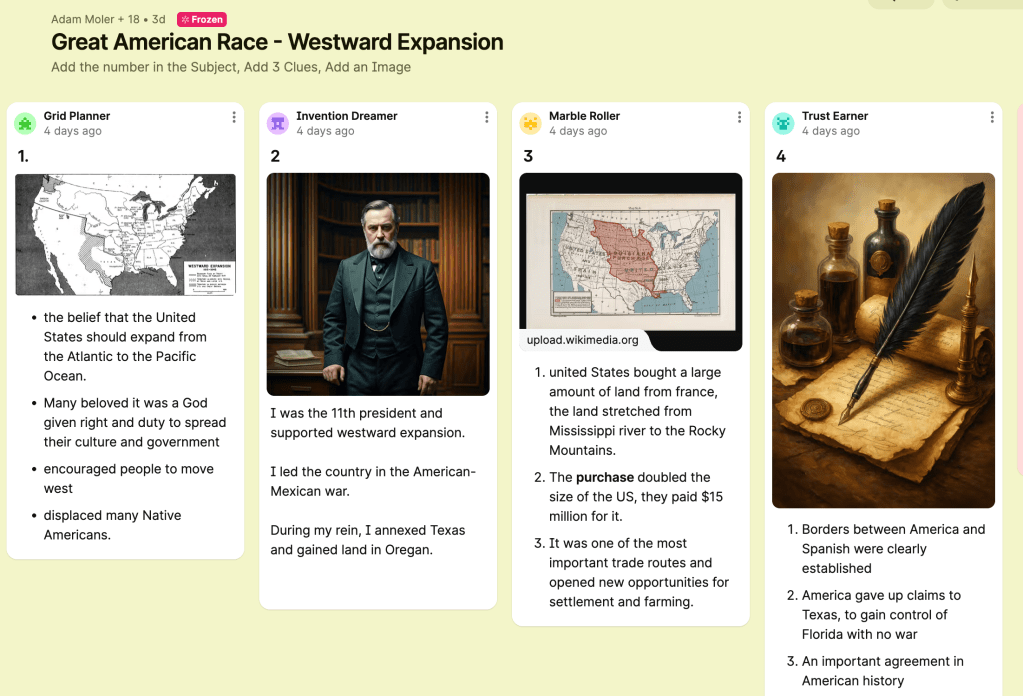
From there, we moved into a Great American Race activity. Students each received a slip containing a numbered vocabulary term with a five-to-six sentence description. Terms included people, events, and concepts such as James Polk, Mexican Cession, and annexation.
Students were told not to share their information.
Instead, they went to Padlet and created a post using:
- their assigned number as the title
- three clues from the description
- a relevant image
I moderated every post so nothing appeared until everyone was ready. Once all clues were approved, students paired up and raced to solve every numbered clue on Padlet.
This became one of my favorite ways to launch the unit because the structure matched the content. Westward expansion was a race for land, influence, opportunity, and movement. Students were literally racing through the ideas that would define the unit.
Wednesday: Manifest Destiny as an Idea to Question
Wednesday focused fully on Manifest Destiny, but not as a simple textbook definition.
Too often students hear the phrase and think it just means “America moved west.” I wanted them to wrestle with it as an idea, a belief system, and something people still debate today.
We started with Fast and Curious using Gimkit to review terms like Manifest Destiny, annexation, expansion, and acquisition. That quick retrieval gave students a base before asking them to think more deeply.
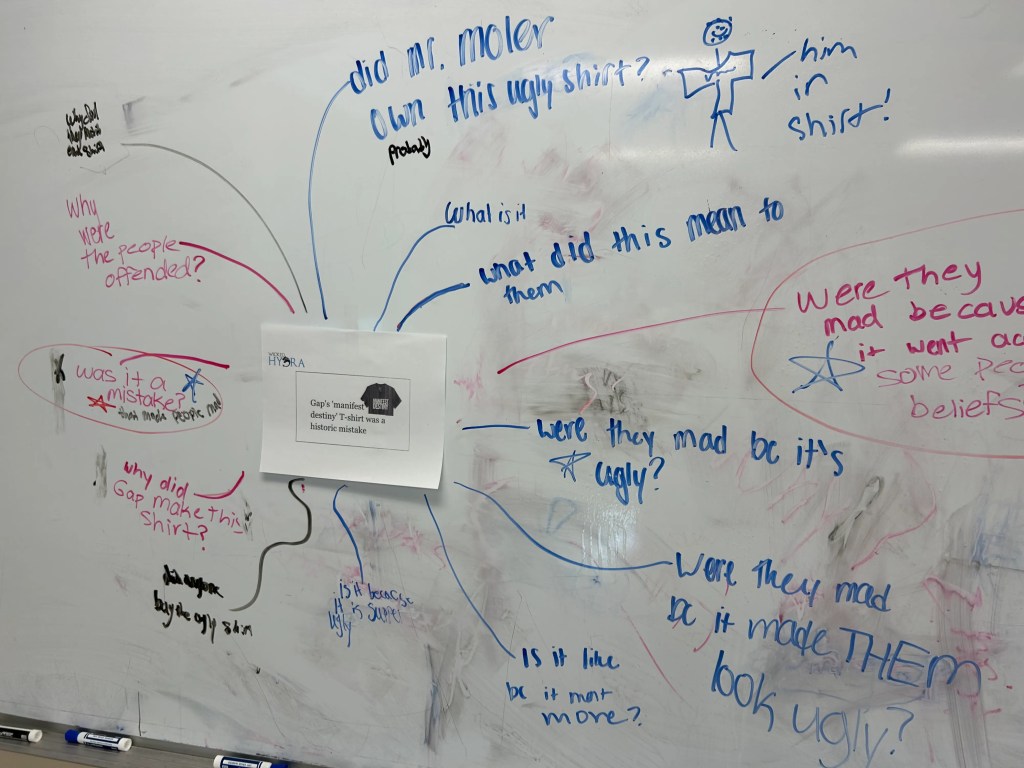
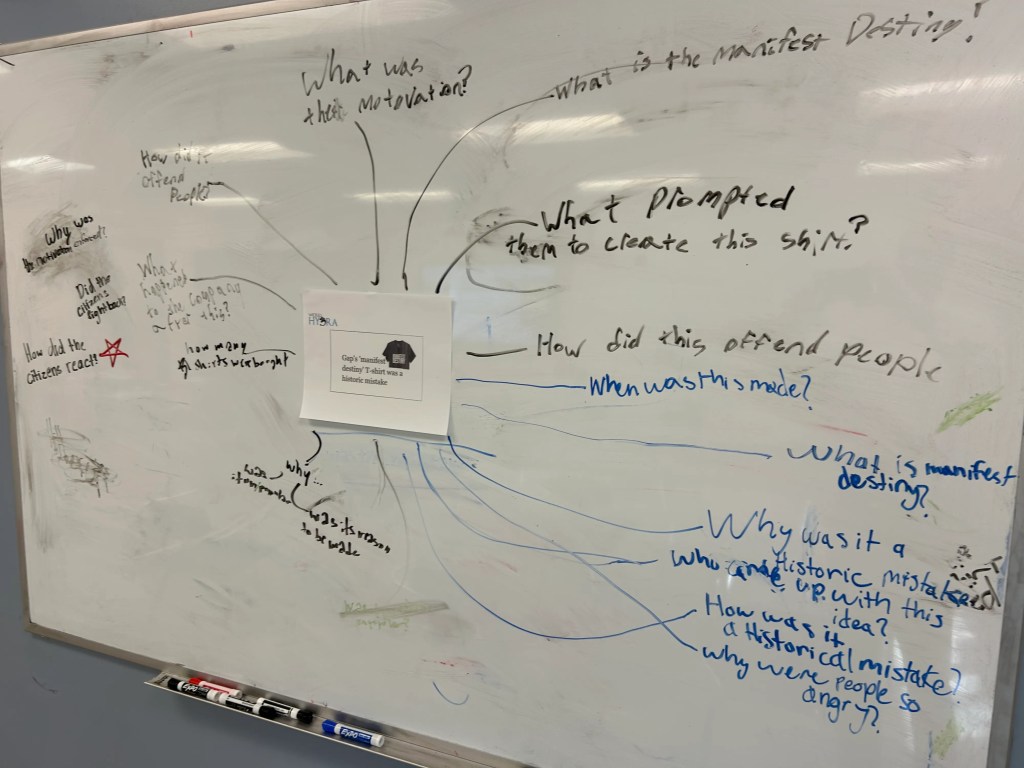
Then we moved into a Wicked Hydra built around the headline:
Gap’s T Shirt Was a Historic Mistake
Students worked in groups at whiteboards generating questions they thought the lesson would answer. At first the questions were surface level. Then they became sharper:
Why would a shirt be controversial?
Who would be upset?
How is history remembered today?
The room changed once students had something real to figure out.
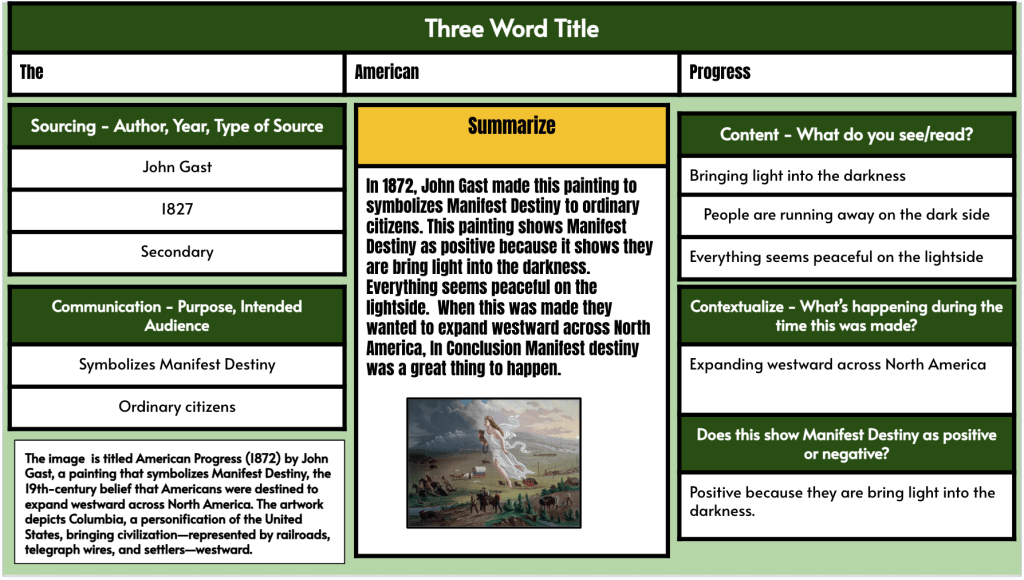
Next came Sourcing Parts using the painting American Progress. Students examined creator, message, audience, and perspective. They quickly noticed symbols of movement and expansion, but deeper discussion centered on who was missing from the image and whose story was being ignored.
That is where the lesson slowed down in a good way.
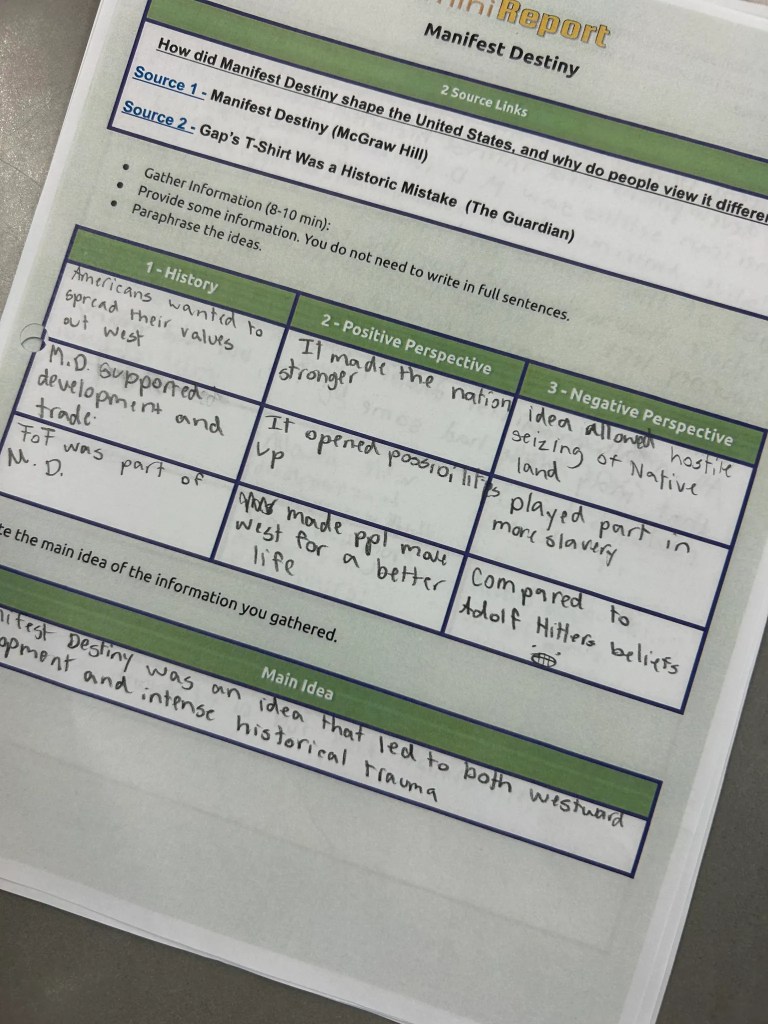
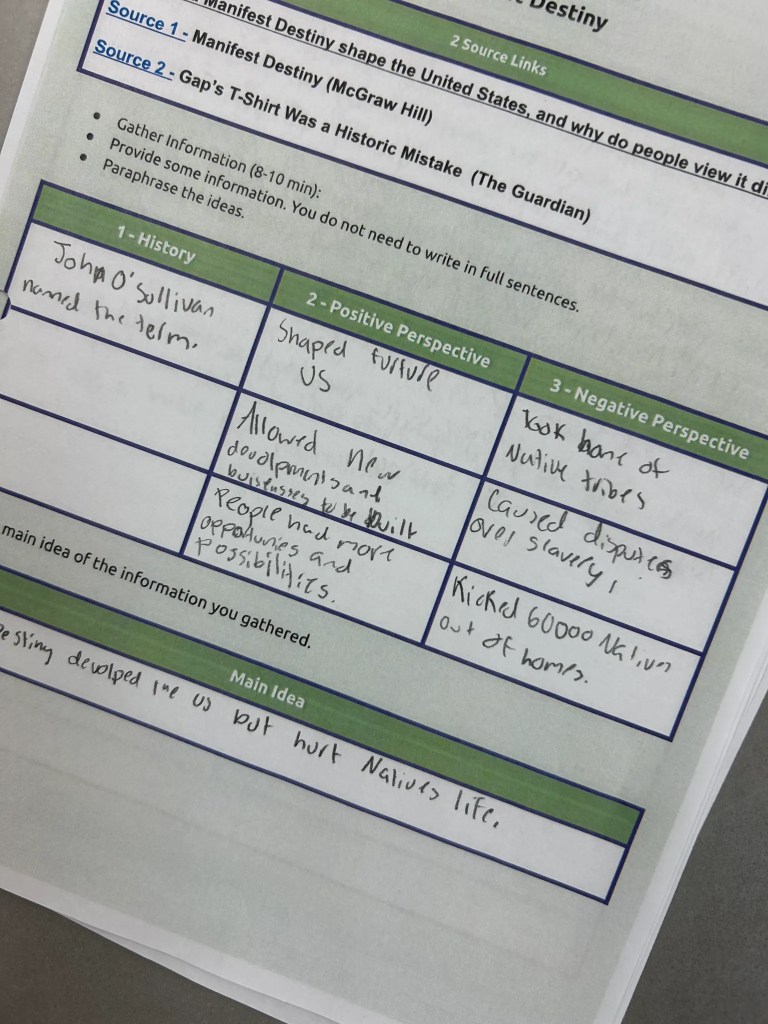
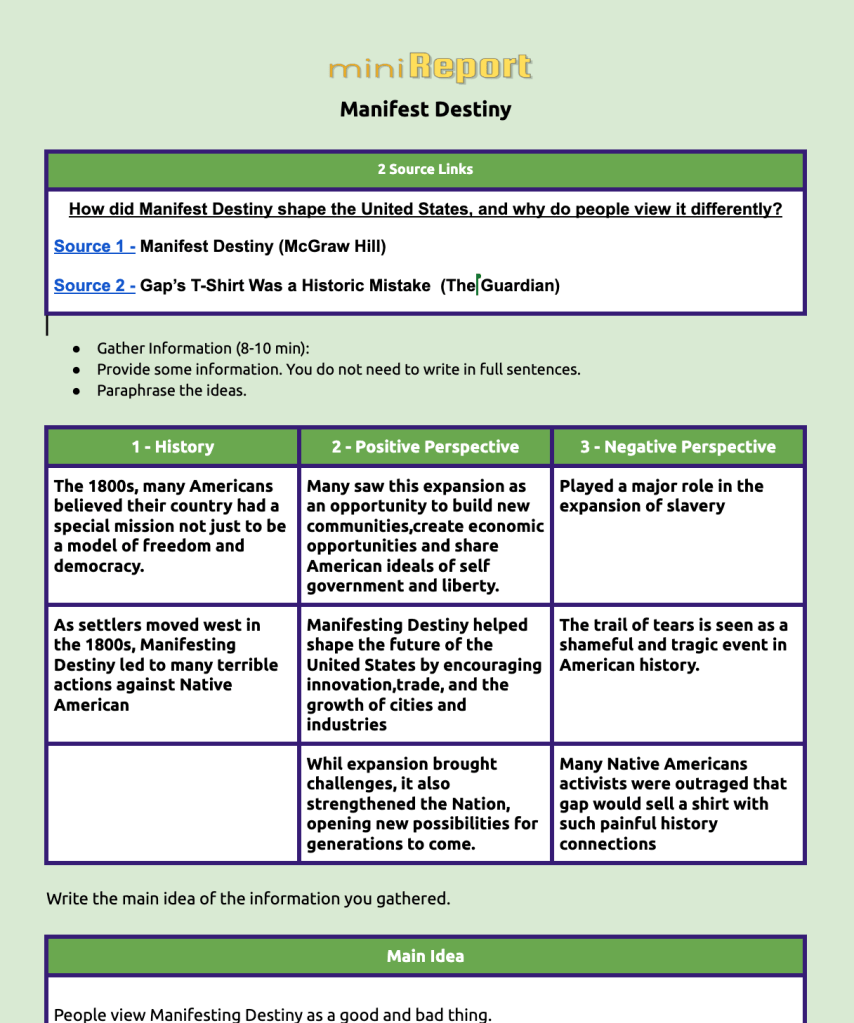
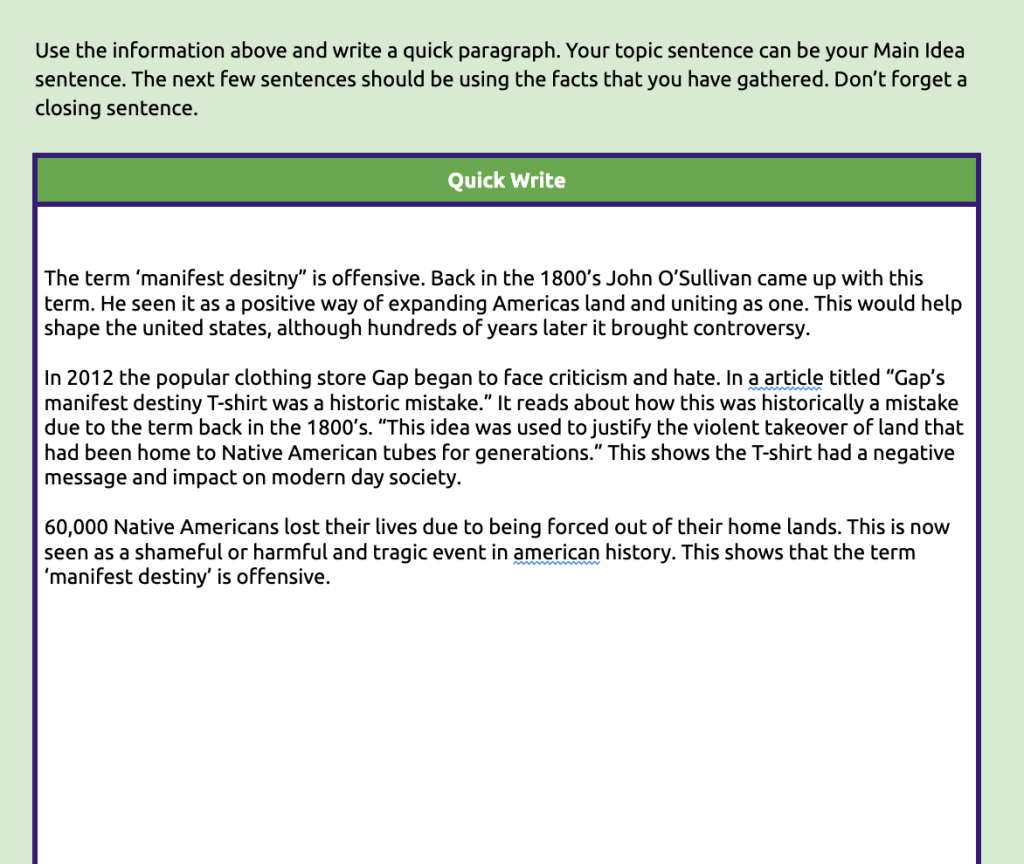
To close, students completed a MiniReport comparing two perspectives:
- Manifest Destiny as necessary expansion
- Manifest Destiny as an idea criticized then and now
Students used notes, evidence, and prior discussion to write a paragraph capturing the central tension.
Instead of writing being separate from the lesson, it became the natural finish.
Thursday and Friday: Adjusting Without Lowering Expectations
I had to be out Thursday and Friday with a sick child at home, so lesson planning became about clarity and simplicity without losing rigor.
Normally I run a more hands-on annotated map lesson, but I knew too many moving pieces could create confusion in my absence.
Thursday: Time and Space
Students began with a blank westward expansion map. They labeled territories, added the year each was acquired, and colored the map.
This simple task matters more than people think.
Students often learn names like Louisiana Purchase or Oregon Territory without understanding where these places are or when they happened. Mapping helps anchor content in time and space.
After that, students rotated through stations posted in Google Classroom. Their organizer had Manifest Destiny in the center, with surrounding territories connected to three guiding questions:
- What land did we get?
- How did we get it?
- Why was it important?
Straightforward, focused, and manageable with a substitute.
Friday: From Recall to Comparison
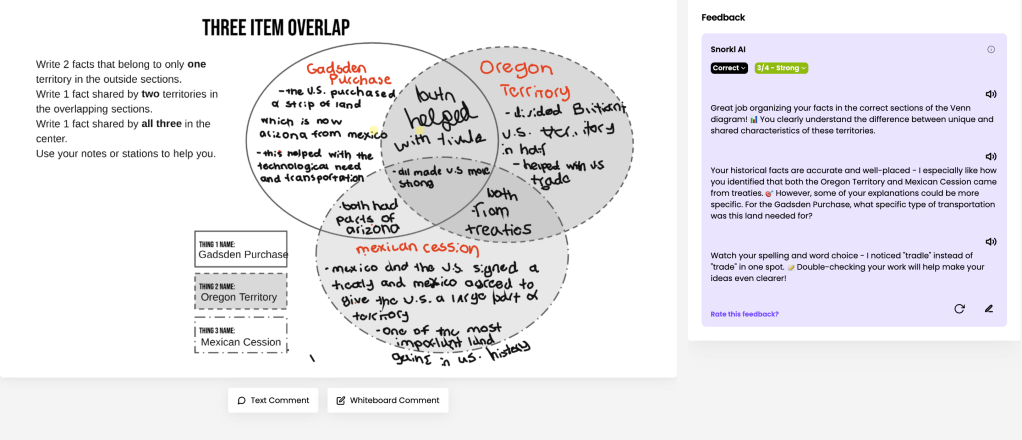
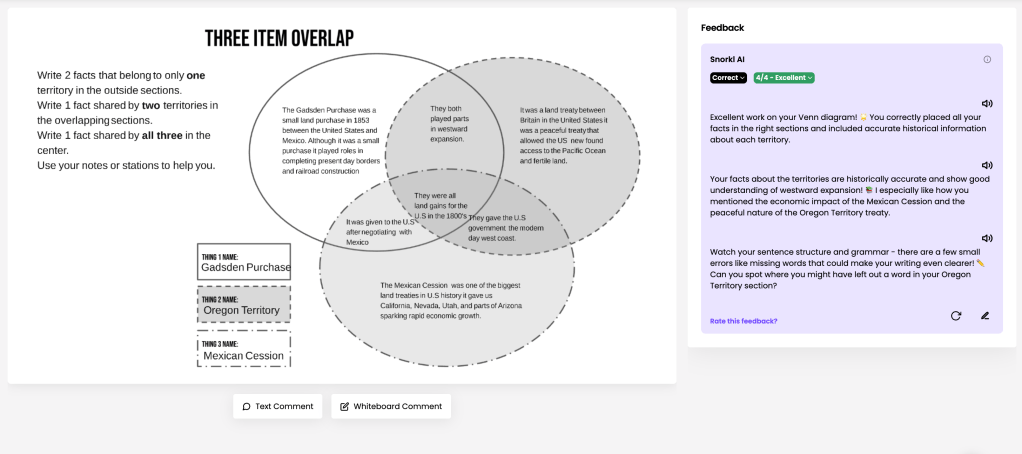
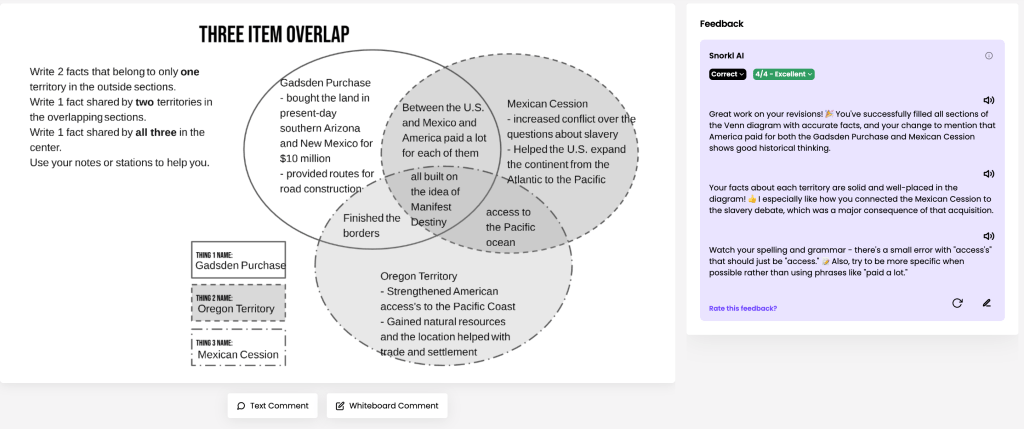
Friday began with finishing Thursday’s work. Then students moved into Snorkl, where I assigned a triple Venn diagram comparing three territories.
This was intentional.
I like pushing learning from:
- DOK 1: identify and recall
- DOK 2: compare, organize, explain
- DOK 3: justify and evaluate when possible
The Venn diagram immediately raised the level of thinking because students had to sort similarities and differences rather than copy facts.
To finish, students completed a Quizizz/Wayground review with map labeling, acquisition questions, and short-answer responses that provided AI-supported feedback.
Even while I was out, students were still receiving guidance instead of completing isolated tasks and wondering if they were correct.
That matters.
Final Thought
This week was a reminder that good instruction is not about flashy one-off lessons. It is about sequencing experiences that build knowledge and confidence over time.
We reviewed old learning.
We launched a new unit with curiosity.
We questioned historical narratives.
We built geographic understanding.
We compared ideas and territories.
We used AI as feedback, not as a shortcut.
Most importantly, students kept thinking all week.
That is always the goal.


