
Some weeks are about covering ground. Others are about slowing down and helping students see how events connect. With 30-minute classes all week, there was no room for wasted time. Every lesson had to be clear, focused, and built around thinking. Our goal this week was to take territorial acquisitions deeper and move beyond memorizing names, dates, and maps.
Monday: Texas Independence
We began Monday with Texas Independence. The guiding question asked students how Americans moving to Texas helped cause Texas to become independent and later join the United States. I handed students a Mini-Report that gave structure to the lesson. In a shortened class period, structure matters. Students knew what information to gather, where to place it, and what they would eventually do with it.
EdPuzzle + Mini-Report + Snorkl
We opened with an EdPuzzle on Texas Independence. As students watched, they recorded two key notes on their Mini-Report. This gave them a foundation before moving into a reading that added more context. Students explored why settlers moved to Texas, why tensions grew with Mexico, why independence happened, and why annexation followed.
Too often, students learn history as isolated events. Texas becomes independent. Texas joins the United States. Move on. This lesson pushed students to see cause and effect instead.
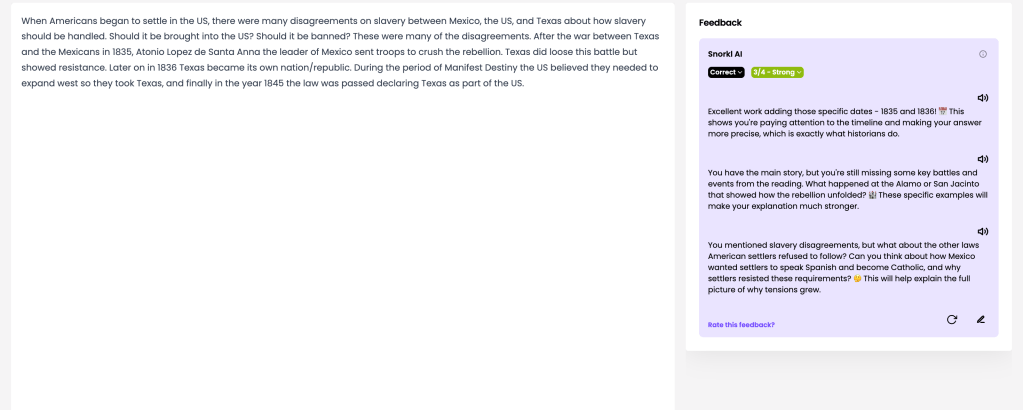
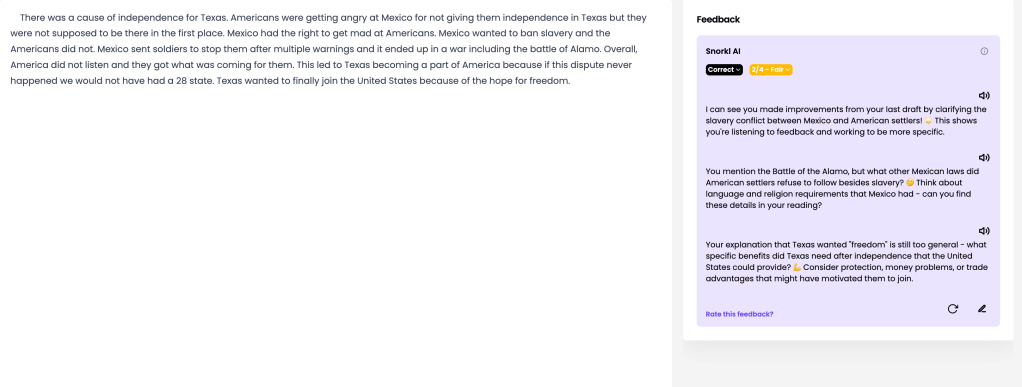
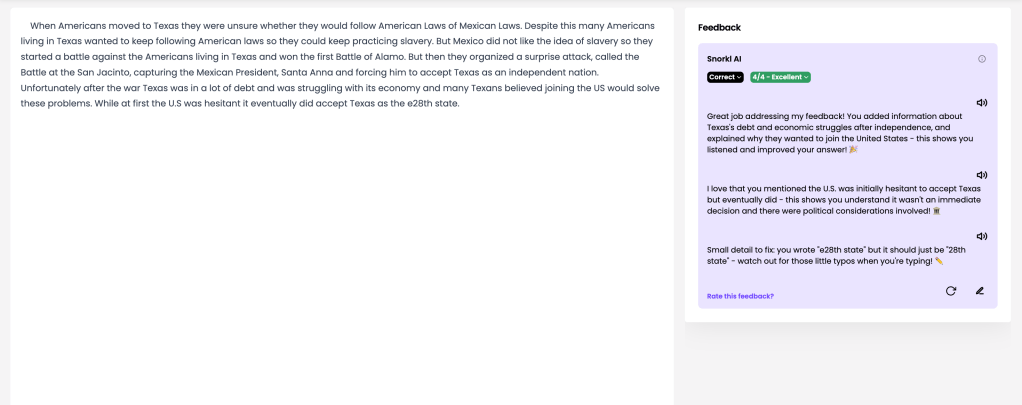
We finished with writing using the new beta writing platform on Snorkl. I added our source reading, created the prompt, and students typed directly into the response space. Snorkl provided immediate feedback that reminded me a lot of Class Companion. Students had a chance to think, write, revise, and improve while the learning was still fresh.
Tuesday: Mexican-American War
Tuesday usually would have been Oregon Territory because that is the next step chronologically. Instead, I changed the order on purpose. I wanted students to see how the annexation of Texas directly led to the Mexican-American War. Sometimes chronology matters less than helping students understand relationships between events.
Map and Tell + Annotate and Tell + Sketch and Tell + Snorkl
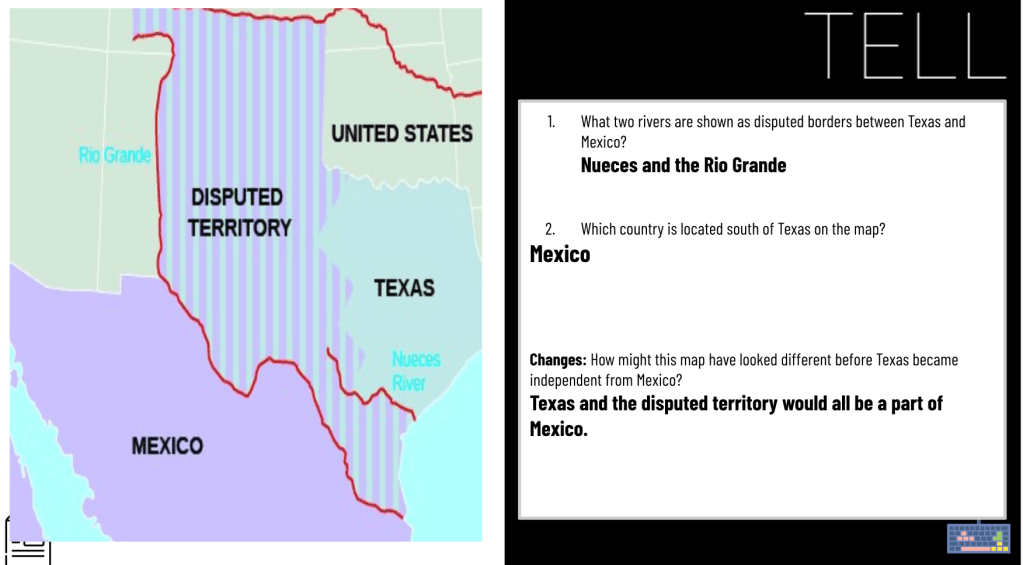
We opened with a Map and Tell focused on the border dispute between the United States and Mexico. Students examined the disputed territory between the Rio Grande and Nueces River and thought about how maps reflect conflict, claims, and power.
From there, students completed two Annotate and Tells focused on the causes of war. They examined failed diplomacy, Polk’s attempt to purchase land, Mexico’s refusal, and the decision to send troops into disputed territory. These activities helped students slow down and analyze motives, decisions, and perspective instead of just rushing to outcomes.
We closed the content portion of class with a Sketch and Tell on the Treaty of Guadalupe Hidalgo. Students showed what land the United States gained and explained why the treaty mattered. They recognized that the war helped the United States expand dramatically, but it also opened a new debate over whether slavery would spread into those territories.
If time allowed, students responded in Snorkl to the question: How did the Mexican-American War help the United States grow while also creating new disagreements over slavery and power?
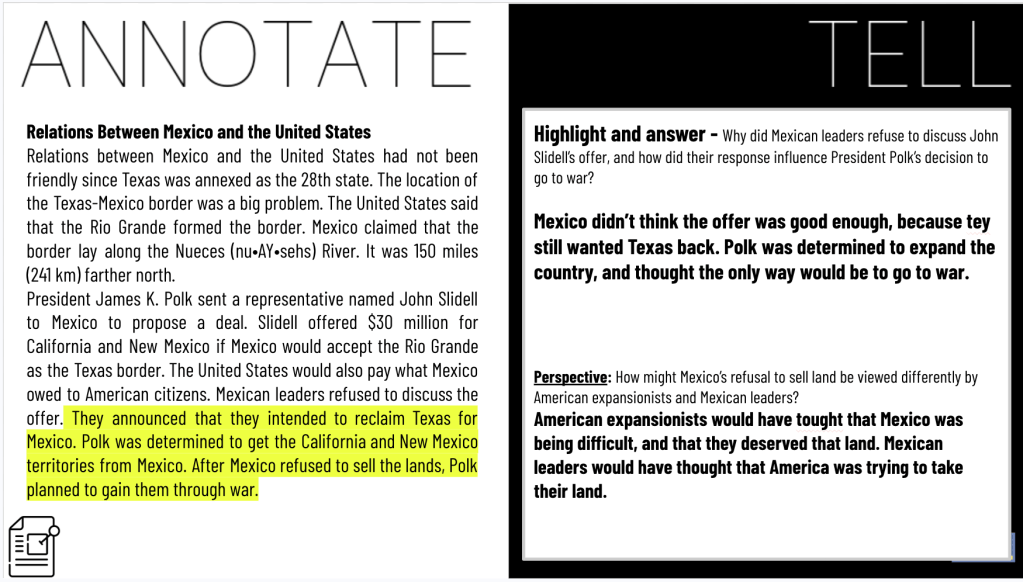
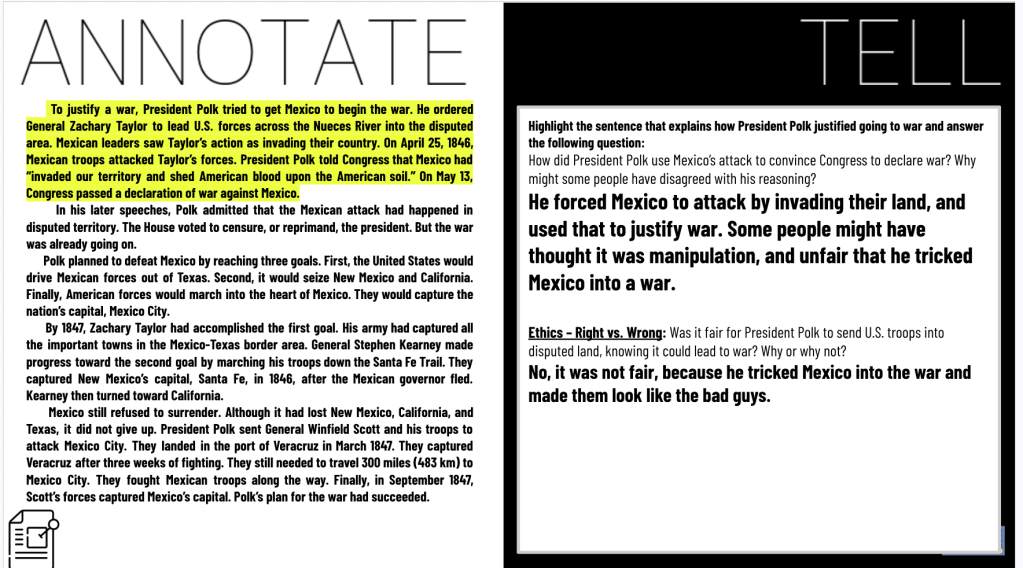
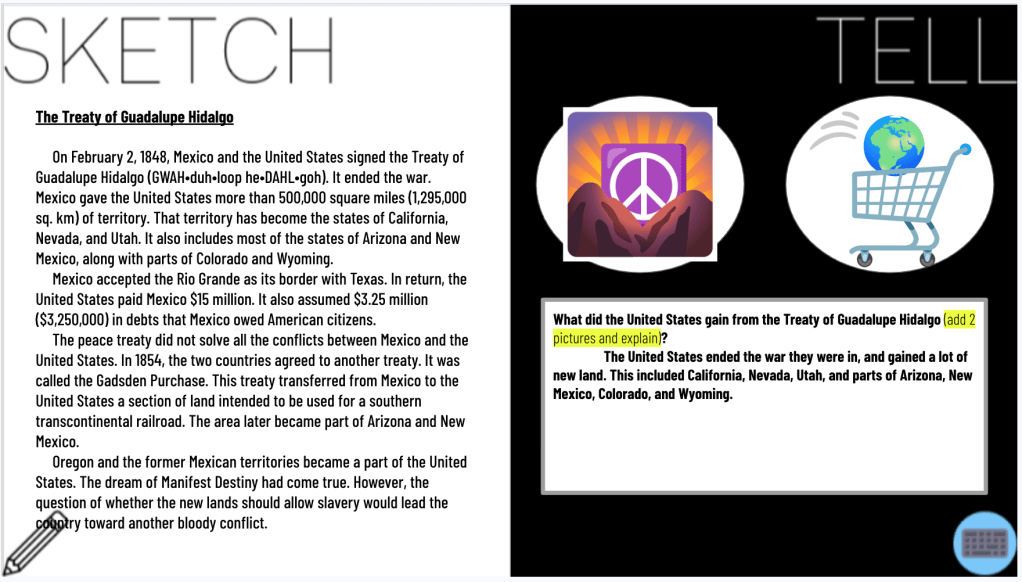
Wednesday: Oregon Territory
Wednesday we moved into Oregon Territory and focused on how the United States gained this land. Students were beginning to see that westward expansion was not one single event. Different territories came through different paths, negotiations, and conflicts.
EduProtocol Smash + Map and Tell
I may have invented something new here.
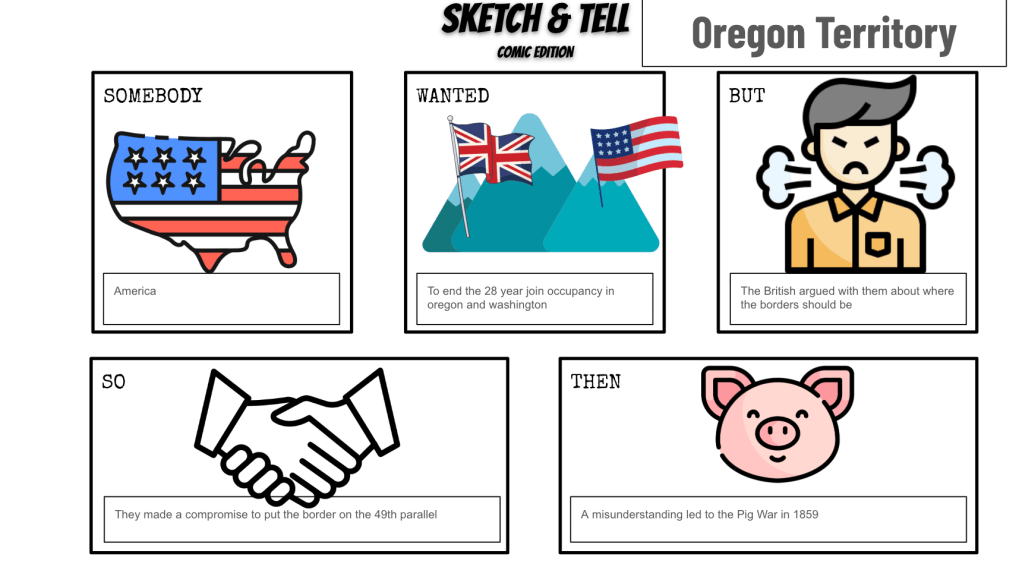
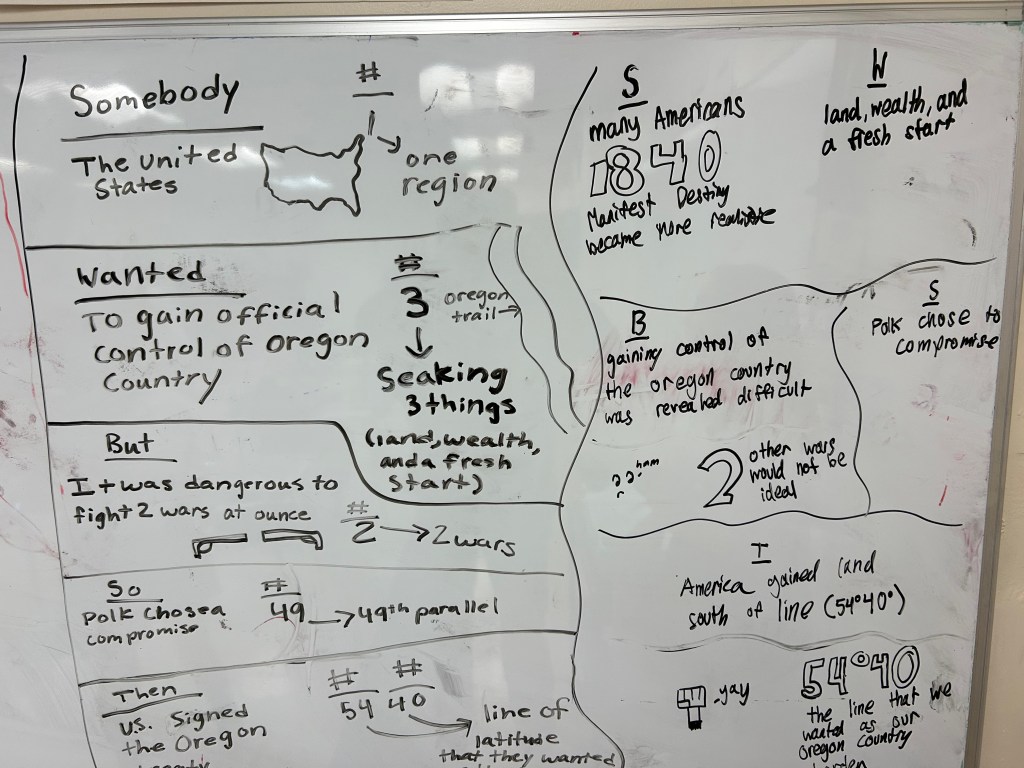
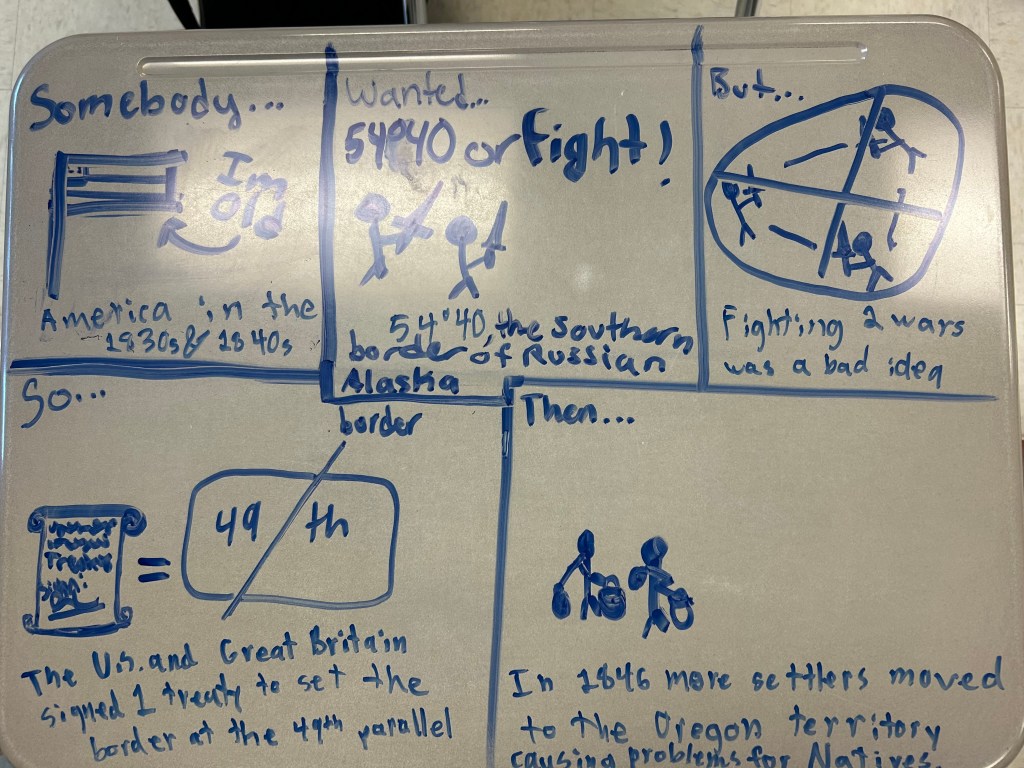
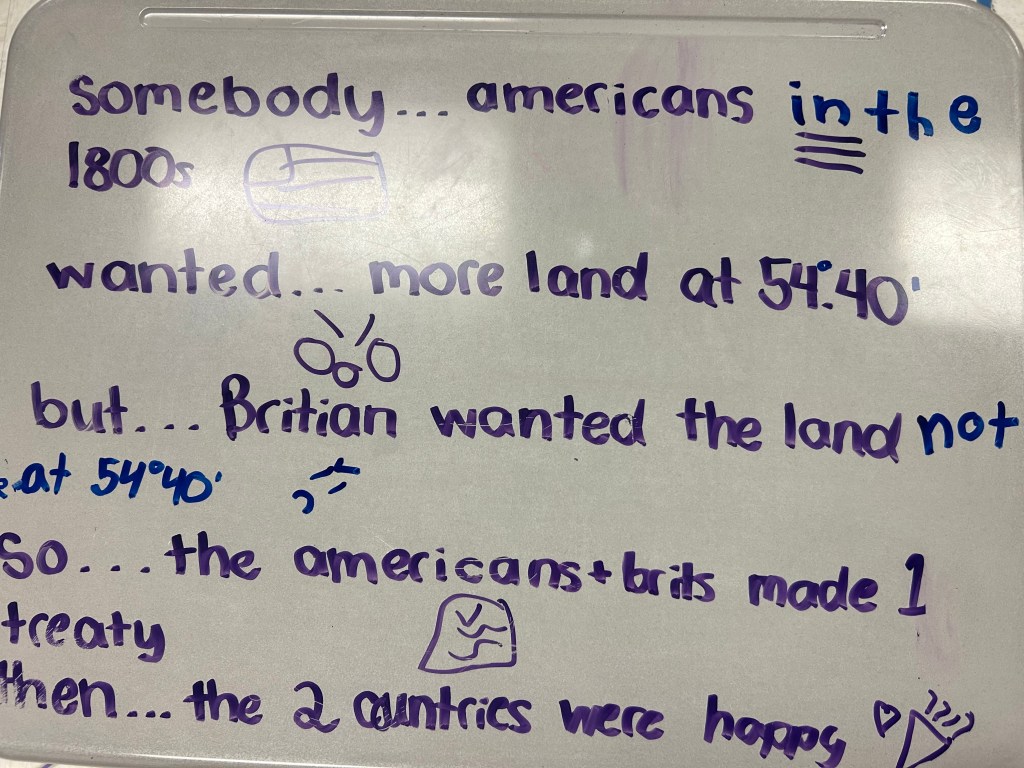
Students read about Oregon and the Oregon Treaty, then we followed it up with a Building Thinking Classrooms style activity that smashed together SWBST Sketch and Tell with Number Mania.
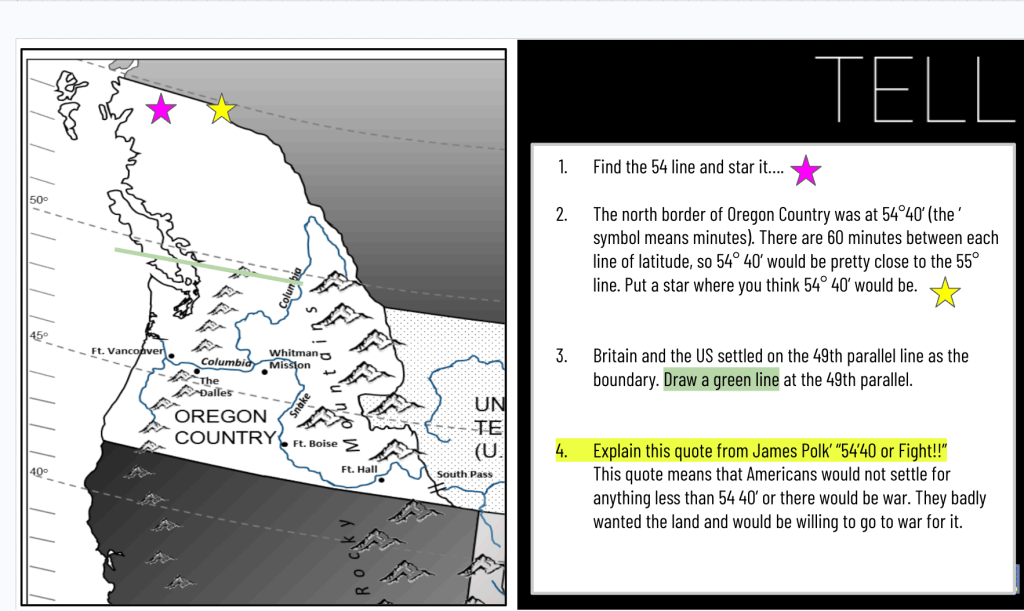
Students had to retell the story using Somebody, Wanted, But, So, Then. The twist was that every caption needed a number and every caption needed a picture.
That small change created a lot of thinking. Students had to ask themselves, “How can I use a number here?” Sometimes that meant using dates. Sometimes it meant latitude lines. Sometimes it meant quantities, years, or distances. Sometimes it meant reworking their sentence entirely.
That is productive struggle. When students have to adapt knowledge instead of copy knowledge, the thinking gets better.
We followed that with a Map and Tell focused on the slogan 54°40′ or Fight and what it meant. Students had to locate the 54°40′ line and wrestle with the idea of minutes within lines of latitude. Then they had to locate the 49th parallel, and parallel itself was a new academic term for several students.
Thursday: A Strong Start and a New Inquiry
Thursday began with a Quizizz over westward expansion territories and Manifest Destiny. The class averages were 90%, 95%, 97%, 95%, and 98%. Well done.
Those scores showed me students were retaining the content from earlier in the week, but more importantly, they were starting to connect the bigger ideas behind expansion.
Mini Inquiry Launch
After the Quizizz, we began a mini inquiry unit built around a compelling question: What drives people to move, and is the risk worth the reward? We started with Day 1 and focused on push factors, or the reasons people felt they needed to leave home.
CyberSandwich + Primary Sources + BTC Whiteboards
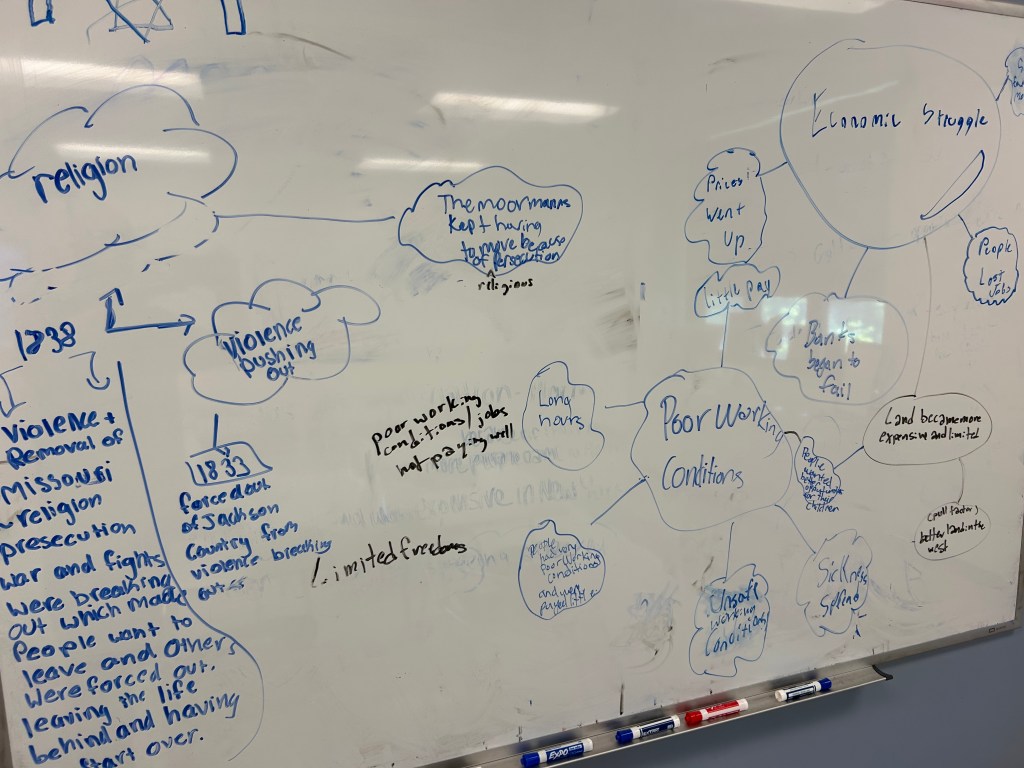
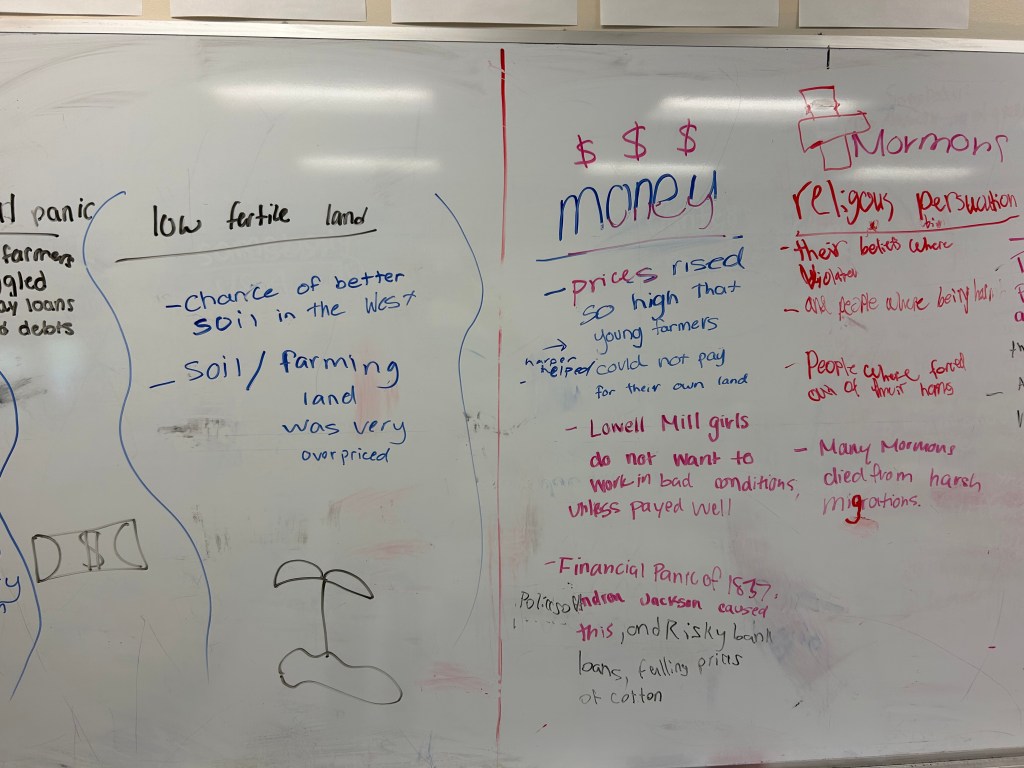
I turned the sources into a CyberSandwich using five different pieces of evidence. Students worked through sources connected to Mormon persecution, expensive farmland, overcrowding, poor factory conditions, and economic hardship.
Their task was to answer one question: What pushed people to leave home and head west? Many students struggled at first because they wanted answers stated directly in the source. They were hunting for exact words instead of reading between the lines. One example came from the Lowell Mill Girls protest song. Some students said people would not want to move west because they were treated like slaves. I pushed them further. What do you think working conditions were like? What do you think pay was like? What do you think quality of life was like?
After reading and note taking, students moved to the whiteboards Building Thinking Classrooms style. Groups compared notes, added ideas, and talked through evidence together. After five or six minutes, students returned to their seats and wrote a brief summary.
I really liked this structure because students were surrounded by the thinking of the room. As they wrote, they looked around at the boards, borrowed evidence, reconsidered ideas, and strengthened their responses.
That is what a classroom should feel like. Ideas visible. Thinking shared. Learning active.
Lessons for the Week
Monday – Texas Independence MiniReport
Tuesday – Mexican American War Rack and Stack
Wednesday – Oregon Territory
Thursday – Westward Migration Inquiry


