First, before anything else, you have to teach middle schoolers how to actually say the word superlative. Every year I hear “super-lative,” “super-laxative,” and a few completely original versions that honestly deserve awards of their own.
Once we get past that, we talk about what a superlative actually means.
A superlative is the extreme of something. The “most,” “best,” “worst,” “biggest,” or “most important.” That’s what makes this EduProtocol so useful in social studies and honestly almost any content area. It pushes students past simply gathering information and into evaluating it.
Superlatives, created by Kim Voge as a spinoff of Number Mania, works especially well at the end of a unit, a lesson sequence, or after students have interacted with a lot of information. By that point, students have enough background knowledge to compare ideas, categorize information, defend opinions, and synthesize what they’ve learned.
The setup is simple:
- Give students a list of superlatives connected to your content
- Students choose one or more
- They match a person, place, event, idea, or geographic feature to the superlative
- Then they defend their thinking with evidence
At first, I’ll usually use ChatGPT to help generate a list of superlatives tied to the topic. After students get a few reps with the protocol, I’ll start having them create their own superlatives, which raises the level of thinking even more because students begin deciding what matters within the content itself.
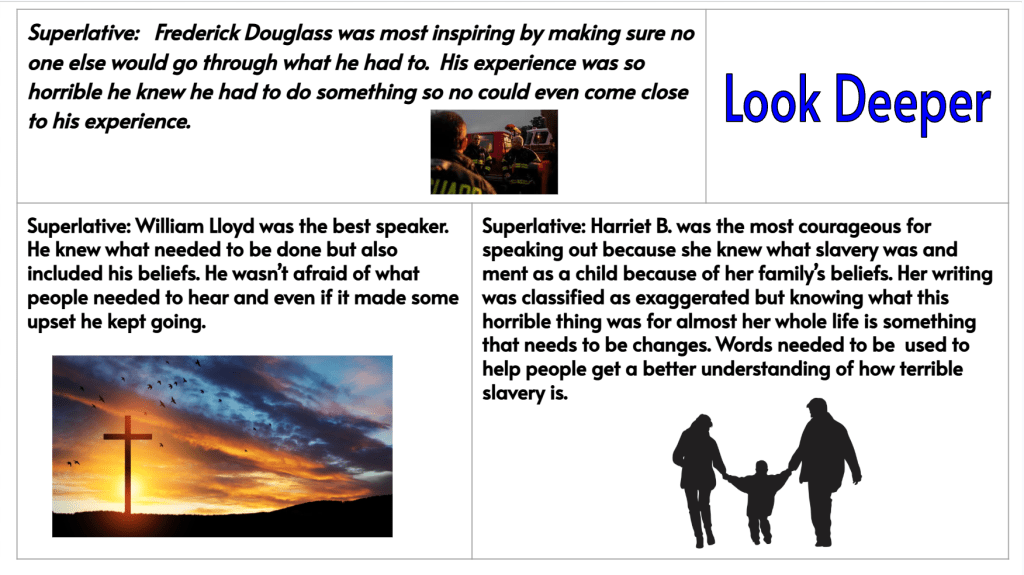
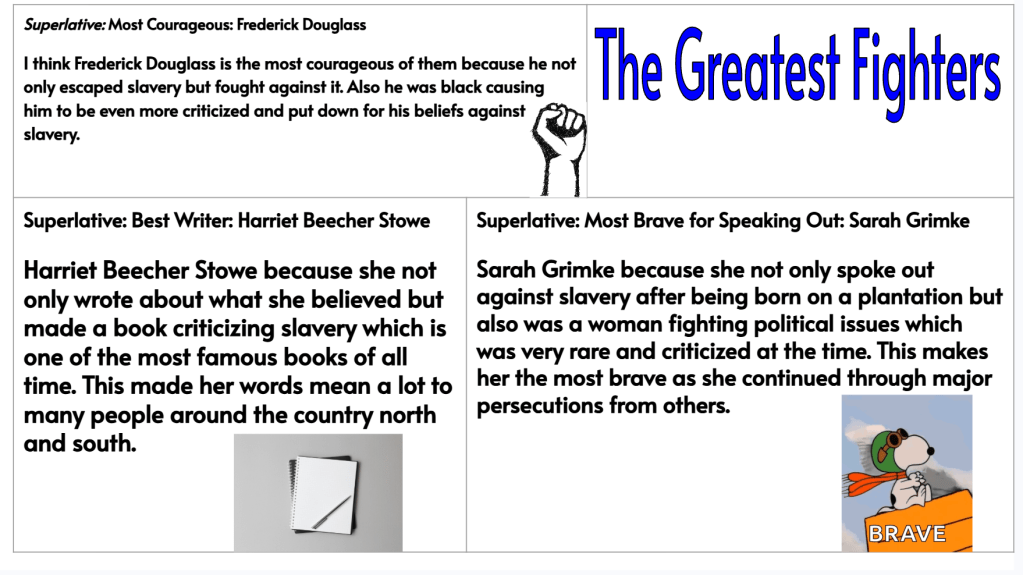
Recently, I used it during a lesson on abolitionists. Students had to choose superlatives like:
- Loudest Voice for Change
- Most Courageous
- Boldest Actions Award
- Best Speaker or Writer
- Biggest Unsung Hero
Students then selected an abolitionist that fit each category and justified their thinking using evidence from readings, discussions, and notes.
I also used it in 6th grade geography during a China unit. Students rotated through stations on geographic features and then created posters using superlatives like:
- Most Important Geographic Feature
- Best Place to Settle
- Most Valuable for Trade
- Most Difficult Environment
- Geographic Feature That Shaped China the Most
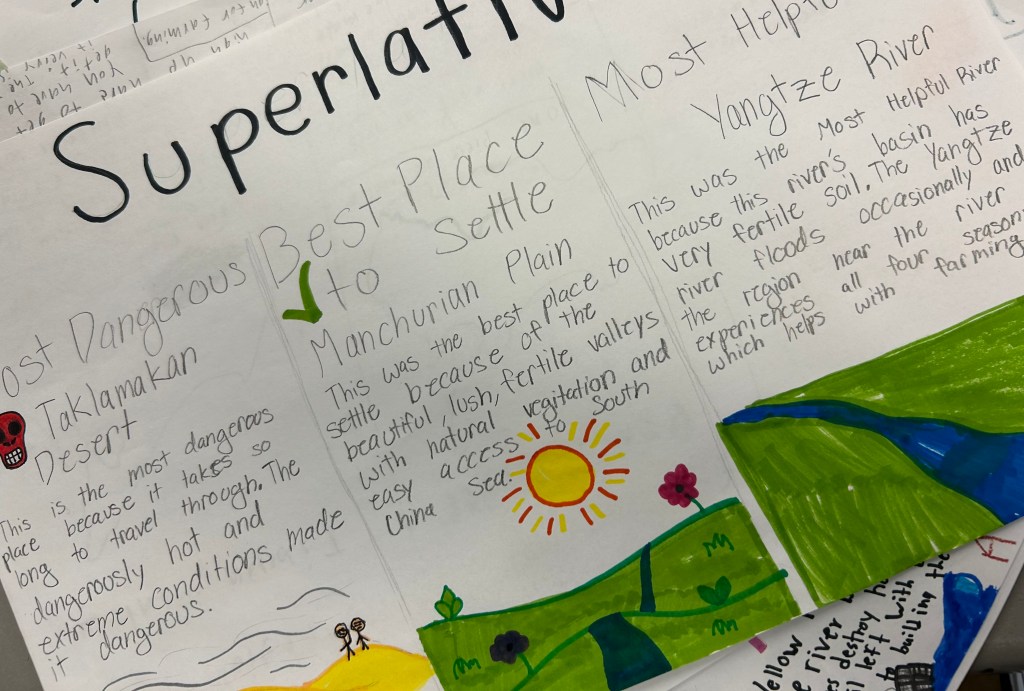
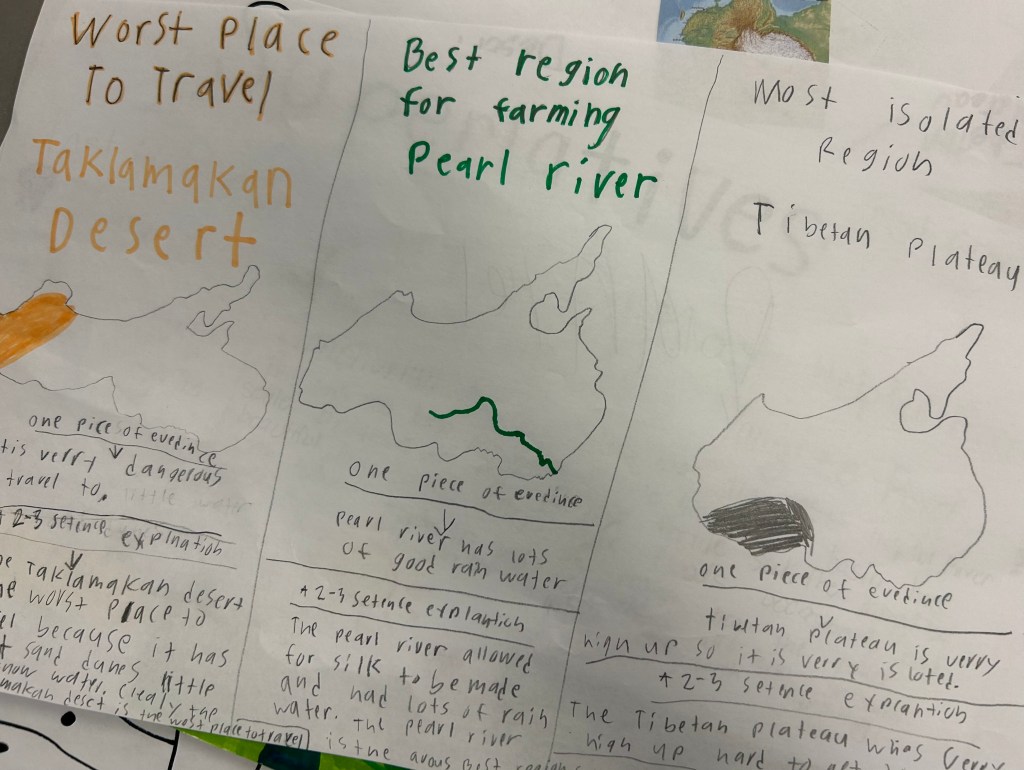
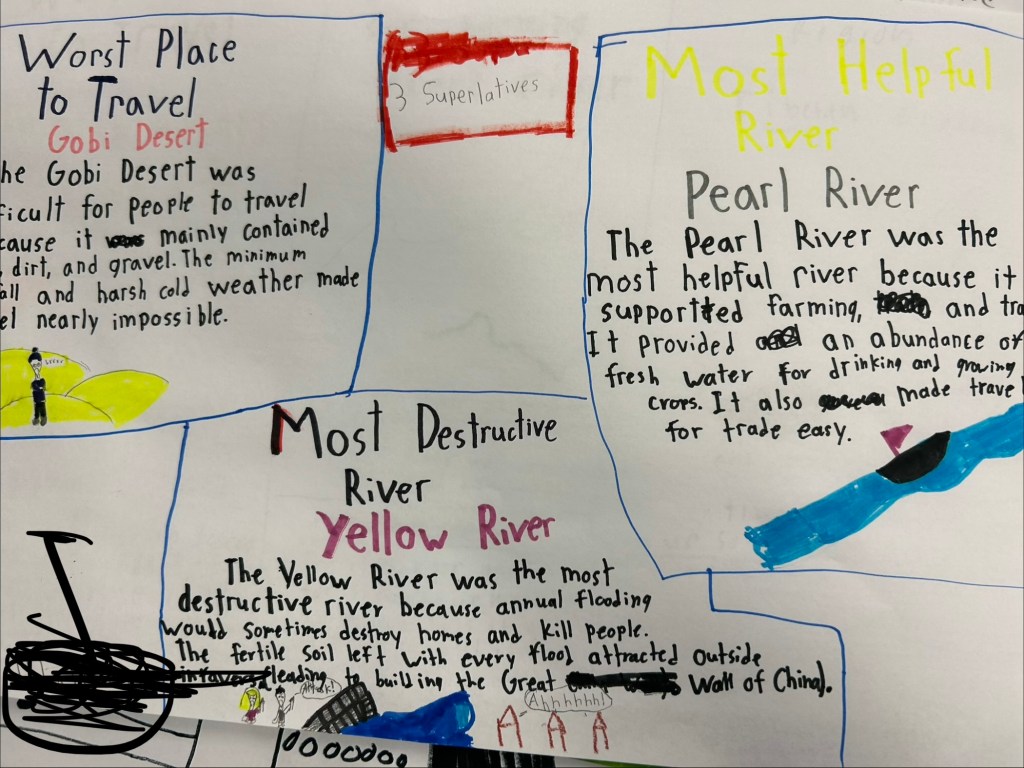
Students selected a geographic feature and matched it with multiple superlatives using evidence from the stations.
What I like about this protocol is that there often isn’t one perfect answer. Students naturally start debating and defending ideas:
- Was the Huang He the most important river or the most dangerous?
- Was Frederick Douglass the most inspiring or the boldest?
Those conversations are where the thinking starts to deepen.
The protocol is flexible too. It works digitally or on paper. It can be quick or extended. You can use teacher created superlatives or student created ones. It also naturally moves students into higher-level thinking without making the activity feel overly complicated.
Superlatives gives students a reason to evaluate information instead of just repeating it back. And that’s probably why I keep coming back to it.

 Moler's Musings