I don’t usually run the same lesson twice. Every year I’m changing things, adjusting parts, trying new ideas, and figuring out what works best for the students in front of me. That’s always been part of how I teach. But every once in a while, a lesson keeps finding its way back into the rotation. Not because I’m out of ideas, but because it does what a good lesson should do. Students are engaged, they’re thinking, and the flow of the class just makes sense. This abolitionist sequence is one of those lessons. It blends structure, retrieval, student voice, and deeper thinking in a way that feels natural, and that’s why I know I’ll keep using it.
Thin Slide: Setting the Tone
We opened with a Thin Slide built around the quote, “Change begins when someone refuses to stay silent.” Students had to respond using one image and one word or phrase. It was quick, simple, and gave everyone an entry point right away. Before we ever got into names, dates, or historical facts, students were already thinking about courage, resistance, and the power of using your voice. That matters. Too often we rush straight into content and miss the chance to frame the bigger human ideas behind it. This gave the lesson a purpose from the start and helped students connect emotionally before they connected academically.
EdPuzzle: Building Background Fast
From there, we moved into a short EdPuzzle. This wasn’t meant to carry the lesson or replace teaching. It simply gave students enough background knowledge to move forward with confidence. Sometimes students don’t need a long lecture. They need a few focused minutes that activate memory, introduce key people, and clear up confusion before the real thinking begins. That’s exactly what this did. It refreshed prior knowledge, added some context, and helped students feel ready for the next task.
Thick Slide: Contributive Learning
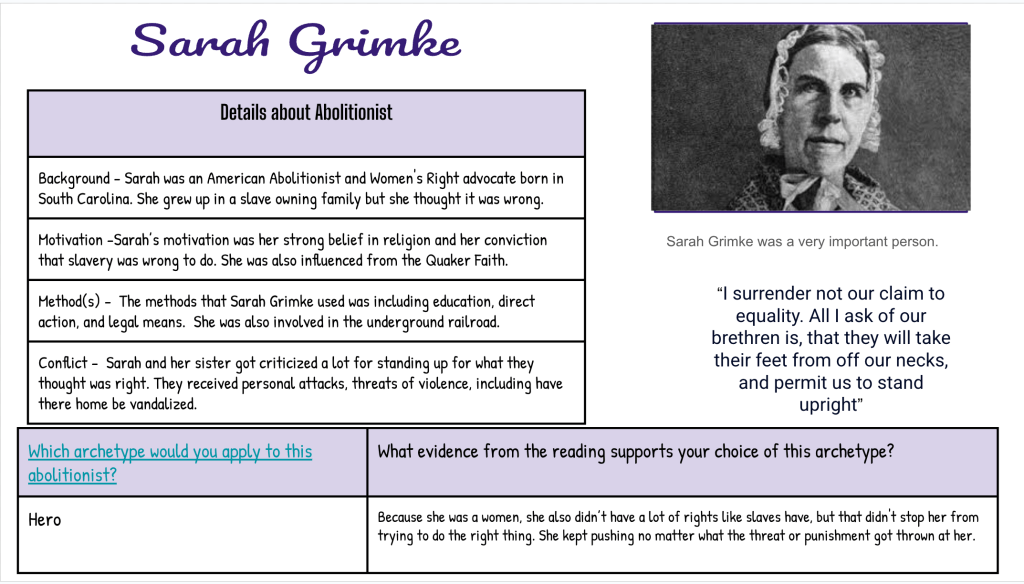
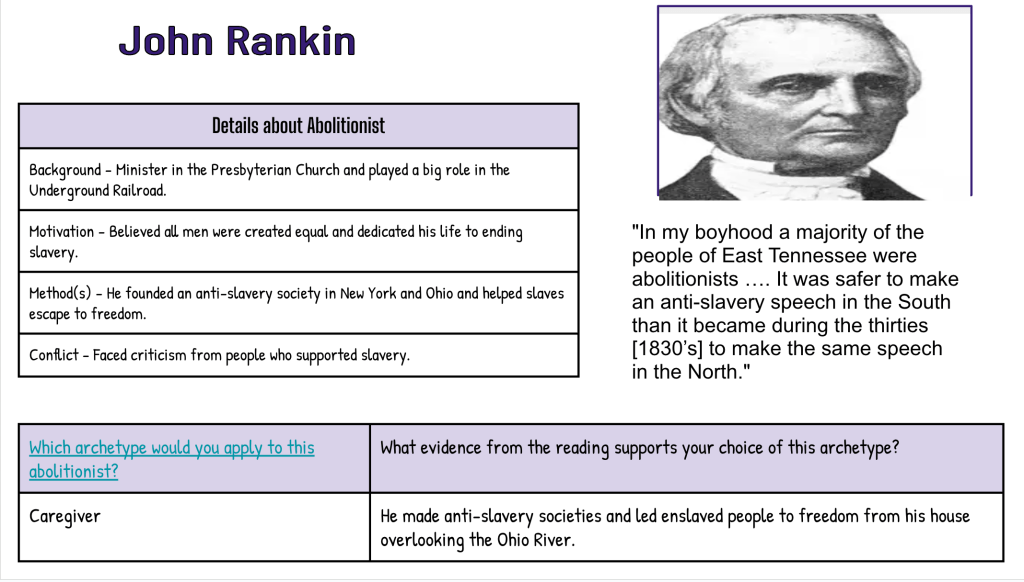
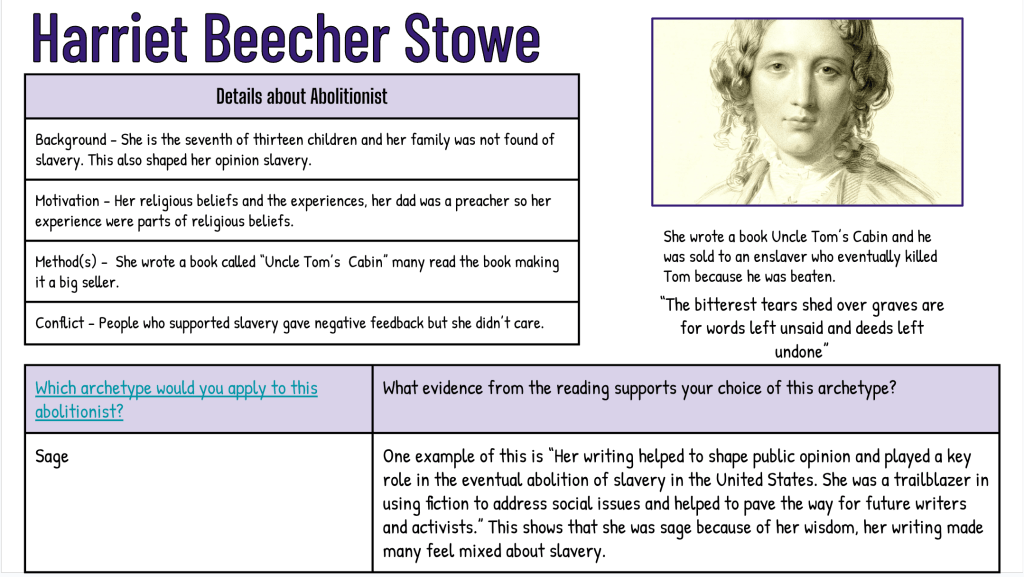
The Thick Slide was the core of the lesson. Each student selected one abolitionist and created a slide that included background information, their motivations for ending slavery, the methods they used, and one quote or moment that showed who they were. This is where the lesson moved beyond copying facts. Students had to make choices. They had to decide what mattered most, organize ideas clearly, and present them in a way others could learn from.
Even better, every student became responsible for bringing one important figure into the room’s shared understanding. Instead of waiting to receive information, they were contributing it.
Frayer Model: Learning From Others
After students shared their Thick Slides, classmates used a Frayer Model to gather information on several abolitionists. They focused on things like background, motivations, methods, and impact. This is where the room shifted from individual learning to collective learning. Students were no longer depending only on me for information. They were learning from one another.
A student who studied Frederick Douglass helped classmates understand his influence. Another student who studied Harriet Beecher Stowe added her story to the room. Others brought in local voices like John Rankin or James G. Birney. That kind of learning feels different because students see themselves as part of the process.
Fast and Curious: Strengthening Memory
The next round began with Fast and Curious on Quizizz. Students reviewed vocabulary and key ideas connected to reform movements such as abolitionism, suffrage, and reform goals. Nothing complicated. Just another rep with important content.
Retrieval practice is powerful because it strengthens memory, boosts confidence, and gets students mentally active right away. Sometimes teachers underestimate how valuable these quick review moments are, but they matter. Students need repeated exposure to ideas if we want those ideas to stick.
Superlatives: Moving Beyond Recall
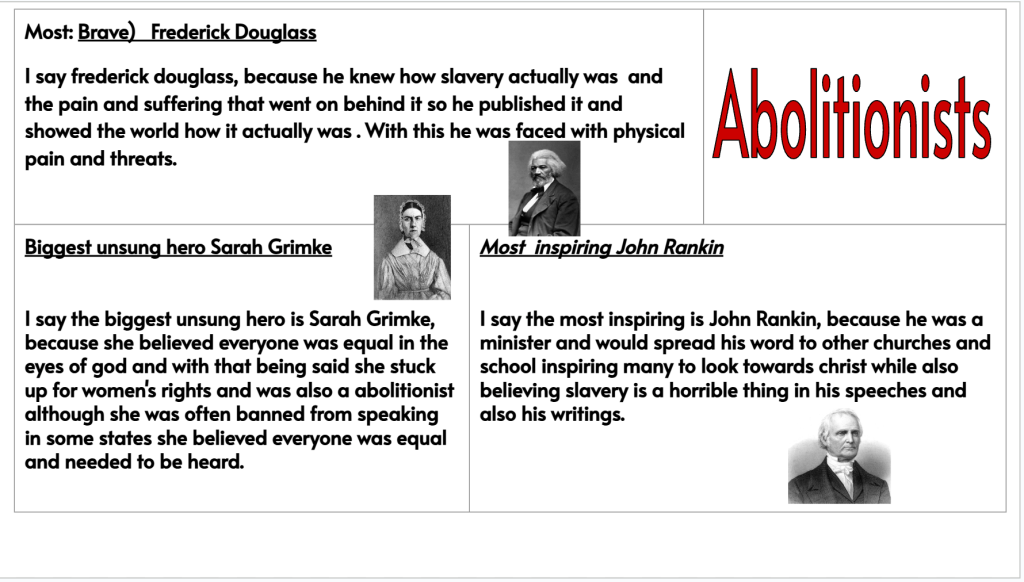
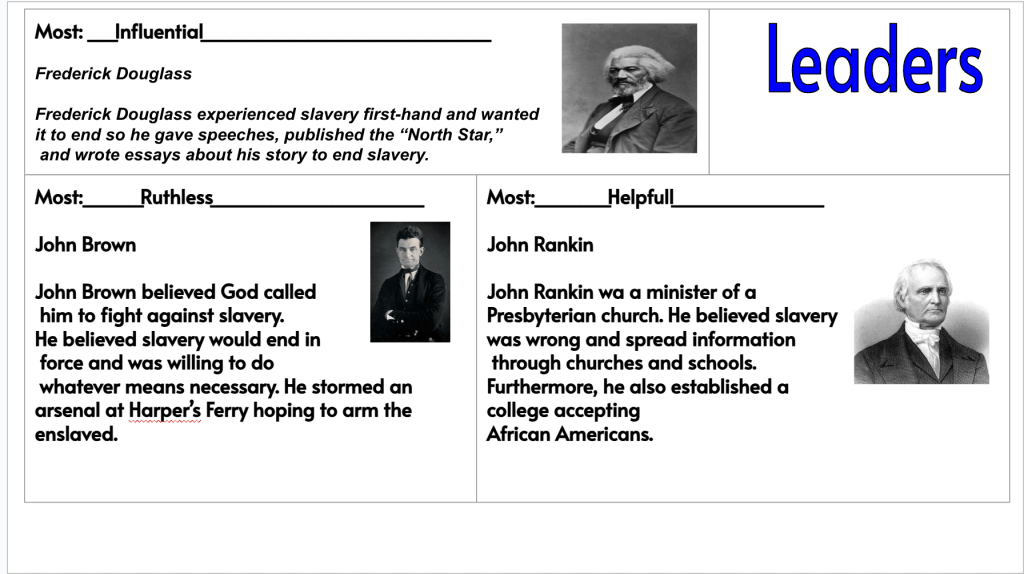
After that, students completed a Superlatives activity. They selected abolitionists and gave out categories like Most Courageous, Most Determined, Most Visionary, or Strongest Voice for Change. This is where the lesson moved into comparison and judgment. Students had to weigh evidence, compare people, and defend their reasoning.
Who took the greatest risks? Who changed the most minds? Who had the biggest long-term impact?
Those questions force students to think deeper than recall ever could. It also gave them room to disagree respectfully and explain their thinking, which is always a win in a history classroom.
AI Feedback: Evaluating What Matters
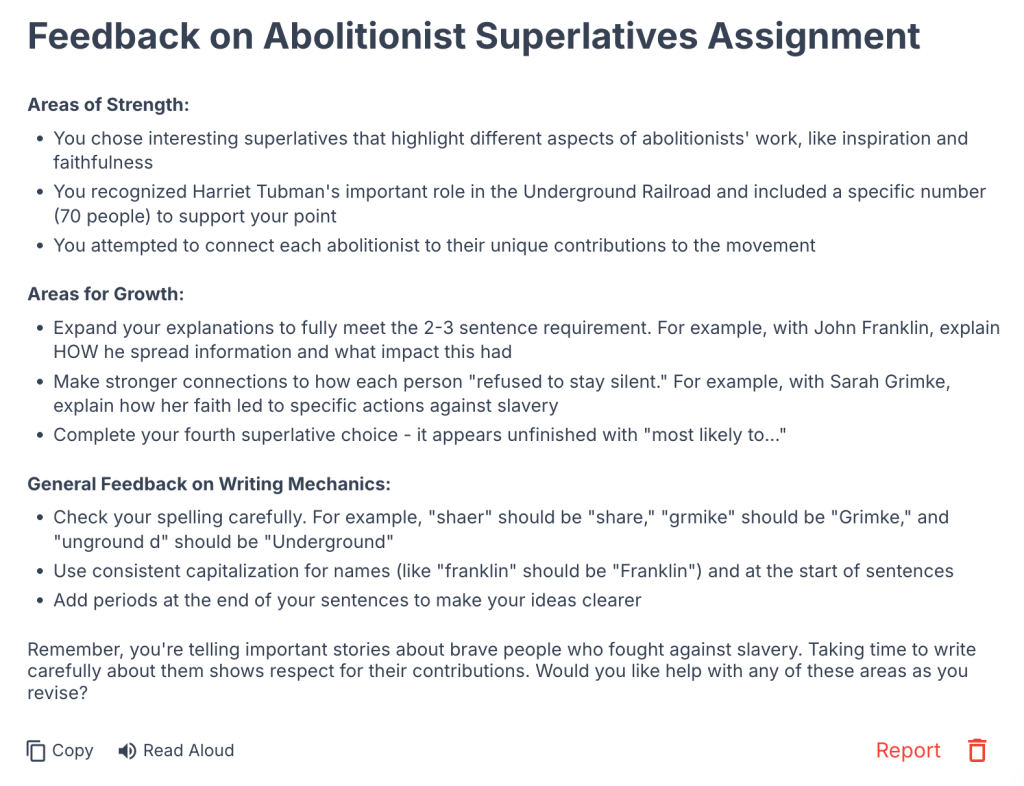
After students completed their work, they used MagicSchool’s feedback tool by uploading screenshots of what they created. Then we talked about the feedback itself. What suggestions were useful? Which ones could be ignored? What would actually improve the work?
That conversation matters because students don’t just need feedback anymore. They need to know how to evaluate feedback. In a world where tools can generate endless suggestions, judgment becomes the real skill. Students need practice deciding what is worth listening to and what is not.
Next time I run this lesson, I will use Snorkl. I like the feedback with Snorkl because it asks questions and helps the students reflect on their work.
How the Lesson Worked Together
What made this sequence strong was how each part supported the next. The Thin Slide created the theme and emotional lens. The EdPuzzle built quick background knowledge. The Thick Slide gave students ownership. The Frayer Model turned classmates into resources. Fast and Curious strengthened memory. Superlatives pushed analysis. AI feedback encouraged reflection and revision.
Nothing felt random or thrown together. Every move had a purpose, and each part helped students succeed in the next one. That kind of sequencing is what makes lessons feel smooth and effective.
Why This One Stays
This lesson stays because it does what good lessons should do. It gets students involved quickly. It builds understanding step by step. It asks students to think instead of just copy. It gives structure without making the room feel rigid. Most importantly, it creates a classroom where students contribute to the learning rather than passively sit through it.
It also reminds me of something worth saying right now. There is a lot of frustration aimed at technology in education. Some of it is understandable. But technology itself is not what makes a lesson shallow or meaningful. The deciding factor is how we use it.
In this lesson, the tools were never the point. They helped students retrieve knowledge, create something original, receive feedback, and think more deeply. They supported strong teaching instead of replacing it.
That is the difference.
The problem is rarely the tool. The problem is when the tool has no purpose.
When used with intention, technology can strengthen great teaching. And when teaching is already strong, it becomes one more way to help students learn.


