
This lesson works because students are starting from almost nothing. Most of them do not walk in with background knowledge about the cotton gin. In fact, the most common response when I introduce it is something like, “They make gin from cotton?” That actually helps. Instead of correcting misconceptions, I am building understanding from the ground up. The goal is not just to explain what the cotton gin is, but to help students understand how one invention can reshape an economy and deepen an existing problem at the same time.
Language Matters
We start with a short mini lesson on language, and it immediately sets the tone for how we approach the content. We talk about using enslaved instead of slaves, enslaver instead of owner, and freedom seekers instead of runaways. It is a small shift, but it forces accuracy. Students begin to see that the words we use can either clarify or hide what actually happened. This matters because if they do not have the right language, they will not build the right understanding of the system we are about to study
Making It Real
From there, I put raw cotton in their hands. Seeds still stuck in it, pieces tangled together, nothing cleaned up. I show them what cotton looks like on a stalk and let them react to it. There is always a moment where they realize how messy it is and how much work it would take to clean. That is intentional. Before we ever talk about Eli Whitney or the machine itself, students understand the problem that needed to be solved. This step gives them something concrete to anchor their thinking, and it makes the invention feel necessary instead of abstract.
Archetype Four Square
When we move into Archetype Four Square on Eli Whitney, the focus shifts from the problem to the person. Students are not just collecting facts. They are deciding how to categorize him and supporting that choice with evidence. Is he an innovator, a problem solver, or something more complicated? That question matters because it opens the door to thinking about impact. It moves students away from a simple mindset of memorizing and toward a deeper look at what his invention actually led to.
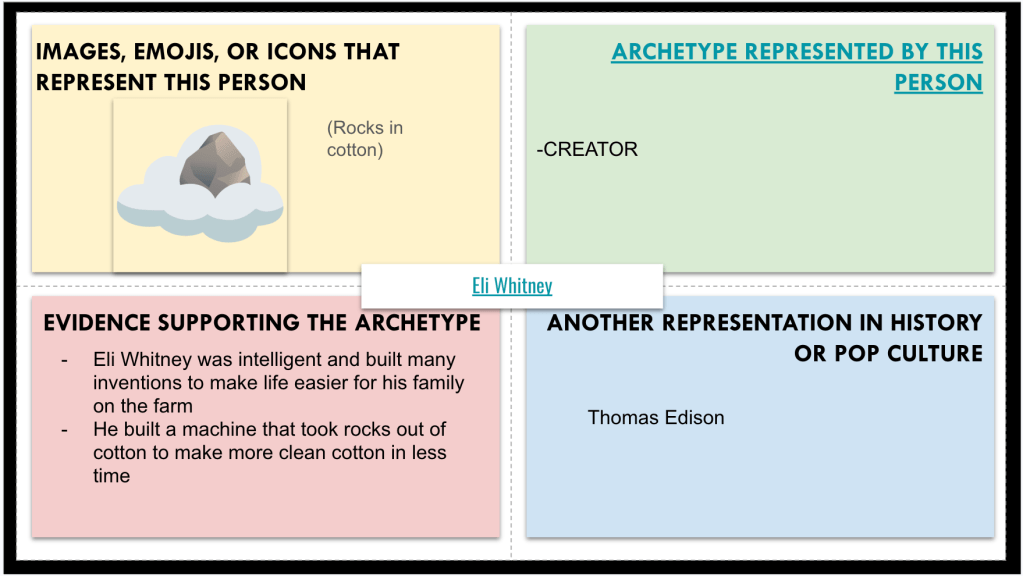
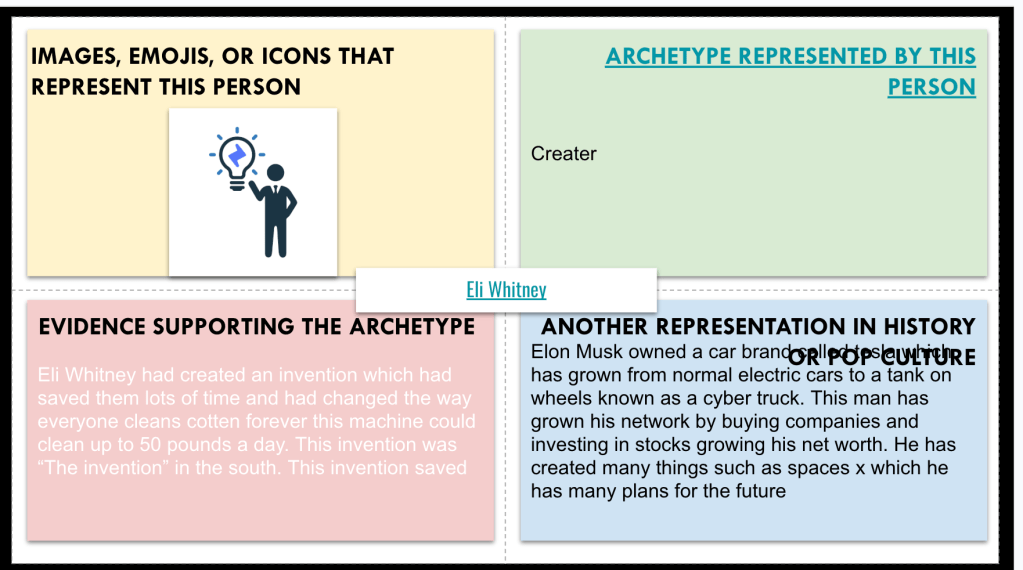
Annotate and Tell
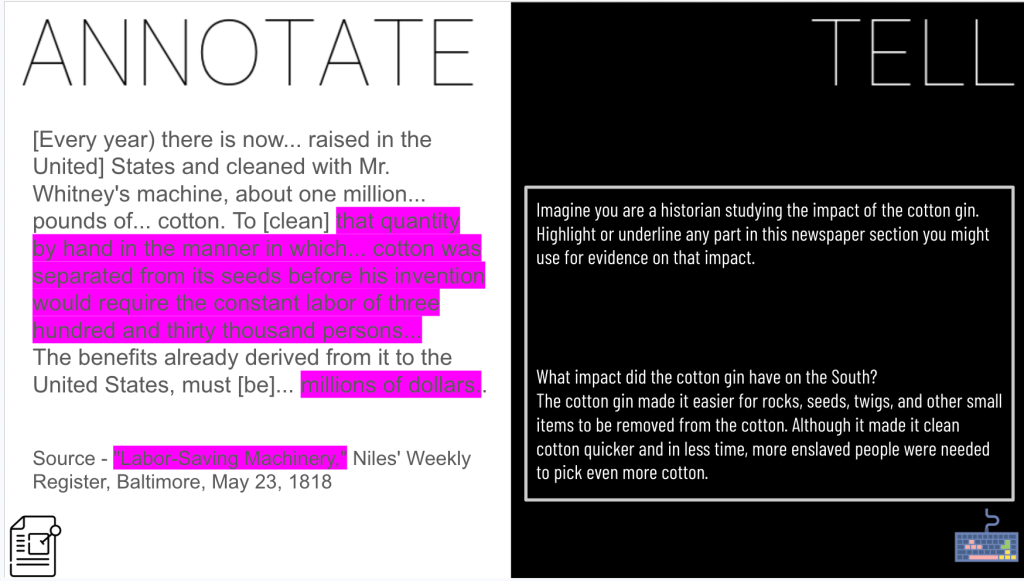
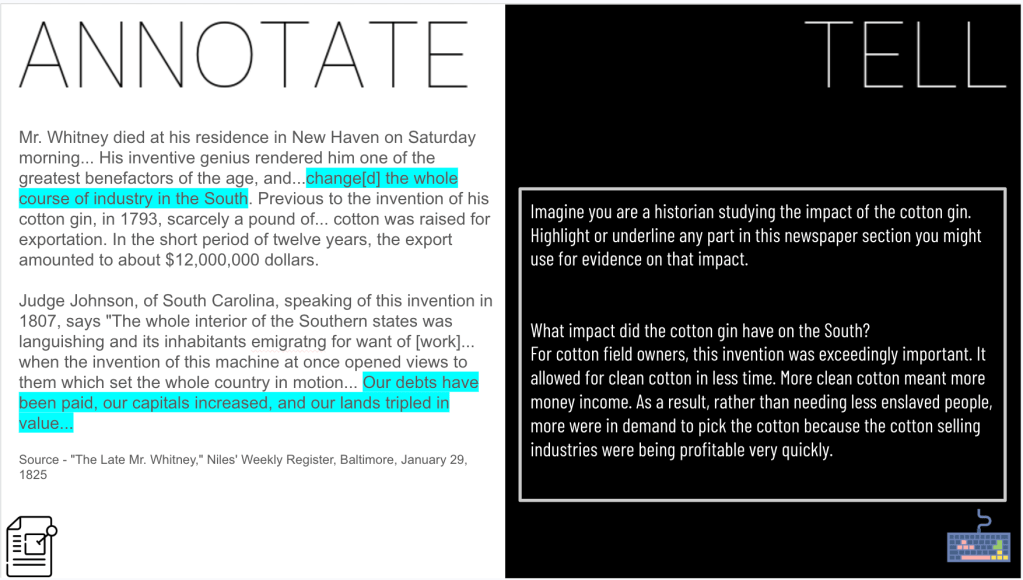
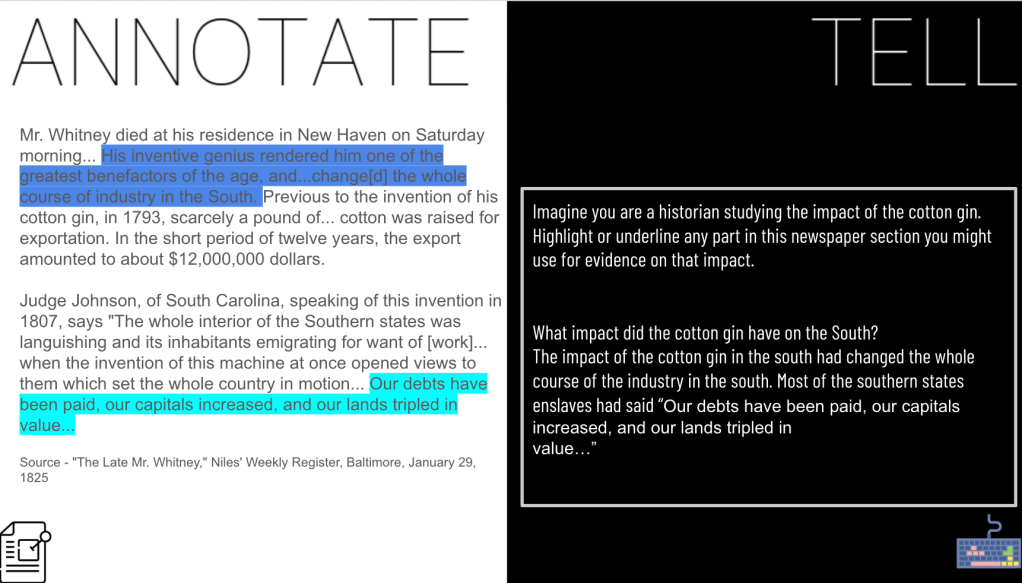
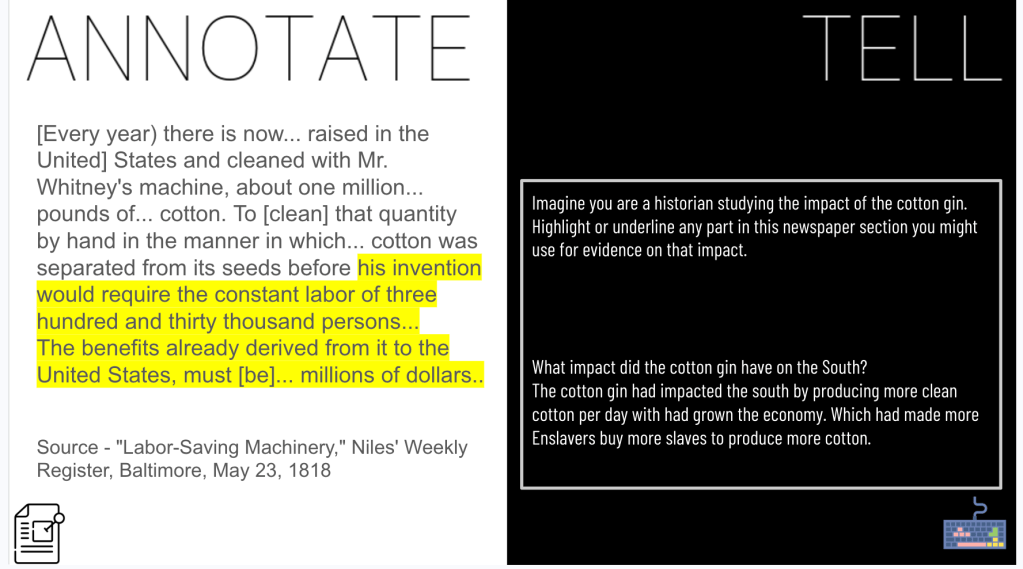
The lesson then moves into Annotate and Tell using primary sources that describe the cotton gin’s impact. Students read closely and pull out evidence about production, labor, and economic growth. One source explains how machines could clean enormous amounts of cotton compared to hand labor, while another shows how quickly cotton exports increased and how the Southern economy shifted in a short period of time. This part matters because students are not just hearing the story from me. They are seeing the claims and evidence directly from the time period, which makes the learning more grounded.
Graph and Tell
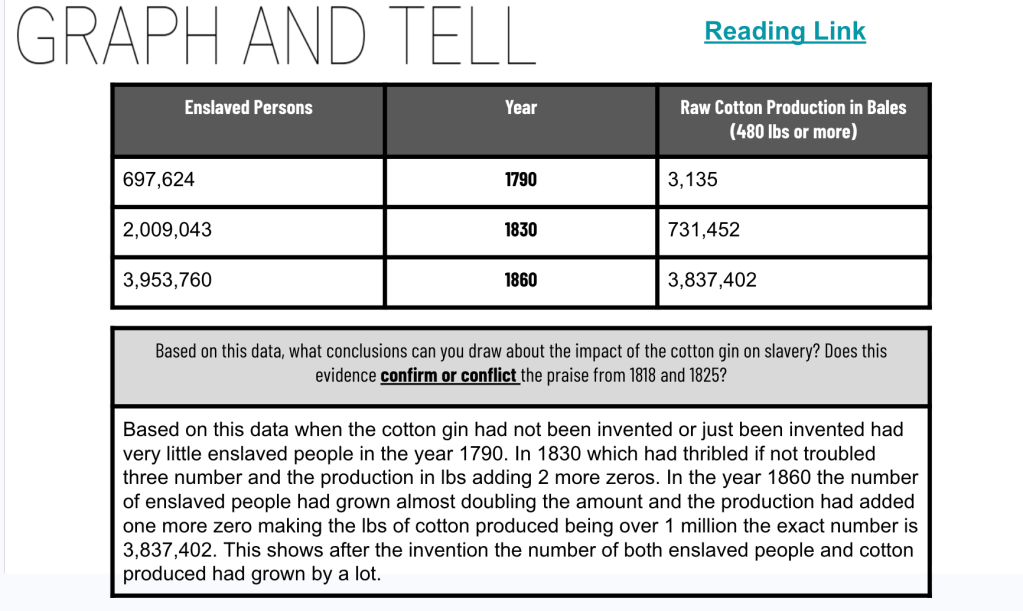
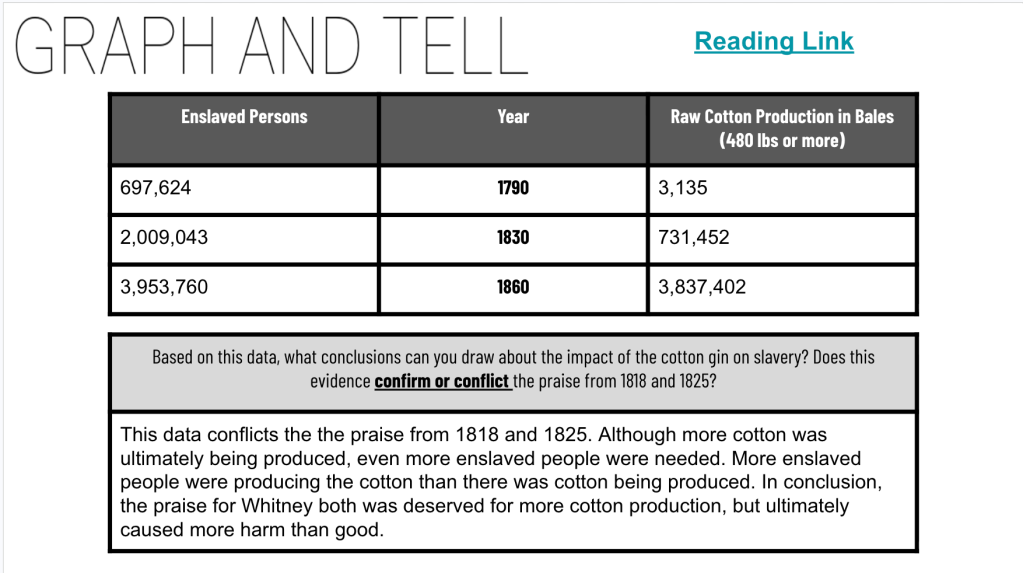
After that, we bring in data with Graph and Tell. Students look at the growth of cotton production alongside the growth of the enslaved population and begin turning those numbers into meaning. This is where things start to click. The machine made cotton easier to process, but instead of reducing the need for labor, it increased it. Students start to notice that connection on their own, which is far more powerful than being told.
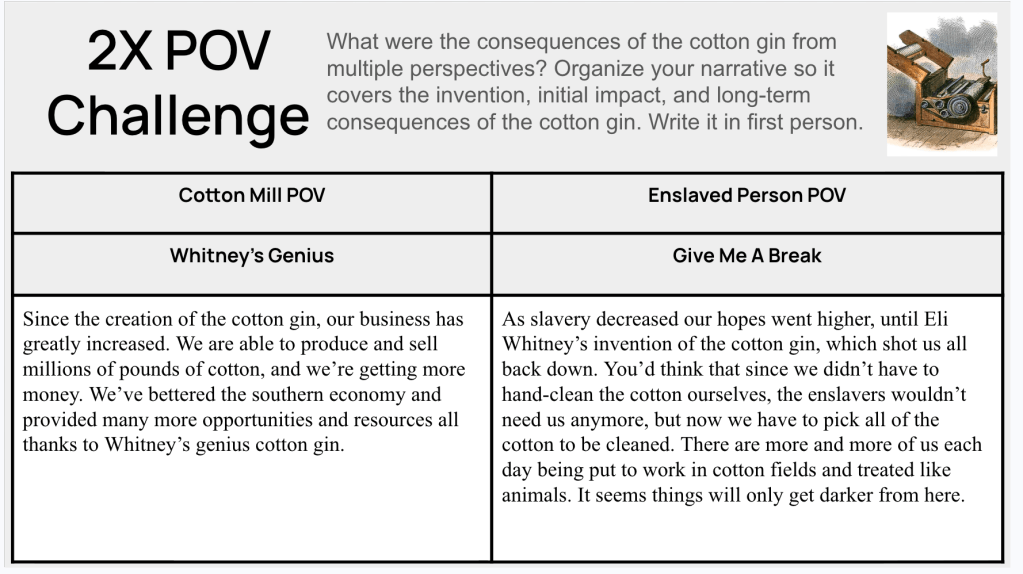
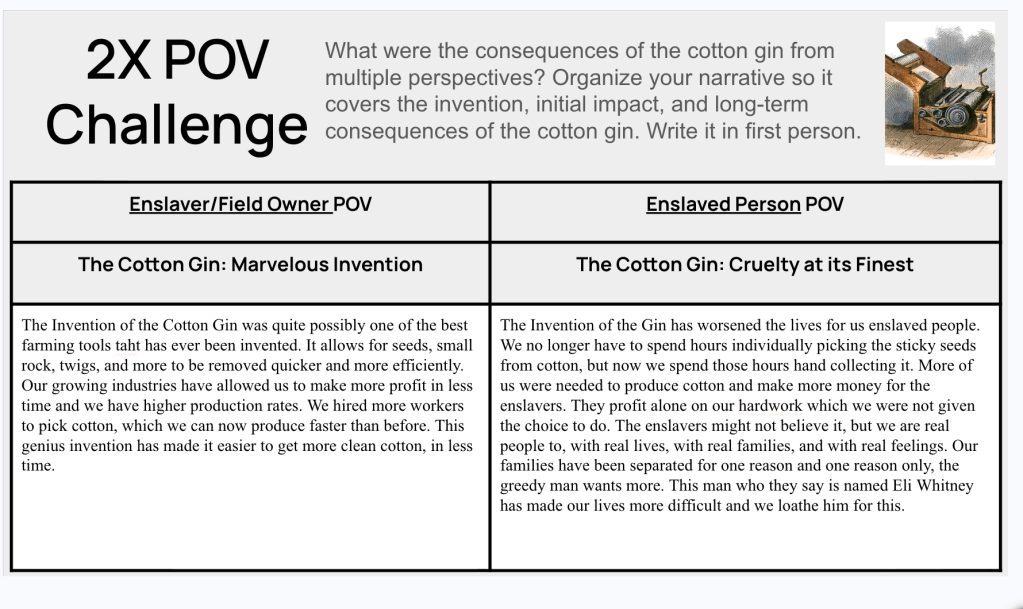
Multiple Perspectives (2xPOV)
We close by shifting perspectives and asking students to think about the cotton gin from different points of view. Enslavers, enslaved people, Northern businesses, and Southern farmers all experienced the impact differently. Students have to explain those differences and make sense of how the same invention could be seen as progress by some and harmful by others. This part brings everything together because it forces students to move beyond describing what happened and into explaining why it mattered.
How It All Fits Together
What makes this lesson work is how each part builds into the next. The language shapes how students think about people. The cotton makes the problem real. The archetype builds an understanding of the individual. The sources add evidence. The data creates tension. The perspectives add complexity. Students are not overwhelmed because they are building their understanding step by step.
Why This One Stays
This lesson stays because it changes how students think about cause and effect. They start with very little understanding of the cotton gin and leave with the ability to explain how one invention could increase efficiency while also expanding slavery. They are not just learning what the cotton gin is. They are learning how to think about impact, and that is what makes the lesson worth running again.
The Lesson Link
The Cotton Gin Lesson – What was the impact of the cotton gin?

 Moler's Musings