As an 8th-grade social studies teacher, every week presents a fresh canvas for me to inspire young minds and foster a love for history. This particular week, though shortened due to the Labor Day holiday, was brimming with excitement and valuable insights. Our journey through the fascinating world of European exploration and colonization, coupled with the power of EduProtocols, created an engaging and educational experience. In this reflection, I’ll take you through each day, sharing my experiences, lessons, and the impact of EduProtocols in my classroom.
Before diving into the week’s lessons, I had already prepared a roadmap for our journey into the Age of Exploration and colonization. Our central guiding question for this unit was: “How did Europeans exploring North America for trade, religious reasons, and competition with each other affect the history of the continent and the people who lived there?” This overarching question was the compass that directed our learning throughout the week.
To provide a comprehensive exploration, I developed three supporting questions:
- How did Native Americans adapt to their environments and live before the arrival of Europeans?
- What motivated European Exploration and colonization of North America?
- What were the effects of European exploration and colonization on North America?
These questions were designed to encourage critical thinking and in-depth understanding, setting the stage for our week of exploration.
Tuesday – Fast and Curious, Repuzzler, Number Mania
Wednesday – Repuzzler, Number Mania, Iron Chef, Fast and Curious
Thursday – Repuzzler, CyberSandwich
Friday – Fast and Curious, Thin Slide, Iron Chef
Tuesday: A Fast and Curious Start
The week kicked off with Tuesday’s focus on introducing our new unit on Exploration and Colonization. To capture students’ attention and curiosity right from the start, I began the class with a “Fast and Curious” activity on Gimkit. This engaging quiz consisted of 15 questions, and I allotted a generous 6-minute time frame to ensure students had enough time to read and think through the questions. The questions covered both vocabulary related to the unit and content-specific inquiries.
Once the Fast and Curious session concluded, I took a moment to provide feedback on the top 3 missed questions. This practice aimed to encourage students to learn from their mistakes and foster a growth mindset in the classroom.
Next on the agenda was a Repuzzler Google Slidedeck, which contained eight essential vocabulary words, including terms like “Columbian Exchange,” “colonization,” and “indigenous.” Each word had its own slide where students were tasked with defining it, providing three examples or characteristics, and adding a relevant picture. However, before they could start on these slides, I had to walk them through the process of using the share button, requesting email addresses, and entering those addresses efficiently. Initially, this took about 3-4 minutes, but with practice, the students became more adept at this digital collaboration.
Students were given 9 to 10 minutes to complete all eight slides. This activity not only expanded their vocabulary but also honed their skills in digital communication and collaboration.
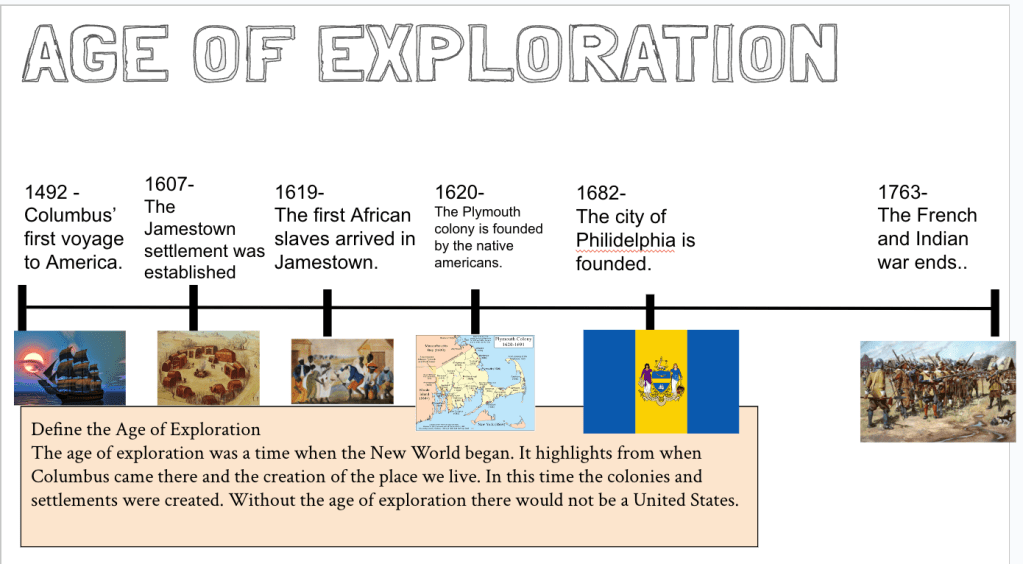
To provide context for our upcoming lessons, I turned to Number Mania timelines, a powerful EduProtocol. This activity allowed students to explore the historical era we were about to dive into, share important events they deemed significant, and practice placing these events in chronological order. It also helped them gain a better perspective on the historical context of the unit.
I shared a Google Form and allotted 12 minutes for students to find and share three or four essential events that occurred between 1492 and 1763. By the end of the time, we had a spreadsheet filled with various historical events. I then tasked them with selecting the 4 or 5 most crucial events that shaped North America and chronologically placing them on the timeline. They added images, modified the title, and even crafted their own definition for the “Age of Exploration.” While some students completed this task, others made progress, illustrating the adaptability and differentiation of EduProtocols.

Wednesday: Collaborative Learning Takes Center Stage
Wednesday was dedicated to collaborative learning, fostering teamwork and peer engagement. To kick things off, I arrived at school with eight different versions of the Repuzzlers created by students, neatly cut into fourths. When the students entered the classroom, I organized them into groups and tasked them with reassembling the vocabulary puzzle. This activity not only reinforced the importance of collaboration but also allowed for peer feedback and support. It took 8-9 minutes, during which I circulated around the room, providing guidance and checking student work.
After the Repuzzler activity, I divided the students into two groups based on their progress with the Number Mania from Tuesday. Students who had finished the Number Mania tasks signed up for a Gimkit Fast and Curious session, while those who hadn’t completed it had 10 minutes to do so. This approach catered to the students’ individual progress and learning pace, promoting self-directed education.
To deepen our understanding of the era and events we were studying, I provided students with a list of the top 10 events that changed North America between 1492 and 1763. Remarkably, I generated this list using ChatGPT, and it was impressively accurate. This exercise not only demonstrated the potential of AI in education but also encouraged students to think critically about historical events. Each group received the top 10 list and was instructed to consult their Number Mania timeline to select which of these events they wanted to include. Sharing their data through a Google Form facilitated collaboration and discussion.

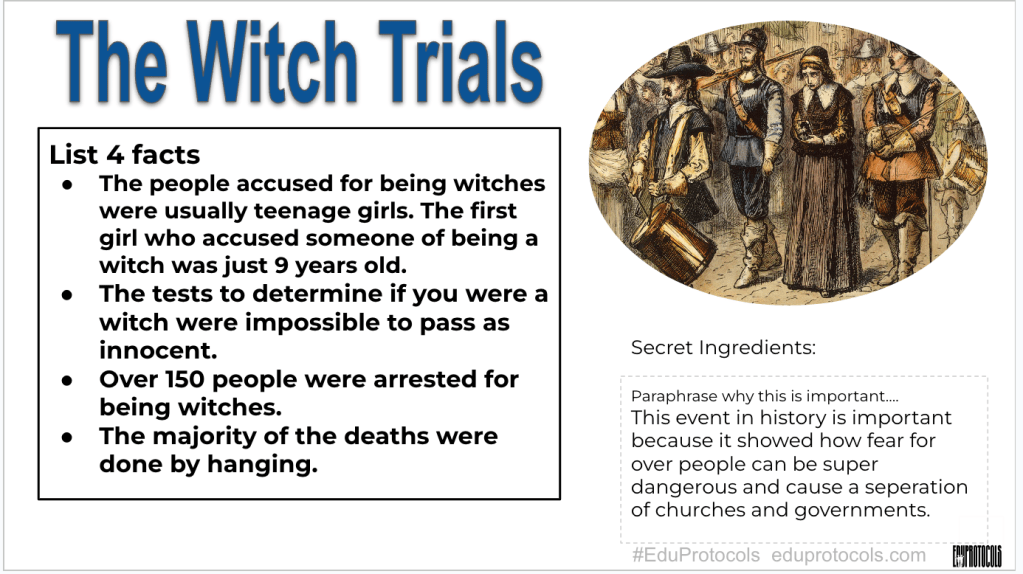
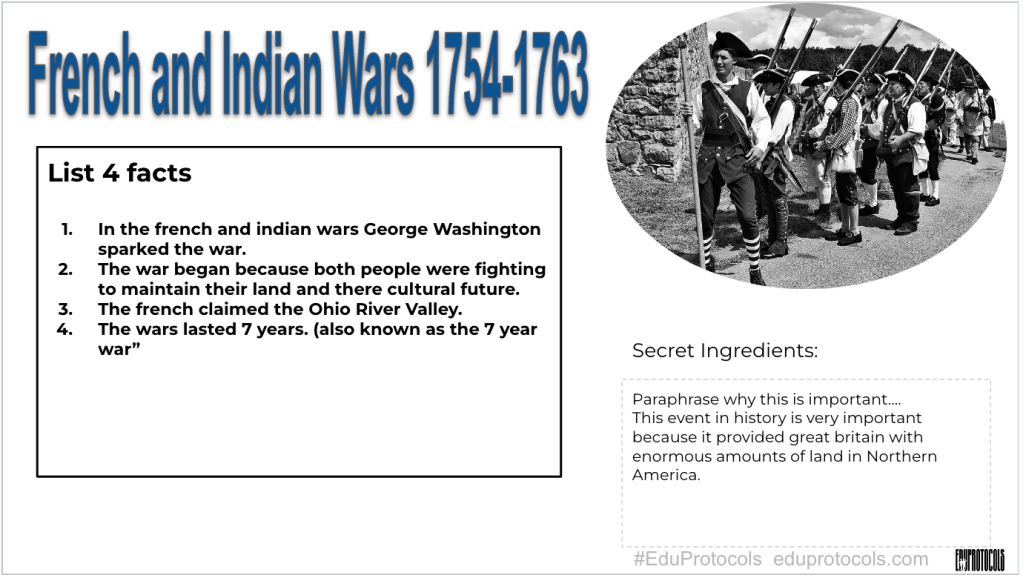
Taking our exploration to the next level, we embarked on an Iron Chef EduProtocol. Each group from the Repuzzler activity shared an Iron Chef Google slide deck. They were tasked with choosing one event from their timeline, designing a slide about it, and including a title, picture, three to four facts about the event, and a paraphrased explanation of its significance. I informed the students that they would be sharing their slides after 10 minutes, ensuring they stayed on task. The students had ten minutes to complete this assignment, and when the timer sounded, it was time to present. Each group had to share one fact about their event in 8 seconds or less.
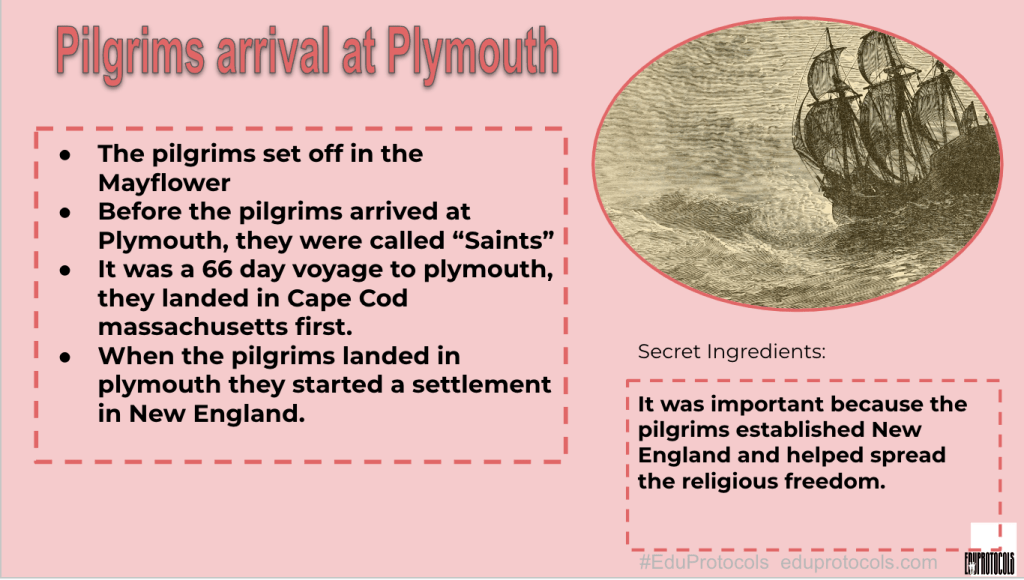
Thursday: Unpacking Native American Adaptations
Thursday marked our transition into the first supporting question of the unit: “How did Native Americans adapt to their environments and live before the arrival of Europeans?” This was the perfect opportunity to introduce the CyberSandwich activity for the year. Typically, I would start with a simpler CyberSandwich, but my students were already familiar with EduProtocols, so we jumped into a more challenging article.
Instead of a light-hearted story, we delved into a simple article about Native Americans adapting to their environment. The article incorporated vocabulary from the Repuzzler, such as “natural resources” and “culture.” We began the class with a Repuzzler, setting a timer for 5 minutes. I challenged the students to organize the cards efficiently, racing against the clock.
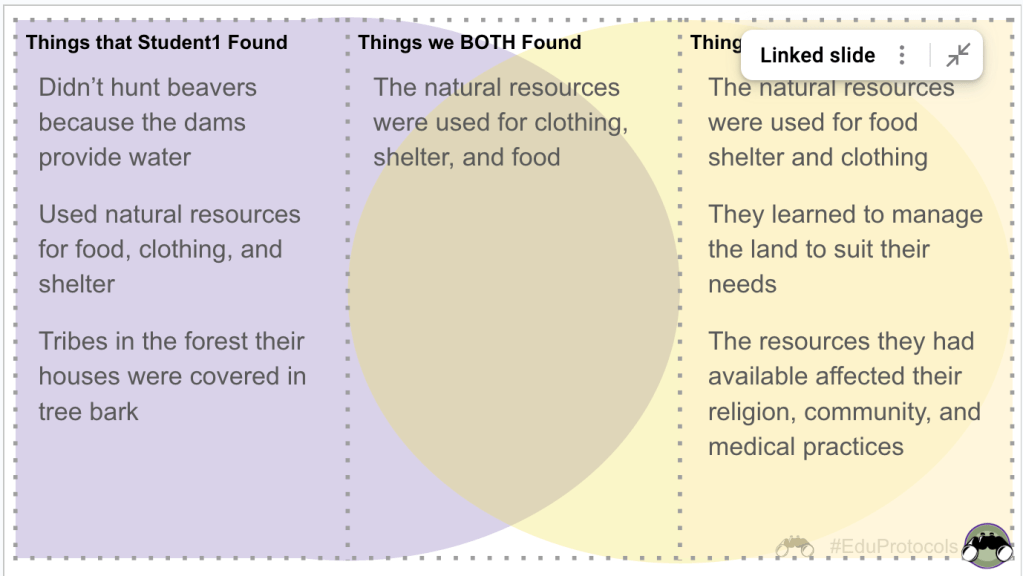
After the Repuzzler, it was time for the CyberSandwich. The students had ten minutes to read the article and extract 4-5 essential notes that would help answer the question. Next, I had students select three of their notes and paraphrase them on the comparison slide. Discussion and collaboration were encouraged throughout the process. Finally, students were tasked with writing a summary paragraph.
Before the students started writing, I shared a valuable lesson on crafting effective paragraphs. I walked them through a paragraph I found, pointing out a well-constructed topic sentence but highlighting how the details in the paragraph did not align with the topic sentence. This served as a reminder that a paragraph should pursue a clear idea, ensuring students grasped the importance of cohesion and structure. The students then submitted their paragraphs through a Google Form, allowing me to centralize all the information. I took the spreadsheet, converted it to a PDF, and attached it to a new AI site called claude.ai, which Jacob Carr introduced to me. Claude.ai scanned the PDF and provided precise, insightful feedback on each paragraph. This tool proved to be an invaluable asset in enhancing the quality of student work.



In my fifth-period class, we took a slight detour because a student asked about slavery. I seized this opportunity to conduct an 8pArts lesson that breaks down the social constructs of slavery. This deviation was possible because the students were already familiar with the 8pArts process. In this 8pArts lesson, we used a powerful photograph depicting two children with interlocked arms. Most people initially perceive this image as a symbol of equality. However, they are surprised to learn that the children, despite appearing as black and white, are both formerly enslaved and are siblings. This lesson proved to be a powerful and memorable exploration of the complexities of history and human understanding.
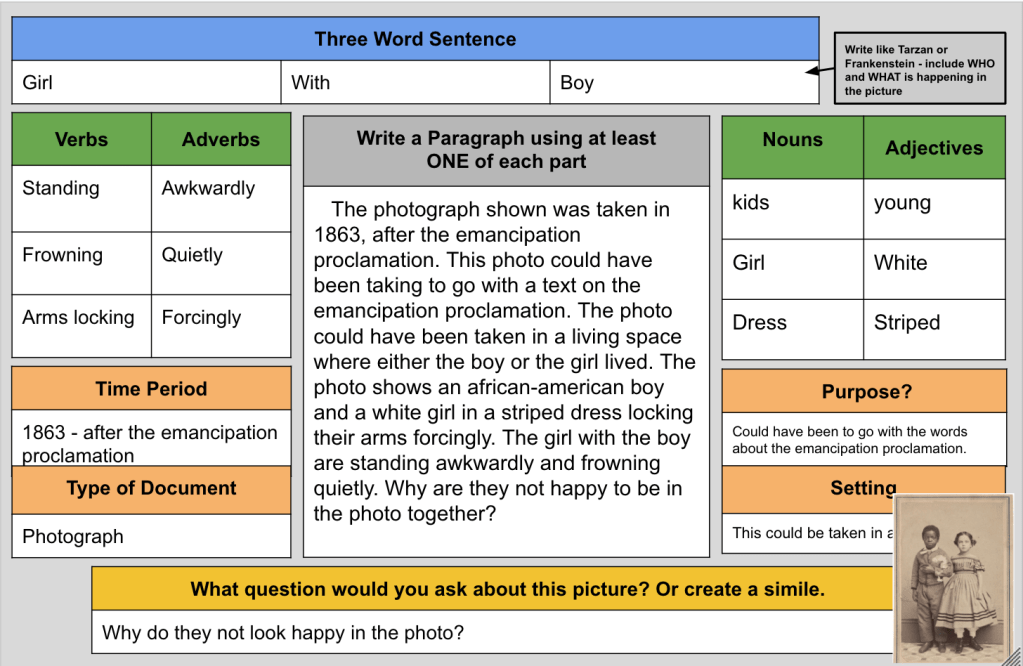
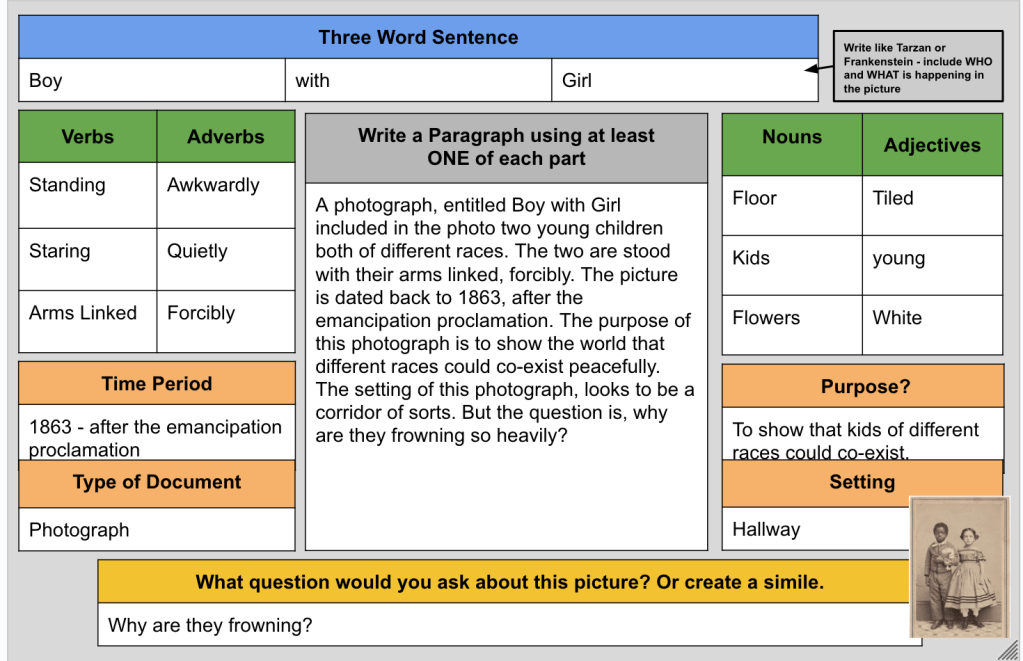
In all my classes, we didn’t have time for a Fast and Curious Gimkit session. However, I asked the students to take out a piece of paper and write down the name of a Native American tribe with ties to Clermont County, Ohio. Out of 122 students, only 2 could provide a correct answer. This was a crucial setup for Friday’s lesson, which aimed to bridge the gap between history and our local community.
Friday: Bridging History and Local Community
As Friday rolled around, our focus remained on Native Americans in North America, but with a special emphasis on the indigenous peoples of our local community. The day began with another Fast and Curious Gimkit session to engage the students and get their mental gears turning.
We then transitioned to a Thin Slide activity, designed to encourage critical thinking and research skills. For this task, I asked students to claim a slide and type the name of the European country that claimed the land now known as Clermont County. They were also required to include an image that supported their answer. Students initially included unrelated images, such as the Eiffel Tower or random pictures of the country in question. I used this as an opportunity for a teachable moment, asking them, “If the goal is to prove that France controlled the land here in Southwestern Ohio, would that picture prove that?” This simple yet effective exercise helped them understand the importance of using relevant images, such as historical maps or markers.
Following the Thin Slide, we delved into the Iron Chef EduProtocol. This time, I turned to ChatGPT to create four articles about Native American tribes with ties to Clermont County. I asked ChatGPT to provide information on how these tribes adapted to their environment and describe their interactions with Europeans. Armed with these articles, I gave students 12-15 minutes to read and paraphrase four key facts about their chosen Native American group. They were required to include a picture, title, and complete the “secret ingredient,” which, in this case, was the location of the tribe today.
Once they completed their slides, I instructed them to highlight one paraphrased fact and fact-check it. They had to find another source that corroborated their information and copy and paste the source link into the speaker notes. This practice aimed to instill a healthy skepticism and encourage students to seek information from multiple sources, a vital skill in the age of information.
When this task concluded, I took a moment to explain the significance of this Iron Chef lesson. I highlighted the fact that at the beginning of the week, only two students could name a Native American tribe with ties to Clermont County. Now, every student was equipped with this knowledge. This demonstrated the power of EduProtocols in not only teaching historical content but also connecting it to our local community and fostering a sense of relevance.
In a surprising twist, students were curious about why these Native American groups were now located in Oklahoma. This curiosity led to an engaging discussion as students delved into the historical events and policies that led to the forced relocation of these tribes.


Conclusion
Reflecting on this week of teaching 8th-grade social studies, I am reminded of the immense potential of EduProtocols in engaging students, fostering critical thinking, and connecting history to their lives. From the Fast and Curious sessions that sparked curiosity to the Repuzzlers that expanded their vocabulary, every EduProtocol played a crucial role in our journey through the Age of Exploration and colonization.
Furthermore, the integration of technology, such as ChatGPT and claude.ai, added a new layer of depth to our learning experience. We were not only exploring history but also examining the tools and technologies that can enhance our understanding of the past.
Perhaps the most rewarding aspect of this week was witnessing the transformation of students who started the week with limited knowledge about our local Native American history and ended it with a deeper appreciation for the complexities of our shared history. The power of education lies not just in imparting facts but in inspiring curiosity, critical thinking, and a sense of connection to the world around us.


Thanks for sharing all these great ideas and templates! For the Numbermania timeline, what resources did they use to gather dates/events? Or did you just let them Google it?
LikeLike
I gave them a source to use, but also gave them the option to Google.
LikeLike