
This week in seventh grade, we wrapped up our look at Roman culture and daily life with a Bento Box before getting into the origins and spread of Christianity. I liked how much we were able to bring back from the past two weeks, especially on Friday. Students already knew a little about Nero, Roman gods, and what early Christians did when they gathered. That gave us a place to start with a harder question: Why did some Romans see Christians as a threat?
Monday: Roman Culture and Daily Life
Last week, students compared the lives of wealthy and ordinary Romans, created their own Roman citizens, and made comics about what might happen if two of those citizens met. On Monday, I wanted to build on that work by spending more time on the culture those people lived in. We had already talked about where Romans might live, what they might eat, and what they did for work. The stations gave us a chance to look more closely at the stories they told, the language they used, and what they did for entertainment.
Roman Culture Stations
Students worked through stations on topics like Roman mythology, the founding of Rome, Latin, Roman literature, and bread and circuses. The founding station brought us back to Romulus and Remus, a story students had encountered at the beginning of the unit. This time, we could look at it as a story Romans told about their own city. The Latin station gave students a chance to look for connections to languages people still speak today, and the bread and circuses station helped clear up a distinction that is easy to miss. The Colosseum and the Circus Maximus were both places Romans went for entertainment, but the events people went to see were different.
I like using stations for a lesson like this because each topic gives students a different way into Roman life. It also gave them a range of examples to choose from for Tuesday’s assignment. They were going to have to go back through the information and decide which details they could do the most with.
Tuesday: Roman Culture Bento Box
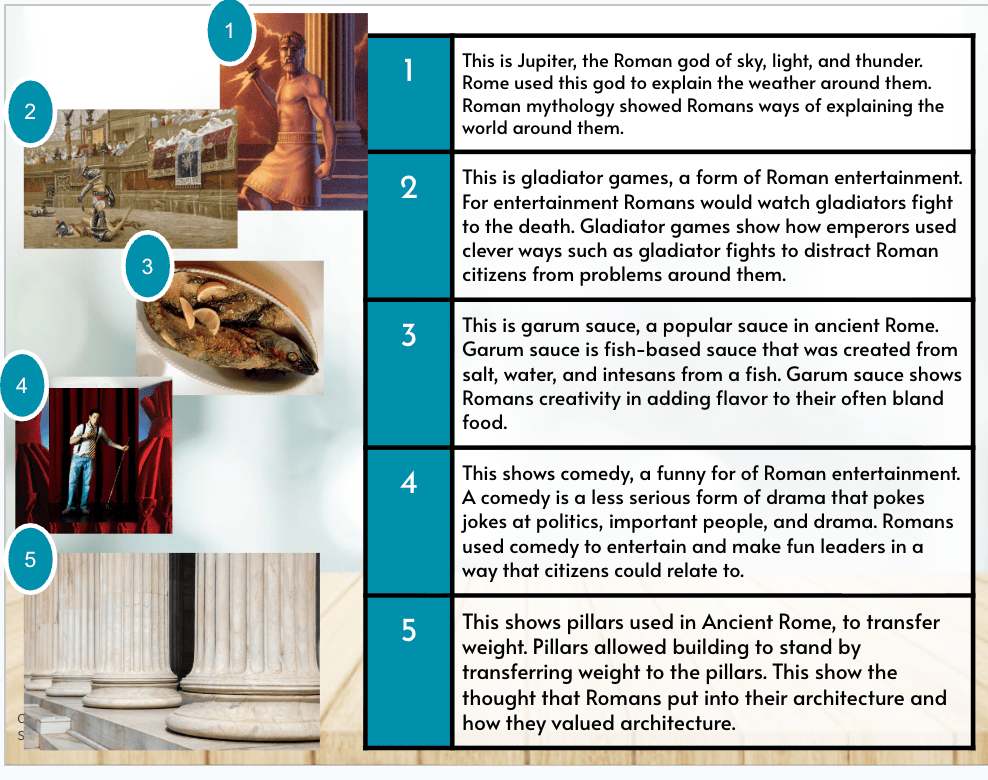
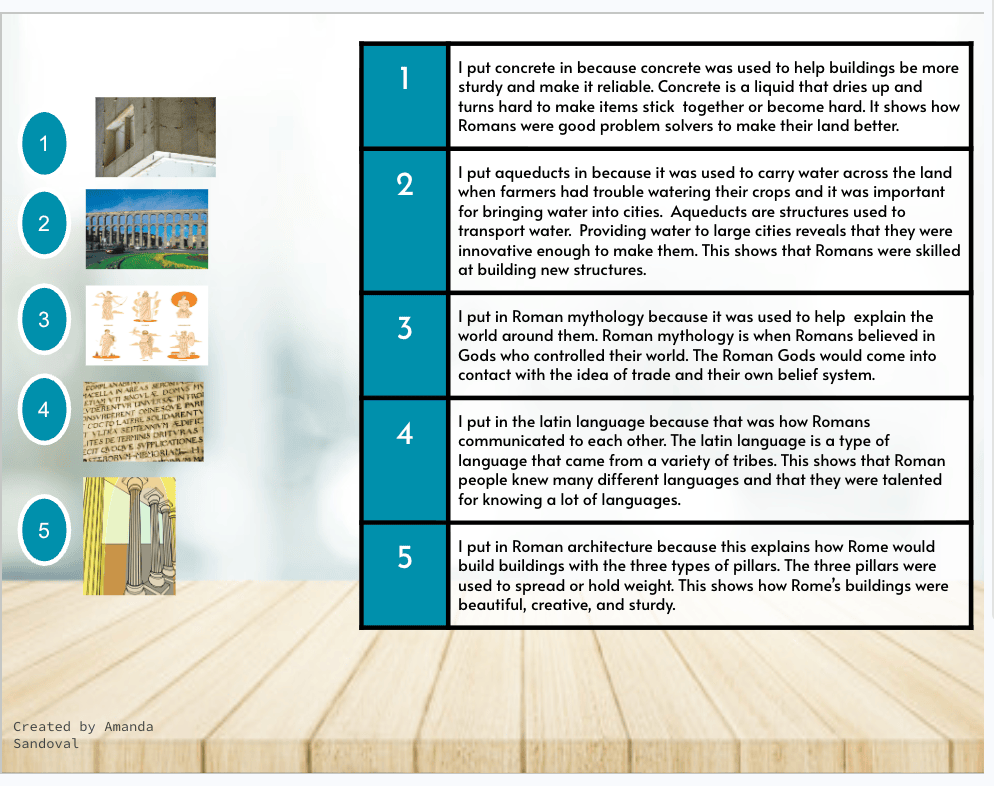
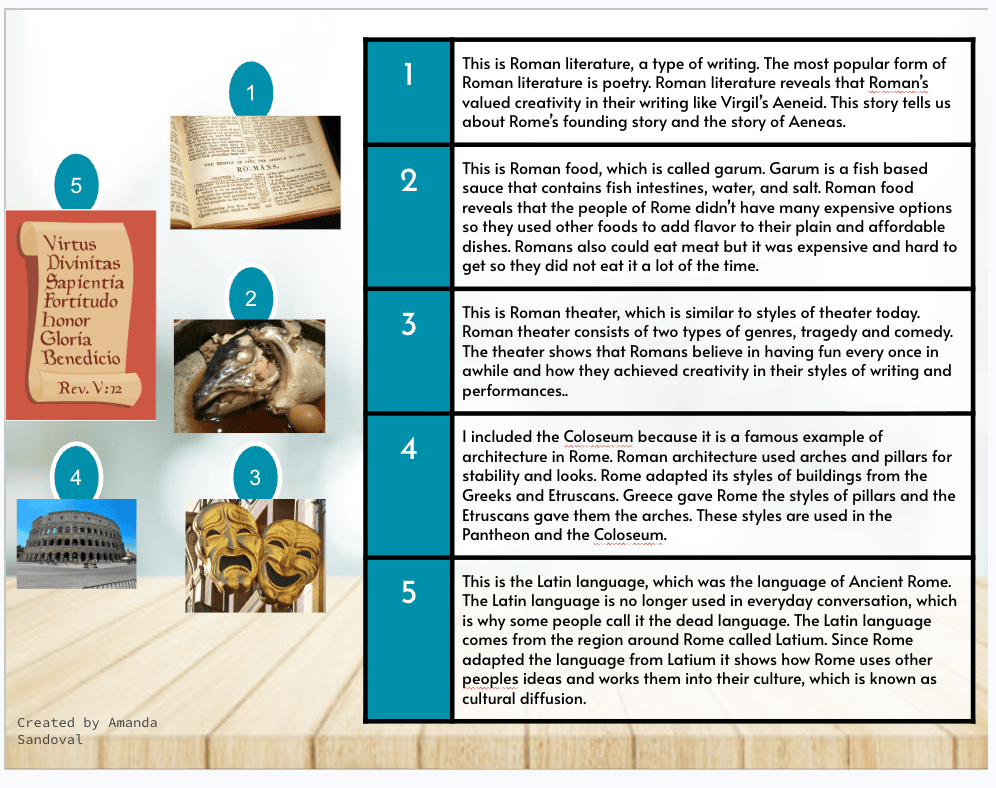
On Tuesday, students used their station work to create a Roman Culture Bento Box. They had to choose five objects or images that represented at least four station topics. For each object, they had to identify it, describe it using an accurate historical detail, and explain why it mattered.
Identify, Describe, and Explain
I like this format because students have some choice in what they include, but they still have to do the same thinking with each object. A student could choose a statue of Jupiter, identify him as the king of the Roman gods, and describe his connection to the Greek god Zeus. The explanation takes that one step further. What does that connection help us understand about how Greek beliefs influenced Roman mythology?
That last part is where I spend most of my time when I look through these. Students can usually find a picture and give me a fact about it. I want to see what they can do with the fact once they have it. The five objects gave them five chances to practice making that connection.
Wednesday: Catch-Up and Review
One of my classes was a day behind, so I used Wednesday to get everyone to the same point before we started Christianity. We also spent some time on review Gimkits, and class averages ranged from 88% to 94%.
I was glad we had a day for this. We were about to move into a new part of the Rome unit, and I knew I was going to ask students to pull from things we had been learning over the past two weeks. The review gave them another chance to retrieve some of that information before we needed it again.
Thursday: The Origins, Rise, and Spread of Christianity
On Thursday, we started looking at how Christianity began and spread through the Roman Empire. I wanted students to understand how the story went from Jesus teaching in Roman-controlled Judea to Christian communities gathering in places as far away as Rome. I broke it into six short readings and used an Iron Chef on the whiteboards followed by a Sketch & Tell-O timeline.
Iron Chef on the Whiteboards
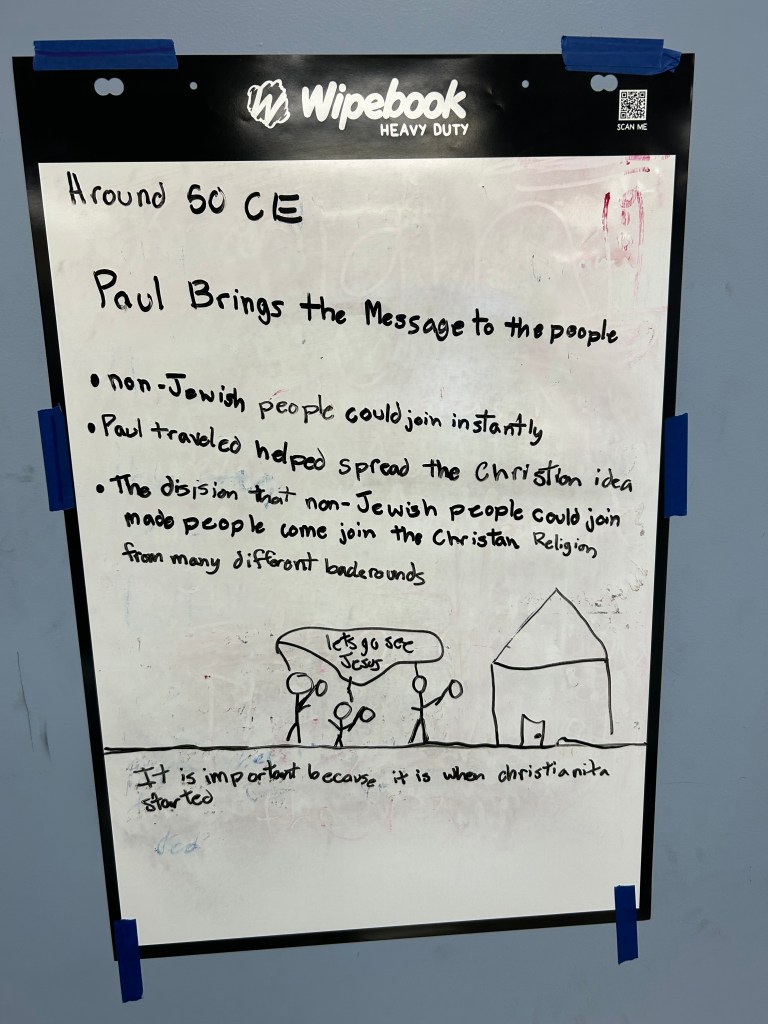
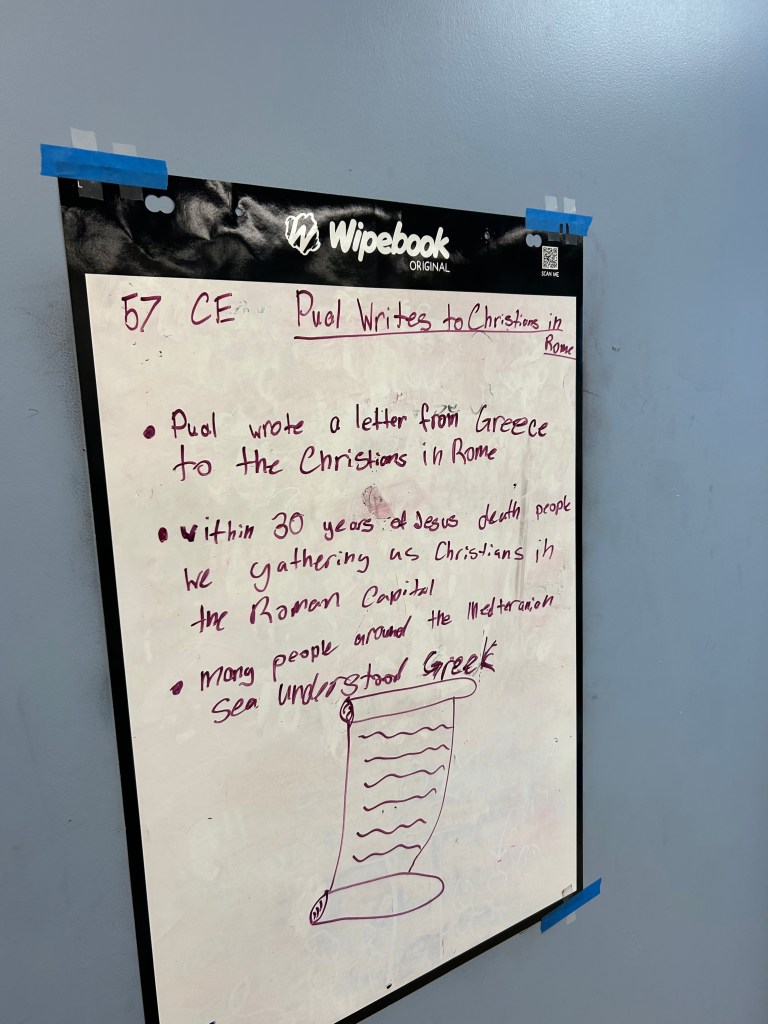
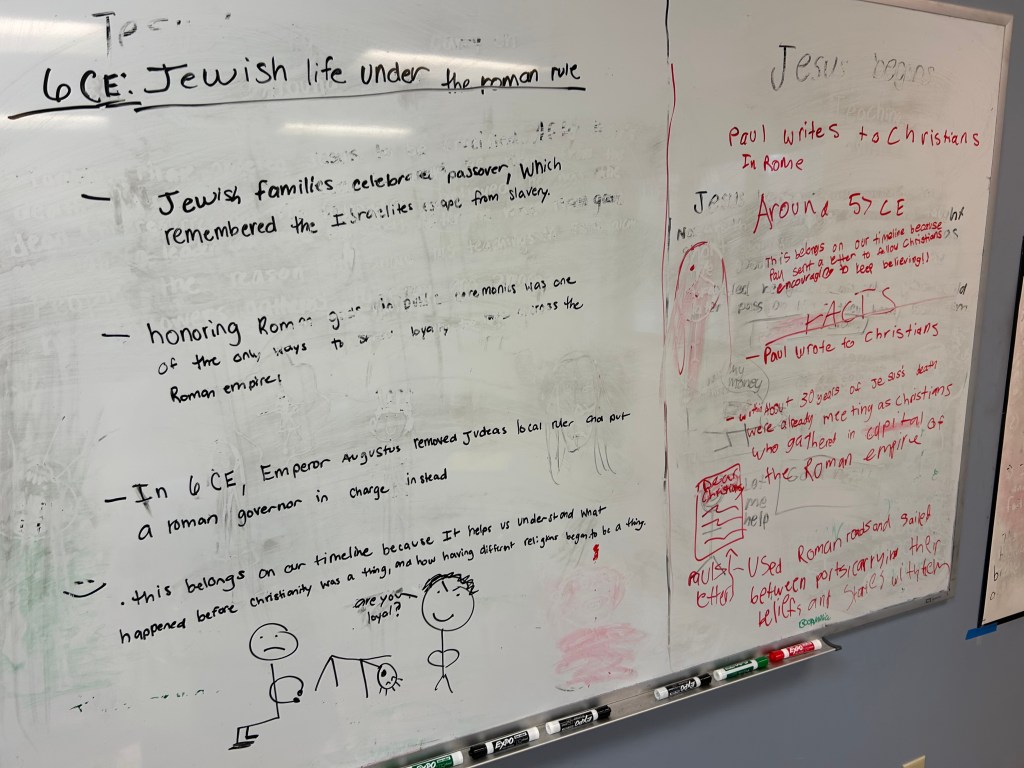
Each group received one part of the story and used its whiteboard to explain it. One group read about Jewish life under Roman rule in Judea, while another looked at how Jesus used parables like the Good Samaritan to teach. Other groups read about what Jesus’s followers did after his death, how Paul helped bring the message to people outside the Jewish community, and what early Christian communities did when they gathered.
One detail I liked was that Paul wrote to Christians in Rome before he had ever visited the city. There was already a community there for him to write to. That gave us a reason to bring back what we had learned about travel and connections across the empire. We could use what students already knew about how people and goods moved around Rome to think about how beliefs moved, too.
Sketch & Tell-O Timeline
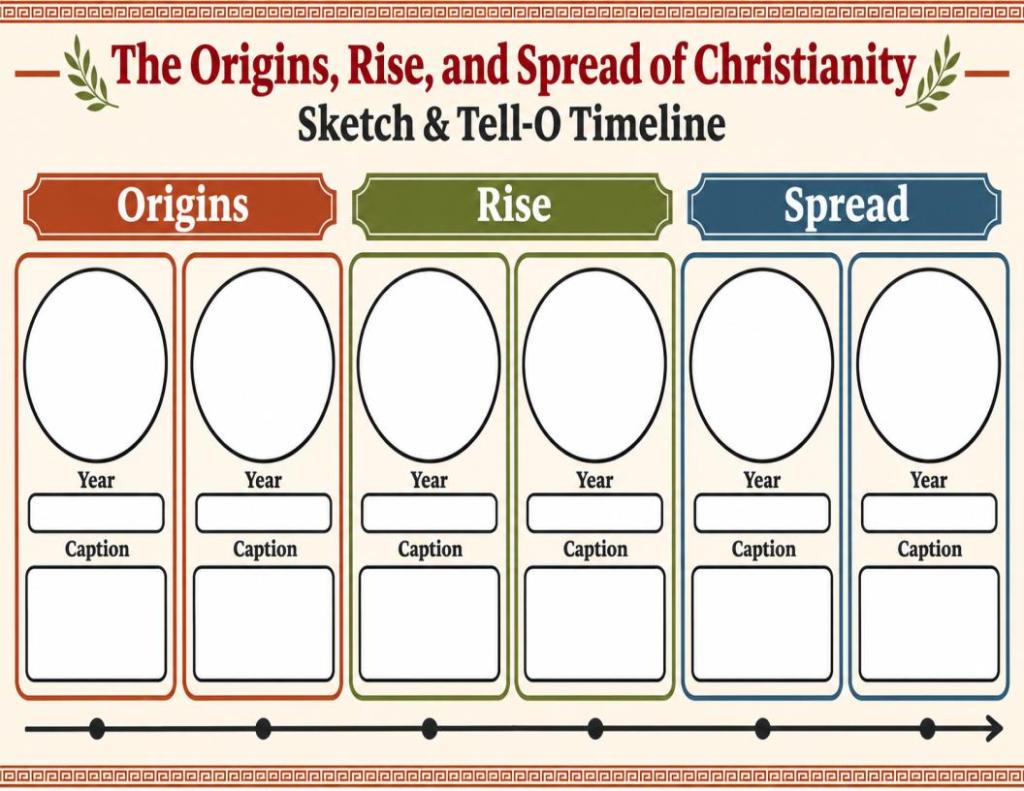
After the whiteboards, students put the six events in chronological order. They drew a picture for each event and wrote a caption with the details they wanted to remember. I like following a group activity with something like this because every student has to work with the whole story. A group might know its own reading well, but now each student had to figure out where it belonged and how it connected to what came before and after it.
The captions were important here. A sketch of a letter could stand for more than one part of Paul’s story. The caption had to tell me which event the student was showing and what that letter helped us understand about the spread of Christianity.
Friday: Why Did the Roman Empire Persecute Christians?
We started Friday with a Gimkit on Thursday’s lesson, and the scores ranged from 88% to 98%. From there, we moved into a lesson I found from the Digital Inquiry Group. The question for the day was “Why did the Roman Empire persecute Christians?”
From the Textbook to Tacitus
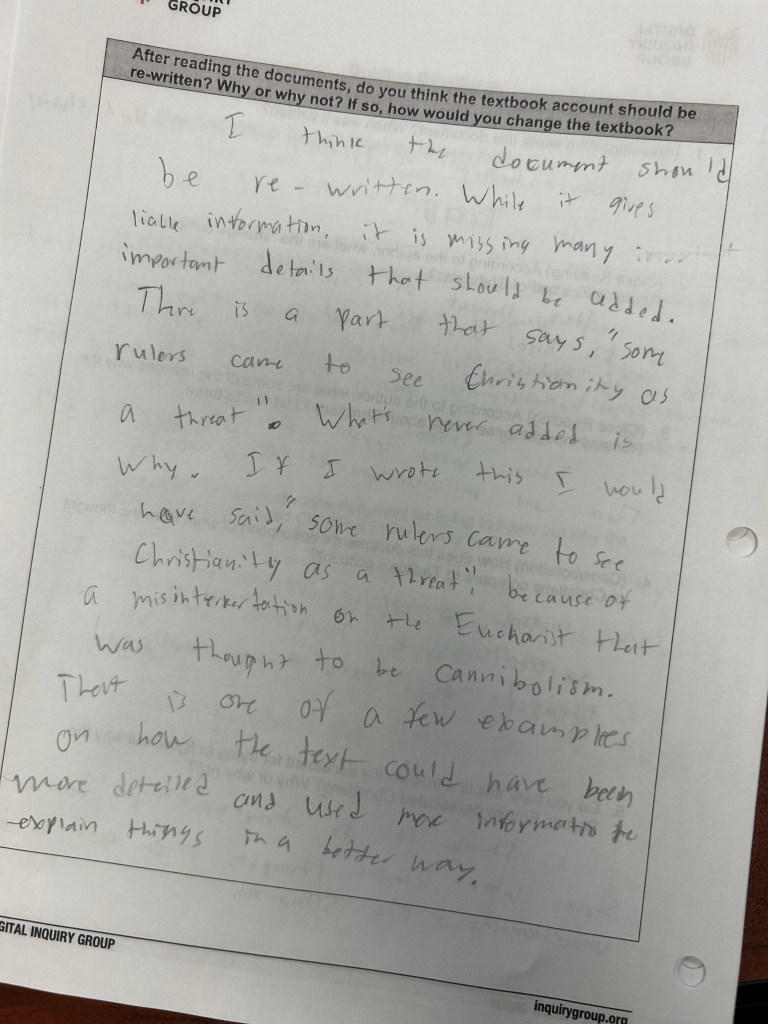
We started with a textbook excerpt that explained that some Roman officials feared Christians were conspiring against them and that some rulers saw Christianity as a threat. That gave students a basic explanation, but it left us with a question worth spending some time on. What were these officials actually afraid of?
Next, we read the Roman historian Tacitus’s account of the fire in Rome in 64 CE. According to Tacitus, rumors were circulating that Nero had ordered the fire, and Nero blamed Christians to draw attention away from himself. Students had already encountered Nero in our emperor gallery walk, so we had a familiar person to come back to. Now we were looking at a specific decision he made and asking why Christians were a group he could get away with blaming.
How Roman Critics May Have Understood Christian Worship
For our final reading, we looked at an interpretation by David Cassel, a professor of theological studies. He suggested that some Roman critics may have heard Christian language about the body and blood of Christ in the Eucharist and taken it literally. That was one possible explanation for how a rumor about cannibalism could have started.
This was my favorite connection of the lesson. On Thursday, students had read about early Christians gathering to pray, listen to readings, and share bread and wine. On Friday, we could return to that same gathering and think about what someone outside the group might have heard about it. We also went back to what we had learned about Roman gods and public religious customs. When public worship could be a way of showing loyalty to Rome, what might an official assume about people who refused to participate?
To end the lesson, students had to decide if they would change the textbook or leave it as it was. I love these mini lessons with different sources that have students make a claim, use evidence, and reasoning.
Looking Back at the Week
I liked how often we were able to go back to lessons we had already done. The culture stations gave students the information they needed for their Bento Boxes. Our earlier work on travel across the empire helped explain how Christianity spread. The emperor gallery walk gave students a place to start with Nero, and Thursday’s reading about Christian gatherings helped them make sense of Cassel’s interpretation on Friday.
That last connection was probably my favorite. We had already spent time learning what Christians did when they gathered and what public worship meant in Roman life. Having both pieces in place let us spend more of Friday on the question I wanted students to think through. How did a group of people gathering to practice their faith come to be seen as a threat?
Lessons For The Week
Tuesday – Bento Boxes (created by Amanda Sandoval)
Thursday – Christianity Stories, Sketch and Tell-O Timeline


