
Have you ever finished a lesson thinking students understood something only to come back the next day and wonder what happened? That was my Wednesday. Tuesday’s scores looked good. Students had read about the Roman Republic, taken notes, sketched, and explained how the government worked. However, a few changes to the wording of questions and answer choices threw things off. I had a whole lesson planned for Wednesday. That lesson needed to wait.
This week was a short one in 7th grade social studies. We were off Monday and had Grandparents Day on Friday, leaving three days to work with the Roman Republic. During those three days, we used some familiar EduProtocols, revisited content that needed another look, and compared Rome’s government to Athenian democracy.
Tuesday
I like simple. Simple, especially with something like government in the Roman Republic. Consuls, senators, assemblies, patricians, and plebeians can become a lot of words pretty quickly. I wanted students to understand how these pieces worked together, who had power, and how that power was limited. To do this, I put together a simple rack and stack of activities.
Fast & Curious
We began with a Fast & Curious Gimkit. The three class averages were 64%, 55%, and 58%. This gave us a starting point and helped me see what needed attention before students began working with the reading.
Frayer
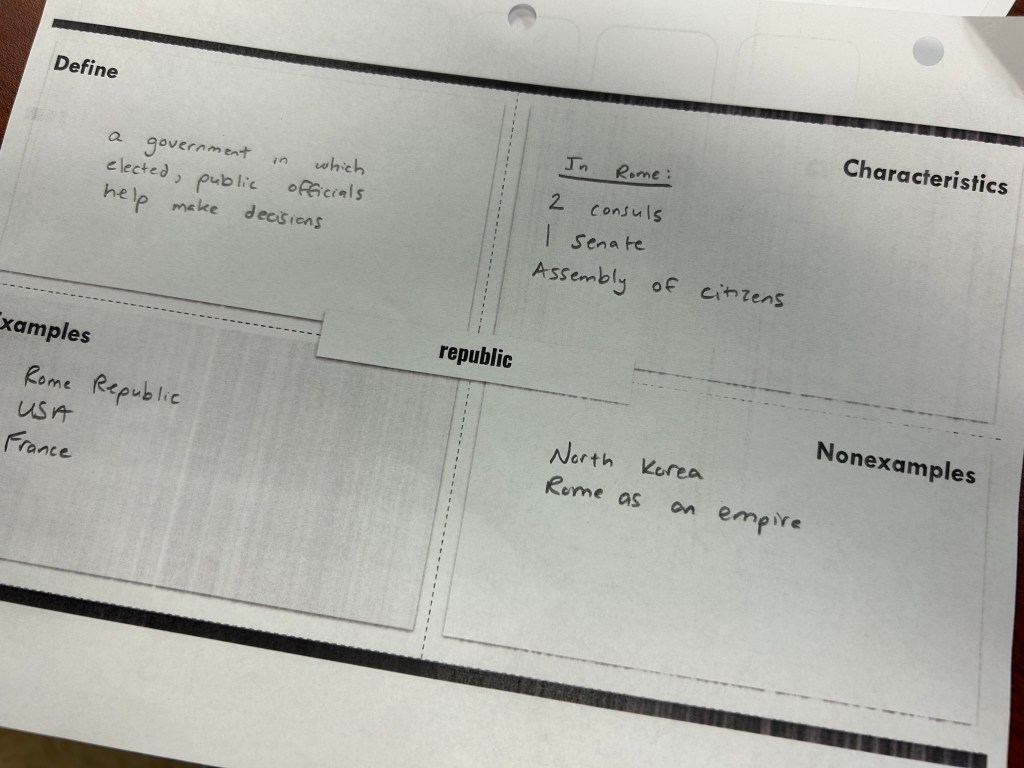
From there, we spent about five minutes on explicit instruction and a Frayer for the word republic. Before getting into the different parts of Rome’s government, I wanted students to have a working understanding of the type of government we were studying. We worked through the definition, characteristics, examples, and nonexamples.
Alphaboxes
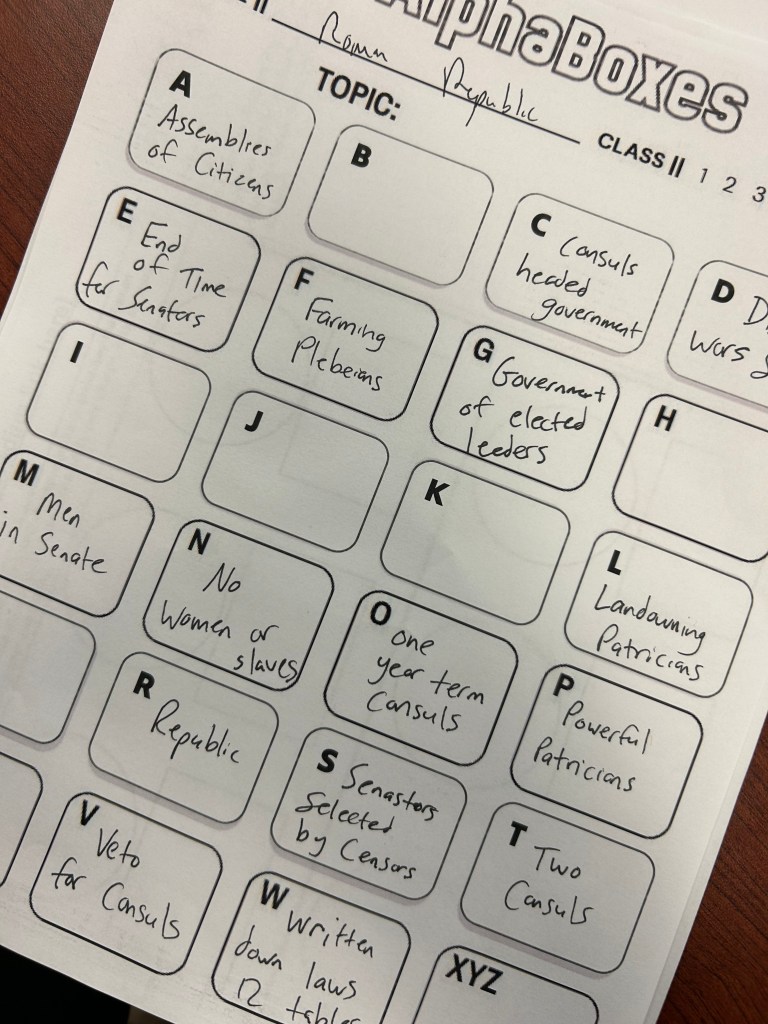
Next, students had eight minutes to read and take notes using Alphaboxes. After reading, they shared with a partner and then shared their most creative note. I like this part because students get to see how someone else organized the same information. They are working with the same reading, but their notes don’t have to look exactly alike.
Alphaboxes also gives students a reason to think about the words they are choosing. They have to connect information from the reading to a letter and create a note that makes sense. After sharing, they had another opportunity to add information or clarify something before moving on.
Sketch & Tell-O
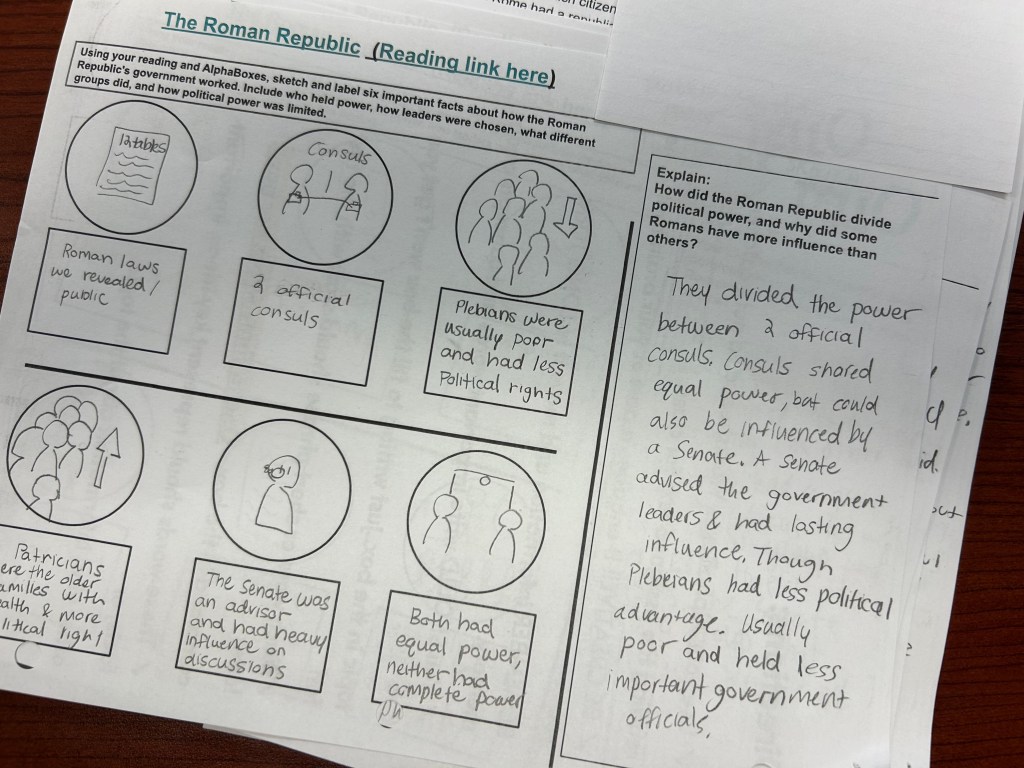
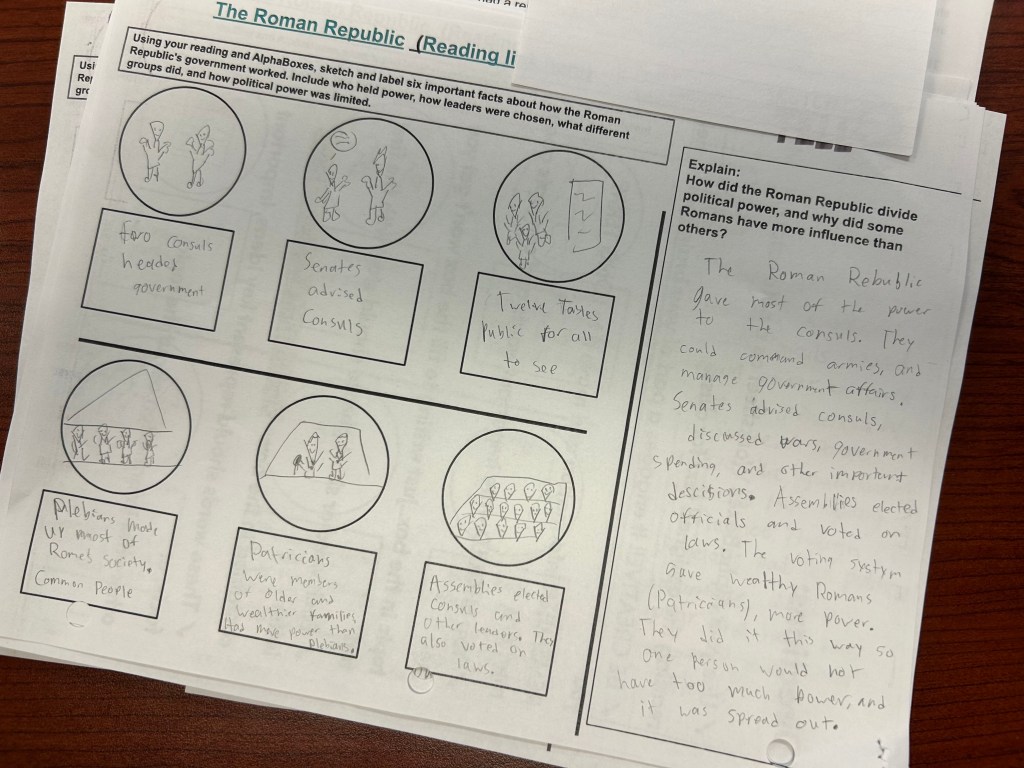
Students then used their Alphaboxes to complete a Sketch & Tell-O. They had eight minutes to sketch, describe, and explain important information about the Roman Republic. The sketches included things like the two consuls, the Senate, assemblies, and the differences between patricians and plebeians. Along with the sketches, students explained how Rome divided political power and why some Romans had more influence than others.
We closed with another round of Fast & Curious. Class averages increased to 85%, 88%, and 67%. After seeing those scores and looking at their work, I felt pretty good about where we were.
Then came Wednesday.
Wednesday
Fast & Curious
We began with another Fast & Curious Gimkit. I had changed some of the republic-related questions, including some wording and answer choices. I expected a little adjustment. I did not expect the scores to drop as much as they did after one day.
It’s fascinating to me how a small change in wording can throw students off. They can answer a question one way, but ask about the same idea a little differently and suddenly it becomes difficult. Tuesday’s scores gave me one piece of information. Wednesday’s questions gave me another. I needed to pay attention to both.
I had a whole lesson planned, but I scrapped it. Students needed to learn about Rome’s republic differently before we moved on.
CyberSandwich
I put together a quick CyberSandwich using a reading that explained the government more clearly and approached the information a little differently. This time, students had three focused questions to guide their notes.
After reading and taking notes, students went to the whiteboards. Their task was to identify the top three pieces of information they would need to include in a summary. There was a lot they could include, but what did someone really need to know to understand the Roman Republic? That was the decision they had to make. From there, we went to Scriblit and students wrote their summaries.
This is what I love about EduProtocols. I already knew the structure, and students knew what to do with it. I could spend my time finding a clearer reading and focusing the task on what they needed. Looking at the data, realizing something needed to change, and putting together a different lesson didn’t require starting from scratch. I still wanted students to understand the same content. We just needed another way to get there.
Thursday
Condense and Compare
On Thursday, we brought Athenian democracy back into the conversation. Students had already studied Athens during our Ancient Greece unit, so this was an opportunity to connect that learning to the Roman Republic.
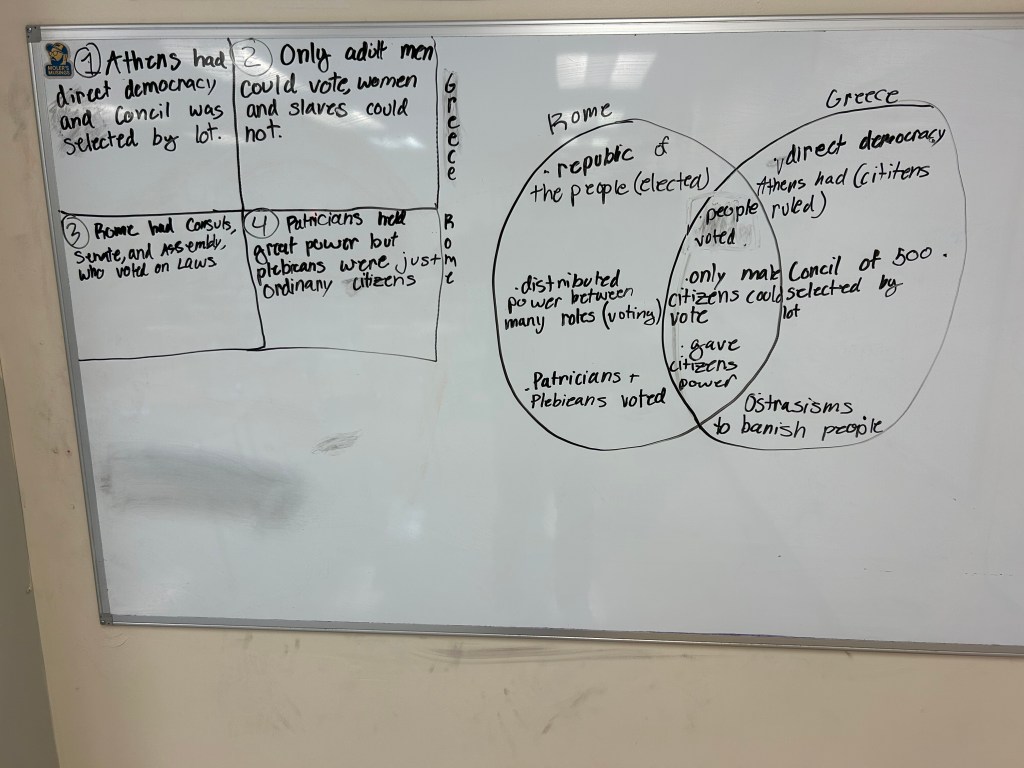
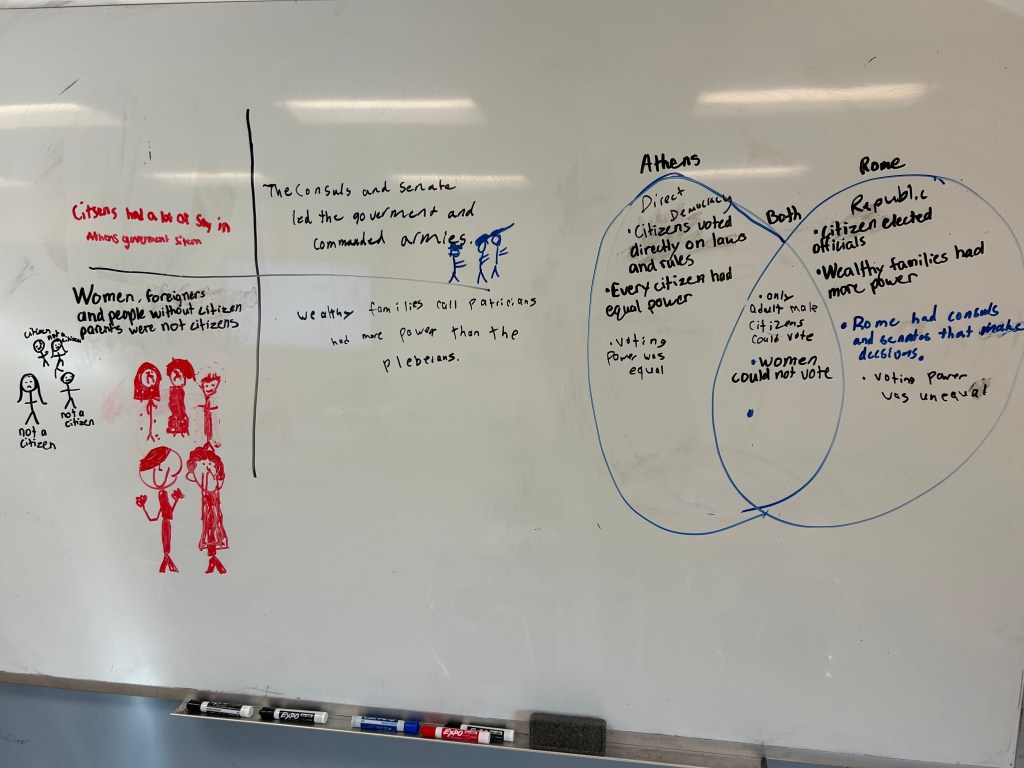
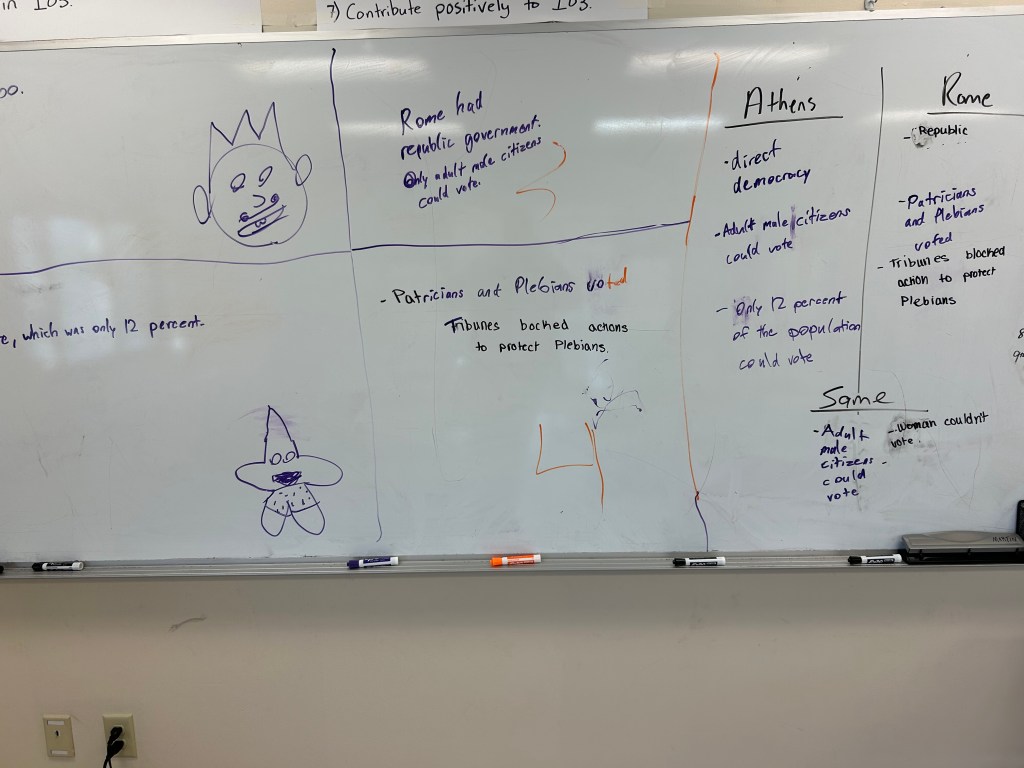
I was inspired by another post I had seen and put together a lesson I called Condense and Compare. Students began by writing 10-word summaries. Ten words doesn’t leave much room, which is the point. They had to decide what mattered most and how to communicate it clearly.
Next, students used the whiteboards to create Venn diagrams comparing Athenian democracy and the Roman Republic. They looked at how citizens participated, how leaders were selected, and who had access to political power. This brought us back to an important part of both governments: having citizens participate did not mean everyone could participate equally.
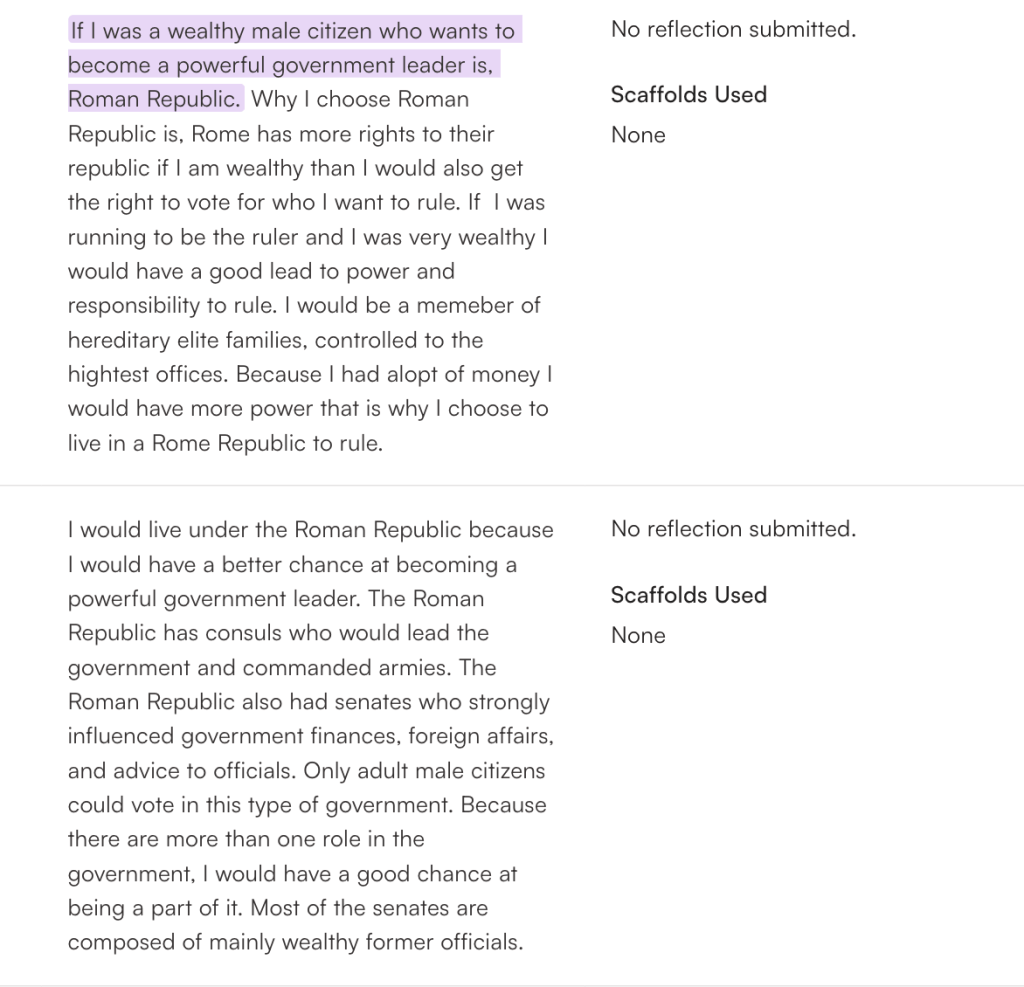
After comparing the governments, students went to Scriblit to respond to a question: Which government would you rather live under if you were a…?
I assigned a person for students to consider and changed that person between classes. This added something to the comparison. Choosing a government becomes a different question when students have to think about who they are within that society. A wealthy male citizen might have a different answer than someone excluded from political participation.
The goal was to use their comparison to explain a choice. Students needed to connect how the government worked to what that would mean for the person they had been assigned. Their summaries and Venn diagrams gave them information to work with when writing their responses. We finished with Gimkit.
A Short Week and a Change of Plans
We did not have social studies on Friday because of Grandparents Day, so Thursday wrapped up our week.
Wednesday was the part of this week that stuck with me. It would have been easy to look at Tuesday’s closing scores and move on. However, changing a few questions showed me something I needed to see. Students needed more work with the content, and I needed to teach it differently.
I like having a plan. I also like having familiar activities that make it possible to change that plan when needed. This week, a quick CyberSandwich and some time at the whiteboards became the lesson we needed.
Lessons for the week
Tuesday: Fast & Curious, Frayer, Alphaboxes, and Sketch & Tell-O
Wednesday: Fast & Curious and CyberSandwich
Thursday: Condense and Compare, writing in Scriblit, and Gimkit


