
This week in 103, we moved from examining Athenian democracy to exploring the Persian Wars and the Golden Age of Athens. We began by gathering evidence and developing an argument about whether Ancient Athens was truly democratic. From there, we used maps, readings, whiteboards, and sketches to understand the Persian Wars and how victory helped Athens grow stronger.
We finished the week with a scaffolded Research EduProtocol. Students gathered and shared facts about the Golden Age, ranked information from their classmates, and used that evidence to write. Throughout the week, each activity gave students something to work with in the next.
Monday: Building a Case About Athenian Democracy
I was absent on Monday, but students continued working with our question: Was Ancient Athens truly democratic? The previous Thursday and Friday, they had created a Thick Slide using evidence and information from Documents A and B. Monday’s lesson followed that same structure with two additional documents.
Thick Slides: Who Could Participate?
Document C was a table showing the percentages of citizens and noncitizens in Athens and who could participate in society. Document D was a secondary source about ostracism and its relationship to democracy. Together, these documents gave students more information to consider as they examined participation and power in Athens.
Students created a Thick Slide that included four to five facts from the documents, a comparison of the two sources, a picture they created, and a quote. The familiar format allowed them to continue the work we had started while adding evidence that could help them answer our larger question.
Stake Your Claim: Organizing the Evidence
I also left a Stake Your Claim EduProtocol. Students used their Thick Slides to develop a claim, select evidence, identify the document each piece of evidence came from, and explain their reasoning.
This moved students from gathering information to deciding what that information supported. They needed to explain how their evidence helped answer whether Ancient Athens was truly democratic.
By the end of the lesson, students had an organizer to build their written response from. Their Thick Slides held the information; Stake Your Claim helped them organize it into an argument.
Tuesday: Turning Evidence Into an Argument
I returned on Tuesday, and we began with Fast & Curious on Gimkit. I brought back the same Ancient Greece questions we had used two or three weeks earlier. Students did great! It was encouraging to see how much they remembered as we continued building on that earlier learning.
From Stake Your Claim to Scriblit
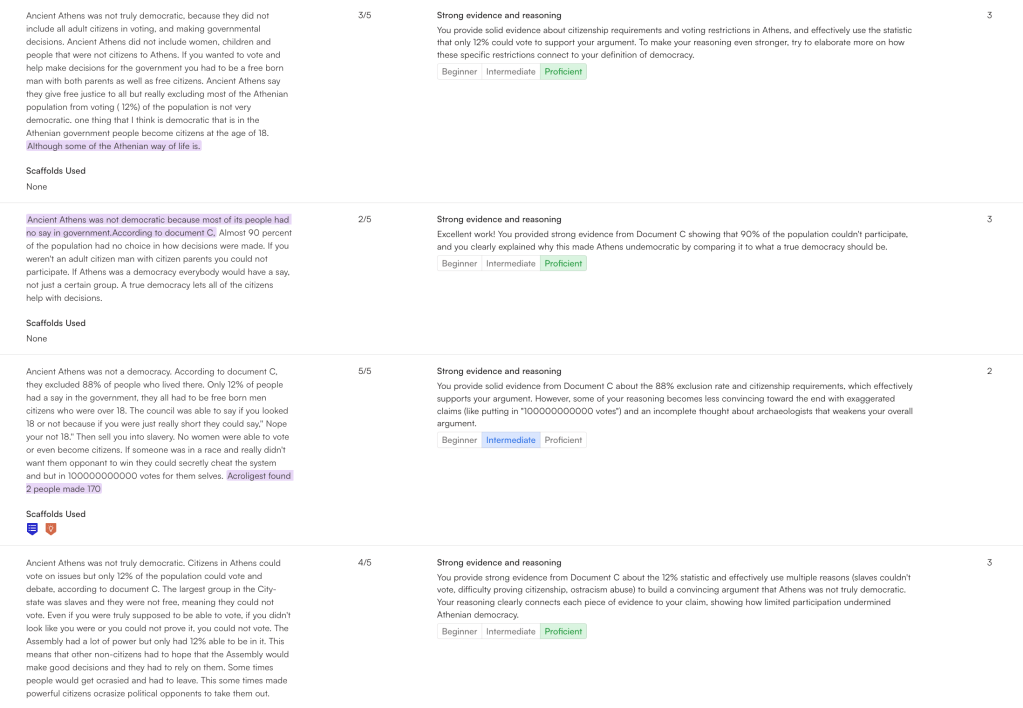
After our review, I reminded students of the Stake Your Claim organizer they had completed on Monday. Then we busted out Scriblit. Students used their organizers to write a formal claim, evidence, and reasoning response to our question: Was Ancient Athens truly democratic?
They already had a claim, evidence from the documents, and reasoning to work with. Now they needed to put those pieces together into a clear written response.
Checking the Claims
I gave students ten minutes to write and circulated as they worked. One thing I paid close attention to was how they started their claims. Were they beginning with “yes” or “no”? Were they using first-person language such as “I think” or “I believe”?
Those are two habits I want students to move away from in formal claims. I want them to answer the question directly and make a statement they can support with evidence. Circulating while they typed gave me a chance to offer that feedback while they were still working.
Battle Royale
Once the writing time ended, we ran a Battle Royale round with their responses. It was fun, and it gave us a different way to finish this part of our work on Athenian democracy.
Over the last few lessons, students had examined documents, gathered information in Thick Slides, organized an argument with Stake Your Claim, and written a formal response. Each step gave them something to use in the next.
And, in the interest of keeping this recap honest, we did something else that day, too. As I’m writing this, I cannot remember what it was. That’s the week it’s been.
Wednesday: Setting the Stage for the Persian Wars
After finishing our work on Athenian democracy, we turned our attention to the Persian Wars. This felt like a natural next step in our study of Greece. Understanding the conflict would help students see how Athens grew stronger and how the Greek victory helped set the stage for its Golden Age.
Wednesday’s class periods were shortened, so we focused on the geography and events that led to the war.
Map & Tell: Planning an Invasion
We began with a map and two questions. What challenges might the Persians face traveling from their empire to attack Athens? If students were leading the invasion, would they attack by land or by sea?
Students needed to use two details from the map to explain the challenges and support their choice of invasion route with geographic evidence. This brought us back to something we have returned to throughout the unit: geography shaped the choices people could make.
Sketch & Tell: How Did Athens Get Involved?
Next, students used a reading to sketch and label six stages leading into the Persian Wars. Breaking the background into stages gave them a way to follow the sequence and show how one event led to another.
They also answered the question: How did helping the Ionian rebels get Athens into a war with Persia? That explanation asked students to put the connection into words after representing it through their sketches.
Thursday: From the Persian Wars to the Golden Age
Thursday’s work moved us into the battles themselves. Students would first focus on one battle, then use their classmates’ work to piece together the larger story.
Iron Chef on the Whiteboards
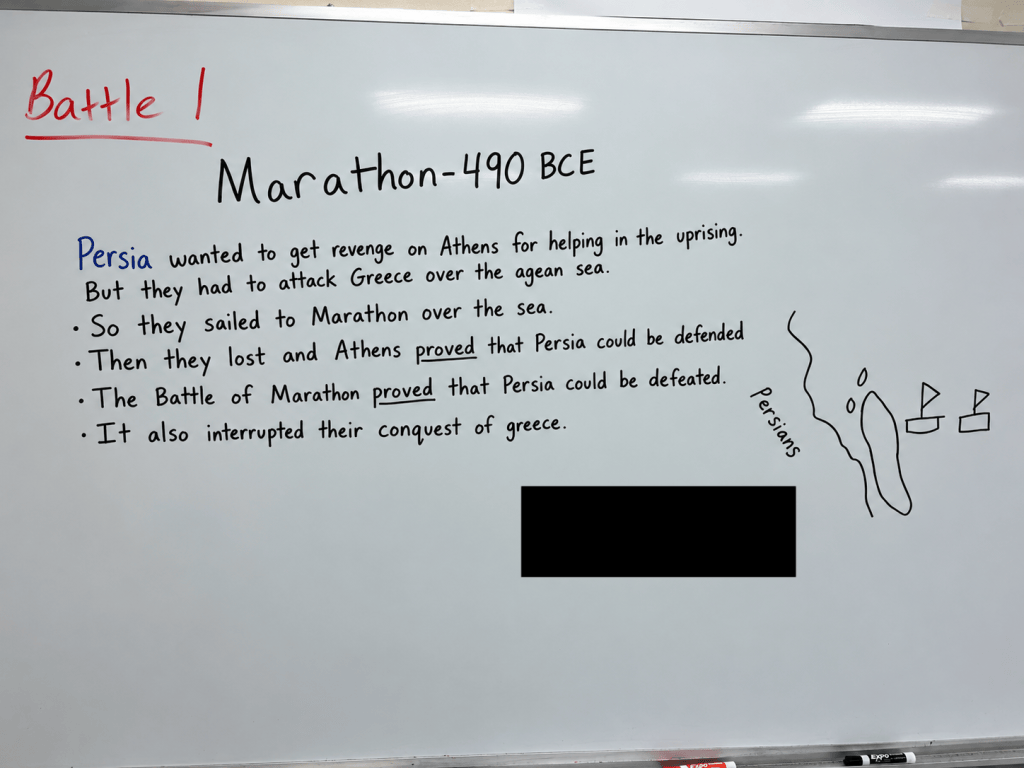
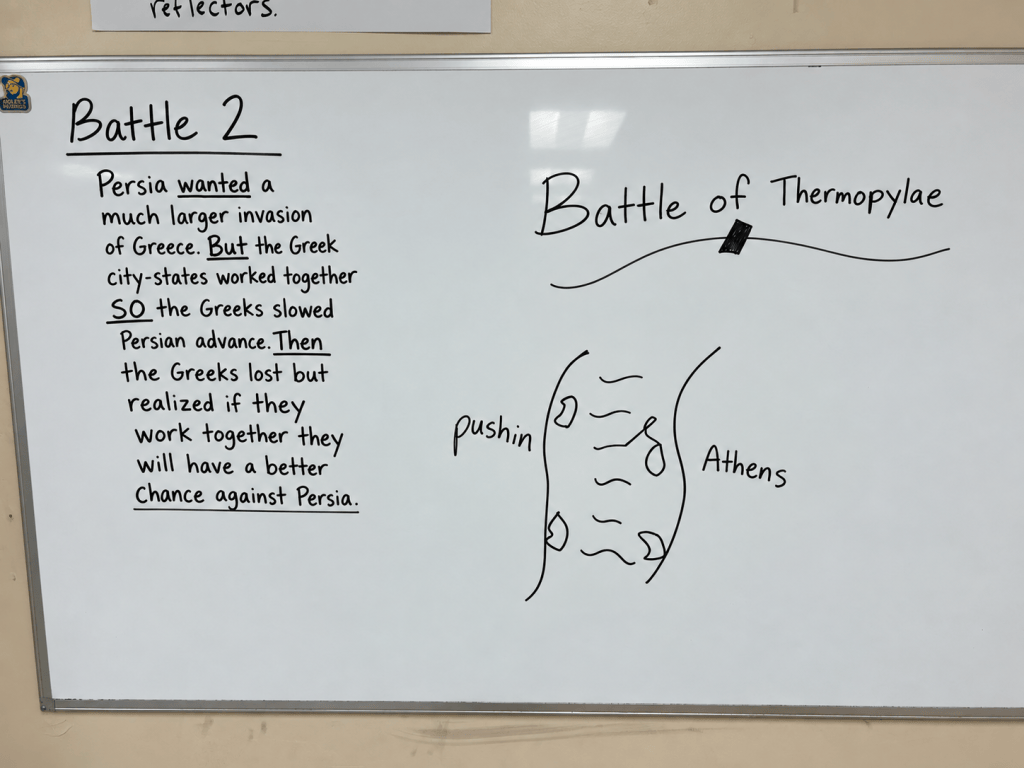
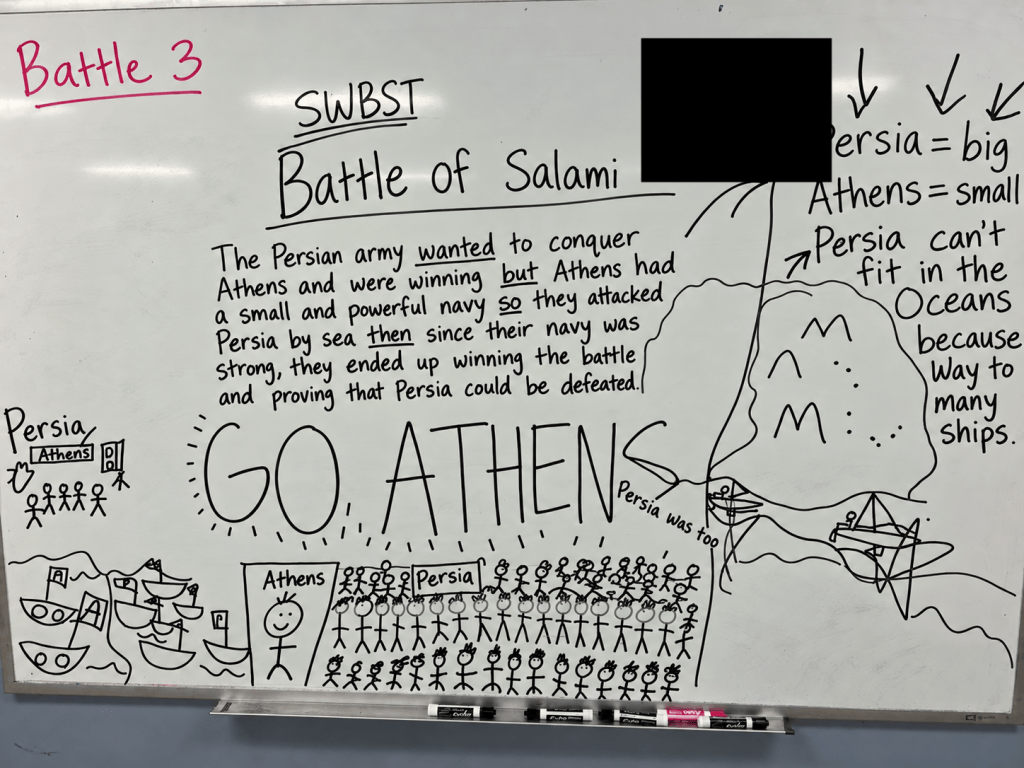
Students read about their assigned battle and worked together to create a whiteboard that taught classmates what happened and why it mattered. Each board needed the battle’s name and year, a summary in their own words, a labeled sketch, and an explanation of its importance.
For the summary, we used Somebody, Wanted, But, So, Then. Who fought? What were they trying to accomplish? What obstacle did they face? What did they do? What was the result?
That structure gave students a way to organize the reading. Their labeled sketch showed an important moment or strategy, while the “Why it mattered” section asked for two to three sentences explaining how the battle affected what happened next.
Students also needed to write large and organize their boards so classmates could read them during the gallery walk. The boards were going to become a resource for the next part of the lesson.
Gallery Walk: Sketch & Tell, Comic Edition
Students used the whiteboards to retell the Persian Wars through sketches and captions. Their comic included Marathon, Thermopylae, Salamis, and Plataea, followed by a final panel focused on Athens.
Each battle needed a sketch and a caption. The Athens panel asked students to show how victory helped the city-state grow stronger. That final panel gave the battles a larger purpose and brought us toward our next topic: the Golden Age of Athens.
I like having students use what their classmates create. The whiteboard gave each group responsibility for explaining one part of the story, and the comic asked every student to put those parts together.
Wicked Hydra: A First Look at the Golden Age
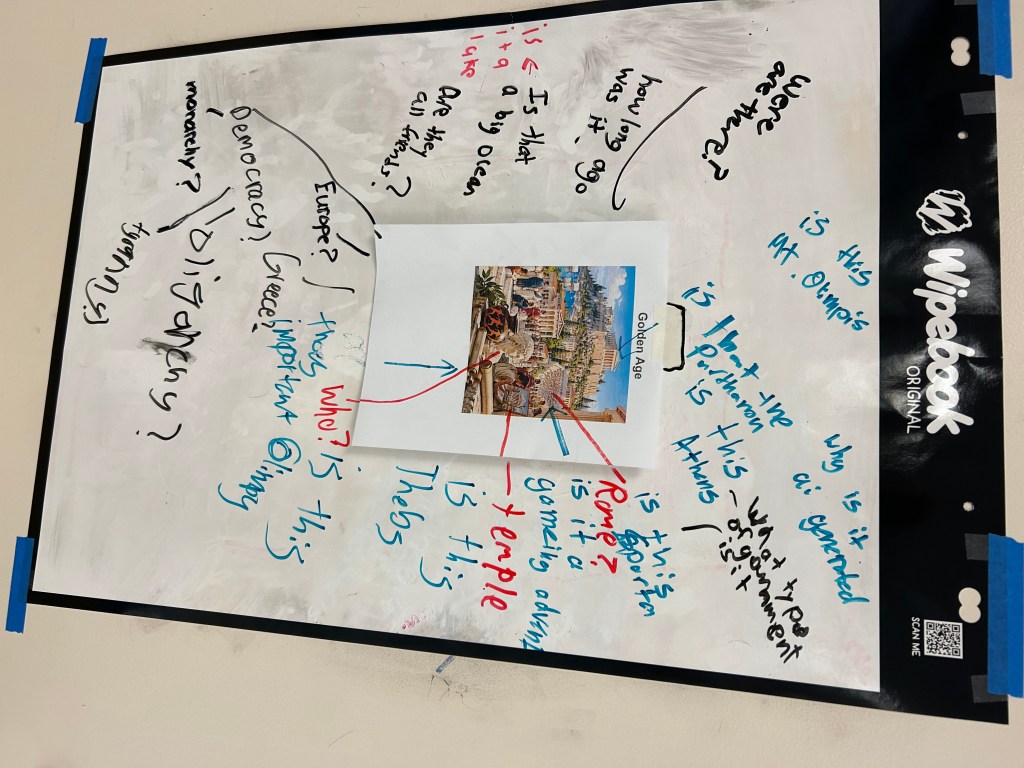
We closed class with a Wicked Hydra to introduce the Golden Age of Athens. I had ChatGPT create an image representing the period and taped copies around the room.
Students had three minutes to write questions about what they noticed in the image. Then they rotated to a new board, read the questions already there, and added more of their own. We rotated again so students could continue building on their classmates’ questions.
The final panel of their Persian Wars comic asked how Athens grew stronger after the war. Now, the image gave them a chance to imagine what that stronger Athens might look like and ask questions about it. Those questions gave us a starting point for exploring the Golden Age.
Friday: What Made Athens’s Golden Age “Golden”?
On Friday, we dove into the Golden Age of Athens with a question: Why was 480–404 BCE considered the Golden Age for Athens? Thursday’s Wicked Hydra had given students a chance to ask questions about the period. Now we used a scaffolded version of the Research EduProtocol to gather information and develop an answer.
Research: Building a Shared Collection of Facts
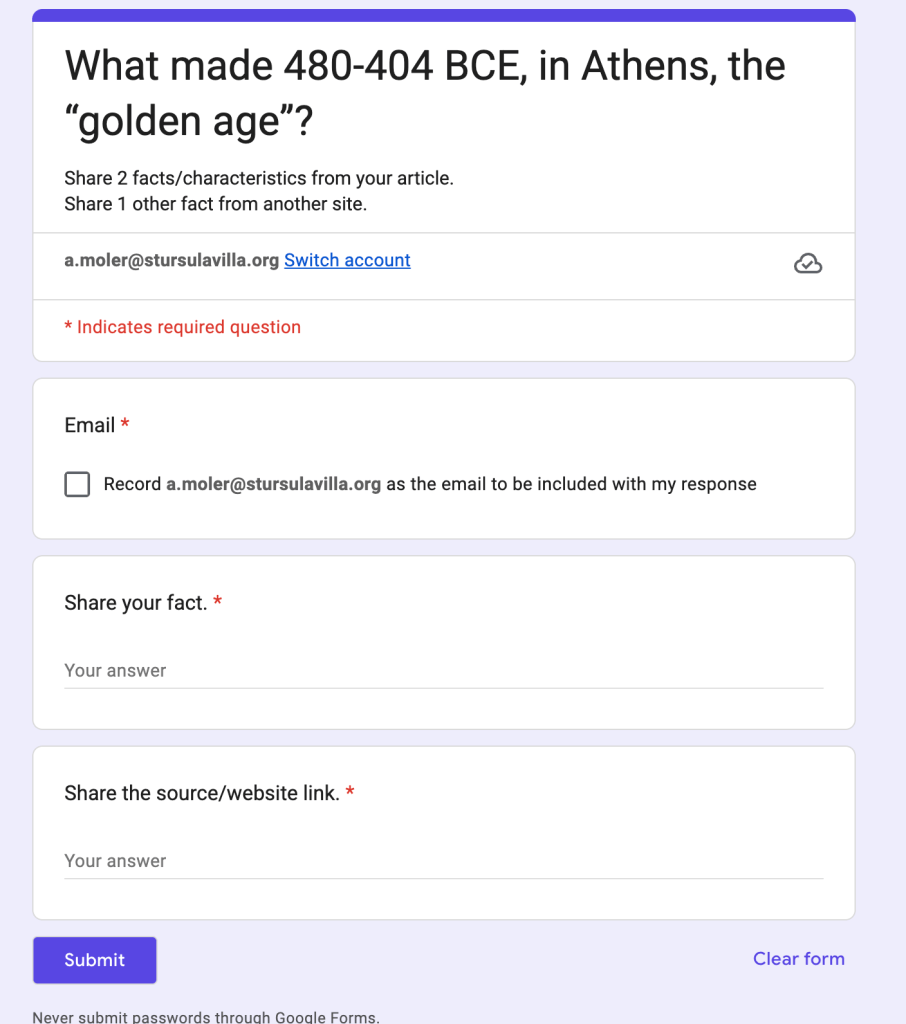
In the Research EduProtocol, students investigate a question and crowdsource information to help answer it. They submit facts and their sources through a Google Form, with the responses feeding into a linked Google Sheet. That spreadsheet becomes a shared resource students can use in their writing.
For this round, I provided some support. I used ChatGPT to create seven articles drawing on seven different sources related to our question. Students received different articles and shared two facts from their assigned reading through the Google Form.
Then I sent them into the wild, wild west of the internet. Students did a Google search and submitted an additional fact, along with its source. The provided articles gave them a starting point before they searched on their own.
Tier List: Paraphrasing and Ranking
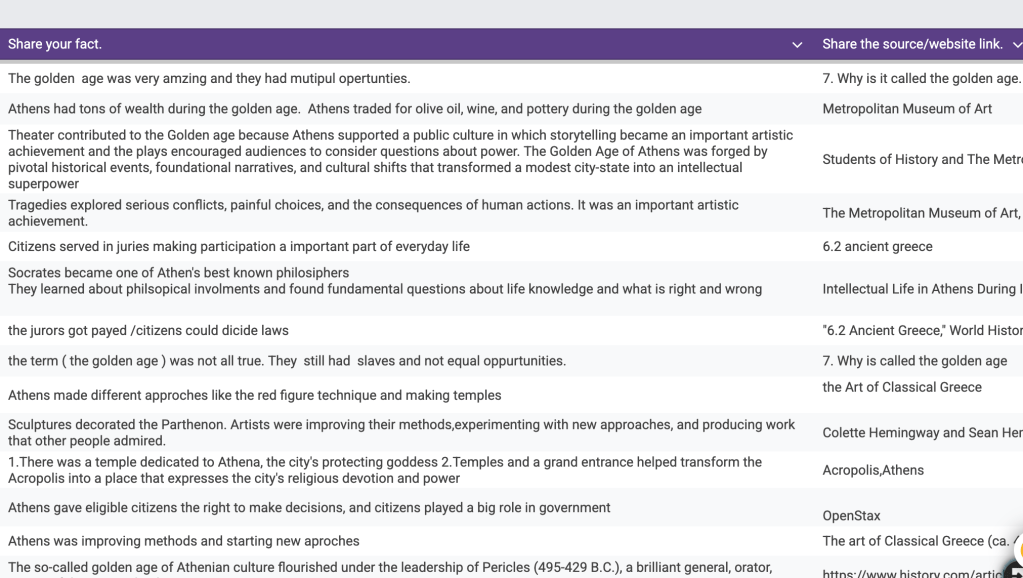
Once students submitted their facts, I shared the spreadsheet with everyone. They now had access to information gathered by the entire class.
I gave students a Tier List and ten minutes to paraphrase and rank six to seven facts from the shared collection. They needed to consider which facts would be most useful in explaining why this period was considered a golden age.
This step gave students time to work with the information before writing. They put facts into their own words and made decisions about which evidence would best help them answer the question.
Scriblit: Putting the Evidence to Work
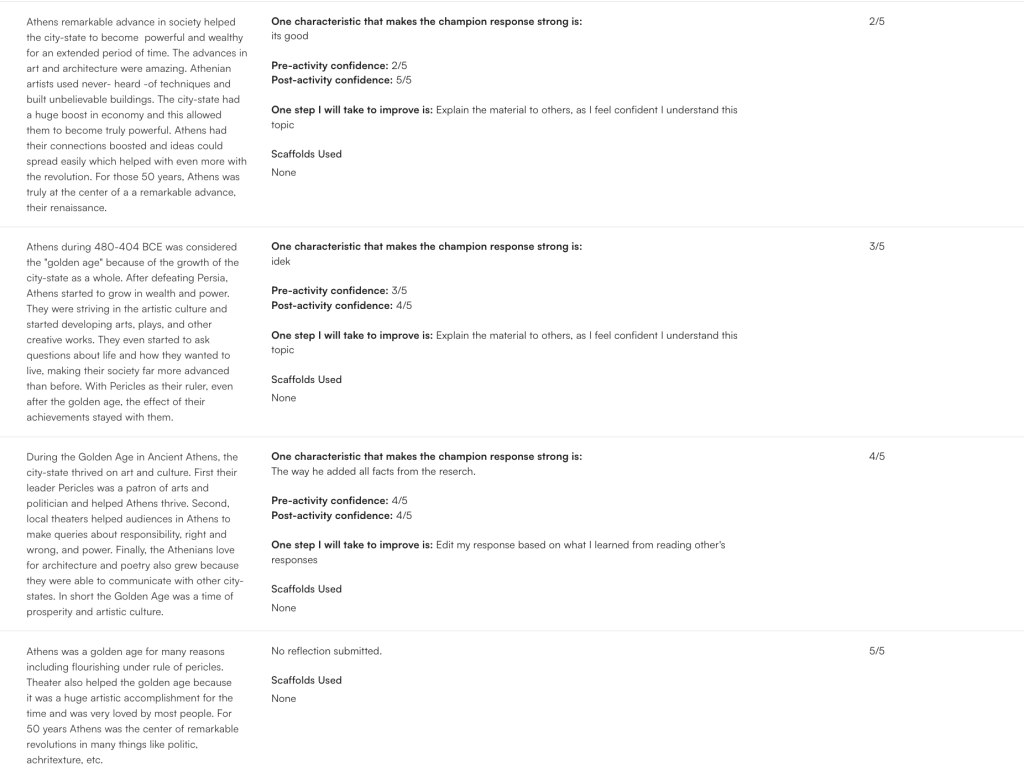
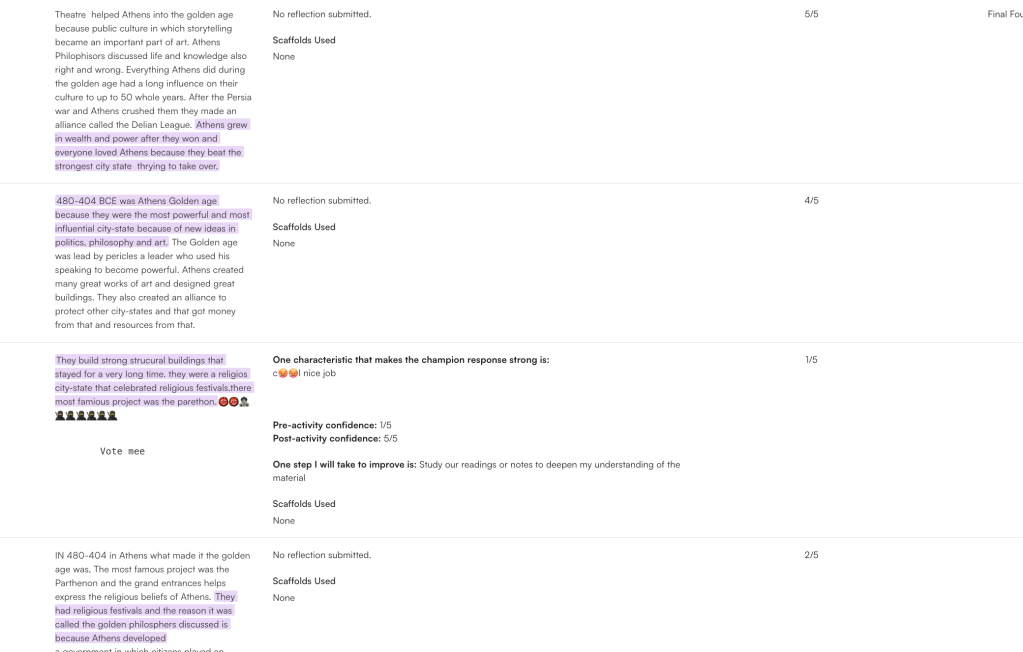
Then we busted out Scriblit. Students had ten minutes to develop a paragraph answering our question, using at least two pieces of evidence.
Their Tier Lists gave them a place to start. They had already selected, paraphrased, and ranked information. Now they needed to use that evidence to explain what made the period a golden age for Athens.
The main sequence followed three ten-minute blocks: read and share two to three facts, paraphrase and rank, and develop a paragraph. That kept the work moving and gave each part a clear purpose.
We also fit in two rounds of Fast & Curious on Gimkit, with Golden Age questions added to our question set. Across the class period, students encountered the information, shared it, considered its value, and used it to write an answer.
Lessons for the Week
Monday – Thick Slide and Stake Your Claim
Wednesday and Thursday – Persian Wars Rack and Stack
Friday – Tier List


