Calling someone “great” is easy. Explaining why they deserve that title takes a little more work.
This week in 103, my 7th graders finished our Ancient Greece unit by examining Alexander the Great’s legacy. Monday through Wednesday, we focused on the question, “Should Alexander the Great be considered great?” Students built background knowledge, analyzed sources, and used evidence to make their own judgments.
On Thursday and Friday, students brought the entire unit together with a one-pager assessment. I’m not a traditional test kind of guy. I would rather kids make something with what they have learned.
Here is the layout of our week….
- Monday: Background knowledge about Alexander’s accomplishments, challenges, and Hellenistic culture.
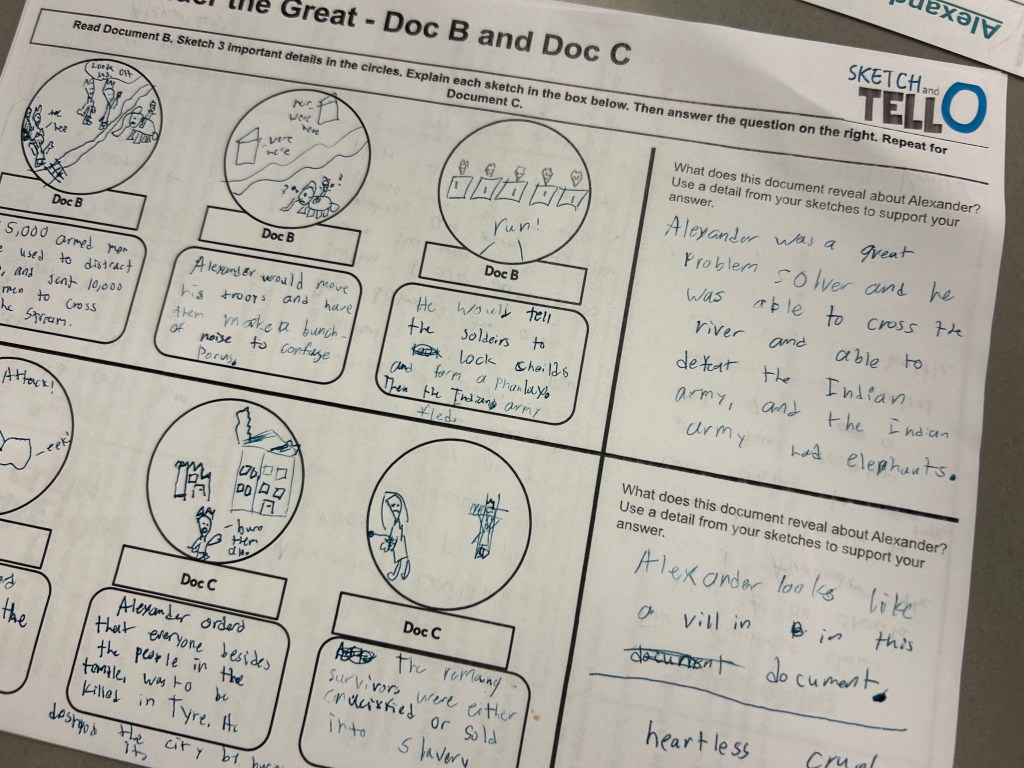
- Tuesday: Sketch and Tell-O and Stake Your Claim with Documents B and C.
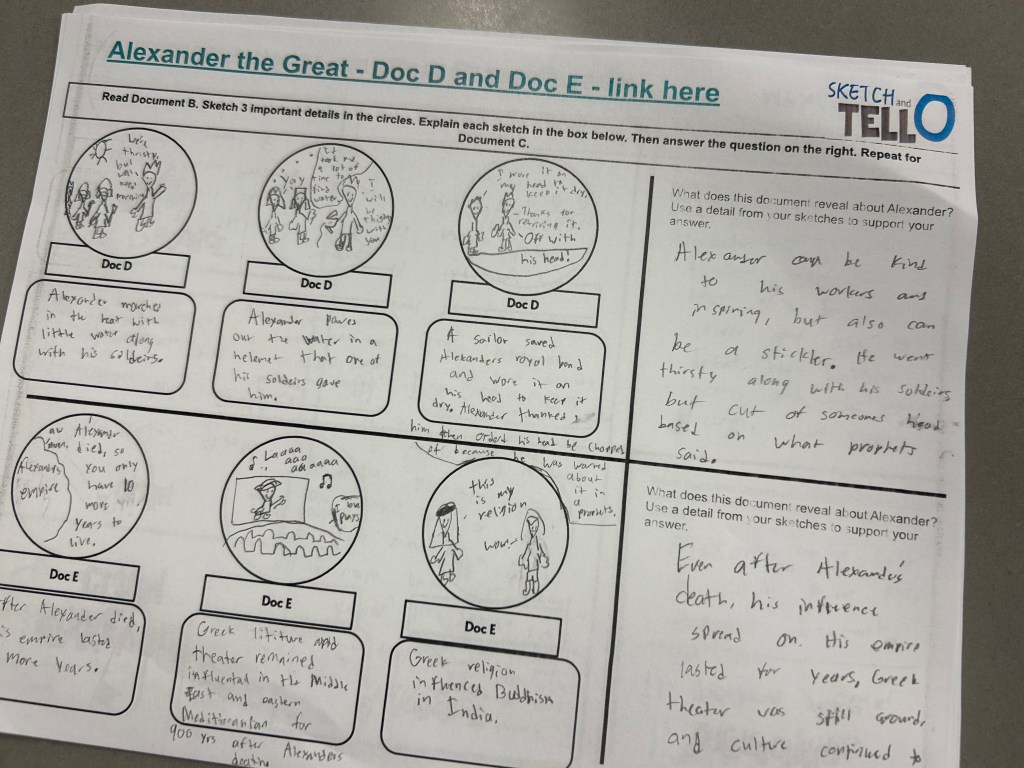
- Wednesday: Sketch and Tell-O and Stake Your Claim with Documents D and E, followed by a Scriblit and Quick Write feedback.
- Thursday: Begin the Ancient Greece one-pager during a shortened, 30-minute class.
- Friday: Finish and submit the one-pager by the end of our 45-minute class.
Monday: Building Background Knowledge
Before students could decide whether Alexander deserved to be called great, they needed to understand what he accomplished and what problems he faced. We began with a Frayer on Hellenistic culture. Students worked through the definition, characteristics, examples, and a symbol to represent the idea. This gave us some vocabulary to use when discussing how Alexander connected different parts of the ancient world.
For our reading and partner work, students identified two accomplishments, two problems, and one way cultures connected. They compared notes with a partner, created a top-three list, and wrote about Alexander’s accomplishments and challenges. I like giving students a specific purpose when taking notes. Telling a 7th grader to “take notes” can mean just about anything. Giving them things to look for helps focus their reading and gives them something to discuss with a partner.
We also examined a map of Alexander’s conquests. Students considered how the map could support the claim that Alexander was great and what important information it left out. The map shows the reach of his conquests, but that alone does not answer our question. We needed to examine more evidence.
Tuesday and Wednesday: Sketch and Tell-O and Stake Your Claim
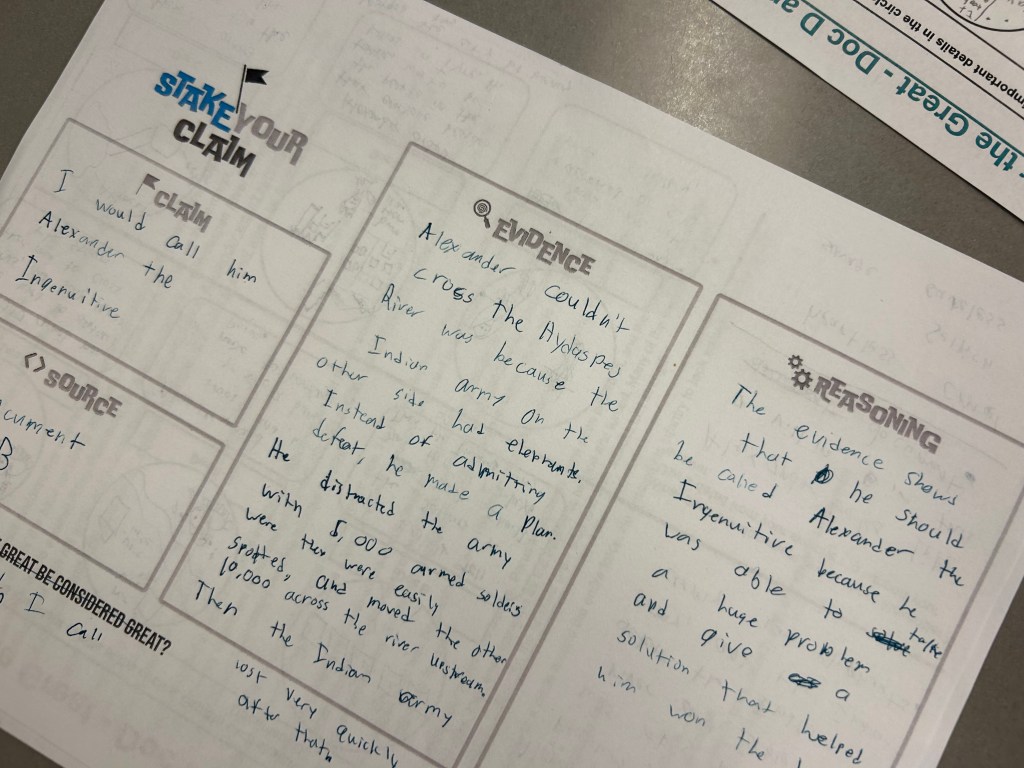
On Tuesday and Wednesday, students analyzed four sources about Alexander’s legacy, ranging from primary to secondary sources. We used Sketch and Tell-O with Stake Your Claim to break down the documents and build an answer to our question.
For each source, students sketched three important details and explained their sketches in writing. They then answered, “What does this document reveal about Alexander?” Their response had to use a detail from their sketches as evidence.
I like Sketch and Tell-O because students have to make decisions about what they read. They have to choose important details, represent them visually, and explain what those details mean. The “tell” part matters. I want to know what students understand about the detail they chose to draw.
After Documents B and C, students answered, “What would you call Alexander the Great?” We returned to that question after Documents D and E. As students encountered more information, they had a chance to reconsider their original claim.
For teachers looking to try this, the sequence is simple:
- Read a source.
- Sketch three important details.
- Explain each sketch.
- Make a claim using evidence from the source.
- Revisit the claim after reading additional sources.
I want students to understand that they can change their minds when they learn something new. They just need to explain how the evidence supports their thinking.
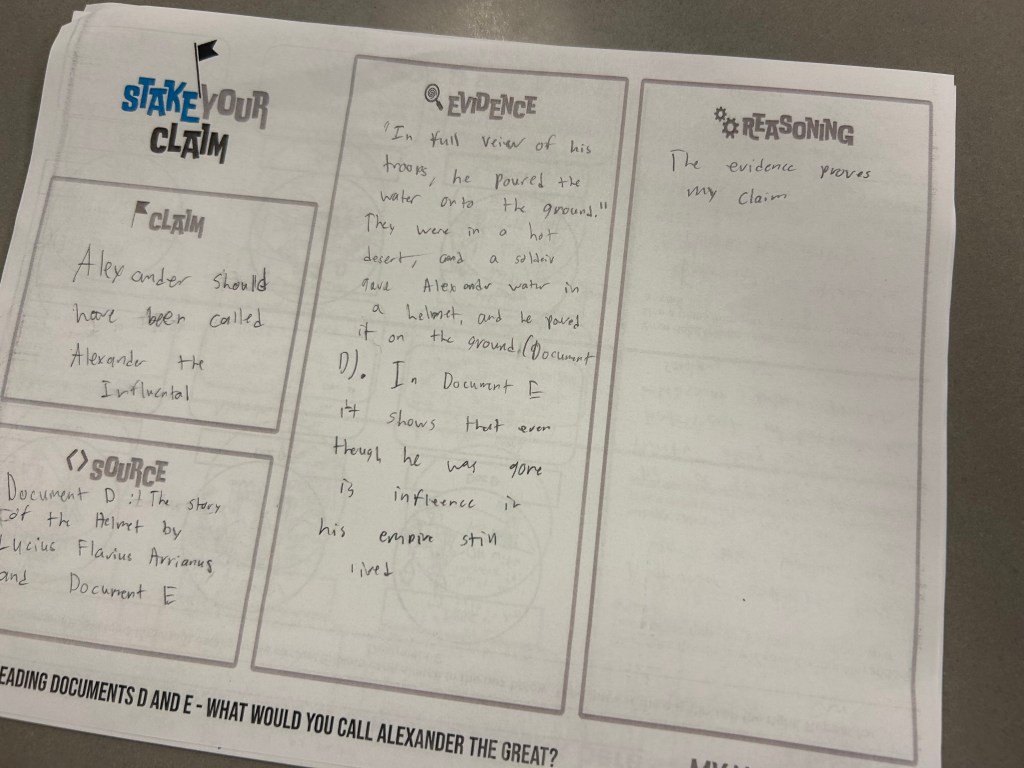
Wednesday: What Would You Call Alexander the Great?
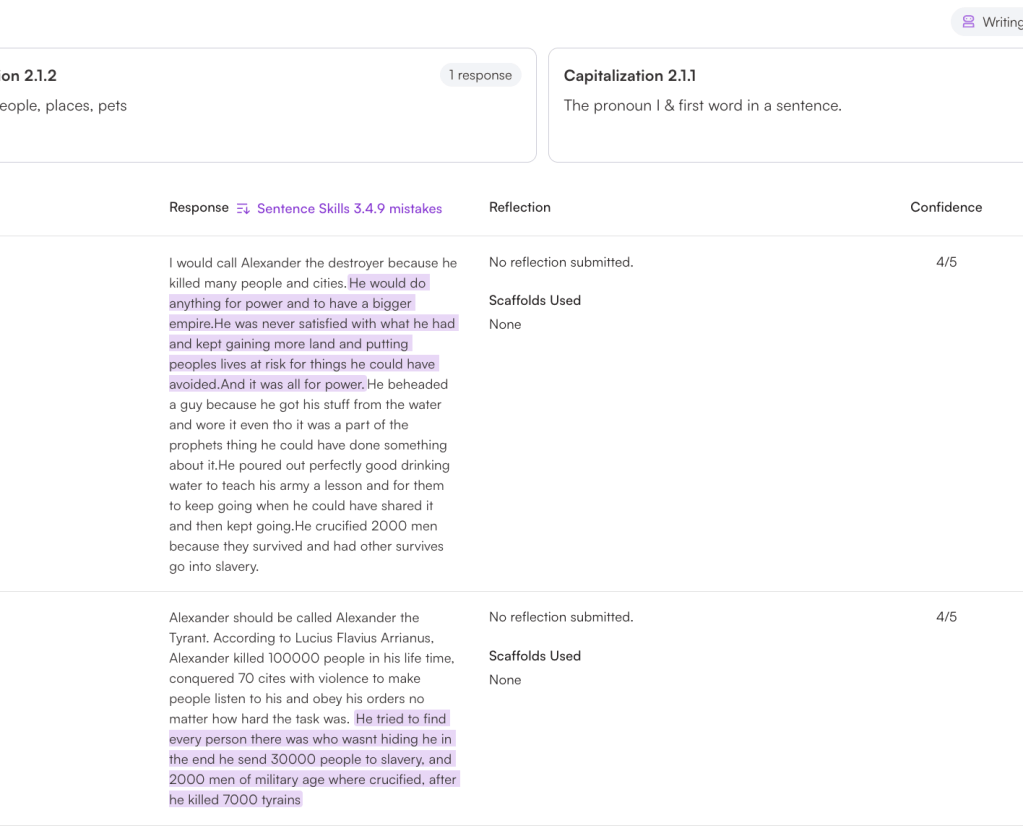
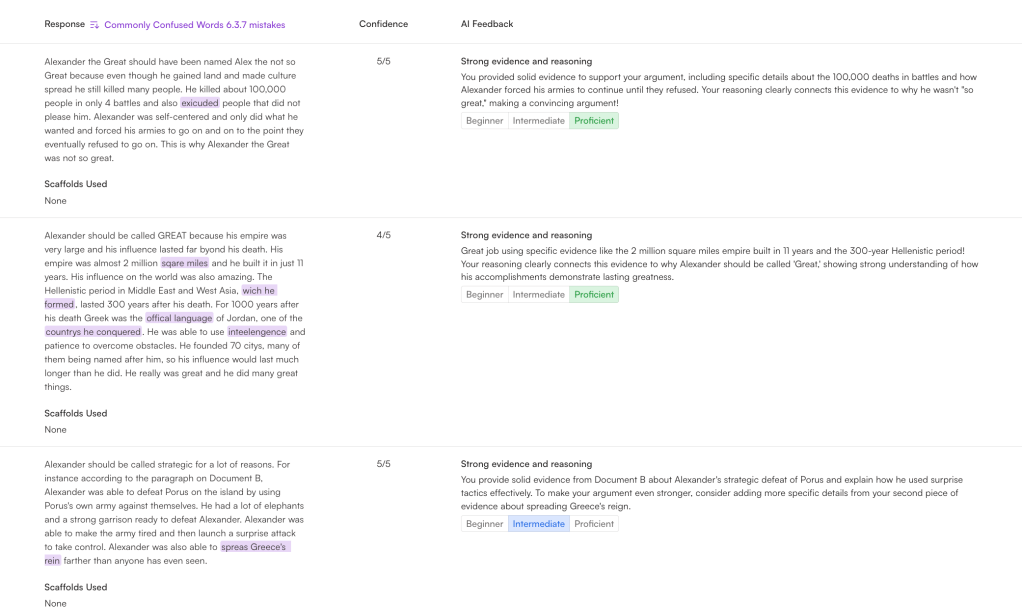
After analyzing the sources, students pulled their thinking together with a Scriblit. The prompt was, “What would you call Alexander the Great?” Students had to support their answer with two pieces of evidence.
By this point, they had background information, sketches, explanations, and earlier claims to use. The writing grew out of the work we had already done. I like this question because students get to choose their answer. However, choosing a title for Alexander is only part of the task. They have to find evidence and explain why that evidence makes their title appropriate.
We used the Quick Write feature to get feedback on their responses. Students could get feedback while the sources and their thinking were still fresh. For teachers trying something similar, I would keep the prompt focused. One clear question with two pieces of evidence gives students a manageable writing task while still requiring them to make and support a historical judgment.
Thursday and Friday: Creating an Ancient Greece One-Pager
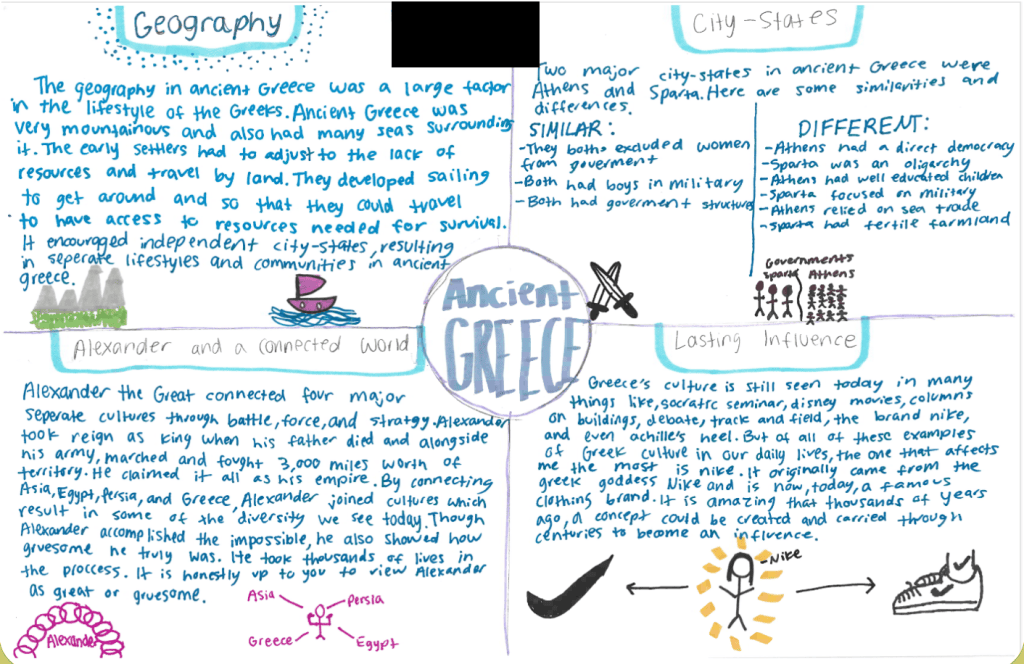
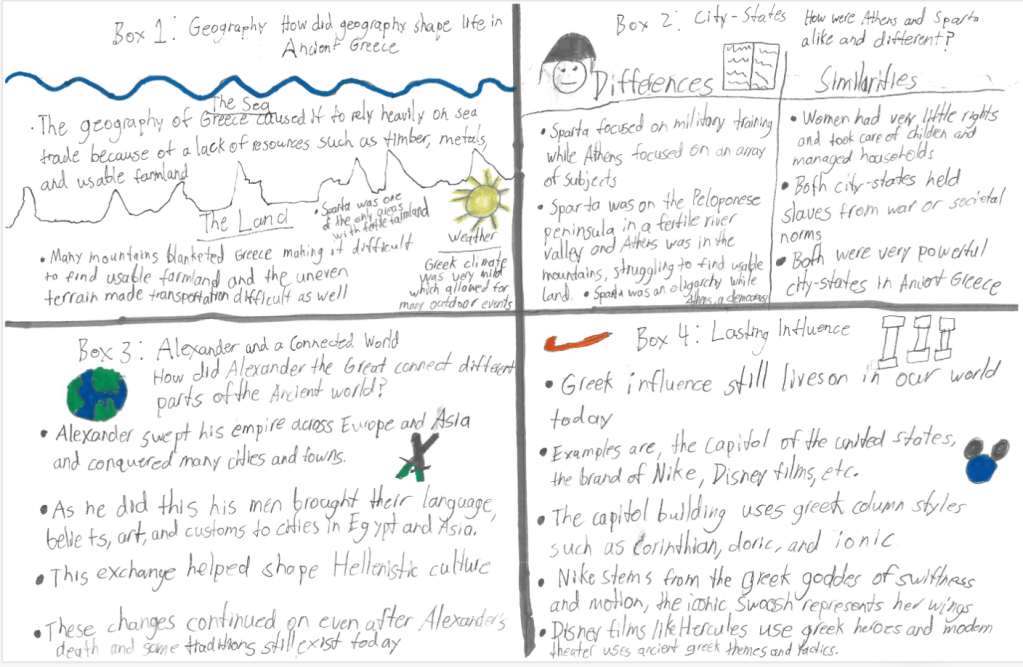
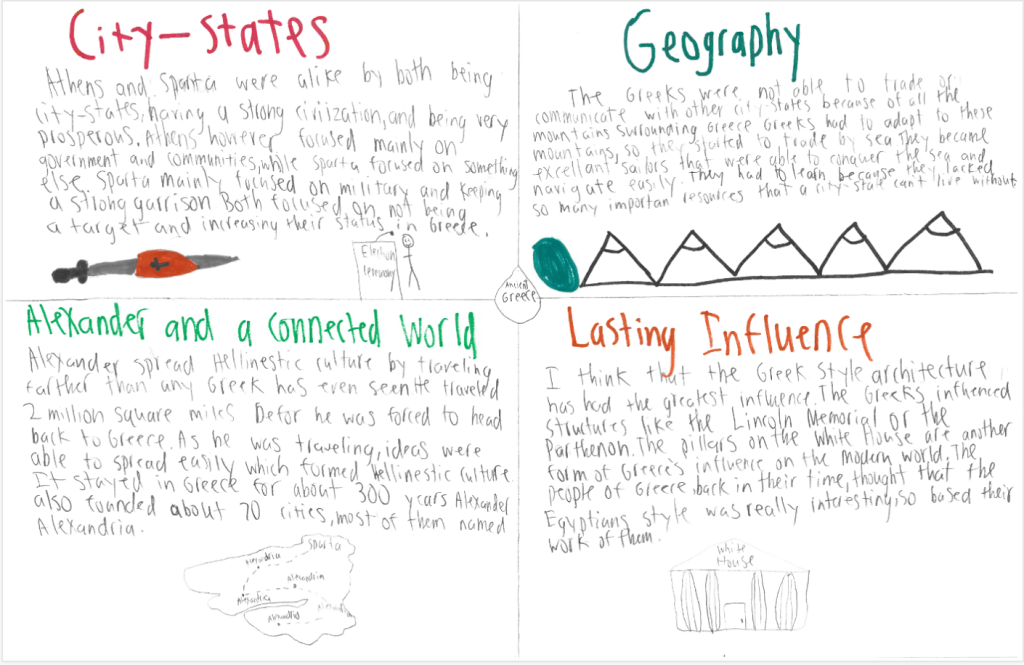
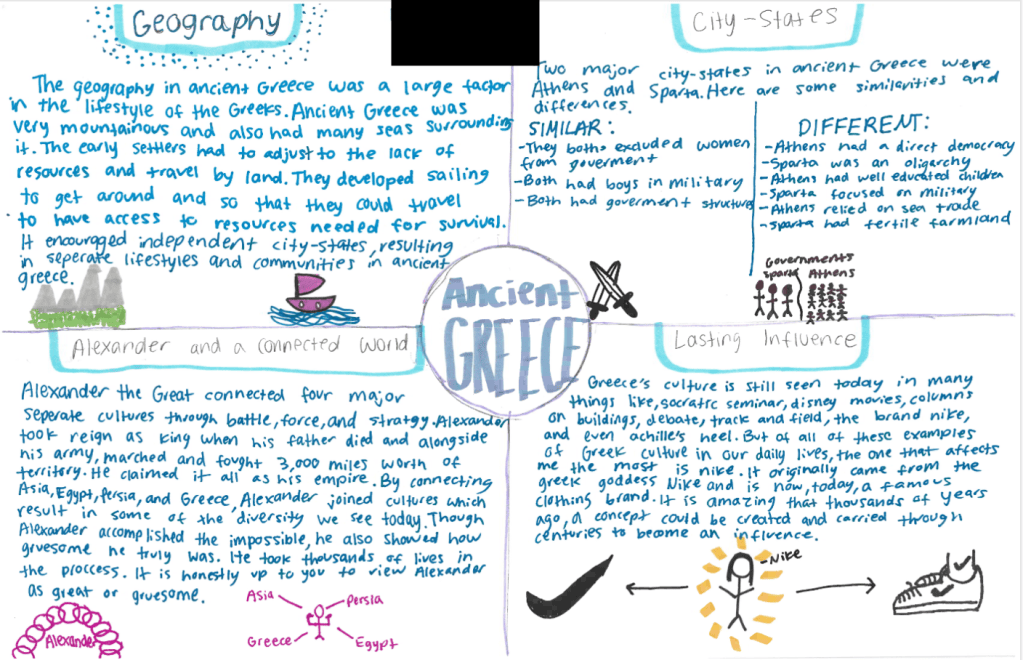
On Thursday, we began our Ancient Greece assessment. Students created a one-pager divided into four clearly labeled boxes. Each box focused on a major question from our unit:
- Geography: How did geography shape life in Ancient Greece?
- City-States: How were Athens and Sparta alike and different?
- Alexander and a Connected World: How did Alexander the Great connect different parts of the ancient world?
- Lasting Influence: Which Greek idea or achievement has had the greatest influence on our world today?
For each box, students wrote four to five complete sentences, used at least two specific supporting details, and included a meaningful, labeled visual.
I’m not a traditional test kind of guy. I would rather students create something that shows what they understand. With this assessment, they had to explain geography’s influence, compare city-states, describe cultural connections, and defend a choice about Greece’s lasting influence. There was plenty of thinking to do within one page.
Yes, They Could Use Their Notes
I allowed students to use their notes and the EduProtocols we completed throughout the unit. I want students to see that the things we do in class matter. The reading, writing, sketches, and discussions give them information they can use later. An assessment is a good opportunity to show them that connection.
I also want them to see that staying organized matters. Keeping their work, completing it thoughtfully, and knowing where to find it helps when it is time to create something with that information. Having notes available still leaves students with work to do. They have to choose relevant details, explain their thinking, and answer the question in their own words. For teachers considering this approach, let students use the work they have already created. It gives that work a purpose beyond the day it was completed.
A Strict Time Limit
Thursday’s class periods were shortened to 30 minutes, and Friday’s class was 45 minutes. Students had to submit the assessment by the end of class on Friday. They were not allowed to take it home. I told them, “If you know your stuff, you should be able to get this finished.” They had their notes, the work from our unit, clear directions, and a firm deadline.
A one-pager can take forever if students spend too much time on a title or one drawing. I wanted them to use their time to answer all four questions and create visuals that helped explain their answers. The time limit made it important to get started, stay focused, and make decisions about what to include.
Quality Matters
I also made it clear that this was an assessment. Quality mattered. Students needed accurate information, specific supporting details, complete explanations, and meaningful visuals. Their writing needed to be readable and in their own words.
I like giving students room to create, but they still need clear expectations. A colorful page needs thoughtful answers to go with it. For another teacher trying a one-pager, I would establish those expectations at the beginning. Students should know what a complete response looks like before they begin working.
Looking Back at the Week
I like how the work connected throughout the week. Students built background knowledge, analyzed sources, made claims, and used evidence in their writing. Then they used the work from our entire Ancient Greece unit to create their assessment.
That is what I want students to see. The things we do each day have a purpose. Their notes matter. Their organization matters. The information they learn gives them something to think about and something to create. By Friday, they had the opportunity to show what they could do with it.
Lessons for the Week
Monday – CyberSandwich Day 2
Tuesday – Sketch and Tell-o with Stake Your Claim
Wednesday – Sketch and Tell-o with Stake Your Claim
Thursday and Friday – One Pager


