This week in 7th grade, we continued working our way through Ancient Greece. We started with the Golden Age of Athens and ended the week beginning our investigation of Alexander the Great. In between, students spent some time looking at just how much Ancient Greece still shows up in their lives today.
One thing I liked about this week was that we didn’t just learn about the achievements of Ancient Greece and move on. Students first learned about them through stations, then had to process what made the Golden Age “golden.” From there, they looked for those Greek influences in the modern world and decided which ones actually have the biggest impact on their own lives.
By Friday, we were ready to start asking a different kind of question. Instead of looking at what the Greeks created, we began looking at how Greek culture spread beyond Greece. That brought us to Alexander the Great.
Monday: Exploring the Golden Age of Athens
We started the week continuing our study of Ancient Greece by looking at the Golden Age of Athens. After the Persian Wars, Athens became wealthier and more powerful, and this period produced ideas and achievements that are still connected to Greece today. Rather than going through each achievement together, students worked through six different stations focused on different areas of Greek culture.
At each station, students read information, looked at examples, and answered questions. There was quite a bit of information to work through, so I wasn’t worried about everyone finishing in one day. I wanted students to have time to actually read and work with the information rather than race from station to station just to say they were finished.
The goal was to build a foundation. Before we could talk about the influence of Ancient Greece on our world today, students needed to understand what was actually happening during the Golden Age and what the Greeks were creating, thinking about, and doing differently.
Tuesday: Check It, Fix It, and Put It Together
Students started Tuesday by finishing any Golden Age stations they had left from Monday. Once everyone finished, I hung the answers to the stations around the room. Students took their papers, moved around the classroom, checked their responses, and made corrections. If something was wrong, they fixed it. If they were missing information, they added it.
I liked having students move around the room and check their own work instead of standing at the front and going through every answer together. They had to find the information, compare it to what they had written, and decide what needed to change. It also gave them another look at the information from all six stations before we asked them to do something with it.
Thick Slides: What Made the Golden Age Golden?
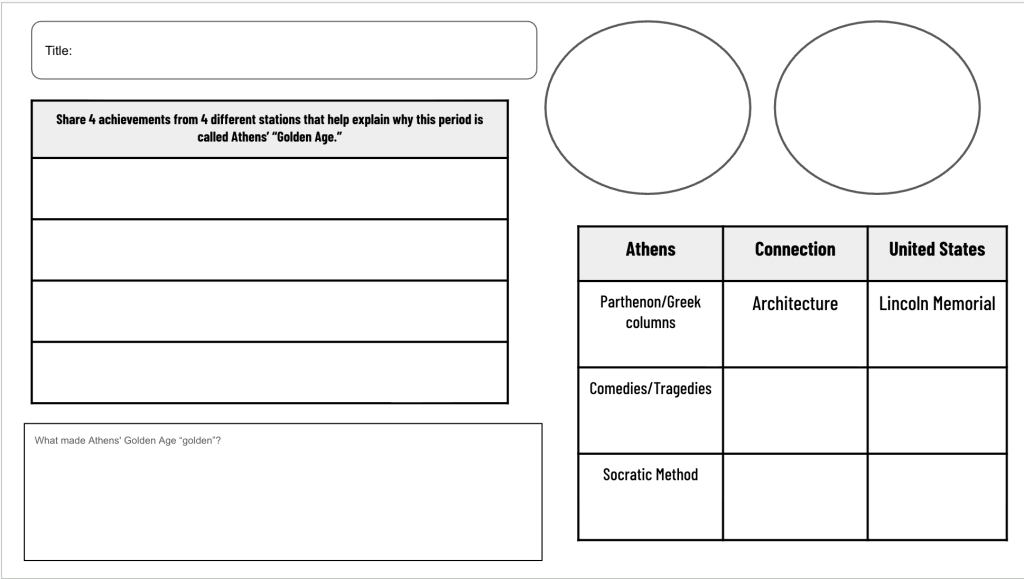
After checking their work, students created a Thick Slide to bring everything together. They used the information from their stations to share four facts about the Golden Age, add pictures that represented what they had learned, and respond to the bigger question: What made the Golden Age golden?
This was the piece I wanted after the stations. The stations gave students a lot of individual pieces of information, but the Thick Slide asked them to step back and make sense of all of it. Instead of just knowing that Athens had philosophers, impressive architecture, theater, art, and other achievements, they had to think about why all of those things together made this period significant.
It also gave us a good bridge into what we were going to do next. Students had spent two days learning about what came out of the Golden Age. Now we were ready to see where some of those ideas ended up.
Wednesday: Finding Ancient Greece in Our World
On Wednesday, we shifted from learning about the Golden Age to looking for Greek influence in the world around us. I handed students directions that contained the same six categories they had worked with during the stations. Instead of letting everyone immediately pick whatever topic they wanted, I had students roll a die. Whatever number they rolled determined the category they would work with.
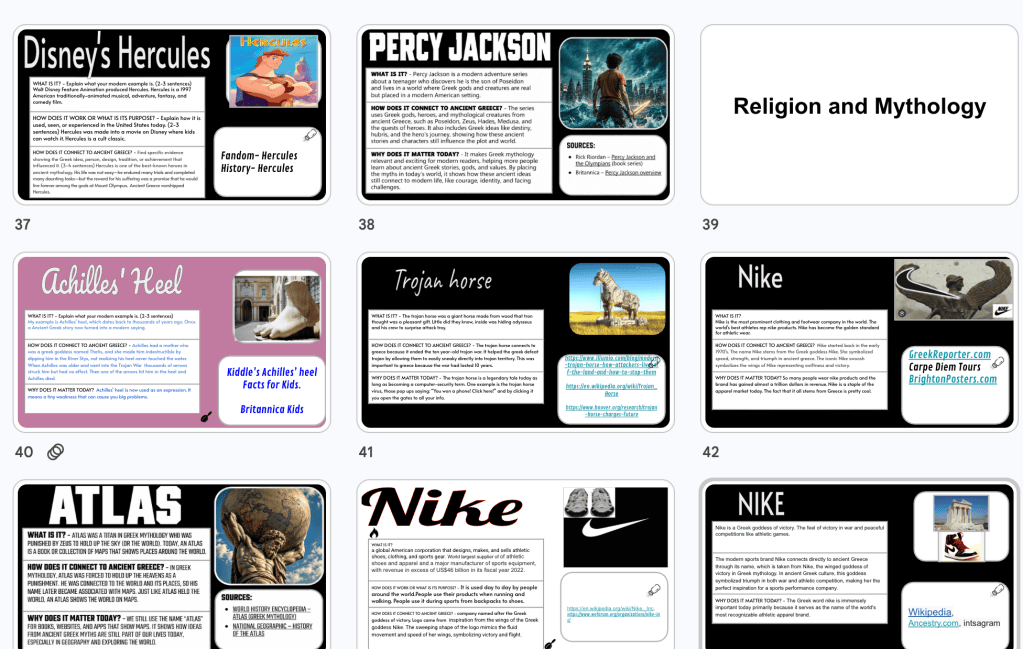
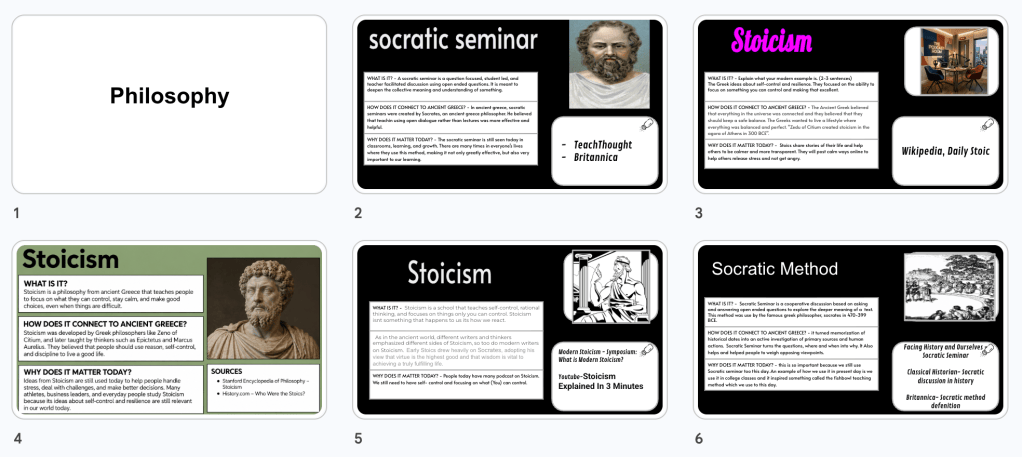
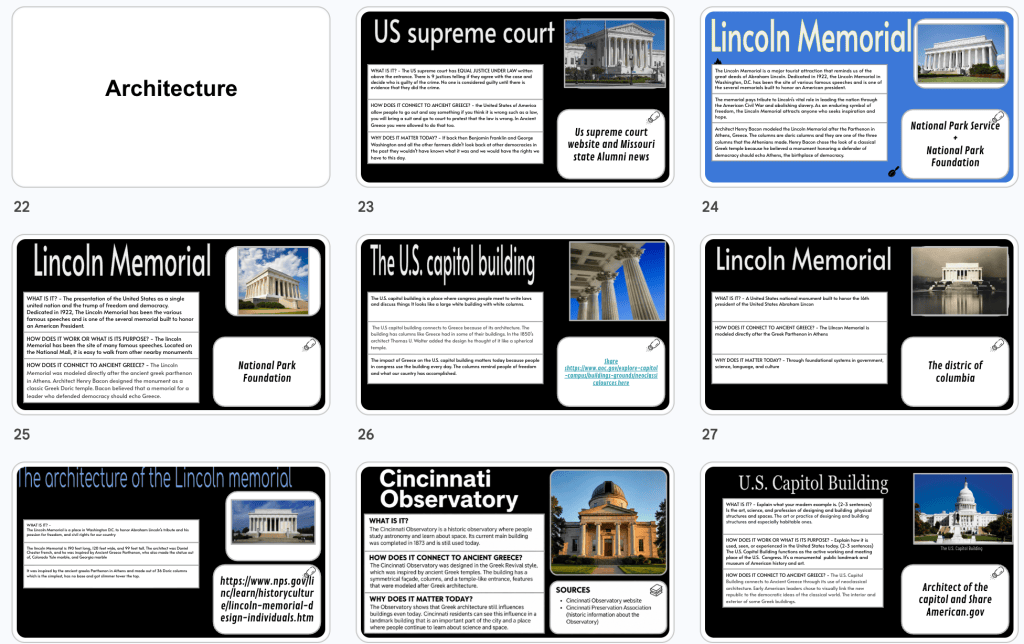
Once students had their category, they still had some choice. They selected a Greek influence from that category and created an Iron Chef slide about it. I tried to make the choices a mixture of things students might expect and things they probably would not immediately connect to Ancient Greece. There were the more obvious connections, but there were also Disney movies, Percy Jackson, and local examples such as the Cincinnati Observatory.
Iron Chef: Greek Influence
Students used their topic to create one slide that taught the rest of the class about that Greek influence and its connection to our world today. The roll of the dice gave them some limits, but they still had choice within the category. More importantly, it kept everyone from choosing the same two or three topics.
I liked the shift from Tuesday to Wednesday. On Tuesday, students were answering What made the Golden Age golden? On Wednesday, they were starting to answer another question: Where can we still see it? By the end of class, we had a collection of student-created examples that we could use for the next day’s lesson.
Thursday: How Much Does Ancient Greece Affect You?
Before class on Thursday, I took all of the Iron Chef slides students had created and compiled them into one large slideshow. Instead of presenting the slides one at a time, students worked their way through the collection and looked at what their classmates had created.
The goal wasn’t to copy information from every slide. Students had already spent Wednesday researching one influence in more depth. Now I wanted them to see just how many different examples the class had found. As they worked through the slideshow, they saw Greek influence in everything from government and architecture to mythology, entertainment, sports, science, and places around Cincinnati.
Tier List: Greek Influence Today
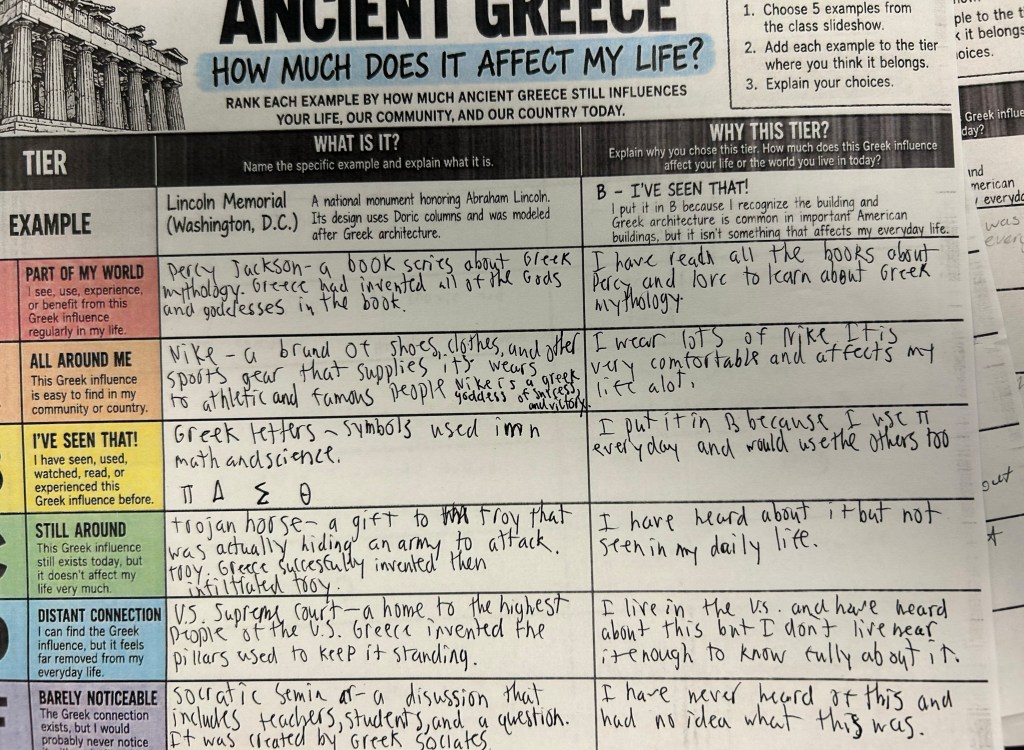
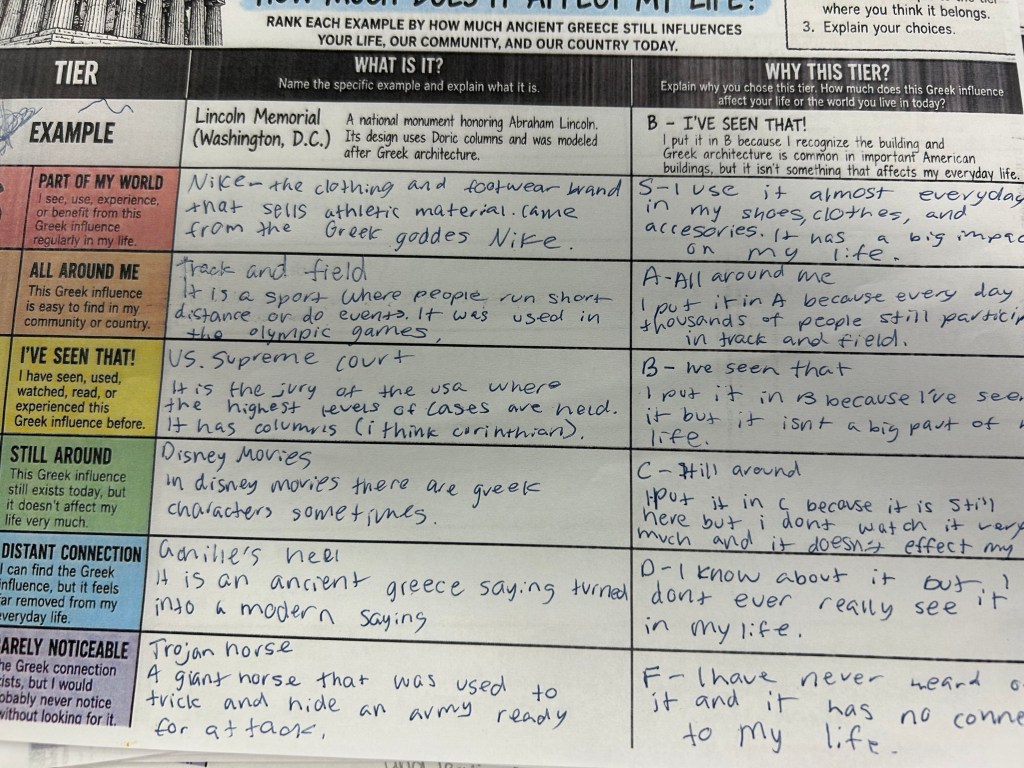
We used a Tier List to process the slides, but I changed the question a little. I didn’t want students ranking which Greek contribution was the most historically important. Instead, I asked them to think about their own lives and rank the influences based on how much each one affects them today.
That made the activity much more personal. There wasn’t necessarily one correct Tier List. A student who reads Percy Jackson or watches movies connected to Greek mythology might rank mythology differently than someone else. Other students might recognize Greek influence in sports, government, architecture, or something they see around Cincinnati.
Students had spent the beginning of the week learning about Ancient Greece as history. By Thursday, they were looking at how much of that history is still sitting right in front of them.
Friday: Two Different Alexanders
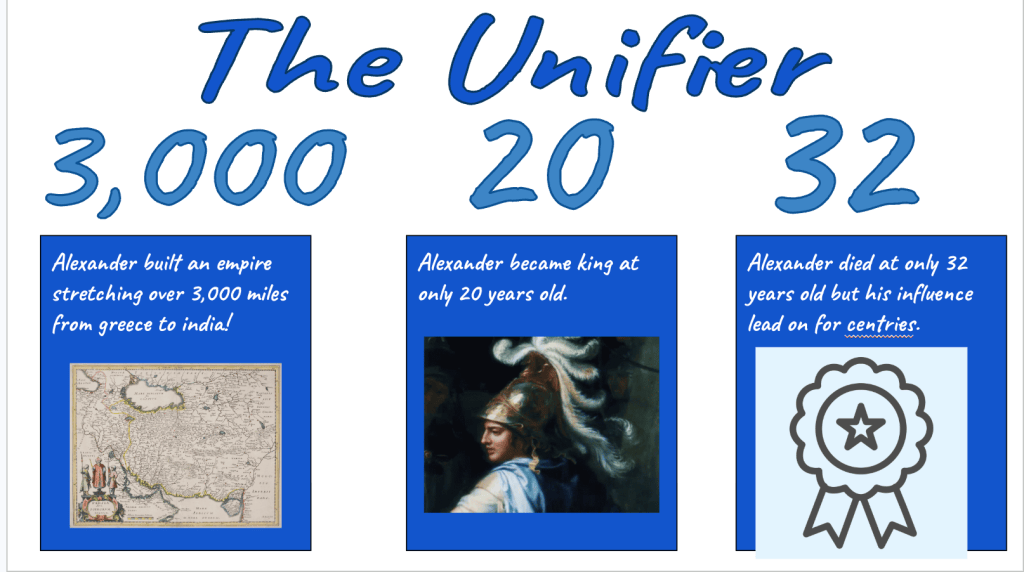
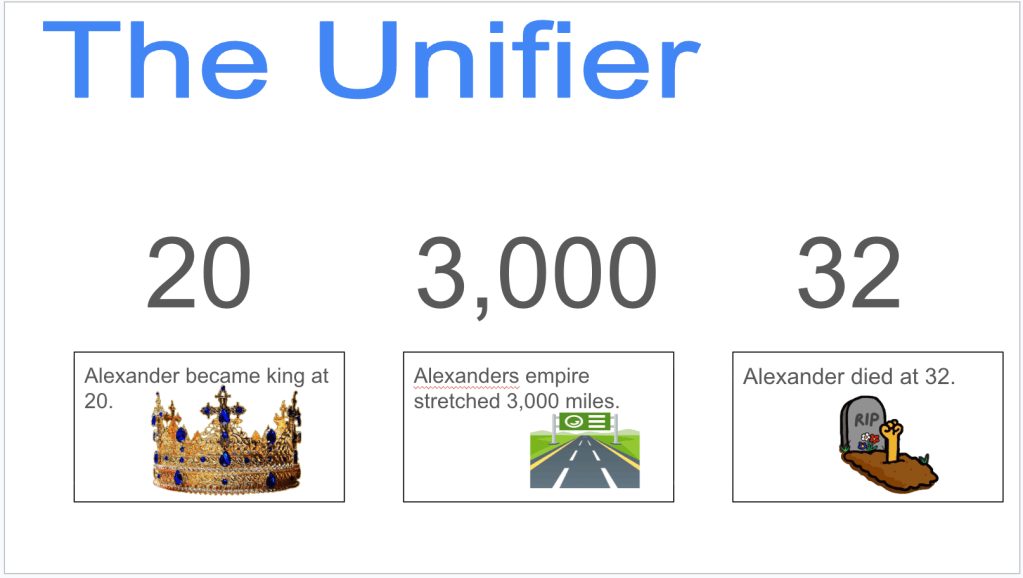
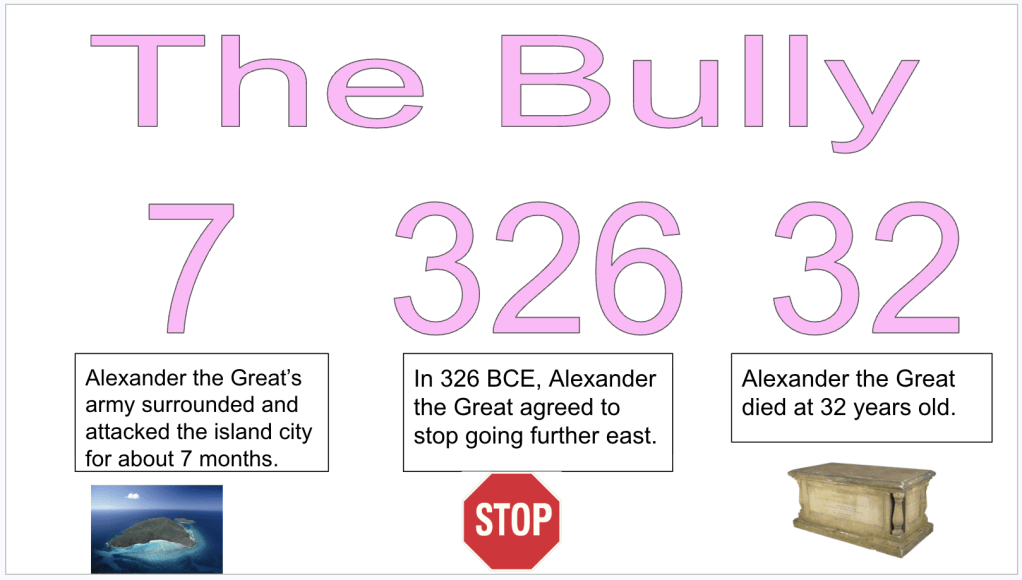
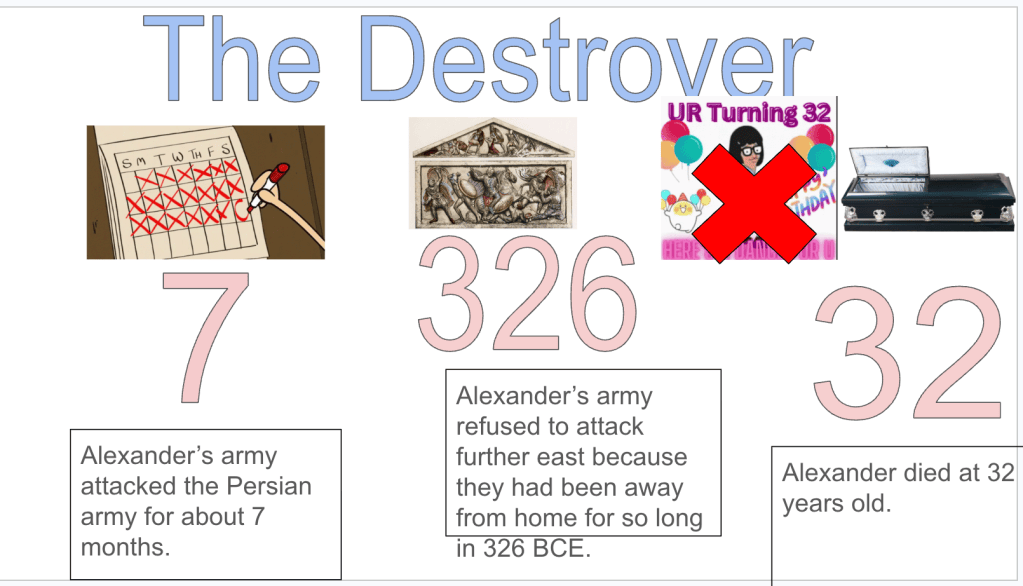
Friday started with something new. I wanted students to learn Number Mania, but I didn’t want their first experience with the protocol to also require them to figure out a bunch of new history content. We started with a simple practice. Students had to take a slide and add two numbers, a title, and a picture. That gave them a chance to understand the basic structure before we used it with Alexander the Great.
Once they had the idea, we moved into Alexander. This time, however, students were not all given the same reading. Some students received a reading that presented Alexander in a positive way, focusing on his accomplishments, military success, empire, and the spread of Greek culture. Other students received a much more negative version that focused on the violence, destruction, and terror that came with his conquests.
The students didn’t know there were two different readings.
Number Mania Meets Archetypes
Students started creating their Number Mania slides using the Alexander they had been given. About halfway through, I decided to add another layer to the activity. I gave students a list of positive and negative archetypes and asked them to choose one that they thought fit Alexander based on their reading.
This is where things got interesting because they were confused.
Some students who had read the positive version of Alexander couldn’t understand why I had included so many negative archetypes. Students with the negative reading were looking at some of the positive choices wondering how those could possibly describe the guy they had just read about.
At first, I wasn’t sure how well adding the archetypes halfway through was going to work. The confusion actually ended up helping.
Teach Your Alexander
Students paired up and shared what they had learned about Alexander. As they started talking, they realized that they had not all been given the same version of the story. One student had learned about a successful military leader who created an enormous empire and helped spread Greek culture. The student sitting next to them might have learned about a conqueror who destroyed cities and used violence and fear to expand that same empire.
They were talking about the same person, but the stories didn’t sound the same.
That gave us the question we will continue with next week: Does Alexander deserve to be called “The Great”?
I could have started the lesson by putting that question on the board and telling students there were positive and negative ways to view Alexander. Instead, the different readings and archetypes allowed them to discover that problem on their own. The confusion over the archetypes actually became part of the lesson. Students had to talk to someone else before they understood why the choices they were seeing did not seem to match the Alexander they knew.
We ended the week with more questions about Alexander than we started with, which is probably a pretty good place to begin an inquiry.
Lessons For The Week
Monday – I can’t share the file, I don’t have permission.
Tuesday – Thick Slide
Wednesday – Iron Chef Slide, Directions
Thursday – Tier List
Friday – Alexander the Great Readings, Number Mania


