This week in 103, we built on our work with Greek geography to explore city-states and the governments that shaped them. Students moved from reading and discussing to whiteboards, writing, and gummy bear governments. MAP testing made the schedule a little unusual, but we kept connecting our learning around who held power and what it meant to be part of a Greek city-state.
Tuesday: What Makes a City-State More Than Just a City?
Tuesday picked up where we left off with Greek geography. Mountains and seas separated communities and helped lead to the growth of independent city-states. Now we needed to build on that with a question: What makes a city-state more than just a city?
Fast & Curious and a Frayer
We started with Fast & Curious on Gimkit to revisit previous learning, followed by a Frayer on citizen. This gave us a chance to look at both rights and responsibilities. Being a citizen meant belonging to a community, having a role in it, and being expected to contribute. We also looked at who had those political rights in Ancient Greece and who was left out.
CyberSandwich: Read and Take Notes
Then we moved into CyberSandwich. Students had 10 minutes to read and take notes, choosing five important facts that could help them answer our question. The reading went beyond the buildings and places within a polis to explore its government, laws, citizen-soldiers, and shared identity.
To the Boards: Choose the Top Three
For the partner discussion, students found whiteboard space, compared their notes, and ranked their top three facts before writing them on the board. I like giving that conversation a specific job. Partners had to decide which facts mattered most for answering the question and agree on what deserved a spot on their board.
Writing and a Battle Royale
From there, students used Scriblit to write their responses, and we ran a Battle Royale with their writing. The same question carried us through the lesson, from reading to partner discussion to writing. Each step gave students another opportunity to explain how a city-state functioned as an independent community and what held that community together.
Wednesday: Who Holds the Power?
Tuesday’s work on city-states gave us a place to start on Wednesday. Each polis had its own government, but those governments did not all operate the same way. We began with Fast & Curious on the four types we would be working with: democracy, oligarchy, tyranny, and monarchy.
Iron Chef on the Whiteboards
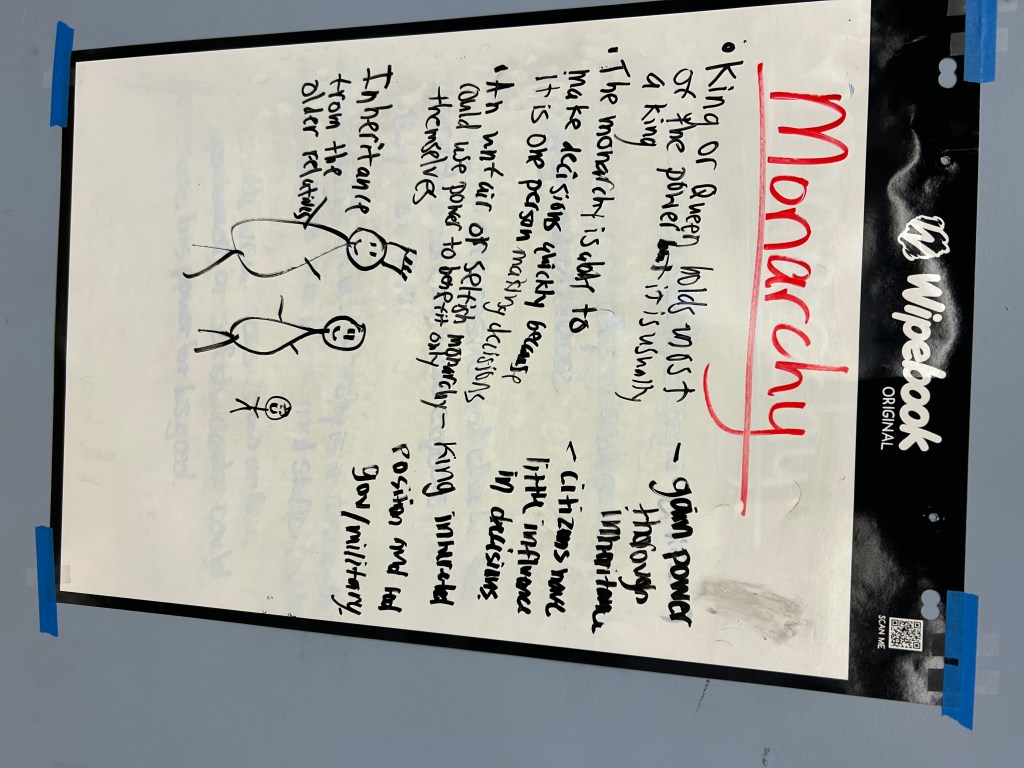
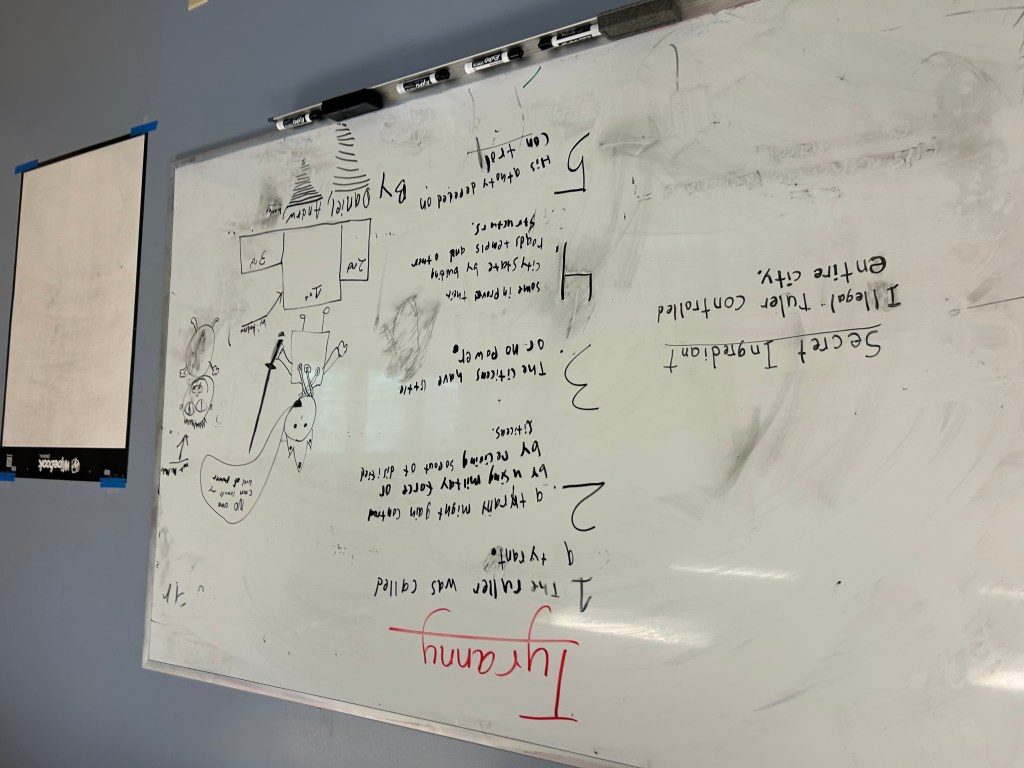
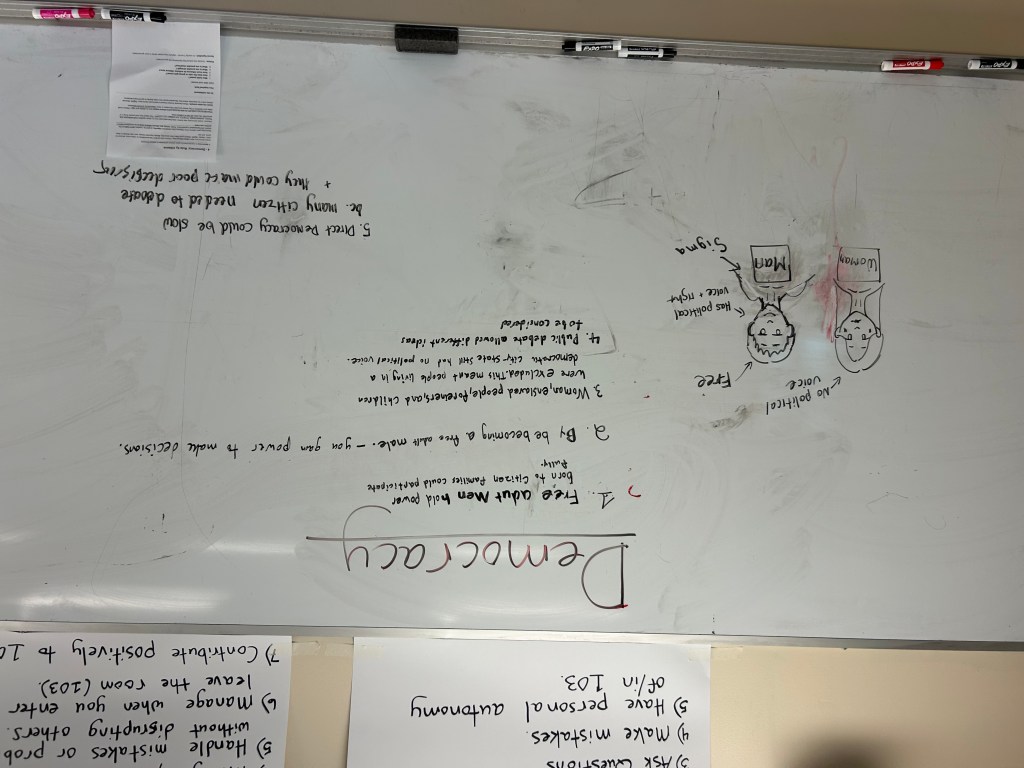
I handed out one of the four government readings to students, and they partnered up to create an Iron Chef whiteboard. Each pair had to explain who held power, how they gained it, how much influence ordinary citizens had, and one possible strength and weakness of that government. They also included a picture to represent it.
The secret ingredient was to explain how power worked in their government in exactly five words. That little constraint gave partners another decision to make. They had to choose words that captured the idea while staying within the limit.
Read the Room
Once the boards were ready, students received a Frayer divided into the four government types. They walked around the room, read each other’s boards, and recorded three important facts about each one. Partners had focused on one government for their Iron Chef, and the walk gave them a chance to learn about the other three.
The same ideas carried across all four: who gets to make decisions, how they get that power, and how much say everyone else has. Those questions would follow us into the next activity.
Thursday and Friday: Gummy Bear Governments
MAP testing made Thursday and Friday’s schedule a little weird, so we spread our next activity across both days. Students had read about the governments, created their boards, and gathered notes. Now I handed out gummy bears and asked them to show how each government worked.
Making Power Visible
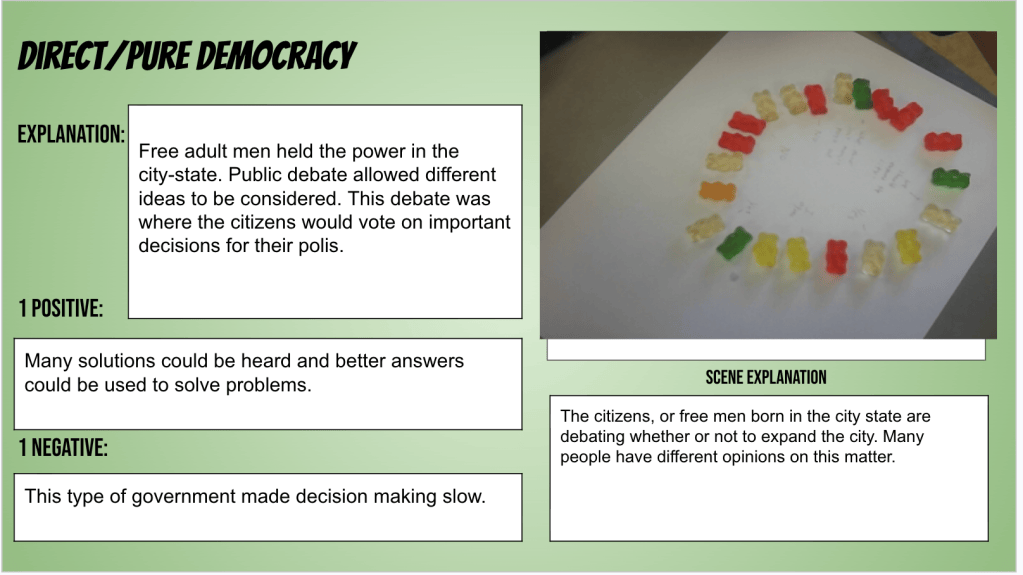
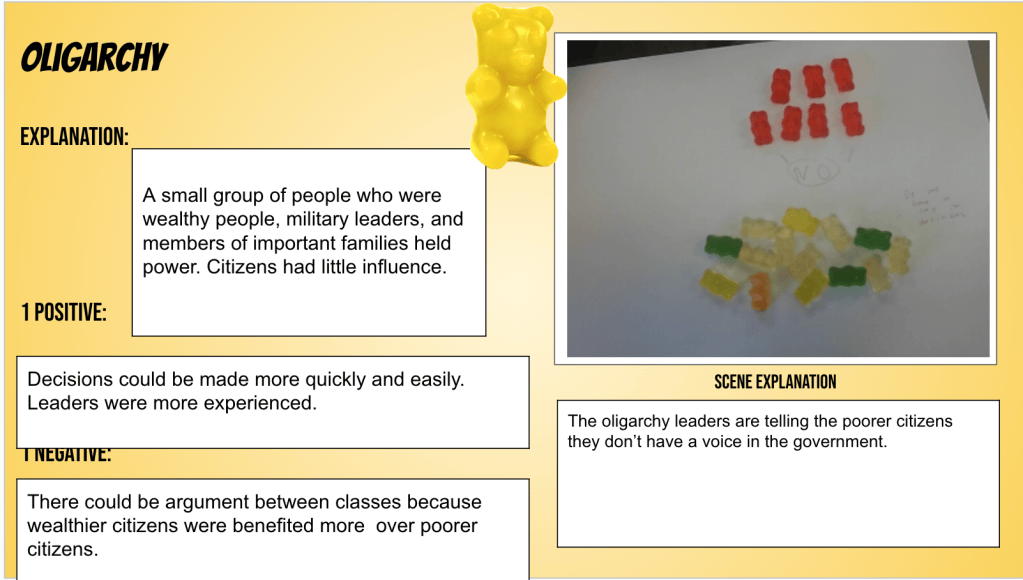
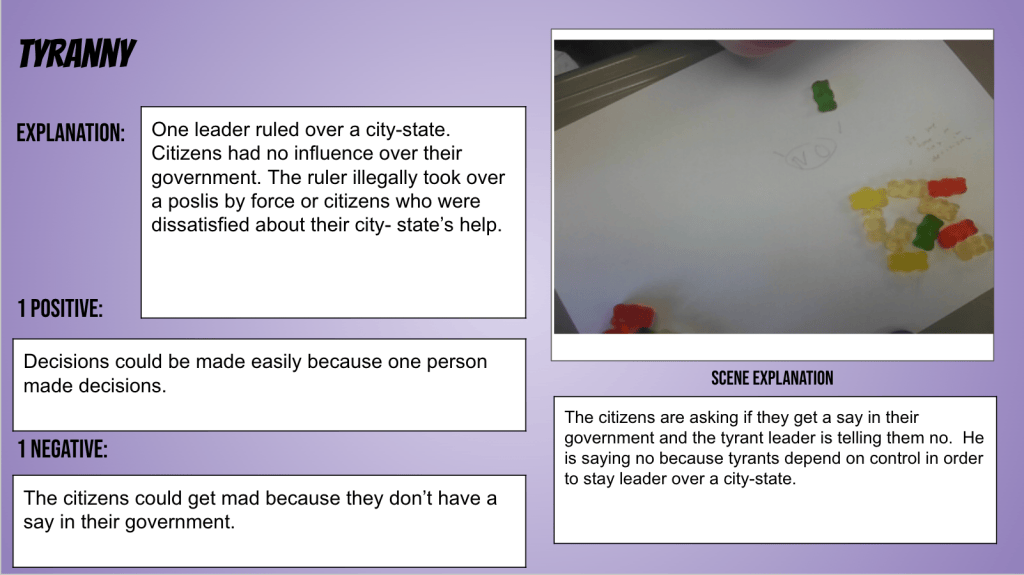
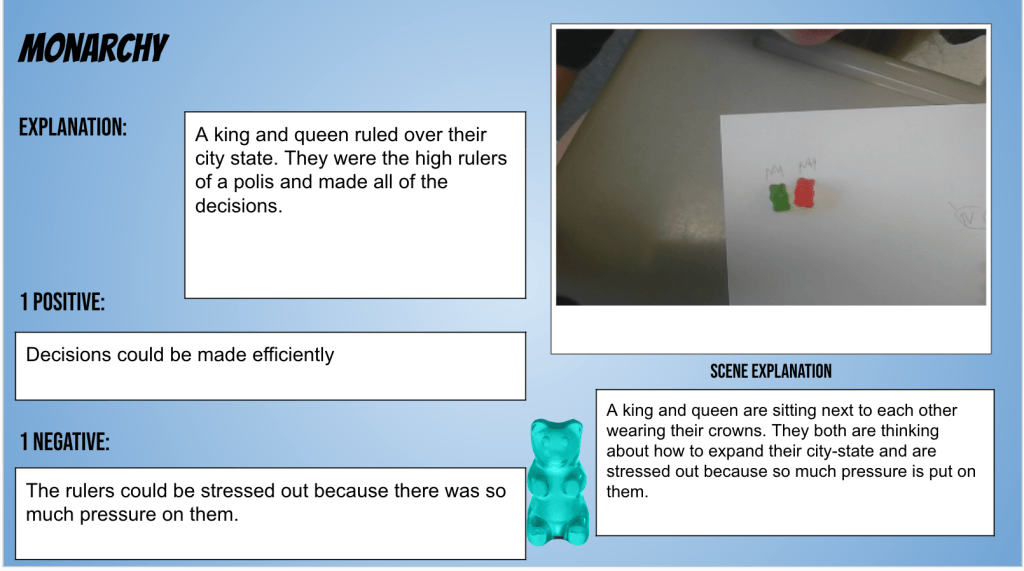
Students arranged their gummy bears into scenes representing democracy, oligarchy, tyranny, and monarchy. They could use construction paper and props to help show who held power and how the other bears fit into the system.
This is where the differences mattered. Monarchy and tyranny both involve one ruler, so showing one bear in charge only tells part of the story. The scene and explanation needed to communicate how that ruler gained power. Democracy and oligarchy also needed to show a clear difference in who had a voice.
Explain the Scene
For each government, students were asked to include a photo, explain how the government worked, and identify one positive and one negative. They also explained what was happening in their gummy bear scene so the arrangement connected to the content.
I like this progression because students keep working with the same information in different ways. They read it, choose what matters, learn from each other’s boards, and then make decisions about how to represent it. The gummy bears give them something to build with, but the explanation is where they have to connect that construction to their understanding of government.
Lessons for the Week
Tuesday – City States Rack and Stack, Reading
Wednesday – Governments Rack and Stack (Frayer with Mr. Roughton Template), Reading

 Moler's Musings