
Monday
Setting the Stage for the Declaration
Monday was all about setting the stage for the Declaration of Independence. This was not the deep dive yet. It was about building background knowledge and telling the story behind the document.
We started with an image of the Declaration itself. I told the story of Thomas Jefferson writing it. Jefferson was a quiet, soft spoken individual, not someone who demanded attention, but someone who could write like no one else. That contrast always hooks students. You do not have to be loud to be powerful.
From Words to Action
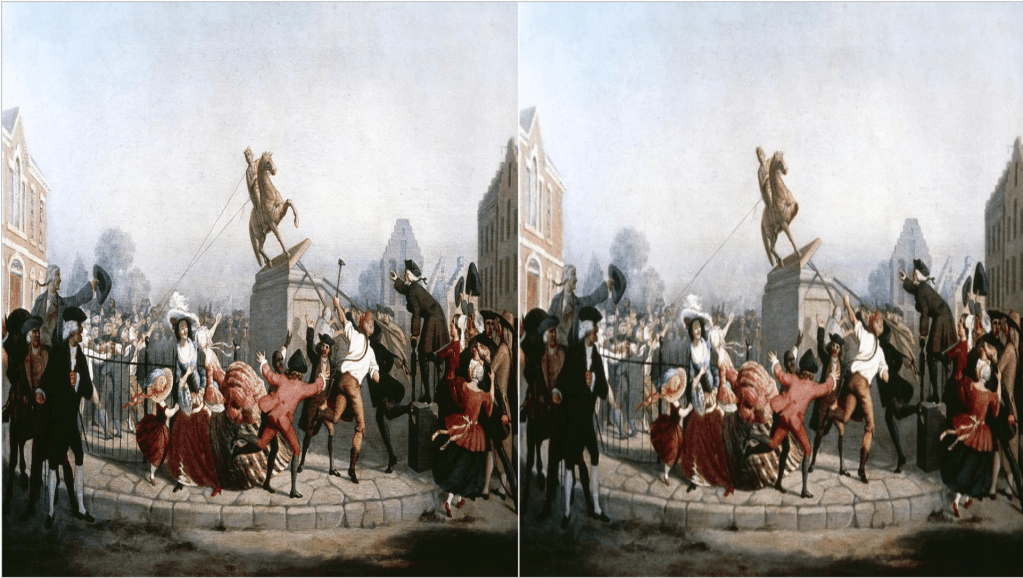
From there, we talked about what happened after the Declaration was approved. It was not just signed and forgotten. It was read aloud throughout the colonies. That moment led perfectly into an image of the King George statue being pulled down at Bowling Green Park in New York City.
I used cleanup.pictures to remove a few details from the image and turned it into a spot the difference activity. I made six changes, just enough to slow students down and make them really look.
Making It Real
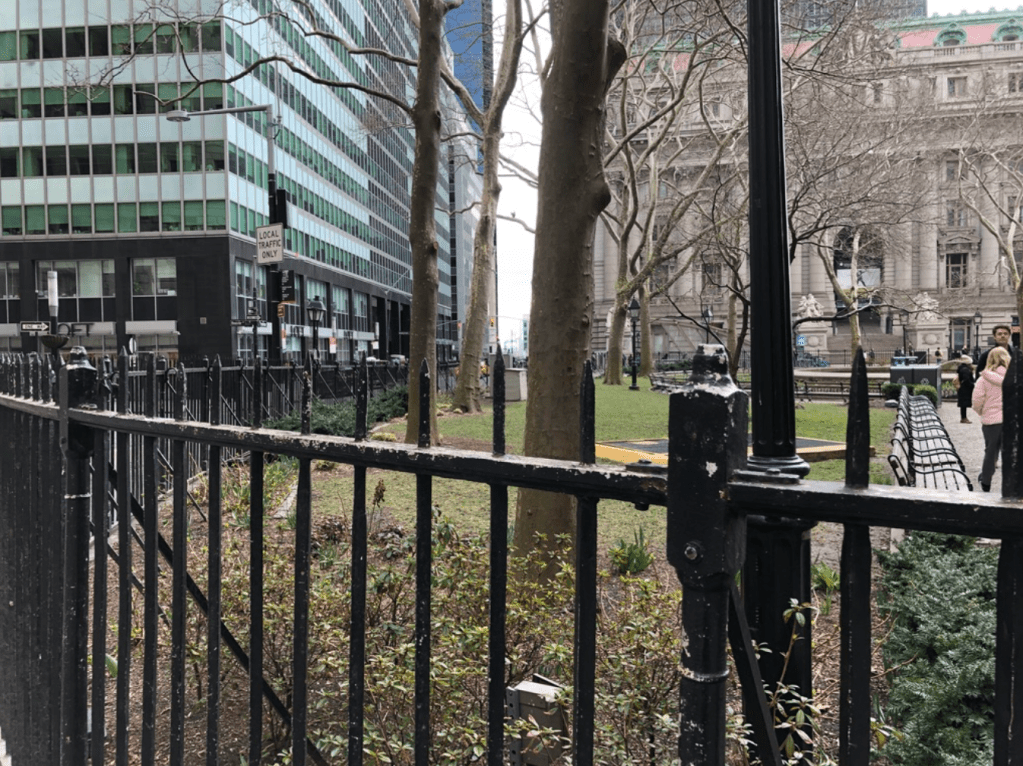
I shared photos from my own visit to Bowling Green Park to help make the moment feel real instead of textbook flat. Since we were heading toward Hamilton’s You’ll Be Back, I also shared an image of Alexander Hamilton’s gravesite, which is right nearby. Small details like that help students realize history happened in real places with real people.
Retelling the Story With Numbers
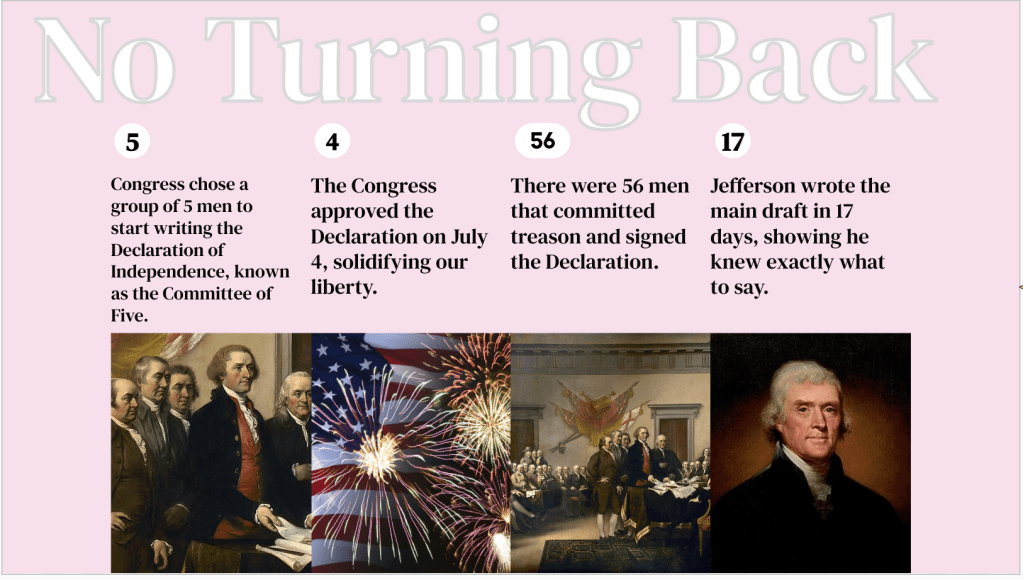
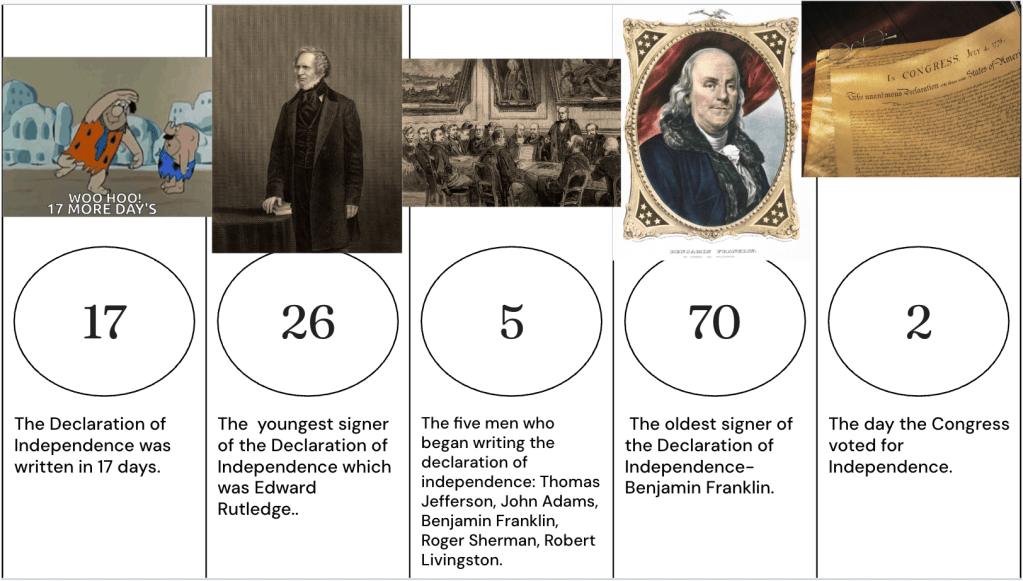
We ended the day with a reading and a Number Mania activity. Students retold the story of the Declaration of Independence using numbers like dates, ages, totals, and time spans.
I also showed students the new Building Blocks feature in Google Slides, which makes it much easier to create a clean template for Number Mania. The students did a really nice job pulling together meaningful numbers, retelling the story, and showing creativity in how they organized their slides.
It was a strong way to start the week and set us up for the deeper work to come.



Tuesday Through Friday
Revisiting Locke Before the Declaration
Before we officially started analyzing the Declaration of Independence, I wanted to pause and go back to John Locke. Students had learned about him earlier, but I wanted to see what stuck.
I wrote a paragraph about John Locke, natural rights, and the social contract and embedded four errors into the text. Students had to find the mistakes and correct them. This worked really well. They were locked in, talking through ideas, and justifying why something did or did not make sense. It was one of those moments where you can tell the thinking is actually happening.
Nachos, Errors, and the Declaration
A lot of what came next was inspired by my friend Dominic Helmstetter. He shared a lesson sequence he used with the Declaration that included Annotate and Tell, 3xPOV, Retell in Rhyme, and Taylor Swift. I borrowed heavily and made it my own.
We kicked things off with a Helmstetter classic, the Nacho Thin Slide. About four weeks ago, I was challenged to incorporate chips and salsa into a lesson. Students forgot. I did not.
I had chips and salsa out and waiting. Two slides were posted, each with four statements connected to the Declaration of Independence Number Mania reading. Three of the statements had errors. Students had to find and correct them while eating chips and salsa and discussing the Declaration. It was loud, focused, and surprisingly productive.


The Greatest Breakup Letter Ever Written
Next came an introduction to a new question. Who said it, Taylor Swift or Travis Kelce?
We looked at breakup lines and talked about tone, message, and purpose. I kept coming back to the idea that the Declaration of Independence might be the greatest breakup letter ever written. That framing stuck with them and carried into the rest of the week.
Chunking and Translating the Declaration
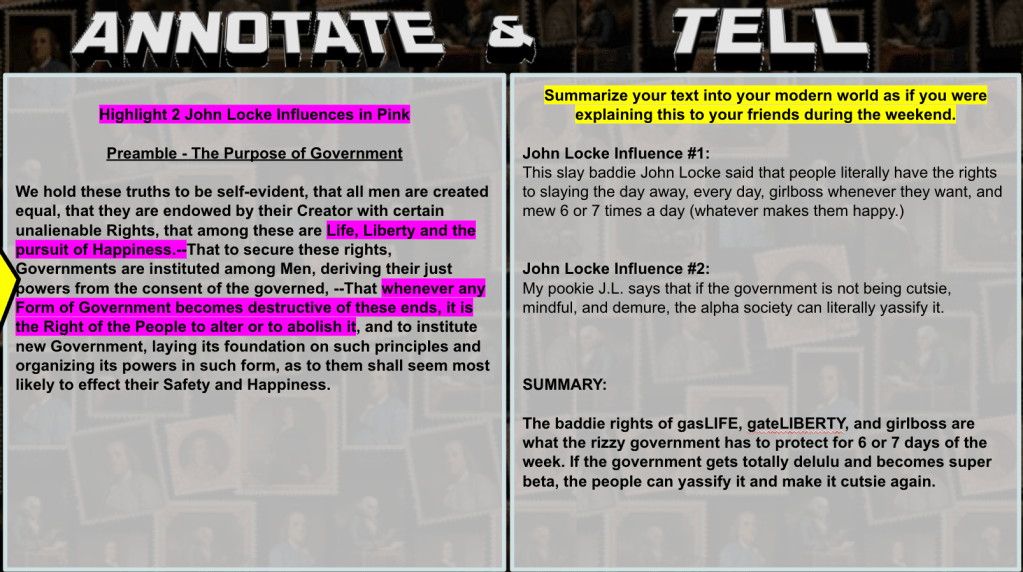
Over the next couple of days, we read and annotated the Declaration in sections. We focused on the preamble, the purpose of government in the preamble, the grievances, and the closing statement.
As we worked through each section, I challenged students to summarize the meaning using modern language. This was easily one of their favorite parts. They had fun translating eighteenth century ideas into words they would actually use, while still trying to keep the meaning intact.


Three Perspectives, Three Minutes Each
Once students had a solid understanding of the document, we shifted to writing from different perspectives. Students wrote from the point of view of King George, Patriots, and Loyalists.
They wrote for three minutes per perspective. I used Hamilton songs as timers. When students wrote as King George, I used You’ll Be Back as the timer, which felt both appropriate and hilarious. The time pressure kept them moving, and the music helped set the tone for each perspective.


Retell in Rhyme
The final piece of the lesson was Retell in Rhyme. This year, I have been trying to honor my co-author and friend Dr. Scott Petri by intentionally using some of the lessons he created. Retell in Rhyme is one I do not normally use, but I decided to give it a shot with the Declaration of Independence.
By this point, students had annotated the document, written from three perspectives, and discussed its meaning multiple times. Retell in Rhyme felt like the right capstone.
Students partnered up and created rhymes explaining the meaning of the Declaration. Some stuck to the minimum of three couplets. Most went way beyond that. I got the idea from Dominic Helmstetter, and I know Scott would have approved.
I took their poems and converted them into songs. I wish I could have let students design their own songs, but the AI platform Udio was blocked. So I did it myself and shared the links with them.
The results were awesome.
We ended with a listening party and played “Bop or Flop.” Students voted, reacted, laughed, and genuinely enjoyed hearing their work come to life.
It was one of those moments that reminded me why trying something new is worth it.
Lessons for the Week
Monday – DOI Number Mania, John Locke Errors Fix
Tuesday – Friday – Nacho Thin Slide, DOI Analysis


