This week looked a little different. Between interruptions, schedule changes, and all the end-of-year randomness that comes with May, this was not a clean “day-by-day” kind of week. Instead of forcing content forward, we slowed down and focused on a few things that deserved more time. One of the biggest was wrapping up our Cincinnati inquiry unit.
Cincinnati: Caught Between Two Worlds
Our essential question throughout the unit was: “How was Cincinnati a city caught between two worlds before the Civil War?”
Students learned about the Ohio River and how it symbolically divided free and slave states, but we also talked about the reality of the river itself. Before modern dams and river systems, the Ohio River was not always deep or difficult to cross. At certain times of the year, parts of it could be only one to three feet deep or frozen over completely. That small detail changed how many students viewed escape, movement, and the idea of freedom itself.
We also explored why pigs are everywhere in Cincinnati and why the city became known as Porkopolis. Students connected the river to trade, transportation, and economic growth. Cincinnati was booming because of its location, but students also began to realize how connected the city still was to the South economically and culturally.
That contradiction became the center of the inquiry. A free state did not mean free from racism, discrimination, or violence. Students examined the Cincinnati riots of 1829, 1836, and 1841 and discussed what those events revealed about the city. Many students walked into the unit assuming “North = good” and “South = bad.” Local history complicated that thinking in important ways.
Ending the Unit with One-Pagers
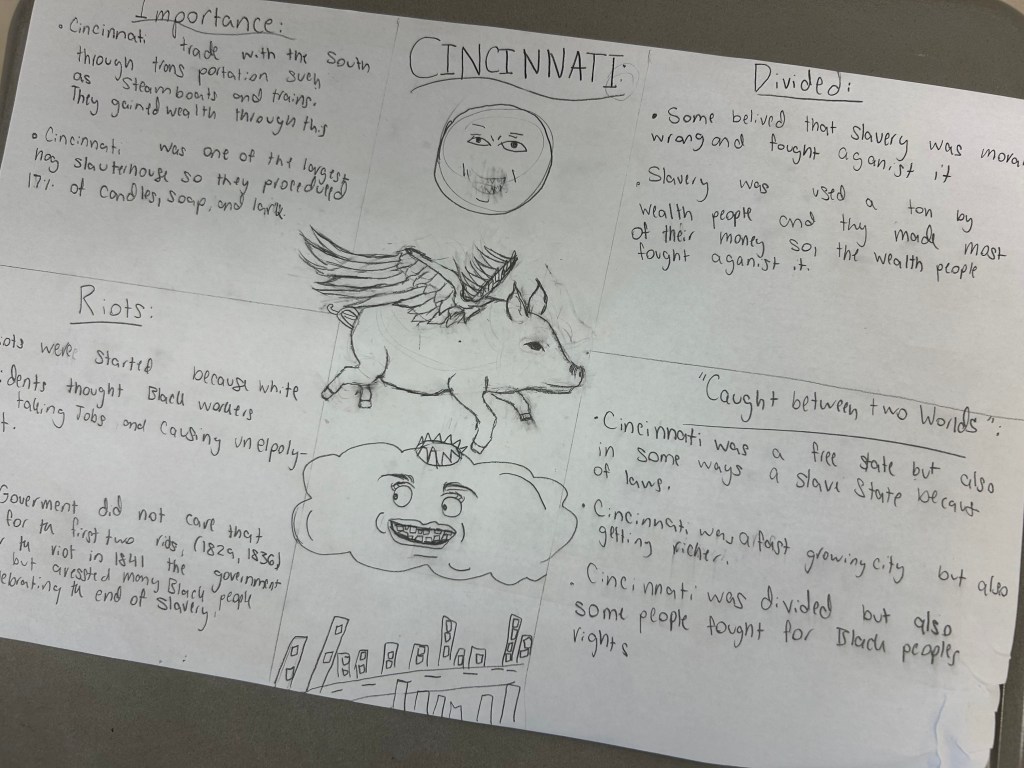
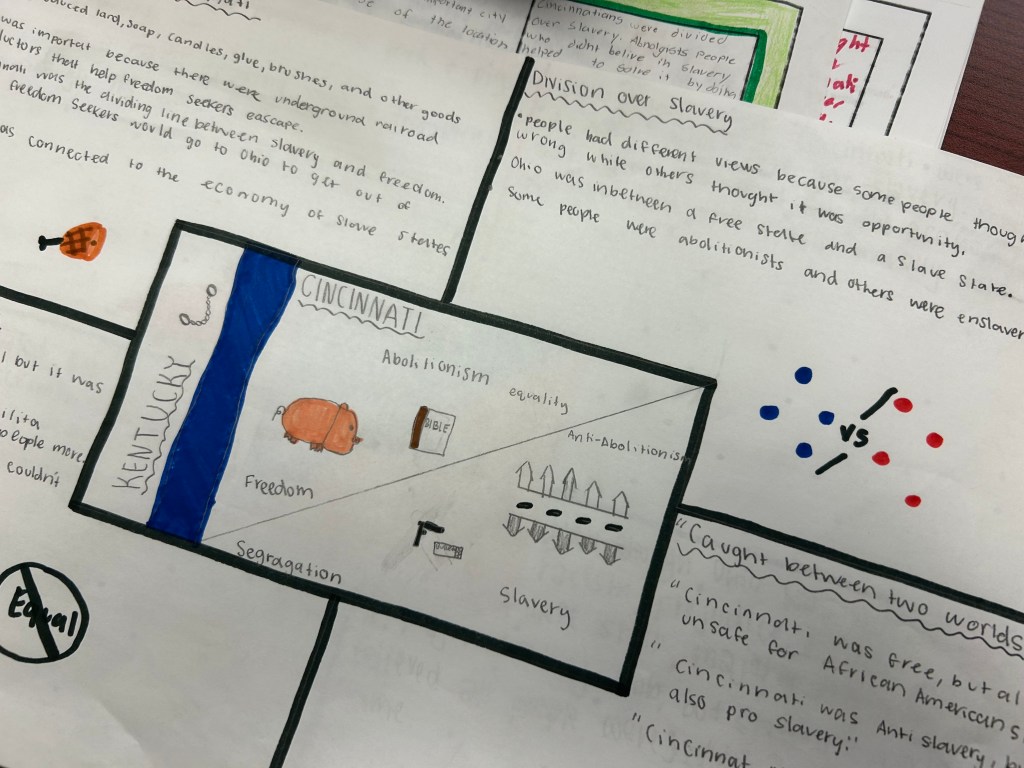
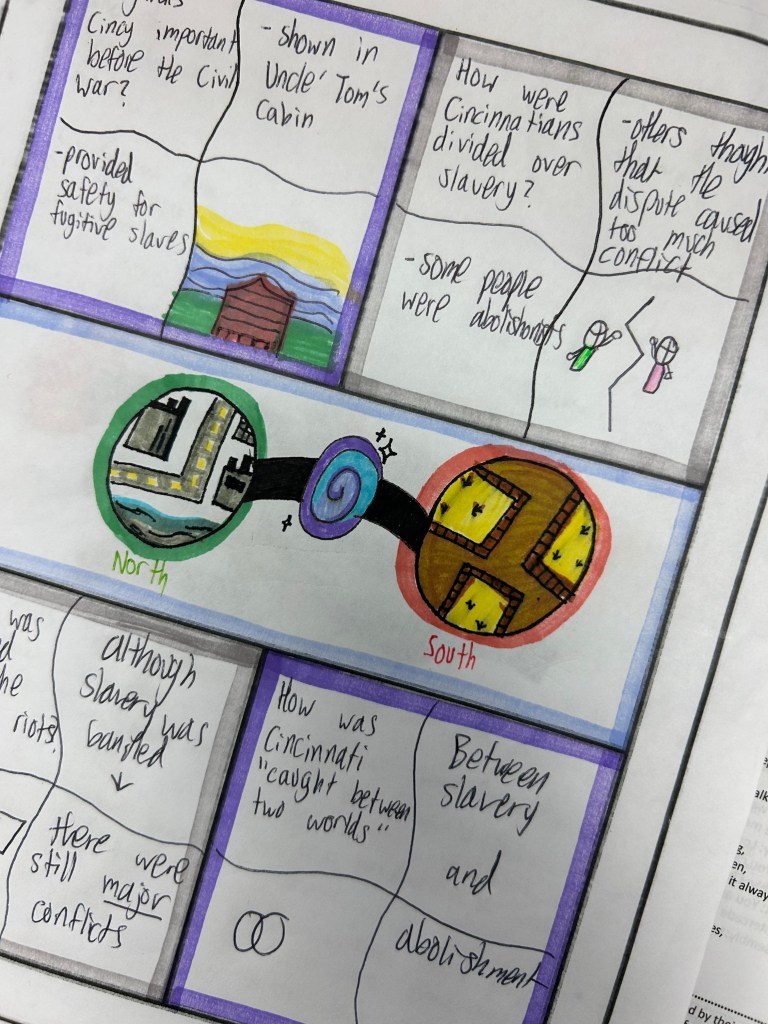
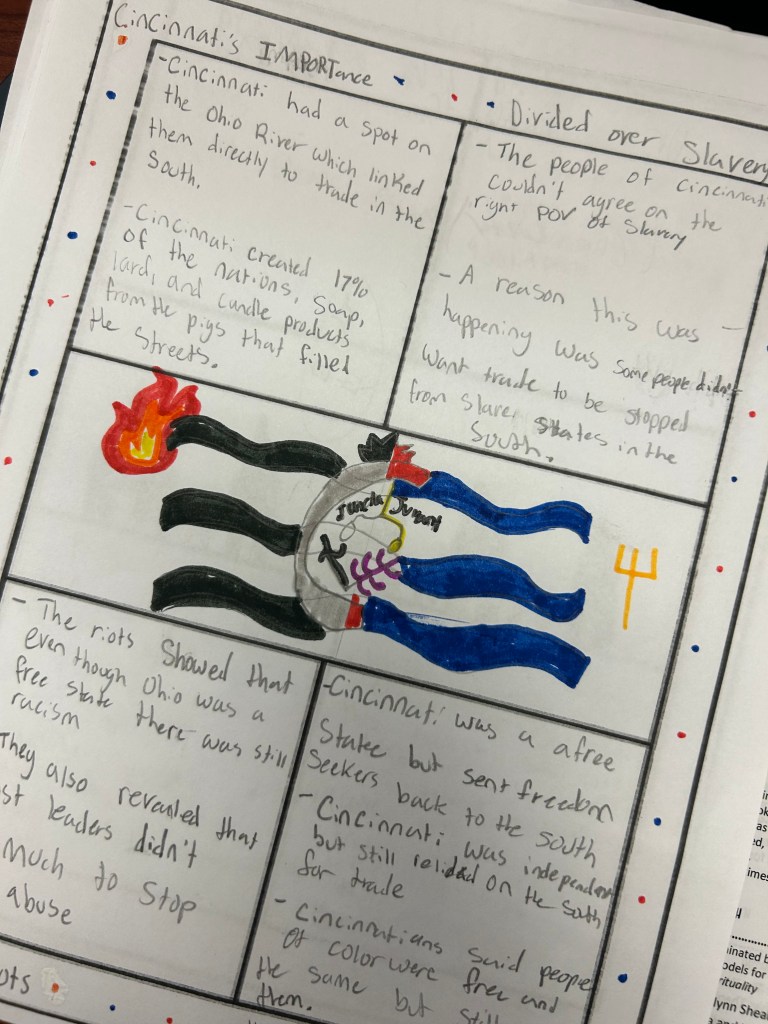
To finish the inquiry, students created one-pagers that visually explained the tensions and contradictions of Cincinnati before the Civil War. The structure of the assignment asked students to break the inquiry into sections:
- Why Cincinnati became important before the Civil War
- How Cincinnatians were divided over slavery
- What the riots revealed about the city
- Why Cincinnati was “caught between two worlds”
One of my favorite parts was the contradiction statements:
“Cincinnati was ____________, but also ____________.”
Those statements forced students to move beyond simple answers. Cincinnati was a free city, but also deeply discriminatory. It was economically successful, but also divided. It was connected to freedom seekers, but also connected to pro-slavery beliefs and racial violence.
The one-pagers also gave students room to show understanding in different ways. Some students leaned heavily into symbolism with rivers, chains, bridges, and divided maps. Others focused more on evidence and written explanations. A few created visuals that connected Porkopolis, the Ohio River, and the riots all together on the same page.
That is the kind of work I want students doing at the end of a unit. Not just repeating information, but organizing ideas, wrestling with contradictions, and building meaning from evidence.
Turning Coloring Pages Into History
The other thing we did this week was much lighter. My 8th graders are graduating soon. At this point in the year, they still need structure and purpose, but they also need room to breathe a little. I wanted something creative, low stress, and genuinely fun. So I went down a rabbit hole.
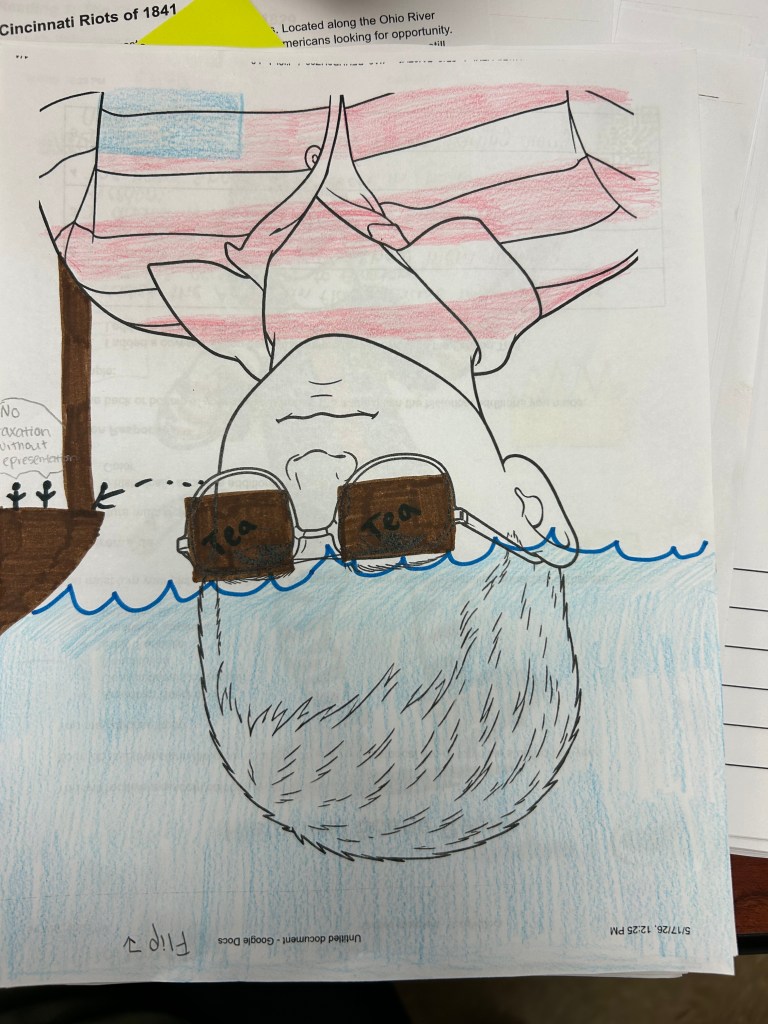
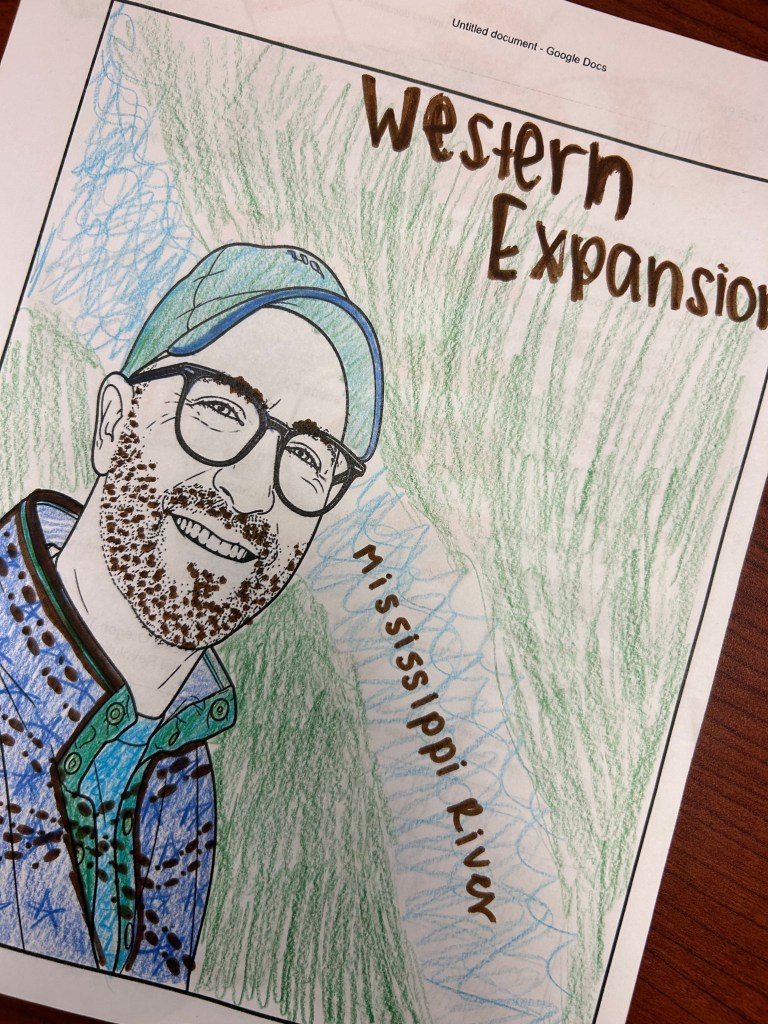
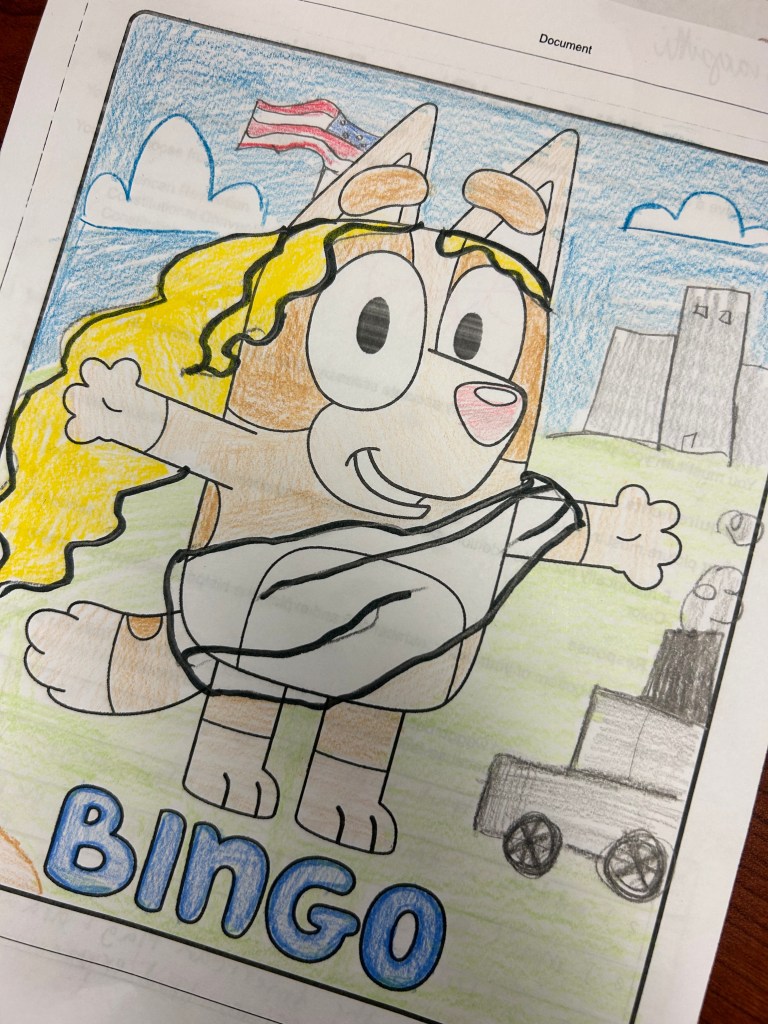
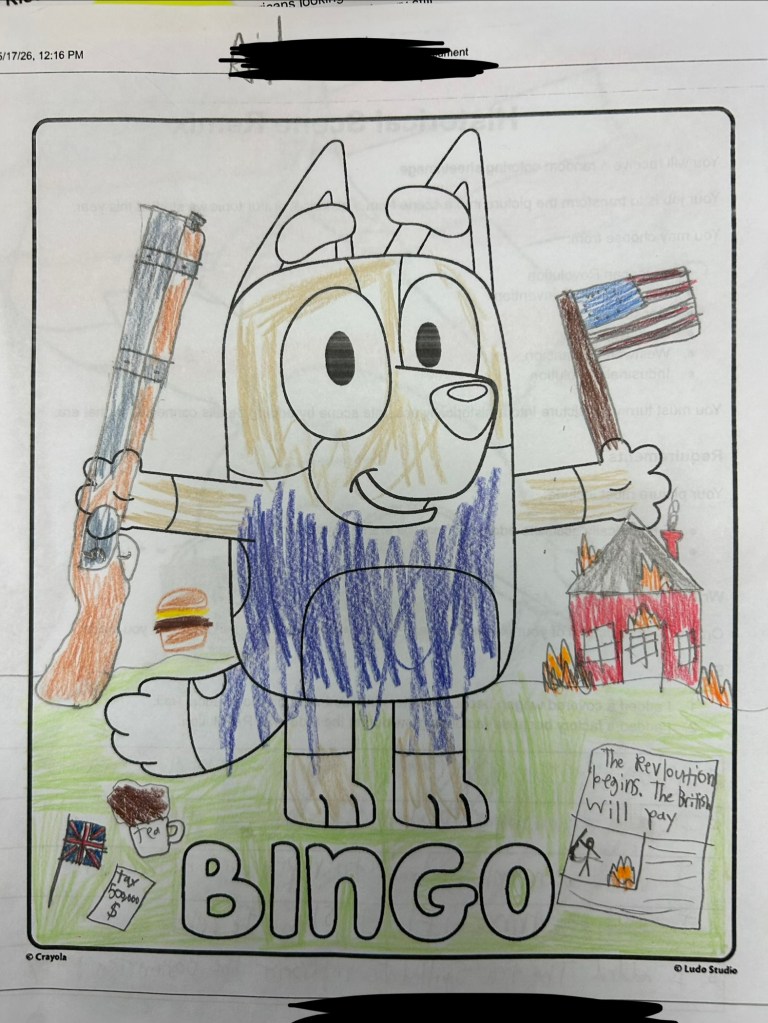
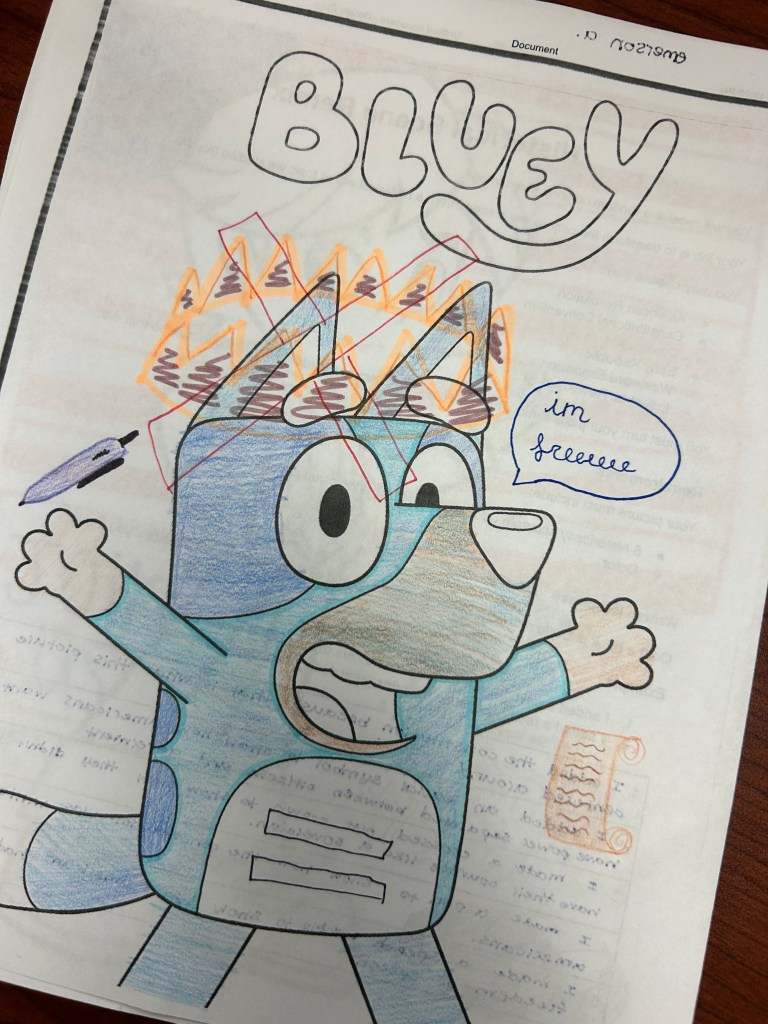
I found coloring pages on Crayola’s website, used ChatGPT along with old pictures of myself, and made a collection of weirdly specific coloring pages connected to our class. Then students had to transform the coloring page into a historical scene or moment. That was it. Add at least five historical details or symbols and explain what you added.
Some students turned Bluey into historical figures. Others added scenes from westward expansion, the American Revolution, or industrialization. One student turned a coloring page into a tea protest scene complete with taxation references and a burning building. Another added a Mississippi River reference into a western expansion design. One student even turned me into a coloring page.
And honestly, it ended up being one of those assignments where students quietly worked longer than expected because they were invested in it.
There was something fun about watching middle schoolers take a simple coloring page and turn it into something historical, creative, and weirdly thoughtful. Some were funny. Some were surprisingly detailed. A few looked like absolute chaos in the best way possible.