
This week we continued with our study of the first five presidents of the United States, exploring this question: “How well did the major decisions under Washington, Adams, and Jefferson live up to the Federalist and Democratic-Republican visions for America?” This week we looked at Thomas Jefferson and the Louisiana Purchase and James Madison and the War of 1812. A common theme throughout this unit has been having students put themselves in someone else’s shoes and examine different events from other perspectives. This has been a recurring theme throughout the entire unit.
My classes were still a bit uneven, so I did some things this week to get all my classes back on fairly even ground. Between lessons on Jefferson and Madison, I incorporated review with a Resource Rumble and an engaging “culture shock” lesson I adapted from Mr. Roughton, which allowed me to catch all my classes up to the same point again. The main EduProtocols I utilized this week were Thin Slides, Archetypes, CyberSandwich, 3xCER, and Number Mania.
Tuesday – Louisiana Purchase
Wednesday – Mr. Roughton website
Thursday and Friday – War of 1812, History4Humans, Gimkit
Tuesday
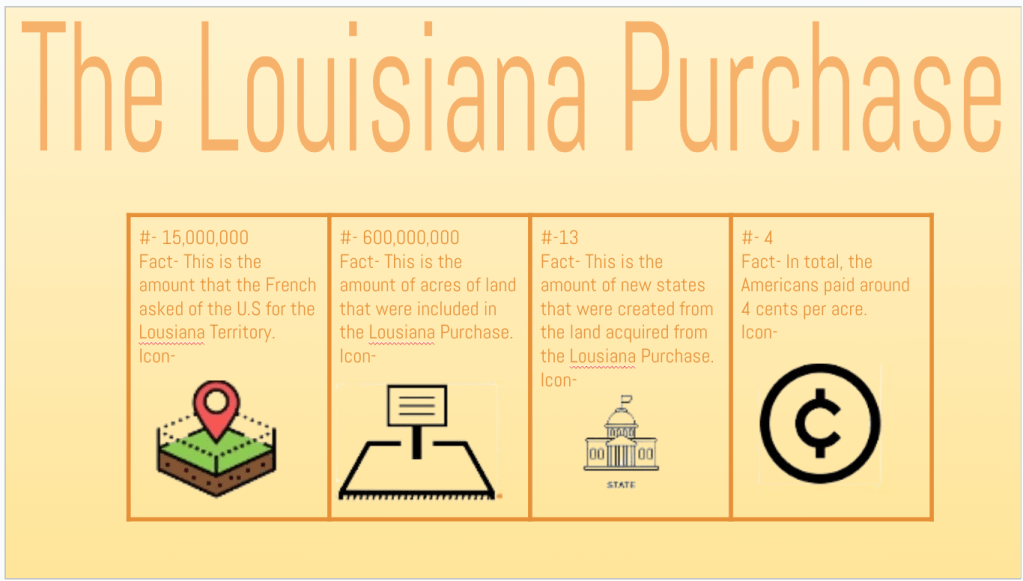
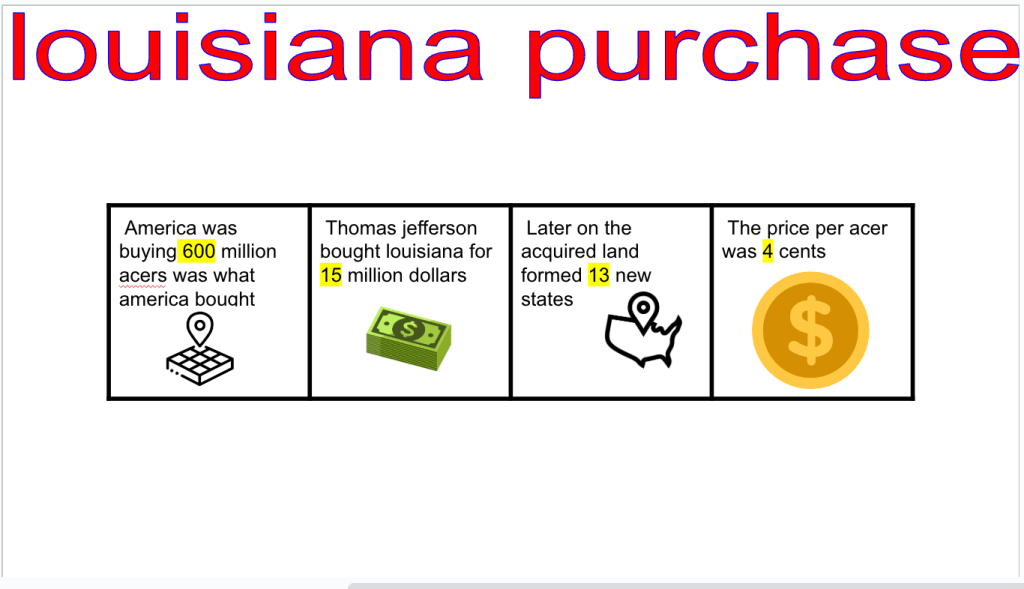
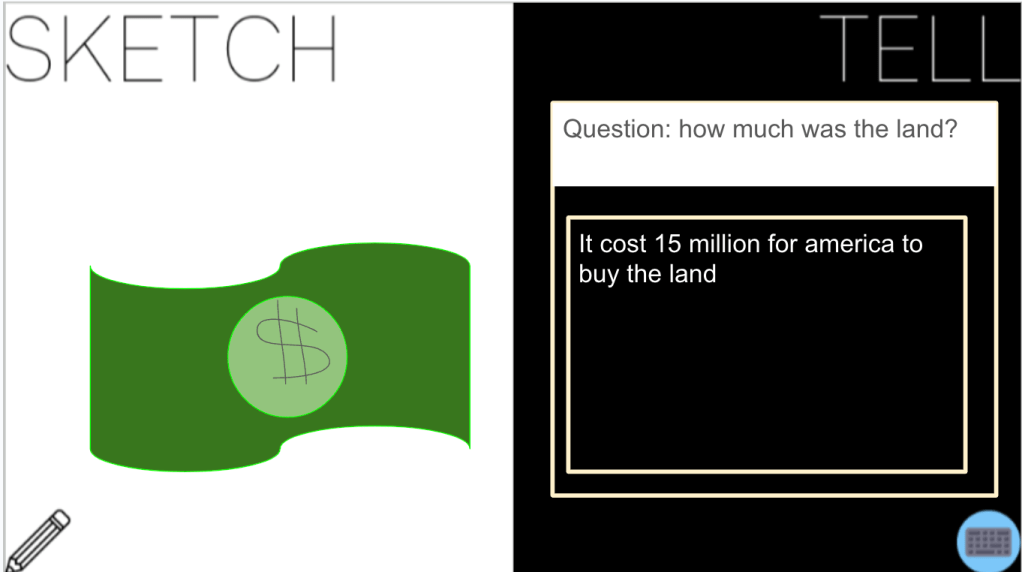
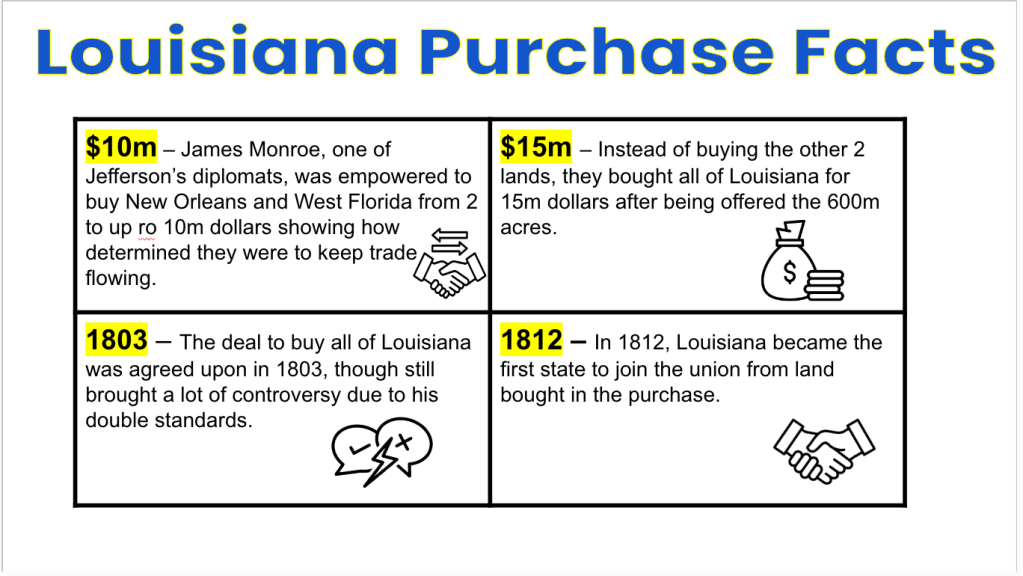
On Tuesday, we did a lesson on the Louisiana Purchase. I asked why Federalists opposed the purchase. First, I provided relevant background knowledge before students could answer. I started with a Thin Slide, asking students to find an interesting fact about Thomas Jefferson to share with a partner. Next, I gave students a section of the textbook on the purchase, enhanced with AI to incorporate more statistics. With Number Manias, I often give a quote for students to support with facts and numbers. The quote: “Expanding the country west was a key goal for Jefferson. So even though it went against some of his usual policies, Jefferson made the daring choice to buy all of Louisiana from France.” Before the Number Mania, students completed a Frayer model for the word “diplomat”—I should have done this last week with the XYZ Affair. Students then had 5 minutes to read and find 4 numbers to support the quote, followed by 15 minutes to design slides.
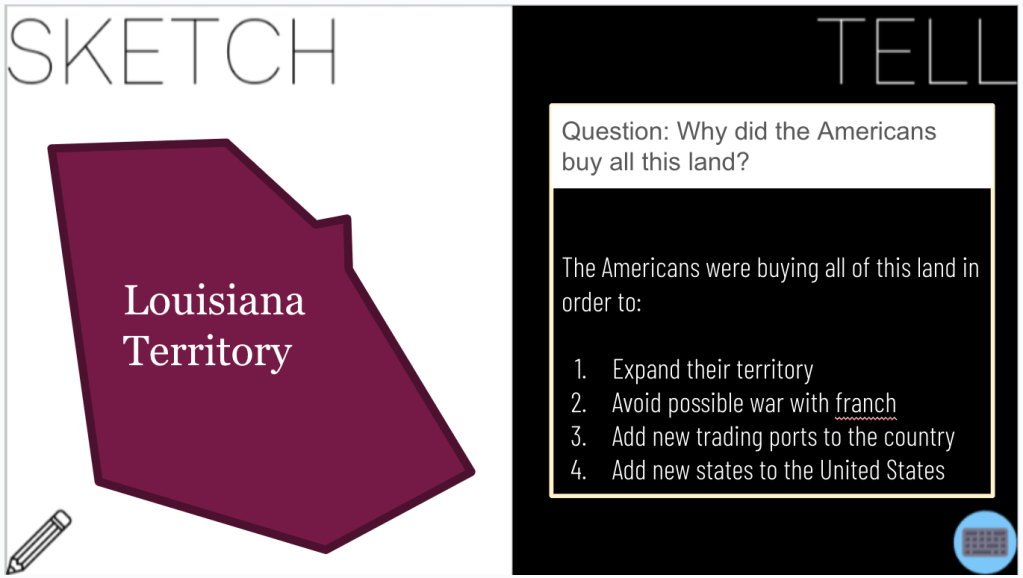
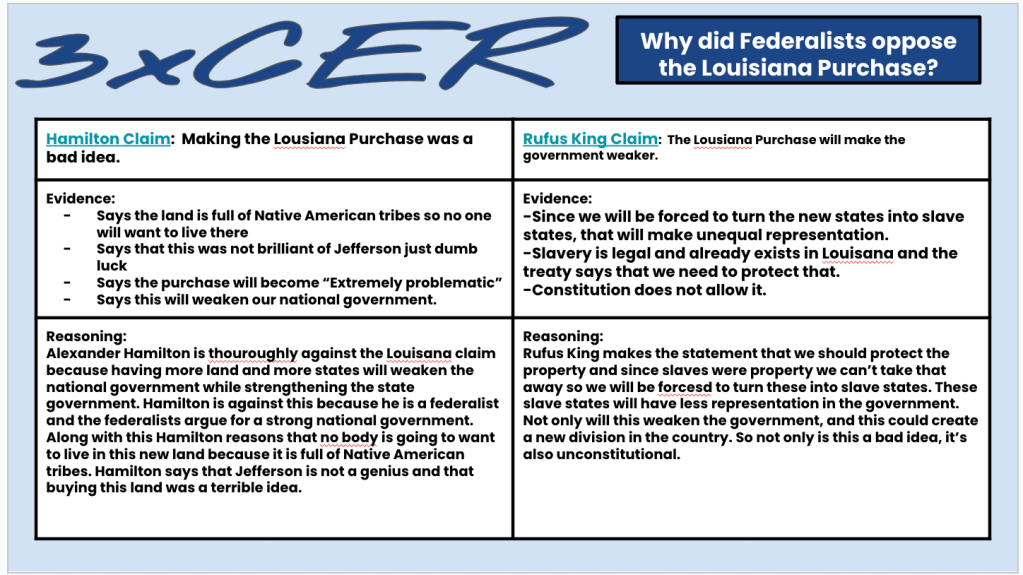
We then did a 3xCER, answering why Federalists opposed the purchase. I emphasized that although doubling the U.S. size seemed positive, Federalists objected. This ties back to whether these presidents upheld party visions. Students read Hamilton’s editorial, recorded his claim/evidence/reasoning regarding his opposition, then did the same for a Rufus King letter. I think this showed multiple perspectives—on one hand it seemed beneficial, but Federalists opposed it for potentially expanding slavery, weakening federal power, etc. This foreshadows future learning and reminds that Federalists favored centralized power.



Wednesday
On Wednesday, I wanted some classes to catch up while allowing advanced classes to continue progressing. With one class, we used a Resource Rumble to review Washington, Adams and Jefferson’s presidencies. With other classes, we did Mr. Roughton’s “Culture Shock” lesson. This gave a feeling of early 1800’s life while reviewing past learning. It began by having students write the principal about a policy change, but I blocked out harsh language, relating it back to Adams’ Sedition Acts. We did an activity with political cartoons about presidents. We went outside to sketch leaves, then read Lewis & Clark journal entries to guess the animal, which I tied back to the Louisiana Purchase exploration. Students enjoyed this lesson, so I will use similar ones in the future.
Thursday and Friday
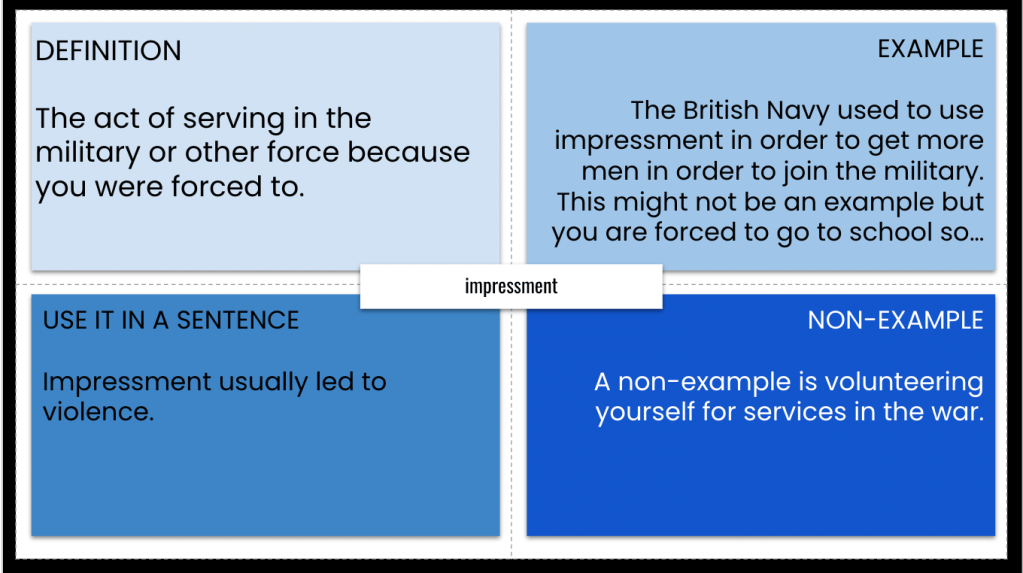
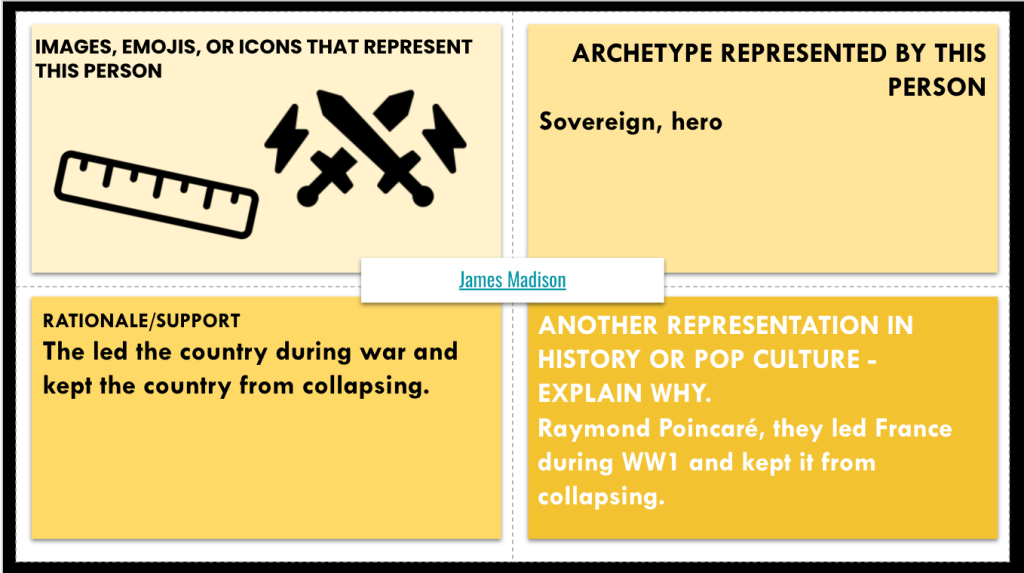
On Thursday and Friday, we began examining James Madison and the War of 1812, asking what he should do about British impressment. Since most students didn’t know Madison or impressment, I structured activities to build background knowledge. We started with a Thin Slide about Jefferson’s Embargo Act, efficiently providing/reinforcing information. Before they began, I rolled dice to determine slide phrase length to encourage concise summarization. My goal was to show Britain/France tensions persisted. I asked students the definition of insanity – trying the same thing but expecting different results – which I likened these first 3 presidents’ failed efforts to avoid war. Next was a Madison Archetype Foursquare, then students Frayer modeled “impressment” and “warhawks.”
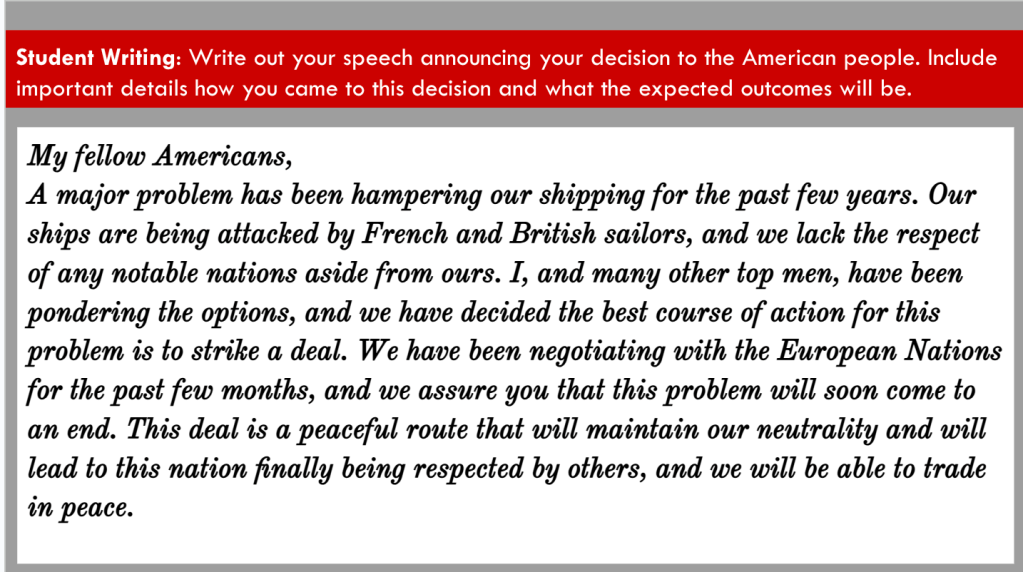
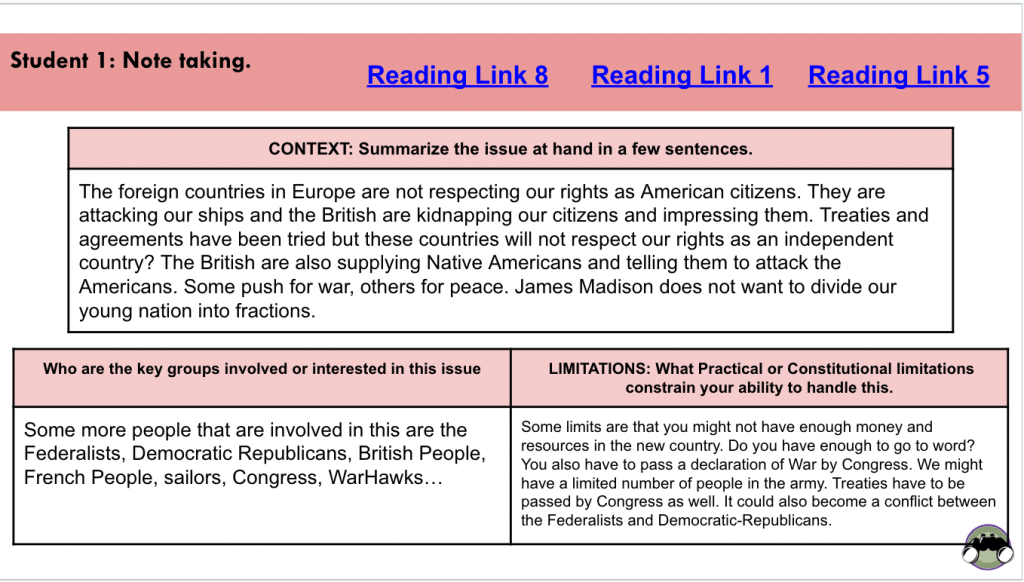
I then added a CyberSandwich using an activity from Dan Lewer’s website putting students in Madison’s shoes regarding impressment. After a briefing/timeline for context, I simply asked them to decide as if they were president. Last time with Adams, students finished quickly, so I modeled weighing options first. We developed a good pro/con list before writing a speech for the public where I provided framework: summarize the issue since there was no instant media, share their decision, and justify why it was best. After writing, I revealed Madison urged war, now called the War of 1812. We watched a video on the burning of the White House, then I shared more outcomes like stalemate, the Battle of New Orleans, Federalists wanting succession, and the Federalist Party’s end. Students enjoyed considering perspectives and options as if they were president.
We closed with a 5-minute Gimkit review game, then partner discussions before a 4-minute rematch, challenging students to beat their prior scores. Every class scored over 80%, demonstrating learning.







 Moler's Musings
You said that you enhanced the textbook entry with AI generated stats. Do you present those on a slide before they read the textbook?
LikeLike
I attach a copy of the textbook section to Claude and have it pull information, rewrite for 8th grade students, and add statistics/numbers.
LikeLike