Introduction
This week, our eighth-grade social studies class delved deeper into the heart of the American Revolution, immersing ourselves in the captivating question: “How did the Enlightenment and the colonists’ growing frustration lead to the American Revolution?” As I navigated this fascinating and enlightening week, I discovered the need to make certain concepts more accessible, especially for those students who struggled with terms like “dissatisfaction.” Thus, I replaced the word with simpler ones like “anger” to ensure every student could actively participate in our exploration. Let’s embark on this educational journey, day by day.
Monday – MapWich (French and Indian War)
Tuesday – Hero’s Journey French and Indian War
Wednesday – Frayer a Historical Person
Thursday – Howson History Sketch (retrieval practice)
Friday – Causes of American Revolution Thick Slide
Monday: The Impact of the French and Indian War
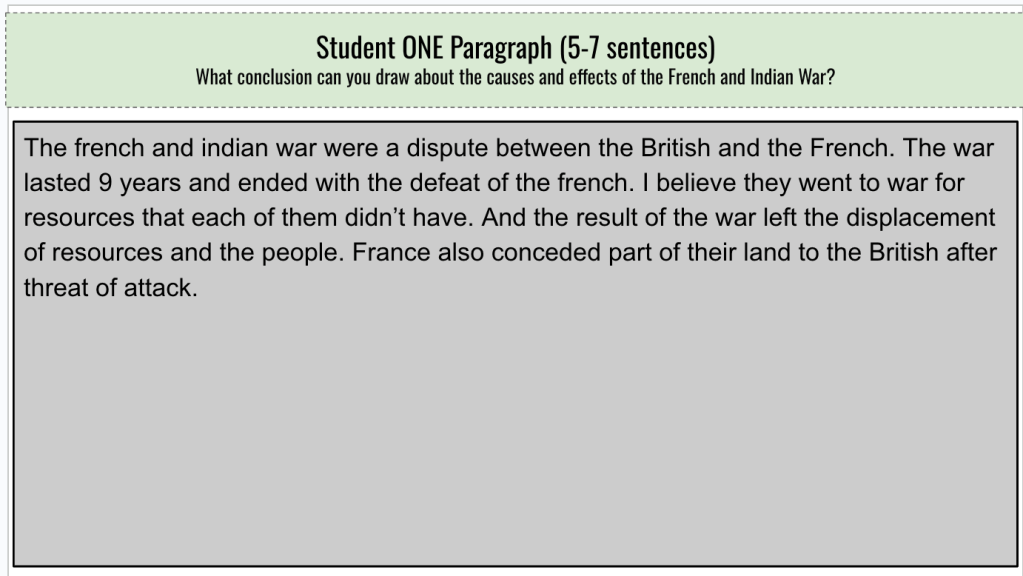
Our week commenced with a riveting exploration of the French and Indian War, an event that would profoundly alter the dynamic between the colonists and the British government. To ignite our curiosity, we began with a “Fast and Curious” Gimkit quiz, focusing specifically on the French and Indian War. The initial results were telling, with scores ranging from 47% to 58%, signifying the depth of understanding needed.
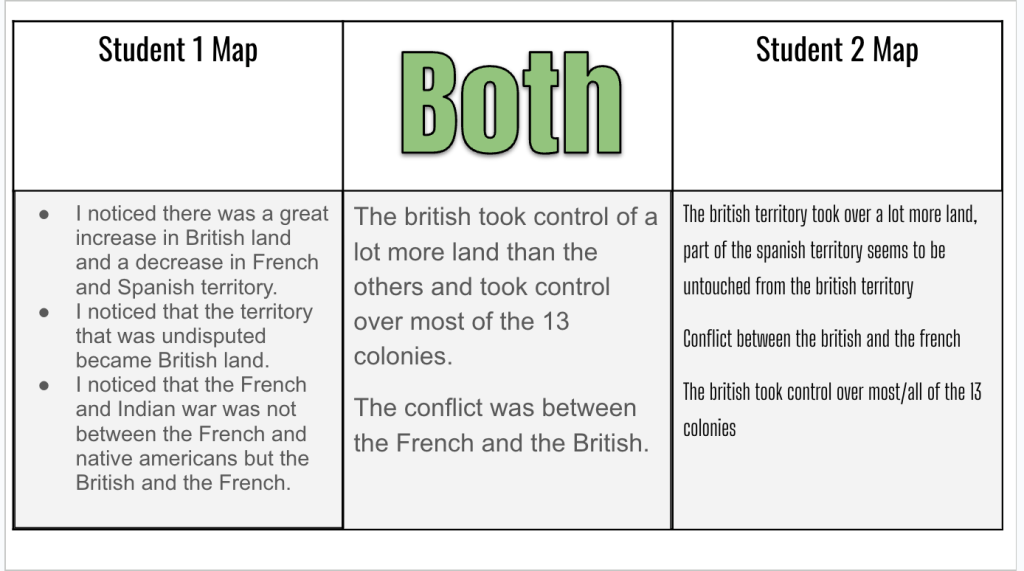
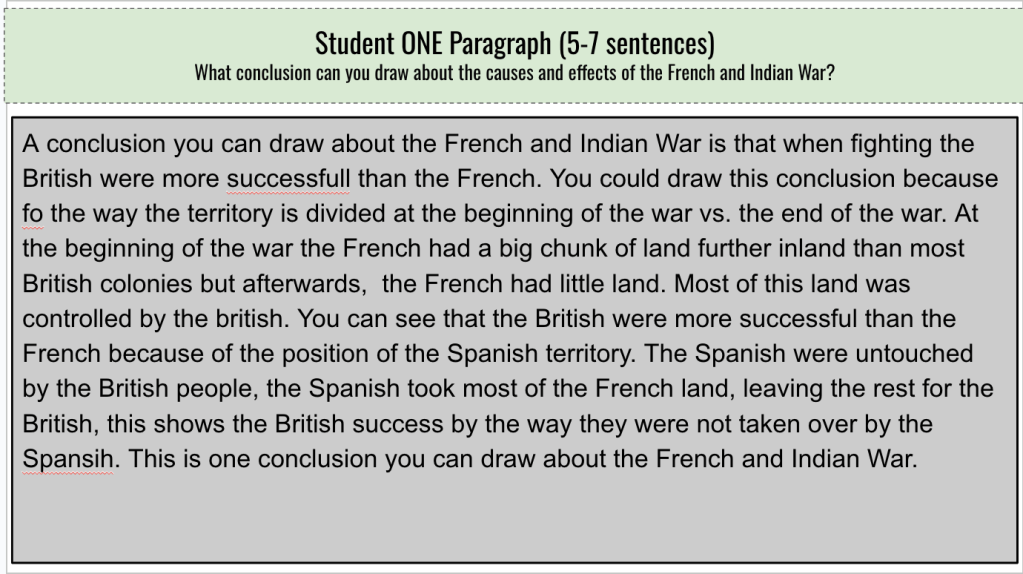
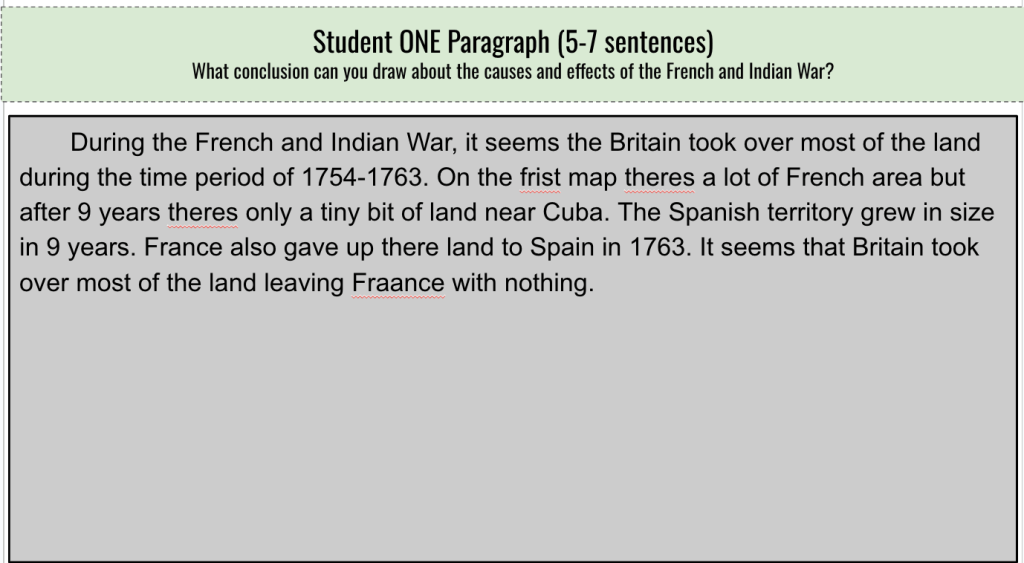
Next on our agenda was a Mapwich Eduprotocol, a creative approach inspired by my friend, Robert Mayfield. The Mapwich involved presenting a map of North America’s transformation from 1754 to 1763, directly after the French and Indian War. I encouraged students to discern the map’s purpose, similarities, and differences between the two timelines. The map was a treasure trove of historical insight, including the Proclamation Line of 1763, which we discussed. I aimed to nurture their map-reading skills and their ability to draw meaningful inferences. To facilitate this, I had them partner up, analyze the map, and engage in discussions for a riveting eight minutes. At the end of this thought-provoking exercise, I tasked students with creating brief summaries of the French and Indian War’s impact on North America.
Following this, we revisited the French and Indian War with another Gimkit quiz. This time, the class averages leaped significantly, ranging from 67% to 82%, a testament to the power of engaging, interactive learning.

Tuesday: The Hero’s Journey and French and Indian War Integration
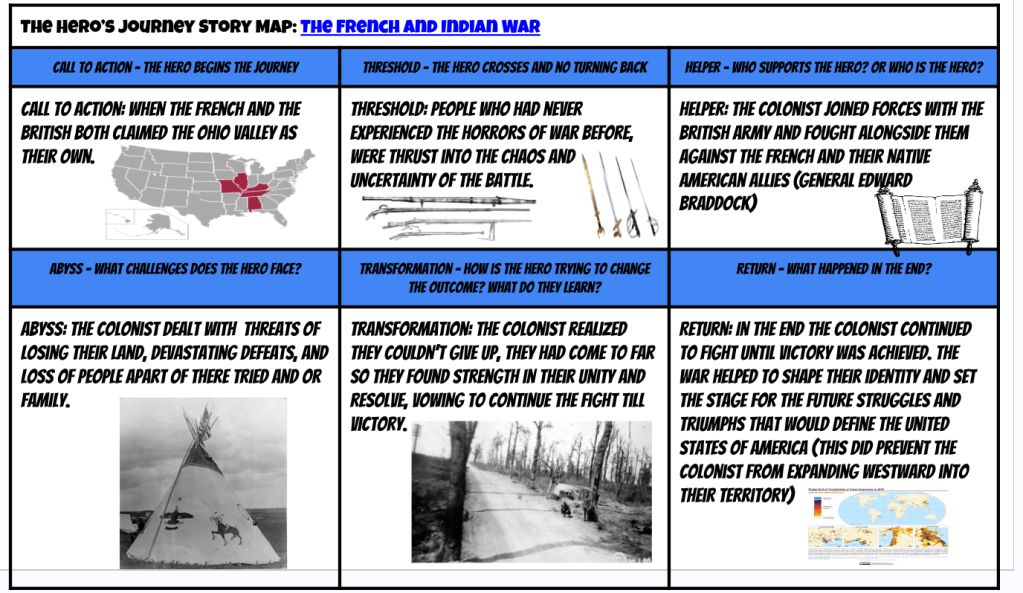
On Tuesday, we set sail on a new educational adventure, introducing students to the captivating Hero’s Journey EduProtocol. This year, my approach has emphasized reducing cognitive load and ensuring that every new concept is accessible. We commenced with a captivating Ted Ed video, skillfully weaving the Hero’s Journey into the lives of our students. The video brilliantly connected iconic stories like Harry Potter and The Hunger Games to the Hero’s Journey. It inspired us to reflect on our own daily experiences, highlighting how we all embark on heroic journeys, encountering the unknown, crossing thresholds, finding mentors, facing challenges, and hopefully emerging as better individuals.
The Hero’s Journey introduction continued with commercials that showcased the Hero’s Journey elements, a tangible link between literature and history. For instance, a Chef Boyardee commercial provided students with a unique opportunity to identify these elements in real-world scenarios.
Once students were comfortable with the Hero’s Journey, I shared a reading, expertly crafted by Diffit AI, which detailed the French and Indian War in Hero’s Journey format. Students were captivated, with 25 minutes to read and chart their Hero’s Journey. This approach enabled them to grasp historical events through the lens of the Hero’s Journey, fostering a profound connection with the material.
The day concluded with another Gimkit quiz on the French and Indian War, and this time, the class averages surged to an impressive 75% to 90%, showcasing a deepening understanding of the topic.


Wednesday: A Cognitive Experiment
On Wednesday, I was absent, but I had set in motion a captivating experiment inspired by a podcast featuring Daniel Willingham, a distinguished cognitive scientist. During the podcast, he discussed an experiment testing working memory during reading comprehension. It involved providing students with passages filled with spelling errors, syntax issues, and contradictions. Surprisingly, students readily identified spelling and syntax errors but struggled to recognize contradictions, even when they were a mere sentence or two apart.
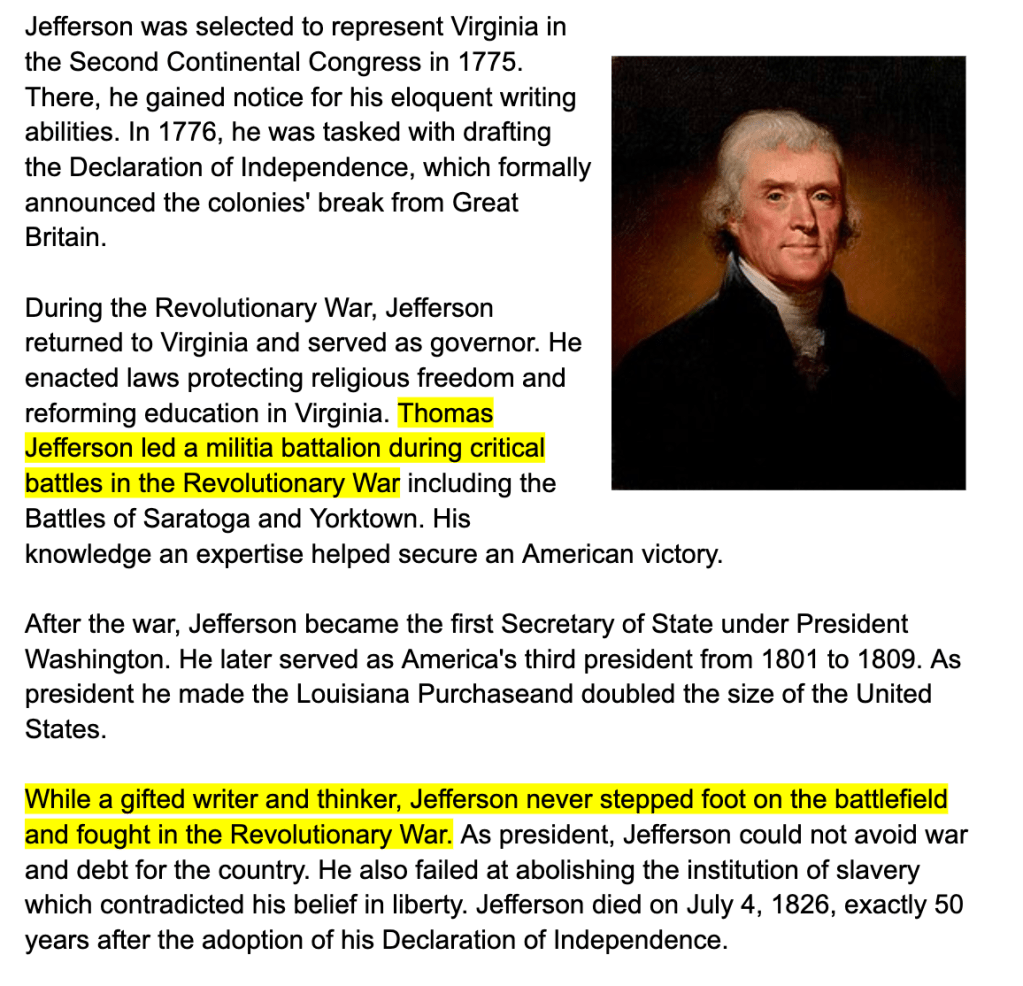
I decided to put this experiment into action, utilizing artificial intelligence. I used Claude.AI to generate one-page biographies about historical figures and groups involved in the American Revolution. Notably, I instructed Claude to include one deliberate lie within each biography, and this process gave rise to intriguing contradictions. Some were positioned back-to-back, while others were tantalizingly spaced three or four sentences apart.
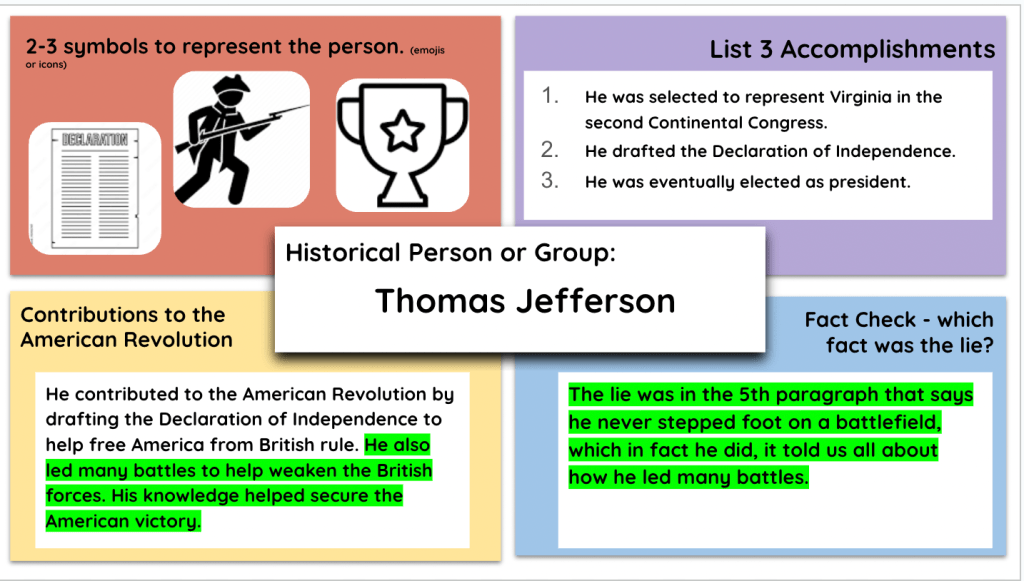
To enhance the exercise’s depth, students engaged in Frayer activities, seeking a deeper understanding of the historical figures and their contributions. Their ultimate quest was to uncover the one lie, effectively mimicking the working memory experiment described by Daniel Willingham.
The results the following day mirrored Willingham’s findings: students grappled with recognizing contradictions, especially those separated by more than two sentences.


Thursday: The Light of Understanding
Thursday was a day of enlightenment and revelation. We returned to the biographies from the previous day, with a twist. I highlighted the contradictions in green and took the opportunity to explain working memory, its significance in everyday life, and its role in learning.
I emphasized the subtlety of contradictions, some positioned just sentences apart, and students’ expressions revealed their amazement. This was a pivotal moment for them, making them keenly aware of the importance of processing information while reading.
I allowed students 10 to 15 minutes to revisit the biographies and determine the truth, a vital step in helping them understand cognitive processes and grasp the significance of correction in the learning process.
In addition, I provided students with an opportunity to catch up on any missed assignments, or they could collaborate in groups to participate in a creative “Sketch and Tell” activity inspired by Howson History. Each group received a sheet of paper with nine different drawings. The students had to select a topic from a bin and then create a drawing representing something they had learned about that topic. It was a dynamic and interactive activity that worked on some retrieval practice.
Friday: Unraveling Colonial Dissatisfaction
As the week drew to a close, we returned to our fundamental question: “How did the Enlightenment and the colonists’ growing anger lead to the American Revolution?” I explained that we would now explore what incited the colonists and how Enlightenment ideas contributed to their mounting frustration.
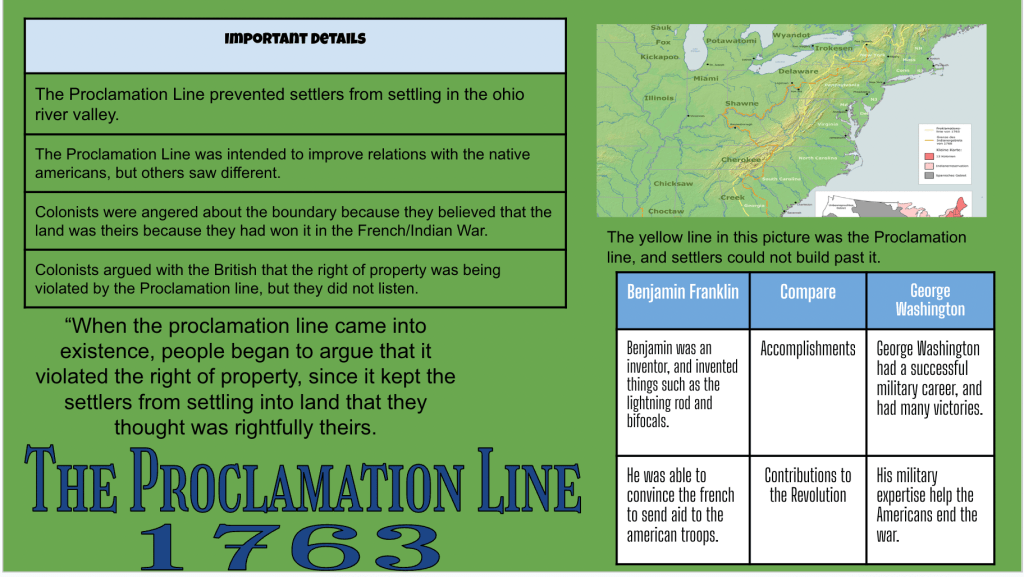
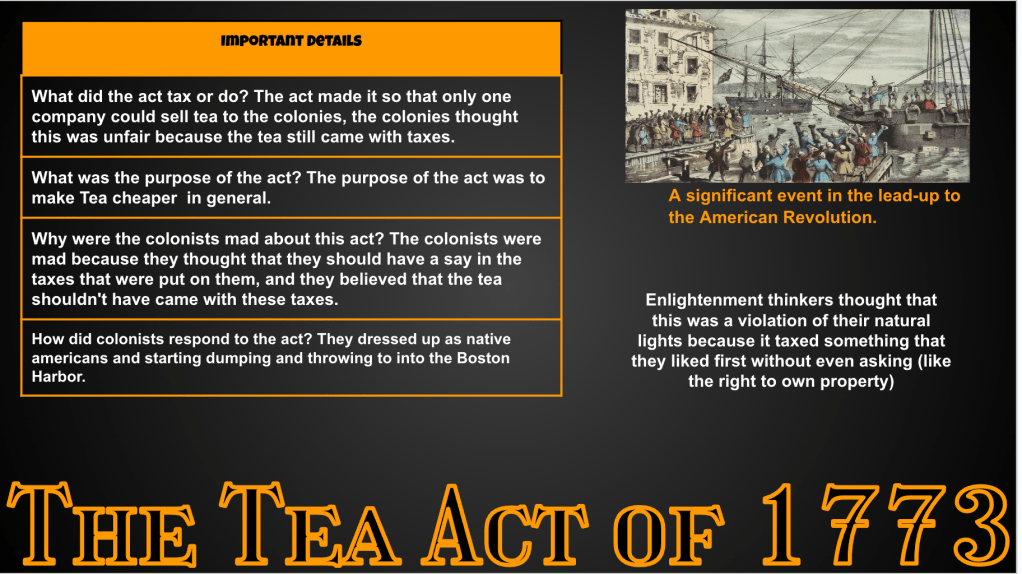
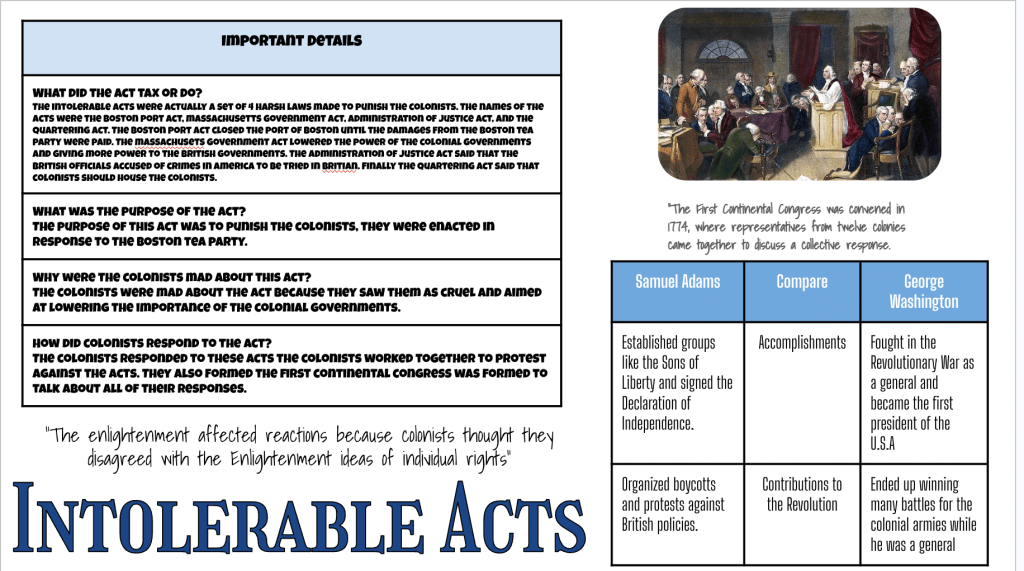
Students were tasked with selecting from a list of acts including the Stamp Act, Proclamation Line of 1763, Quartering Act, Townshend Act, Tea Act, and the Intolerable Acts. I utilized Diffit to generate articles that seamlessly incorporated Enlightenment ideas like natural rights, social contract, and self-government into each act’s description. It was a move away from traditional textbooks, enabling a richer exploration of historical events.
Before diving into the readings, I instructed students to skim the articles, understand the headings and subheadings, and establish their learning objectives. This enabled them to target their reading effectively and extract the most meaningful information. After reading and highlighting, students had the responsibility of creating “thick slides” to share with the class. They were encouraged to paraphrase their highlights, reinforcing the importance of critical thinking and information processing.
By the end of the class, students had shared their insights through a Google form, and it was clear that they were beginning to recognize the value of these discussions. The day ended with a well-deserved break outdoors, a moment to recharge and reflect on a week filled with profound learning and important discoveries.
This week was an engaging journey of exploration, discovery, and understanding. As we move forward, I hope to continue instilling in my students the importance of critical thinking, the significance of working memory, and the joy of learning. Our educational adventure is far from over, and I’m eager to see where it leads us next.


I used that Howson history sketch activity last year, but can’t find my file! Do you have a digital copy of that sheet? I’d love to use this week! Thank you!
LikeLike
https://docs.google.com/document/d/1S9Rduw_LRMlVdp_j719QfpA5ZMru_O9EUNSNgbetdgM/copy
LikeLike