As an educator, I’m constantly searching for innovative ways to engage my students and make learning a memorable experience. Recently, I had the opportunity to delve into a lesson that not only sparked deep conversations but also introduced my students to cutting-edge technology. On Monday, September 11th, I set up a lesson I’d been wanting to do for a while, thanks to a conversation with my co-author, Scott Petri. In this blog post, I’d like to reflect on my latest lesson using StoryFile AI and the Wicked Hydra EduProtocol. (StoryFile Survivor, StoryFile First Responder)
The inspiration for this lesson came during a Sunday discussion with Scott, where we brainstormed ideas for teaching about 9/11. We both agreed that the traditional approach of showing shocking videos often distracts from the human experiences and the importance of learning from first responders and survivors. It was during this conversation that Scott reminded me of an incredible resource called StoryFile, which utilizes artificial intelligence (AI) and recorded oral histories.
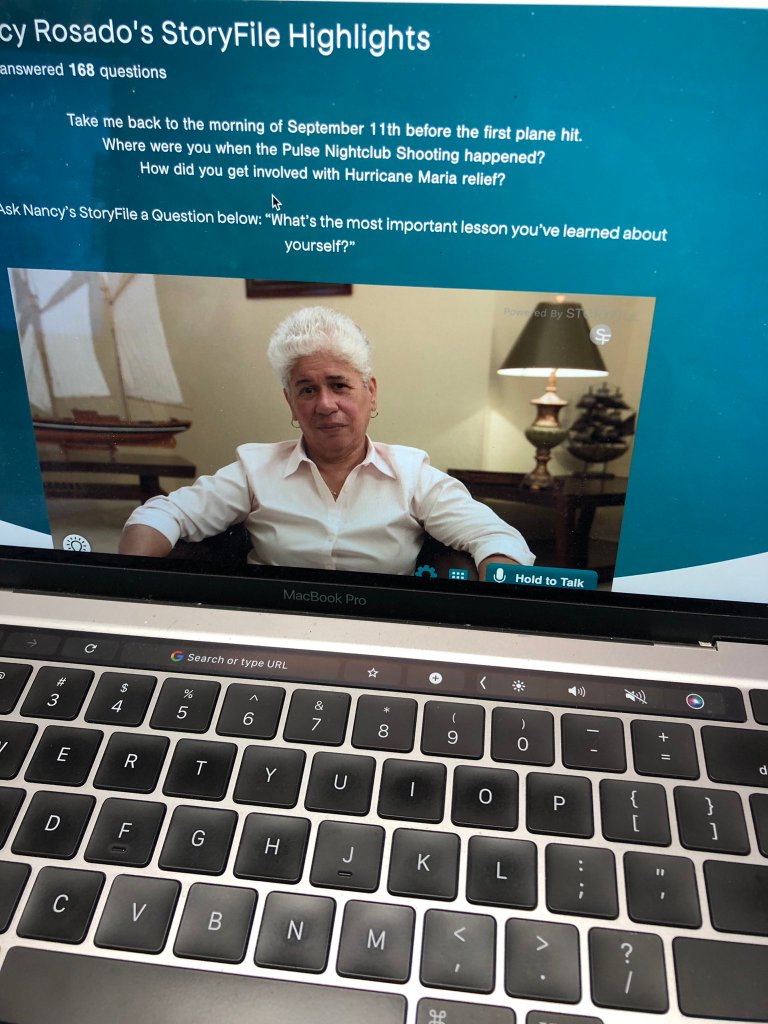
StoryFile features video interviews with historical figures and famous individuals, allowing users to ask questions verbally or through typing. The AI responds with recorded answers, creating an interactive experience that offers unique insights. This lesson, in particular, aimed to focus on the stories of first responders and survivors, and StoryFile had a first responder named Nancy Rosado whose insights I knew would be valuable.
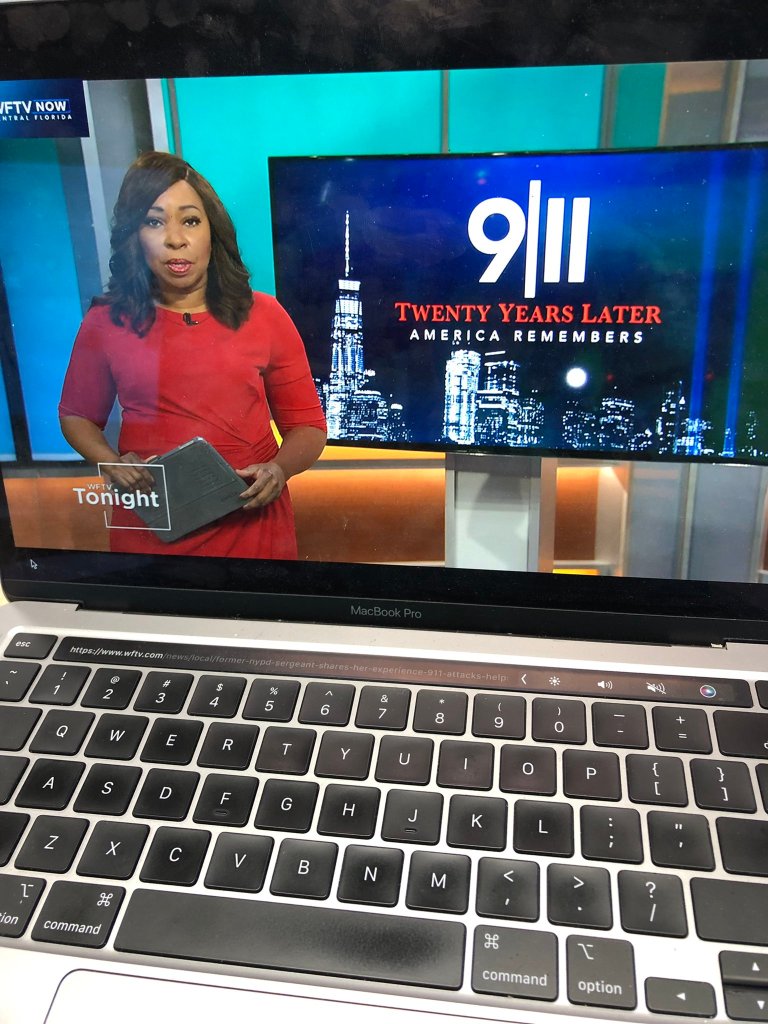
Before starting the lesson, I posed a critical question to my students: “How can we learn about the effects of 9/11 from the experiences of first responders and survivors?” To kick things off, I found a news clip from an Orlando, Florida news station featuring Ms. Rosado. The clip was approximately four minutes long, and before showing it, I asked my students to think about the questions they would ask Ms. Rosado if they had the chance.
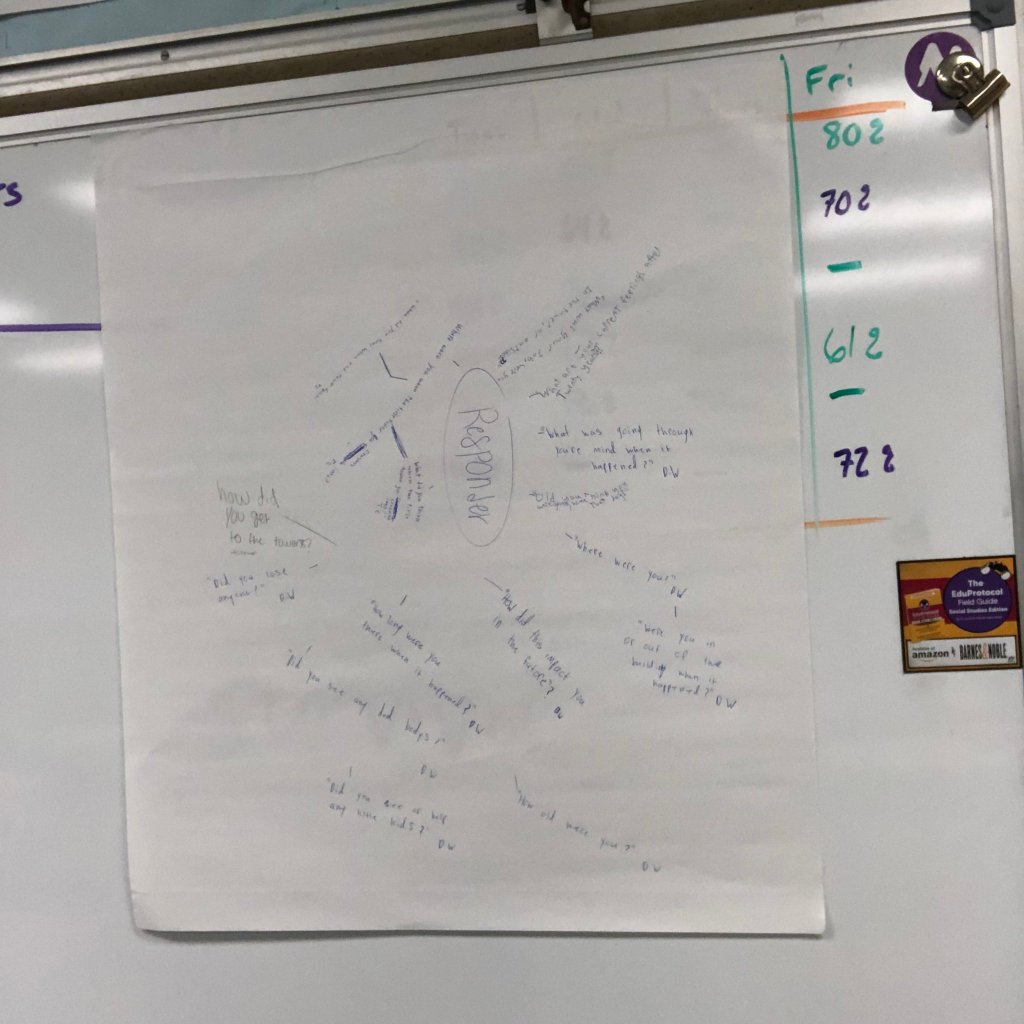
After the video concluded, it was time to employ the Wicked Hydra EduProtocol, a collaborative brainstorming activity. I divided the students into groups of 3 to 5 and instructed them to write “survivors and first responders” in the center of a large piece of paper. They had ten minutes to brainstorm questions they could ask first responders or survivors about their experiences on 9/11. These questions would later guide their interactions with StoryFile.
Once the groups had compiled their questions, they hung up their papers around the room, allowing their peers to read each other’s questions and potentially add more to different groups’ papers. Next, I distributed a Frayer model graphic organizer to each student, and I had them write down four questions they would ask a survivor or first responder. I emphasized the importance of asking thoughtful questions, as it’s a vital skill in history and in life, where job interviews often include the ubiquitous question, “What questions do you have?”
With their questions in hand, I introduced my students to StoryFile. Their initial reactions ranged from amazement to slight unease as they explored the platform and began asking questions verbally and typing them. I had intentionally selected the news story about Nancy Rosado because she was one of the interviews available on StoryFile, and the entire lesson’s design was deliberate.
However, to our surprise, Ms. Rosado didn’t answer many questions about 9/11—maybe four in total. This unexpected turn led to a fascinating dynamic in the classroom. Students quickly realized that if one interviewee didn’t answer their question, they could try asking the other interviewee instead. I encouraged this adaptive approach and had students summarize the responses they received. If they couldn’t get an answer, I urged them to rephrase their questions. If all else failed, they placed an “X” in the Frayer box.
The majority of my students thoroughly enjoyed this hands-on experience with AI technology, and about 90% were actively engaged throughout the lesson. It served as an excellent opportunity for them to learn how to navigate and communicate with new AI tools, a skill that will undoubtedly be valuable in their future endeavors.
Reflecting on this lesson, I’ve identified a few minor tweaks I’d like to make for next time. Firstly, I want to emphasize more clearly that students should write down the interviewees’ responses, as this is essential for their learning process. Additionally, I plan to allocate more time for students to write a paragraph summarizing what they’ve learned at the end of the activity.
In conclusion, this lesson was a remarkable journey into the world of AI-assisted learning and historical exploration. It showcased how technology like StoryFile can bring history to life and engage students in a meaningful way. As an educator, I’m constantly inspired to innovate and provide my students with experiences that challenge their thinking and broaden their horizons. This lesson was undoubtedly a step in the right direction, and I look forward to incorporating more cutting-edge tools like StoryFile into my future lessons.


 Moler's Musings