Teaching is often described as a journey, and each week in the classroom brings new experiences, challenges, and opportunities for growth. This past week, I embarked on an exciting adventure with my eighth-grade social studies students, focusing on questions about the study of history and the foundation of New Richmond, OH. Despite the interruptions caused by MAP testing, we managed to dive into historical inquiry and utilize EduProtocols to engage and educate our students effectively. In this reflection, I’ll take you through our week, sharing the lessons, strategies, and insights gained during this journey.
Monday – Frayer, Iron Chef Slide, Parafly
Tuesday – Thick Slide (How we study history)
Wednesday – Gimkit
Thursday and Friday – Thick Slide (New Richmond), Research Protocol Google Form
Monday: Why Do We Study History?
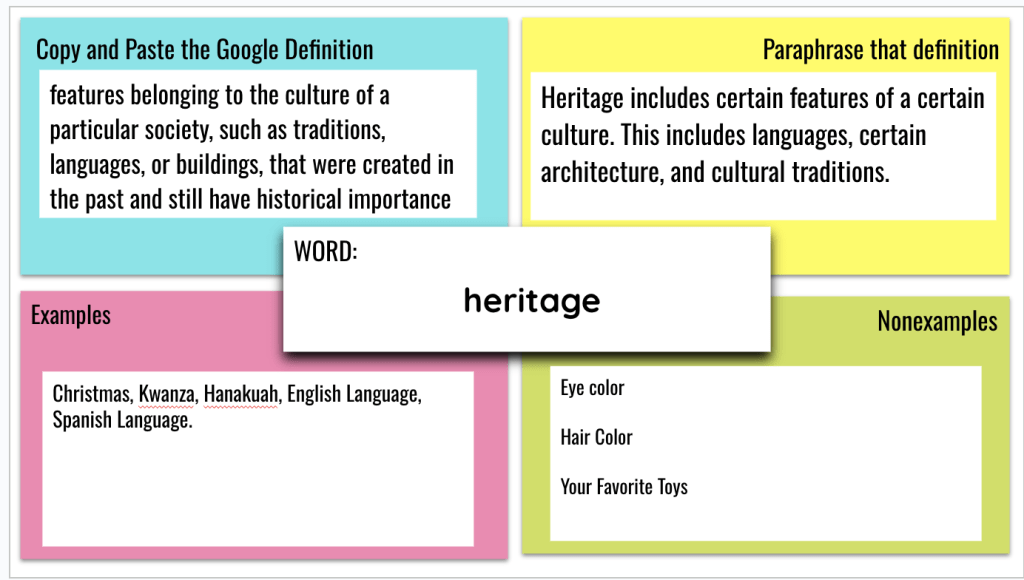
To kick off the week, I posed a fundamental question to my students: “Why do we study history?” It’s a question that goes to the heart of our subject, encouraging students to think critically about the importance of understanding the past. I introduced a sequence of EduProtocols, starting with a Frayer model to explore key concepts related to history: heritage, diversity, and empathy.
However, the unexpected occurred when I realized that none of my students had experience with paraphrasing. It was an eye-opener, reminding me that not all students come into the classroom with the same skills. Flexibility in teaching is essential, and I quickly adapted by using the Parafly EduProtocol with PearDeck (I don’t know who made the original Parafly slides I used). This tool allowed me to guide students through paraphrasing, starting with something relatable: the secret menu item from McDonald’s called the “land, sea, and air burger.”
As we progressed, students practiced paraphrasing skills with a brief paragraph on White Castle before diving into the historical content. They paraphrased one-sentence definitions and added them to their Frayer models. To culminate the lesson, they read an article on why studying history is important, selected the most compelling reason, and paraphrased it on an Iron Chef Slide. This fluid adaptation showcased the power of EduProtocols in making real-time adjustments to enhance learning experiences.

Tuesday: MAP Testing and Data Analysis
With MAP testing taking up much of the day, we had shorter class periods to work with. To maximize our time, students continued to work on their Iron Chef/Parafly slides from the previous day. Additionally, I recognized the need for baseline data on social studies content, so I had each class participate in a Gimkit quiz focused on first-quarter content.
The results provided valuable insights, with class averages ranging from 38% to 56%. I used ChatGPT to efficiently organize the data, transferring it into a spreadsheet and applying conditional formatting to identify areas of concern. This data-driven approach allowed me to tailor my teaching to address specific weaknesses and strengths in each class.


Wednesday: How Do Historians Study History?
Wednesday presented another challenge with shortened class periods, but we pressed on with our exploration of history. The guiding question for the day was, “How do historians study history?” My objective was to simplify the research process and introduce students to the basics of source analysis.
To achieve this, I provided two levels of readings on how historians approach their studies and assigned students a Thick Slide activity. This wasn’t their first encounter with Thick Slides, as we had introduced the concept the previous week. The slides required students to compare primary and secondary sources, paraphrase the steps of studying history, and formulate a question related to the history of New Richmond, OH.
I also recorded video directions as I was absent for part of the day. Despite my absence, the students demonstrated exceptional engagement, with a participation level of 90%. This experience emphasized the value of clear instructions and activities that foster student independence.


Thursday and Friday: Uncovering the History of New Richmond, OH
As the week progressed, we delved deeper into historical inquiry, shifting our focus to the founding of New Richmond, OH. To kickstart Thursday’s lesson, I allowed students to choose between taking a Gimkit quiz on states, countries, and continents or completing their Thick Slides from the previous day. These quick tasks served as a warm-up and allowed students to review their understanding of geography.
The main event of the day was the Research EduProtocol, which aimed to answer the question, “Why was New Richmond, OH founded?” This process required students to navigate through various online sources using a custom Google Search engine I had prepared. The goal was to collect four relevant facts from these sources.
Once students had gathered their facts, we took a moment to reflect on the importance of selecting information that directly answered the question. Some students had initially chosen data unrelated to the topic, such as coordinates or population figures from 2010. It was a valuable learning moment as we discussed the importance of relevance and corroborating information from multiple sources.
With their curated facts in hand, students crafted a Google slide that included the facts along with their source links. This phase not only encouraged source attribution but also emphasized the significance of verifying information across multiple sources.
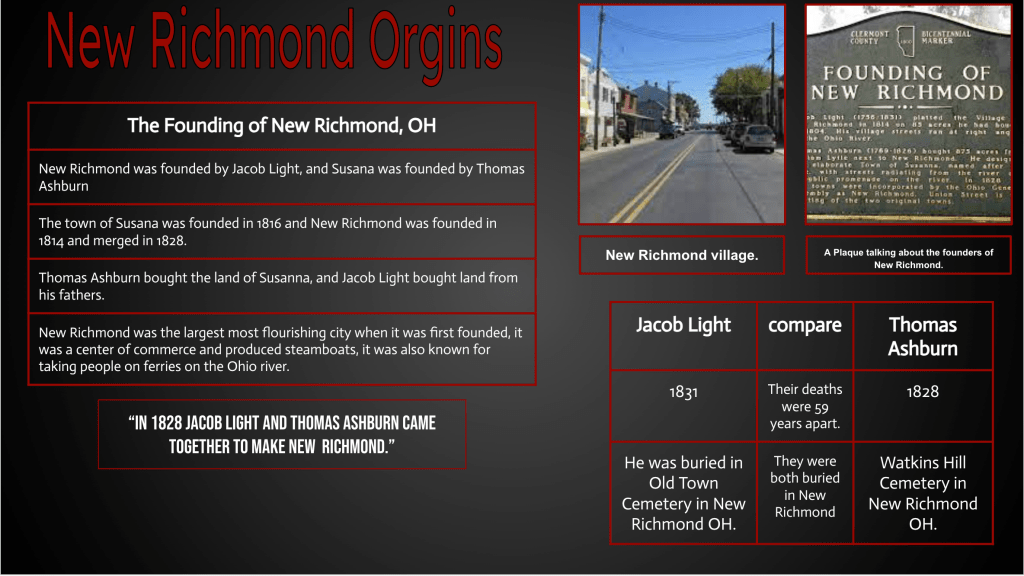
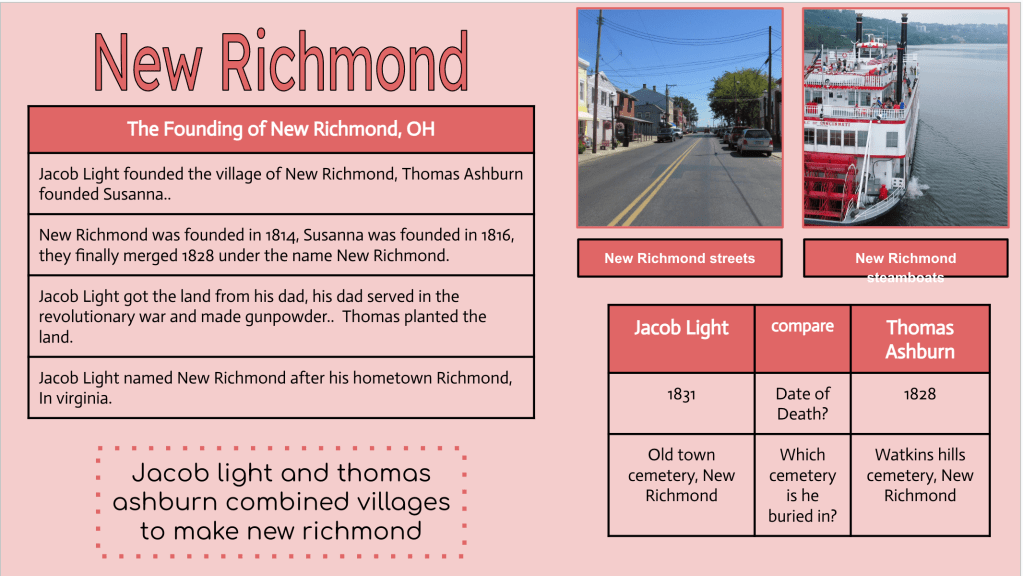
Our final task was another Thick Slide activity, building upon the information collected. Students were challenged to paraphrase their five facts, compare the founders of New Richmond, add two relevant pictures with captions, and practice writing a topic sentence. This comprehensive exercise reinforced several key skills, including paraphrasing, source analysis, and writing composition.


Conclusion: Reflecting on a Week of Growth
As I look back on the past week of teaching eighth-grade social studies, I am reminded of the importance of flexibility and adaptability in education. While our schedule was disrupted by MAP testing, we managed to engage our students effectively through the intentional use of EduProtocols and data-driven instruction.
Our journey through the week allowed students to grapple with fundamental questions about history and develop essential skills such as paraphrasing, source analysis, and topic sentence construction. The EduProtocols provided structure and consistency, while also allowing for dynamic adjustments when needed.
As educators, we must continuously assess our teaching methods, adapt to the diverse needs of our students, and use data to inform our decisions. This week’s experiences reaffirmed my commitment to fostering a deep understanding of history and equipping my students with the skills they need to be critical thinkers and engaged citizens.

 Moler's Musings