This week we broke away from the French and Spanish colonization and we focused on British colonization with Jamestown and Plymouth. This week I wanted the students to complete another Thick Slide. The interesting aspect of this year is the fact that I have never had these students in past years. Every student is new to me and new to EduProtocols. As a result, when I introduce a new protocol, I follow it up with a second rep.
In this example, the students did a Thick Slide on the Middle Passage last week. This week, we followed that up with a Thick Slide on Jamestown or Plymouth. I also wanted the students to share their slides and contribute to each other’s learning.
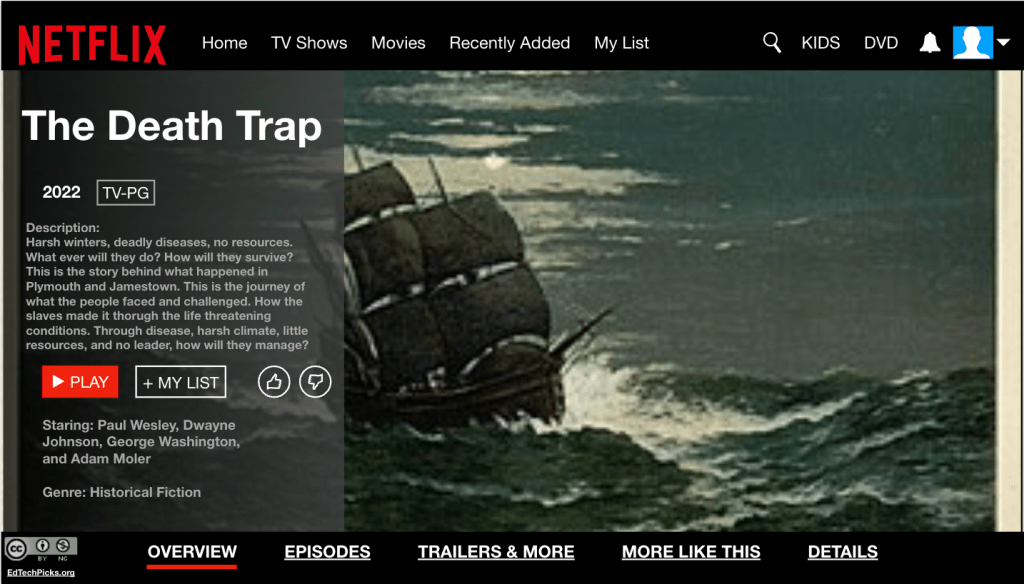
We finished the week with a creative Netflix template. The students love this template and it’s super engaging for most content.
Monday – Thick Slide, Fast and Curious (Gimkit)
Tuesday – Fast and Curious, Frayer
Wednesday – Netflix template, Fast and Curious
Friday – Gimkit, Add to Portfolios
Monday
This week we began to learn about Jamestown and Plymouth. Last year I didn’t focus on either colony. Instead, we did an investigation on the disappearance of the Roanoke colony. The Roanoke investigation is engaging, however, the students I have this year would struggle with the content. Plus, this lesson requires a lot of planning and printing stuff, and my head is barely above water now. I decided to keep it simple and went back to Jamestown and Plymouth.
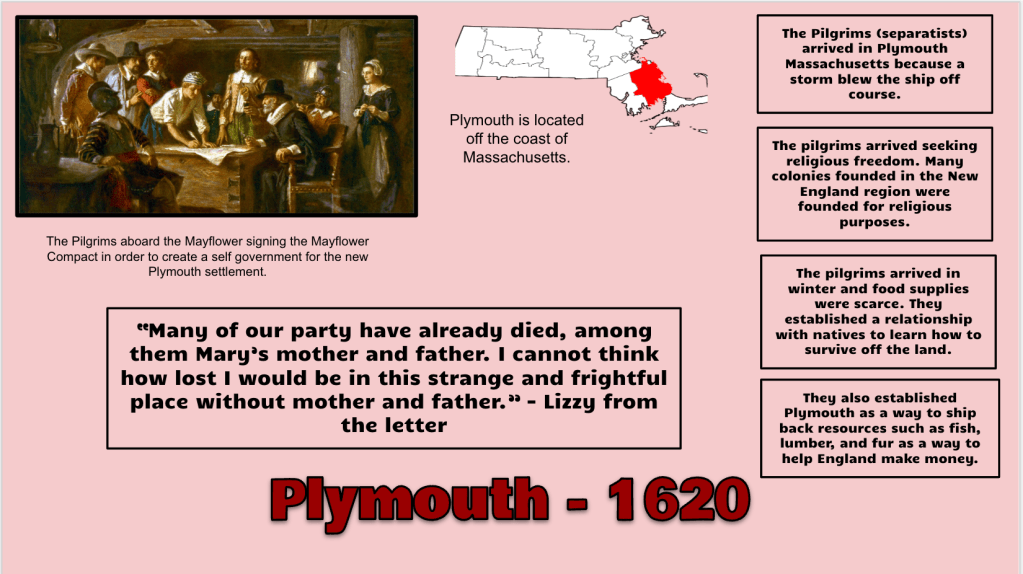
I knew I wanted a lesson to get the students to contribute to each other’s learning. The best, and most, familiar way to achieve this in my room is through a Thick Slide. I created a quick Thick Slide, found a quick reading, and shared the stuff with the students.
Before students began creating their Thick Slide, I ran a Gimkit for 5 minutes. Most class averages were between 52-58%. After some feedback, I gave students 20 minutes to complete a Thick Slide on either Jamestown or Plymouth. I had them focus on these items:
- Why was the colony founded?
- What hardships did the colony face?
- What made the colony successful?
- What kinds of people went to these colonies?
With this being the 2nd rep of Thick Slides, here are some student examples:


We finished class with another Gimkit and all classes raised their averages between 75%-80%.
Tuesday
Tuesday I began by showing the students how to change the share settings on their Thick Slide. I do this so the students can access each other’s slides after we share. I’ve been asked many times, “How do you have students share slides for contributing learning?” Here’s how I do it:
- I share a Google Form.
- Students fill out the Google Form – which colony did you do? Paste a link to your slides.

- I turn the Form data into a SpreadSheet.
- I share the SpreadSheet on the Google Classroom assignment.
After students shared their slides, I gave each student a Frayer model. I print out the Frayer models for this because it’s easier write down the information. On the Frayer I filled in the 4 boxes with the same 4 questions mentioned above:

When students were finished, I had them create new Gimkit questions with the Gimkit Kitcollab. I shared a link through Gimkit and students began creating and submitting questions. I establish 1 rule: The same question cannot be repeated twice.
As students start submitting questions, I can accept or reject the question. At the end of time, we had a 20+ question Gimkit entirely made by the students.
Wednesday
Now that students had their thick slide completed, as well as the Frayer completed, it was time to create. I thought about giving students a choice, but I reminded myself that I have never had these students before. As a result, I dropped that idea. I needed something engaging and effective which meant the Netflix template came out.
I love the Netflix template and the students love it as well. When I put the template up on the Newline TV thing I have, one student said, “Are we watching a movie?” When I showed the students it was an editable tem[plate, they were instantly enthralled.
With the Netflix assignment, I listed out success criteria on the board:
- A Creative Title.
- The pictures relate to Jamestown and/or Plymouth.
- You included in your description and episodes 3 or more of the following:
– Year(s) founded and location.
– Why it was founded.
– Hardships they faced.
– Why did the settlements become successful.
Here are some of the students examples:



Thursday
Thursday was used for taking 10 minutes to finish up the Netflix assignment from Wednesday. After the 10 minute timer went off, I introduced a new EduProtocol – 3xCER. I learned this from Ariana Hernandez and adjusted it to fit with social studies.
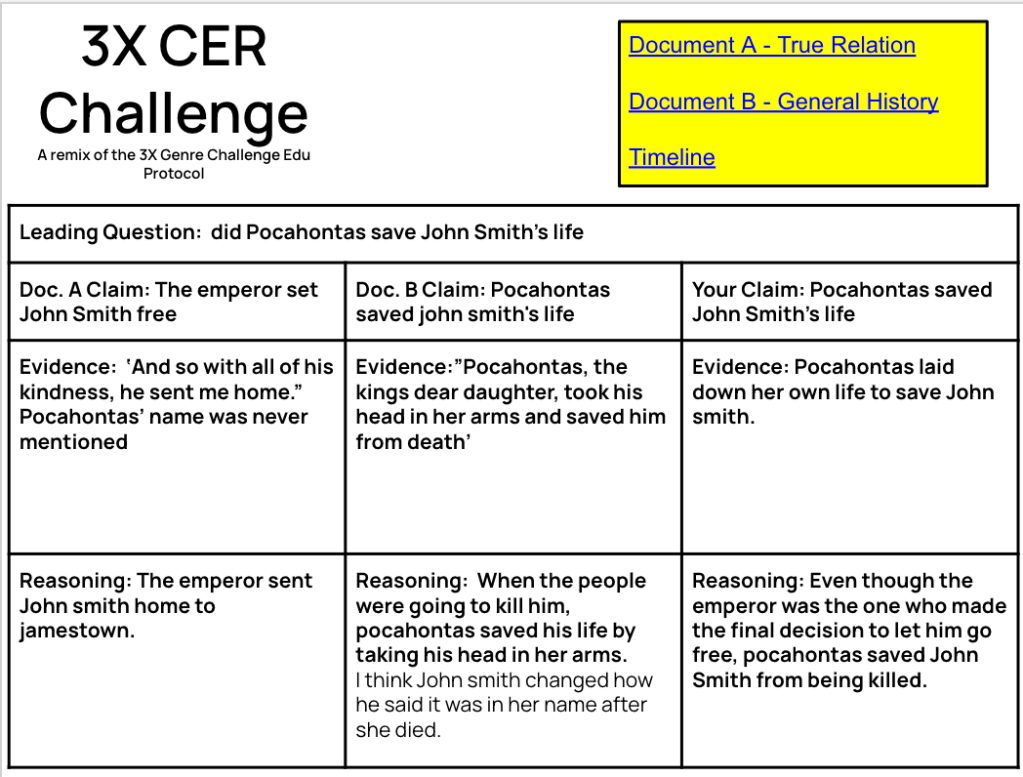
The 3xCER is a remix of the 3xGenre found in Kim Voge’s Deploying EduProtocols book. In the original 3xGenre students have a picture, small reading, video, or some topic they learned and they write a quick poem, an persuasive piece, and an informational piece in one class. With the 3xCER, students work on writing claims, using, evidence, and reasoning three different ways.
In my case of using 3xCER, we used the John Smith and Pocahontas lesson from SHEG. This is a perfect lesson to fit with Jamestown. Before we even began, I ask students a question, “What is a claim?” To my surprise, not many students knew. Here is your weekly reminder: don’t assume your students know basic things.
On our first rep, we read the timeline to place people and events in context. Many students were surprised that Pocahontas was a real person. We also discussed that her real name was Amonute, sometimes known as Matoaka. Then students typed the question – Did Pocahontas save John Smith’s life?After reading the timeline and typing our main question, students read document A which implied that Pocahontas did not save John Smith’s life. From this, I asked a ton of questions to help students write a claim, find evidence, and use reasoning.
The students were on their own for document B which implied Pocahontas did save John Smith’s life. However, with this document, John Smith completely changed his story 16 years after the fact. After they finished document B, students had to write their own claim. I stated, “Document A implied a claim, Document B implied a claim, now what is your claim? What do you think happened?” I encouraged the students to go back to the timeline to help them develop reasoning to add more to their evidence and prove their claim. Here are those results:

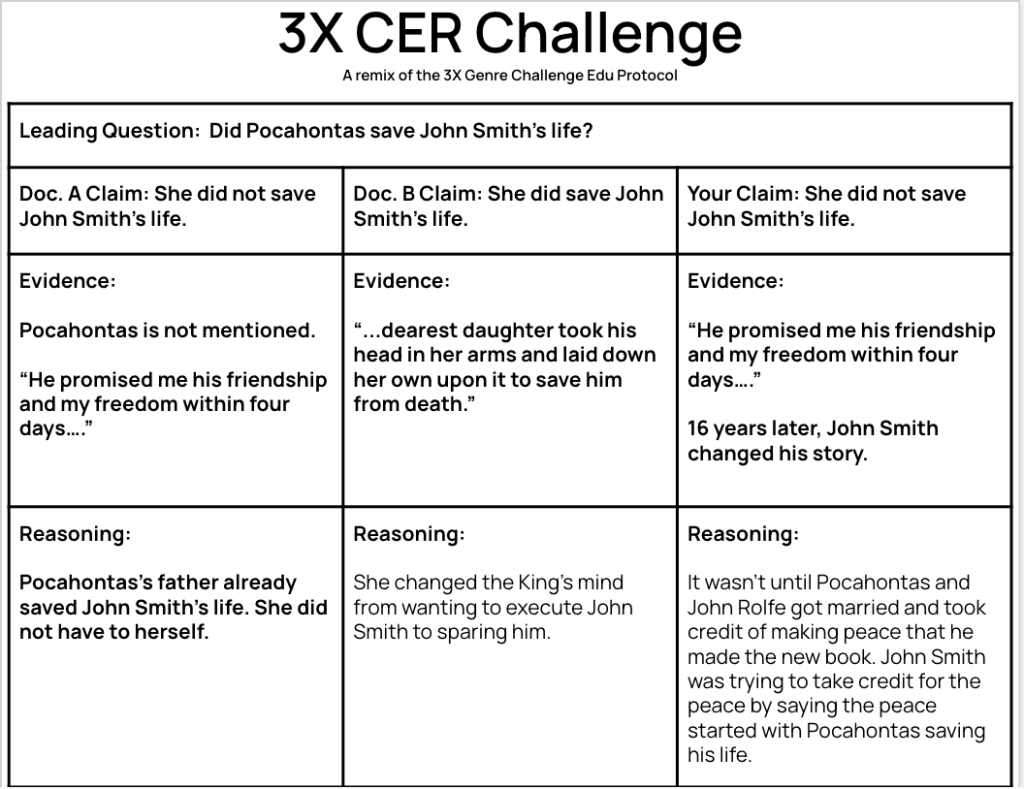
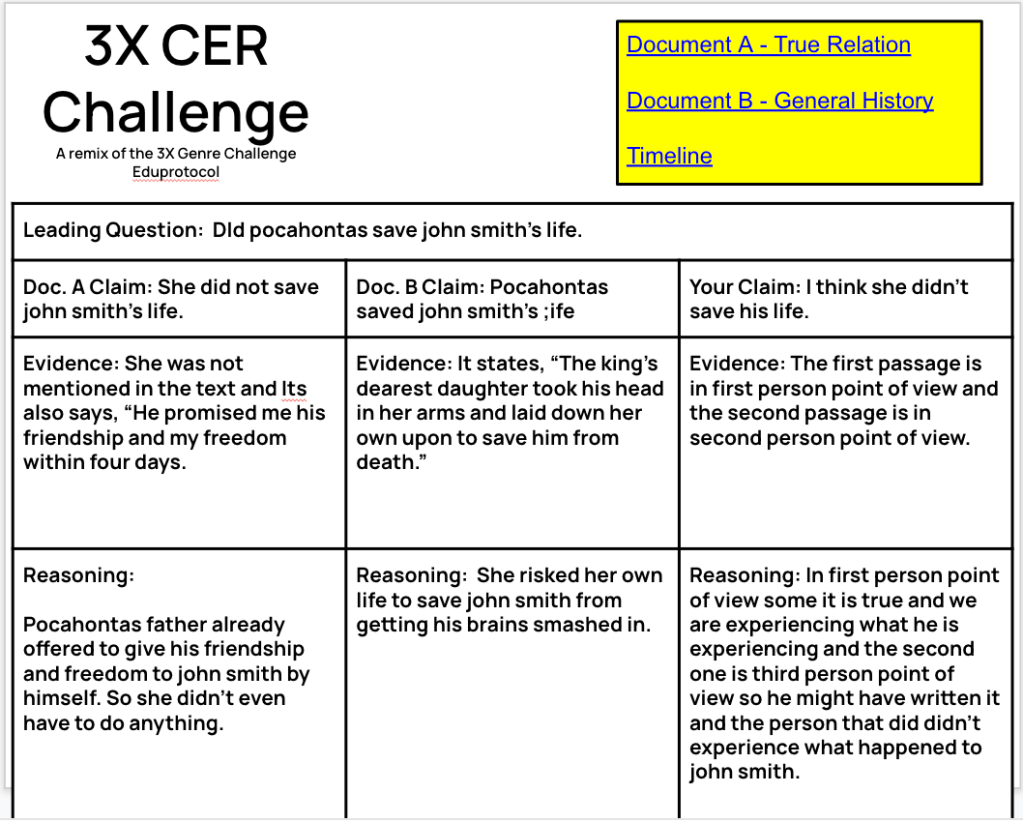
Anyclass time leftover was spent playing the student developed Gimkits from the previous day.
Friday
For Friday I developed a brand new lesson on 3 colonial regions. I thought about starting it, but I thought – why? Instead, a new thing I’m doing this year is a student portfolio. I’m teaching students how to use Google Sites to keep all of their work readily available. I can use this portfolio for parent-teacher conferences, they can use it to see their growth, or students could use it to reflect. Part of the class period was spent adding documents to the site.The other part of class was spent playing gimkit or finishing missing work.

 Moler's Musings
Thanks for always sharing ! Do you lecture or have students complete notes?
LikeLike
I rarely lecture. I let the students create their own knowledge and learning. For example, with the Jamestown/Plymouth – students chose the colony they wanted to read about. They included their own info on the slide. They shared the slides. They wrote down their own information on the frayer. The only time I lecture is to clear up misunderstandings. For example, a lot of students put down “Pilgrims” for people that went to Plymouth. I stopped class and mentioned to them, “Pilgrims is technically correct, however, it’s was men, women, children, basically families seeking religious freedom”
LikeLike