
If anyone knows how I go about writing my blog, I usually write it after school on Friday while sitting at a local brewery. However, this time, I’m writing it from the bedroom while quarantined. I came down with Covid on Tuesday, and it’s terrible. Once one thing seems to get better, something else gets worse or something else comes back. It’s a neverending battle.
This week we finished our mini-unit on historical thinking and began our unit on European exploration of North America. Due to covid, I had to switch up some lessons and cancel some ideas I had in mind.
To begin with European Exploration, I wanted to introduce the time period known as the Age of Exploration. Often times we jump from unit to unit skipping over characteristics and facts related to the time period, or era, the students are studying. Then we focused on the motivations and effects of European exploration of North America. Finally, we closed out the week making connections with our learning. I didn’t want to begin anything new since I hadn’t been at school since Tuesday.
If this blog doesn’t make sense, I blame Covid brain fog……
Monday – Finish historical thinking infographics.
Tuesday – Fast and Curious, Number Mania Timeline, Nearpod (countries)
Wednesday – Fast and Curious, Frayer, Sketch and Tell (motivations)
Thursday – Fast and Curious, Frayer, Sketch and Tell (effects)
Friday – Fast and Curious, WordWall Sort, Hexagonal Learning
Monday
When Monday began, I realized several students needed to finish work from Friday. On Friday, we began creating historical thinking posters as a teaching tool for primary and secondary sources as well as analyzing sources. I created two sets of infographics. Some were blank and students had to visualize where they wanted their information. On the other hand, some were premade templates where students could plug in their information and change colors as needed. Students took about 15-20 minutes to finish.
After students finished, I wanted to get back to having students make portfolios. I asked students, “Who has used Google Sites?” I discovered that not many students have used Google Sites before. The goal of using Google sites is to have students upload their work throughout the school year to see their growth with creating and writing throughout the school year. Despite the steep learning curve, students uploaded their historical thinking posters to their site. These sites can be used to share with parents for positive emails home or shared during conferences.
Tuesday
Tuesday brought about a new unit – European Exploration of North America. Instead of jumping into the unit, I wanted to place it in context with a Number Mania timeline. Placing it in context also allowed me to refer back to the historical thinking posters and the term contextualization. Furthermore, I wanted students to understand the countries and continents that were mentioned in the unit. So, I created a Nearpod with the drag and drop feature so students could locate and label countries.
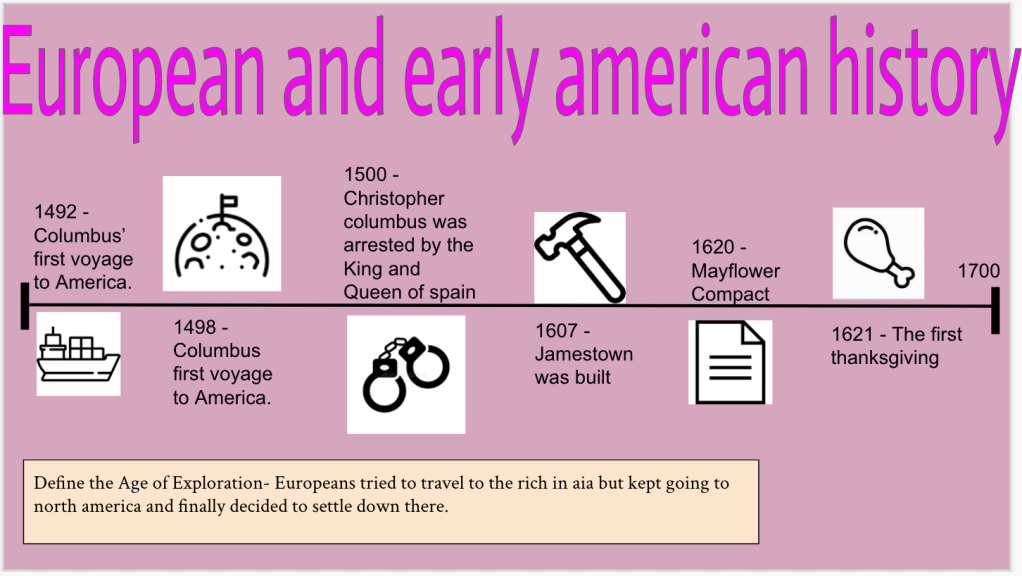
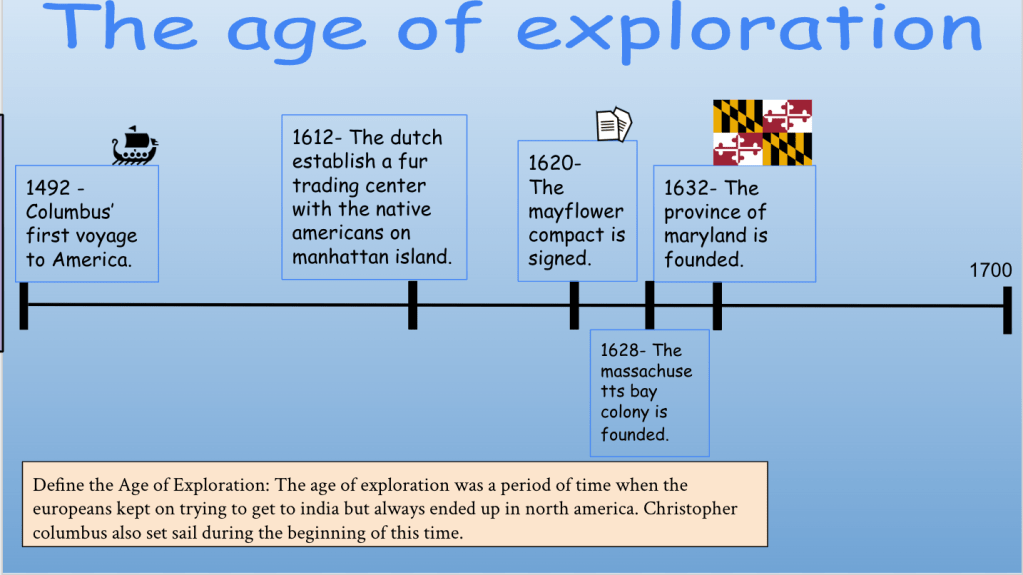
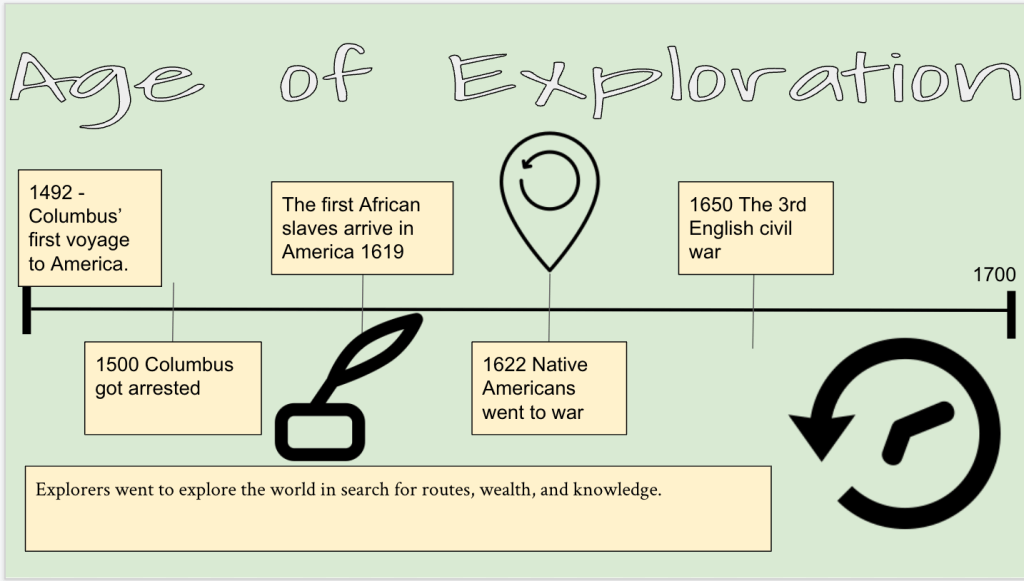
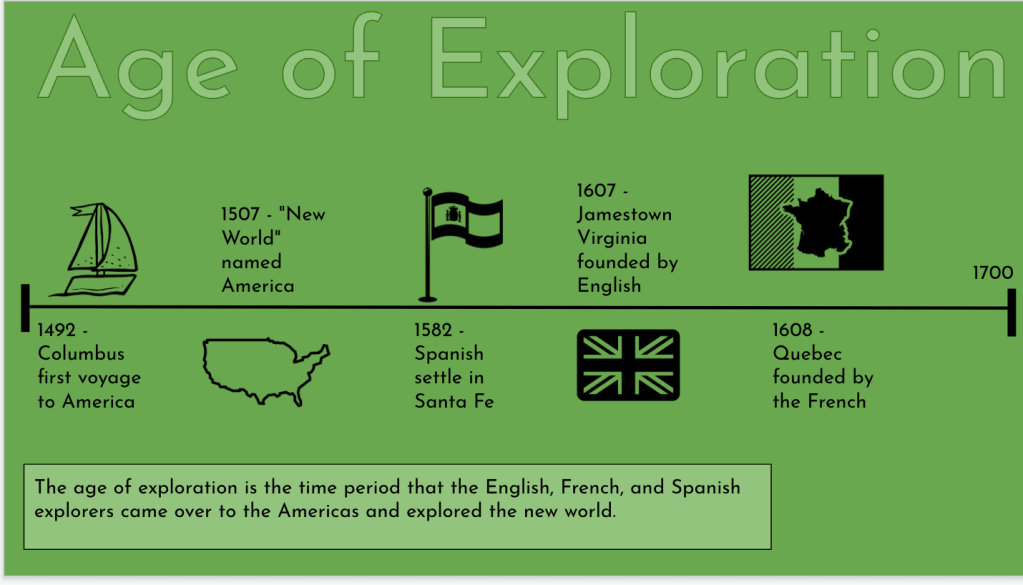
In the Number Mania timeline, I shared a premade slide and a Google Form. I asked students to share 2-3 events that shaped America. However, the events had to happen between 1492 and 1700. As students shared information through the form, I created a spreadsheet with the data.
The stuff shared by students was interesting and led to great discussions. For example, some students shared 1666 – The Great London fire. I asked, “Does this seem like something that would shape America?” They also shared, 1732 – George Washington born. I asked, “Was 1732 before or after 1700?” Yes, I had to ask that question. Don’t assume your students know basic stuff. After 10 minutes, we had a list of events to choose from to create timelines.
For 15-20 minutes, students created timelines with events they felt shaped America. Keep in mind, this is the third Number Mania/infographic that students have created this year. I have shown them how to duplicate shapes, change colors, add textboxes, change fonts, add pictures, and use word art. They will be pros by the end of the year. Here are some of their Number Mani timelines about the Age of Exploration:
The last thing we did in class was identifying countries and continents. The students need an understanding of where places are in the world. I created a Nearpod where students had to identify North America, Europe, Spain, France, Britain. At first they laughed, but they quickly realized why I chose to do this activity.
Wednesday
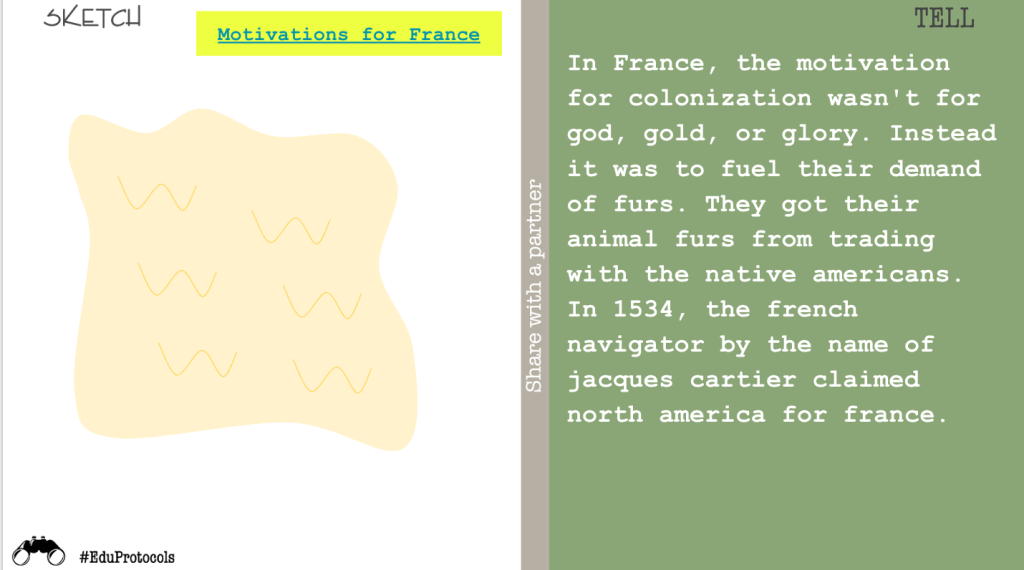
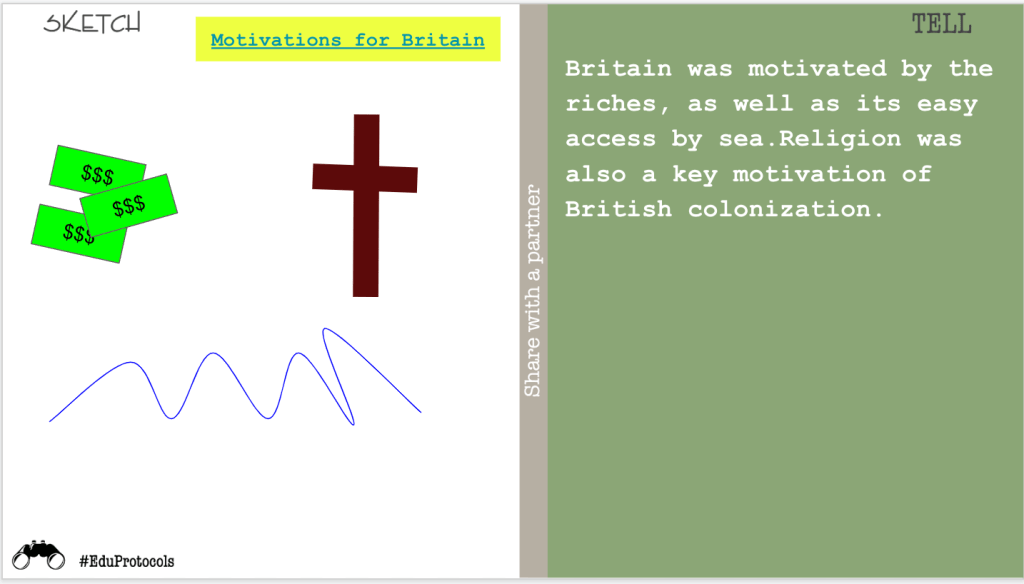
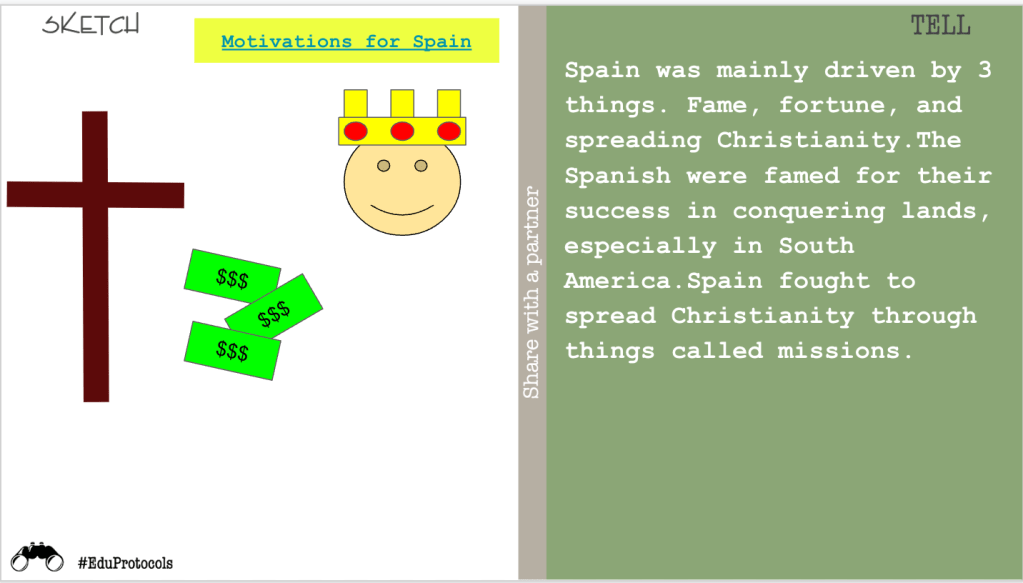
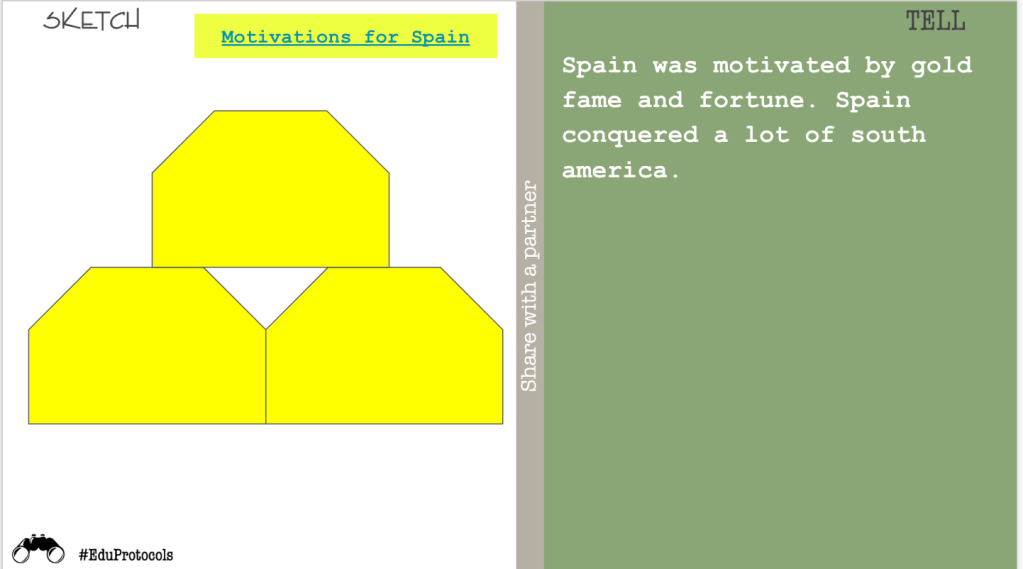
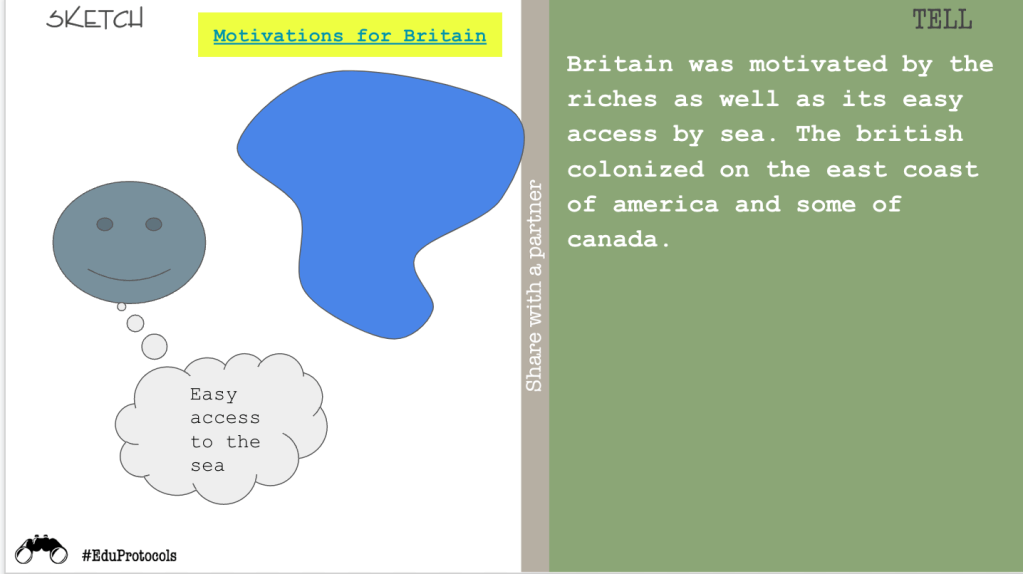
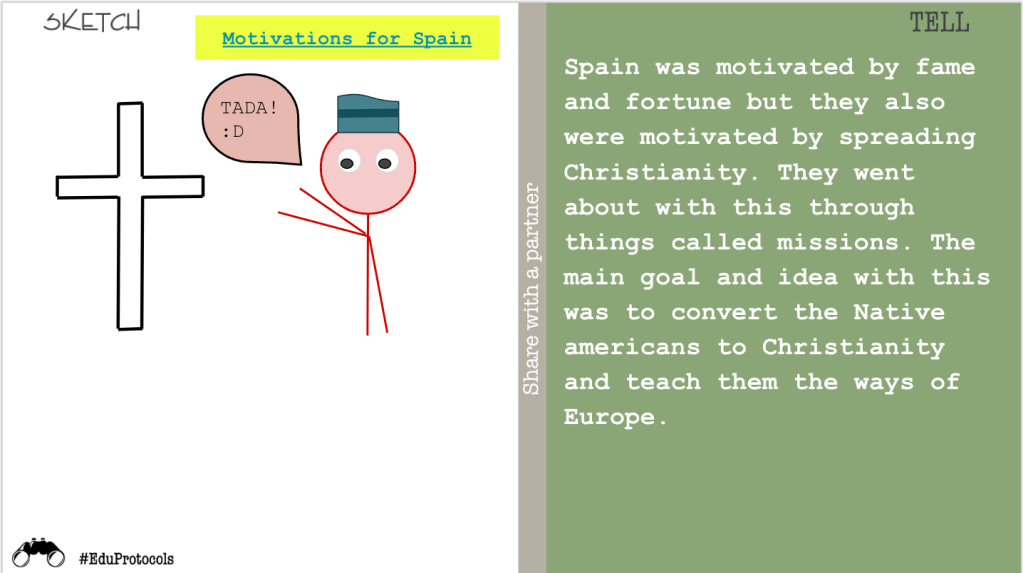
Wednesday I began my quarantine at home. My original plan was to teach a CyberSandwich before using it with exploration. This wasn’t possible. So I went back to a classic – Sketch and Tell. The students are familiar with a Sketch and Tell and it made sense as a simple reading comprehension activity. The goal for today: sketch and tell about what motivated Spain, France, and Britain to explore and colonize the Americas.
When students arrived in class, I had a Quizizz homework assignment set up. I was feeling bad, and lazy, so I just shared one Quizizz link across all classes. I do not recommend this because you will be searching for student names for days. The class average across all classes for the day was a 53%. When setting up a Quizizz homework, I do recommend:
- Turning off “show answers” after the quiz because students will keep the answers up and cheat.
- Allow students to take the quiz once or twice – this forces them to use their Google account and not use goofy names.
- Use a redemption question.
- Turn off powerups – it affects original scores. Use powerups on the 3rd or 4th rep of Fast and Curious.
Next, I had students complete a Frayer with the word Colonization. Typically I would have students skim the reading, submit words, and then we would choose 3 and Frayer them. The word Colonization was in the article and important for understanding this unit.
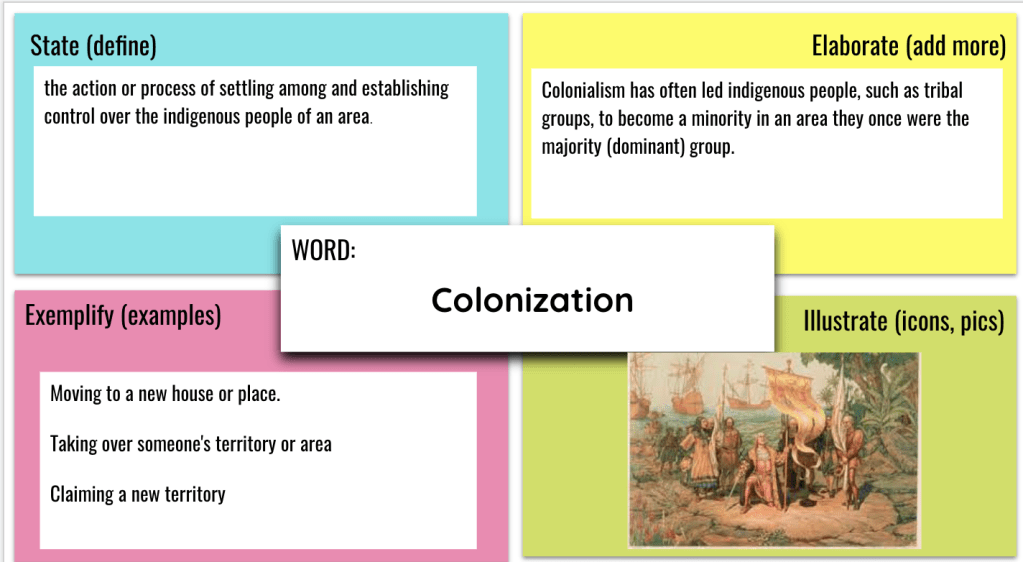
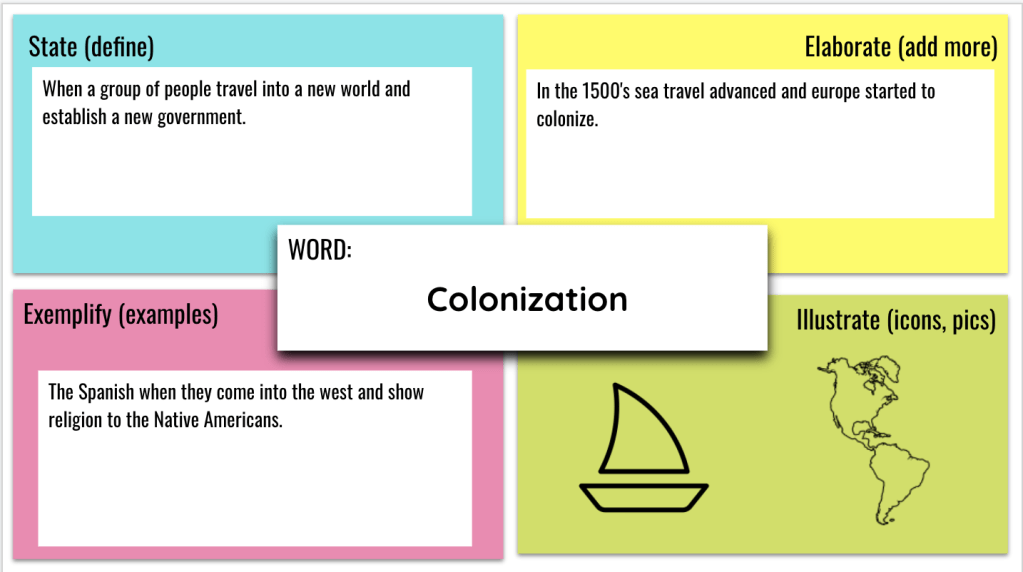
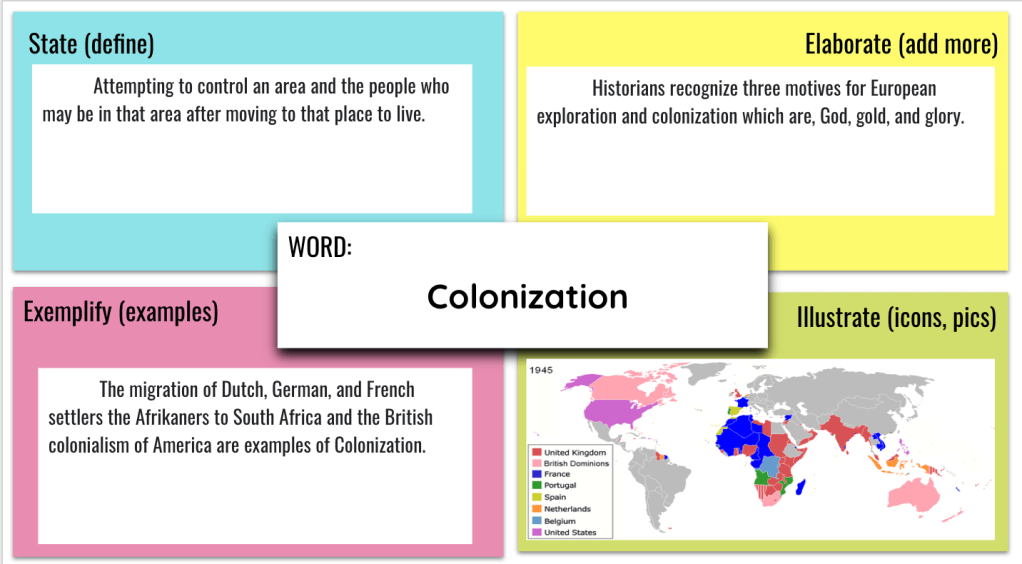
The last thing students did in class was the Sketch and Tell paired with a reading. Students read the article and answered the question – What motivated European countries to explore and colonize North America? Students created three slides – one for Spain, one for France, and one for Britain. They created a sketch about European motivations and then summarized their learning. This, to me, is way better than choosing multiple choice comprehension questions. Plus, no two answers are the same. Students are processing and internalizing their learning in their own unique way.
Thursday
On Thursday, class began with another Fast and Curious on Quizizz. Tghis time the class average across all classes shot up to 67%. The students are starting to figure out how I run class. This was followed up with another Frayer with the word Columbian Exchange. This word was a major part of the article on the effects of the European exploration.
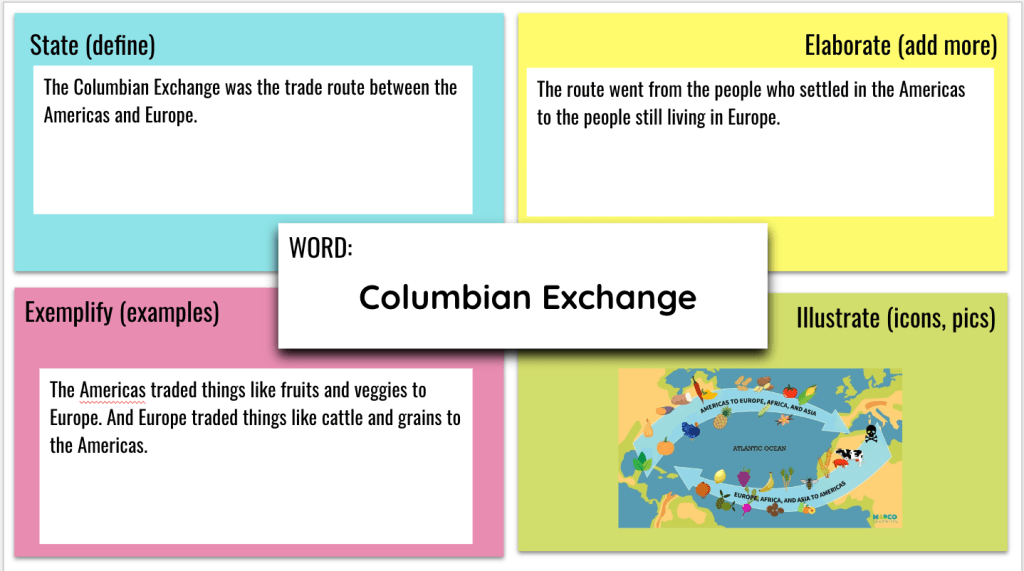
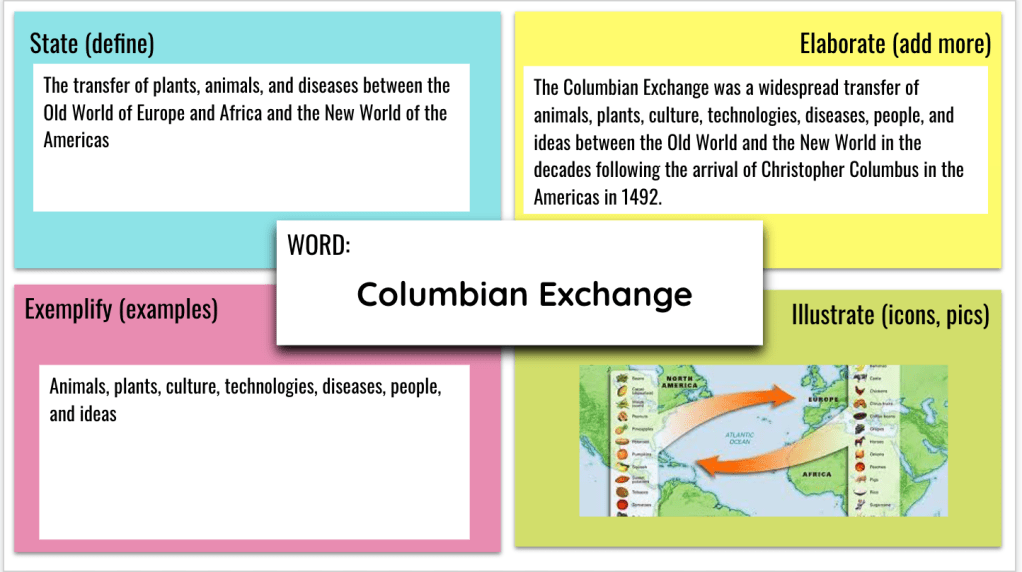
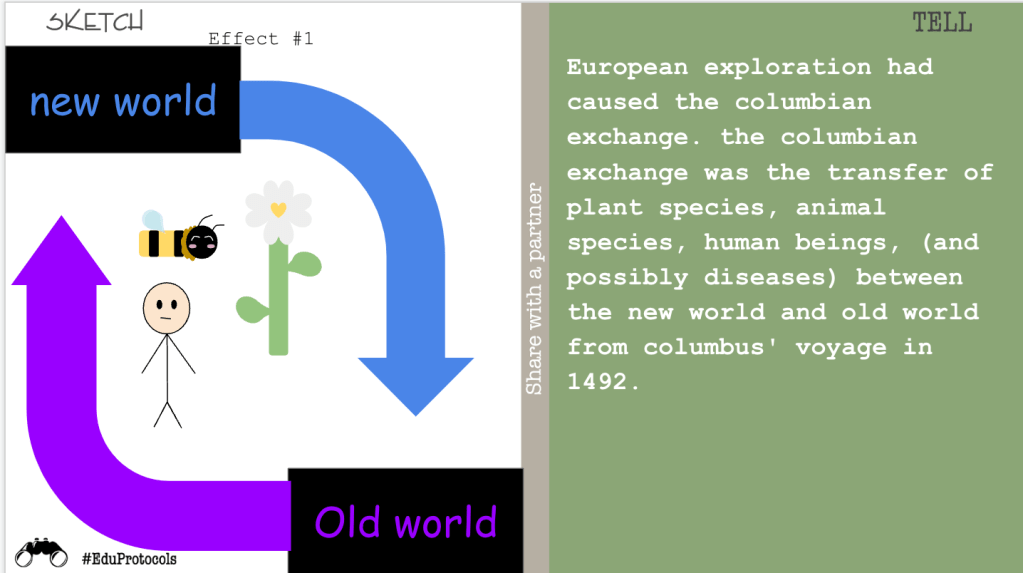
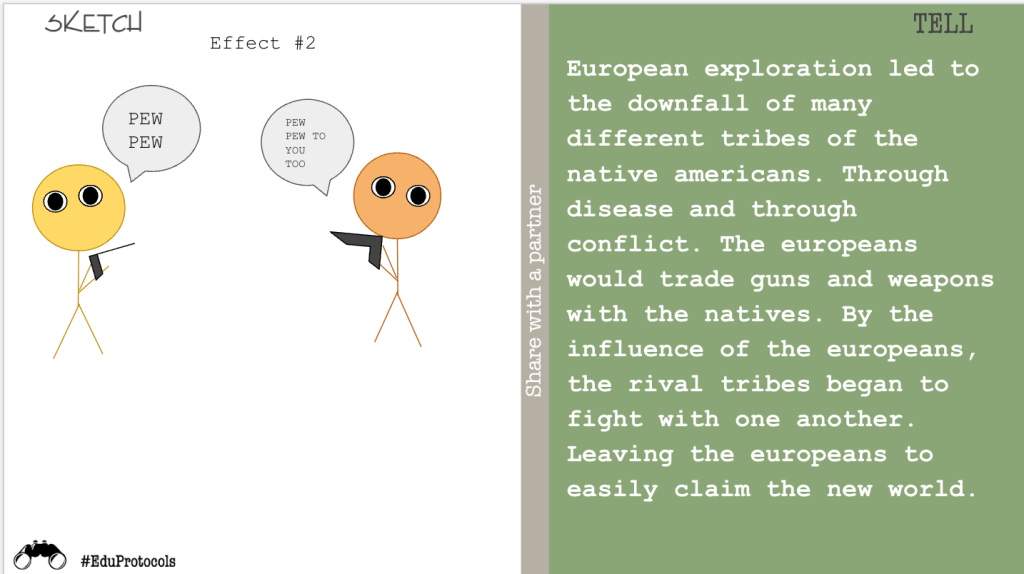
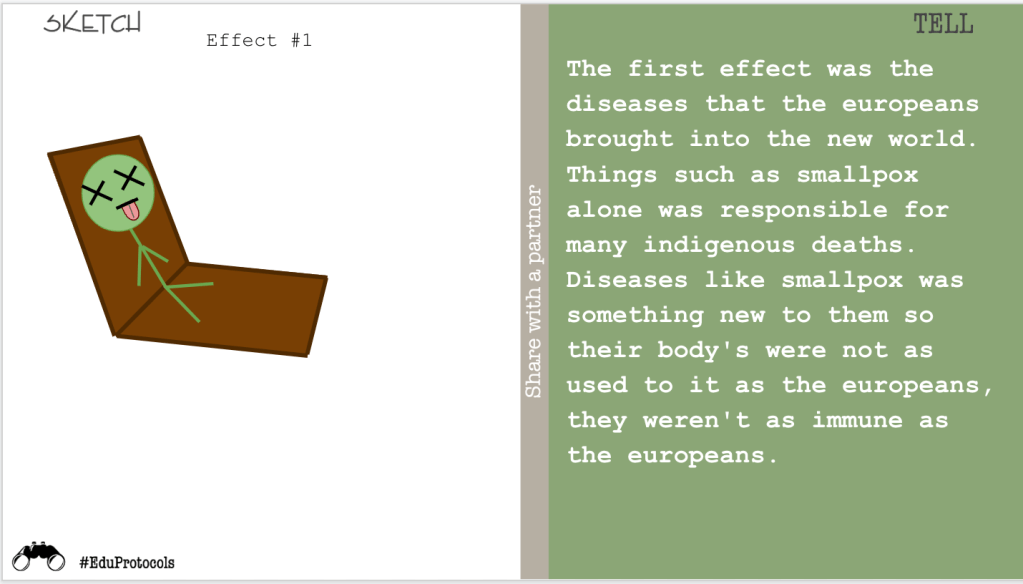
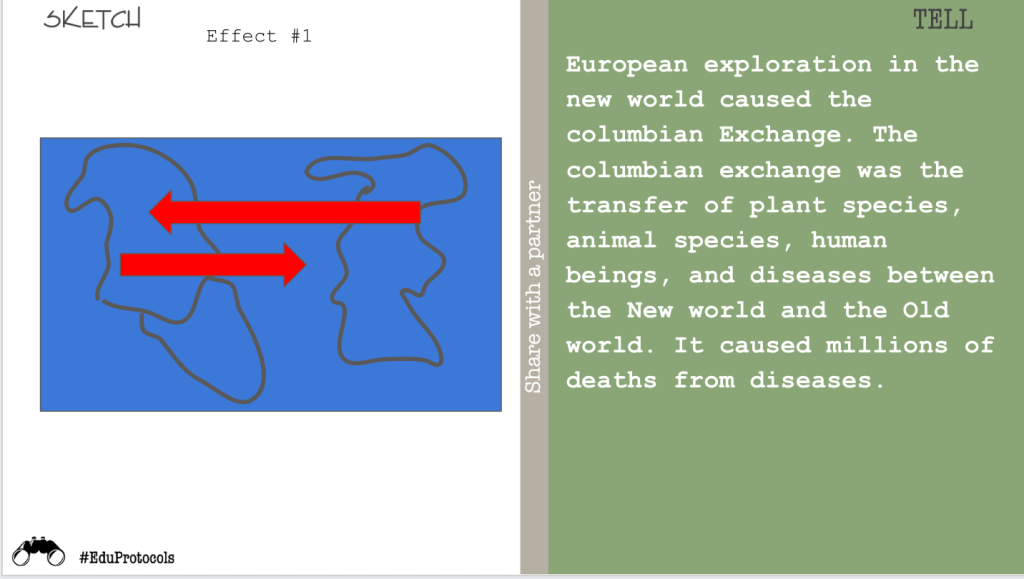
Last year, I used a sketch and tell with the effects of European exploration. Since I used a skecth and tell on Wednesday, I tried to think of a new assignment. I wanted a mix up. Then it hit me – I was making things complicated. There is nothing wrong with going back to back days with skecth and tell. If anything, it’s all about the reps and I keep the lesson the same. Here are some students samples:
Friday
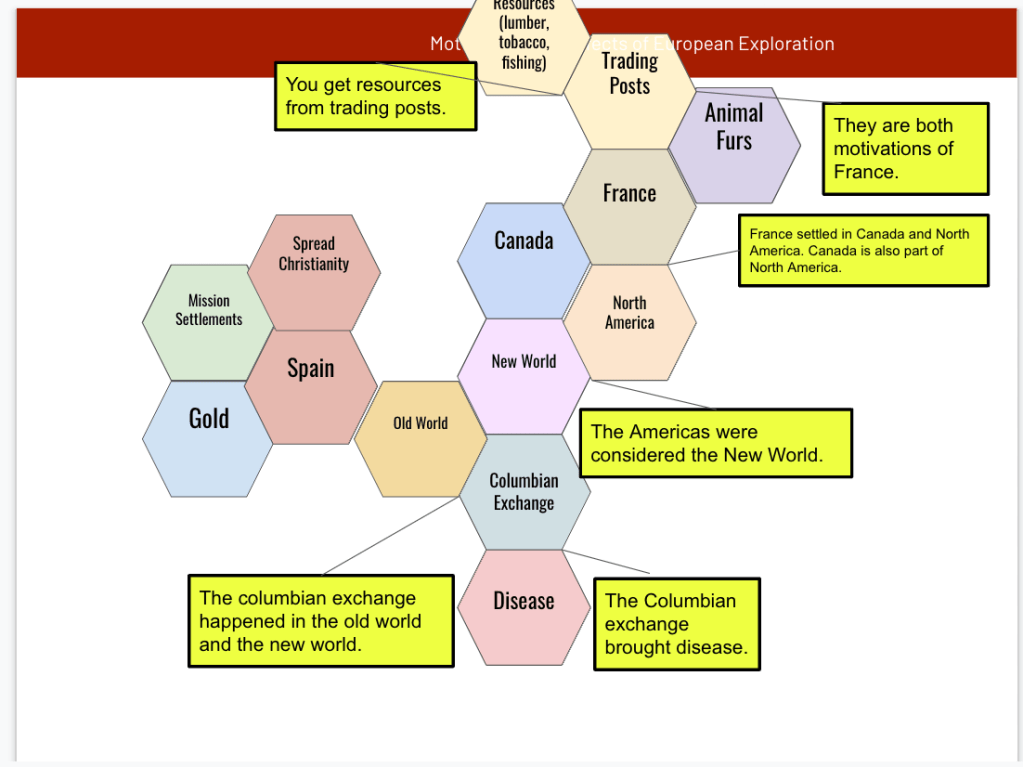
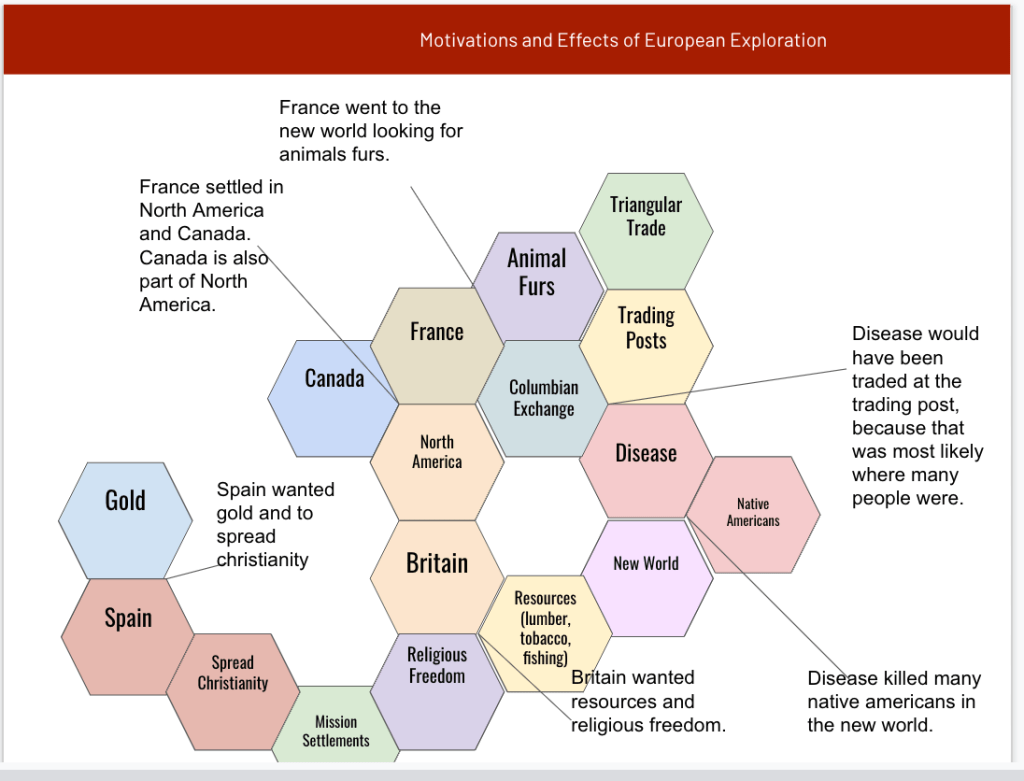
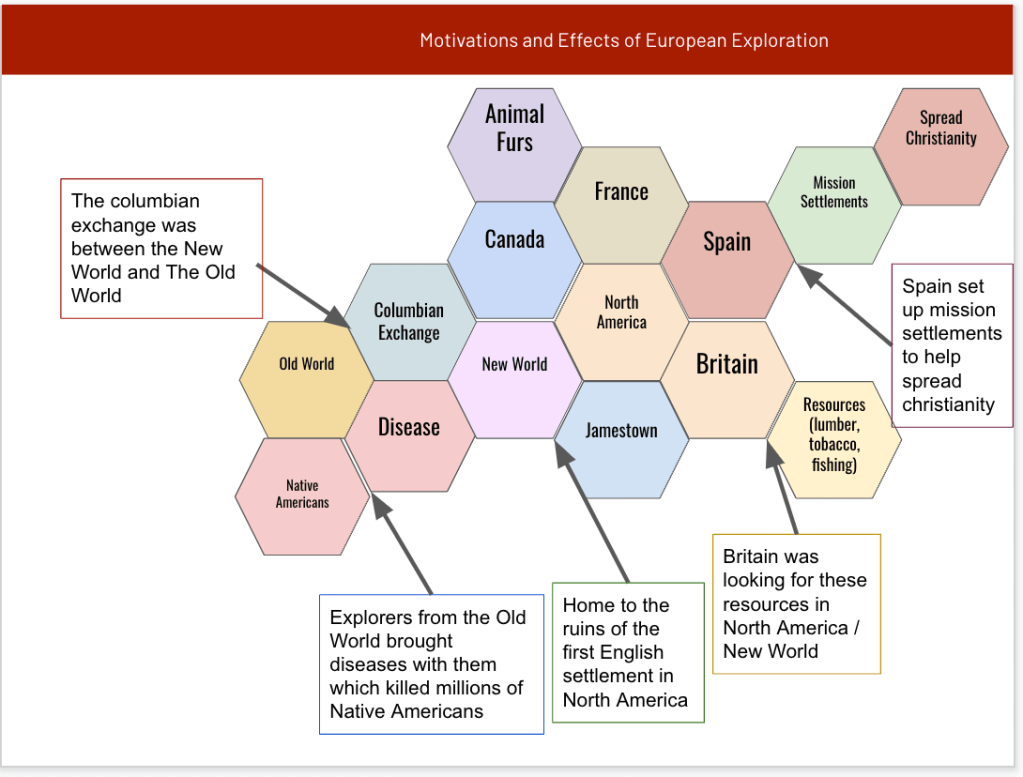
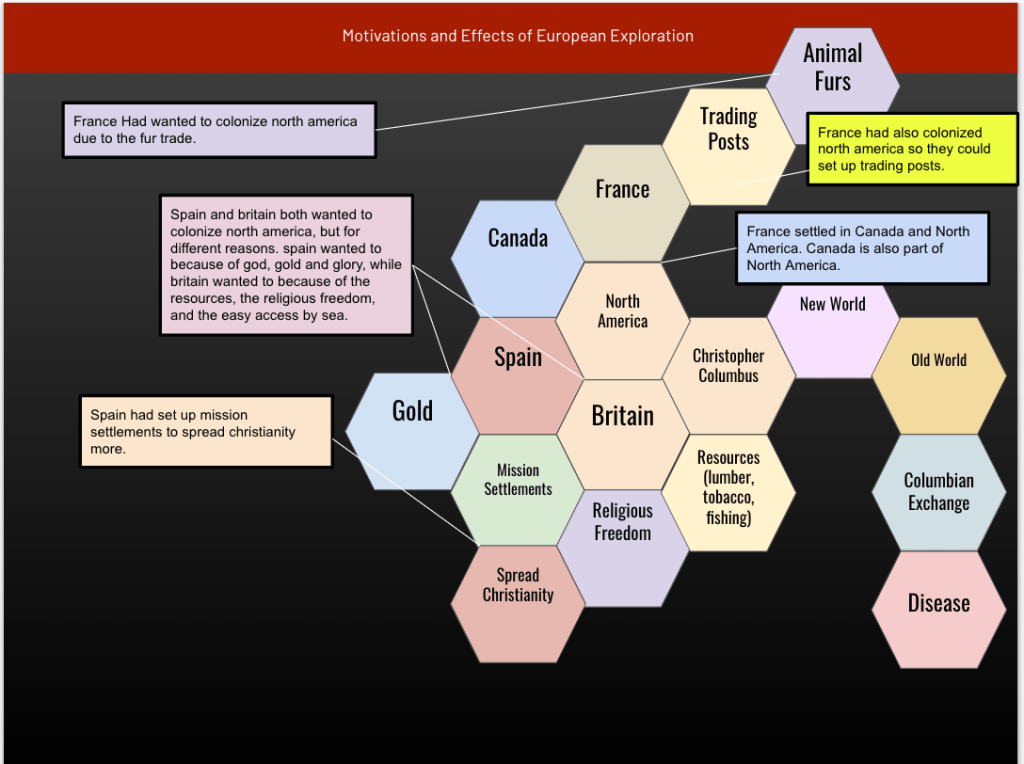
For Friday I didn’t want to start anything new. I began thinking to myself, what is a good activity with a DOK level of 3? I wanted students to make connections and process their new learning. My mind went to a “Which One Doesn’t Belong?” activity. So, I created one here. Each slide contain four images, students select which one doesn’t belong, then they justify their choice using evidence from what they have learned. However, I decided this wasn’t it and would be fi nished too quickly. Then i remembered Hexagonal Learning – the digital version!
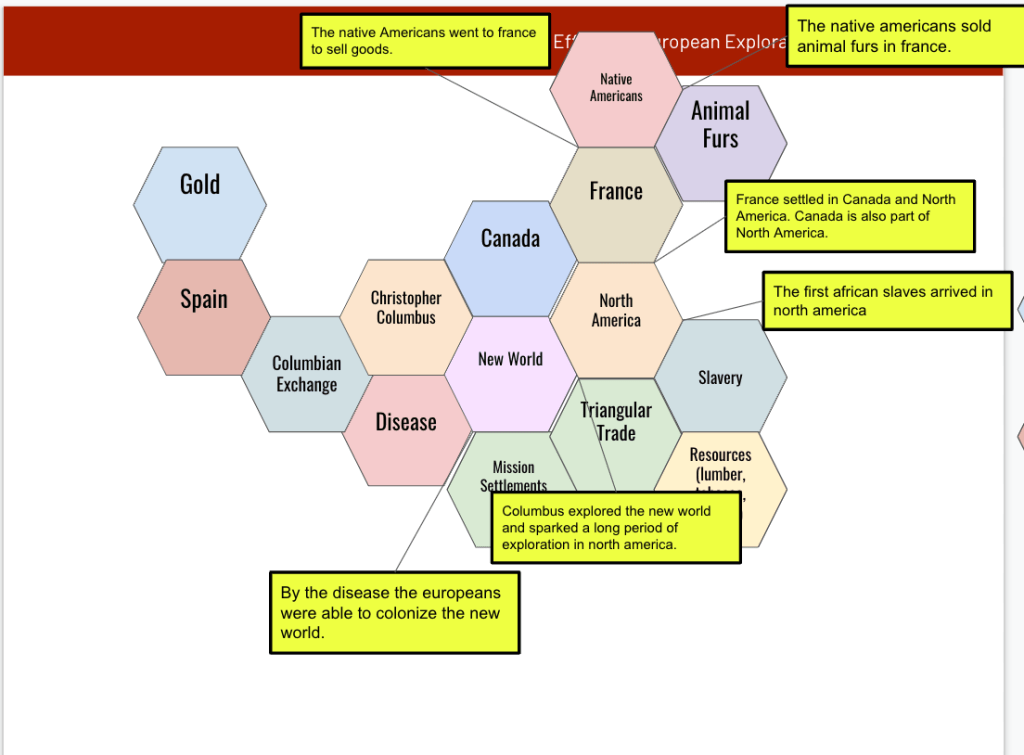
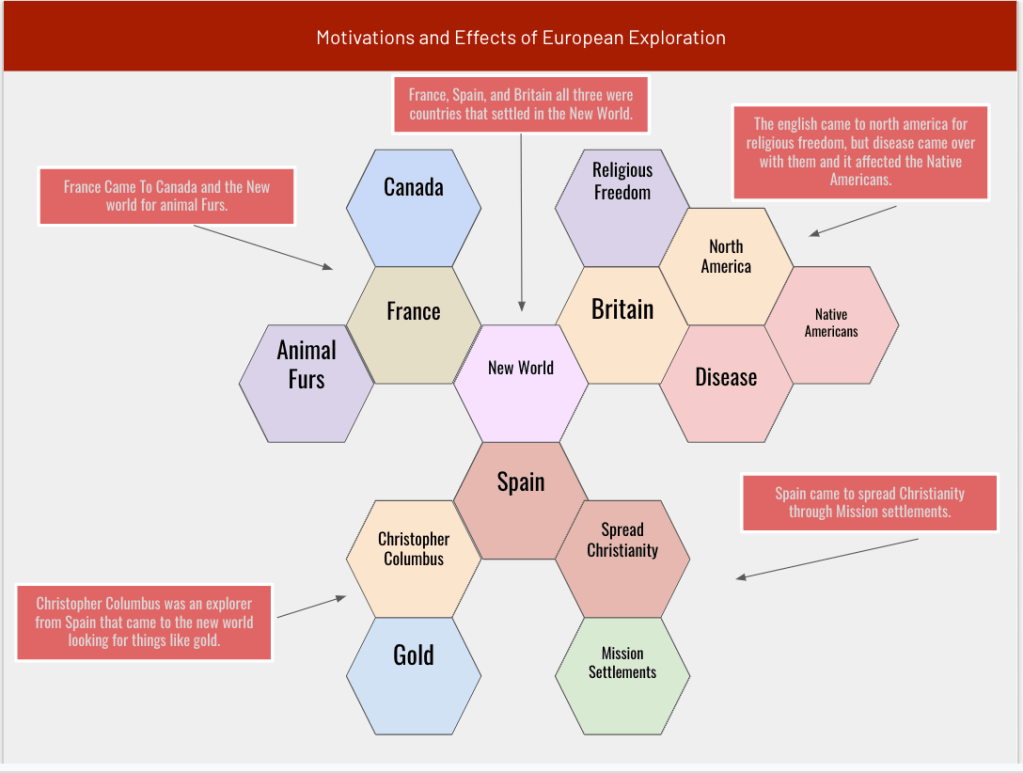
I went through the fast and curious quizizz, and the readings and I added basic concepts to the hexagonal learning template. I added basic things such as countries, old world, new world, disease, furs, etc. I provided a basic example, and let students try it out. For their first try, they did an excellent job making connections and writing some explanations. Here are some student samples:
At the conclsuoj of class, the all class average for the fast and curious finished at 85% which is great for 115 total students.

 Moler's Musings
Thinking of you, buddy. It’s been a rough couple of weeks. I hope you are feeling better soon. I’m looking forward to seeing you in October.
LikeLike