History teacher at New Richmond Middle School. Tennis coach at SUA, Beechmont Racquet and Fitness, Lunken Playfield, and KCC. Striving to learn, create, and innovate one day at a time.
This week was a weird one heading into winter break.
Monday started as a two-hour delay, but the cold did not play nicely with the salt. Roads iced over, conditions got worse, and the day was eventually called off. Over the weekend, I had a freak accident and hit my head, which led to concussion symptoms. Headache and dizziness lingered into Monday and Tuesday, so I missed school on Tuesday.
Then Thursday morning hit. I woke up at 2 a.m. with an awful pinched nerve in my shoulder. Sometimes the pain is manageable. Sometimes it creeps up to a seven or eight. This one was a solid seven or eight. I tried to push through and go in anyway, but I could not make it. I left early and went to urgent care, and I am glad I did. The pain is gone.
Because of all that, this was not a week to start anything new. Instead, I kept it simple. We focused on one core question: why the British lost the Revolutionary War. We did not get into individual battles, specific people, or detailed comparisons between the two sides. This week was about framing the story and building understanding before the details.
Tuesday
Tuesday was about finishing strong.
Students wrapped up their Netflix-style assessment for the Declaring Independence unit. I had very clear instructions typed up, and everything centered on one guiding question: what convinced the colonists that independence was worth the risk?
Each “episode” had a purpose.
Episode one focused on Lexington. Not just as a battle, but as British soldiers acting as police, enforcing laws, and ultimately killing colonists. We framed this as a civil conflict where natural rights were being violated. That moment mattered because it shifted the relationship. This was no longer about protests or complaints. Something had broken.
Episode two moved into ideas. John Locke and Thomas Paine. Natural rights and the social contract. But just as important was Paine’s ability to communicate those ideas in a way regular people could understand. Independence was radical. Paine made it relatable. He helped people see themselves in the argument and believe it was possible.
The final episode centered on the Declaration of Independence. The point of no return. Once that document was signed, there was no walking it back. The risk was real, but so was the commitment.
Looking back, it almost follows a hero’s journey without actually being one. A problem emerges. Beliefs are challenged. A decision is made that changes everything. Not because it fits a template, but because that is often how history actually unfolds.
Wednesday and Thursday
Wednesday and Thursday were about keeping things simple and intentional.
I did not have the time or the capacity this week to dive into Revolutionary War battles or a long list of people. I also did not want to be staring at screens because of the concussion. So instead of forcing something new or flashy, we slowed things down and went analog.
We did a paper-based stations activity built around one question: Why did the British lose the Revolutionary War? Students rotated through eight stations with an organizer, pulling evidence and ideas from a mix of primary and secondary sources. They read letters, watched a short video, and analyzed different explanations without me front-loading anything.
Before we started, I told them why I designed the lesson this way. Three years ago, a student asked me, “Mr. Moler, did we win the Revolutionary War?” That question stuck with me. It was a reminder that what feels obvious to us as adults or teachers is not always obvious to students. I wanted to make sure I covered my bases and made it clear that yes, the colonies did win.
I also explained that I could have framed the lesson as why the Americans won. Instead, I intentionally framed it as why the British lost. The most powerful military in the world lost to a group that, on paper, looked untrained, unorganized, and outmatched. That framing creates curiosity. It forces students to think deeper about strategy, geography, leadership, motivation, and mistakes rather than just memorizing victories.
Students used the stations to build their own explanation and then wrote a clear response answering the question. No slides. No devices. Just thinking, reading, and writing.
That lesson carried into Thursday.
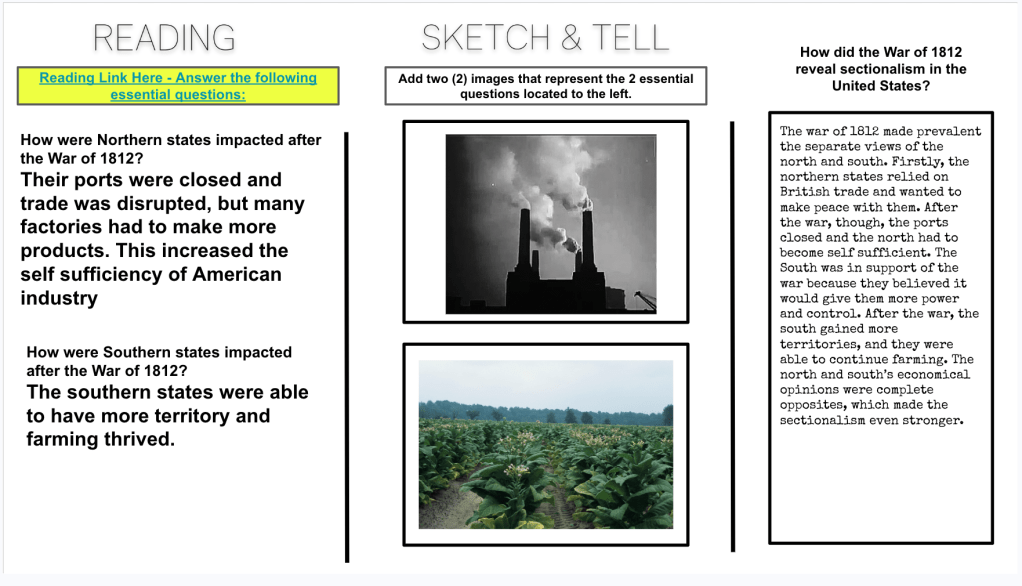
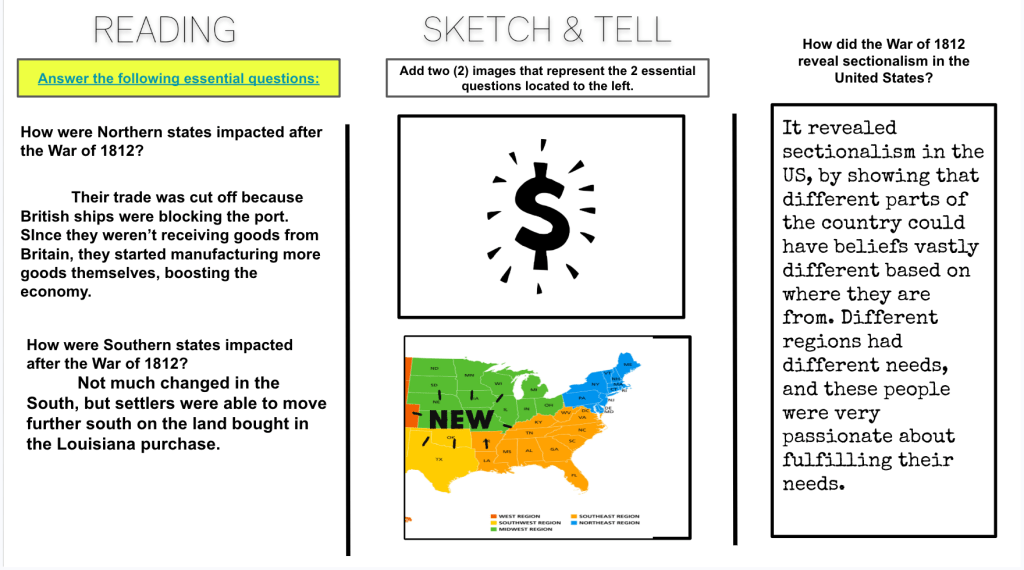
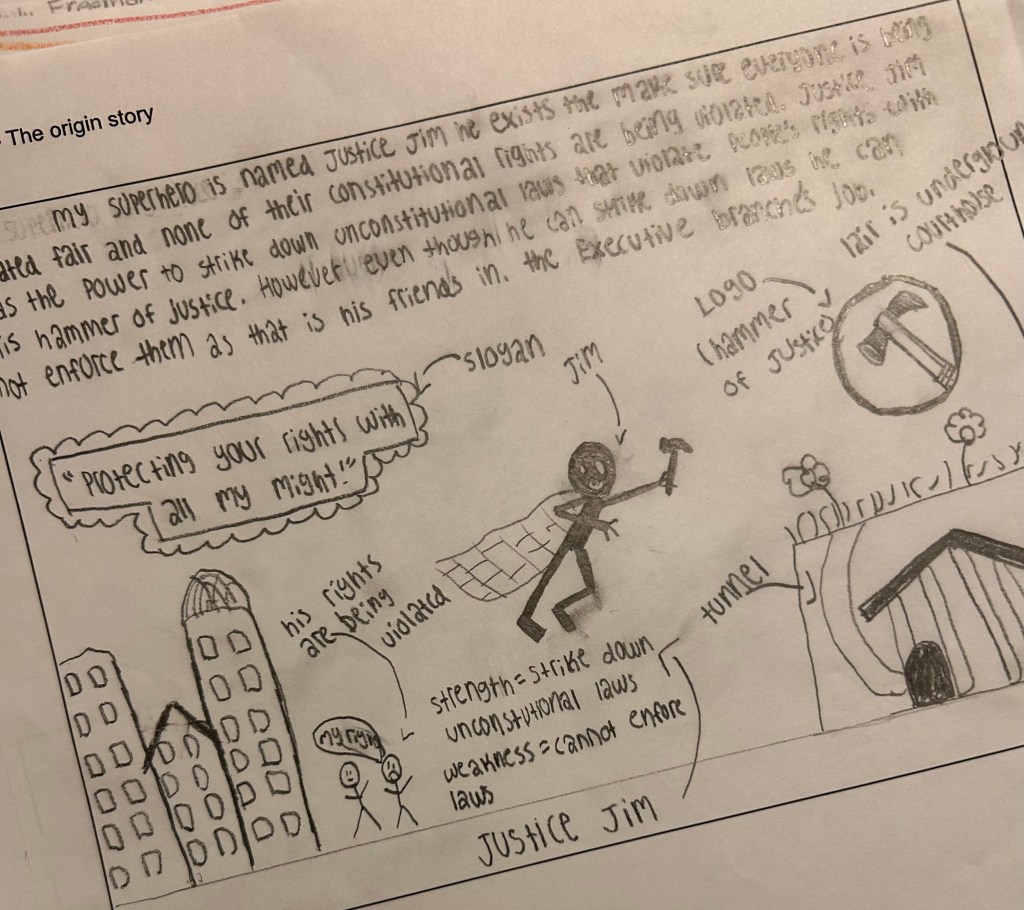
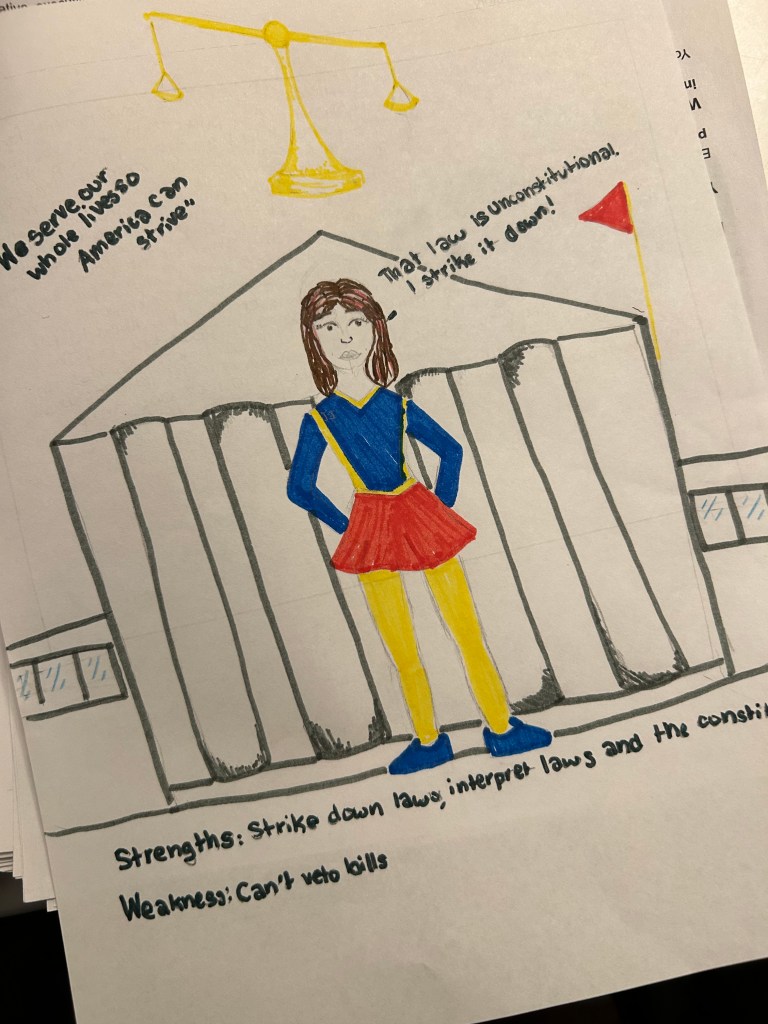
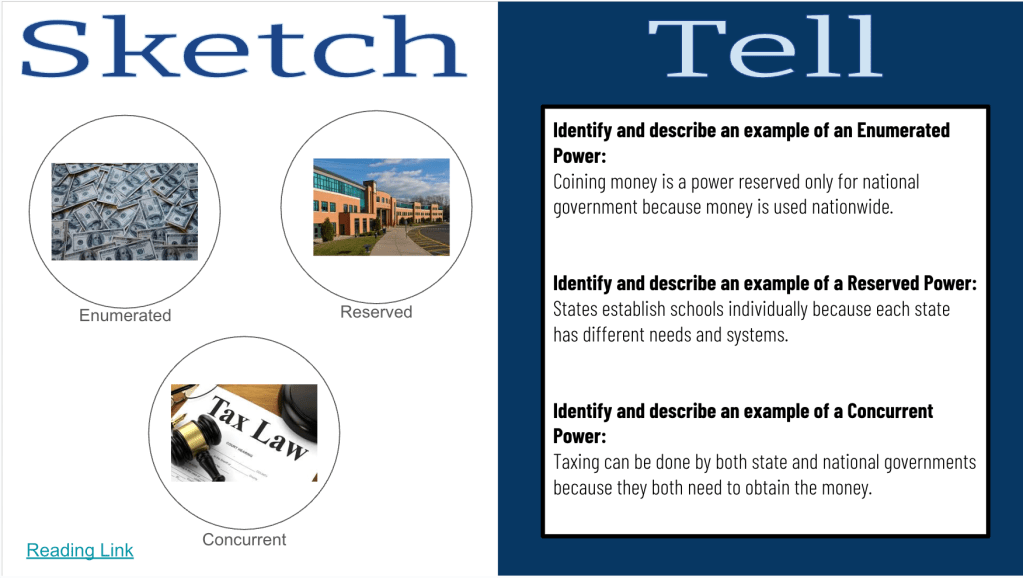
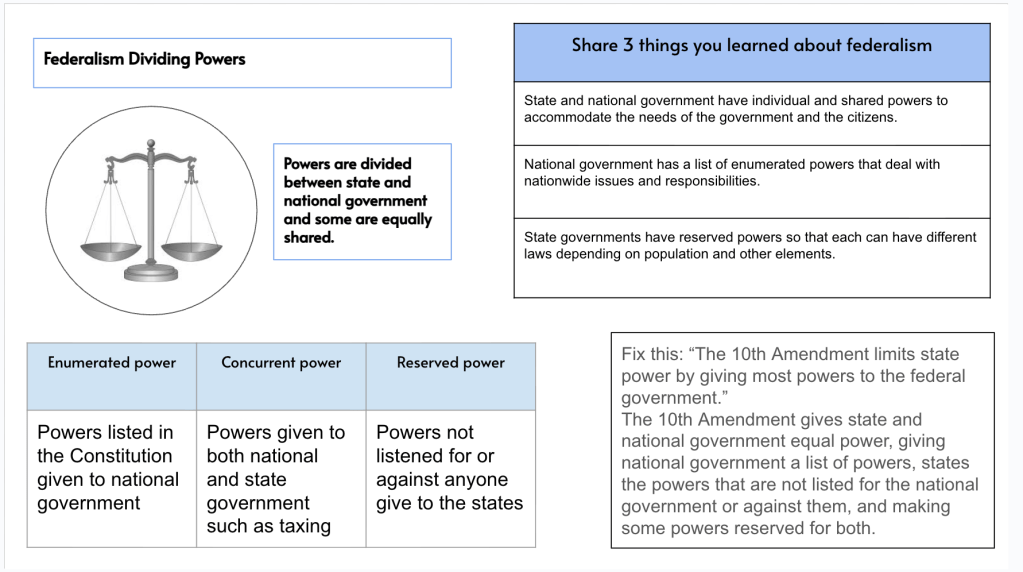
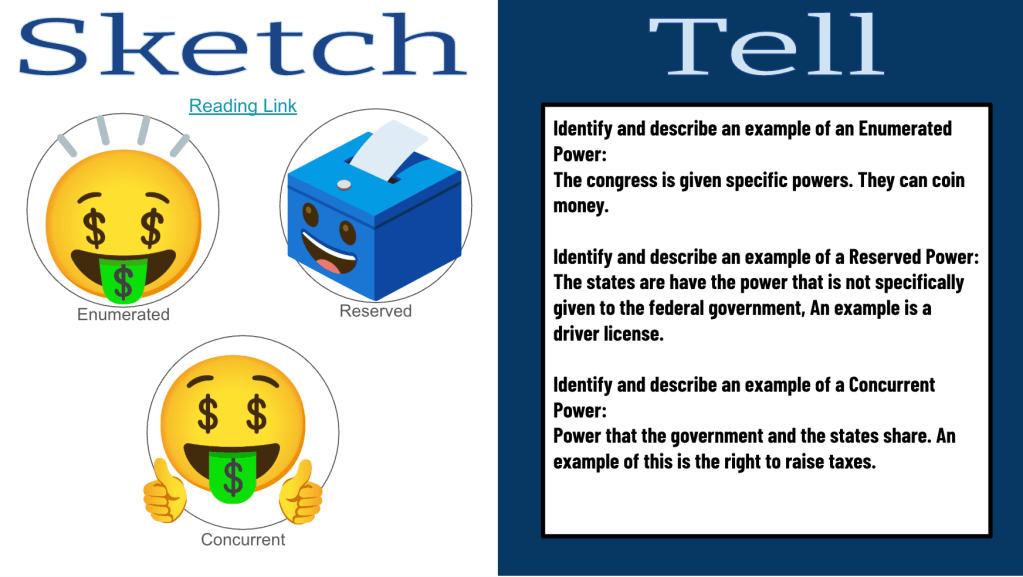
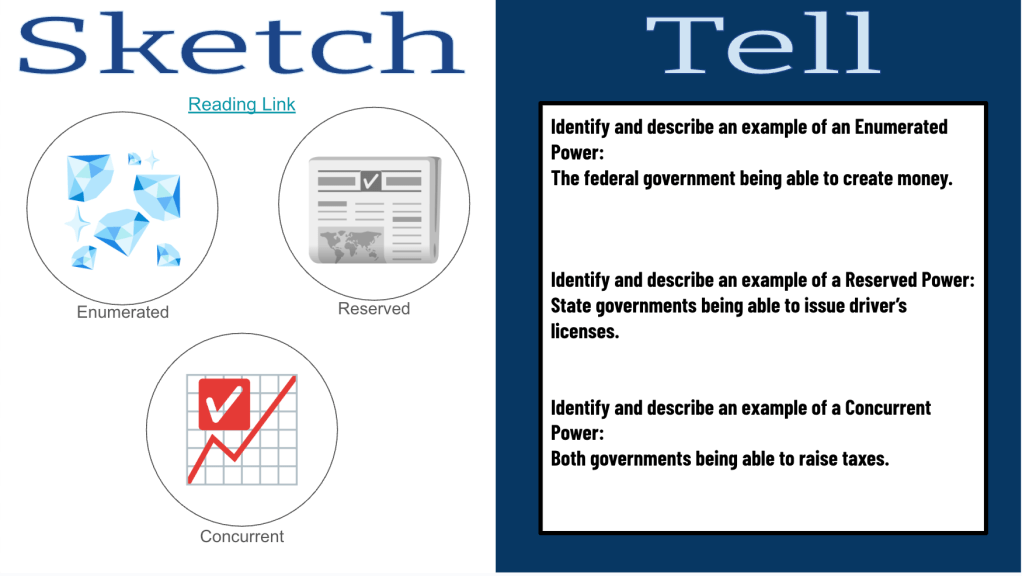
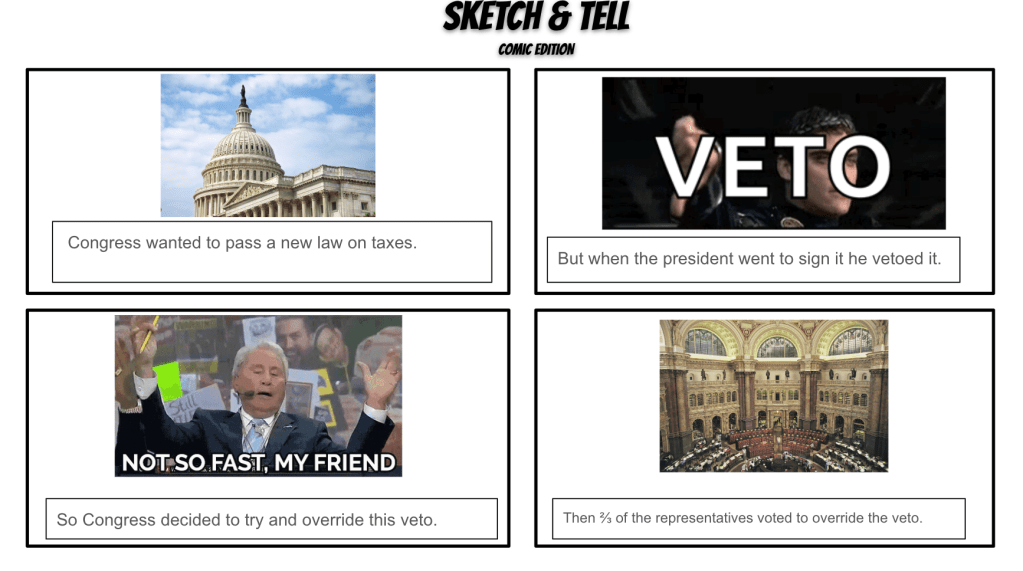
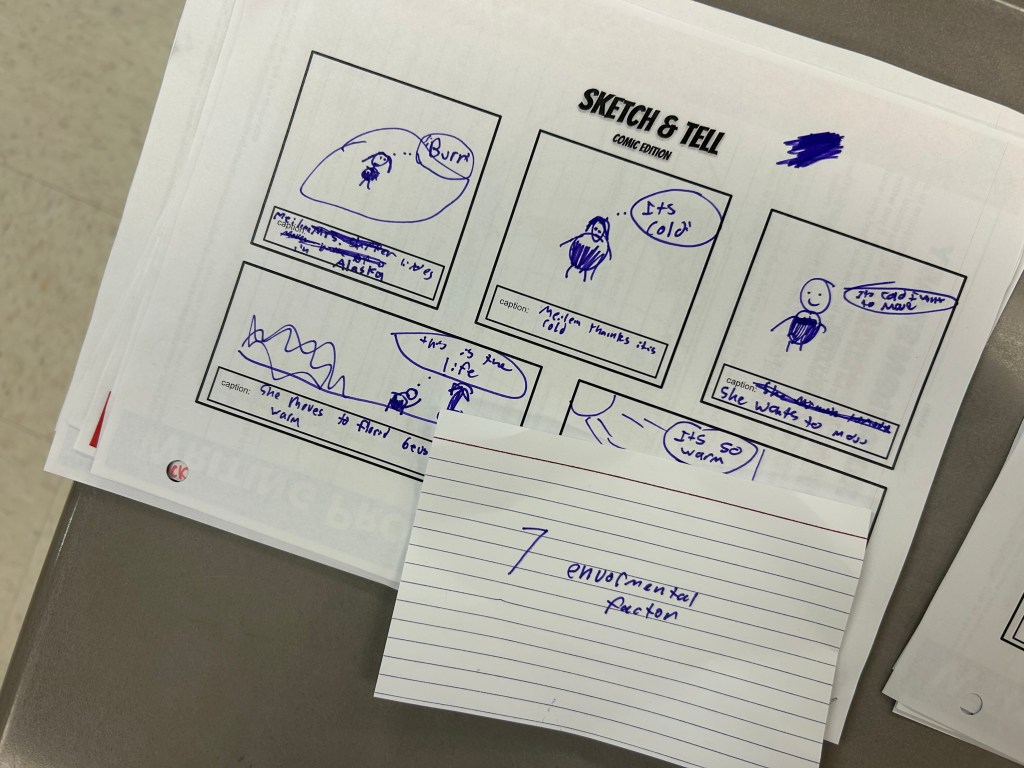
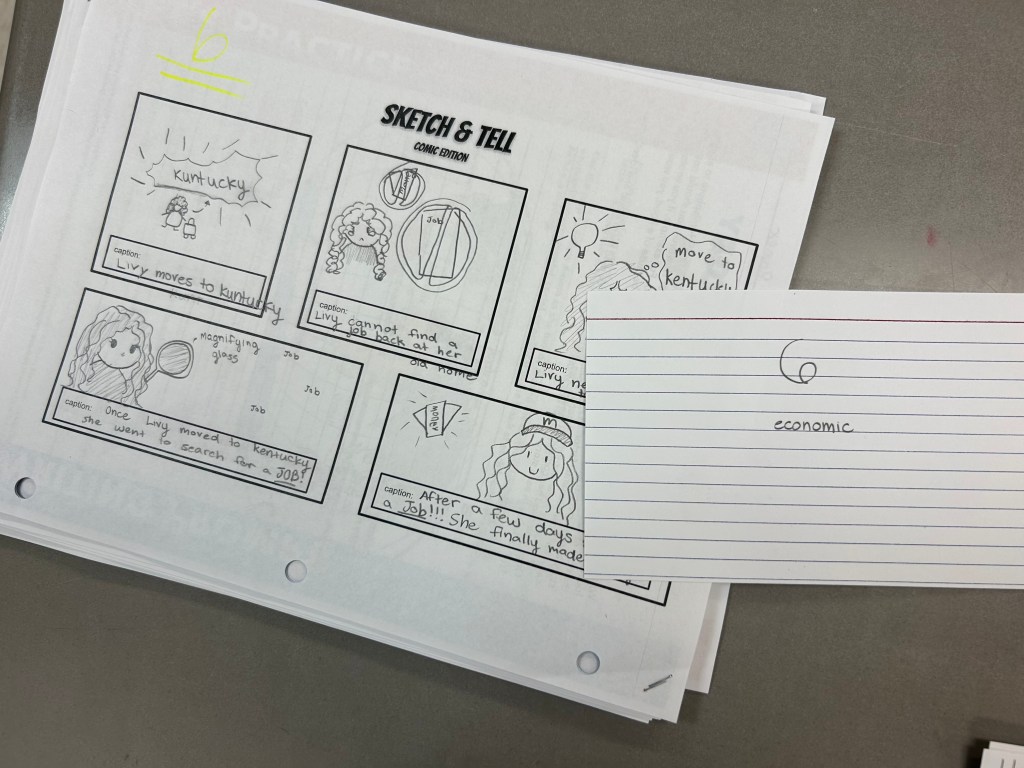
For early finishers, I pulled out a John Meehan lesson that works like a choose-your-own-adventure through the life of a soldier. Students learned about training, pay, food, daily conditions, and how soldiers actually fought. I paired it with a Sketch and Tell-O, where students drew one idea and shared one thing they learned.
It was low-tech, calm, and exactly what this week needed.
Friday
Friday was controlled chaos in the best possible way.
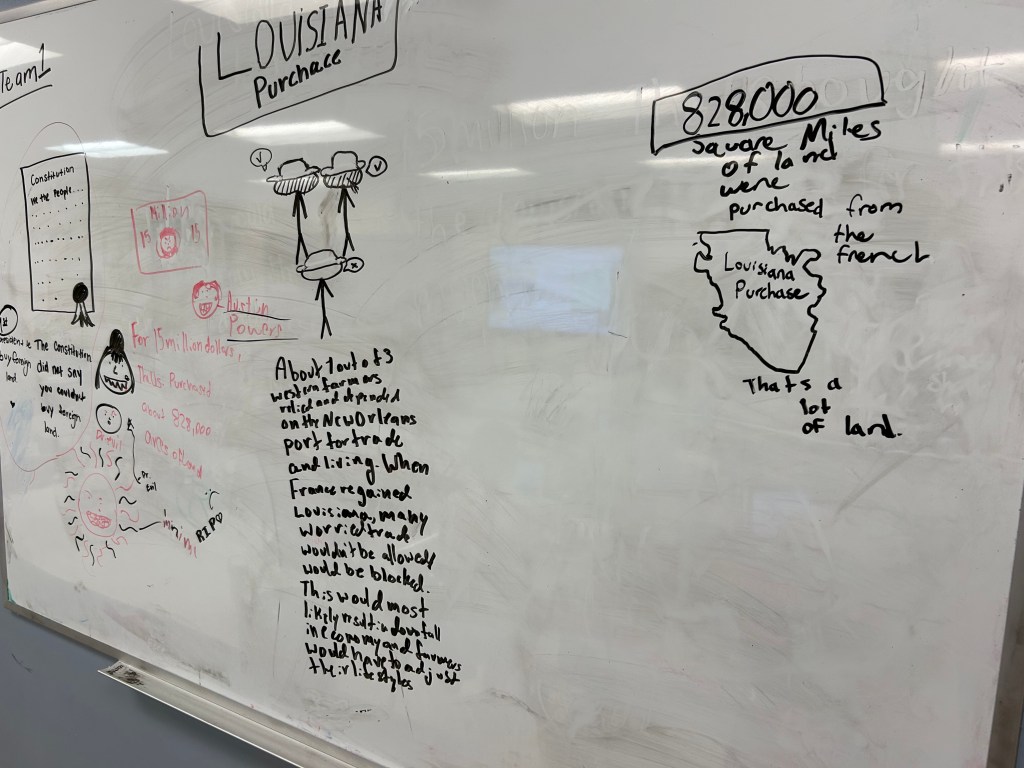
We did an ugly Christmas sweater party, but not the store-bought kind. We made them history-style. Students could choose any topic we covered during the first part of the school year and turn it into an ugly sweater design. Ideas were everywhere. Colonization, natural rights, mercantilism, battles, documents. Markers, paper, and laughter took over the room.
At some point in the middle of all this, a group of students started trying to draw me. Then they tried to draw me as George Washington. That is when I said the most 2025 sentence I have probably said all year: “ChatGPT can do that.”
I took my face, took George Washington’s face, and had ChatGPT merge them together. Then I turned it into a coloring page. It was ridiculous. It was hilarious. And the kids lost it.
More than anything, it felt like the perfect way to end the first half of the school year. Creative. Low pressure. Connected to content. A reminder that learning does not always need to be heavy to be meaningful. Sometimes it just needs to be human.
Monday was all about setting the stage for the Declaration of Independence. This was not the deep dive yet. It was about building background knowledge and telling the story behind the document.
We started with an image of the Declaration itself. I told the story of Thomas Jefferson writing it. Jefferson was a quiet, soft spoken individual, not someone who demanded attention, but someone who could write like no one else. That contrast always hooks students. You do not have to be loud to be powerful.
From Words to Action
From there, we talked about what happened after the Declaration was approved. It was not just signed and forgotten. It was read aloud throughout the colonies. That moment led perfectly into an image of the King George statue being pulled down at Bowling Green Park in New York City.
I used cleanup.pictures to remove a few details from the image and turned it into a spot the difference activity. I made six changes, just enough to slow students down and make them really look.
Making It Real
I shared photos from my own visit to Bowling Green Park to help make the moment feel real instead of textbook flat. Since we were heading toward Hamilton’s You’ll Be Back, I also shared an image of Alexander Hamilton’s gravesite, which is right nearby. Small details like that help students realize history happened in real places with real people.
Retelling the Story With Numbers
We ended the day with a reading and a Number Mania activity. Students retold the story of the Declaration of Independence using numbers like dates, ages, totals, and time spans.
I also showed students the new Building Blocks feature in Google Slides, which makes it much easier to create a clean template for Number Mania. The students did a really nice job pulling together meaningful numbers, retelling the story, and showing creativity in how they organized their slides.
It was a strong way to start the week and set us up for the deeper work to come.
Tuesday Through Friday
Revisiting Locke Before the Declaration
Before we officially started analyzing the Declaration of Independence, I wanted to pause and go back to John Locke. Students had learned about him earlier, but I wanted to see what stuck.
I wrote a paragraph about John Locke, natural rights, and the social contract and embedded four errors into the text. Students had to find the mistakes and correct them. This worked really well. They were locked in, talking through ideas, and justifying why something did or did not make sense. It was one of those moments where you can tell the thinking is actually happening.
Nachos, Errors, and the Declaration
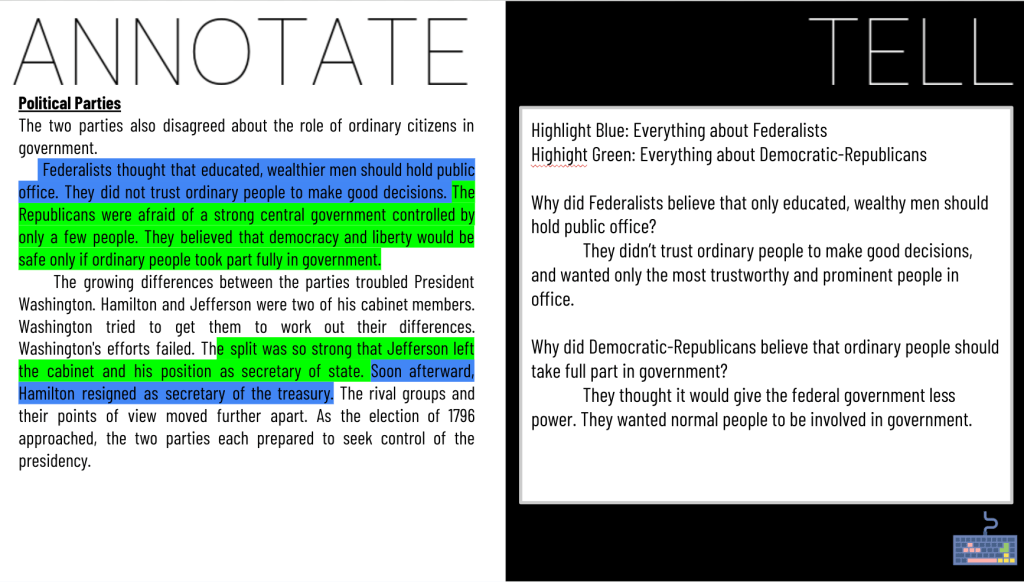
A lot of what came next was inspired by my friend Dominic Helmstetter. He shared a lesson sequence he used with the Declaration that included Annotate and Tell, 3xPOV, Retell in Rhyme, and Taylor Swift. I borrowed heavily and made it my own.
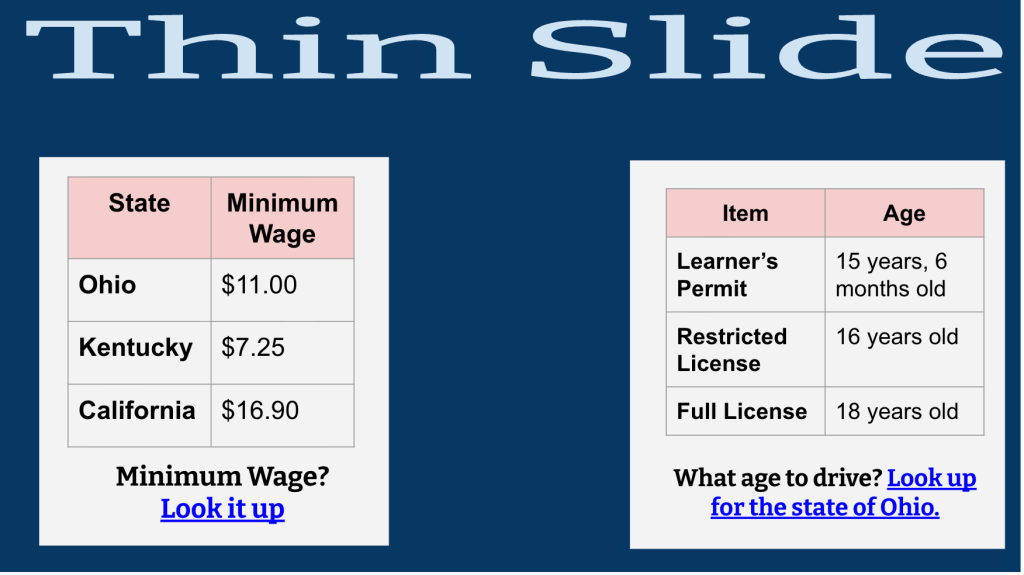
We kicked things off with a Helmstetter classic, the Nacho Thin Slide. About four weeks ago, I was challenged to incorporate chips and salsa into a lesson. Students forgot. I did not.
I had chips and salsa out and waiting. Two slides were posted, each with four statements connected to the Declaration of Independence Number Mania reading. Three of the statements had errors. Students had to find and correct them while eating chips and salsa and discussing the Declaration. It was loud, focused, and surprisingly productive.
The Greatest Breakup Letter Ever Written
Next came an introduction to a new question. Who said it, Taylor Swift or Travis Kelce?
We looked at breakup lines and talked about tone, message, and purpose. I kept coming back to the idea that the Declaration of Independence might be the greatest breakup letter ever written. That framing stuck with them and carried into the rest of the week.
Chunking and Translating the Declaration
Over the next couple of days, we read and annotated the Declaration in sections. We focused on the preamble, the purpose of government in the preamble, the grievances, and the closing statement.
As we worked through each section, I challenged students to summarize the meaning using modern language. This was easily one of their favorite parts. They had fun translating eighteenth century ideas into words they would actually use, while still trying to keep the meaning intact.
Three Perspectives, Three Minutes Each
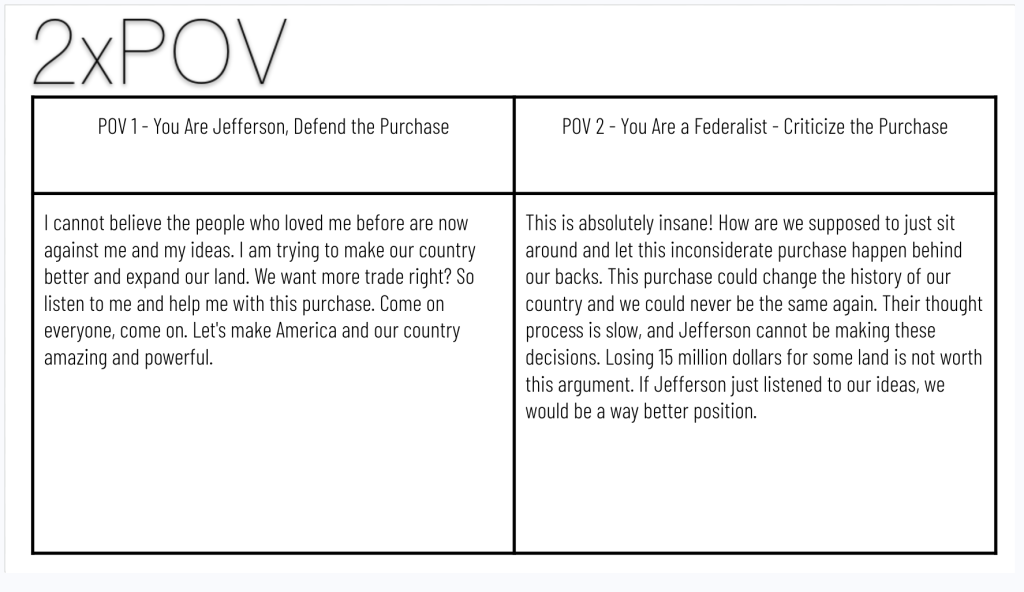
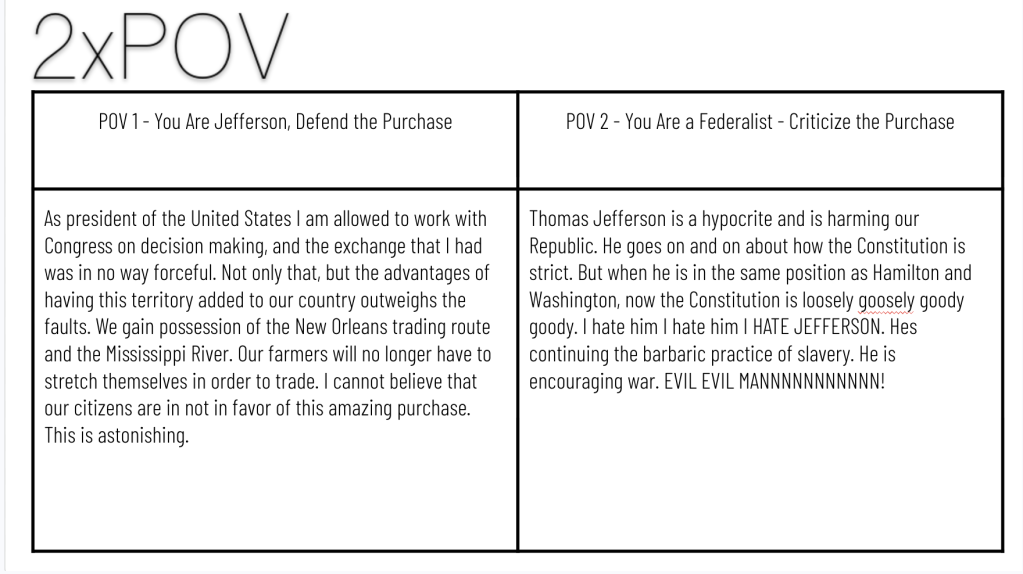
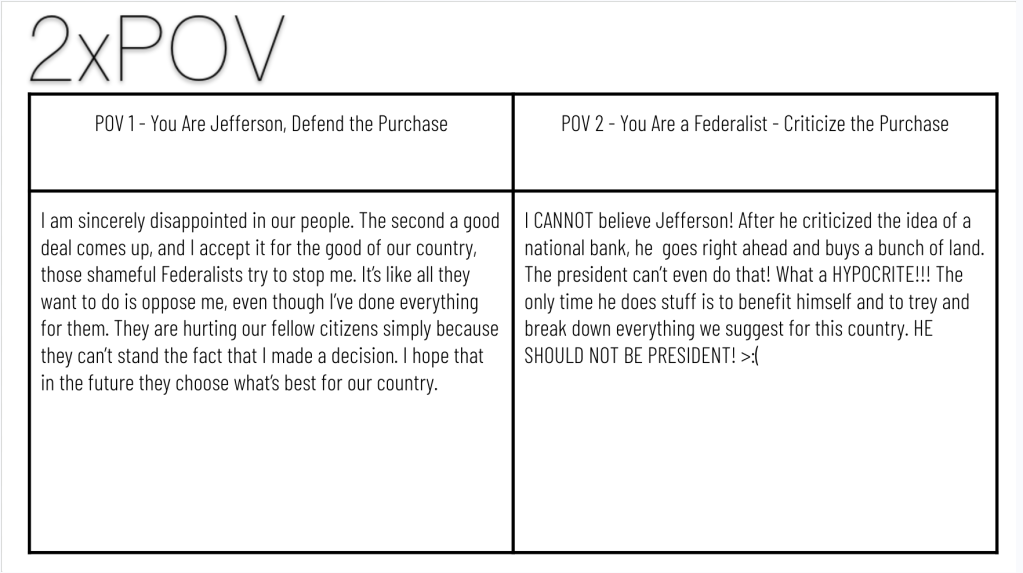
Once students had a solid understanding of the document, we shifted to writing from different perspectives. Students wrote from the point of view of King George, Patriots, and Loyalists.
They wrote for three minutes per perspective. I used Hamilton songs as timers. When students wrote as King George, I used You’ll Be Back as the timer, which felt both appropriate and hilarious. The time pressure kept them moving, and the music helped set the tone for each perspective.
Retell in Rhyme
The final piece of the lesson was Retell in Rhyme. This year, I have been trying to honor my co-author and friend Dr. Scott Petri by intentionally using some of the lessons he created. Retell in Rhyme is one I do not normally use, but I decided to give it a shot with the Declaration of Independence.
By this point, students had annotated the document, written from three perspectives, and discussed its meaning multiple times. Retell in Rhyme felt like the right capstone.
Students partnered up and created rhymes explaining the meaning of the Declaration. Some stuck to the minimum of three couplets. Most went way beyond that. I got the idea from Dominic Helmstetter, and I know Scott would have approved.
I took their poems and converted them into songs. I wish I could have let students design their own songs, but the AI platform Udio was blocked. So I did it myself and shared the links with them.
The results were awesome.
We ended with a listening party and played “Bop or Flop.” Students voted, reacted, laughed, and genuinely enjoyed hearing their work come to life.
We kicked off the week by jumping straight into one of the most confusing and debated moments in early American history, the Battle of Lexington. The goal wasn’t just to learn what happened, but to help students build their own interpretations using evidence, perspective, and context. And honestly? Monday delivered.
A Documentary Hook
We opened with a three minute clip from the brand-new Ken Burns American Revolution documentary. I paused right as the first shot cracked across the screen. That moment became the anchor for everything that came next.
DIG Sources + 3xPOV
Students shifted into the Digital Inquiry lesson and worked through the primary sources. This is where the magic of 3xPOV really showed up. With two minutes per perspective, British soldier, Minuteman, and eyewitness, they built quick, evidence-based claims to explain what happened on Lexington Green.
Their writing showed real thinking:
Students picked up on how quickly things escalated.
They noted that both sides described the other as the first to act.
Many picked up on fear, confusion, miscommunication, and split-second choices.
The 3xPOV sheets became messy, thoughtful, and honest—exactly what you want when you’re teaching kids how historians work.
Revisiting the Clip
Once students had shaped their ideas using the sources, we returned to the documentary and watched the next stretch. This time, they were watching with purpose. They weren’t just taking in the story, they were comparing interpretations, checking details, and refining what they thought happened.
That second viewing hit differently. You could see lightbulbs turning on as students layered new information onto their earlier ideas.
Back to the Compelling Question
Everything we did on Monday came back to the heartbeat of the unit: What convinced the colonists that independence was worth the risk?
Students started connecting Lexington to the bigger picture of natural rights, fear of losing self-government, and the sense that British actions were crossing a line. A few student responses from the day captured that shift:
“They believed Britain was taking away their natural rights and threatening their lives.”
“If they lost self-government, they had nothing. That’s what convinced them to fight.”
You could feel the unit starting to come together. Not because students memorized facts, but because they experienced how a single moment in history can change everything.
Wednesday
Wednesday was one of those beautiful 30 minute classes where everything had to be tight, intentional, and fast moving. The goal was simple: build student understanding of John Locke and connect his ideas directly to our compelling question about independence being worth the risk.
Frayer x2: Enlightenment + Locke
We opened with a quick double Frayer Model, one for the Enlightenment and one for John Locke. Students worked to define the ideas, identify characteristics, and connect them to symbols. Even in a short block, you could see the shift. Students started recognizing that the Enlightenment was not just old European thinking, but a spark that reshaped how people viewed rights, power, and authority.
Parafly Meets Sketch and Tell / Emoji Kitchen
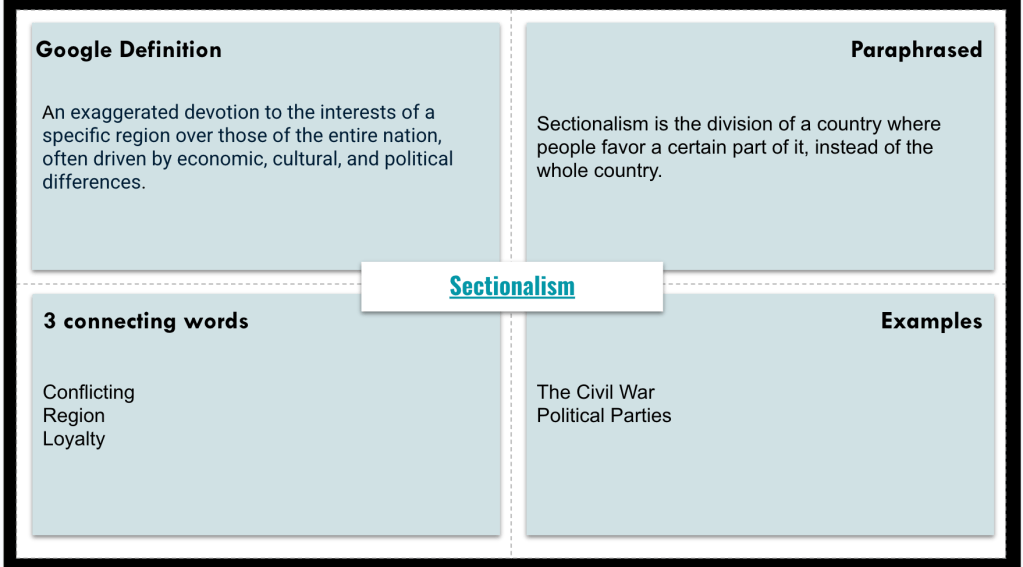
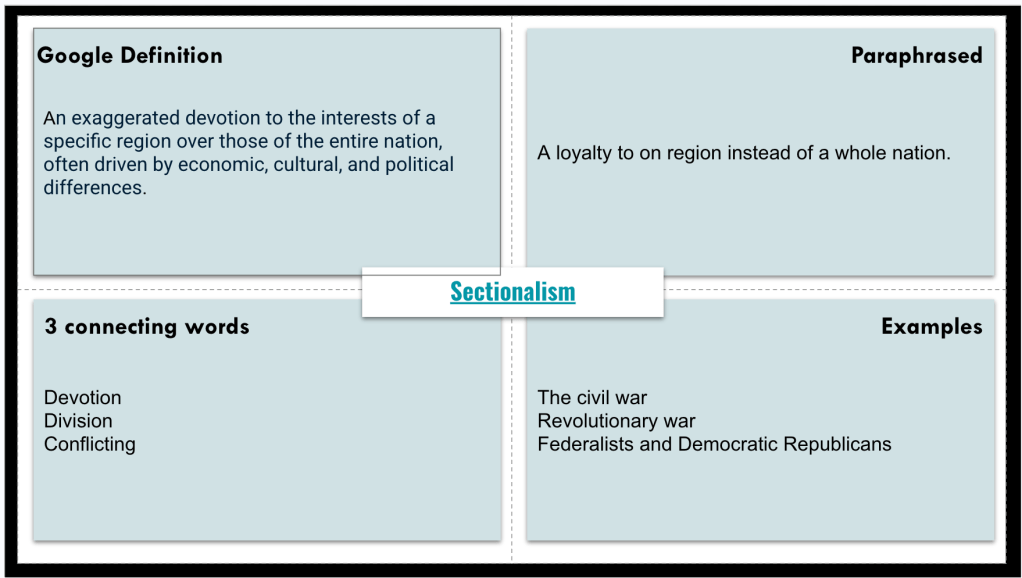
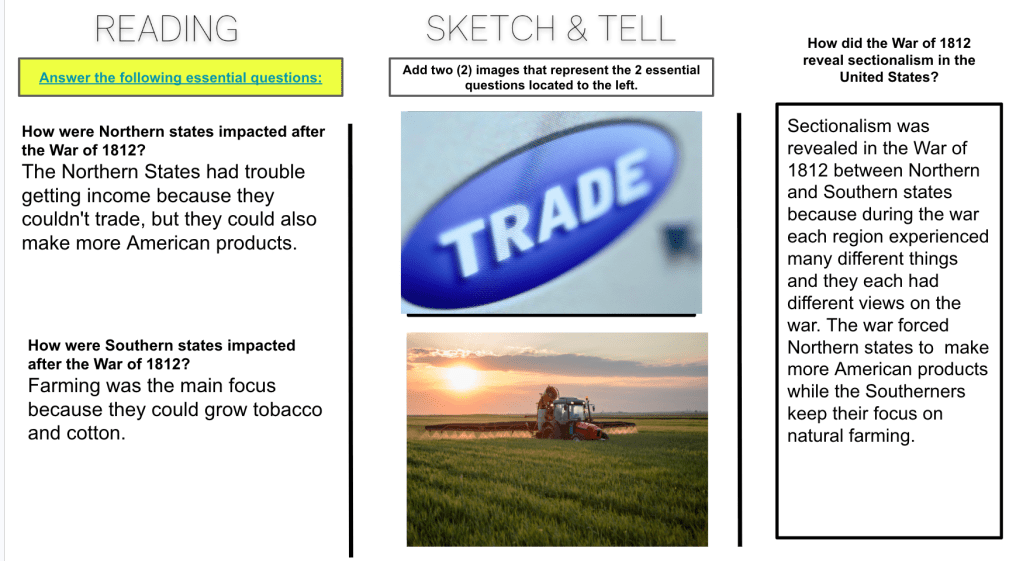
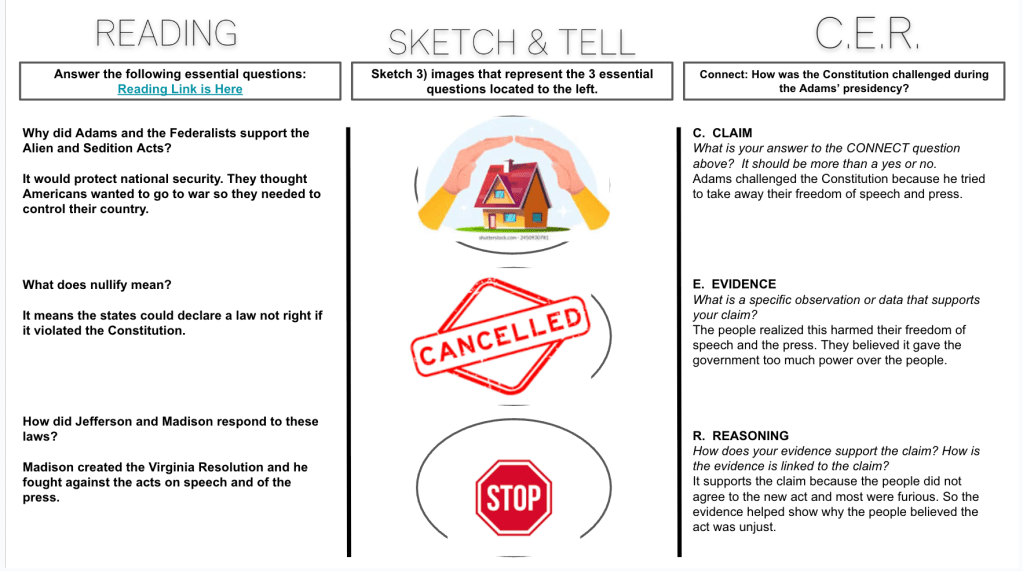
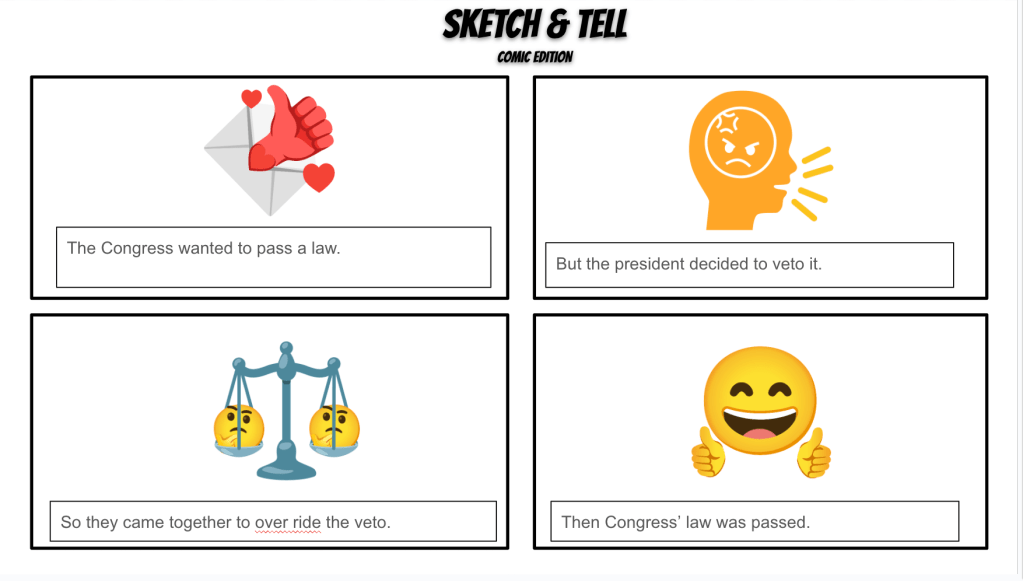
Next, we moved into Parafly, paraphrasing definitions for natural rights and social contract. Instead of stopping at words, students paired their paraphrases with visuals through Sketch and Tell or Emoji Kitchen. This is where things clicked. The images pushed them to internalize the meanings.
Natural rights became images of protection, individuality, or freedom
Social contract became governments chosen by the people, ballots, or agreements
Their sketches said just as much as their sentences.
Putting It All Together
To close the loop, students answered our supporting question: How did John Locke’s ideas influence the colonists in their dispute with the British government?
Their thinking showed real growth in just 30 minutes.
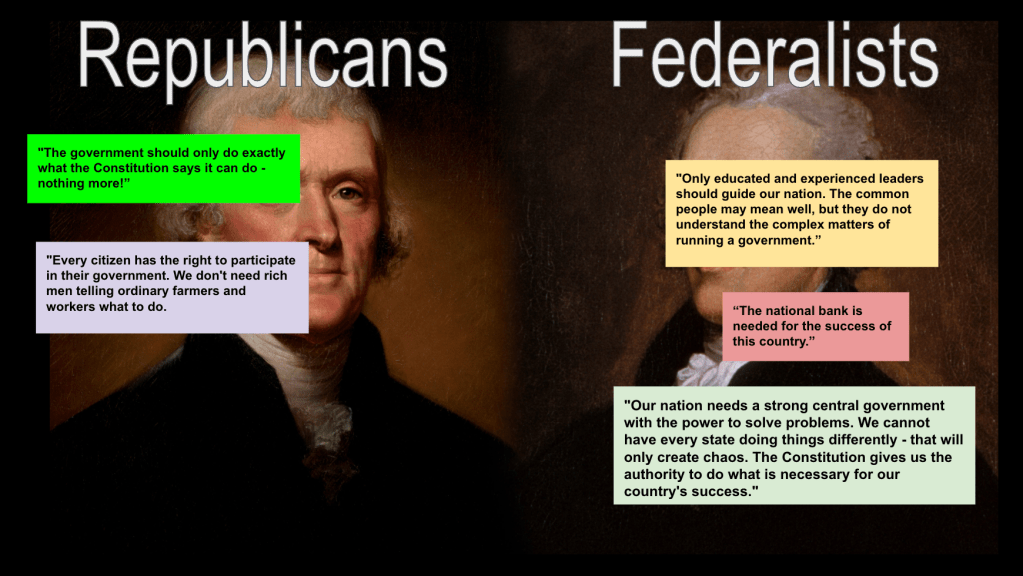
They connected the ideas of ignored rights to the colonists’ rising frustration.
They recognized that Locke offered options, the idea that people could question, replace, or revise a government that violated their rights.
They linked Enlightenment philosophy to colonial action: “suppression was not their only choice.”
Even in the short class period, students stacked multiple exposures: vocabulary, visuals, paraphrasing, and application. They walked out with a clearer understanding of why ideas mattered as much as events.
Thursday and Friday
To close the week, we shifted from battles and philosophies to one of the most influential voices of the entire Revolution. This was our introduction to Thomas Paine and Common Sense, and once again the Ken Burns documentary became the perfect anchor. This was the third time we used it in this unit, and it continues to be such a valuable tool. PBS keeps posting clips, and if they keep doing that I will keep finding ways to use them. The storytelling is incredible.
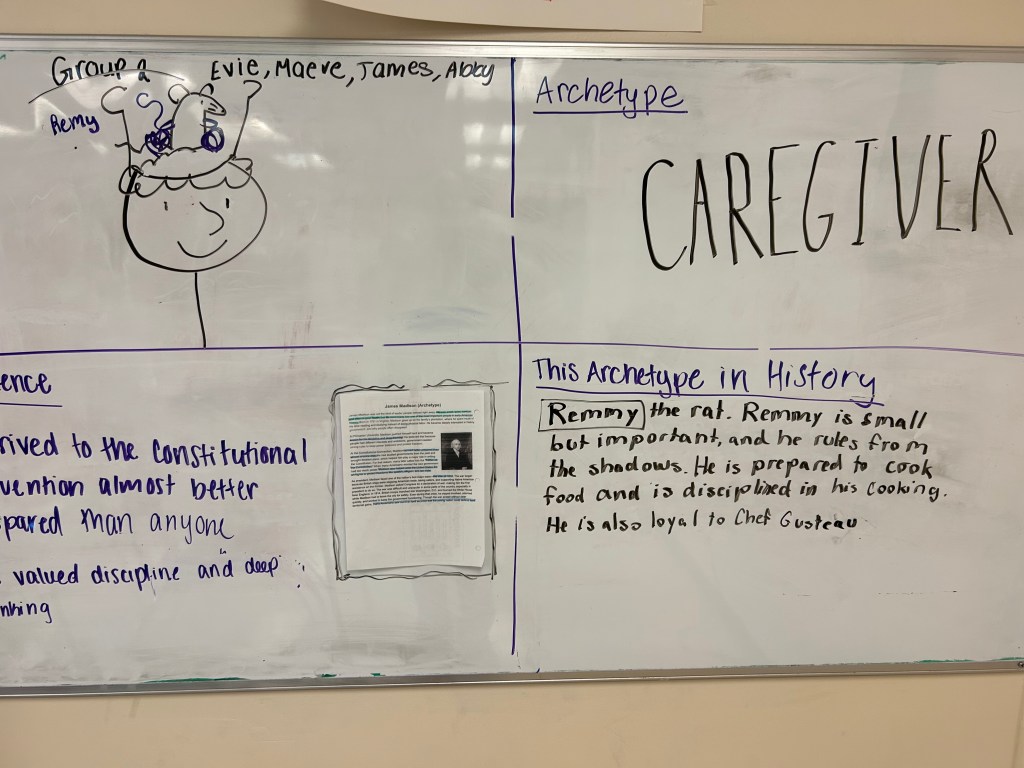
Archetype Four Square with the Documentary Clip
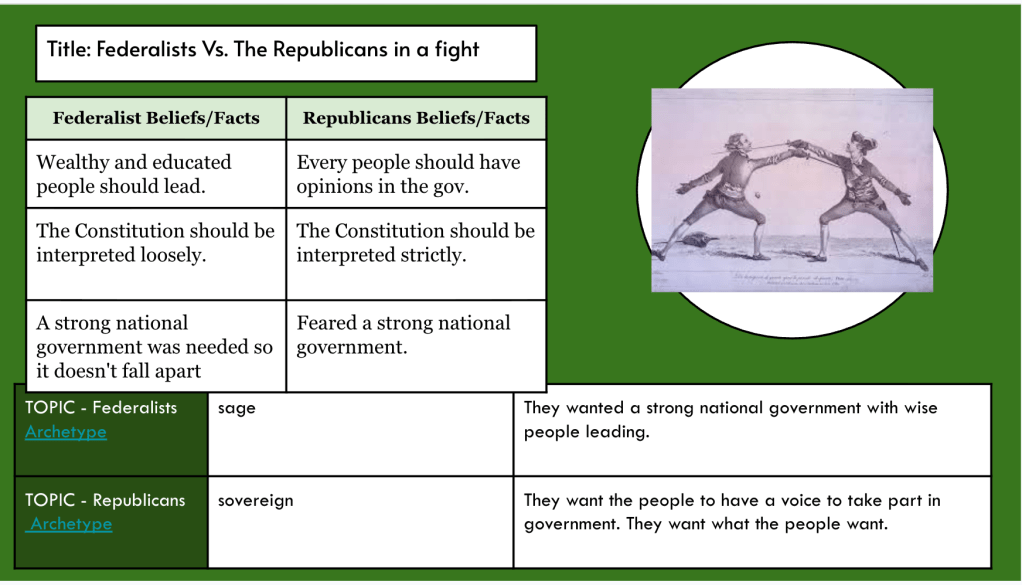
We opened with a four minute clip on Thomas Paine. Students had the Archetype Four Square template in front of them on paper, and after watching the clip they talked in groups to answer a simple question: which archetype fits Paine?
Their answers were all over the map in the best possible way.
Some saw him as a rebel.
Others argued he was a creator.
A few made a case for sage.
One group claimed he was basically a magician because of the way he transformed public opinion.
Everyone had evidence and everyone had a justification. It was a strong discussion that showed how open ended archetype work can be when the content is rich.
Reading Paine’s Words for Ourselves
Next, students moved into reading excerpts from Common Sense. One excerpt connected directly back to the documentary clip, where historians mentioned that Paine called the king a literal beast. Students lit up when they saw it in print. It helped them understand that Paine’s writing was bold, emotional, and designed to stir people into action.
Using Parafly, students translated Paine’s original words into clearer language. The goal was not to simplify the ideas, but to make them accessible so the message could stand out.
I asked students, “Which event must have been on Paine’s mind when he wrote that?” Their retrieval was strong. Boston Massacre. Tax laws. Early British crackdowns. They pulled events from previous lessons and connected them to Paine’s anger and urgency.
Then we pushed further. Students responded to How do you think John Locke inspired these words? They began seeing what historians always emphasize. Ideas do not appear out of nowhere. One moment shapes the next, one writer builds on another, and everything connects.
Ending the Week with a 2xPOV and a Mystery
To close the lesson, we returned to the consistency of POV writing from earlier in the week. Students wrote for three minutes from the perspective of a neutral colonist answering: If you were a neutral colonist and read Common Sense, would it sway you?
Then they switched roles and wrote as a loyalist. If you read Common Sense as a loyalist, how would you feel and what would you say?
Once students finished their writing, I set up the final moment of the day. Sitting on a small stool in the center of the room were a set of fake bones. Students walked in and noticed them immediately, but I did not explain them until the end. After we wrapped the 2xPOV, I told them the story of Thomas Paine’s bones, scattered across the world after his death because of the controversy surrounding his life and ideas.
It was the perfect unexpected hook to end the week. Students left the room talking about Paine, his writing, his influence, and now his bones. It tied everything together in a way that was memorable and a little strange, which is exactly how good history class should feel.
I was scrolling through my own blog the other day, looking back at what I did at this time last year, and it hit me. I am four full weeks behind where I was. Last year I had 65 minute classes. I had 180 school days. I had far fewer interruptions and almost zero strange schedules. This year I’m teaching 40 to 45 minute classes. At least once a week one of them gets chopped to 30 minutes. Some days I don’t see certain groups at all. And I’m working with a 173 day schedule.
I’m sharing this for any teacher who feels that pressure creeping in. I refuse to water down what I teach just to say I “covered it.” If I’m going to teach something, I’m going to do a good job and give kids an experience they actually learn from. Eighth grade social studies is important. It shapes how students understand this country and the ideas that built it. I’m proud to teach it and I refuse to cheapen it just because the clock is tight.
So if you feel behind, you’re fine. We all are in some way. Do what you can and don’t shortchange students. Bring the stories to life. Connect the past to their community and their world. You can’t do that by rushing through a textbook and obsessing over a pacing guide. Quality matters more than speed, and the kids will remember the difference.
Monday was one of those keep the storyline going days. We are still building the Road to the Revolution, but instead of dumping vocab or giving kids a list of causes, I am trying to tell it like an actual unfolding story through the people who lived it.
I pulled a short video from the American Battlefield Trust that covered the Boston Tea Party and the punishments that followed. I had a moment where I thought, “We could totally Number Mania this.” Looking back, I probably should have done it with a new twist. My brain was foggy and I did not have the creative energy to reinvent the wheel on a Monday morning.
Instead we kept it simple. Students answered the question: What was the significance of the Boston Tea Party? It was straightforward, but it pushed them to think beyond “they dumped tea.”
Then we moved into a Sketch and Tell O on the punishments from the Intolerable Acts. It was quick, visual, and it worked for our shortened 30 minute classes.
The highlight of the day was bringing in a diary entry from John Adams. He admired the boldness of the Tea Party but also feared what might come next. He predicted the Intolerable Acts before they happened. That got the kids attention.
I paired the letter with the Main, Side, Hidden strategy we have been using: • The main idea of Adams reflection • The side ideas he mentions • The hidden message sitting underneath his words
Even in a short class period, they pulled out solid thinking. For a shortened schedule day, that felt like a win.
Tuesday
Tuesday kept the story moving. We shifted into the First Continental Congress and started with a Frayer. I linked a short reading in the middle of it so they had context before filling it out. Students had to define the First Continental Congress, list people who were there, list characteristics, and include a picture. It was simple and structured, and it helped them see this meeting as an actual event with real people, not just a vocabulary term.
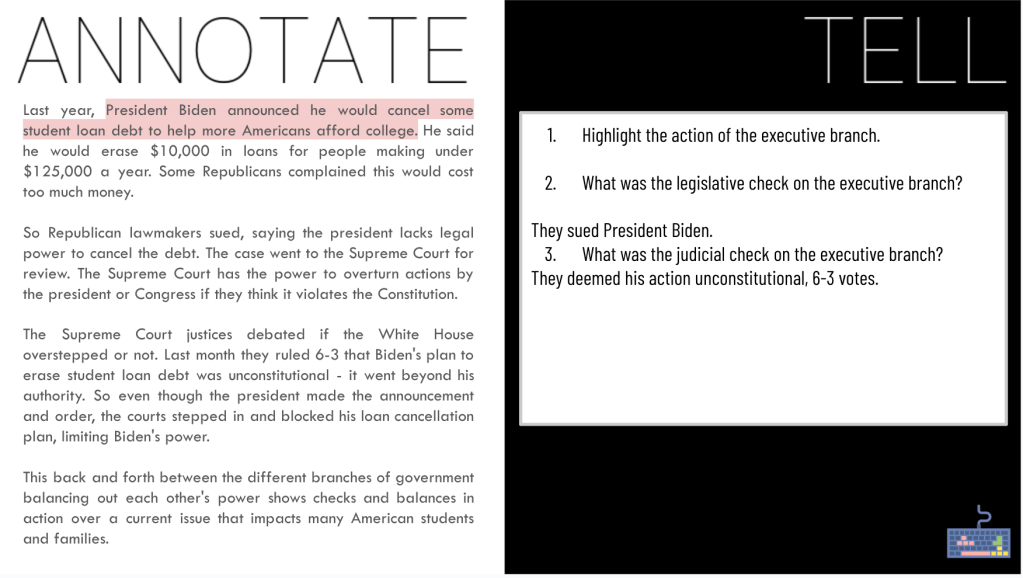
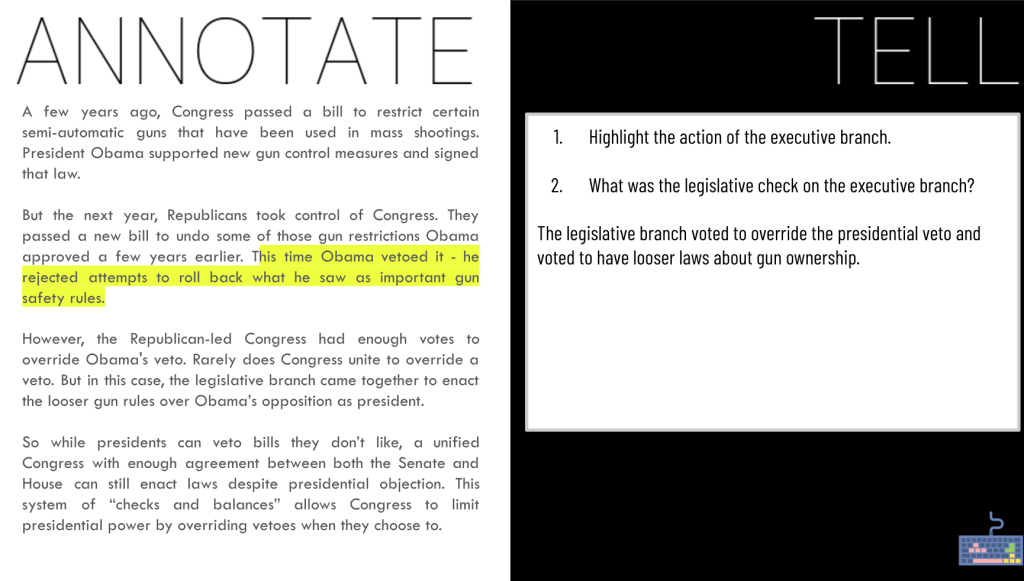
Next we moved into an Annotate and Tell with the Declaration of Resolves. I had to explain two things right away. First, resolves are agreements. Second, the abbreviation N C D is Latin for nobody disagreed. Kids get tripped up by things like that, so clearing it upfront helped them focus on the meaning.
For annotation I gave them these prompts:
• Highlight any phrase that says what rights colonists deserve. • Underline any violations of those rights.
And they answered:
What are the colonists saying they deserve
How does Britain take those rights away
If you had to explain this whole document in two simple sentences, what would you say
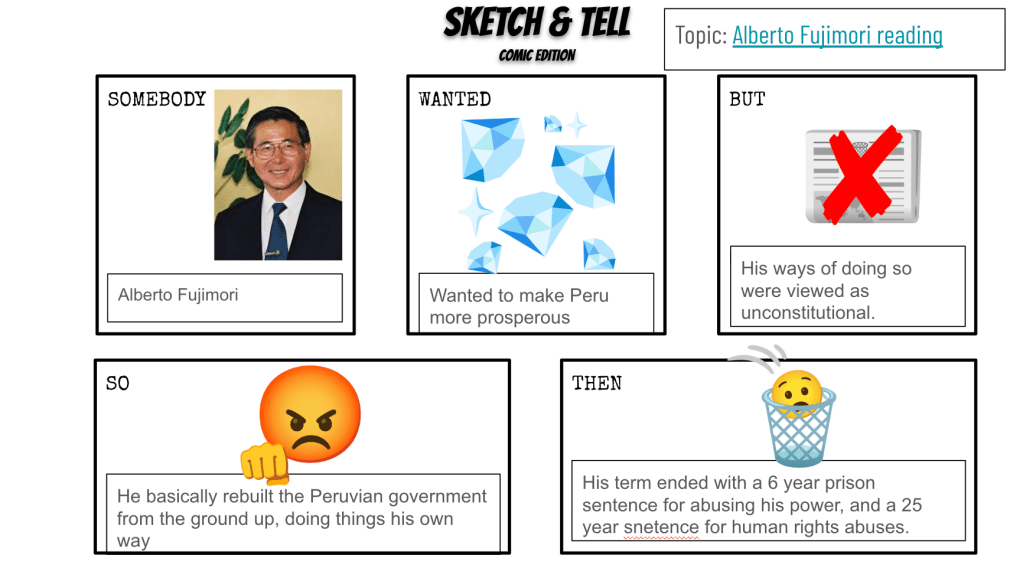
To close out the lesson, I had students write a haiku. It worked perfectly because it connected to what they have been doing in language arts. This is the second time I have overlapped with language arts. The first time was when they wrote a summary using the somebody wanted but so then format. It was awesome to see them use a skill from one class and apply it in another.
Wednesday and Thursday
By midweek it was time to wrap up the unit, and I decided the summative assessment would be a one pager. Not a decorative one. An argumentative one. Students had to explain the reasons loyal colonists began fighting against their own government, and they also had to explain why some colonists would have chosen to stay loyal. It asked them to balance perspective, make a claim, and show their thinking.
Setting it up felt good, and I did not fully realize why until later in the afternoon. Two parents were touring the school and stopped by my room. My students were scattered around the room working, thinking, revising, and asking me questions about their ideas. One parent asked what they were doing, so I explained the one pager and mentioned that this was their test for the unit. She looked surprised, so I explained it a little more.
I said something like, “I am not a traditional teacher. I do not think learning is circling A, B, or C. Learning should feel different. It should keep going. We always talk about wanting lifelong learners. Assessments like this actually support that. The best part is the conversations I get to have while they work. They ask how to word ideas, how one event connects to another, and why certain actions mattered. Those moments are real learning.”
She paused for a second and then said she agreed. It felt like she had not considered that idea before. The truth is, I had not really considered it in that way either until I heard myself say it out loud.
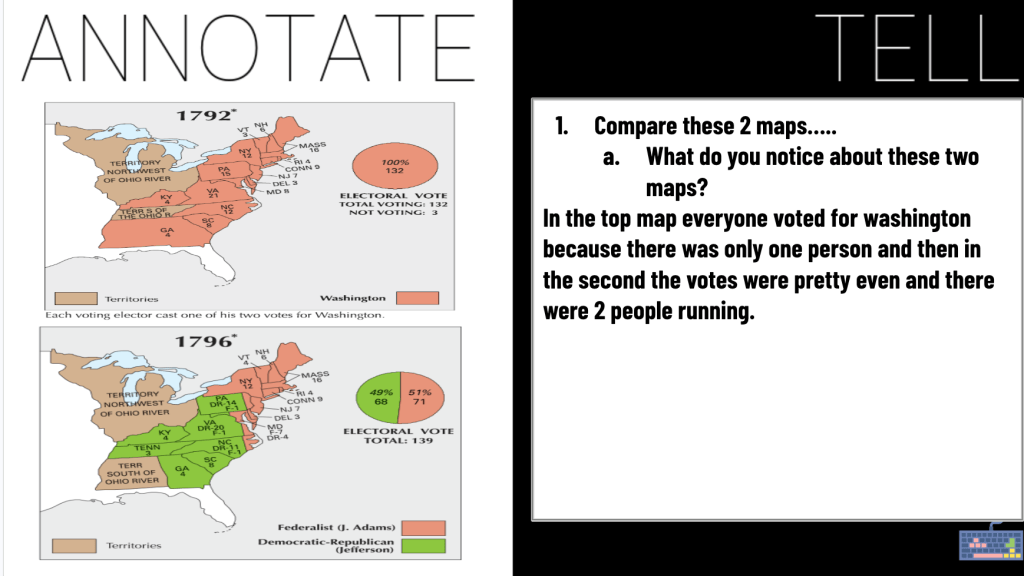
These one pagers, and really any nontraditional assessment we have done this year, whether a Netflix summary, a hexagonal web, or an annotated map, naturally create conversation. Kids stop and think. They ask questions. They revise. They explain. When I gave a traditional test at the start of the year, none of that happened.
I think we often treat a summative assessment like a finish line. You know it or you do not, and then we move on. This assessment pushed back on that idea. It became part of the learning, not the end of it. And it reminded me that when we design assessments that invite curiosity instead of shutting it down, students rise to it.
Friday
Friday was exactly what we needed. We played Gimanji, an Alexis Turnbull classic, and it was the perfect way to head into a long break. We mixed Kahoot, Gimkit, Quizizz, and Blooket into one big review of everything we have learned this year. The kids were into it, the energy was high, and the room felt light after a heavy unit.
I like Gimanji because it does not feel like a test review. It feels like a celebration of what they know. They laugh, they compete, and they surprise themselves with how much they remember. It is the kind of day that ends a week on a high note and sends everyone out the door in a good mood.
I never really thought about this until I had a brief conversation with two parents this afternoon. They were touring the school, thinking about sending their child here next year, and they stopped by my room. My students were working on their summative assessment for our Road to the Revolution unit. It is an argumentative one pager answering the question, “Why did loyal colonists begin fighting against their own government?”
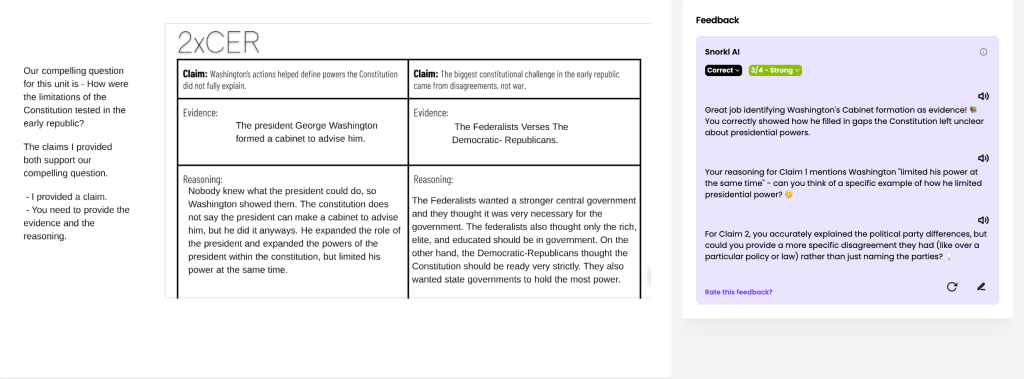
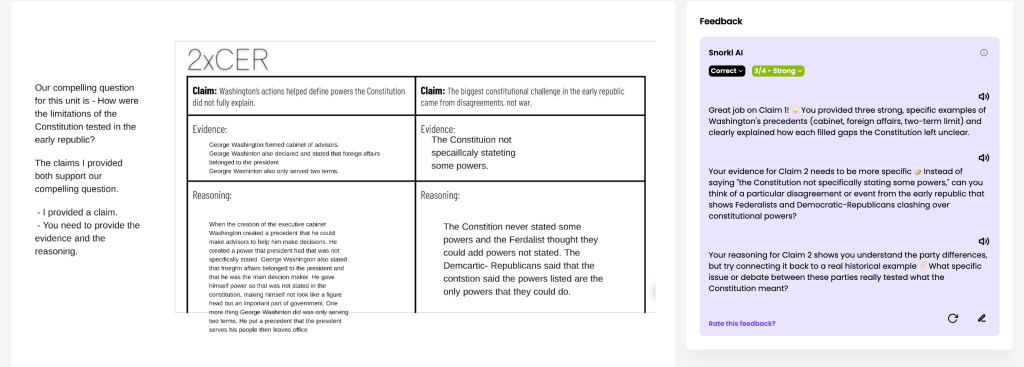
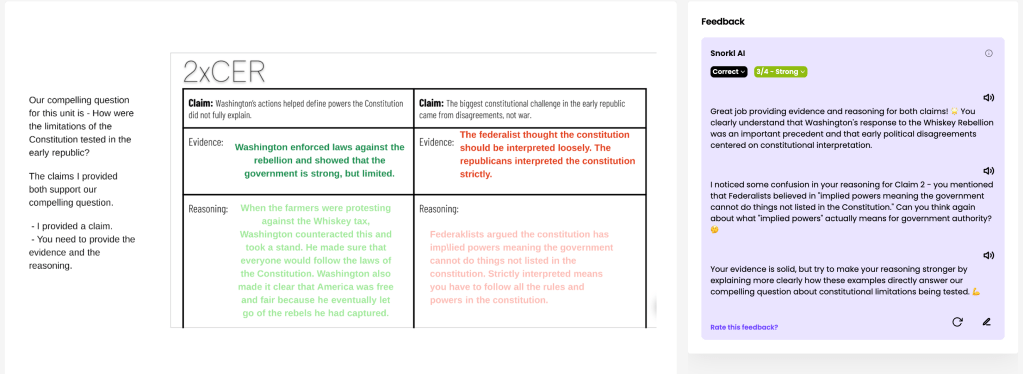
I mentioned that the one pager was their test for the unit, and one of the parents looked a little surprised. So I followed up with, “I am not a traditional teacher. To me, there is more to learning than circling A, B, or C. Learning should feel different. It should be ongoing. We always talk about wanting lifelong learners, and assessments like this actually allow for that. The best part is the conversations I get to have with kids while they work. They ask how to word things, how one idea connects to another, and why certain events mattered. Those moments are meaningful. That is real learning.”
She paused, thought about it, and said she agreed. It honestly felt like I opened her mind to something she had not considered before.
The funny part is that I had not really thought about it that way until the words came out of my mouth.
These one pagers, and any nontraditional assessment we have done this year whether the Netflix summaries, hexagonal webs, or annotated maps, naturally create conversations and questions. Kids stop, think, ask, revise, and explain. I love that. When I gave a traditional test at the start of the year, none of that happened.
I think we often view a summative assessment as the finish line. Here is what you should know, show it, and then we move on. But what if the assessment pushed back on that idea? What if it became part of the learning instead of the end of it?
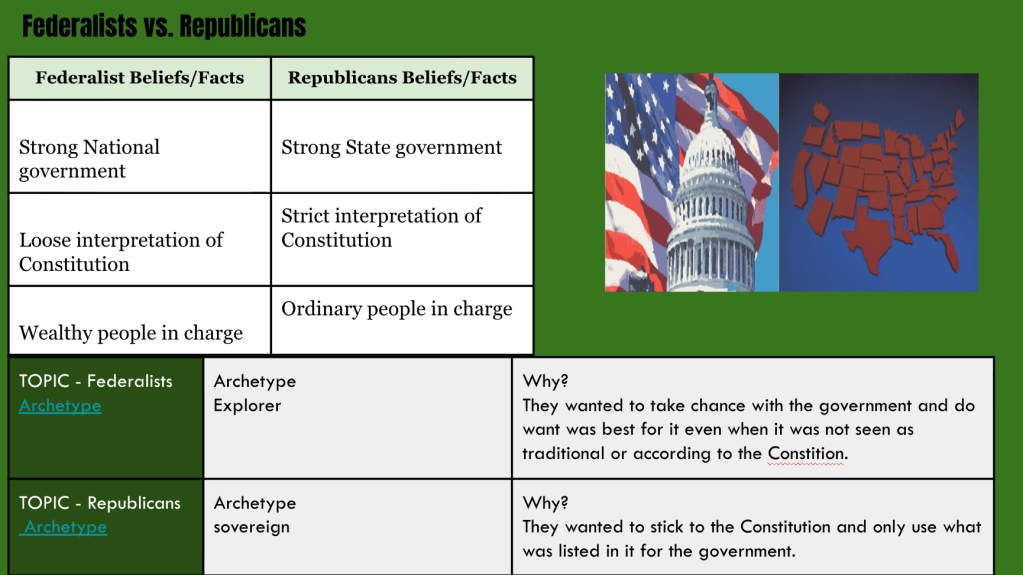
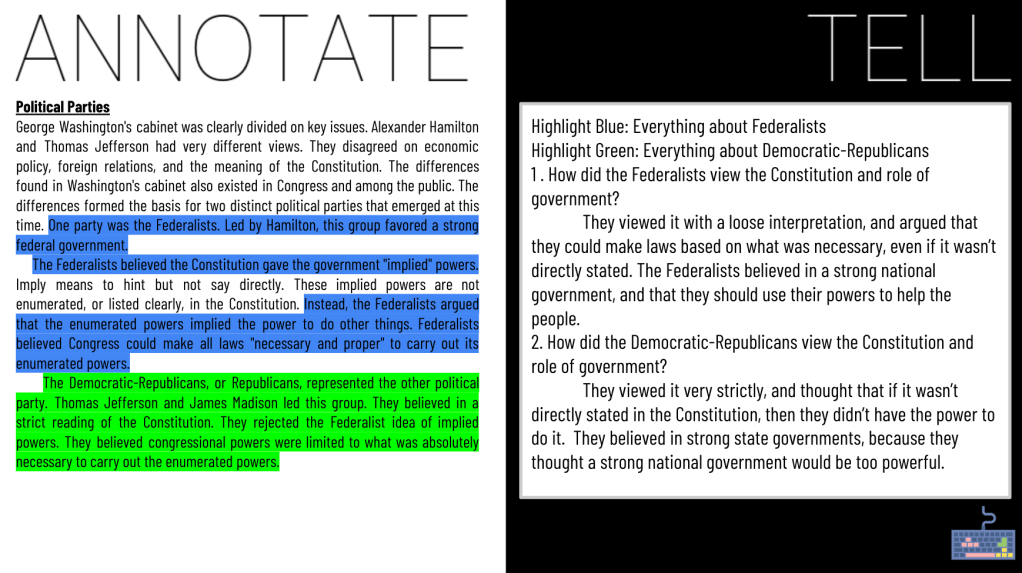
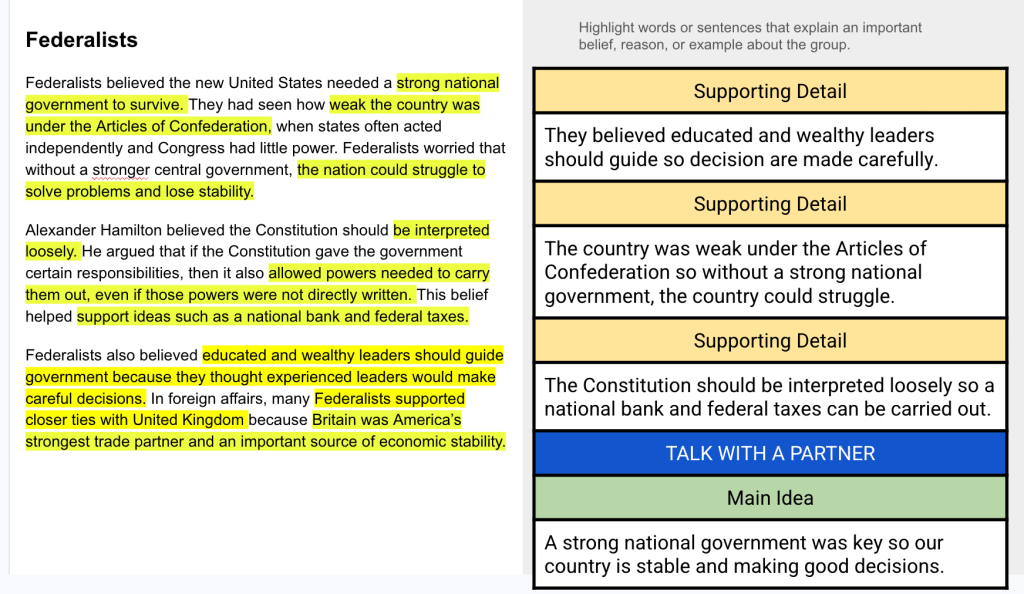
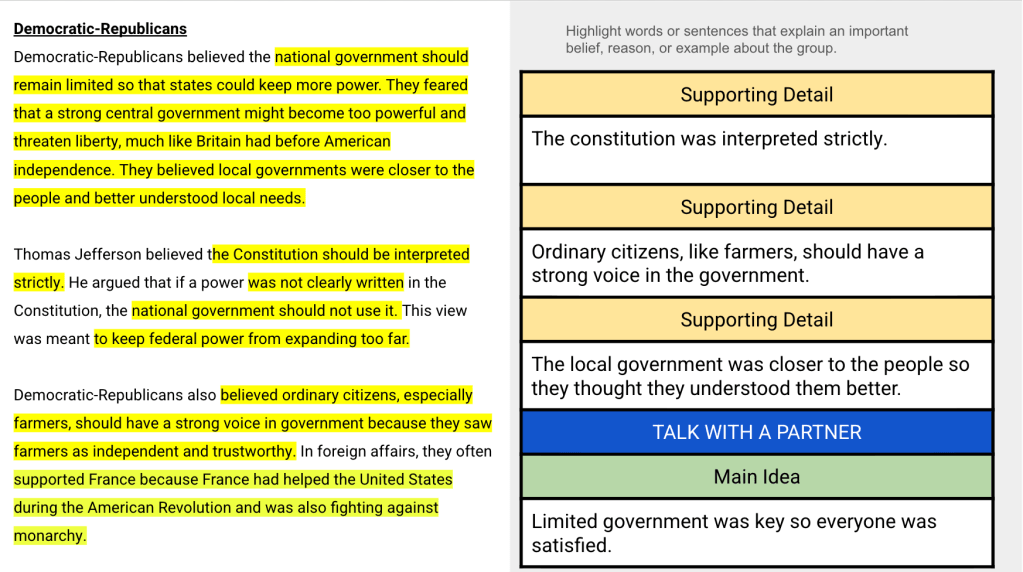
I’ve been watching Ken Burns’ new documentary, The American Revolution, and it hit me just how much is packed into this era. Abstract ideas. Complicated politics. Dozens of events. And honestly, the way I used to teach it wasn’t doing anyone any favors.
My old approach was pretty typical: start with some vocab, squeeze in the French and Indian War, sprint through every tax over 2–3 days, toss in salutary neglect somewhere, then protests, then the Boston Massacre as a one-off, then the Tea Party and Intolerable Acts, and finally the Declaration and natural rights. It worked… but there was no flow. Too many disconnected parts. The cognitive load was just too much.
This year, I decided to take a completely different path.
I treated the French and Indian War as the ending to my 13 Colonies unit, framing it as a rivalry gone bad. Then, instead of opening the Road to Revolution with new content, I started with review of the consequences of that war and the breakdown of salutary neglect. I still taught vocabulary up front, but this time I wanted the unit to feel like a story told through the voices of the people who lived it.
We kicked things off with the Stamp Act by reading the actual wording. Kids debated fairness using the colonists’ own language. I even taught the difference between a pence, a shilling, and a pound because if you want them to understand the argument, you have to let them stand inside it.
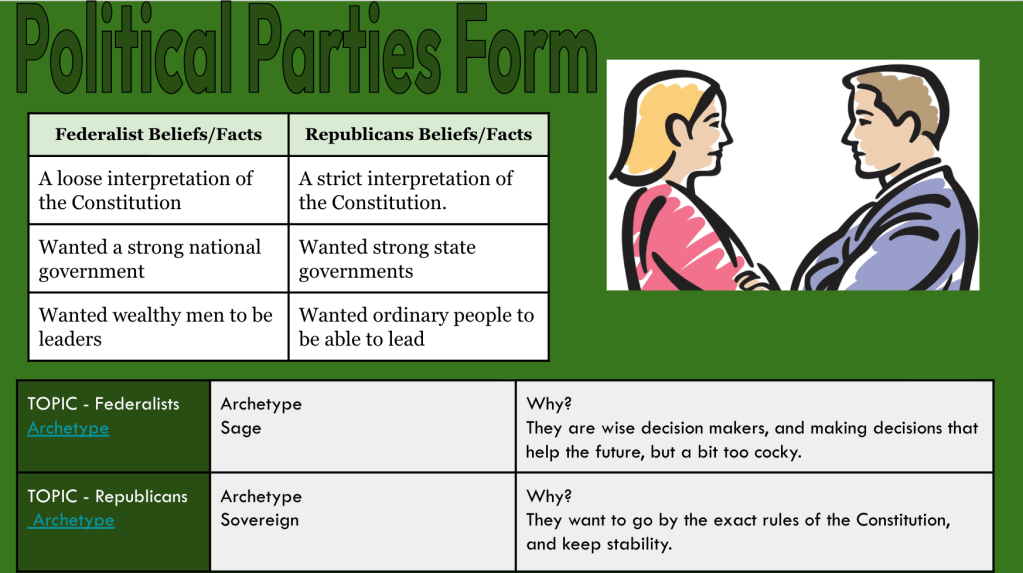
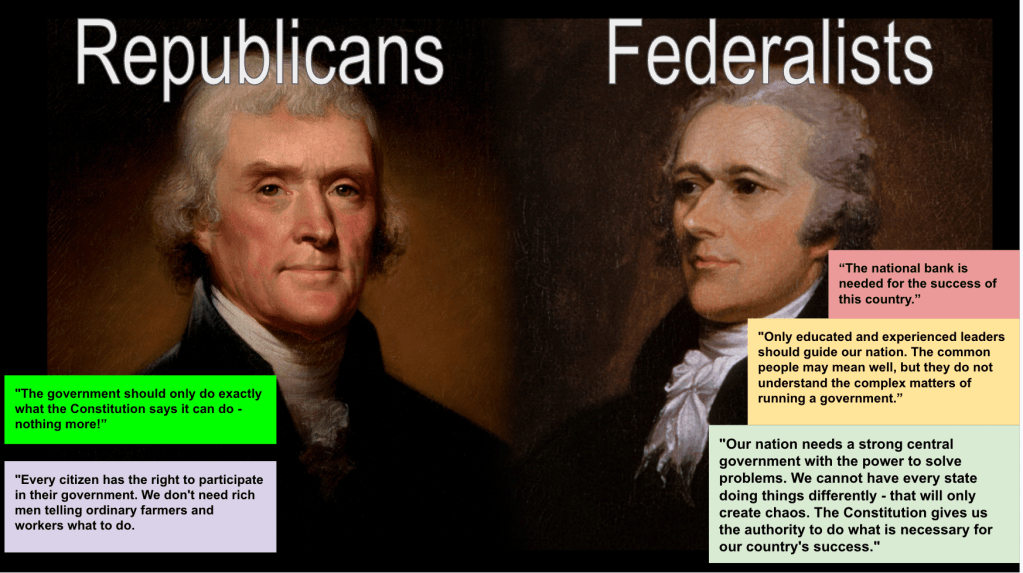
From there, we looked at protests and reactions through the eyes of Samuel Adams and Thomas Hutchinson. Same people, same thread, same narrative. Then we moved into the Townshend Acts and Adams’ Massachusetts Circular Letter. That’s also when I introduced natural rights, not waiting until the Declaration of Independence. Life, liberty, and property were already shaping colonial arguments long before 1776.
When we got to the Boston Massacre, it finally clicked for them: “If natural rights include life… what happens when government ordered, British soldiers fire into a crowd?” The story built itself.
Then we hit the Tea Party and Intolerable Acts using a diary entry from John Adams where he basically predicts the crackdown and knows war is on the horizon. Finally, we closed the chapter with the First Continental Congress and their Declaration of Resolves. Background reading to primary source to short, purposeful chunks. As my friend and co-author Scott Petri always said: “Don’t make your class death by 1,000 primary sources.”
In the end, the kids didn’t just remember events, they followed a coherent story told by the people living it. And that made the culminating question feel earned:
Why did British subjects go from being loyal to fighting their own government?
This new approach felt clearer, more human, and honestly… more teachable. And watching students connect the dots on their own reminded me why I love this job.
This week in 103 was all about building a bigger story. We moved from Samuel Adams to the Stamp Act protests, into the Townshend Acts, and finally circled back to the Boston Massacre with fresh eyes. Even though we had shortened classes on a few days, the structure of the protocols kept things tight and focused. Students were constantly reading, creating, discussing, and explaining. What stood out most was how each day layered onto the next. By Friday, students could see how one decision in Parliament led to another reaction in the colonies, which led to more tension, and eventually to violence in Boston. It was a full week, but a good one, and the kids handled the thinking really well.
Monday
We kicked off the week with 30-minute classes, and I always laugh a little when people insist you “can’t learn anything” in that amount of time. With EduProtocols, 30 minutes is plenty. If anything, the shortened periods force clarity: What matters? What’s the essential move? What can students actually do in that window?
For Monday, that essential move was introducing Samuel Adams. The name is familiar, but students usually know very little about him. Since we were jumping into new content, I wanted fast reps on vocabulary and core ideas, so we started with a Blooket. Quick, fun, and a fast way to frontload the content they would need in the next task.
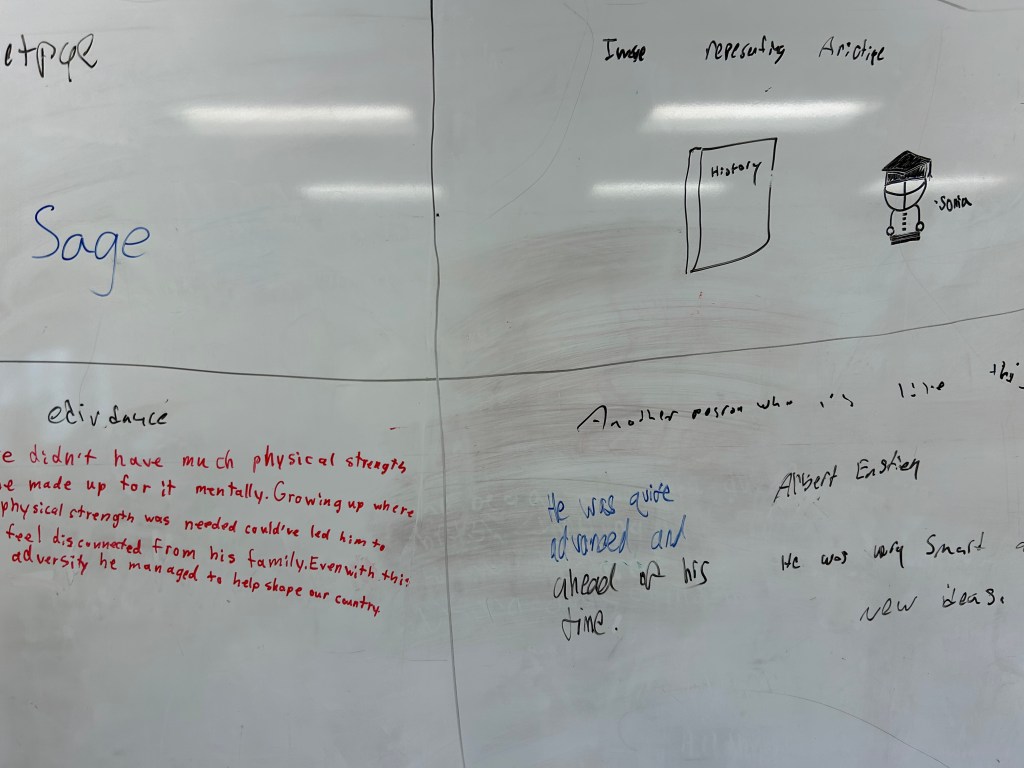
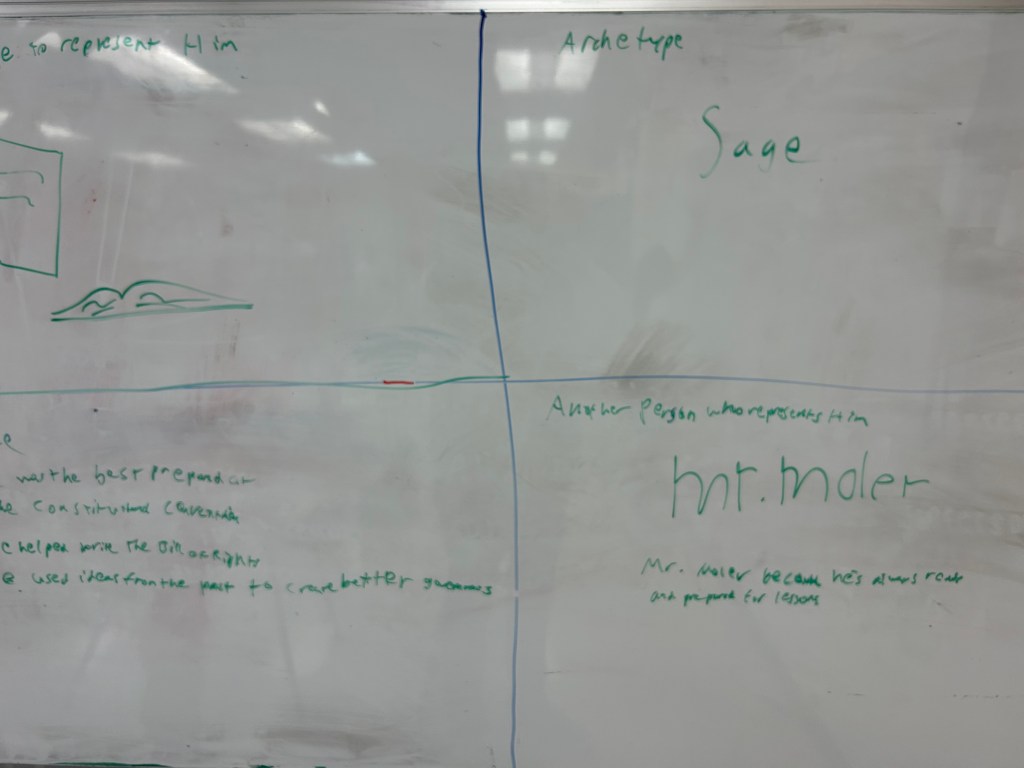
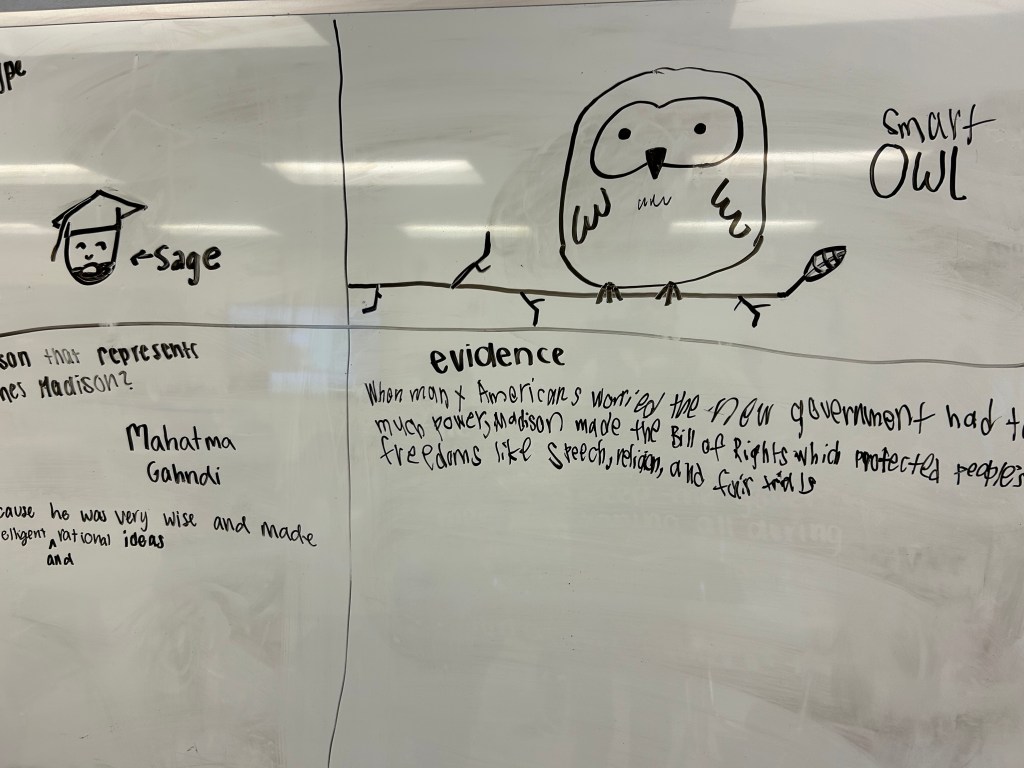
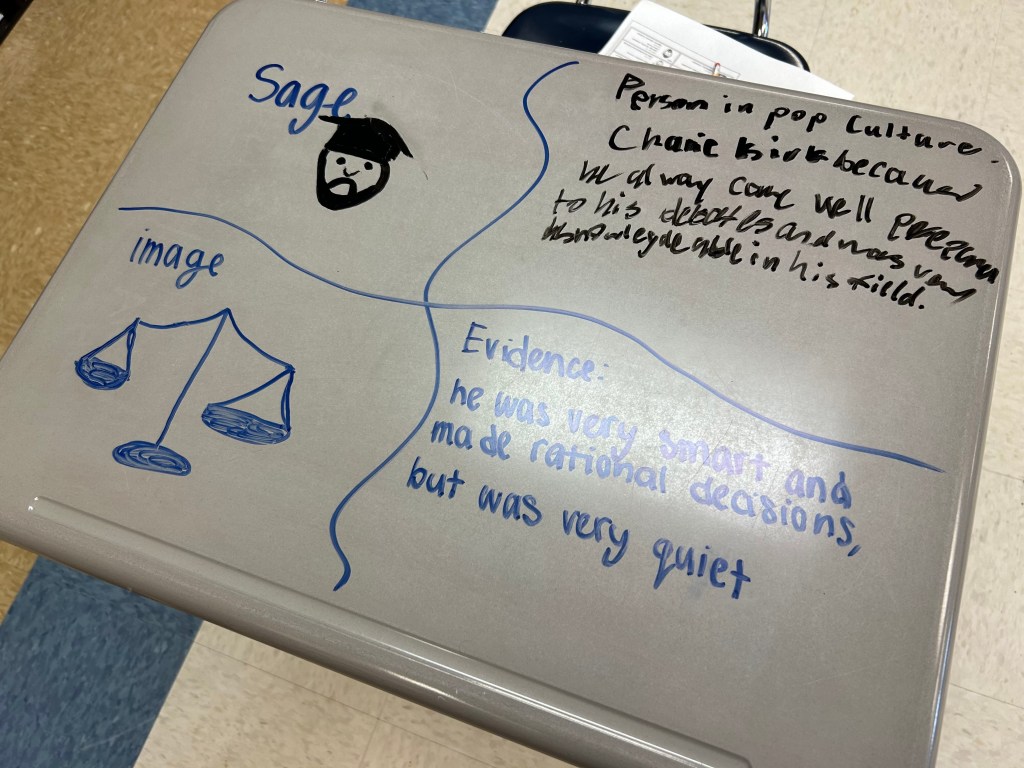
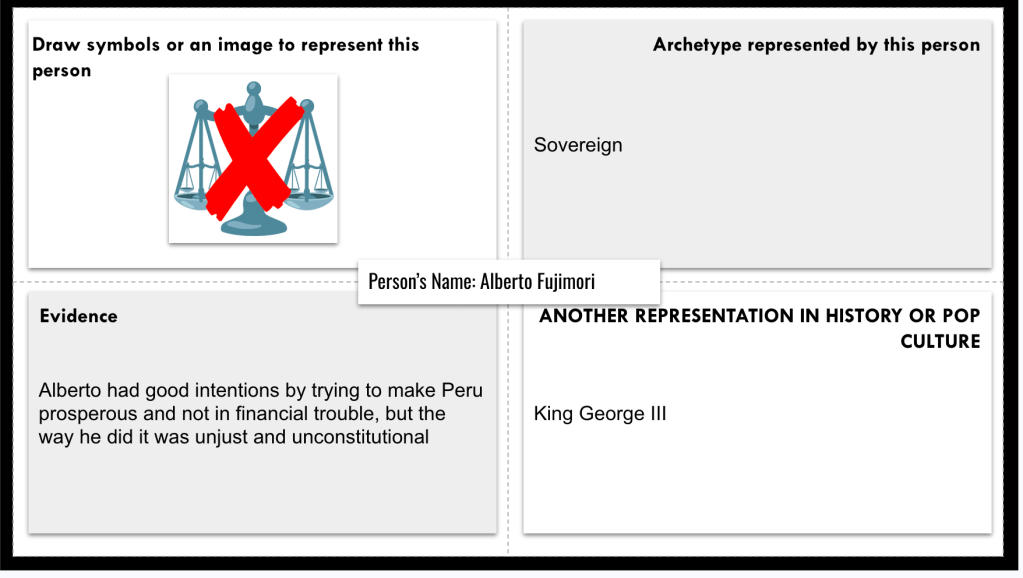
From there, we moved into an Archetype 4 Square. I dropped a short bio of Samuel Adams into the center, and students filled the quadrants:
a symbol for Samuel Adams
an archetype that fits him
evidence from the reading defending that choice
someone from history or today who connects to him, along with an explanation
That last box is where I am still coaching. Students are decent at choosing a comparison person, but they forget the explanation. Easy fix. I might just add a short reminder directly in the quadrant (“Explain why this person connects”) so the prompt stays on their radar even when they start typing.
The conversations afterward were the real payoff. Students shared the archetypes they chose such as Rebel, Sage, and Creator, and they had strong reasons behind each one. Rebel was easily the most common, but some students pushed deeper and defended more unexpected angles. For a short class, it produced some of the best thinking of the day.
Tuesday
Frayer Model
Tuesday was a full rack and stack on the Stamp Act protests, and it flowed really well from one protocol to the next. We started with a Frayer Model on the Sons of Liberty. I provided the definition, and students paraphrased it in their own words. In the bottom sections, they added four characteristics from a short reading I linked to the center term, and then they added a picture. It was a quick way to anchor who the Sons of Liberty were before moving into the bigger story.
Sketch and Tell O
Next, we moved into a Sketch and Tell O paired with a reading about the Stamp Act protests. Students used Emoji Kitchen to create symbols and images that represented the different ways colonists protested. Emoji Kitchen lets students combine emojis in creative ways, and it always leads to stronger thinking and clearer explanations. After creating their images, students explained how each symbol connected to the protests.
Annotate and Tell
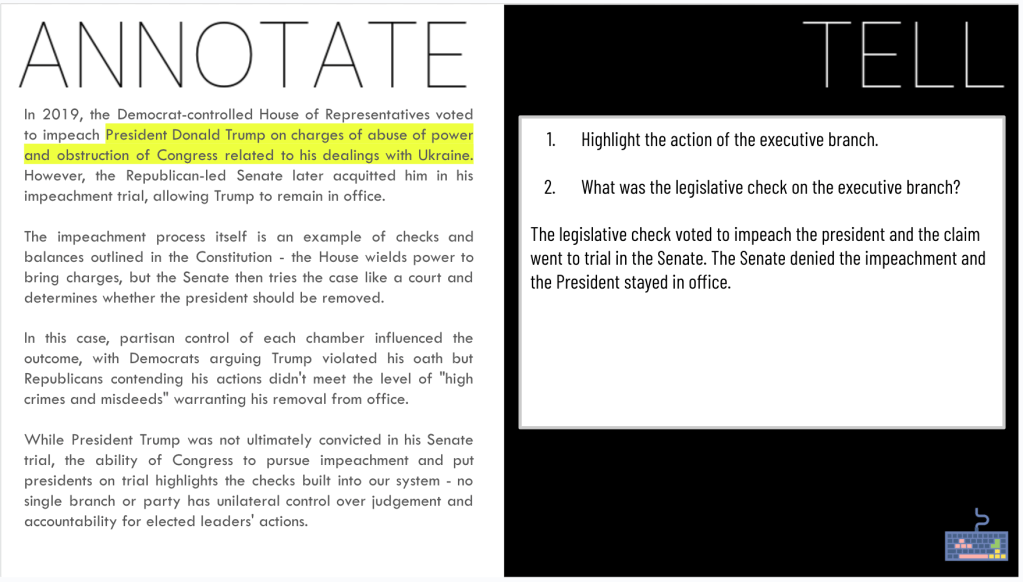
The reading mentioned Lieutenant Governor Thomas Hutchinson and the attack on his home, so that became our bridge into the next layer. I gave students a primary source excerpt from Hutchinson’s letter describing the destruction of his house, and we used an Annotate and Tell to slow down and analyze it. Students had to drag a star to any line showing damage to the house, highlight anything that showed Hutchinson’s feelings, and identify one surprising detail. Then they weighed in on the big question. Since Hutchinson supported the Stamp Act, were the protesters justified in destroying his home?
2xPOV
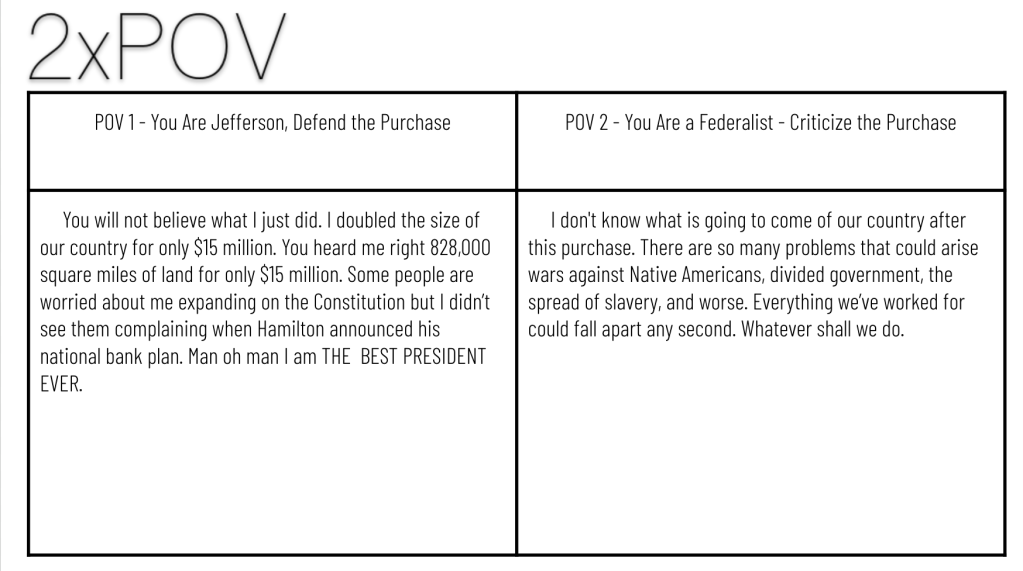
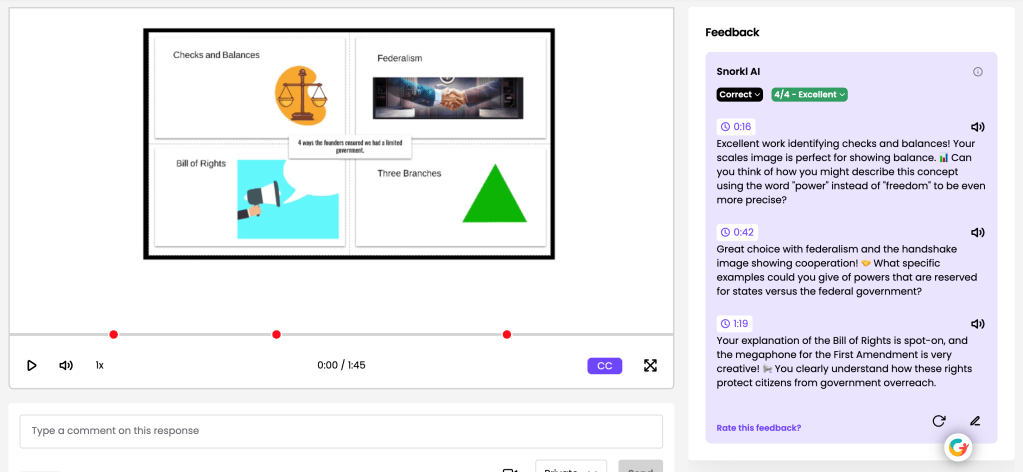
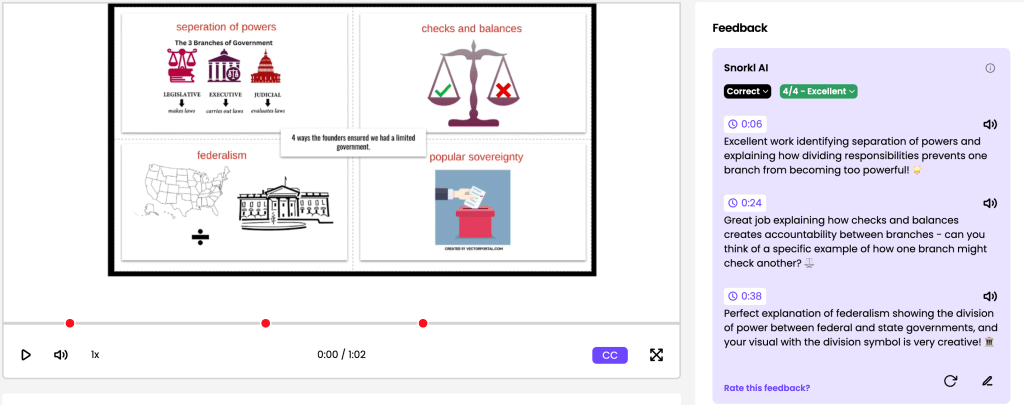
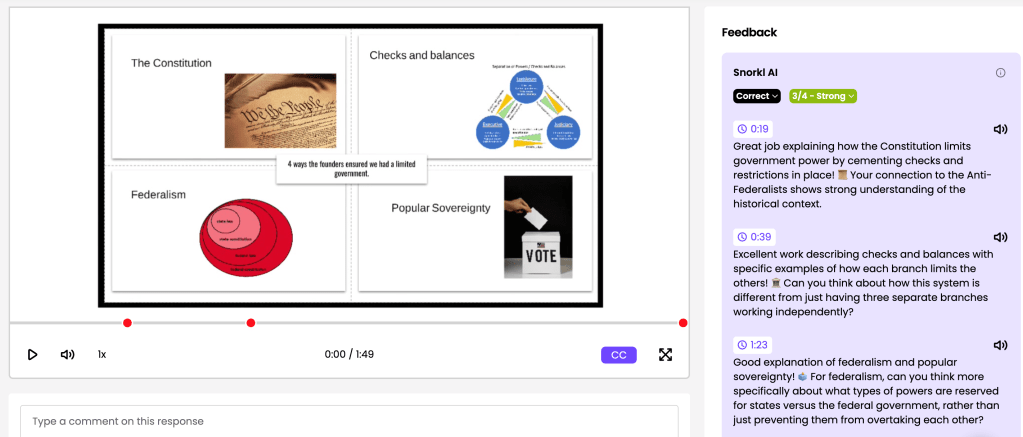
We wrapped the lesson with a 2xPOV. Students selected two perspectives from the list Thomas Hutchinson, a Sons of Liberty member, a member of Parliament, or Samuel Adams and wrote from those viewpoints about the protests. I linked Snorkl for immediate feedback so students could revise on the spot.
All of this moved from DOK 1 to DOK 3 in one 45 minute class period. Students went from paraphrasing and identifying to creating symbols, analyzing a primary source, and finally writing from multiple viewpoints. It was a short class with a lot of thinking packed into it.
Wednesday and Thursday
Thin Slide Faceoff
We were back to shortened classes again, so I kept things tight and intentional. We shifted into the Townshend Acts and started with a Thin Slide Faceoff. Students read a short overview I linked to the slide, then created a thin slide that captured the Townshend Acts in three minutes with one picture, one word or phrase, and a short explanation. Fast, simple, and it got them thinking.
Next, they read about natural rights and made another thin slide with the same constraints. After both slides were done, we moved into the faceoff part. Students paired up and talked through this question: What is the connection between natural rights and the Townshend Acts?
The conversations were impressive. Students worked together to create a final thin slide that showed the connection they saw. Many noted that taxing without representation violated natural rights, but they still needed practice explaining why. That set us up perfectly for the next protocol.
CyberSandwich
To push their thinking further, we transitioned into a Cyber Sandwich using the Massachusetts Circular Letter written by Samuel Adams and James Otis Jr. This document is incredibly important for understanding colonial resistance, yet I have never seen it in a textbook. Students independently read the letter and underlined any mention or hint of natural rights.
After reading, they completed a flow chart that matched the structure of the letter. The chart had five parts:
Colonial legislatures should cooperate with one another.
Colonists have natural rights, and many of these rights are also part of Britain’s constitution.
One of these rights is…
The recent act of Parliament therefore…
Finally, colonists cannot be effectively represented in Parliament because…
Students struggled with this at first. Many missed Samuel Adams’ main point: that taxing without representation violated the natural right of property. We paused for a discussion about what “property” meant in the 1760s. Students assumed it meant houses and land. We talked through how property also includes money and the things you earn through your own labor. Once that clicked, the flow chart made a lot more sense.
Students then shared their flow charts with a partner to compare thinking and clean up misconceptions.
Snorkl Writing
We wrapped both days with two Snorkl prompts:
Imagine you had to explain to a 4th grader why members of the Massachusetts legislature objected to the Townshend Acts. What would you say?
If you were a member of another colonial legislature, how would you have responded to this invitation from Massachusetts?
Because students needed more time to fully understand the Circular Letter, we stretched this work across both Wednesday and Thursday. The struggle was productive and necessary. By slowing down and doing it over two days, students finally saw how natural rights, property, and representation all connected.
Friday
Number Mania plus Main, Side, Hidden
We wrapped the week by jumping into the Boston Massacre. Students had already studied it earlier in the year through the Paul Revere engraving, so I needed to come at it from a different angle. Instead of treating it as an isolated event, we connected it to the larger story we had been building all week through the Townshend Acts.
We started with a quick narrative review. Parliament became angry about the Massachusetts Circular Letter, the royal governor dissolved the Massachusetts Assembly, and Britain sent more soldiers to Boston to keep order. More troops meant more friction, and more friction meant the situation was almost guaranteed to explode. That set the stage for the Boston Massacre.
For the lesson, students created a Number Mania using four numbers that explained the story of how tensions escalated into the Boston Massacre. They also had to give their slide a more truthful title for Paul Revere’s engraving, since his version of the event was far from accurate.
After students built their Number Mania slides, we added a layer from the Main, Side, Hidden routine. Since this was new for many students, we slowed down and talked through each part:
MAIN This is the central story your numbers tell. What is the big idea? What is the main takeaway someone would understand from your four numbers?
SIDE These are the details happening alongside the big idea. They may not be the headline, but they help explain why the main story happened. Side stories often introduce other people, factors, or influences that add depth or context.
HIDDEN This is the deeper, less obvious layer. What is happening under the surface? What truth or tension isn’t immediately visible in the main or side stories? This could be something about power, fear, propaganda, rights, or motives.
Explaining these three layers helped students go beyond listing facts. They started thinking about the Boston Massacre as more than a street fight. They noticed how propaganda shaped reactions, how fear influenced both sides, and how anger over natural rights violations had already created a powder keg before the first shot was fired.
It was a strong way to end the week. Students used numbers to build a story, then used Main, Side, Hidden to deepen it. The routine helped them see that history is never just one story. There are always layers.
Monday and Tuesday were all about performance-based assessments. I’ve been wrestling with a question that probably crosses a lot of teachers’ minds at some point: Am I doing enough to prepare my students for what comes next?
Most social studies classes lean on multiple-choice tests, short answers, and essays. I rarely do. My students spend more time creating, connecting, and explaining. Sometimes that makes me pause. Should I be giving more traditional tests? But then I look at the kind of learning that happens when students engage in performance-based assessments, and I remind myself why I lean this way.
Performance-based assessments ask students to show what they know. They mirror the kind of thinking and communication skills that matter beyond school: writing, presenting, and defending ideas. Districts that use capstones or portfolio defenses talk about how those assessments measure real understanding. I think the same is true in Room 103.
This week’s performance assessment was Hexagonal Thinking. Students worked with 12 hexagons representing key ideas from our 13 Colonies unit, including self-government, the French and Indian War, Native American displacement, slavery, and regional differences between the colonies. The task was simple in setup but deep in thinking. Students arranged the hexagons so that each connected to at least one other idea, then explained six of those connections.
Each connection had to relate to opportunity or inequality, tying back to our big question: Were the 13 Colonies a land of opportunity or a land of inequality?
The results were incredible. Some groups connected the French and Indian War to Native American displacement. Others saw links between self-government and inequality through voting rights. The conversations were thoughtful and honest. When students finished, they used their evidence from the hexagon connections to take a stance, opportunity or inequality, and defend it.
Two days, one performance assessment, and a lot of real thinking.
Wednesday: A New Road Begins
We kicked off a new unit on the Road to the American Revolution. Our new compelling question is: What caused British subjects to stop being loyal and begin fighting their own government?
We started with a Blooket review of 17 vocabulary words. As students played, I handed out a TIP Chart (Term, Information, and Picture). After the round ended, students opened their Blooket results and chose 9 out of the 17 words they missed the most. Those were the ones they defined and illustrated.
This quick adjustment made the activity more purposeful. I’m also getting much better data from my Fast and Curious games now that I’ve been refining how AI creates my answer choices and distractors. The results are more reliable and more accurate, which makes the follow-up activities even stronger.
Our class periods were shortened to about 30 minutes because of Mass, but students were still able to build a strong foundation for what’s next.
Thursday
Thursday built directly off where we left our 13 Colonies unit, focusing again on the French and Indian War and how it set the stage for the Revolution. I like using Number Mania to introduce a new unit because it helps place the time period in context and gives students a snapshot of the big ideas ahead.
I also decided that each lesson in this unit will begin with a Thomas Paine quote. He’s the perfect voice for this period and the ideal spark for student curiosity. I introduced him as the top social media influencer of the 1700s and shared our first quote: A long habit of not thinking a thing wrong gives it a superficial appearance of being right.
The theme of the lesson was about changing relationships. After discussing the quote briefly, we began our Number Mania. I added a twist this time: a Secret Number. It wasn’t written in the text, but it was implied by the context. Students had to think deeply to uncover it. Only three students found it, and it was a great one: zero representation or voice in Parliament.
I didn’t even mention the idea of a secret number before the activity because students can get too fixated on finding it. Instead, I quietly looked for it as I walked around and rewarded those who included it with a Hi-Chew. When one group nailed it, I paused the class to highlight their insight and spark more discussion.
After finishing, students posted what they thought was the most important number from their slide to a Padlet. We ended by replaying our vocabulary Blooket from Wednesday. The results showed solid improvement: 72% to 77%, 59% to 77%, 63% to 73%, 67% to 84%, and 73% to 85%.
Small gains, but big signs of growth.
Friday: The Stamp Act
Friday was all about the Stamp Act. We started with a Blooket again, and the averages told a great story of improvement: 84%, down slightly to 75%, then up to 88%, 89%, and 92%.
After that, we jumped into a Thin Slide Faceoff. Students created a quick slide on the Navigation Acts with one picture, one word, and one phrase in three minutes. Then we did the same for the Sugar Act. Once finished, groups discussed similarities between the two acts and created another Thin Slide showing the connection. I picked one student per group for a quick five-second share.
Next, students made one more Thin Slide introducing the Stamp Act using a short paragraph. Three minutes, one picture, one word. Simple and fast. They shared within their table groups. I’m starting to like this rhythm of shorter, tighter readings and visuals. It keeps the class moving and gives more time for discussion.
Then we shifted into conversation. I asked, What taxes do we have now? Do you think the Navigation Acts and Sugar Act affected everyone? What about the Stamp Act? That led right into our primary source reading.
We read the actual text of the Stamp Act, which listed the taxes on various items. I gave context on British money: one pound of cheese was four pence, and a steak dinner was one shilling. Students quickly realized how unfair and inconsistent the taxes were. Dice cost ten shillings, playing cards two, and a newspaper could cost as much as food. One student pointed out that colonists probably didn’t have much British currency anyway and wondered where it was even coming from. Great question.
Students then moved into a Sketch and Tell. First, they reread the Stamp Act and starred anything that seemed unfair. The margins filled with stars. Their reasoning was sharp: “It’s all unfair because the colonists had no voice,” one said. Others noted the inconsistencies and the choices people would have to make between eating or staying informed.
To wrap up, students used Emoji Kitchen to create quick images representing taxed items. It was the perfect way to blend creativity and understanding.
A great end to a full week of connection, curiosity, and growing independence.
This week in 103 was packed with movement, discussion, and meaningful writing. The lessons built on each other, using EduProtocols that pushed students to analyze, connect, and create rather than memorize.
We used CyberSandwich for deep reading and partner discussion, Snorkl for instant writing feedback, SWBST Sketch and Tell to help students visualize and summarize key events, Map and Tell to analyze spatial change, and Twelve-Topic Stitch-Up to review and connect ideas across multiple units. Each protocol gave students a clear structure for thinking while keeping engagement high.
It was a week that blended analytical thinking with creativity and reminded me how powerful structure and feedback can be when they work together.
Monday
Starting with Context We began with two short readings that set the stage. The first explained how England’s government evolved from absolute monarchy to limited government, tracing the Magna Carta, Parliament, and the English Bill of Rights. The second showed how those same ideas carried into colonial life through the House of Burgesses, the Mayflower Compact, and New England town meetings.
Each reading made one thing clear: freedom in the colonies was built on English ideas, but not everyone got to share it.
Building Understanding through CyberSandwich Students partnered up for a CyberSandwich. Partner 1 read and took notes on England’s ideas, focusing on what limits were placed on the king and how citizens gained a voice. Partner 2 focused on how the colonies used or changed those ideas. Then they met in the middle to discuss who had power and who was left out.
It’s an activity that’s always been strong for collaboration and comprehension, but this time, I layered in something new.
Snorkl: Feedback That Actually Matters In the past, students would write their CyberSandwich response, turn it in, and maybe get my feedback a few days later. This time, I paired it with Snorkl AI feedback, and everything changed.
Instead of waiting, students got instant, specific feedback on their writing. Snorkl scored their responses out of four and offered suggestions they could act on immediately. Suddenly, the classroom energy shifted. Students weren’t done after one draft; they wanted to improve.
Some rewrote their paragraphs four, five, even eight times, chasing that 4 out of 4 score. I told them that if they earned a 3 or a 4, they were finished. But if they landed on a 1 or 2, they had more work to do. It wasn’t about perfection; it was about progress.
And it worked. Students who rarely revised were reading their feedback out loud, asking questions, and explaining their thinking to peers. For the first time, I didn’t have to beg for revisions. The feedback loop ran itself.
Why It Mattered Teaching social studies from an analytical standpoint doesn’t lend itself to quick right-or-wrong answers. It’s about reasoning, evidence, and perspective, and that kind of learning thrives on feedback. I don’t have the time to personally give that level of feedback to thirty kids every day, but AI made it possible.
By the end of class, students weren’t just defining democracy or limited government; they were thinking like historians, weighing whose voices mattered and whose didn’t.
Tuesday
The Question That Drove the Lesson Tuesday’s focus was one event that connected perfectly to Monday’s discussion on power and inequality: Why was Bacon’s Rebellion significant?
The McGraw Hill textbook began with the line, “Bacon’s Rebellion was significant because it showed the government could not ignore the demands of its people.” That statement sounds fine on the surface, but it misses the bigger story. I told students right away that there is more to Bacon’s Rebellion than a government not meeting the needs of citizens.
Starting with Context: Anthony Johnson’s Story We started with a video from PBS about Anthony Johnson, one of the first Africans to arrive in Jamestown, Virginia. He had been enslaved but eventually earned his freedom, bought land, and even owned servants himself. For a time, he lived as a free man in a colony where race did not yet define status.
That part of the story always surprises students. They see early Virginia as a place where freedom was possible for some Africans, at least for a short while. But when Johnson’s land was later taken and his family declared “aliens,” it showed how quickly opportunity gave way to inequality. His story laid the groundwork for how racial boundaries hardened over time.
Building Understanding: Bacon’s Rebellion After that, we turned to Bacon’s Rebellion itself. Students read a short story about the uprising and completed a SWBST Sketch and Tell. They identified the key elements of the story first before moving to visuals. I reminded them to read first, mark things up, type their captions, and add pictures last.
The focus was not just on what happened but on how people responded. Nathaniel Bacon and his followers were frustrated frontier settlers who felt ignored by Virginia’s wealthy leaders. But the real takeaway was what came after. The rebellion failed, but it scared the colonial elite. Leaders realized that poor whites and Africans had united around a common cause, and that was something they did not want to see happen again.
Putting It All Together: Cause, Catalyst, and Change We shifted back to analysis through a CyberSandwich activity. Students read, took notes, and discussed how Bacon’s Rebellion became a catalyst for race-based slavery, even if it was not the direct cause. We talked about how laws soon began to divide people by race to prevent future uprisings that crossed color lines.
Their final task was to “Put it all together and fix this statement from the textbook in four or more sentences.” That line about the government not meeting citizens’ needs became a starting point, not the ending point.
I added a Snorkl link again for real-time feedback. Just like Monday, students were revising again and again, some four, five, even six times, until they reached a score of three or higher. Once they did, they were done. The difference this time was the level of insight. Students were not just repeating facts; they were explaining how power shifted, how fear drove change, and how one rebellion set the stage for race-based slavery.
Why It Mattered Bacon’s Rebellion is one of those moments that is easy to oversimplify. Textbooks tend to flatten it into a story about poor farmers against a stubborn government. But when students saw how Anthony Johnson’s story connected to it, they began to understand the deeper truth. Bacon’s Rebellion was not just about government; it was about control.
Wednesday and Thursday
The Question That Drove the Lesson Our focus shifted to another rivalry that shaped opportunity and inequality in early America: How did the French and Indian War create opportunity for some and inequality for others?
It was a week built around maps, perspectives, and empathy. These were the kinds of lessons where my classroom setup really paid off. My room is arranged in clusters of three desks, which makes it easy for students to discuss, analyze, and collaborate. It feels good to be teaching this way again.
Starting with Context: Map and Tell We began with a Map and Tell. Students analyzed a map of North America before and after the French and Indian War, tracing how land and power shifted. Within their small groups, they discussed two guiding questions:
What major land and power changes happened after the French and Indian War?
How might these changes have created new opportunities for some groups and inequality for others?
The conversations were rich. Students began noticing that while Britain gained territory, it also gained massive debt. Native American groups lost land and autonomy. The colonies suddenly found themselves both protected and restricted. The map itself became a visual story of winners and losers.
Reading and Representing: SWBST Sketch and Tell Next, students read a short story that summarized the key events of the war and completed a SWBST Sketch and Tell. I reminded them again to read first, mark up important parts, type captions, and then add pictures. The goal was not to decorate but to make meaning visible.
This routine has started to stick. Students know what I mean when I say, “Read before you draw.” They are beginning to see that good visuals come from good comprehension.
Multiple Perspectives and Emoji Fusion After that, we moved into one of my favorite parts of the week. Students read four short perspectives about the war: one British, one French, one colonial, and one Native. Each voice told a different story about what was gained or lost.
Then came the creative twist. Using Emoji Kitchen, students fused emojis together to represent those gains and losses symbolically. It might sound simple, but the results were incredible. Some fused a broken heart with a mountain to show lost homeland. Others used a handshake with fire to represent uneasy alliances. Their creativity amazed me.
On the “Tell” side, students answered and discussed two reflection questions:
Explain how your emojis show what each group gained or lost after the French and Indian War.
What pattern or theme have you noticed from studying exploration, colonization, and power in North America?
The second question opened some of the best conversations we’ve had all year. Students started connecting back to earlier units, noticing how power and inequality have been constant themes from exploration through colonization.
Finishing with Empathy In some classes, we had time to end with an Empathy Map. Students picked a side and took the thinking deeper, reflecting on how it might have felt to experience the outcomes of the war firsthand. In other classes, time was tight, so we skipped the empathy map and wrapped up with discussion instead.
Either way, students were doing what historians do best: analyzing patterns, making connections, and interpreting perspective.
Why It Mattered These two days reminded me that visuals, creativity, and collaboration can turn complex history into something personal. The French and Indian War is often taught as a list of dates and treaties, but when students used maps, drawings, and emojis to show who gained and who lost, it became more human.
They saw that history is not just about what happened but about who it happened to. And that understanding matters more than any fact they could memorize.
Friday
The Question That Drove the Lesson Friday was about bringing it all together. After a week filled with deep thinking about power, opportunity, and inequality, I wanted students to review in a way that matched the Halloween energy in the building. The goal was simple: make connections across everything we have learned so far and see how the pieces fit together.
Starting with the Energy Halloween in middle school is pure chaos, so instead of fighting it, I leaned into it. We played Twelve-Topic Stitch-Up, a high-energy review that blended teamwork, laughter, and higher-level thinking. The classroom turned into an operating theater, with “surgeons” connecting major concepts from our unit and trying to keep a steady hand while doing it.
Each group selected one topic from the list and had to “stitch” it to four others by explaining how the ideas connected. They drew lines between concepts like Mercantilism, Bacon’s Rebellion, Slavery, Self-Government, and the French and Indian War. Each connection had to be explained clearly before they could call me over for a check-up.
If their connections and explanations were strong enough, they could send one group member to the front to extract an Operation game piece. The buzz of the board added another level of intrigue, excitement, and fun. Students were laughing, cheering, and thinking all at once.
It was loud, focused, and full of energy. I heard students making statements like, “Bacon’s Rebellion connects to Slavery because elites feared unity between poor whites and Africans,” and “Mercantilism connects to the Middle Passage because England’s wealth depended on trade routes powered by enslaved labor.”
What I Saw and Heard What amazed me most was how much students remembered and how clearly they could explain their thinking. The discussions were full of evidence and reasoning, not just recall. I heard them pull together ideas from weeks of lessons on exploration, colonization, government, and war, and they were doing it with confidence.
At the same time, the activity revealed small misunderstandings I could immediately clear up. Some students mixed up the role of Parliament or misinterpreted the outcomes of the French and Indian War. Those moments became quick teaching pivots that helped sharpen understanding right on the spot.
Why It Mattered Friday reminded me that review does not have to be passive. When students are active, competitive, and creative, they show what they truly understand. The Stitch-Up gave them a chance to demonstrate how power, opportunity, and inequality weave through every part of early American history.
The Operation game piece element turned a review into an event. It gave students a reason to cheer for one another, think more critically, and celebrate their learning.
By the end, the energy was still high, but so was the learning. It was the perfect way to end a wild week and a reminder that a good review day can still push students to think deeply.