This week was about layering, connecting, and getting students to own the content—not just memorize it. Every protocol, every sequence was designed to move students from basic retrieval to deeper understanding without overwhelming them.
Nothing fancy. Nothing over the top. Just intentional teaching.
Monday – Abolitionist Reformers Thick Slide
Tuesday/Wednesday – Superlatives
Thursday – Abolitionists/Women’s Suffrage Reading and AI Evaluation
Friday – Reform Movements Solo Iron Chef
Monday: Contributive Learning With Abolitionists
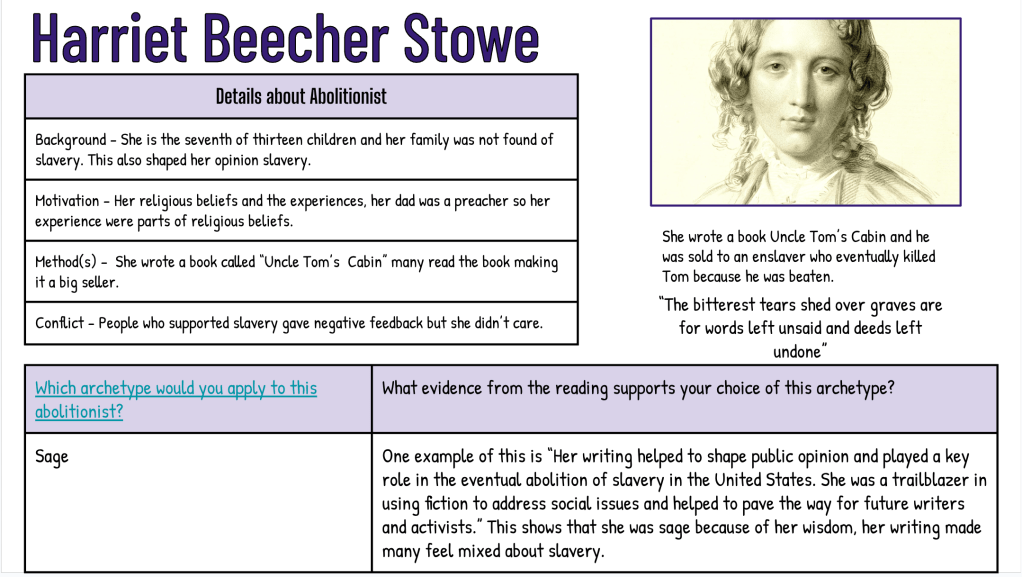
Monday kicked off our Abolitionist Movement work. I always try to bring in local figures like Harriet Beecher Stowe, John Rankin, and James G. Birney alongside Frederick Douglass, Sarah Grimké, and William Lloyd Garrison. Students need to see the local connection—that history didn’t just happen “out there.”
We started with a Thin Slide: “Change begins when someone refuses to stay silent.”
One picture. One word or phrase. Fast. Immediate. It set the tone for the day—thinking about voice, action, and courage.
Then we jumped into a short EdPuzzle. It wasn’t to “teach” the content—it was just to jog memories and fill in some quick context before they picked an abolitionist to dive deeper into.
The Thick Slide was the real meat of the day:
Each student chose one abolitionist and built a slide that included:
- A short background
- Their motivations for ending slavery
- The methods they used (writings, speeches, helping people escape, etc.)
- One powerful quote or moment that showed who they were
This wasn’t just copying facts—it was asking students to curate what mattered.
After they shared, classmates used a Frayer Model to capture the background, methods, and motivations for four abolitionists.
Why I sequenced it this way:
- Thin Slide to frame the emotional/critical thinking lens
- EdPuzzle for quick retrieval
- Thick Slide to produce and contribute
- Frayer to actively listen, gather, and process others’ work
Every move had a purpose: students weren’t just learning about abolitionists—they were seeing patterns of activism.


Tuesday: Finishing Abolition With Superlatives
Tuesday was another strange day because of science OST testing.
We opened with a Fast and Curious on Quizizz. Nothing complicated—just another layer of retrieval on the same reform movement content:
- Words like suffrage, reform, abolitionism, and goals of different movements
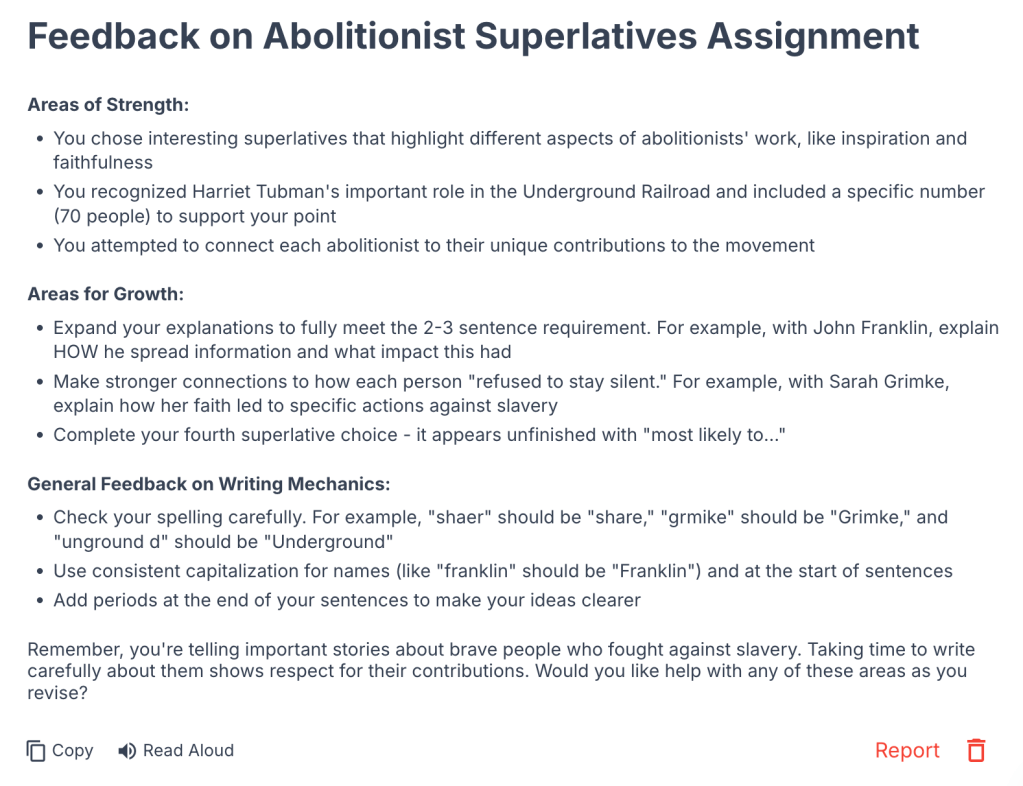
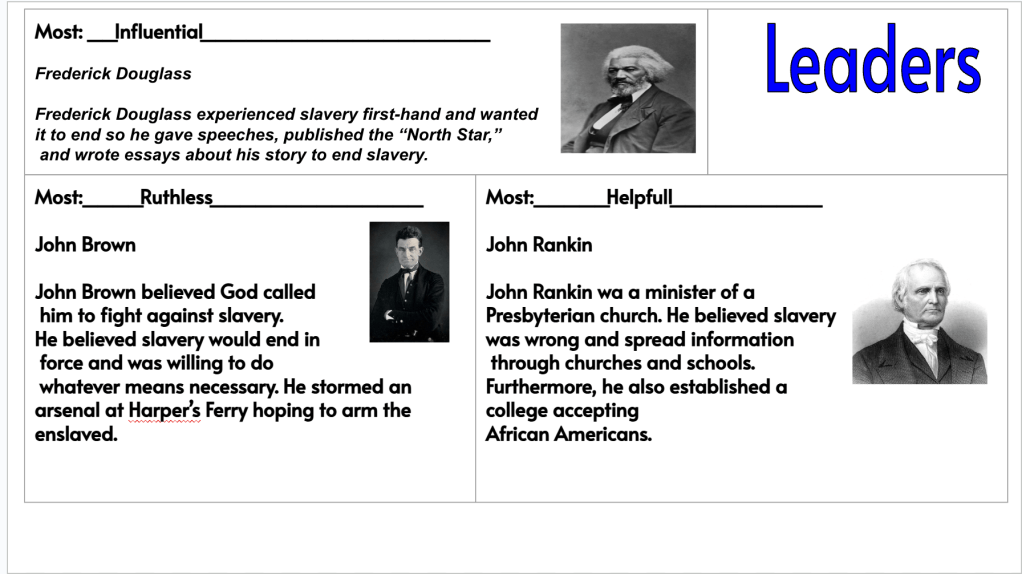
Then we finished Monday’s work with a Superlatives activity (shoutout to Kim Voge). Students had to pick 2–3 abolitionists and apply superlatives like Most Courageous, Most Determined, Most Visionary, etc.
At first, I had them tie it back to the Thin Slide quote from Monday…but after first period, I realized that overwhelmed them. So I pivoted and just let them focus on the superlatives.
After students completed the Superlatives, they used Magic School’s writing feedback tool to add in ideas. They took a screenshot, attached the screenshot to the feedback tool, and generated feedback. It led to discussions of evaluating feedback and choosing to pay attention to the feedback that matters.
Why this worked:
- Fast and Curious warmed them up with retrieval
- Superlatives required them to compare, judge, and defend choices
- It wasn’t just recalling facts—it was applying understanding
The pivot mattered. Sometimes you have to drop something mid-day when you realize it’s not helping kids think better.


Wednesday: Thinking on My Feet With Real-World Skills
Wednesday was a little chaotic—still on the weird science testing schedule. Some classes finished their superlatives and quizzes early, and I knew I needed something meaningful that wasn’t just busy work.
I thought back to a Friday Check-In I ran months ago:
“If I could teach you anything besides social studies, what would you want to learn?”
The most common answer? – Jobs. Taxes. How to get a job.
So I threw together a quick, no-internet-needed lesson:
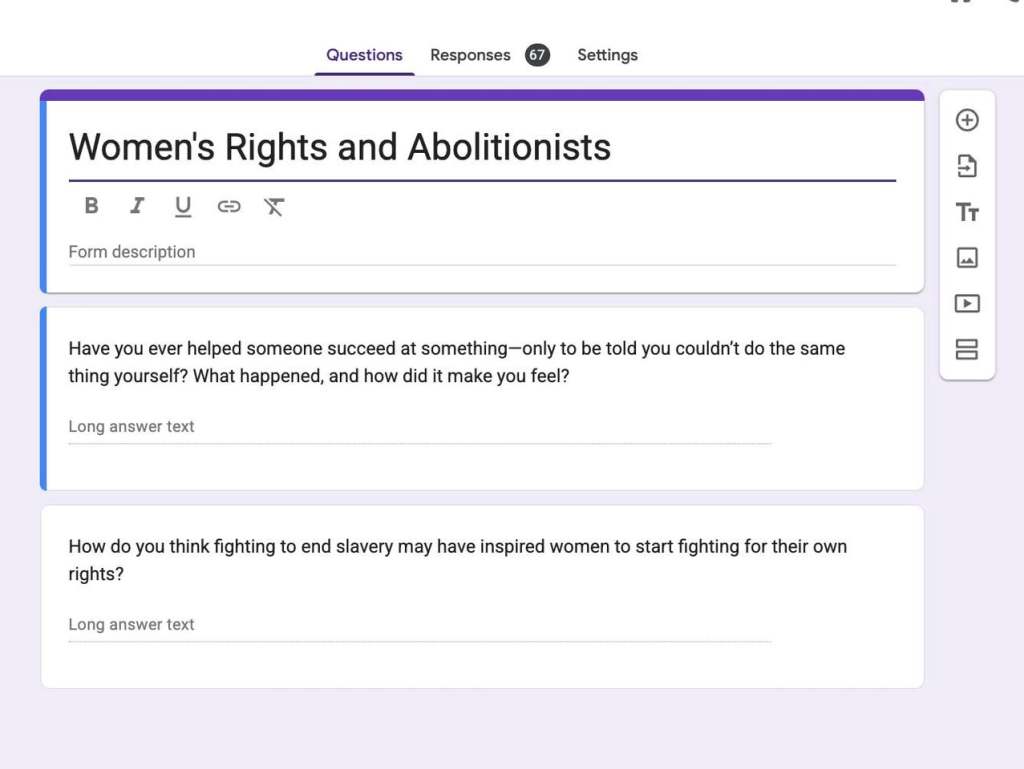
- Started with a Google Form:
- What’s more important—skills or attitude?
- Would you hire yourself right now?
- Number Mania on Padlet:
- What are two labor laws that surprised you?
I shared a quick story about my first job working clay tennis courts—how doing the little things no one asked for got me better hours and more money.
Why this worked:
- It was personal.
- It was relevant.
- It used EduProtocols (Number Mania + fast reflection) in a real-world context.
The best moments come when you connect content to what actually matters for students’ futures.


Thursday: Connecting Abolition and Women’s Rights (with Purposeful AI)
Thursday was all about tying movements together—and introducing AI not as a shortcut, but as a thinking partner.
Our goal:
Understand how the Abolitionist and Women’s Rights movements were connected—and why they eventually split apart.
The flow:
- Opened with a Google Form to prime thinking: Where do you see connections? Where could you see division?
- Annotate & Tell: Students read a short article and answered four guiding questions that helped them think about motivations, conflicts, and context.
Then came the AI part—and this was intentional:
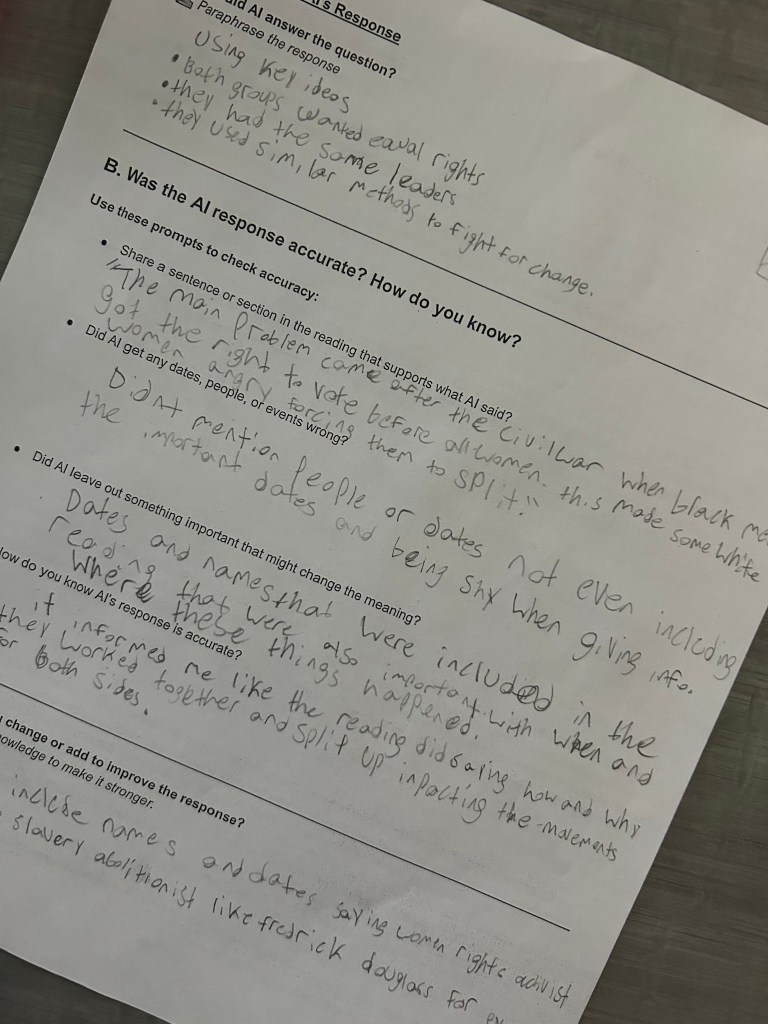
- Students used MagicSchool ChatBot Raina to ask a question about the reading. I did not preload the ChatBot with any extra information.
- They had to paraphrase the AI response
- Then they had to evaluate it:
- Was it accurate?
- Was anything missing?
- How could it have been better?
This wasn’t just “use AI.” This wasn’t generate ideas and copy. It was: engage with AI, challenge it, think critically about it.
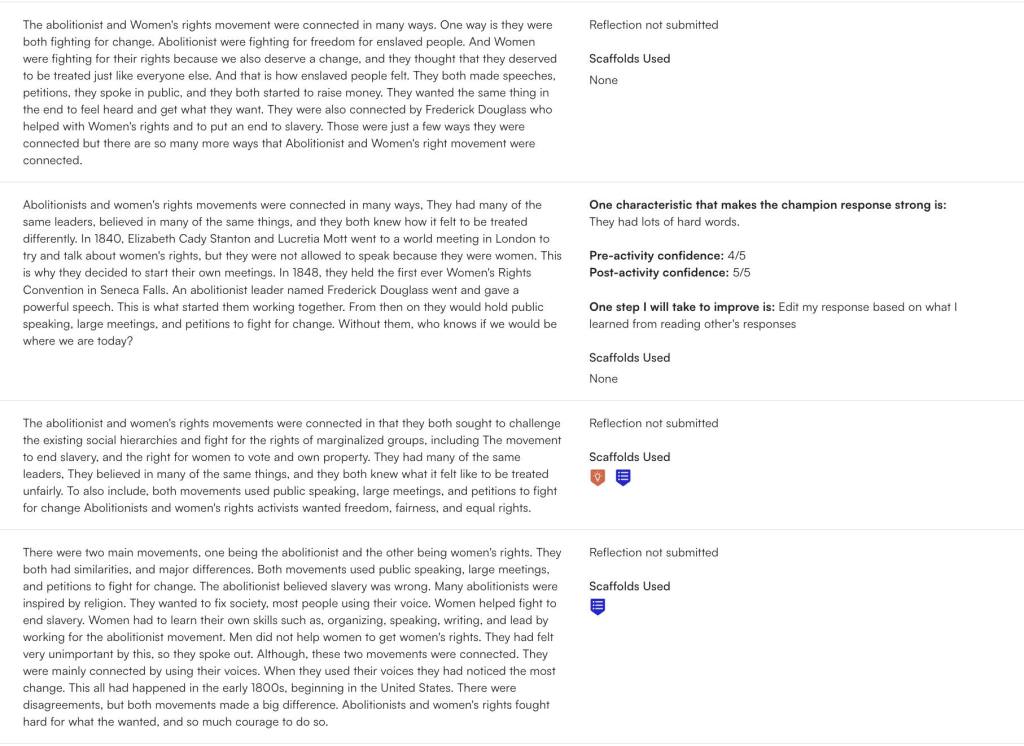
We closed it all with a Short Answer Battle Royale: Explain how the two movements were connected.
Why this worked:
- The Google Form opened thinking.
- Annotate & Tell slowed down reading.
- AI added reflection, metacognition, and sourcing conversations.
- Short Answer forced a full-sentence, evidence-based response.
AI wasn’t a crutch. It was a springboard for better thinking.

Friday: Wrapping Reform With Solo Iron Chef
Friday was about pulling everything together.
We started with a Fast and Curious on Quizizz (class averages were solid: 83%–90%) to hit key reform concepts one last time.
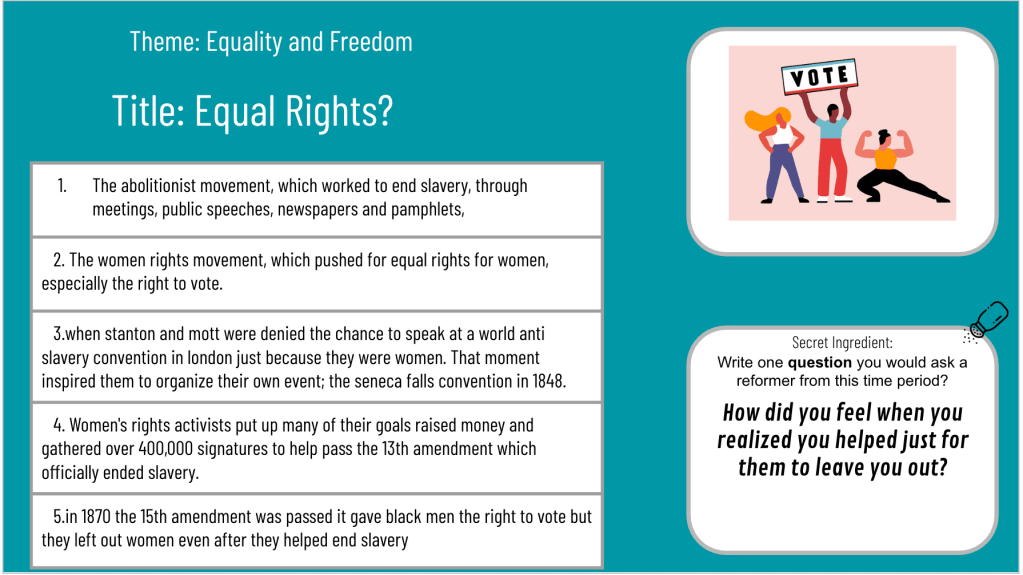
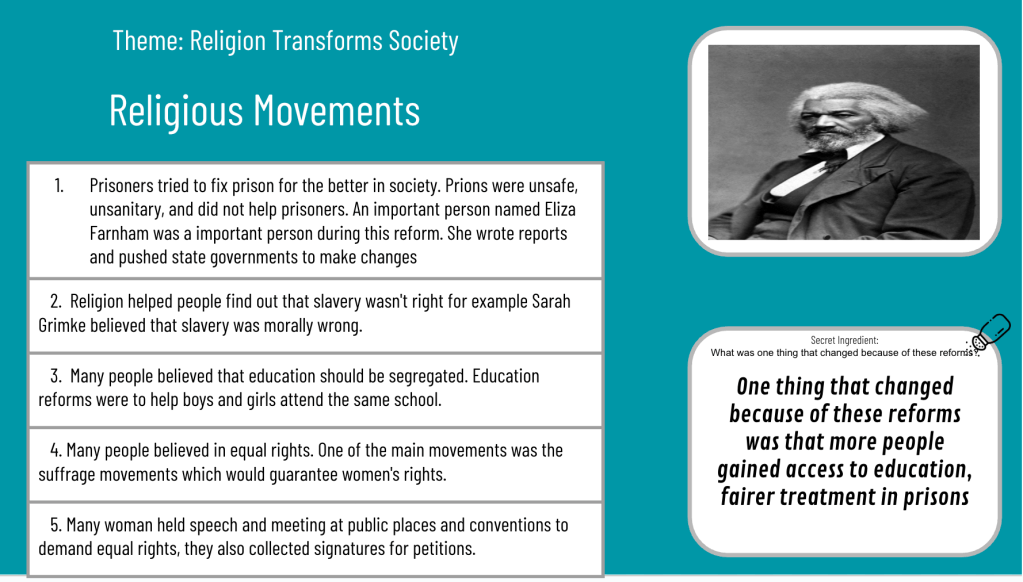
Then, students completed two Solo Iron Chef slides:
- Slide 1: Religion Transforms Society (5 details + image + secret ingredient reflection)
- Slide 2: Equality and Freedom (5 details + image + secret ingredient question)
I set the timer for 15 minutes per slide. Students had to screenshot their work and use MagicSchool to get AI feedback on it. And again—the feedback conversations were the best part. A student said, “The AI said to change my title but I made mine rhyme and I like it.” I said, “Then why listen to it? It’s a tool—not the truth. You know your purpose better than the AI does.”
Why this worked:
- Retrieval + creative processing + purposeful reflection
- AI wasn’t giving answers—it was helping students think about their choices
That’s the mindset we’re trying to build.

Why It All Worked
This week wasn’t about “doing EduProtocols” or “using AI” just because.
It was about intentional layering:
- Start fast and low-stakes (Quizizz, Thin Slide)
- Process and reflect (Annotate & Tell, Thick Slide, Frayer)
- Compare and judge (Superlatives, Battle Royale)
- Create and apply (Iron Chef, Superlatives)
- Use AI for feedback, evaluate the answers
Every protocol had a purpose.
Every sequence moved students one step closer to owning their learning—not just memorizing for a test.
That’s how you build real growth. And that’s what made this week work.

 Moler's Musings
Wonderful ♥️
LikeLike