
Introduction
This past week our school administered the MAP testing, so we had shortened 30-minute class periods at the beginning of the week. Despite the modified schedule, I was still able to teach lessons on the Constitution and incorporate some fun activities. My essential question for the week was “How is the United States Constitution a model for limited government?” We specifically focused on ideas like popular sovereignty, separation of powers, checks and balances, individual rights, and federalism that limit governmental power. The students even got to vote on the specific concepts they wanted to study! Read on to learn more about what we covered each day.
Monday – Great American Race, Gimkit
Tuesday – Great American Race 11 Slides
Wednesday – Popular Sovereignty (CyberSandwich, Annotate and Tell)
Thursday – Iron Chef Separation of Powers
Friday – 3 Truths and 1 Lie, SuperHero Template
Monday
Since we had shortened 30-minute classes on Monday due to MAP testing, I structured an efficient review lesson. First, students did a Repuzzler EduProtocol where they worked in groups sorting vocabulary term cards and matching them up. This collaborative matching activity took about 10 minutes. Next, we spent another 10 minutes on Gimkit, playing a fast-paced quiz game that tested their knowledge of last week’s key vocab terms. To wrap things up, we used the remaining 10 minutes to prepare materials for the following day.
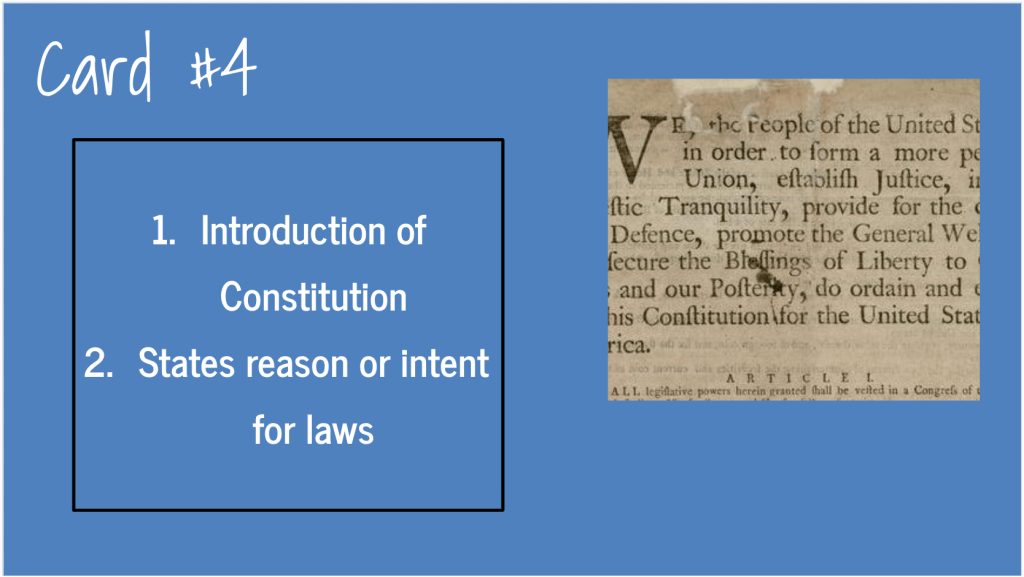
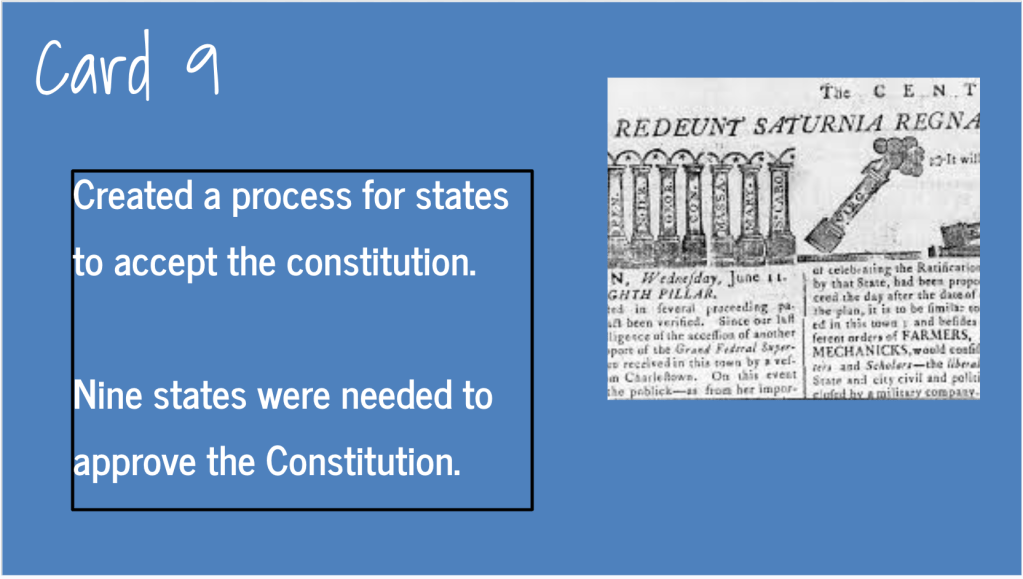
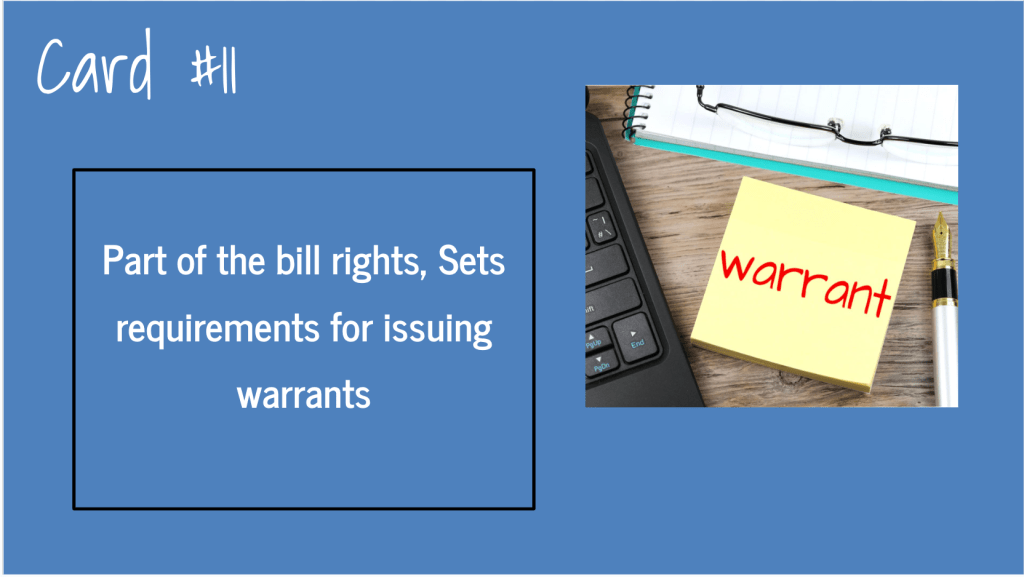
Knowing I wanted to run a “Great American Race” Constitution game on Tuesday, I had students make clue cards to enable that activity. I distributed index cards with a number on one side and a part of the Constitution (e.g. Article 1, 2nd Amendment) on the reverse. Working in small teams, students looked up their assigned Constitutional section in our government textbooks, created two text clues plus an image that related to it, and added the index card number to a slide. After school, I went through their work and selected 11 high-quality student-made slides to use for Tuesday’s Great American Race about the Constitution. This creative prep work got students engaged with the foundational document in advance, even in a condensed 30-minute window.
Tuesday
With MAP testing still limiting us to 30-minute periods on Tuesday, I facilitated a Constitution-themed “Great American Race” activity utilizing the student-made clue slides from Monday. Many students assume this type of collaborative quiz game will be easy since they can just look up the answers as they go. However, they discover it ends up being more challenging than they expect! I compiled the 11 best clue slides into a slide deck. But rather than project them for the race, I actually printed out hard copies, stapled them together, and made an accompanying answer sheet. I divided students into teams, gave each group a government textbook, and let the race competition begin!
The goal was not necessarily for them to solve every slide during the race. More importantly, racing against the clock forced them to flip through the actual Constitution to try locating the correct articles, amendments, preamble, etc. This activity ultimately aimed to familiarize students with navigating the structure and contents of the Constitution itself, as several upcoming lessons refer back to specific sections. Despite some confusion sorting through the complex document, students were fully engaged throughout the 30 minutes. And even if they didn’t find all the answers, the collaborative process of analyzing the clues and consulting the primary text helped prepare them for future class discussions and assignments. So while perhaps not the easiest review, both the preparatory and race elements served their purpose in getting students actively investigating Constitutional language firsthand.

Wednesday
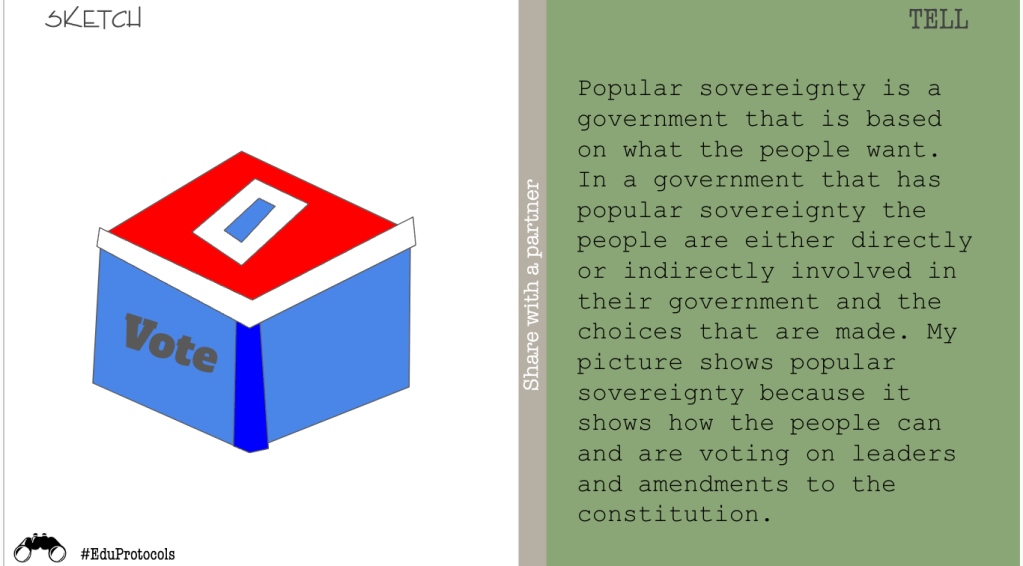
On Wednesday, with 30-minute classes still in place, I introduced the concept of popular sovereignty and tied it back to our essential unit question about how the Constitution limits governmental power. I start with popular sovereignty since it relates directly to empowering the people, as laid out in the Preamble. My goals were threefold: define the term, help students identify examples of popular sovereignty in current events and founding documents, and analyze how it allows citizens to check political authority.
Given time constraints, I used some streamlined protocols shared by teacher Justin Unruh. First we did a CyberSandwich reading activity with leveled texts on popular sovereignty (8th, 5th and 3rd grade). Students took guided notes and then discussed them. Afterwards, I provided options for a paragraph summary or visual sketch to demonstrate their understanding. Next, utilizing an Annotate and Tell, we examined key excerpts from the Constitution’s Preamble and Article I, plus the Declaration. Students highlighted and analyzed sections related to popular sovereignty and checks on governmental power. Some analysis questions I asked included: What mechanism does the Declaration say people have to control government? And how do Constitutional sections allow people to restrict political influence?
In just 30 minutes through targeted, scaffolded reading and writing activities tied to primary documents, students were able to define and identify examples of popular sovereignty. This positions them to evaluate how citizens collectively wield influence over their elected officials. By the end of class, a poll showed most students were eager to next examine constitutional separation of powers as another method of checking authority.



Thursday
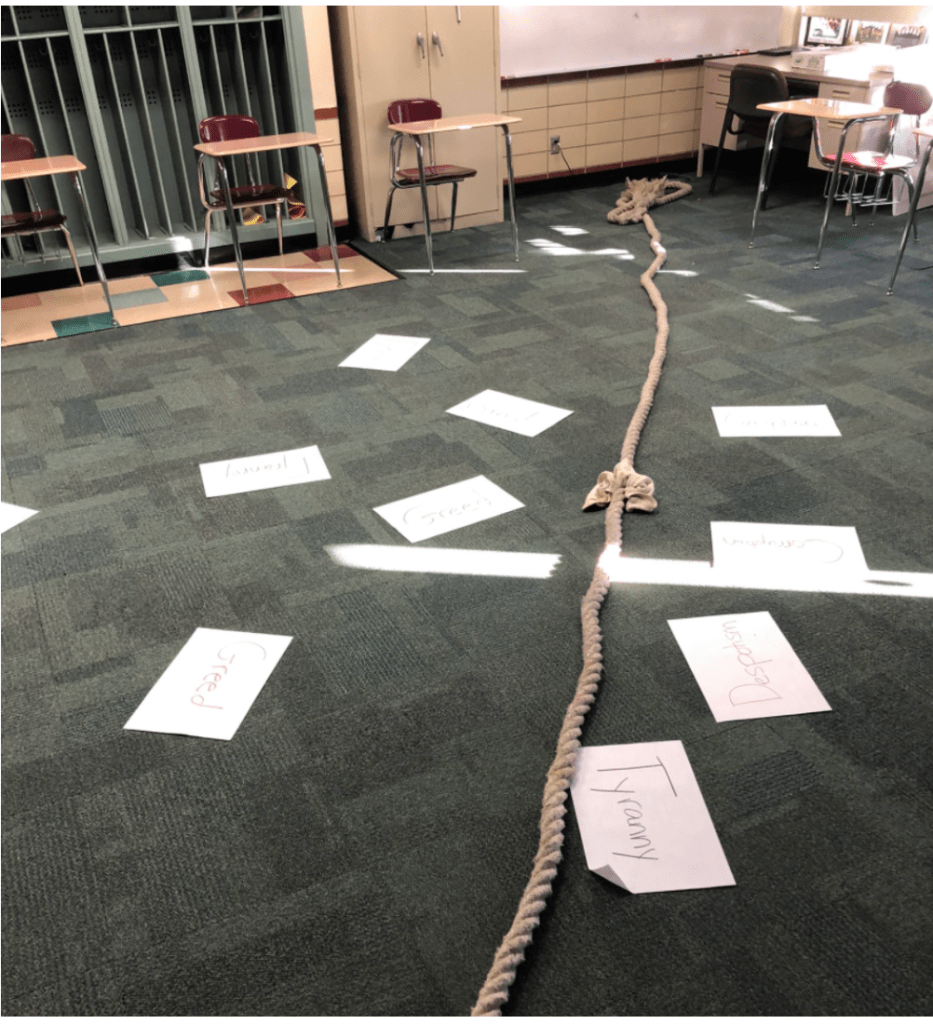
On Thursday, with our normal 47-minute classes back in session, we focused on the concept of separation of powers across the three governmental branches. To creatively introduce why dividing functions is necessary, I utilized a Dave Burgess hook activity with a tug-of-war rope stretched across my classroom. Scattered on the floor were papers labeled “corruption,” “greed,” “despotism” and “tyranny” – negative concepts I explained represent pitfalls into which governments can fall. I asked students how we can lift the rope to raise government above these dangers. Volunteers tried unsuccessfully to complete the challenge single-handedly. Eventually a trio was needed to fully raise the “government” rope. This illustrated why concentrating all governmental powers and responsibilities into one ruling entity invites misconduct.
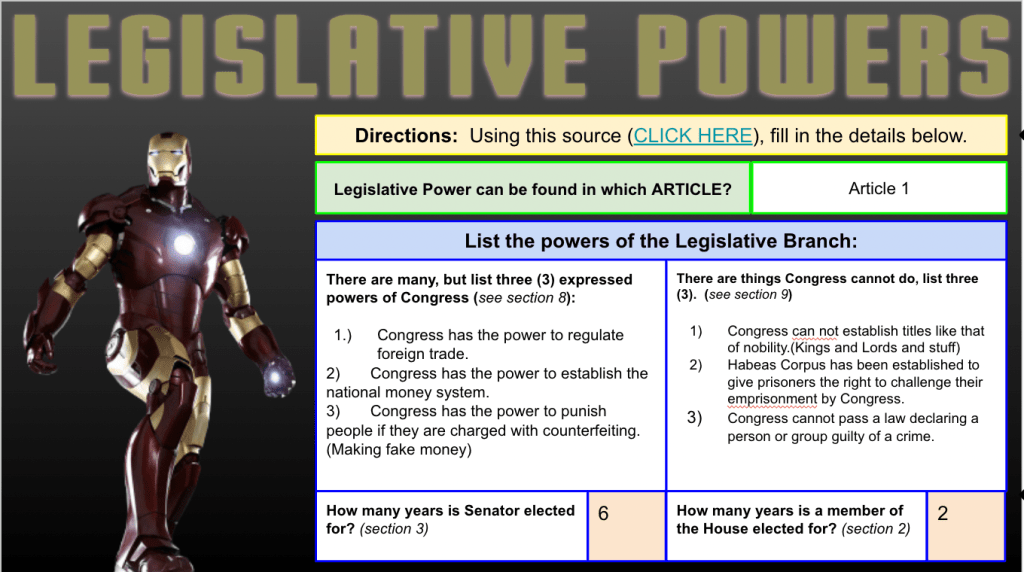
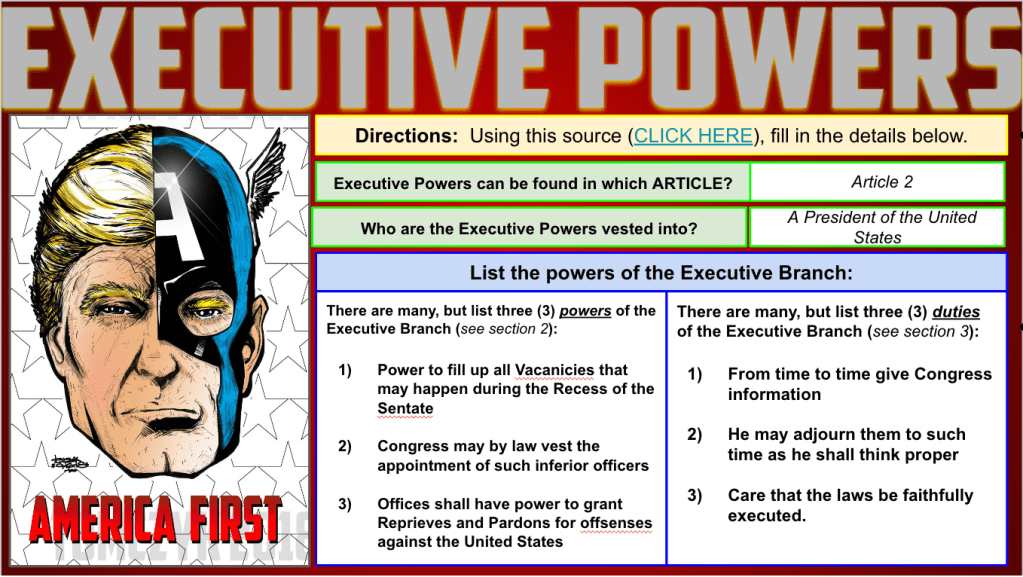
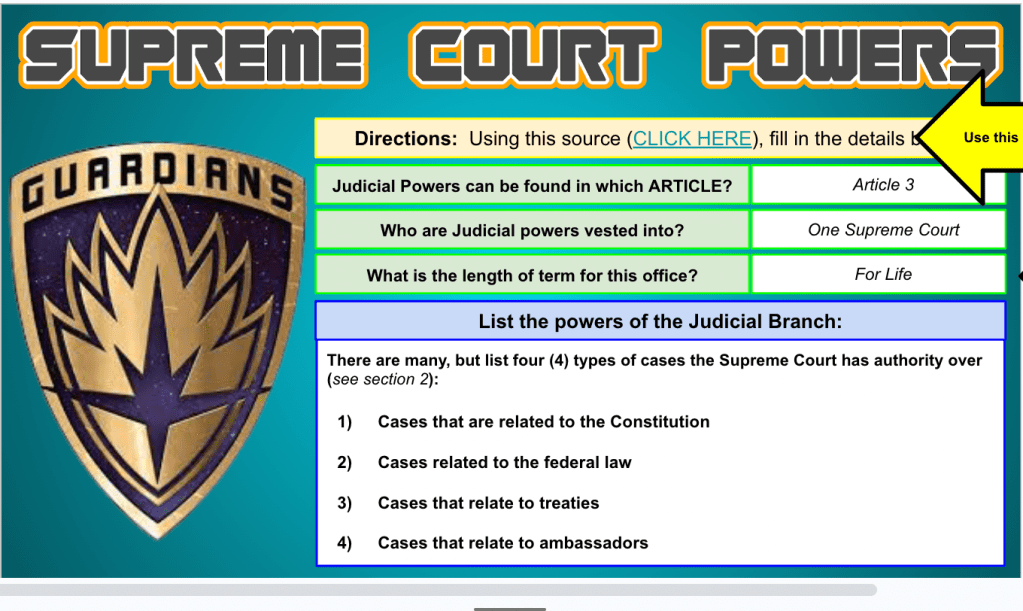
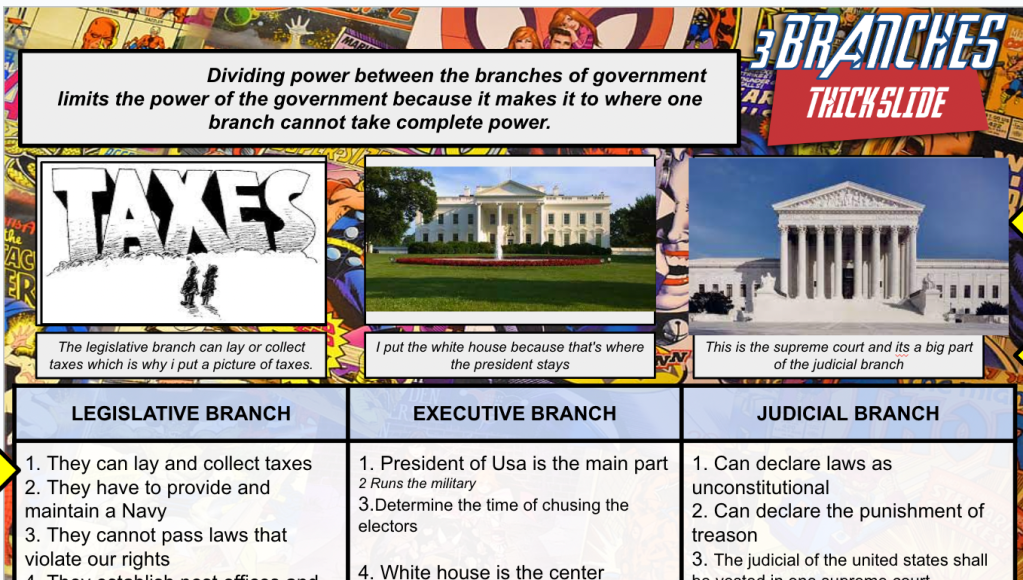
I then shared an Iron Chef EduProtocol created by teacher Dominic Helmstetter. Students consulted the Constitution to research details on the legislative, executive and judicial branches for a slide, with some also using provided readings I condensed via AI. Their tasks included defining specific branch powers, identifying which articles established them, how members are selected, etc. I gave them 10 minutes to find facts and design slides. Finally, everyone combined their branch expertise into one Thick Slide summary, including images and the four most vital points on each one’s roles. I also had them analyze how division of power itself limits authority and potential despotism, referring back to the introductory rope demonstration.
As an assessment, we did a Gimkit quiz. However, many scores were concerningly low, averaging 50-60% correctness instead of the 70% I expected. Informal student feedback indicated some quiz questions were oddly worded or disconnected from the content covered. I will revisit and revise those prompts for an improved test tomorrow so students feel it aligns with and evaluates their learning more accurately.

Friday
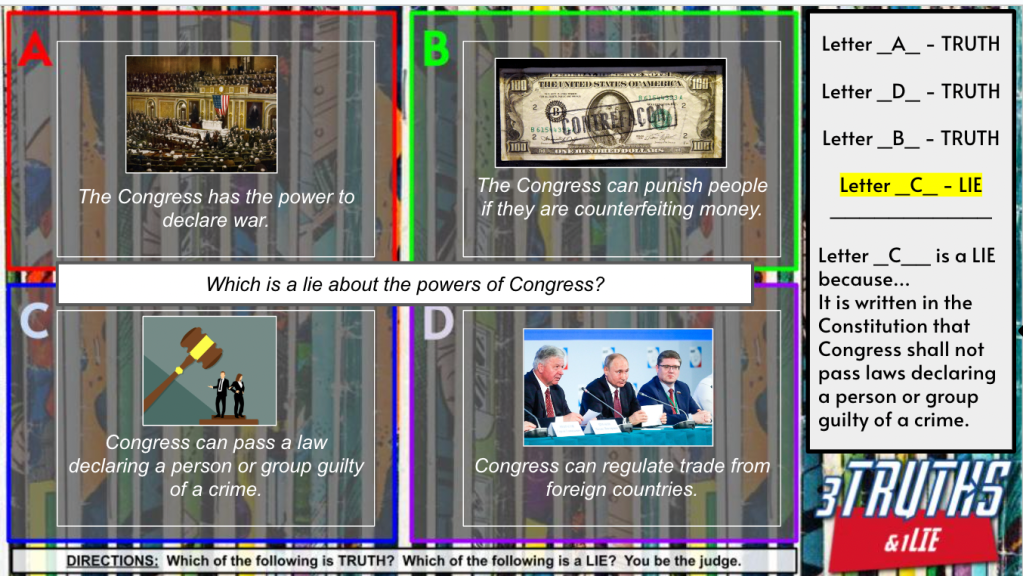
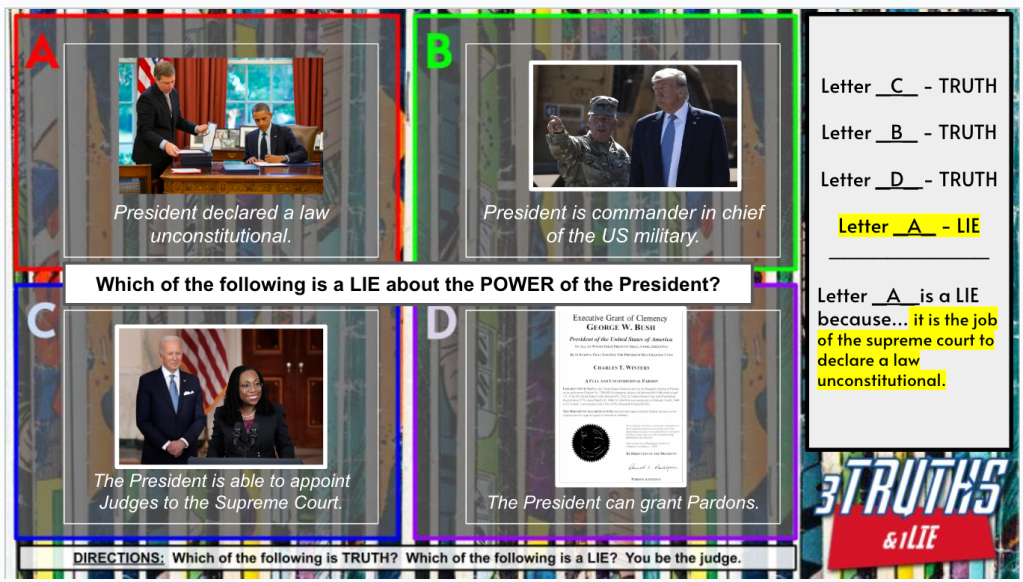
To start Friday’s class, students first took a 5-minute Gimkit quiz with the revised separation of powers quiz questions. The scores this time showed improvement, ranging from the mid-60% up to upper-70% accuracy. It seems the tweaks I made to address their confusion paid off. Next, utilizing another engaging Dominic Helmstetter creation, students developed “Three Truths and One Lie” slides about one governmental branch or all three. On their slides they included one false statement along with three accurate points, before identifying which item was the lie and explaining their reasoning. When we return on Tuesday, this content will be the basis for an interactive guessing game.
With 15 minutes left in class, I distributed a creative superhero drawing template from teacher Quinn Rollins. Their final task was to transform a governmental branch into an original superhero character – envisioning powers, costume details, backstory, etc. related to that branch’s constitutional roles and responsibilities. The students always enjoy this imaginative project. As an extension, I had introduced some classes earlier in the week to using the AI tool Pi as a brainstorming aid. After discussing responsible and constructive AI prompting, many students enthusiastically used Pi to help invent superhero names and powers tied to the civics concepts they had researched.
To wrap up, I encouraged students to revisit the informational slides they made yesterday documenting details on branch functions. I prompted them to mine that content to integrate an appropriately themed superpower or two. We will need just a bit more time next Tuesday to let them finish fleshing out their governmental superheroes. I’m looking forward to seeing their creative takes translating the legislative, judicial and executive duties we studied into heroic embodiments!


 Moler's Musings