Reflecting on the adventures, challenges, and revelations of the first semester teaching 8th grade social studies has been a journey filled with engaging moments, critical thinking exercises, and the exploration of local connections. In this combined blog post, I’ll delve into the overarching themes that have shaped my teaching philosophy and share insights into my go-to EduProtocols that have fostered engagement in my classroom.
The Semester That Was in 505: Fostering Engagement and Critical Thinking in 8th Grade Social Studies
As the first semester concludes, my reflection on the experiences in 8th grade social studies reveals a commitment to nurturing curiosity, developing critical thinking abilities, and making history come alive through local connections. The use of diverse EduProtocols has been a guiding light, injecting dynamism into lessons and ensuring memorable learning experiences for my students.
Fostering Engagement through EduProtocols
The integration of activites such as Sketch & Tells, Hexagonal Learning, CyberSandwiches, and Resource Rumbles has brought a new dimension to the classroom. These innovative frameworks infused movement, friendly competition, and peer collaboration, keeping students energized and invested. The versatility of EduProtocols has allowed for differentiation and accessibility, ensuring that every student can actively participate in the learning process.
Developing Critical Thinking & Analysis
A cornerstone of my teaching approach has been the emphasis on historical analysis. Students have been equipped to carefully evaluate primary sources, substantiate claims with evidence, detect author bias, and discern cause-effect relationships. Paraphrasing and summary skills were honed, and interpreting political cartoons became a tool for understanding satire and symbolism. Thoughtful questioning and reasoning were emphasized in approaching topics like the Revolutionary War and the Constitutional Convention.
Connecting Content to Local Context
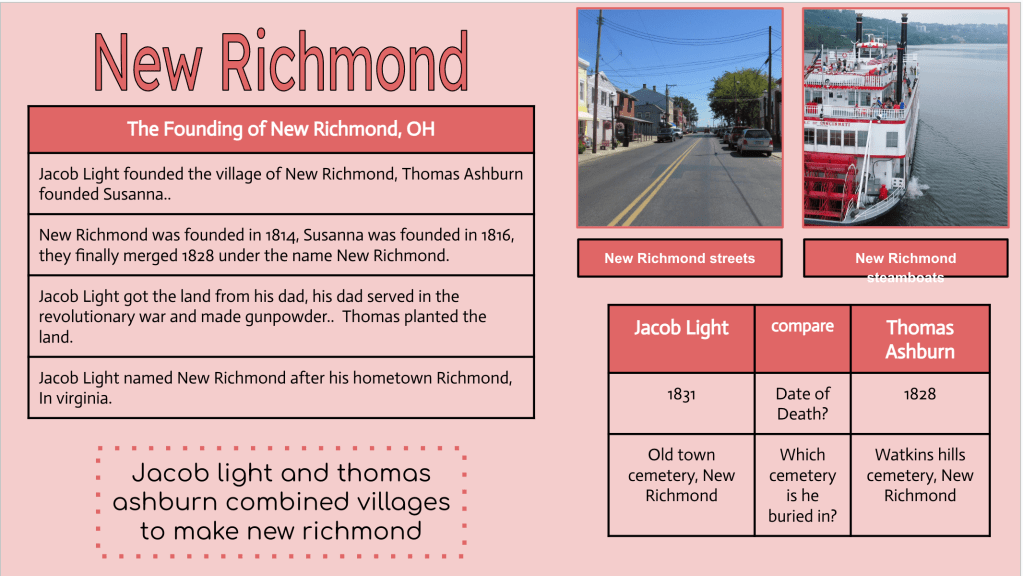
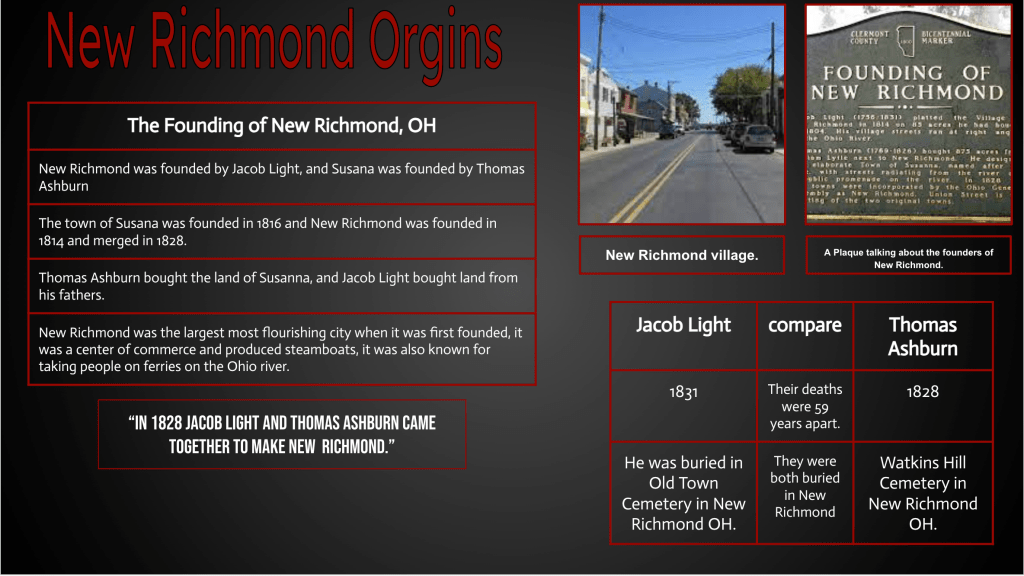
An enriching aspect of the curriculum involved connecting historical content to our local context. From exploring the lasting influence of pre-colonial Native American tribes to researching the impact of European colonization, slavery, and the Underground Railroad on Southwestern Ohio, students gained a deeper understanding of how history has shaped our region. Studying local visionaries who contributed to aviation innovations added a personal and relevant touch to the learning experience.

Onward to the Second Semester
As the semester concludes, I am grateful for the passion and dedication my students bring each day. Teaching is an imperfect yet rewarding art, and therein lies its beauty. My aim is not perfection but progress – that through EduProtocols, critical thinking, and local connections, my students develop a lifelong passion for learning how our shared history shapes who we are. Onward we march, with open minds and full hearts, to encounter the canvas of the second semester.
My Go-To EduProtocols: Fostering Engagement in 8th Grade Social Studies
As an educator committed to making learning interactive for 8th graders, certain EduProtocols have emerged as reliable go-to options in my teaching toolkit. These activities have been carefully chosen based on their effectiveness in fostering engagement, building content knowledge, and providing immediate feedback.
CyberSandwich
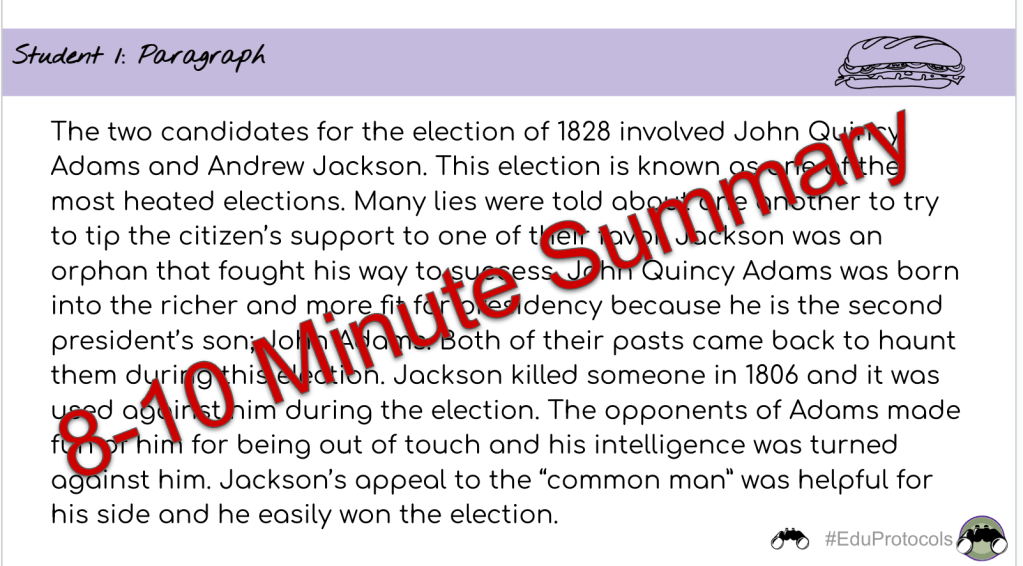
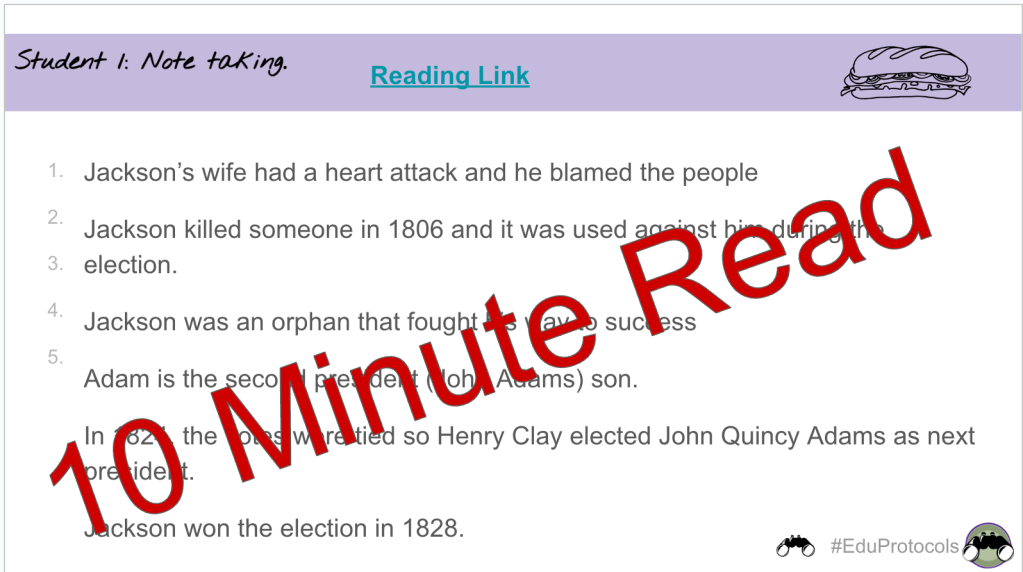
True to its delicious name, CyberSandwich merges collaborative learning with reading and writing skills. Students have 10 minutes to read content related to our topic, discuss with peers, and then write a summary paragraph to solidify their understanding. Its structured format builds content knowledge, improves comprehension and writing abilities, fosters collaboration, and is easily differentiated. The versatility of CyberSandwich allows for seamless adjustments in format without compromising engagement, whether through physical handouts or Peardeck slides.





Sketch & Tell
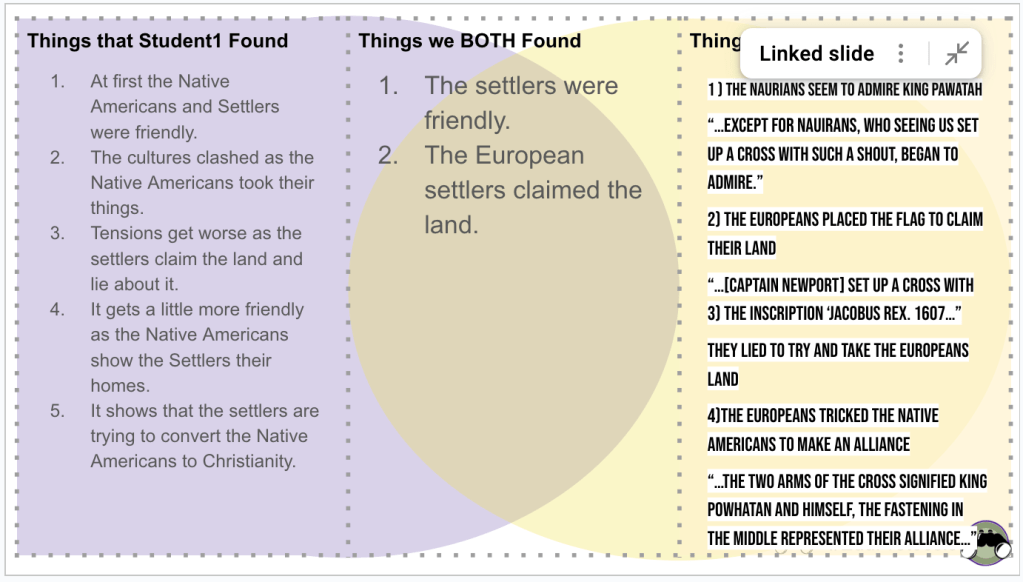
Unleashing creativity to demonstrate understanding, Sketch & Tell invites students to visualize concepts through drawing and explanatory writing. Its flexibility spans quick formative checks for learning to synthesizing complex ideas into graphics with text. Integrated alongside other protocols like Parafly for paragraph practice and following readings to surface existing knowledge, Sketch & Tell promotes engagement through creativity and choice. Allowing options for physical mediums or tech drawing tools makes it adaptable, while the combination of images and annotations checks inferences and connections.


Fast & Curious
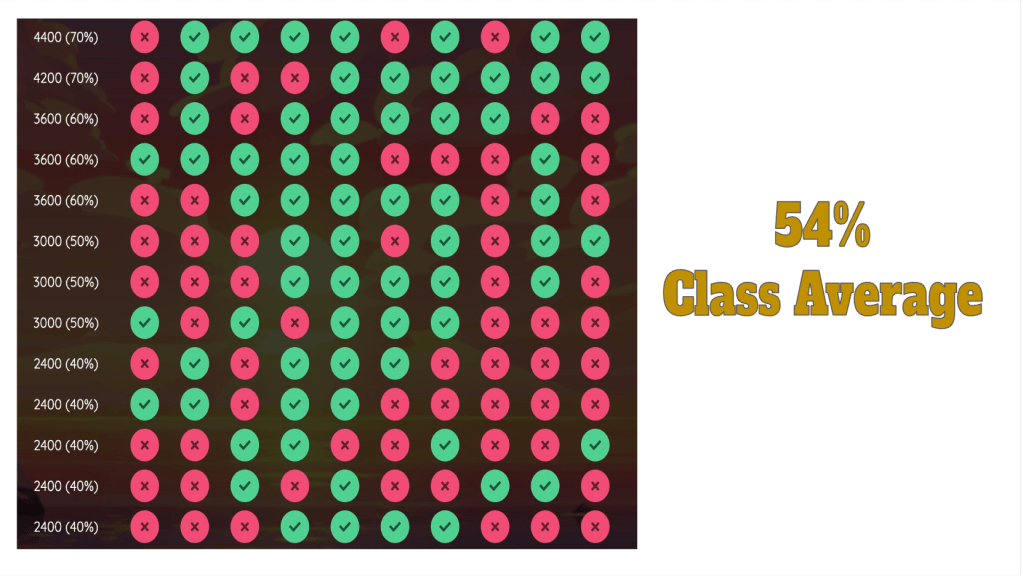
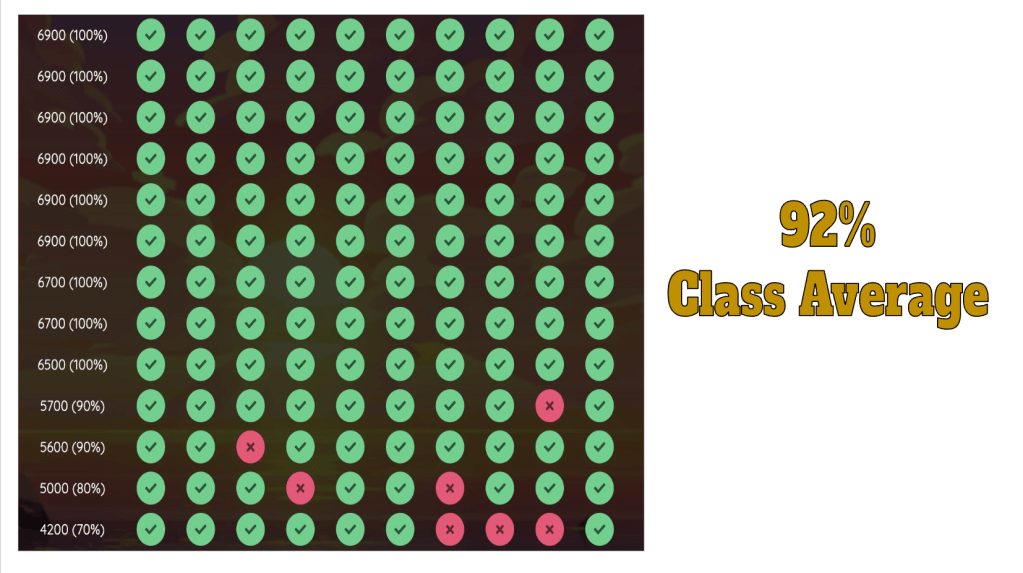
When instant engagement and feedback are needed, Fast & Curious delivers. Educational games such as Quizizz, WordWall, Gimkit, and Blooket can be utilized for a “Fast and Curious” activity. Present content or vocabulary to students and have them engage with the game for 4 minutes. After the time concludes, provide feedback and immediately repeat the quiz/game but reduce the duration. Continue this process throughout the week, repeating the content in shorter time frames, until the class average reaches 90% or higher. This strategy allows for consistent and sustained practice of the material over time.
The “Secret Sauce” Behind EduProtocols
In the ever-evolving landscape of education, curriculum may change, but the ultimate purpose remains unchanged – preparing students for future success by nurturing their development. The “secret sauce” behind my favorite EduProtocols lies in enabling students to unlock their potential by making learning experiential, meaningful, creative, and fun. This guiding principle will continue seeping into my classroom through fresh and familiar activities alike as the adventure of education continues.
As I reflect on the semester that was, I am excited about the journey ahead in the second semester, where open minds and full hearts will continue to shape the canvas of learning in 505.
For more: visit EduProtocols Plus site or check out many examples in the EduProtocols Facebook Group.

 Moler's Musings