If you dislike the your crappy textbook questions. If you want to get your students collaborating and communicating with their learning. If you need a simple way to work on note taking skills along with summary writing… Then the CyberSandwich will be one of your favorite EduProtocols. I reflected on this protocol back in 2021.
The CyberSandwich can be broken into 3 parts:
Part 1 – Reading and note taking: Provide a reading (secondary or primary source) or video to the students. Give them 10 minutes to read and take notes. You can vary the note taking structures if necessary.
Part 2 – Discussion and Compare: Have students partner up to compare, and discuss their notes. This could take anywhere from 5 to 10 minutes. I have the students choose 4 of the MOST important notes they write down and add them to the Venn Diagram.
Part 2a – I learned this from Jon Corippo – after the compare and discussion quickly call on each group to do one of these three options:
- Share 2-3 facts they learned
- Ask a question
- Bazinga – share a fact that wowed you
Part 3 – Write a Summary: Have students write a summary, create a sketch and tell, create an infographic, write using a specific text structure to share what they learned. This should take 8 to 10 minutes.
The CyberSandwich can be done multiple times a week using Google Slides, powerpoint, or paper. I have students that prefer paper, so I print off the CyberSandwich slides. Since August, the 8th graders I teach have completed a CyberSandwich nine times. My focus is writing good, basic paragraphs with a topic sentence, 2 supporting details, and a concluding sentence.

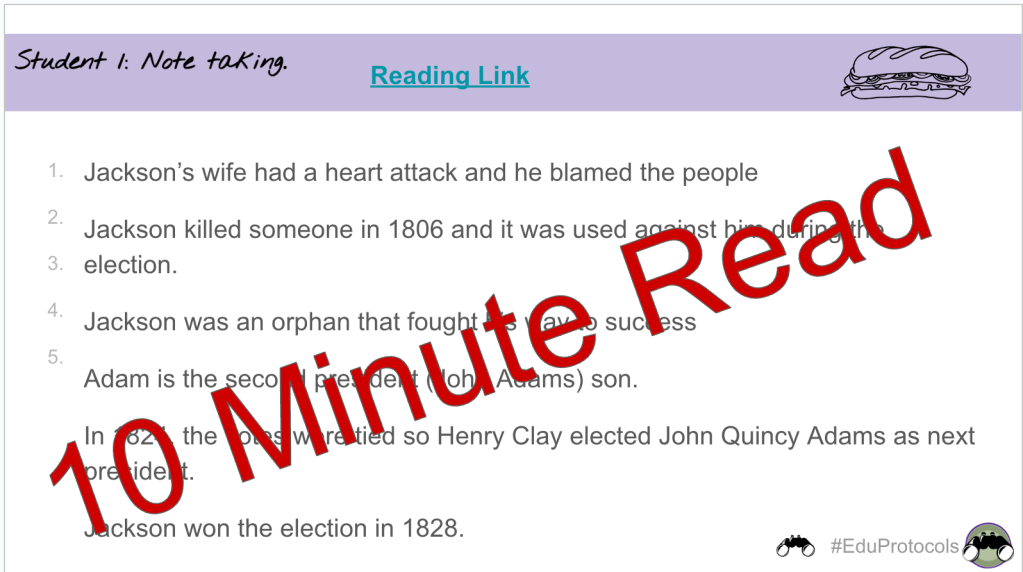

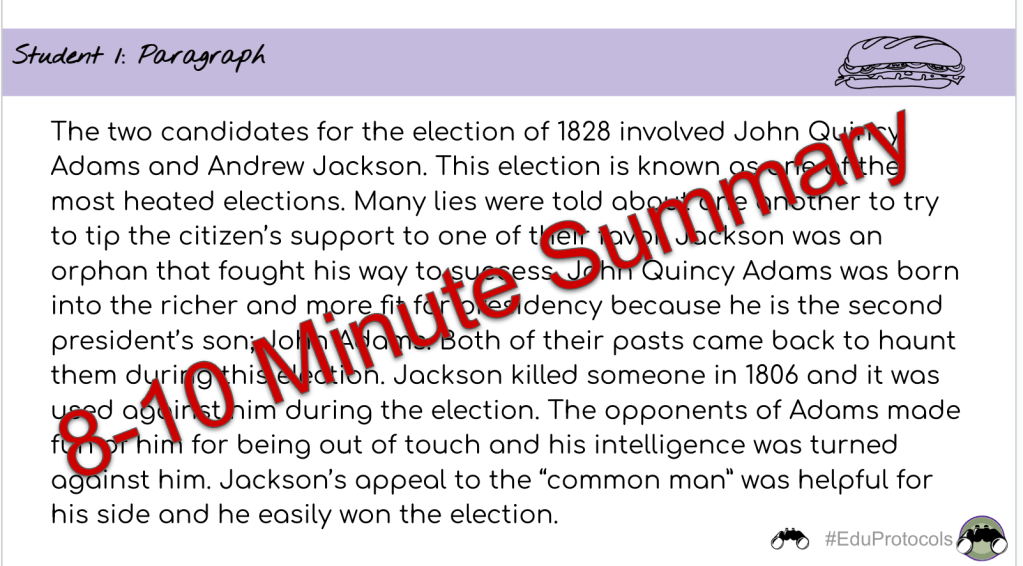
Like any EduProtocol, the CyberSandwich can be versatile and tailored toward any student. Here some ways you can kick up the CyberSandwich with various DOK levels and note taking strategies…
Part 1 – Note Taking
- The Cornell Method – Divided organized columns for questions, notes and summary.
- Mapping – Visual boxes, circles and lines show informational connections.
- Sentence Stems – Scaffolded sentence frames like “Two details were…” build skills.
- SQ3R – Survey, Question, Read, Recite, Review guides active reading/insights.
- Graphic Organizers – Visual categorization through charts, diagrams and concept maps. (Example below with a sequence text structure)
- Annotations – Highlighting/jotting direct text labels, comments and questions.
- Double-Entry Journals – Text details and related personal reactions/analysis in a T-chart.
- Just leave it blank – see what information the students find to be important.
- Main Idea – Identifying key overarching concepts and supporting details. Students fill out who, what, when, where, and why while reading. (Example below)


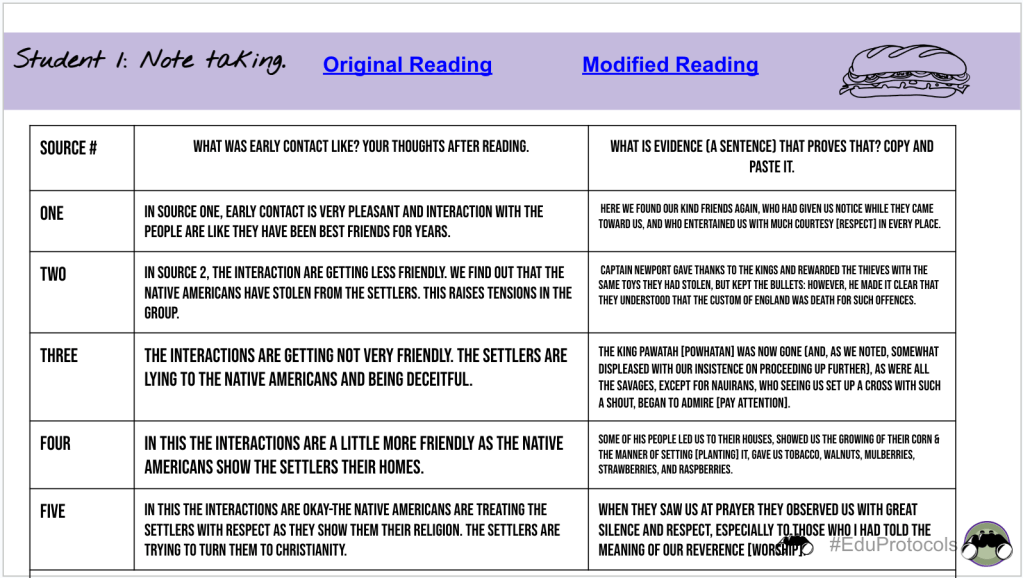
Part 2 – Compare and Discuss
DOK 1 (Recall):
- Share one fact you learned from the reading with your partner
- Take turns stating main ideas you wrote down in your notes
- Create a master list of key terms or vocabulary
DOK 2 (Concept Application):
- Categorize information, ideas, or details as you review notes
- Link concepts presented in the reading to prior knowledge or examples
- Explain differences in how you and your partner interpreted aspects of the reading
DOK 3 (Strategic Thinking):
- Debate an inference or conclusion made based on the information
- Evaluate completeness and accuracy of key ideas covered in partners’ notes
- Synthesize perspectives and develops a new hypothesis or interpretation
Part 3 – Summarize
DOK 1 (Recall):
- State the key facts or main ideas from the reading.
- Identify vocabulary words introduced and explain what they meant.
- Name the major people referenced and places mentioned. What were key dates or events?
DOK 2 (Concept Application):
- Summarize the main topics and key points of the reading.
- Provide examples that illustrate the main concepts from the reading.
- Identify some key details and explain why they were significant.
DOK 3 (Strategic Thinking):
- Analyze any patterns, relationships, causes, or themes you noticed in the reading.
- Predict future implications based on the ideas presented in the reading.
- Evaluate how effective the author or article was in clearly communicating main ideas and explain your reasoning.
- Make connections between ideas in the reading content and other things you’ve learned.
- Create a model, diagram, or graphic to represent the key takeaways visually.
Examples


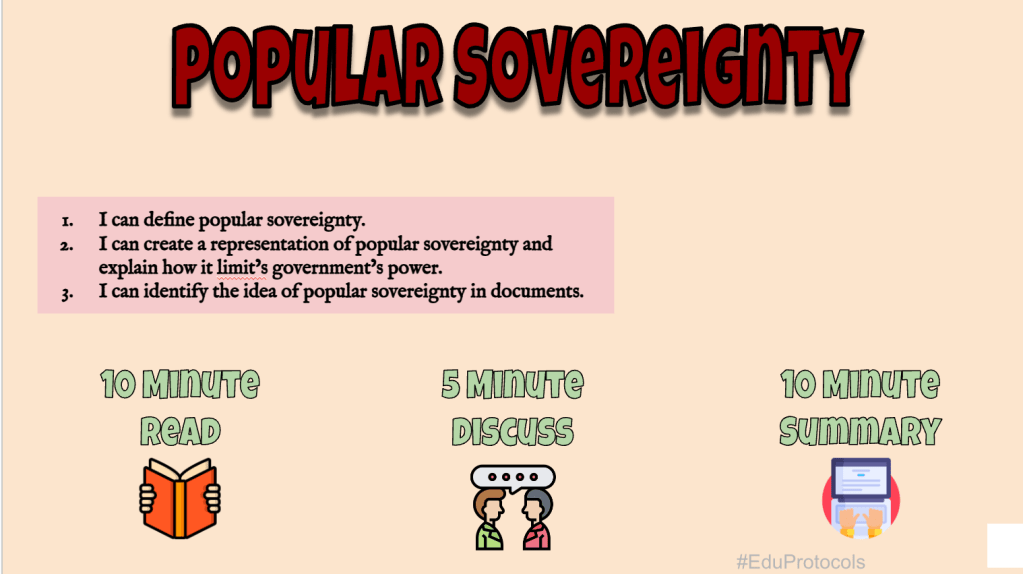
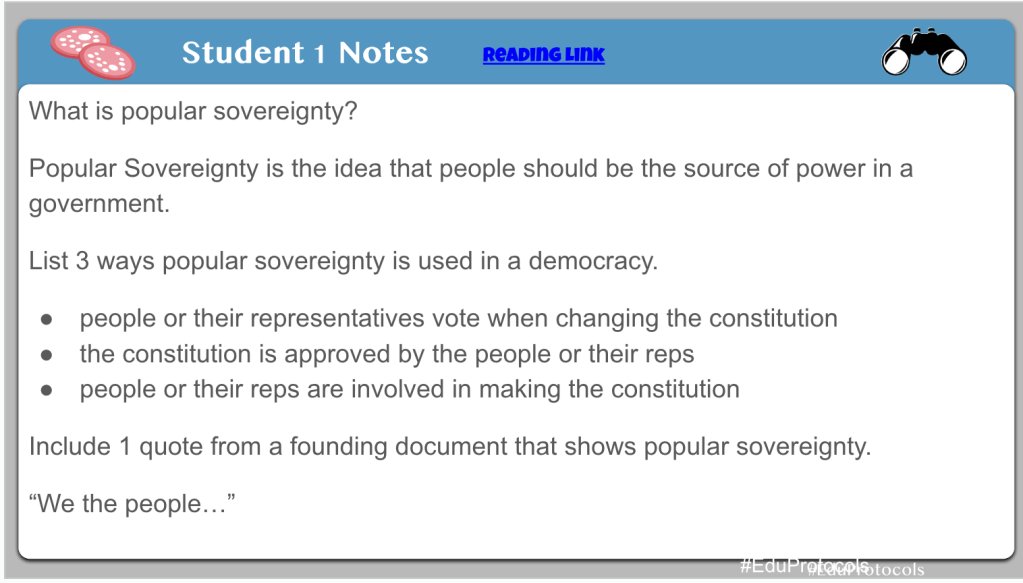


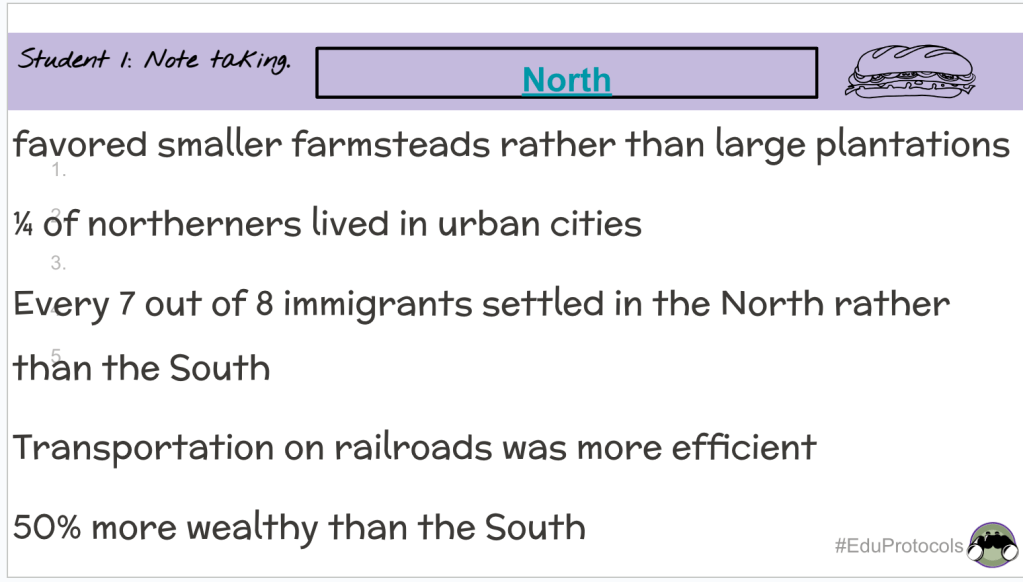
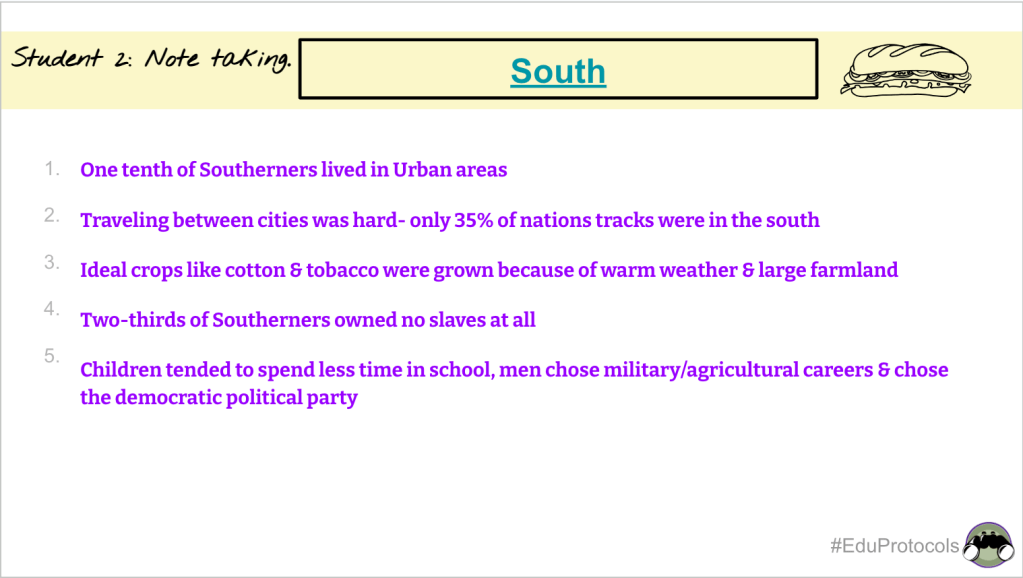
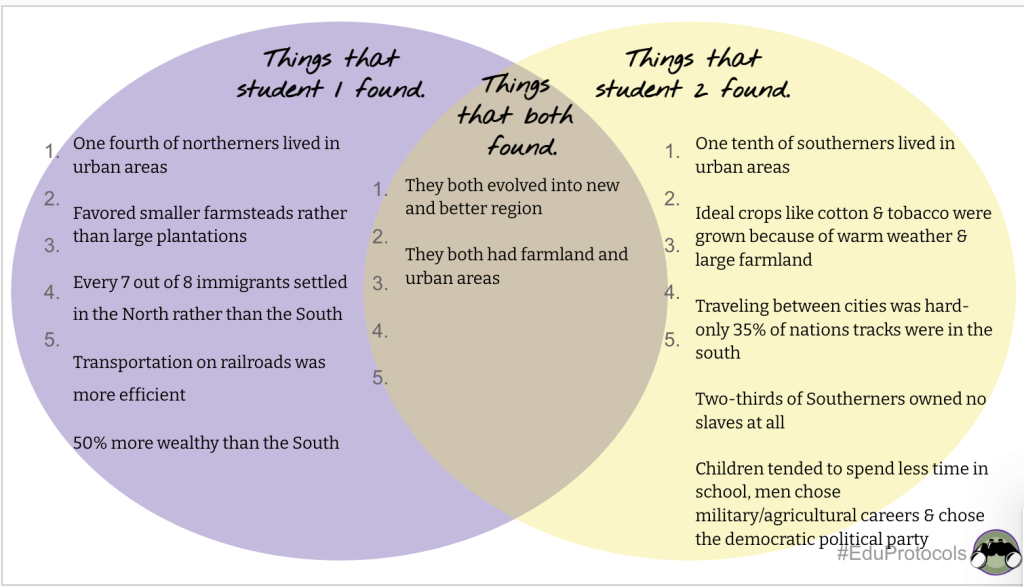
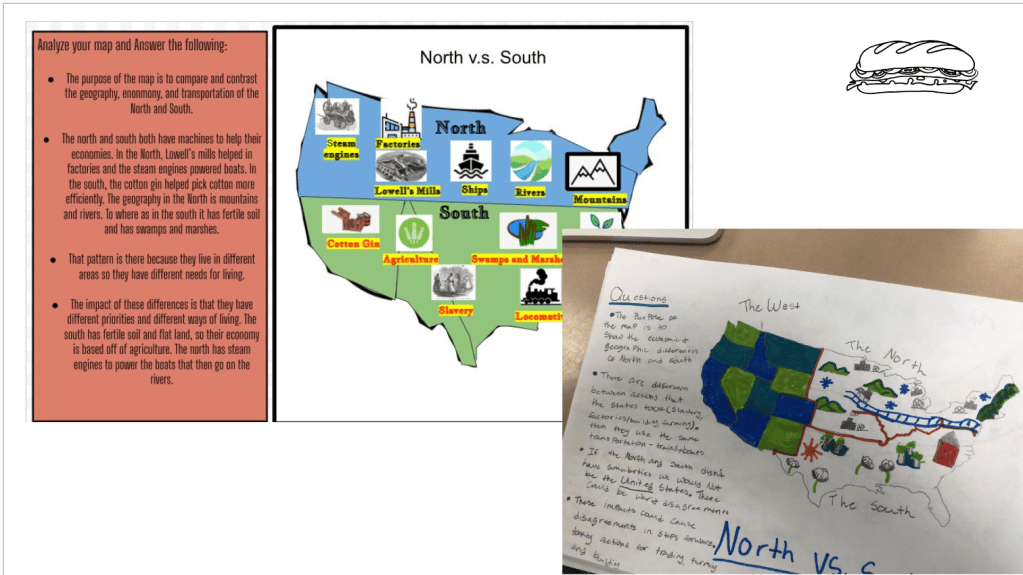
CyberSandwich with Primary Sources

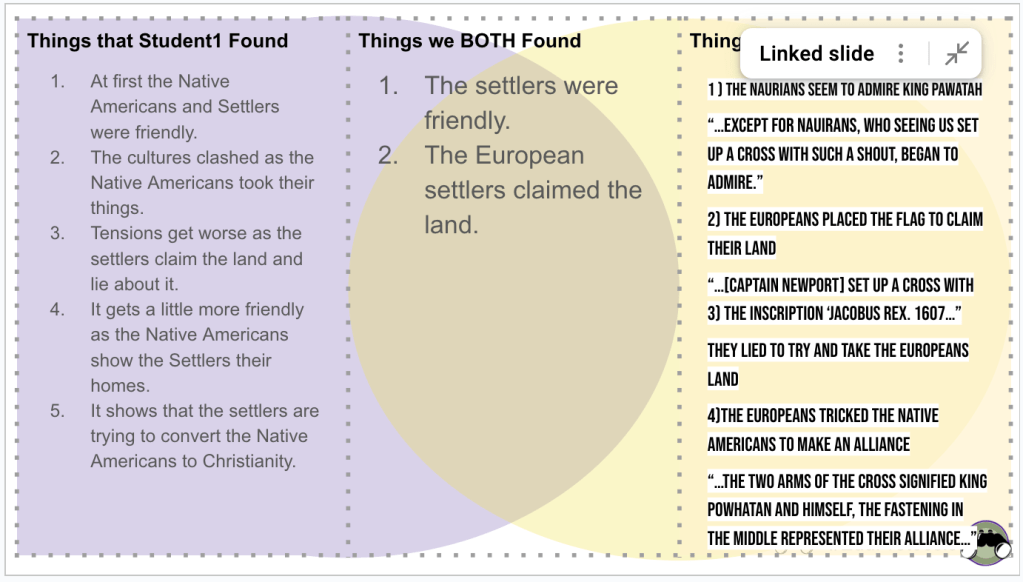


 Moler's Musings