
As we approached the impending Christmas break, a sense of chaos typically accompanied the days. To maintain a semblance of order and to appease restless students, I employed a strategy I whimsically call “Story Time with Moler.” During this post-lunch session, I occasionally read aloud the text we were studying that day. Not only did this practice help in managing the chaos, but it also provided me with an opportunity to inject additional information into the narrative. However, I tread carefully, avoiding fostering dependency among the students. This week, our focus revolved around the Articles of Confederation leading to the Constitutional Convention, the Great Compromise, and an exploration of the 3/5 compromise.
Monday – Resource Rumble (EMC2Learning)
Tuesday – Fast and Curious, Frayer, CyberSandwich
Wednesday – Fast and Curious, Thin Slide FaceOff, Sketch and Tell
Thursday – Branches Notes, Fast and Curious, Frayer/Empathy
Friday – Keyword Prediction, 3/5ths CyberSandwich, Fast and Curious
Monday: Energizing Articles of Confederation Review with Resource Rumble
Monday set the tone for the week, post-Thanksgiving, with a vibrant review session. The day was dedicated to a comprehensive recap of the Articles of Confederation using the engaging Resource Rumble from EMC2learning. This strategy involved strategically placing questions in envelopes around the classroom. Students, working collaboratively without the aid of Chromebooks, participated in a lively retrieval practice. Upon answering questions, they sought real-time feedback from me. Acceptable responses were rewarded with the opportunity to roll dice for building blocks, contributing to the construction of towering structures. The group that managed to erect the tallest tower emerged as the victors. This not only facilitated a solid revision of the Articles of Confederation but also injected an element of fun and activity into the post-holiday return to the school routine.
Tuesday: Unveiling the Constitutional Convention
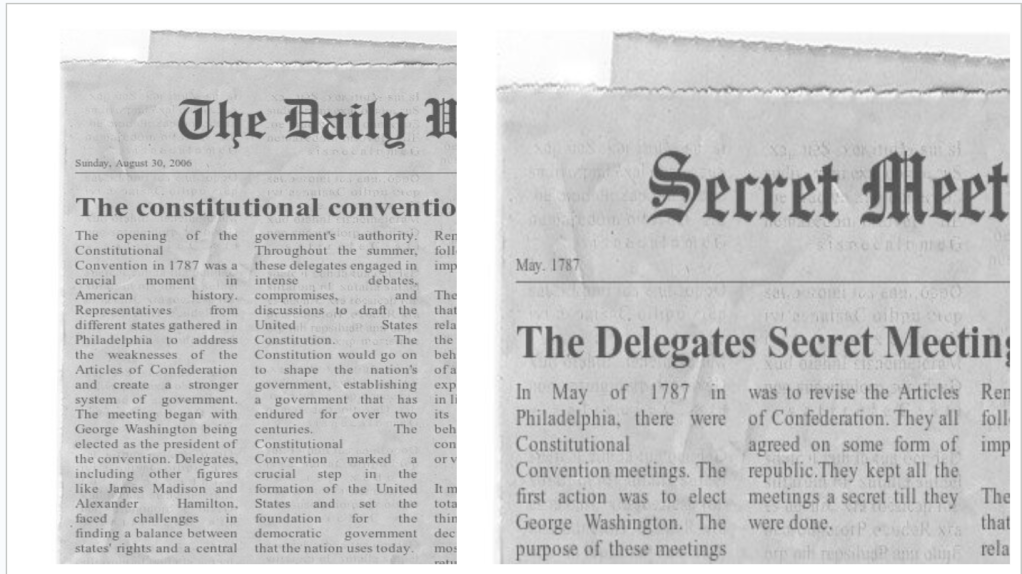
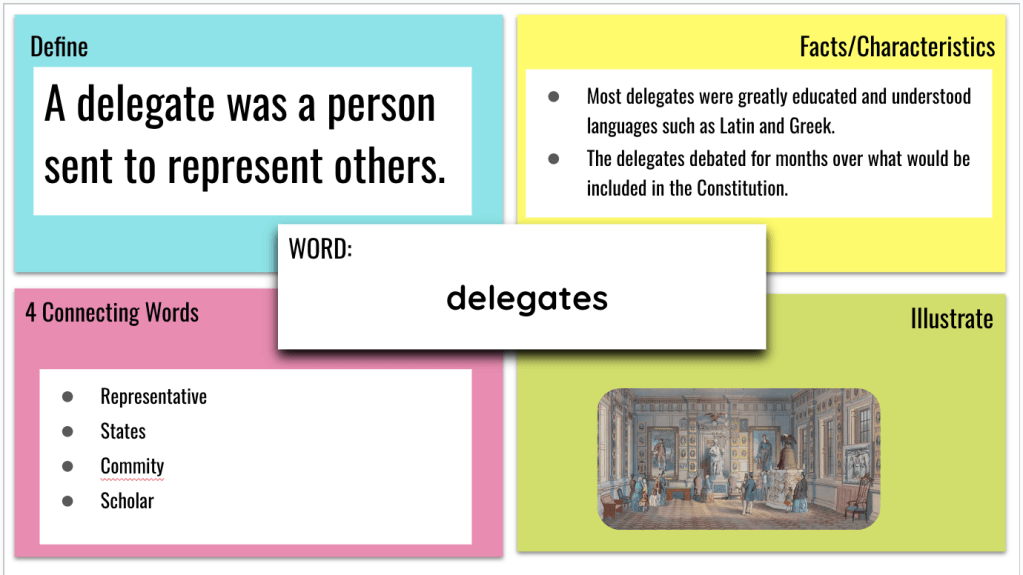
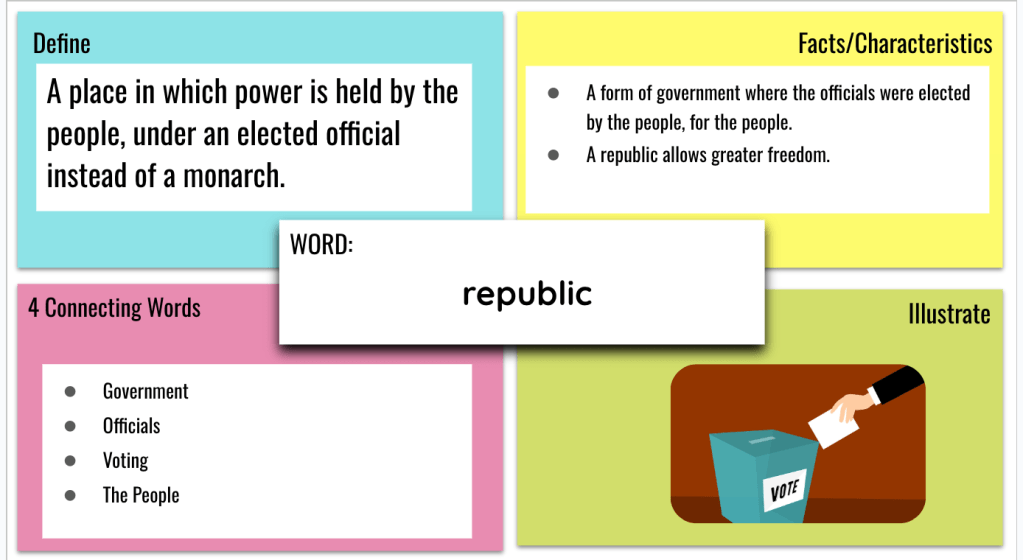
Tuesday marked the commencement of a new and intriguing mini unit, grappling with the question of whether the Constitutional Convention should be regarded as a success. The initial lesson delved into the reasons behind the Constitutional Convention. Kicking off with the Fast and Curious Eduprotocol, the class engaged in a rapid quiz encompassing fundamental information about the Constitutional Convention. Following this, students embarked on (Amanda Sandoval template) Frayer model for the terms “delegate” and “Republic.” The choice of these terms stemmed from their significance in comprehending the subsequent text. The Frayer process involved students defining the terms in their own words, sharing key facts and characteristics, identifying four connecting words, and incorporating an illustrative image. Notably, the term “delegate” was chosen due to unfamiliarity among students. Post-Frayer, a Cybersandwich ensued, wherein students, armed with a main idea note-taking strategy, delved into a textbook section on the Constitutional Convention. This strategy prompted students to document essential information such as who, what, when, where, why, and how. The information gleaned from this exercise was then channeled into the creation of a newspaper headline and clipping, serving as a creative synthesis of the acquired knowledge. The class concluded with a revisit to the Fast and Curious quiz, fostering reinforcement of key concepts.


Wednesday: The Great Compromise Unveiled – Thin Slide Face Off and Creative Sketching
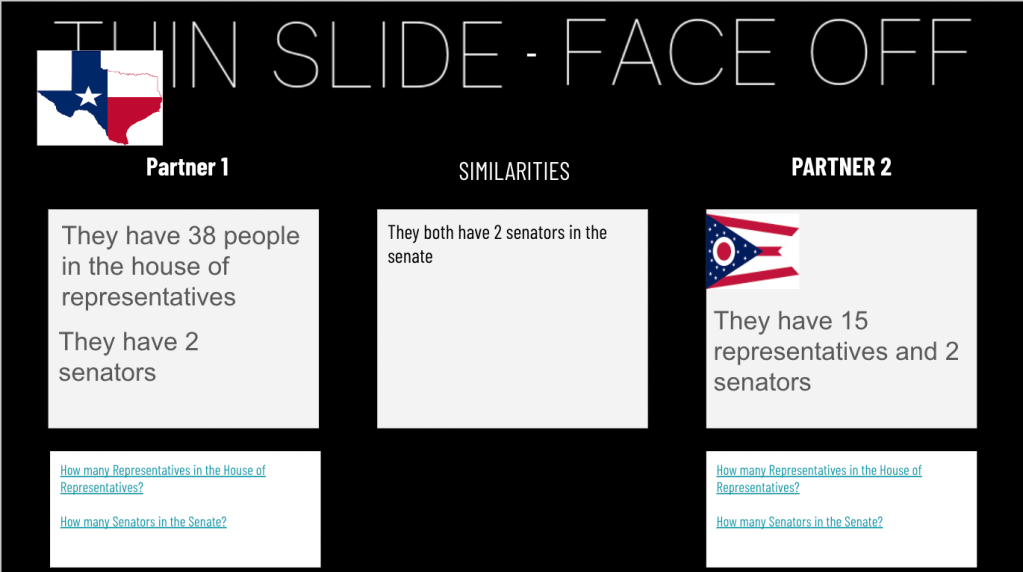
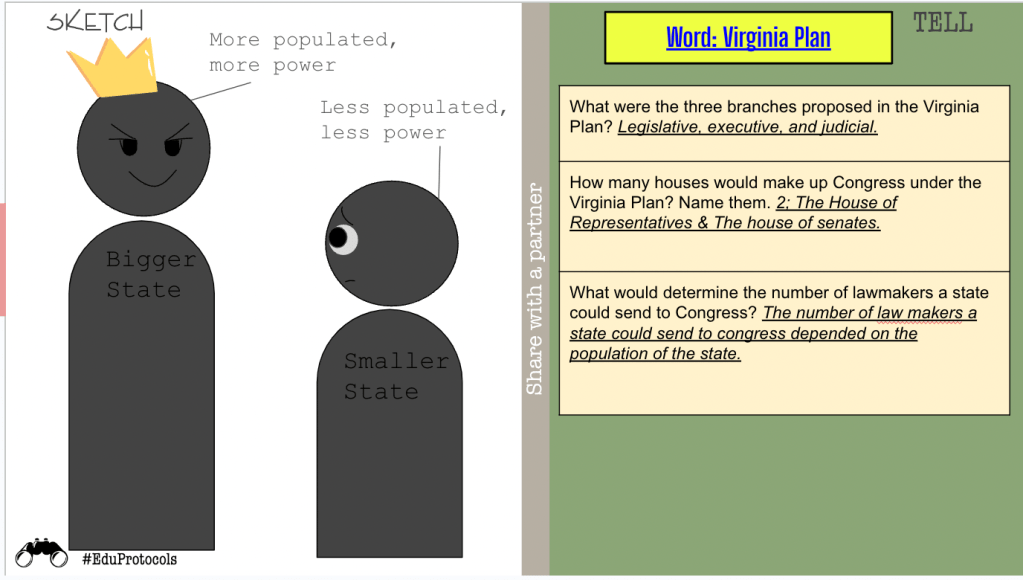
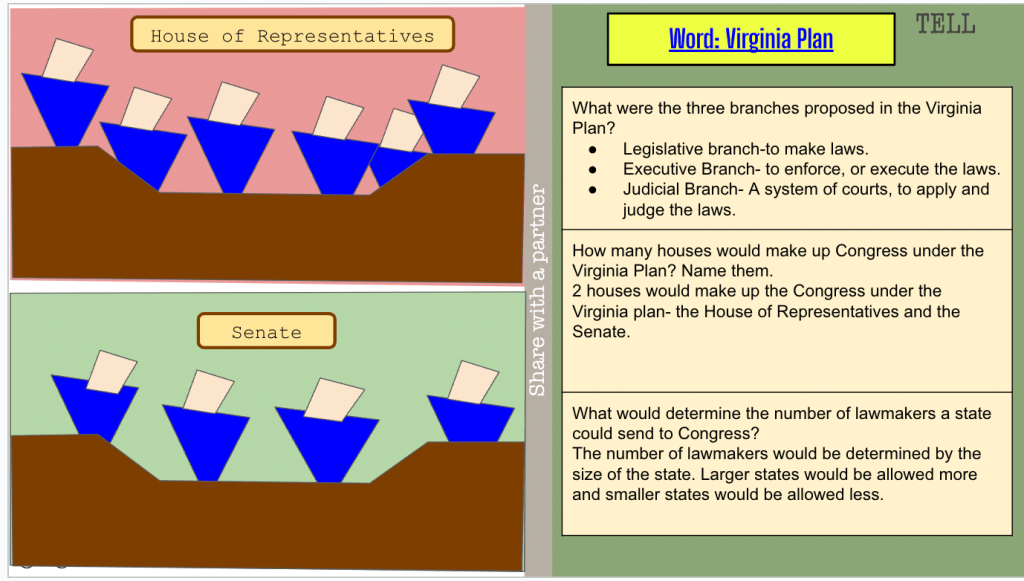
Wednesday delved deeper into the Constitutional Convention, specifically exploring the argument over representation that led to the Great Compromise. The day commenced with the Thin Slide Face Off, a captivating version of a Thin Slide created by Justin Unruh. Students partnered up and shared slides, comparing information about the number of representatives each state had in the House of Representatives and the Senate. This exercise unearthed a common challenge—students’ varied understanding of the distinctions between state, national, and local government levels. Recognizing this, adjustments were made to provide links for students to access the required information easily. The subsequent step involved students comparing information with their partners, identifying similarities and differences between states. The exercise culminated in a lively sharing of findings on whiteboards, offering a visual representation of the variations in House of Representatives and Senate numbers. This interactive session sparked insightful questions about the rationale behind different representation structures, laying the groundwork for the day’s exploration. Following this, a Sketch and Tell activity centered on the Virginia Plan unfolded. Students read about the plan and translated their understanding into visual representations using Google shapes. The Sketch and Tell component prompted students to answer key questions about the Virginia Plan, encapsulating the branches of government it proposed, the number of houses of Congress it advocated for, and the representation of states in that Congress. This creative exercise aimed to bridge the gap between abstract ideas and concrete comprehension for the students. A realization dawned during the lesson—students grappled with the concept of branches of government, a topic typically introduced in elementary school. Sensing a gap in foundational knowledge, a decision was made to prepare a brief presentation on the branches of government to ensure clarity for the students. The day concluded with a quiz that expanded on the previous day’s questions, fostering consolidation of knowledge.






Thursday: Navigating Historical Minds – Frayer Modeling and Empathy Maps
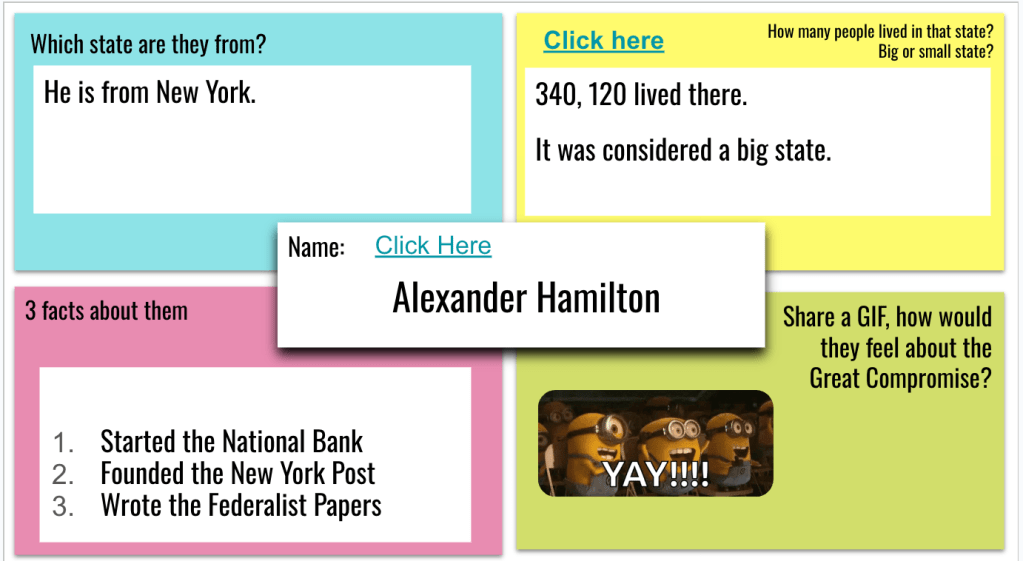
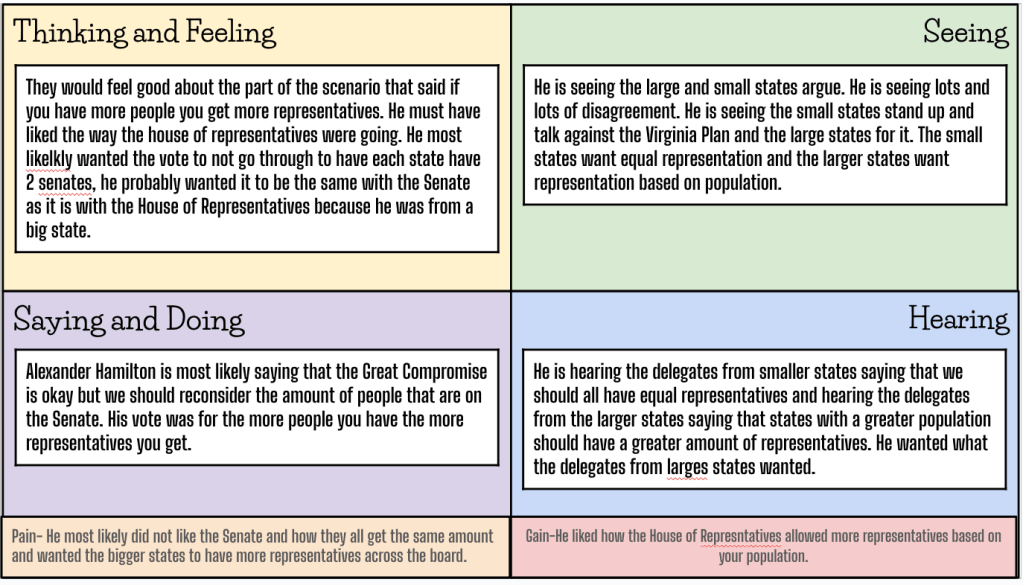
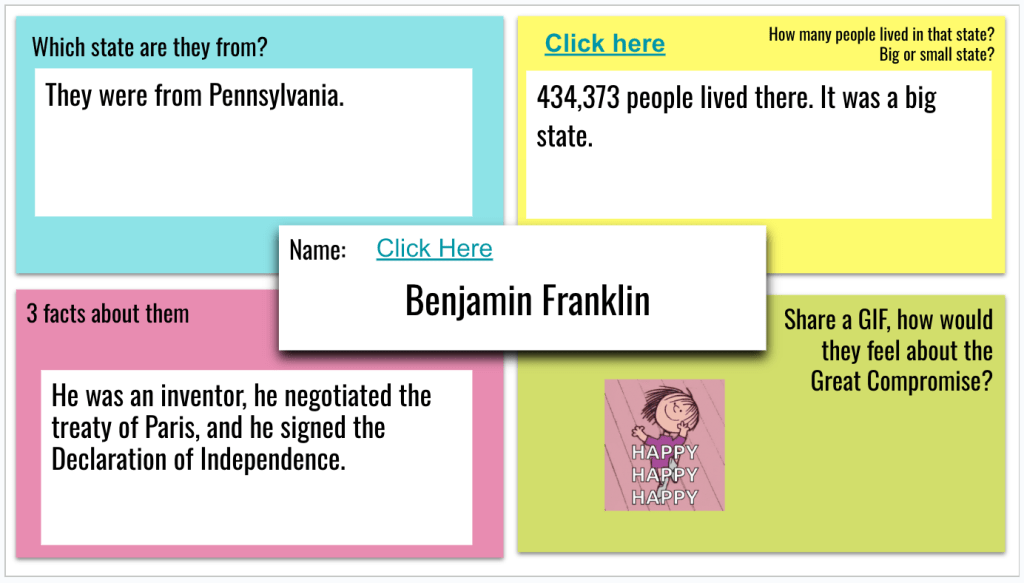
Thursday sustained the exploration of the Great Compromise, building on the Thin Slide Face Off findings and the insights gained from the previous day’s activities. Students completed the Sketch and Tell activity initiated on Wednesday, focusing on the representation proposed by the Virginia Plan. Acknowledging the persistent challenge in understanding the branches of government, a hastily assembled presentation addressed this foundational concept, providing students with a clearer understanding. With a renewed grasp of this crucial aspect, students delved into a deeper exploration of historical figures present at the Constitutional Convention. The day featured a Frayer activity dedicated to a historical person involved in the convention. Utilizing AI-generated information, a list of the ten most recognized figures from the Constitutional Convention, along with details about their state, accomplishments, and potential sentiments toward the Great Compromise, was compiled. Students engaged in Frayer modeling, encapsulating the name of the delegate, their state of origin, whether they represented a large or small state, notable accomplishments, and a GIF representing the delegate’s potential feelings toward the compromise. Following the completion of the Frayer activity, students embarked on an empathy map exercise, delving into the thoughts, feelings, and perspectives of the historical figure regarding the Great Compromise. This strategic approach encouraged students to delve into the minds of convention delegates, fostering a nuanced understanding of their positions. The day concluded with the customary Curious quiz, wrapping up a week of layered exploration and engagement.

Friday: Shifting Focus to Slavery and the Constitution – Keyword Predictions and CyberSandwich
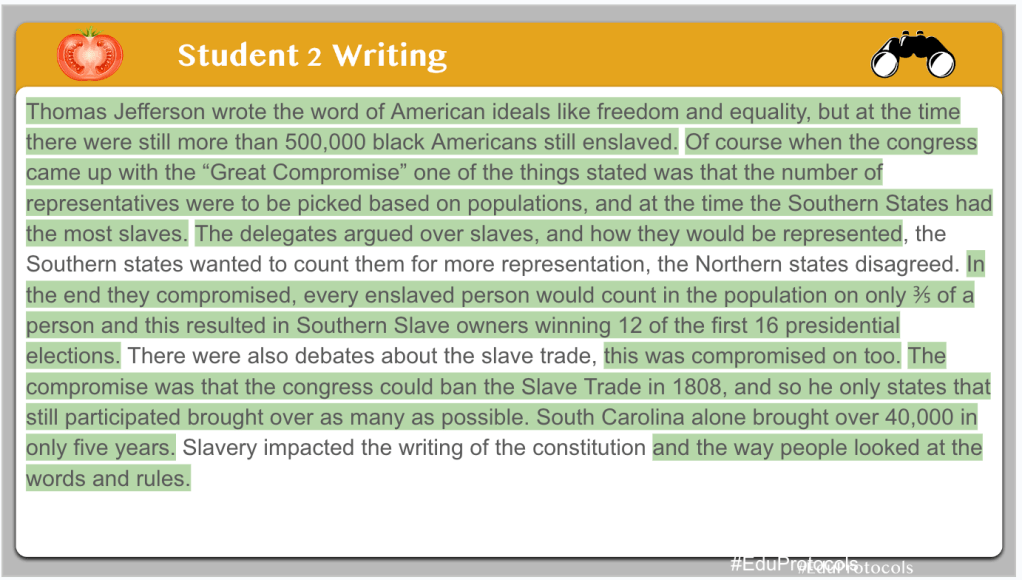
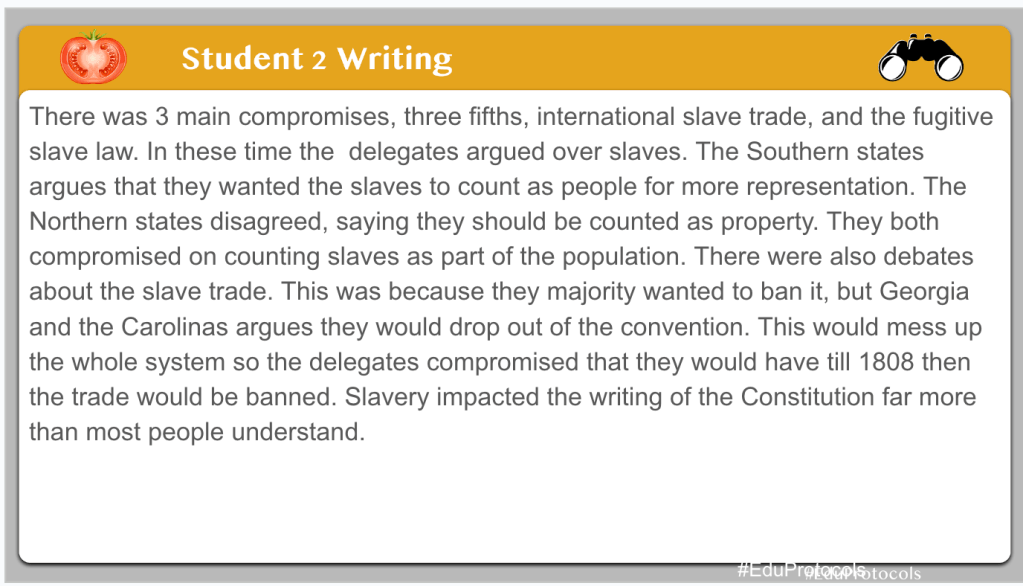
Friday shifted the focus to a new facet—Slavery and the Constitution. The day’s guiding question probed into the impact of slavery on the writing of the Constitution. The class commenced with the Key Word Predictor strategy, a dynamic tool for encouraging predictive thinking before delving into textual content. The central term, “slavery,” was placed at the heart of the predictor, surrounded by keywords such as “3/5,” “1808,” “representation,” and “House of Representatives.” These terms were strategically chosen based on their relevance to the text students were about to explore. Students were prompted to draw lines connecting “slavery” with each surrounding keyword, making predictions about the connections between these elements. This strategic exercise set the stage for the subsequent exploration of three compromises over slavery at the Constitutional Convention. A CyberSandwich unfolded, requiring students to read about these compromises and their effects, all while keeping their keyword predictions in mind. The reading session lasted 10 to 12 minutes, followed by a partner discussion to fill in any gaps in understanding. To add a layer of creativity, instead of a traditional summary, students were tasked with a unique challenge—Claude AI was employed to generate a bland paragraph about the impact of slavery on the writing of the Constitution. The paragraph lacked detail and context intentionally, serving as a blank canvas for students to enhance with the information they had gathered. This approach facilitated a natural differentiation, with students choosing various levels of intervention, from rewriting the entire paragraph to making minor tweaks. The class concluded with the customary quiz, now expanded to include questions about the 3/5 compromise. Impressively, all classes exhibited mastery levels ranging from 80% to 100%, reflecting a solid understanding of the week’s complex topics and fostering a sense of accomplishment among the students.



 Moler's Musings