Introduction
This past week was an exciting one in my 8th grade social studies classroom! We started a new unit on the Northwest Ordinance, the Northwest Territory, and the Articles of Confederation. With Thanksgiving break coming up, I decided to go more in-depth on these topics now and then pick up with the Constitutional Convention when we return. I incorporated some new gamified activities, protocols, and review games to keep things engaging before break.
Monday – Geography Challenge (TCI)
Tuesday – Frayer, CyberSandwich
Wednesday – Sketch and Tell, Quizizz, Content Compactor
Thursday – Retell in Rhyme, Haiku Hijinks
Friday – Word Warriors
Monday – Geography Challenge
On Monday, I wanted to start off the week with something easy and incorporate more geography. Despite not always being a fan of pre-made maps, I decided to use a geography challenge from TCI. It came with background reading to establish context about the colonies and three different map analyses – population, free vs enslaved population, and labeling the 13 colonies. After reading, students had 25 minutes to analyze and label the maps. This was a great activity to reinforce their knowledge of colony locations. In the past, labeling maps took a long time with students flipping back and forth between a map and their paper. By timing this activity, it kept students focused and working efficiently. Almost all students finished labeling their maps!
I also had students analyze population and slavery distribution. To take it a step further, I used AI to generate an additional question about what the debate over state representation was during the creation of our new government after the Revolutionary War. Based on our work with the Fast and Curious game kits, students easily identified the 13 colonies. Tying in geography and historical context was a great way to kick off the week!
Tuesday – Frayer Models and CyberSandwich
On Tuesday, I started with a thin slide asking students to research and find a state created from the Northwest Territory. This got them thinking about how the territory was divided up. Next, we did Frayer Models on the Northwest Territory and Northwest Ordinance to answer: How was the Northwest Territory divided and settled after the Revolutionary War? Focusing on these two main concepts, the Frayer Models helped students understand key definitions, facts, examples, and non-examples.
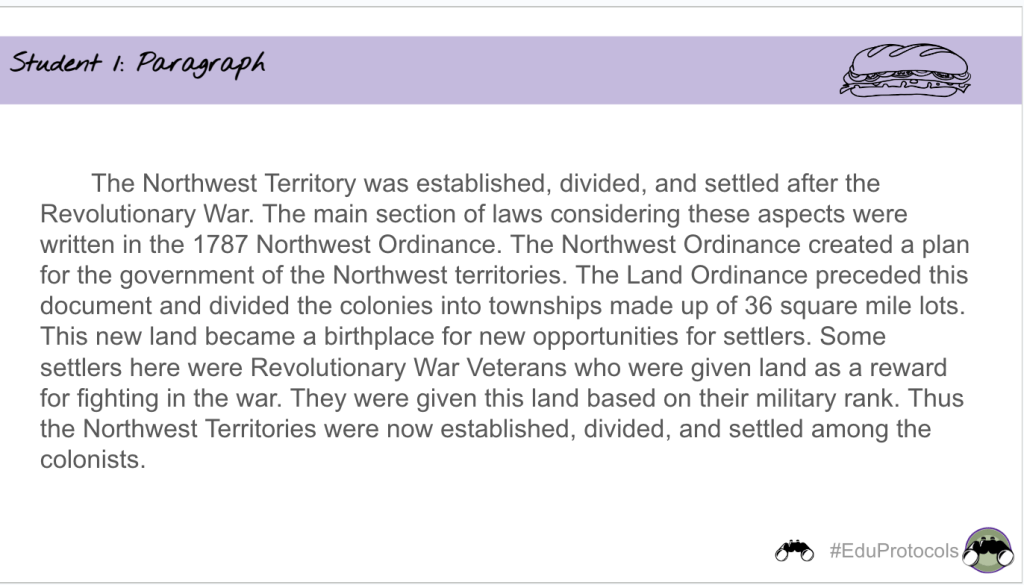
After that, we did a CyberSandwich reading activity. I took the textbook section from TCI on the Northwest Ordinance and Land Ordinance of 1785 and combined it with a newspaper article from our local Clermont Sun using AI. Including local history helps students connect these early laws to where they live today. For example, Ohio was the first state created from the Northwest Territory. The Clermont Sun article explained how this area was surveyed and granted to Revolutionary War veterans.
Combining these sources, I had students read and take notes for 10 minutes, discuss with a partner for 5 minutes, and then write a summary paragraph in the last 8-10 minutes. Their summarizing skills are improving with some students now able to summarize more concisely in 5-6 minutes. CyberSandwiches continue to be an effective way to improve reading comprehension and writing skills.




Wednesday – Content Compactor & Sketch and Tell
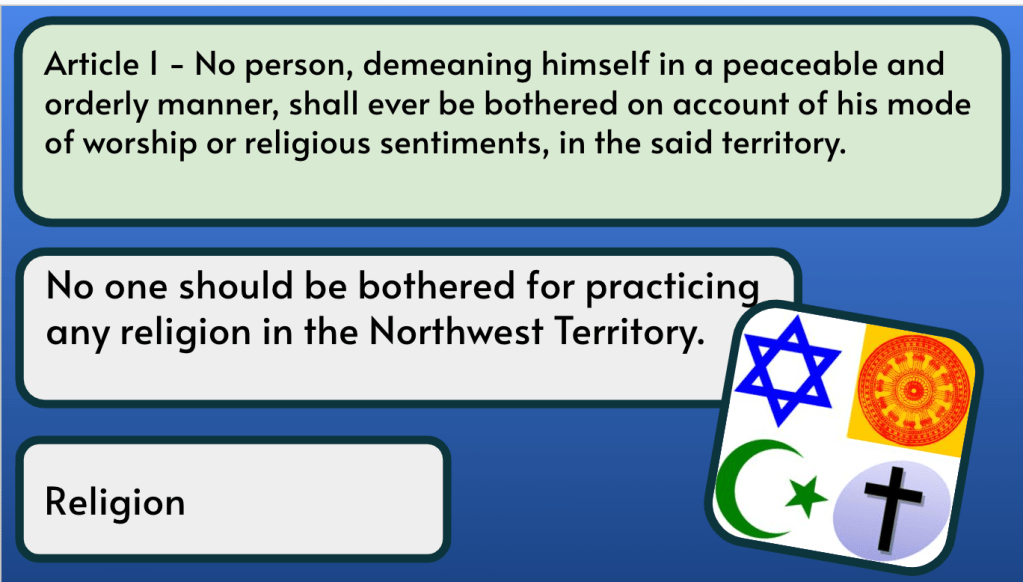
On Wednesday, I wanted to dive deeper into the Northwest Ordinance. I used the Content Compactor strategy from EMC2 to analyze key quotes about how the ordinance allowed for orderly settlement and governance of the territory. Students had to shrink down the quotes by summarizing and condensing them into one word. Getting creative with images and color, this was a great activity to understand main ideas and pick out important details.
After finishing the Content Compactor slides, I had students look at the full set of summarized quotes and answer our essential question for the day in a Sketch and Tell: How did the Northwest Ordinance allow for orderly settlement in the Northwest Territory? Synthesizing the Content Compactor information, the Sketch and Tell gave students another way to explain their understanding. We closed with a quiz on Mastery Peak.



Thursday – Articles of Confederation Reading & Haiku
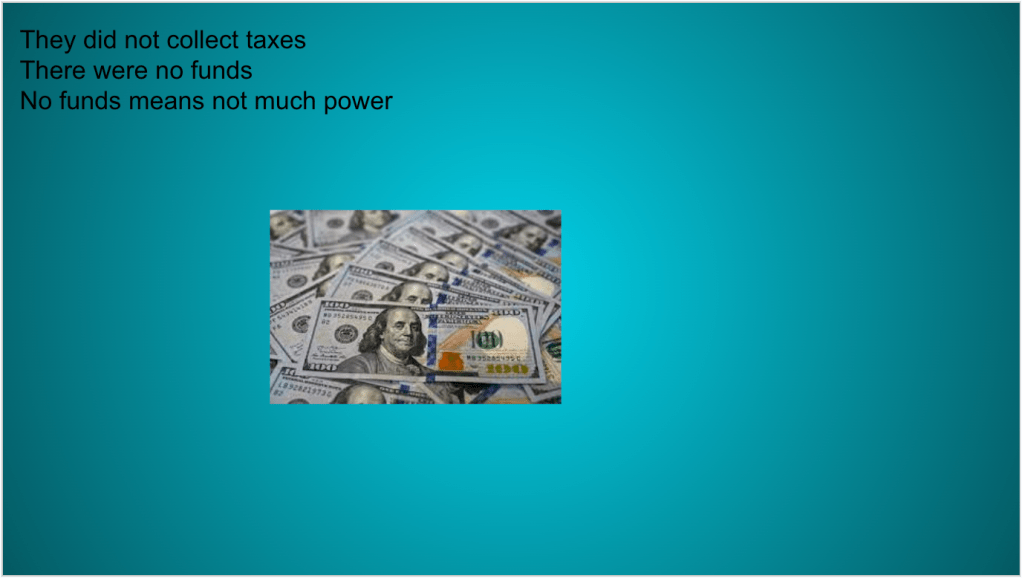
On Thursday, I wanted a quick lesson on the Articles of Confederation. We started with a thin slide asking students to research which level of government had the most power. Great to see 90% quickly identified the states held more power than the national government! I then read the article aloud and had students highlight issues that demonstrated the Articles’ weaknesses.
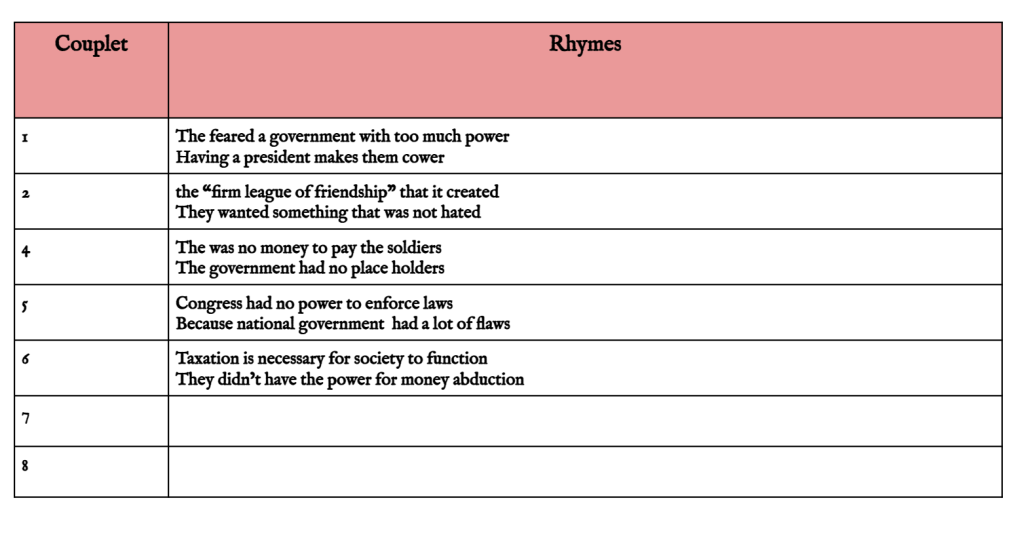
In 1st period, we tried the Retell in Rhyme protocol. Students struggled to rhyme, so for the rest of my classes, we did haikus instead. As the last day before break, I wanted to keep the energy positive. I first gave an example haiku, talked about the 5-7-5 syllable format, and let them write one about a favorite hobby. This gave them a chance to try out haikus in a fun way.
We then played Haiku Hijinks, using spinners to determine the syllables per line about why the Articles failed. Students enjoyed the unpredictability, and it pushed them to think creatively about condensing their knowledge into succinct haikus. Writing in different styles like this engages different skills and keeps things interactive.


Friday – Vocabulary Review with Word Warriors
To make reviewing vocabulary engaging before break, we played the Word Warriors game from EMC2. In each round, students chose a power-up, then I used spinners to determine the part of speech and number of words related to the topic they’d share. Another spinner gave them a chance to use their chosen power-up against an opponent.
We did a practice round generating 5 Thanksgiving verbs. Then I switched topics to our social studies content, like the Northwest Ordinance and Articles of Confederation. Needing to quickly brainstorm adjectives, nouns, or verbs on history forced creative thinking. The head-to-head matchups and power-ups made it fun and competitive. It was a lively way to reinforce key vocabulary and end the week before vacation.
Infusing games and protocols throughout the week kept students actively engaged with the content. The geography map challenge injected a sense of urgency by timing the activity. The unpredictability of syllables in Haiku Hijinks encouraged flexibility. And the competitive, gamified vocab review was a hit on the day before break.
Protocols like Frayer Models, CyberSandwiches, and Sketch and Tells provided structured ways to analyze information, improve reading and writing skills, and synthesize concepts. The Content Compactor helped identify key ideas and details. And switching up how students processed and explained information, like with haikus instead of rhyming, kept things fresh and accessible.

 Moler's Musings