Introduction
Teaching middle school students is a rewarding yet challenging experience. This week, I embarked on a journey inspired by the educational strategies of Scott Petri, adapting them to suit the middle school level. In this reflective blog post, I will take you through each day of a four-day lesson plan in my 8th-grade social studies class. The focus was on the 13 colonies and how geography influenced their economies. Join me as I dive into the details of each day’s activities, adjustments made along the way, and the broader educational goals achieved.
Monday – Sketch and Tell, WordWall
Tuesday – Friday- Colonies Research, Google Sheet
Monday: Setting the Stage
Monday marked the beginning of our adventure into the 13 colonies. I started class with a statement: “Failure is not an option in 505.” This mindset would become a central theme throughout the week. With high expectations and eager students, we kicked off the week with a Sketch and Tell + Parafly EduProtocol smash.
To set the stage, I began with a Wordwall colonial region sort. This activity aimed to refresh their memories from the previous lesson and assess their knowledge of the colonies’ geographic regions. Students were tasked with categorizing the colonies into their respective regions. The initial results were telling—a humbling average score of only 14 out of 35 correct. This clearly indicated a need for further review.
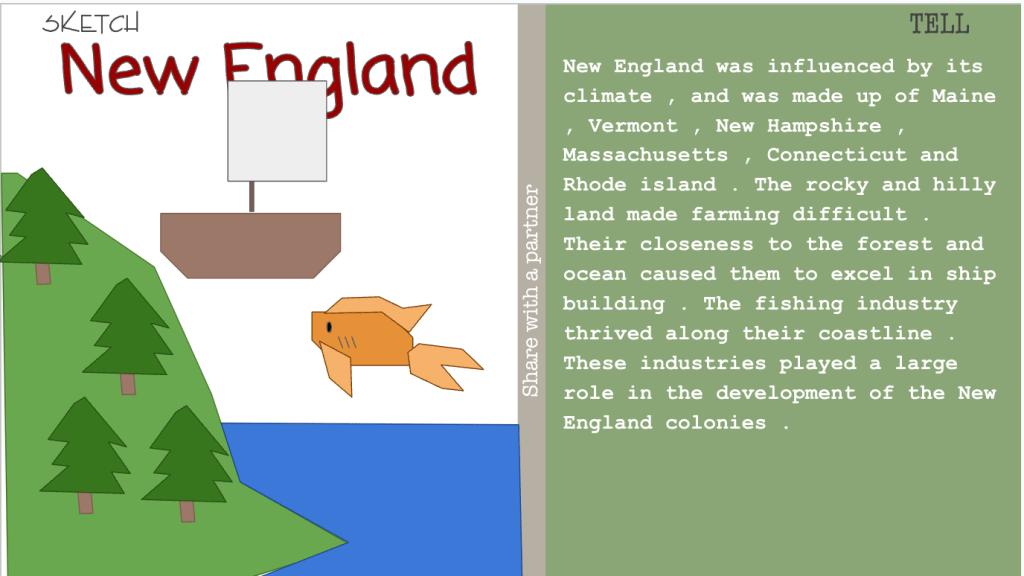
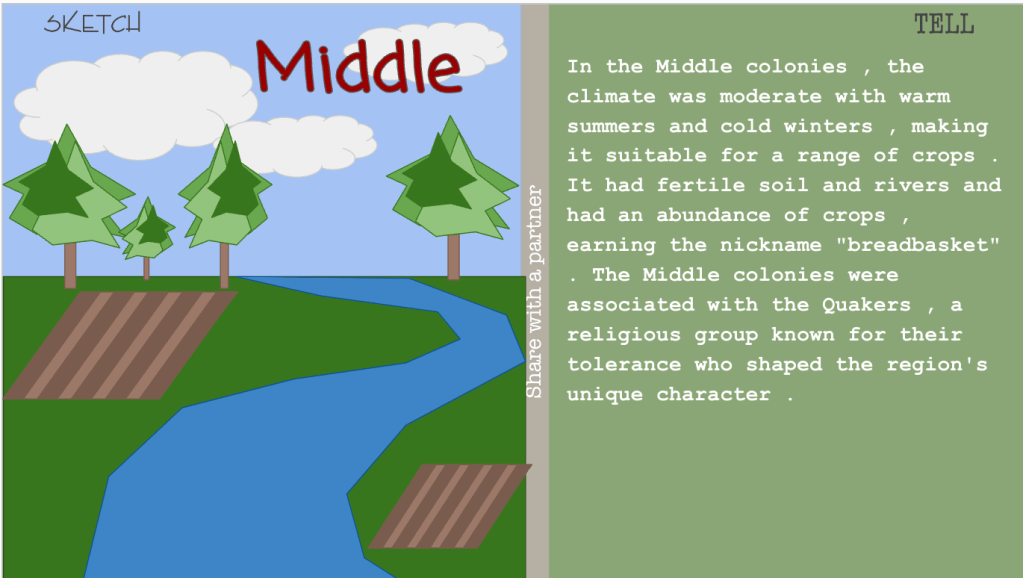
Undeterred, we proceeded with the day’s activities. The main goal was to reinforce the information covered in the previous lesson. The students were asked to paraphrase the last colonial region they had studied and incorporate it into their Sketch and Tell project.
The Sketch and Tell project was a unique endeavor. It required students to revisit their sketches from the previous class, where they had depicted aspects of colonial life and geography. This time, I encouraged them to enhance their sketches with Google Shapes or Scribble Diffusion to add depth and detail.
After completing their sketches, the students were presented with the Wordwall colonial regions sort once more. The improvement was palpable, with an average score of 25 out of 35 correct. This not only demonstrated their capacity for learning but also highlighted the power of repetition and practice.
I took a moment to commend their progress and encouraged them to persevere until they achieved a perfect score and improved their completion time. This day laid the foundation for the week ahead, emphasizing the importance of persistence and continuous improvement.
Tuesday: Diving into the Colonies
Tuesday marked a transition from regional knowledge to a deeper understanding of the individual colonies within their respective regions. This exploration aligned perfectly with our overarching question: “How did Europeans exploring North America for trade, religious reasons, and competition with each other affect the history of the continent and the people who lived there?” Our supporting question for this lesson was, “What were the similarities and differences between the colonies?”
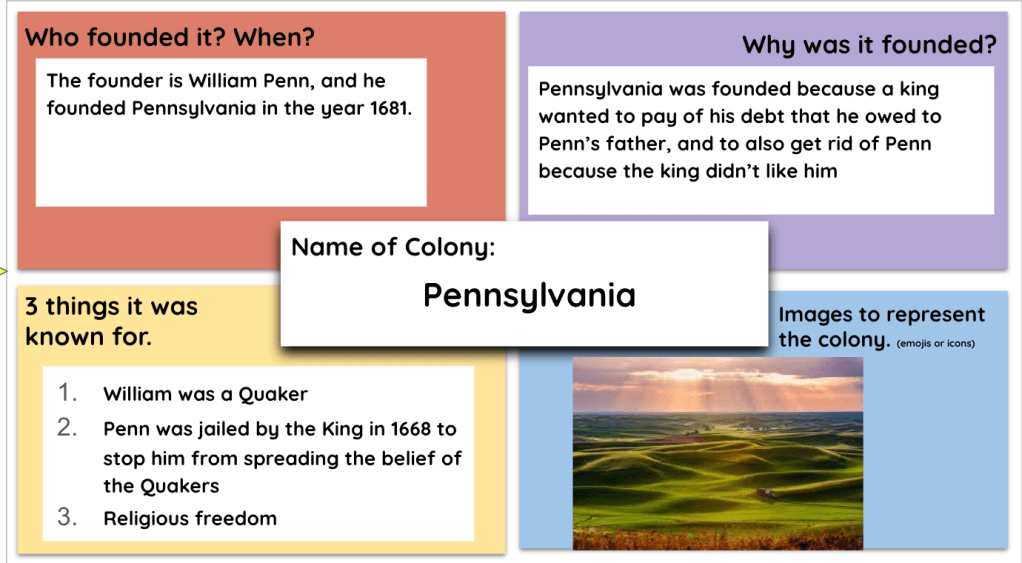
I drew inspiration from my co-author, Scott Petri, and adapted his lesson sequence for middle schoolers. The first activity of the day was the “Frayer a colony” exercise. Students were provided with sections from our textbook, each featuring 2-3 colonies from different colonial regions. The students were given the autonomy to choose a colony to delve into.
On the Frayer model, students were instructed to include key details such as the colony’s founder and founding date, the reasons for its establishment, three pivotal facts, and visual representations that symbolized the colony’s unique characteristics. To encourage creativity and symbolism, I suggested the use of icons to represent various aspects, such as industries, geography, religion, and more.
This activity was designed to engage students in active reading and critical thinking. They had a tight time frame of 15 minutes to read the selected section and complete the Frayer model. This deadline encouraged them to focus, extract key information, and convey it concisely.
Once the Frayer models were completed, the students were asked to transfer five essential facts to an Iron Chef-like slide. Additionally, they were tasked with fact-checking their gathered information, a skill I had been actively promoting throughout the unit. I emphasized the importance of questioning information and seeking verification from reliable outside sources. As I often reiterated to them, “Textbooks don’t always get it right. They also leave out a bunch of information. Sometimes we need to check facts, and if something seems off, we need to ask why.”
Furthermore, I encouraged students to dig deeper when fact-checking by scrolling past the first few options on Google search results and exploring various websites. This exercise was not only about learning the content but also about fostering critical thinking and research skills.



Wednesday: Research Skills and Critical Thinking
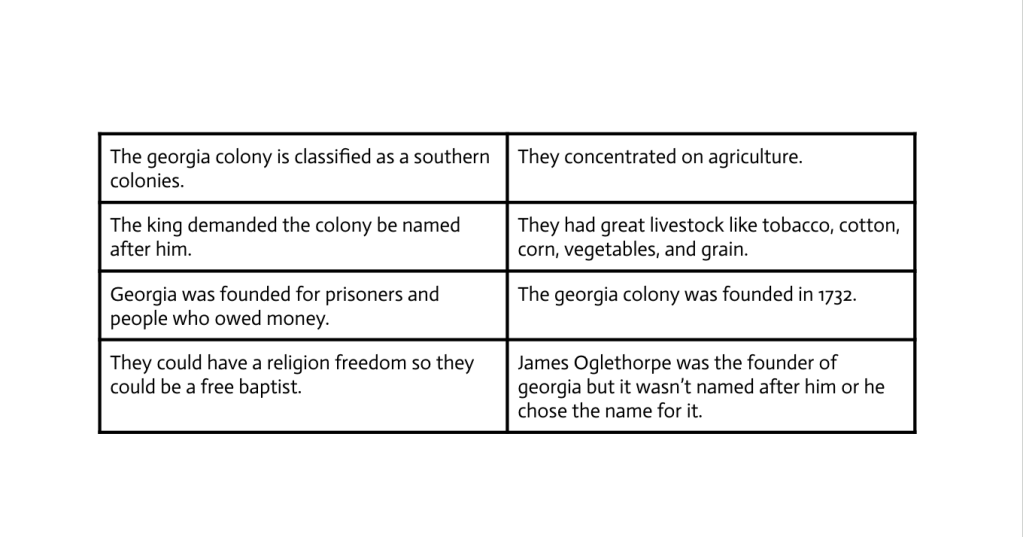
Wednesday was dedicated to honing research skills and critical thinking. I introduced a Google Sheet where students could collect and categorize information about their chosen colony. The goal was to utilize the three websites they had identified during their fact-checking slide.
This activity aimed to drive home the importance of selecting reliable sources and avoiding information overload. Originally, I had challenged students to find 15 facts from three sources. However, this was proving to be a bit too ambitious, and I decided to adjust the goal to 10 facts from two sources. This modification allowed students to focus on quality over quantity and reinforced the idea that depth of understanding is more valuable than superficial knowledge.
The Google Sheet presented some challenges as well. Many students were unfamiliar with using this tool, so I had to provide guidance on entering information into the spreadsheet, wrapping text in cells, and formatting the text appropriately. Additionally, I asked students to choose a category from a drop-down menu in a cell when adding a fact, with categories including geography, religion, people, economy/industries. This categorization exercise served a dual purpose: it helped organize the information and encouraged students to think critically about the key aspects of their colony’s history.
After about 20-25 minutes of research and data entry, I wanted students to condense their information into eight paraphrased, essential, and shareable facts. This step was pivotal in reinforcing their paraphrasing skills, which we had been working on once or twice a week throughout the unit. By the end of the class, I aimed for each student to have a set of paraphrased facts that they could confidently share with others.

Thursday: Collaboration and Creativity
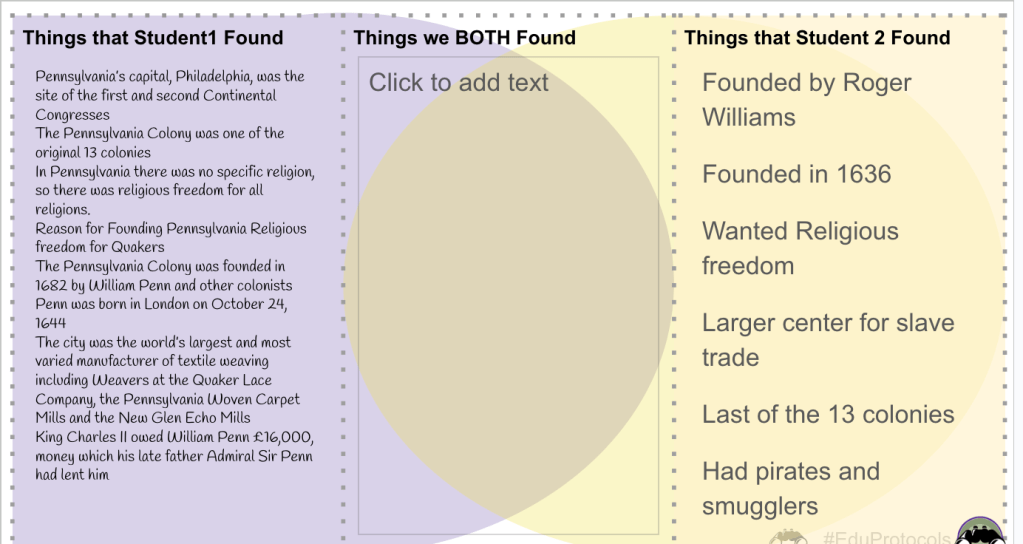
Thursday commenced with an interactive and collaborative activity known as the “CyberSandwich.” This activity required students to partner up and engage in discussions about the paraphrased facts they had gathered about their respective colonies. The objective was to identify both similarities and differences between the colonies. Ideally, I had hoped for students to partner with someone studying a different colony to encourage diverse perspectives and discussions. However, some ended up partnering with students researching the same colony.
I allotted 10 minutes for the CyberSandwich activity, allowing students to discuss, compare, and contrast their findings. This collaboration was intended to deepen their understanding and provide an opportunity for peer-to-peer learning.
Following the CyberSandwich, I directed the students to write a summary paragraph about their assigned colony. My focus was on reinforcing the structure of a well-constructed paragraph, including a clear topic sentence, two supporting details, and a concluding sentence. Before they began writing, I presented them with two options: they could either challenge themselves by crafting a compare/contrast summary about two colonies or opt for a standard summary about their individual colony. This choice allowed students to tailor the activity to their abilities and interests.
With the goal of improving writing skills, I set a time limit of 8 minutes for completing the summary. This time constraint aimed to encourage efficiency and skill development.
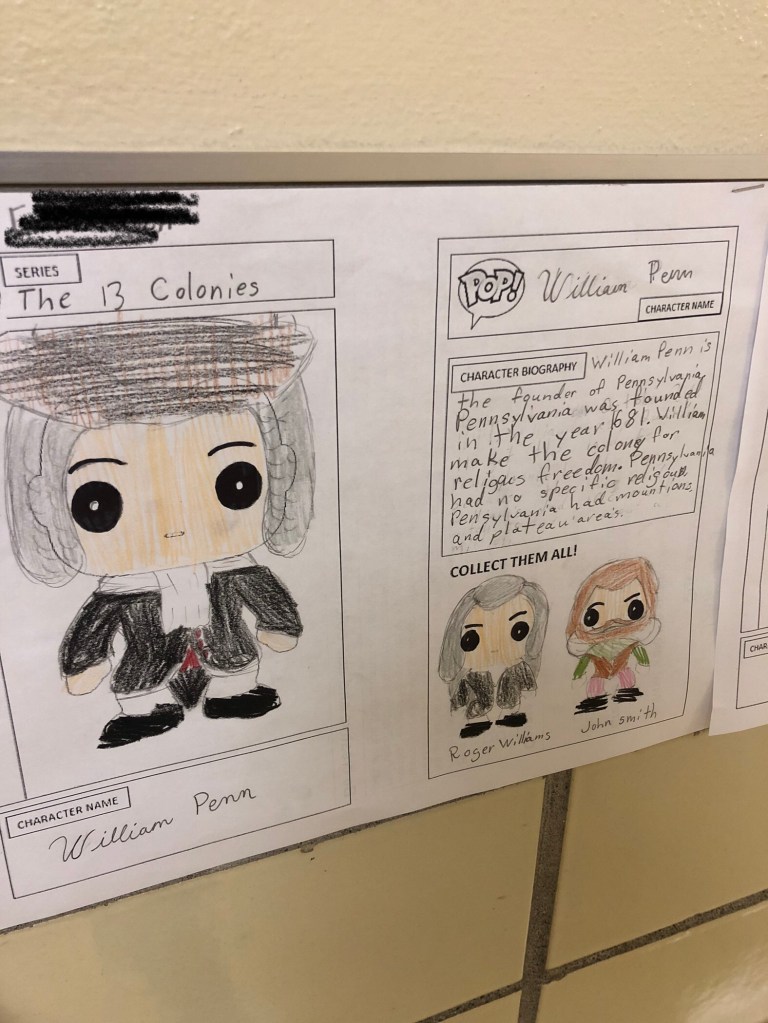
After the CyberSandwich and summary writing, we transitioned to a creative exercise that engaged students’ imaginations and artistic talents. I took inspiration from Alfredo Silva’s teaching techniques and asked the students to design a Funko Pop character that could represent a settler from their assigned colony.
The Funko Pop template I provided was created by Quinn Rollins, author of “Play Like a PIRATE.” Students were encouraged to include accessories and elements that were relevant to their colony’s industries, geography, or religion. Additionally, they were tasked with composing a brief biography for their Funko Pop character. This character could be either a fictional individual or a historical figure linked to the colony.
This activity was met with enthusiasm and creativity, offering a refreshing break from the research-heavy components of the lesson. It also allowed students to express their understanding of their colony’s unique attributes in a creative and personalized way.

Friday: Surprising Assessment and Growth
Friday was designated as a day to finalize the Funko Pop character creations, but it held a surprise in store for the students. As class began, I sprung a Gimkit quiz on them. One month earlier, on August 29th, I had conducted a Gimkit quiz encompassing everything we had learned during the first quarter. This surprise quiz served two purposes: to gauge the students’ progress and to assess how effective our EduProtocols and skill-building efforts had been.
I issued two clear directives to the students: answer 20 or more questions and treat the quiz as if it were a graded assignment. These instructions added a layer of seriousness and purpose to the quiz. The students took it upon themselves to excel.
The results of the Gimkit quiz were astounding and demonstrated the remarkable growth the students had experienced over the course of the month:
- 58% to 80%
- 48% to 80%
- 60% to 87%
- 38% to 70%
- 48% to 82%
- 55% to 90%
Out of 122 students, a remarkable 117 showed growth, with 75 achieving substantial improvements with 20 percentage points or higher. The largest gain of the day was a 73 percentage point increase. Only five students experienced a slight decline, which raised concerns but also highlighted areas where additional support might be needed.
Reflection: The Journey Continues
As I reflect on this week’s teaching experience, I’m filled with gratitude for the opportunity to experiment with new strategies and adapt them to my students’ needs. While the lesson was overall successful, student feedback provided valuable insights and opportunities for refinement.
One notable observation was that the Google Sheets component of the lesson proved overwhelming for some students. They struggled with switching back and forth between various tools, as they didn’t yet possess the executive functioning skills to seamlessly navigate multiple platforms. Moreover, the sheer volume of information and activities within the Google Slide made it appear overwhelming.
In response to this feedback, I acknowledged the need to simplify the lesson further. As I often told my students, “I like to try things, see how they go, and rework them each time.” This commitment to continuous improvement is at the heart of effective teaching.
In conclusion, I firmly believe that teaching is an iterative process. We embark on educational journeys, experiment with new strategies, assess their effectiveness, and make adjustments accordingly. This week’s journey through the 13 colonies and the EduProtocols inspired by Scott Petri has been a valuable learning experience for both my students and me. It’s a reminder that teaching is not just about imparting knowledge but also about nurturing critical thinking, research skills, and a love for learning.
As I move forward, I am excited to refine this lesson further, ensuring that it strikes the right balance between depth of content and accessibility for middle school students. With each iteration, I hope to empower my students with the skills they need to thrive in an ever-changing world and continue to inspire their curiosity and love for social studies.

 Moler's Musings