Introduction
Teaching eighth-grade social studies is a rewarding yet challenging endeavor. Each week, we embark on a journey of discovery, exploring historical events, cultures, and critical thinking skills. In this extended reflection, I will delve into the experiences and lessons of a particularly eventful week, where we dived deep into the motivations behind European exploration and colonization of North America. Additionally, I will share the innovative ways I integrated artificial intelligence (AI) tools for providing feedback, enhancing the learning experience for both my students and me.
Monday – Wicked Hydra, StoryFile
Tuesday – Gimkit, Thin Slide, Sketch and Tell, 8pArts
Wednesday – Thin Slide, CyberSandwich
Thursday – Parafly, Number Mania
Friday – Hexagonal Learning
Artificial Intelligence – Claude AI
Monday: Remembering 9/11
The week began on a somber note, as Monday marked the anniversary of September 11th. As a teacher, I find it essential to acknowledge significant historical events, but I aim to do so in a way that is respectful and thought-provoking. This year, I chose to deviate from the traditional approach of showing videos that depict the shocking visuals of the Twin Towers collapsing. Instead, I wanted my students to engage with the topic by asking meaningful questions.
To structure this lesson effectively, I collaborated with my colleague and co-author, Dr. Scott Petri. Given the diverse age range and maturity of our students – I teach middle school, while Scott teaches AP high school classes – we needed a structured framework for our lesson. This is where “wicked hydra” came into play.
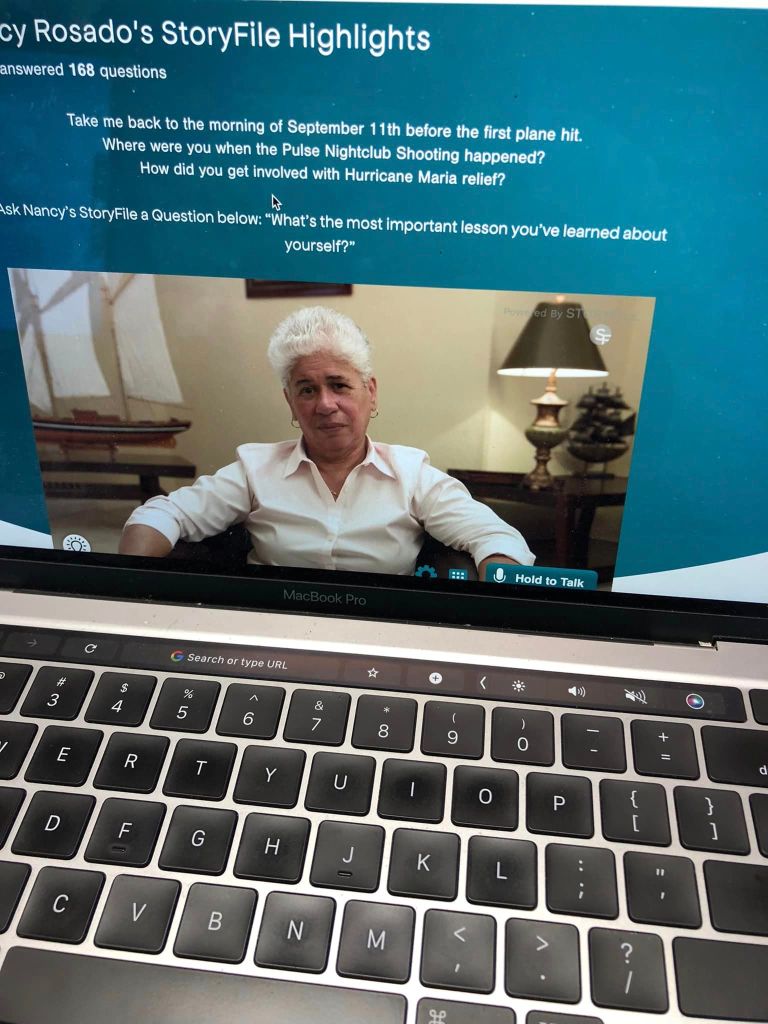
The lesson commenced with a news video featuring Nancy Rosado, a first responder who had been at the World Trade Center on 9/11 and later responded to the Pulse Nightclub shooting in Orlando. The video served as a catalyst for questioning. Before showing the video, I asked students to ponder the question, “If you had a chance, what questions would you ask this first responder or survivor?”
Following the video, students formed small groups of three to five, engaging in a “wicked hydra” activity. They were tasked with writing their questions on large posters, collectively constructing a list of inquiries aimed at Nancy Rosado. This collaborative exercise not only encouraged critical thinking but also promoted teamwork.
Once the posters were ready, the students engaged in a gallery walk, perusing each other’s questions and adding more queries as necessary. Subsequently, I provided students with a “Frayer model,” a graphic organizer that prompted them to identify and summarize four of the most insightful questions from their group.
The culmination of the lesson introduced students to StoryFile, a remarkable platform that houses recorded interviews with celebrities and historical figures. Remarkably, Nancy Rosado was part of StoryFile’s collection, providing a unique opportunity for my students to ask her questions directly. Students were captivated by the prospect of interacting with a survivor, and they could pose their inquiries by typing or using their voices.
During the exercise, we discovered that Nancy Rosado answered only five to six questions about 9/11, whereas another survivor from the same event, Denise Campbell, was more responsive. This lesson served as a powerful exercise in asking good questions and demonstrated the potential of AI in preserving and sharing personal narratives. In the future, I plan to allocate more time for students to craft practice summaries based on what they’ve learned from 9/11 survivors, adding an extra layer of reflection to the lesson.



Tuesday: Exploring European Motivations
Tuesday marked the official start of our exploration into European colonization. To kick off the day with energy and enthusiasm, we initiated a fast-paced and competitive Gimkit session. Running for just four minutes, the Gimkit activity tested students’ knowledge and provided immediate feedback. The class averages ranged from 65% to 80%, setting a spirited tone for the day.
Following the Gimkit, we transitioned seamlessly into a “Thin Slide” activity. Here, students had a mere three minutes to scour the web for images representing the “old world” and the “new world.” These concepts were integral to understanding the motivations behind European exploration and colonization. The rapid nature of this task ensured students remained engaged and focused.
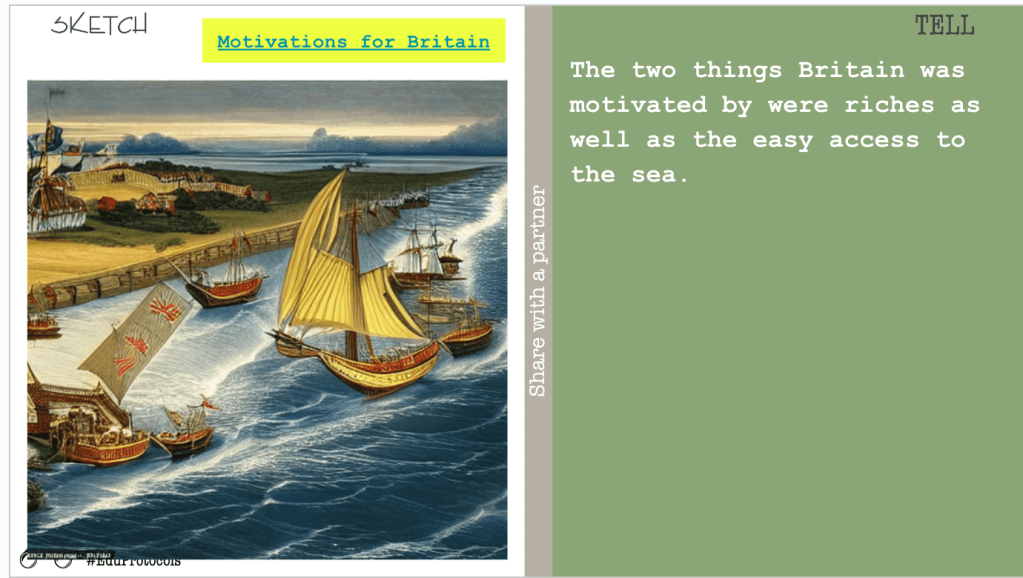
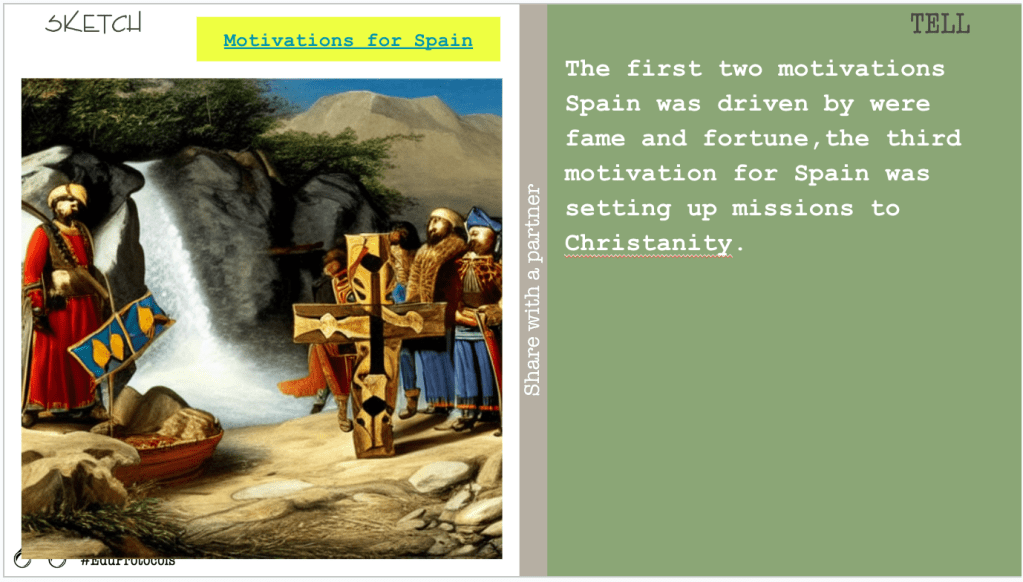
To deepen their comprehension of European motivations, we employed a range of EduProtocols. The first was a “Sketch and Tell” exercise, divided into three slides that explored the motivations of Spanish, French, and English explorers. Accompanied by grade-level reading material, complete with a recorded audio version and a modified text for accessibility, students had a generous 20-minute window to complete all the slides.
Reflecting on my teaching methods, I recognized that I had introduced a new EduProtocol with a high cognitive load – the “8Parts” exercise. However, in the middle of the day, I made a shift, changing the image associated with Christopher Columbus to something more engaging. My goal was to revisit the “8Parts” process on the following day, but as it turned out, I adapted the lesson plan for Wednesday instead.





Wednesday: Exploring Native-European Interactions
Wednesday’s lesson took an unexpected turn as I reflected on our previous week’s discussion about Native Americans and their connections to Clermont County. I didn’t want to move into the topic of European colonization without acknowledging the native populations that inhabited North America. To achieve this, I sought to provide students with insights into the early interactions between Native Americans and European settlers.
Historically, I had come across excerpts from diaries written in Old English that described these interactions. However, I faced challenges in translating these archaic texts effectively. Additionally, I questioned whether eighth-grade students would find them comprehensible and engaging.
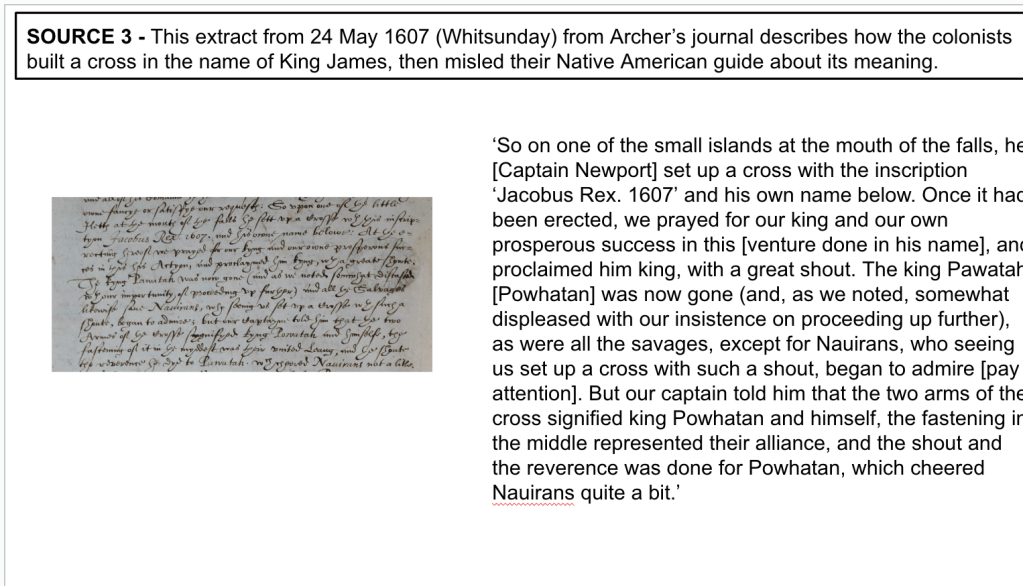
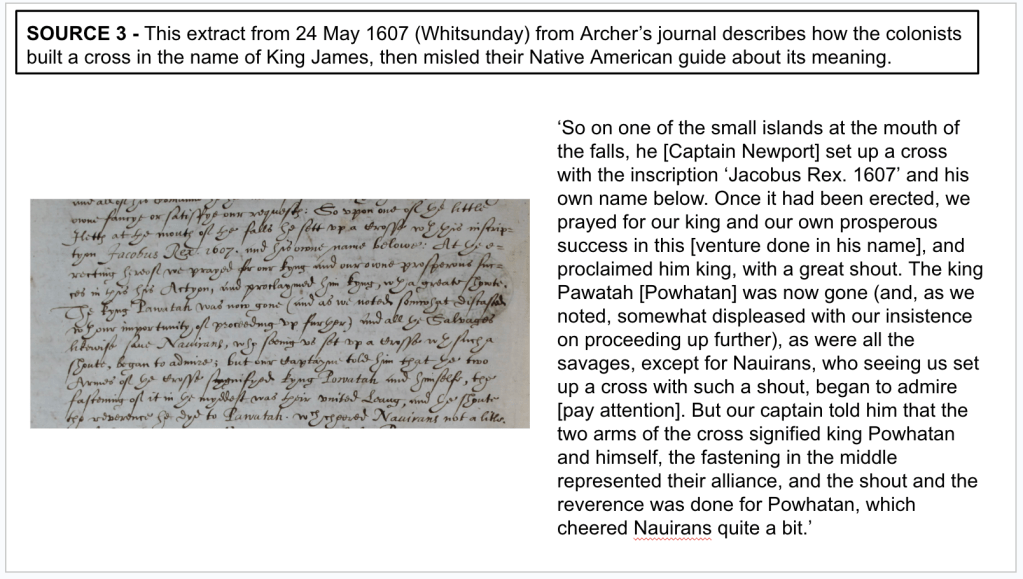
This is where the power of AI stepped in. I stumbled upon a diary entry from a settler who arrived in Jamestown in May of 1607, containing notes about the interactions between Native Americans and his group. I uploaded a picture of the diary entry to Google Keep and employed the “grab image text” feature to extract the text from the image. While the text was laden with misspellings and antiquated language, it was a starting point. To make it accessible and engaging for eighth graders, I turned to AI once again.
Using ChatGPT, I requested a translation of the text to make it suitable for my students’ understanding. To my surprise, the AI handled the task wonderfully, transforming the Olde English into a language that was comprehensible for young learners. This experience was a revelation, showing the potential for AI in bridging the gap between historical documents and modern education.
To enhance the lesson further, I discovered a website containing six translated diary entries from Jamestown, each shedding light on various aspects of Native-European interactions. With limited time in the morning, I swiftly assembled a new lesson plan to introduce students to these crucial historical moments.
The class began with a “Thin Slide,” encouraging students to discover the most interesting facts about Jamestown. I was hopeful that their findings would encompass topics such as tobacco cultivation, the year of founding (1607), and the arrival of enslaved people (1619). The students shared numerous compelling facts during this session.
In the spirit of quick engagement, I initiated a round-robin presentation, with students given eight seconds or less to present their findings from the “Thin Slide.” This exercise encouraged concise and focused communication, fostering valuable skills for future discussions.
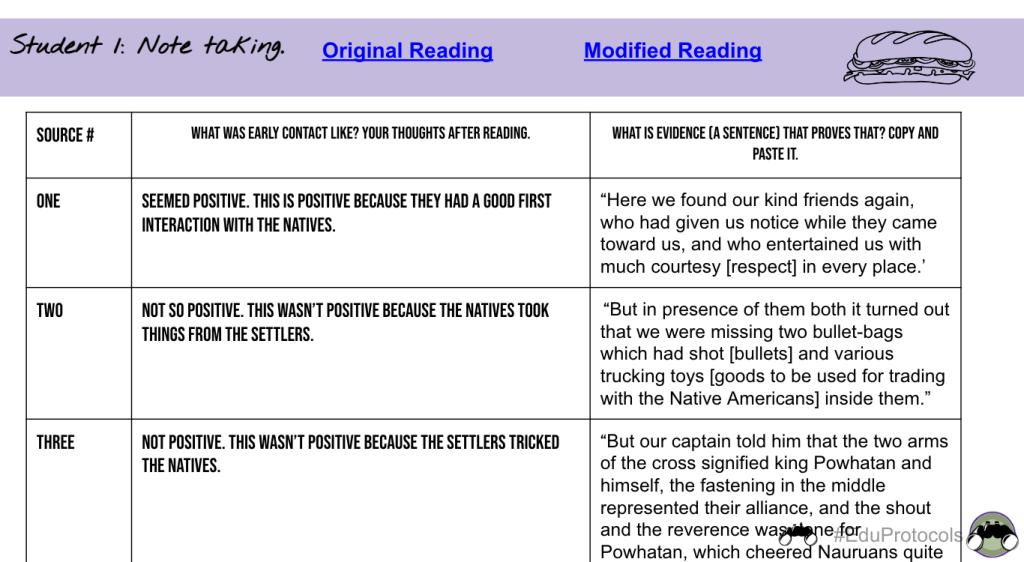
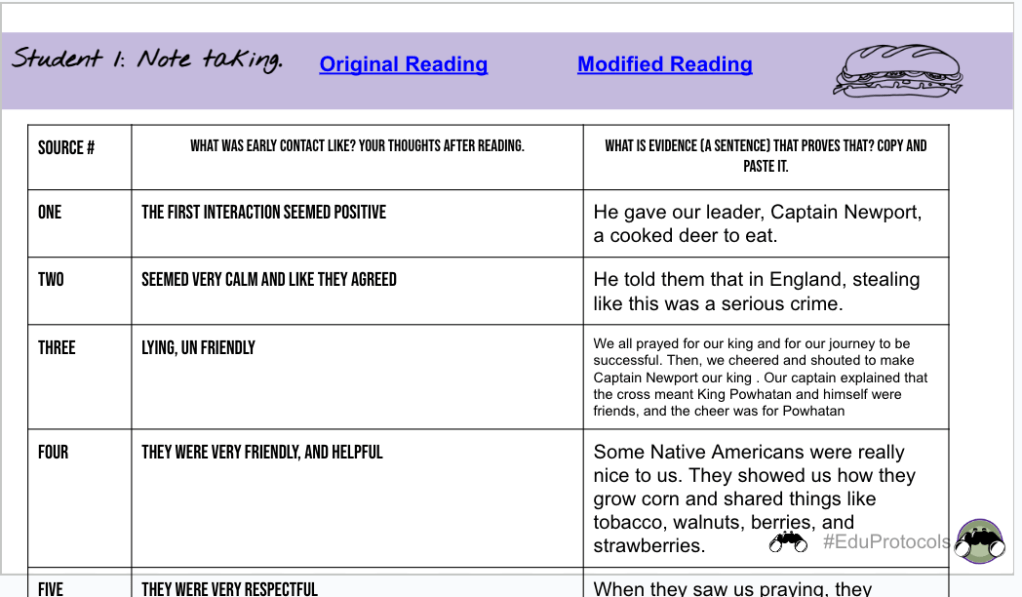
The core of the lesson revolved around a CyberSandwich. This activity involved five diary entries from a single settler’s perspective in Jamestown, each offering a unique insight into the interactions between settlers and Native Americans. The diary entries covered topics such as trade, Native American theft of ammunition, land claims, and the settlers’ intentions to convert Native Americans to Christianity.
Students were highly engaged in this exercise, reading through the various sources and completing a guided notes page within the allotted time of 12-15 minutes. The guided notes page prompted them to describe the interaction from each entry and use a relevant quote as evidence. This approach encouraged students to analyze the primary sources critically.
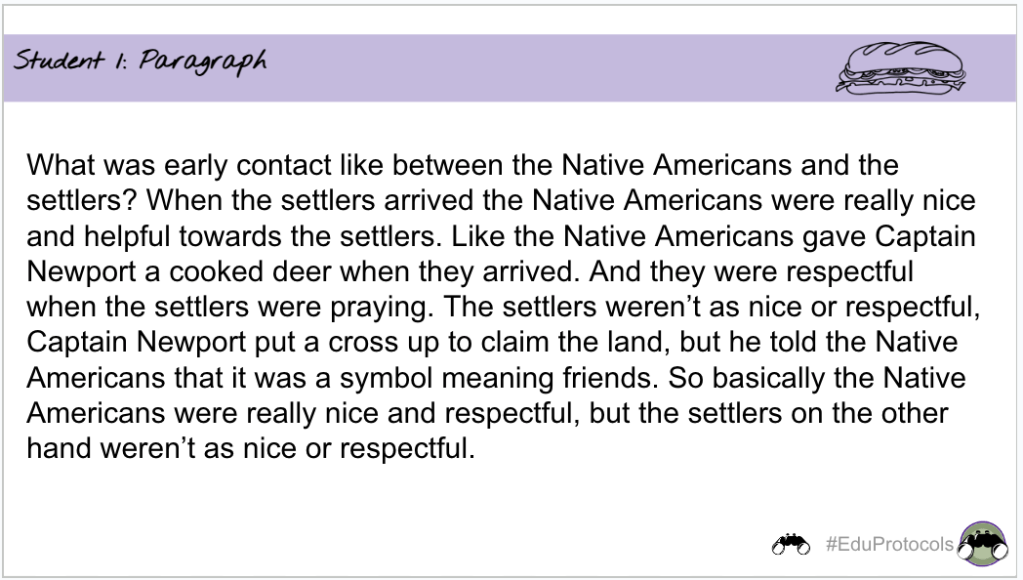
Following the completion of the guided notes, students were tasked with selecting three interactions and notes, comparing them for patterns and differences. This activity aimed to cultivate their skills in drawing connections between historical events and discerning trends.
The remainder of the class was dedicated to students finalizing their summaries, allowing them to synthesize the information they had gathered throughout the lesson. It was a rich and immersive experience, immersing students in the complexities of early interactions between Native Americans and European settlers.



Thursday: Exploring the Effects of European Colonization
Thursday’s lesson shifted our focus to exploring the consequences of European colonization in North America. While I had used a “Sketch and Tell” lesson for this topic in the previous year, I opted for a Number Mania this time. This choice was influenced by our recent practice in paraphrasing, a skill that needed reinforcement.
The reading material for the “Number Mania” activity was thoughtfully selected to align with our paraphrasing practice. It contained descriptive words and concepts that eighth graders don’t typically encounter in their everyday language. This alignment facilitated the provision of targeted feedback on paraphrasing skills, as students were encouraged to retain the descriptive words from the original text.
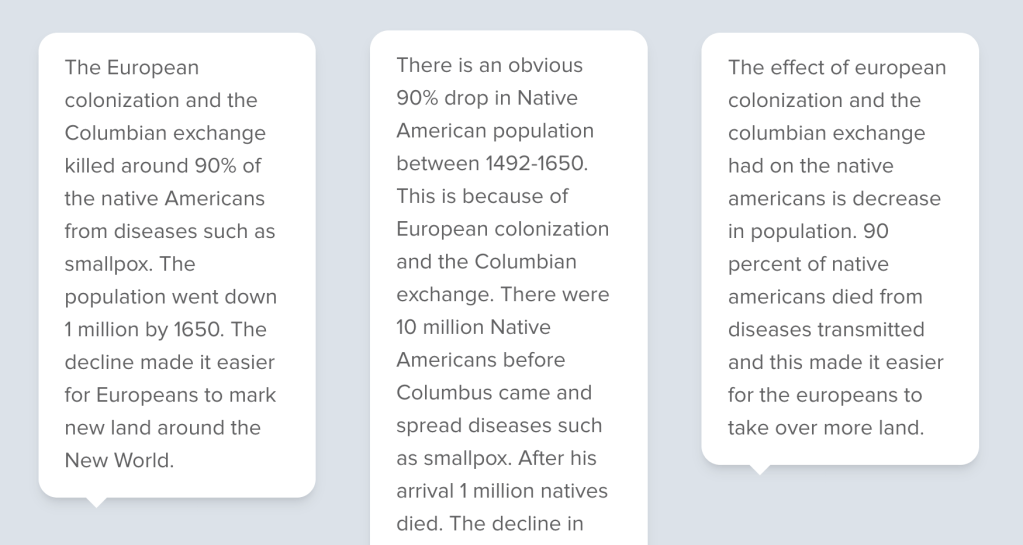
In preparation for the Number Mania, I divided the reading material into four distinct slides. To promote engagement and participation, I introduced the content via Peardeck, an interactive presentation platform. This approach allowed students to explore the reading material and make initial connections.
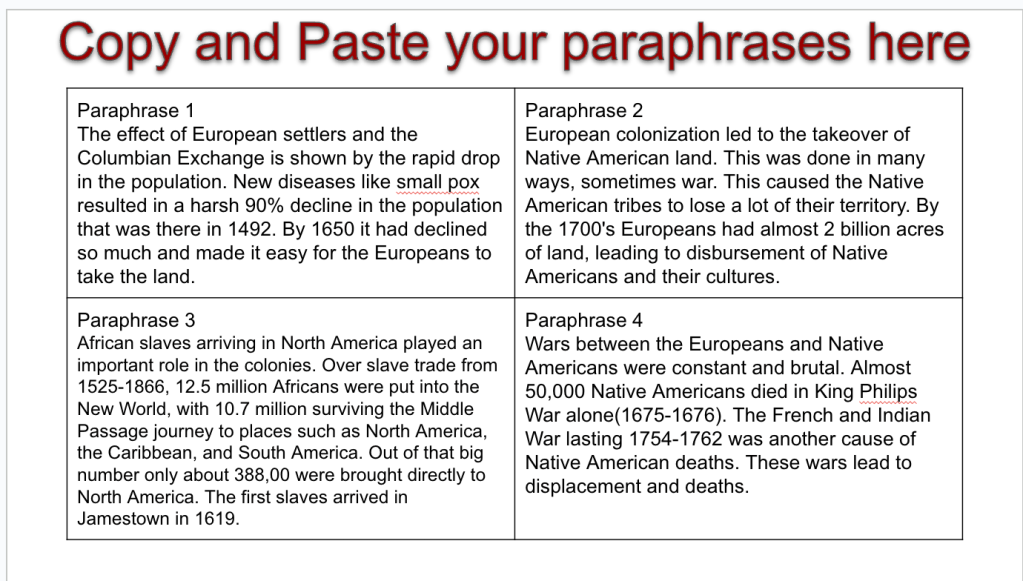
Each slide provided students with three minutes to paraphrase the content. After crafting their paraphrases, students were instructed to copy and paste them onto the designated slide for the “Number Mania” activity. This process facilitated the seamless transfer of their paraphrased content for use in the next stage of the lesson.
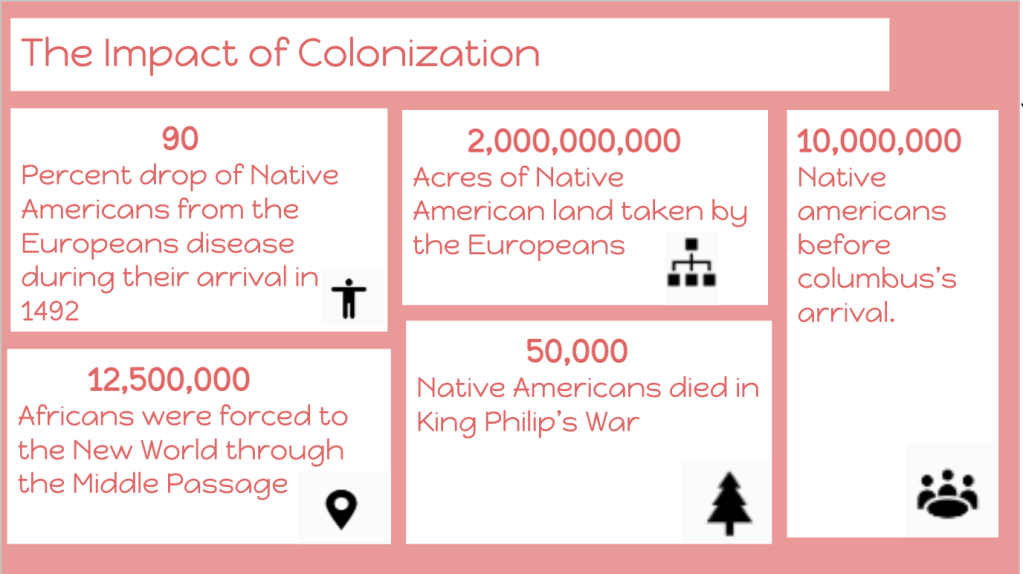
With paraphrasing skills at the forefront, students then moved on to the “Number Mania” exercise. I displayed a quote from the reading material: “The period spanning 1492 to 1763 stands as a pivotal era in North American history, marked by European colonization and its profound consequences.” The challenge was for students to use four numbers and associated facts from the text to substantiate the truth of this statement.
The introduction of numbers and facts as evidence from the text was instrumental in providing students with a clear framework for their responses. This not only encouraged critical thinking but also allowed for specific and constructive feedback. For example, when a student used “18th century” as a number, I was able to guide them by asking what specific event or element from the 18th century supported the statement.
All in all, the Number Mania proved to be an enriching and effective lesson, reinforcing paraphrasing skills while encouraging students to delve into the consequences of European colonization.




Friday: Wrapping Up with Hexagonal Learning
As the week approached its conclusion, Friday provided an opportunity to consolidate the knowledge and insights gained throughout the week. We began the day by allowing students approximately ten minutes to complete any remaining tasks from the “Number Mania” activity. For those who needed extra time, I reverted to Gimkit’s “Fast and Curious” mode as an engaging and interactive way to review the week’s content.
The criteria for this Gimkit session were straightforward: students were challenged to answer 20 or more questions within a tight timeframe of 5-6 minutes. This high-intensity review helped solidify their understanding of the material and served as a dynamic end to the week.
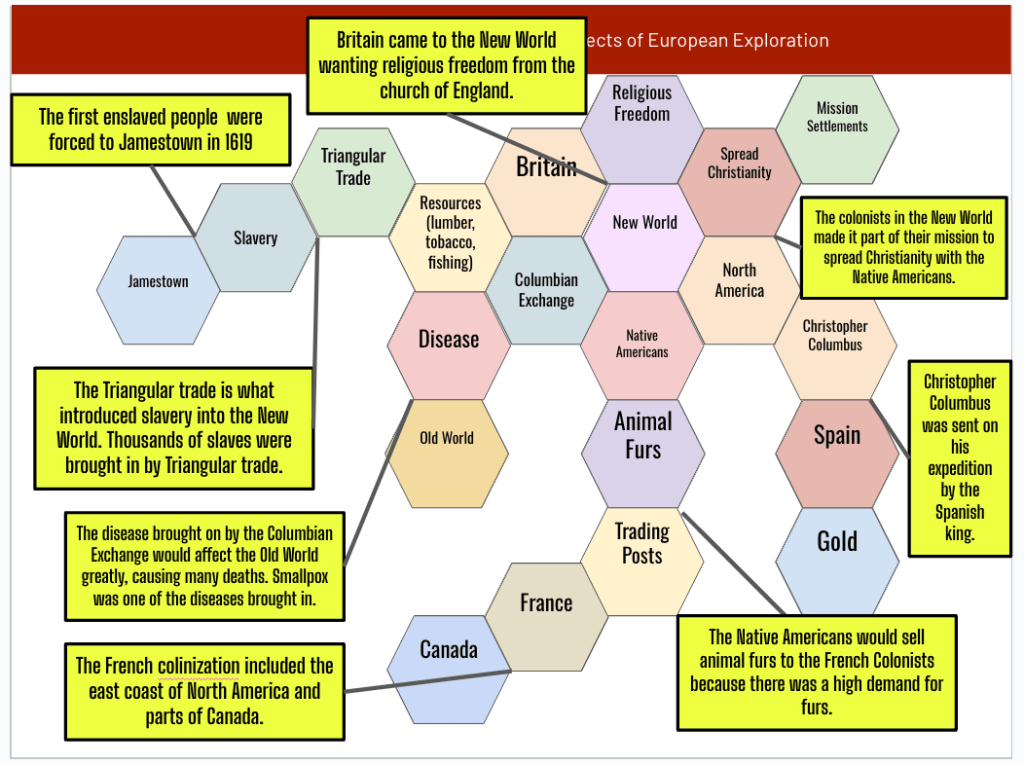
To wrap up the week’s activities, we engaged in hexagonal learning, one of my personal favorite collaborative exercises. Hexagonal learning involves the use of hexagon-shaped cards, each containing a concept or idea related to the topic at hand. In this case, I prepared hexagons with concepts like “New World,” “Old World,” “North America,” “France,” “Animal Furs,” and more.
I offered both digital and paper versions of the hexagonal learning activity to accommodate students’ preferences. They were encouraged to partner with a classmate to work on this collaborative task. The approach we followed was to initially sort the hexagons into groups based on their related concepts. Once the initial sorting was complete, students engaged in discussions to establish detailed connections between the hexagons.
To establish clarity in their connections, I emphasized the importance of detailed explanations. It was not enough to simply connect two hexagons; students needed to articulate why these concepts were related and provide supporting evidence.
To set clear expectations, I shared an example of a hexagonal learning activity from the previous year. While the example looked visually appealing, upon closer inspection, it became evident that the connections were not sufficiently detailed. This served as a valuable lesson in the importance of quality over quantity when making connections.
To provide a clear assessment framework, I established a success criteria for the students. They were required to connect all the hexagons by the end of the class period and create six or more detailed connections to receive a perfect score of 4 out of 4. Many students rose to the challenge, and I encouraged them to revisit the lessons from the week to seek inspiration for their connections.
Throughout this activity, I aimed not only to consolidate their understanding of the week’s material but also to foster critical thinking skills. The process of sorting and connecting concepts encouraged students to approach the subject matter from different angles, deepening their understanding.

Using AI for Student Feedback
One of the highlights of this week’s teaching experience was the integration of AI tools for providing feedback on student work. Traditional methods of grading and feedback are time-consuming and often lack consistency. However, I discovered an innovative AI tool called Claude (claude.ai) that offered a promising solution.
Claude.ai is a platform that scans and evaluates student paragraphs, providing feedback and consistent scoring. My friend Jacob Carr introduced me to this powerful tool, and I immediately recognized its potential in streamlining the feedback process.
In practice, I initiated the feedback process by having students submit their paragraphs through a Google Form. These responses were then collected in a Google Sheet. I downloaded the Google Sheet as a PDF and uploaded it to Claude.ai. I established specific criteria for Claude.ai to assess, including whether the student paragraphs contained a topic sentence, two supporting details, and a concluding sentence. Additionally, I instructed the tool to match the paragraphs with the corresponding student emails and organize this information into a table. Here was my actual prompt, “Analyze these student paragraphs. I asked them to write a summary paragraph about native americans adapting to their environments. The focus was using a topic sentence, 2 supporting details, and a concluding sentence. Tell me with a yes or no if they used a topic sentence, yes or no 2 supporting details, and a yes or no concluding sentence. Match the paragraphs with the student emails. Organize this information into a table. Give each paragraph a score of 4, 3, 2, or 1.”
The results were impressive. Claude.ai provided feedback and scores that were consistent and efficient. To further validate its effectiveness, I conducted an experiment. I uploaded a set of student paragraphs, obtained feedback and scores, and then repeated the process a week later. The results revealed a remarkable consistency rate of 95%. This level of consistency is a game-changer in terms of grading efficiency and fairness.
The ability to provide quantitative data on student writing progress was invaluable. I could track improvements from one assignment to the next, identify areas where students needed more support, and tailor my teaching accordingly. Claude.ai’s feedback, combined with my own insights, allowed for a holistic assessment of student performance and growth. Here was my prompt: “Give me some qualitative and quantitative data of student paragraphs from 1st cybersandwich to the 2nd cybersandwich.. Are we getting better at writing paragraphs? What do we need to work on? Our focus is a topic sentence, 2 supporting details, and a concluding sentence. cross reference the student names to compare.”

Conclusion
As I reflect on this week of teaching eighth-grade social studies, I am reminded of the incredible journey that education represents. We explored the motivations behind European exploration and colonization of North America, delving into history’s complexities and nuances. Along the way, we leveraged innovative AI tools to enhance the learning experience for both students and teachers.
From fostering questioning skills on 9/11 to translating historical documents with AI, from exploring Native-European interactions to analyzing the consequences of European colonization, each day presented unique challenges and opportunities. EduProtocols such as “Sketch and Tell,” “CyberSandwich,” and “Number Mania” facilitated engagement and critical thinking, while hexagonal learning encouraged collaboration and synthesis of ideas.
The integration of AI, particularly Claude.ai, for providing feedback on student work proved to be a transformative experience. It streamlined the grading process, offered consistent feedback, and enabled data-driven insights into student progress.
In the ever-evolving landscape of education, the synergy between traditional teaching methods and innovative technologies holds immense promise. As educators, our commitment to fostering curiosity, critical thinking, and adaptability in our students remains unwavering.

 Moler's Musings