Exhausted but Inspired: My Journey into EduProtocols during the First Week of School
As I sit down to gather my thoughts after the whirlwind that was our first full week of school, the exhaustion is palpable. It’s a unique blend of fatigue and exhilaration, a feeling that only educators truly understand. This week marked the beginning of a new academic year, and I embarked on a mission to introduce my 8th-grade social studies students to the transformative world of EduProtocols. These student-centered lesson structures have become a cornerstone of my teaching approach, and I was eager to witness their impact on my classroom. From Thin Slides to Sketch and Tell, Fast and Curious to Research Protocols, and Thick Slides, each day brought new revelations and connections. For those of you who might be fellow educators following my journey, it’s worth noting that my classes are confined to a brisk 47-minute window this year.
Monday: Escape Room Template, Social Studies Goals
Tuesday: Thin Slide, Sketch and Tell
Wednesday: Frayer a Friend, Frayer with Book Page
Thursday: Research Protocol (Google Form), Facts Slide, Gimkit
Friday: Thin Slide, Thick Slide, Gimkit, Random Emoji Paragraph
Monday: Setting the Stage
The first day of the week unfurled as a canvas of potential. With all grade levels converging in the building, there was an electric buzz in the air. As I stood before my 8th graders, I knew that diving into the syllabus wouldn’t suffice. My goal was to engage them immediately, and the Fast and Curious EduProtocol seemed just the ticket. With Gimkit as my partner, I designed a series of questions that offered glimpses into my identity as an educator and our classroom expectations. From my favorite number to the various districts I’ve taught in, the questions spanned a spectrum of curiosity. With the timer set to four minutes, the classroom was a whirlwind of responses and laughter.
But this wasn’t just a game; it was a bridge to deeper engagement. After the Gimkit frenzy subsided, I delved into the three most frequently missed questions, nurturing a spirit of competition and reflection. A second round followed, lasting three minutes, during which I encouraged my students to aim for higher averages and answer more questions. This approach instilled a sense of friendly competition and the drive for self-improvement.
And then came the unexpected twist—the Escape Room. Drawing inspiration from a template by Dominic Helmstetter, I crafted a narrative where a page from my syllabus had mysteriously disappeared. To retrieve it, students needed to navigate through a series of challenges and solve clues. Each clue led them closer to the missing syllabus page, hidden ingeniously behind one of the nine lockers in our classroom. The excitement was palpable as they used their knowledge of the syllabus to answer questions and unlock a Google Form, eventually unveiling a Wordle puzzle. The puzzle’s solution—”LOCKER”—revealed the hidden page’s location.
With the page recovered, I segued into reviewing my class goals with my students. These goals, carefully curated over the summer, form the foundation of my lesson planning and organization. Each goal is a stepping stone towards comprehensive learning, covering everything from mastering the parts of speech with 90% accuracy to identifying and explaining key historical events and people from world history. This list can be found here.
Tuesday: Unleashing Creativity and Connection
The second day of the week dawned, and my students and I were ready to dive into a fresh batch of EduProtocols. Starting with the previous day’s momentum, I introduced the Thin Slide Eduprotocol. A simple prompt—”What is a food no one should ever eat?”—spurred a flurry of creativity. In just three minutes, each student designed a slide comprising a picture and a single word or phrase. The catch? Each slide would be presented within eight seconds or less, a nod to my favorite number, eight.
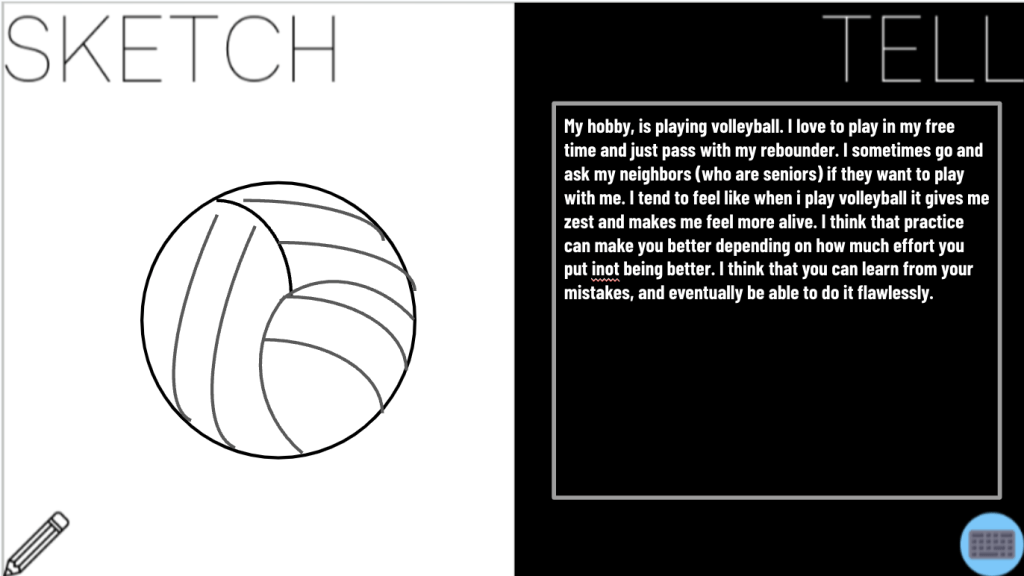
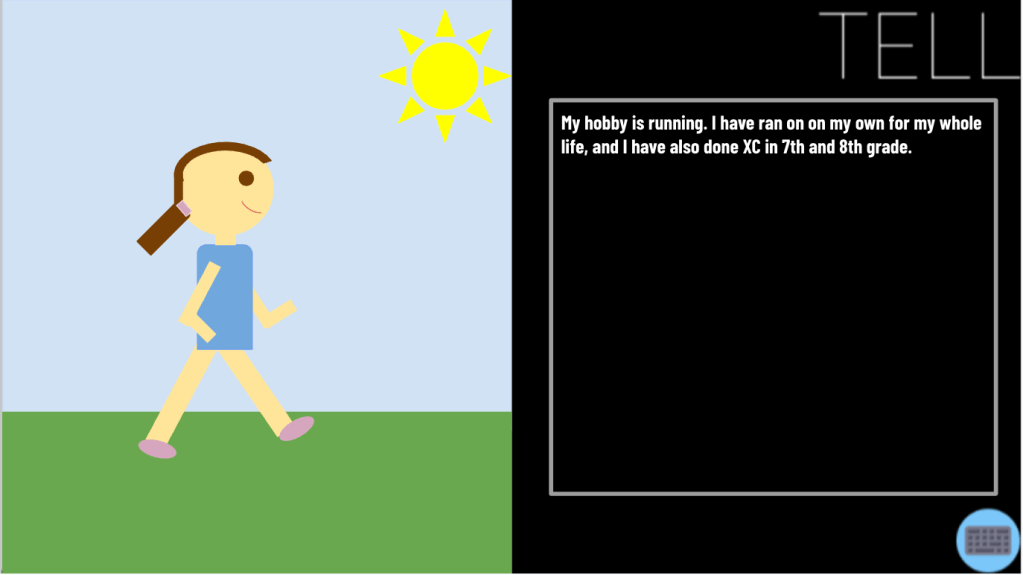
The Thin Slide was followed by the Sketch and Tell protocol. For this, I turned to Justin Unruh’s template, drawn to its black-and-white design. Guiding my students through the protocol, I posed a question: “What is your hobby or talent?” Armed with Google shapes, they sketched their responses in five minutes. Partner discussions and subsequent five-minute writing sessions delved even deeper into their chosen hobbies or talents.
What struck me most about this day was the familiarity my students displayed with EduProtocols. Having experienced them in previous years, they navigated the activities with ease, a testament to the lasting impact of student-centered learning. Their comfort with the protocols allowed them to achieve more in less time, a stark contrast to the previous year when the learning curve was steeper.



Wednesday: Connecting Through Words and Illustrations
Wednesday arrived, and we practiced Frayers. We used the Frayer a Friend Smart Start protocol to forge connections and deepen understanding among my students. Eight minutes were allocated, although students completed the task in just five minutes. This rapid engagement was a testament to their familiarity with the protocols.
The next activity was inspired by a post I saw from Josie Wozniak – a creative approach that involved ripping pages from an old book. Each student received a page and circled three words that resonated with them and one word that did not. They then paired up with a new partner to engage in a “Frayer” interview. The questions focused on the words they had chosen, drawing out personal connections and reflections. This exercise added layers of introspection and empathy to the classroom environment.
The day concluded with an artistic twist. Tasking the students with illustrating their chosen book pages, their creativity and the depth of their connections to the words was awesome.
Thursday: Exploring Continents, Countries, and Context
Thursday brought new challenges and opportunities. I kicked off the day with another round of the Fast and Curious protocol, utilizing Gimkit to bolster our geographical knowledge. Designed with our goal to identify continents, countries, and states with 90% accuracy in mind, the Gimkit session featured 36 questions centered around the regions we explore in class. The results were a mixed bag, with class averages ranging from 51% to 62%. This experience not only reinforced the importance of our class goals but also highlighted areas that needed attention.
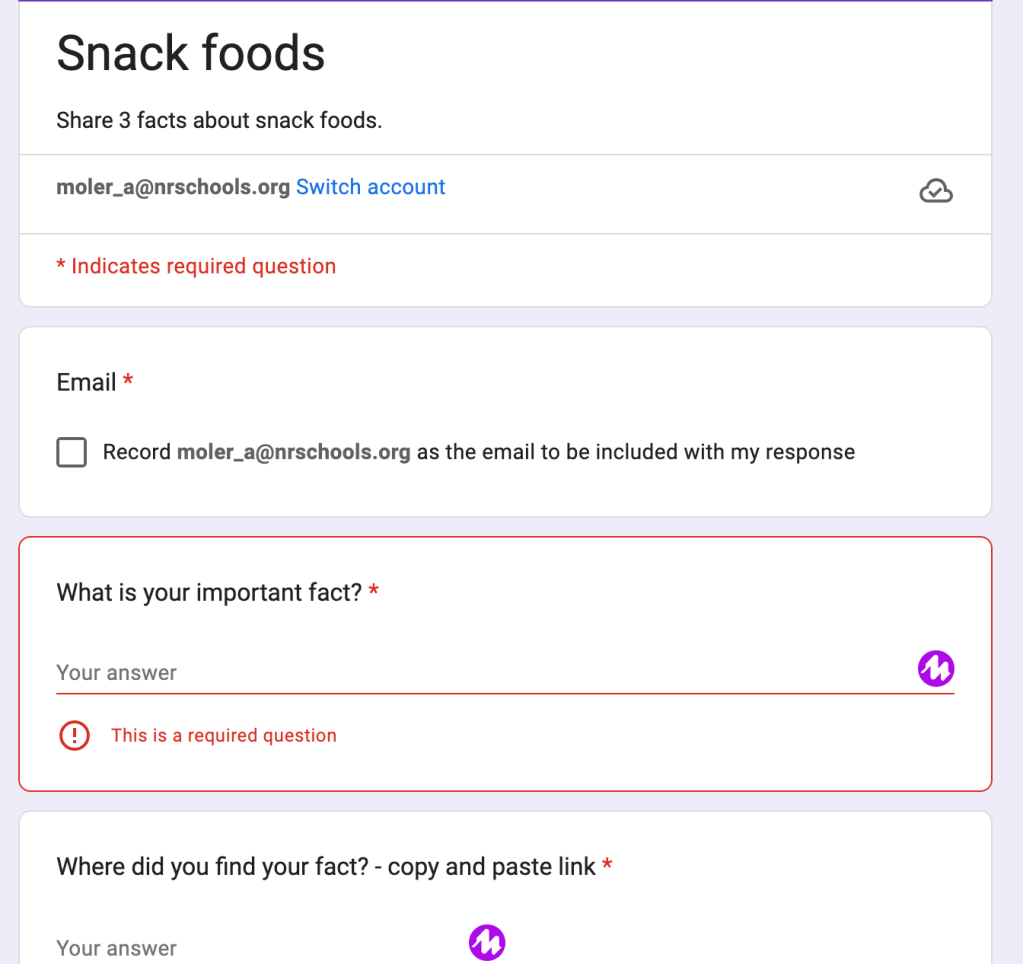
Transitioning seamlessly from geography to research, I introduced the Research Protocol—an approach mentioned in the EduProtocols Field Guide: Social Studies Edition. The students were tasked with researching and sharing three facts about snack foods in 8-9 minutes. The information was collected through a Google Form, which was then transformed into a Google Sheet. From this data, the students crafted visual slides, complete with titles and images, within a 12-15 minute timeframe.
The process continued with the ranking of facts, encouraging critical thinking and evaluation. Subsequently, the students embarked on a writing journey, distilling their newfound knowledge into a summary paragraph using Socrative. This exercise not only showcased their ability to synthesize information but also aligned with our class goal of writing concise paragraphs summarizing various materials. Inspired by this, I harnessed the power of technology to analyze their writing. By copying and pasting the paragraphs into ChatGPT, I received invaluable data on topic sentence coherence, supporting details, concluding sentences, and the use of transitional words. This data provided a baseline for improvement and growth.




Friday: Geography, Reflections, and Creative Expression
As the week drew to a close, Friday arrived, promising new challenges and a sense of culmination. Returning to the Gimkit session from Thursday, we delved back into geography, aiming to improve upon our scores. This time, the results were more encouraging, with every class scoring between 62% and 76%. Providing hints and mnemonic devices, such as “MIMAL” for the map, and creative associations for state outlines, allowed students to showcase their growth.
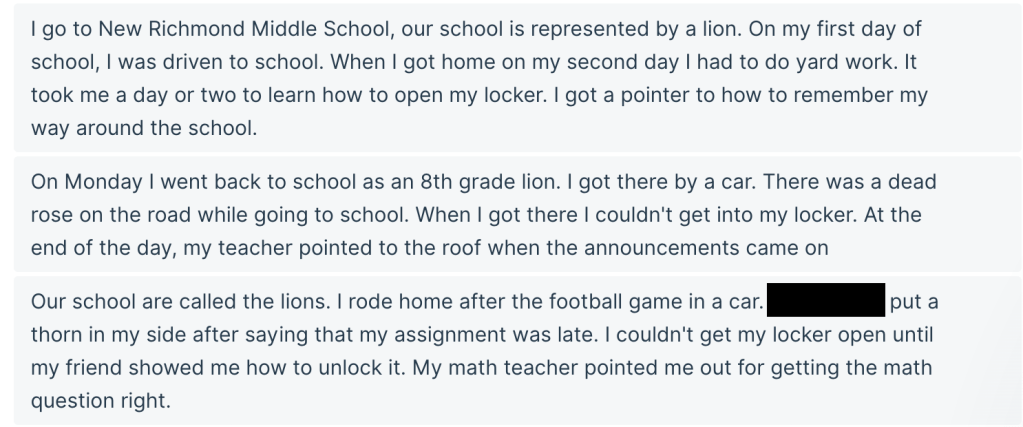
Transitioning to the Thin Slide protocol, I posed a question: “Share a boring fact about yourself.” After 3 minutes, and some quick presentations, I introduced the Thick Slide protocol. Challenging the students to deconstruct their experiences, they designed slides detailing their first week of school. This comprehensive task included a title, four key takeaways from the week, a shoutout to someone who made their week better, a comparison of two classes, and a carefully selected picture with a relevant caption. The depth and thoughtfulness that went into these slides was heartening.


But the learning journey was far from over. To round off the week, I introduced a Random Emoji Paragraph activity on Socrative. As students reflected on their first week back, the challenge was to create sentences related to the emojis. This exercise demanded critical thinking and a mastery of language, pushing them to communicate their thoughts effectively.


Conclusion: A Week of Growth and Promise
As I close the chapter on this exhaustive week, I’m filled with a sense of accomplishment and gratitude. The introduction of EduProtocols has not only deepened the engagement of my students but also streamlined my teaching process. Witnessing the ease with which my 8th graders navigated these activities, fueled by their prior exposure, has underscored the power of student-centered learning. The protocols have become a thread weaving through our classroom, fostering a sense of community and shared exploration.
This first week has set the tone, laying the foundation for a year filled with growth, connection, and meaningful learning experiences. While exhaustion lingers, it’s intertwined with a sense of promise and the knowledge that this journey is one worth every ounce of effort.

 Moler's Musings