As I wrap up another school year, the final week becomes a time of reflection and opportunity. I wanted to ensure that my students’ last days were both productive and engaging, so I planned some exciting activities for them. With only two days remaining for students to complete their research on local Civil War veterans before turning in their Chromebooks, I decided to try out new strategies and incorporate creativity into our social studies lessons.
To start off the week, I focused on reviewing key concepts we had covered throughout the year. On Monday, I kicked things off with a Gimkit review. Using this interactive game-based learning platform, I posed questions from various units we had studied, allowing students to reinforce their knowledge and identify areas that needed further attention.
One of the most enjoyable activities during the final week was inspired by a lesson I learned from Howson history. I introduced a unique drawing activity that encouraged students to connect their understanding of social studies topics with their creative skills. Each student received a random topic and was tasked with drawing or adding onto a shape to represent what they had learned about that particular topic.
For example, if a student received the topic “World War II,” they could draw iconic symbols like flags of the Allied forces or significant events like the D-Day invasion. This activity not only allowed students to showcase their understanding of key concepts and events but also tapped into their imaginative and artistic abilities.
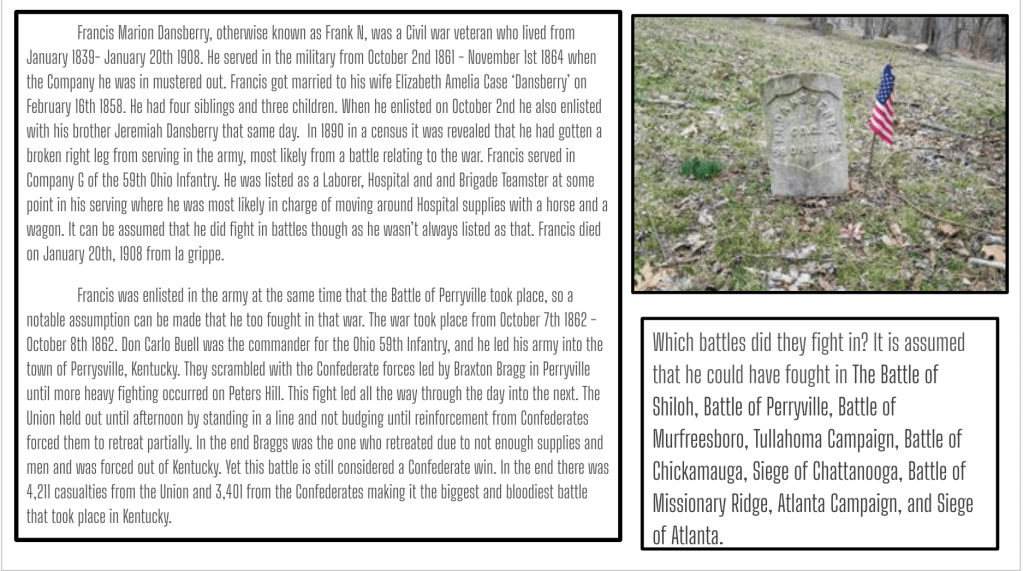
With the end of the school year approaching, I wanted to give my students a chance to connect with history on a personal level. Thus, I assigned them a research project on local Civil War veterans. The aim was for students to dive deep into our community’s history, uncovering stories and insights about the brave individuals who fought in the Civil War.
Through this assignment, students honed their research skills and gained a better understanding of how the war had impacted our local area. By exploring primary and secondary sources, they developed a sense of connection to the past and an appreciation for the sacrifices made by those who came before us.
Throughout the final week, I remained committed to making our lessons as engaging and productive as possible. I recognized the importance of embracing new activities and approaches to keep my students interested and actively involved in their learning.
While not every attempt received unanimous enthusiasm, I firmly believe that trying new things is vital for both students and educators. It encourages exploration and adaptability while reinforcing the idea that education is a dynamic and ever-evolving process.
As I reflect on the final week of this school year, I am grateful for the opportunity to engage my students in meaningful activities that left a lasting impression. By incorporating a variety of techniques, such as review games, creative assignments, and community-based research, I made the most of our remaining time together.
I am reminded of the importance of embracing innovation and stepping outside of my comfort zone as an educator. By doing so, I created an environment that fostered curiosity, engaged my students, and ignited a passion for lifelong learning. The final week of school is not just a countdown; it is a celebration of knowledge, growth, and the power of education.
I usually post template from the week here, but it’s the same as last week. I ask that you consider donating to Samantha Cain’s Go Fund Me Page.
Monday
Monday’s social studies class was filled with excitement and engagement as we delved into a variety of activities designed to reinforce content knowledge, stimulate creativity, and inspire research. From a Fast and Curious EduProtocol review to a sketch and tell inspired by Howson History, this day proved to be both productive and enjoyable for all students.
To kick off the class, I decided to use the Fast and Curious EduProtocol as a comprehensive review of the content we had covered throughout the year. Previously, only a portion of the class had participated, but this time, I made sure that all students took part. With a total of over 100 students, I was pleased to see the results. The class averages were as follows: 70%, 74%, 64%, 62%, and 75%. Considering the scope of the review, covering content from the entire year, these scores were impressive and demonstrated the growth and retention of our students.
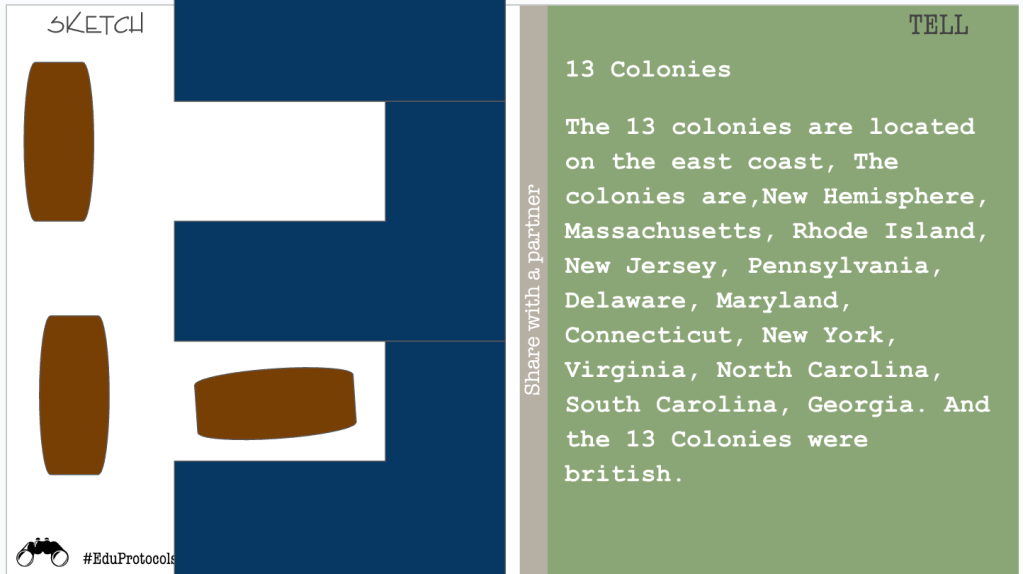
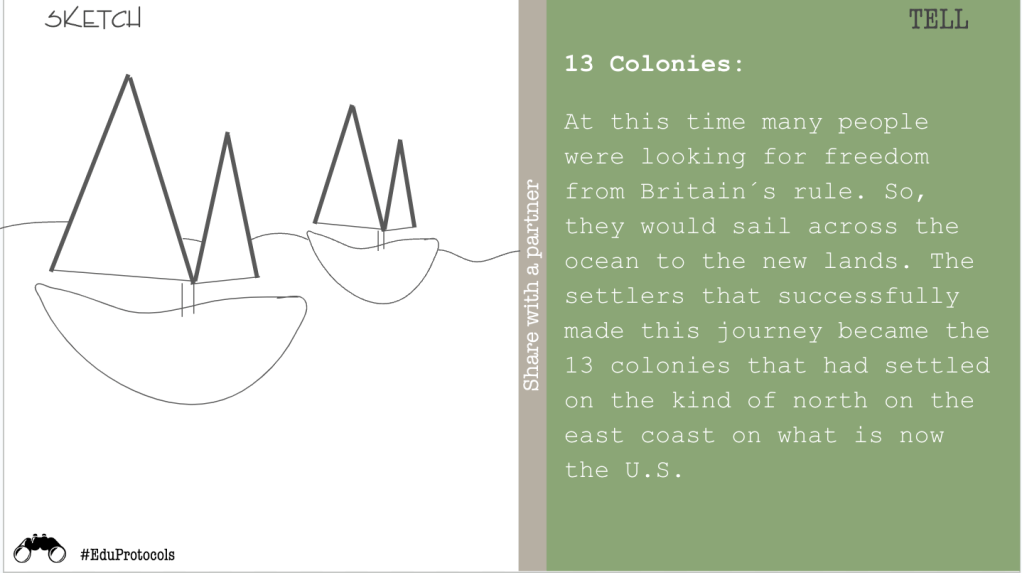
While scrolling through Instagram, I stumbled upon a post by Howson History that immediately caught my attention. It involved dividing a piece of paper into six boxes and assigning random numbers to each box. For each number, students were given a social studies topic and asked to incorporate their knowledge into a picture within the box. This activity resembled a sketch and tell, which intrigued me.
Given that it was the last week and Chromebooks were being turned in, I decided to adapt the activity to incorporate technology. Instead of using physical paper, I had students use Google Shapes to create their drawings within randomly assigned boxes. This way, their artwork could be easily shared and discussed.
After completing their drawings, students enthusiastically shared their creations with their peers. They explained the social studies topic they were assigned and the meaning behind their artistic representations. This sharing session allowed students to not only showcase their knowledge but also engage in meaningful conversations about various social studies topics.
Following the sharing session, I wanted to further deepen students’ understanding of the topics. To achieve this, I had them write about their creations. This exercise helped reinforce the knowledge gained and allowed students to reflect on the connections they had made between their drawings and the social studies concepts.
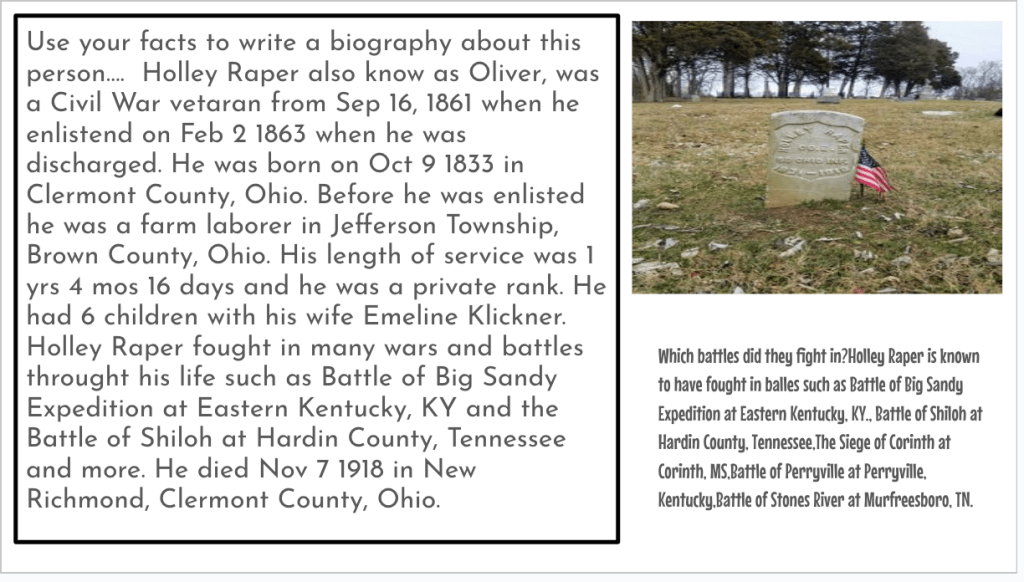
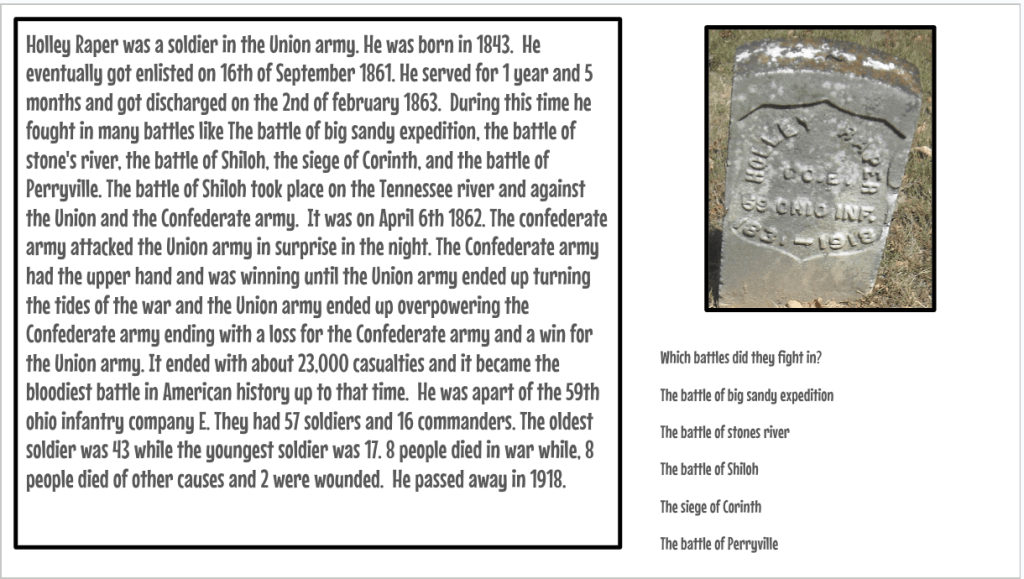
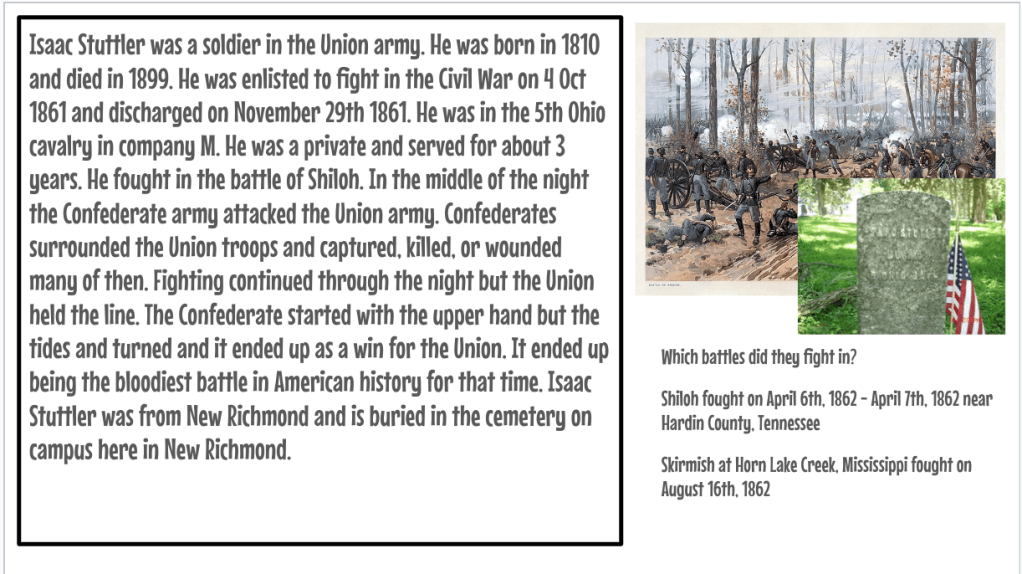
With approximately 25-30 minutes of class time remaining, I shifted our focus to researching local Civil War veterans. This assignment aimed to encourage students to explore the contributions and sacrifices of individuals from our community during the Civil War. It was heartening to witness the dedication and enthusiasm with which students delved into their research, showcasing their curiosity and empathy.
Monday’s social studies lesson was a testament to the power of varied activities and engaging approaches in the classroom. From the Fast and Curious EduProtocol review to the sketch and tell adapted with Google Shapes, students were actively involved in their learning, making connections, and reflecting on their knowledge. The day culminated in dedicated research on local Civil War veterans, fostering a deeper appreciation for the historical significance of our community.
As educators, it is essential to seek inspiration, adapt activities, and make the most of the time we have with our students. This Monday’s lesson demonstrated the impact of engaging strategies, promoting both academic growth and a passion for the subject matter. It was a truly enriching experience for all involved.



Tuesday
Tuesday’s social studies lesson brought with it a sense of accomplishment as we continued our journey of review and research. Starting the class with a familiar content review using Gimkit, we witnessed impressive class averages that reflected the growth and knowledge gained throughout the year. With the goal of maximizing research time, we made adjustments to the activities, opting to focus on completing the Civil War veteran project.
To begin the class, we revisited the content review activity with Gimkit, which had proven to be a valuable tool for reinforcing our social studies knowledge. The class averages this time were outstanding: 80%, 80%, 84%, 75%, and 85%. These results were a testament to the dedication and hard work of our students, showcasing their understanding of the subject matter and the progress made throughout the year.
With limited class time remaining before Chromebooks were collected on Wednesday, I made the decision to forgo the Sketch and Tell activity we had done the previous day. Instead, I prioritized providing more time for research and ensuring the completion of our Civil War veteran project. This adjustment allowed us to delve deeper into our research and pay homage to the brave individuals who played a significant role in the Civil War.
Although Chromebooks were soon to be collected, I didn’t want to let go of the creative and reflective element that the Sketch and Tell activity offered. Instead, I adapted the activity to be paper-based.
We dedicated the remaining time to research and reflection on our Civil War veteran project. Students eagerly delved into their research, drawing upon various resources to gather information about the contributions and experiences of local veterans during this crucial period in history. The focused research time allowed for deeper understanding and empathy towards these historical figures.
Tuesday’s social studies lesson provided us with an opportunity to celebrate the growth and achievements we had made throughout the year. With a successful content review session using Gimkit, our students demonstrated their solid grasp of the material. Adjusting our activities, we prioritized research time and ensured the completion of our Civil War veteran project.


Wednesday
As the academic year comes to a close, it’s essential to reflect on the knowledge and experiences gained throughout the journey. In this week’s social studies lesson, we embarked on a unique and creative activity that encouraged students to revisit key topics we explored together. By putting aside our trusty Chromebooks and embracing a more hands-on approach, we delved into a fun exercise that stimulated both artistic expression and critical thinking. Let’s take a closer look at how this activity unfolded and the insights it provided.
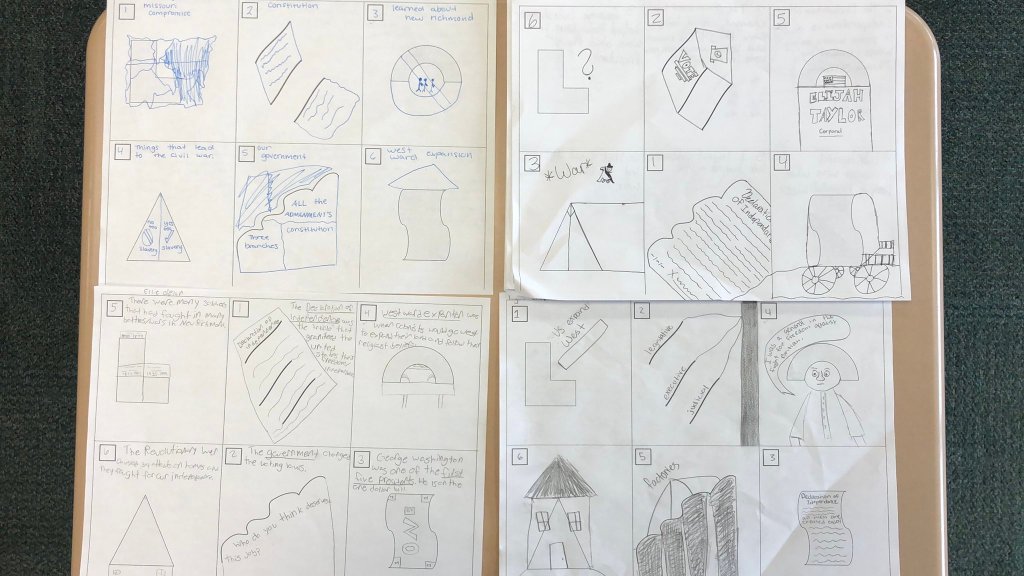
Rather than relying on technology, we turned to pen and paper for our final social studies class. Each student received a sheet with six boxes, each representing a different topic covered during the year. The topics spanned a wide range of historical events, including New Richmond, compromises, the constitution, westward expansion, the 13 colonies, and the American Revolutionary War. With excitement filling the air, students eagerly anticipated what would unfold next.
To add an element of surprise and challenge, I asked students to randomly number the boxes and then draw a topic out of a hat. This allowed for an unbiased selection process, ensuring that each student was assigned a topic to contemplate and reflect upon. As the topics were revealed, a sense of curiosity and anticipation permeated the room.
Once the topics were assigned, students had five minutes to add to the picture and write about what they drew. The combination of visual representation and written reflection allowed students to engage both their artistic and analytical faculties. It was truly remarkable to witness the diversity of interpretations and insights that emerged from this exercise.
As students began to sketch and write, they were prompted to recall the key details, connections, and significance of their assigned topics. Through this exercise, they delved deeper into their understanding of historical events and concepts. It encouraged them to recall specific details, draw connections, and express their thoughts coherently. The process of reflection and synthesis was in full swing.
This activity also provided an opportunity for students to showcase their creative abilities. Some students adorned their boxes with vivid colors and intricate details, bringing their topics to life. Others focused on writing detailed descriptions, explaining the historical context and significance of their topics. The combination of art and writing allowed students to approach the topics from multiple angles and engage with them in a more holistic manner.
As we wrapped up the activity, we took a moment to appreciate the collective knowledge and growth achieved throughout the year. The diverse range of topics explored reminded us of the rich tapestry of history and the interconnectedness of different events and ideas. It was a time to celebrate the efforts and achievements of each student, acknowledging their unique perspectives and contributions.
In this final academic, content-based class of the year, we bid farewell to our Chromebooks and embarked on an artistic journey to revisit key topics from our social studies curriculum. The activity not only provided an opportunity for creative expression but also encouraged critical thinking and reflection. As we concluded this exercise, it became evident that our year-long social studies adventure had equipped students with a deeper understanding of the past and its impact on the present. With newfound appreciation, we bid farewell to this year’s social studies lessons, eagerly anticipating the exciting educational experiences that await us in the future.
What’s Next?
It’s been an eventful year so far, filled with learning, growth, and unexpected opportunities. As I look ahead, I am thrilled to share some exciting prospects on the horizon. In this blog post, I will provide you with an overview of my upcoming conference schedule and highlight the topics I will be presenting. Additionally, I’ll touch upon a notable achievement—a proposal acceptance for the prestigious National Council for Social Studies Conference (NCSS). Let’s dive in and explore what’s next for me!
Spark Summit in Indianapolis (June 8th): First up on my conference schedule is the Spark Summit in Indianapolis on June 8th. At this event, I will have the privilege of presenting EduProtocols and delving into the fascinating world of Artificial Intelligence. As the summit focuses on cutting-edge technologies and innovation, I am eagerly preparing to share insights, strategies, and real-world applications related to these captivating topics.
HICE Conference in Canton, Ohio (June 13th – 14th): Shortly after the Spark Summit, I will be heading to the HICE Conference in Canton, Ohio, on June 13th and 14th. During this conference, I am thrilled to have the opportunity to present EduProtocols once again. EduProtocols have proven to be an effective and engaging teaching method, and I am excited to share practical examples and success stories with fellow educators and attendees at the event.
Notre Dame University (July 11th – 12th): Next on my journey is Notre Dame University on July 11th and 12th, where I will be part of the EduProtocols Plus Academy. During this event, I will be presenting Sketch and Tell, Number Mania, and CyberSandwich, which are all innovative EduProtocols that aim to enhance student learning and engagement. I am looking forward to connecting with passionate educators and sharing these valuable resources and strategies.
NCSS Conference in Nashville (December): In collaboration with Dominic Helmstetter, I submitted a proposal for using Artificial Intelligence in the classroom. Luckily, it was accepted by the National Council for Social Studies Conference (NCSS) in December, held in Nashville.
As I reflect on what’s next for me, these upcoming conferences and the acceptance of our proposal at the NCSS Conference fill me with a sense of excitement and anticipation. It is through these opportunities that I can continue to learn, grow, and make a meaningful impact in the field of education. I look forward to connecting with fellow educators, sharing knowledge, and exploring new ideas. Thank you for joining me on this journey, and I will keep you updated on my experiences and insights from these events. Stay tuned for more exciting developments and future endeavors!

 Moler's Musings