Welcome to this week’s blog post! It’s been a rather peculiar week as the school year is gradually coming to a close. While most of the students were in class, I found myself absent on Monday. However, I didn’t leave them empty-handed. Instead, I had the opportunity to work with middle and high school teachers at St. Bernard, guiding them through the implementation of Eduprotocols and showcasing how they can incorporate A.I. with Eduprotocols.
Whenever I have to be away from the classroom, I always make sure to leave something familiar and engaging for my students to work on. This time, I introduced them to a fascinating Eduprotocol called “Number Mania,” centered around the 59th Ohio Volunteer Infantry. This regiment holds great significance as it was the unit that many of our civil war veterans fought with during that historic period.
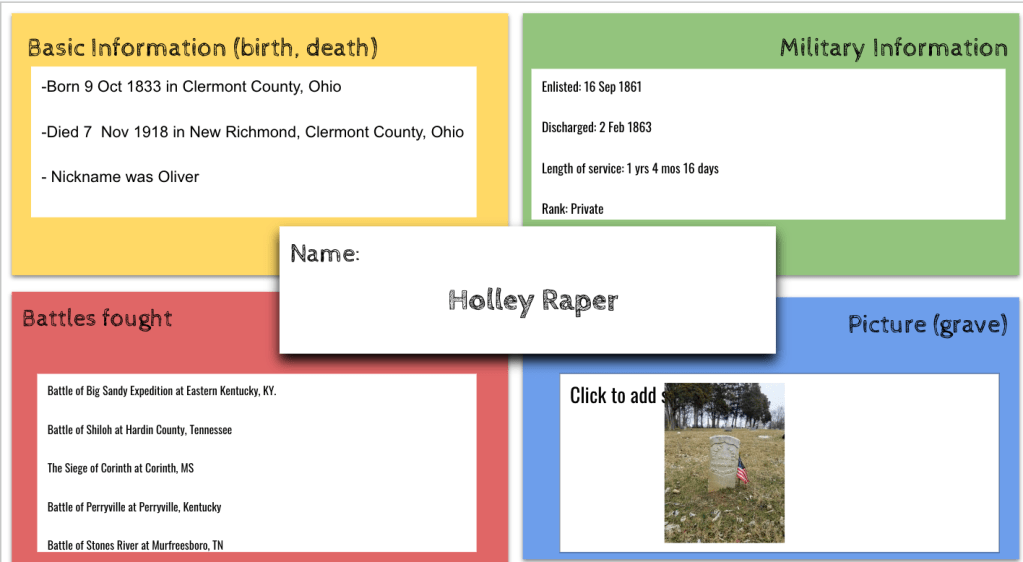
Moving on to our next topic, the students continued their research on civil war veterans. We started by compiling a list of names from the cemetery located behind our school. To facilitate their research, I prepared a series of Eduprotocols specifically designed to aid them in this endeavor. The students had the opportunity to utilize a Frayer model, engage in Number Mania activities, and create a detailed slide presentation to effectively capture and organize the valuable information they discovered.
It has been an eventful week, filled with exploration and learning. Join me as we delve into the highlights of these activities and witness the incredible work our students have accomplished.
Monday – Number Mania, Gimkit
Wednesday – Research
Friday – Research
Monday
Monday’s lesson was a dynamic and engaging experience for my students, as I introduced them to a combination of activities that sparked their curiosity and encouraged active participation. By incorporating the Number Mania EduProtocol, an article about the 59th Ohio Volunteer Infantry, and a Gimkit on basic Civil War information, I aimed to provide a range of options that catered to different learning preferences and interests.
To kick off the lesson, I introduced the Number Mania EduProtocol to the class. This activity not only challenged students’ mathematical and problem-solving skills but also encouraged teamwork and collaboration. Its flexible nature allowed students to connect with the local historical context as they delved into the story of the 59th Ohio Volunteer Infantry.
Knowing that some students might not feel comfortable using the Fold3 database for research, I provided them with an alternative option to engage with the topic. I paired the Number Mania activity with an article created by ChatGPT about the 59th Ohio Volunteer Infantry. This approach allowed students to connect with the local history and explore the background of this infantry, which was organized at Camp Ripley, located just 25-30 minutes away from New Richmond along the Ohio River.
In order to accommodate different preferences and learning styles, I presented students with a choice: they could either complete the Number Mania activity or attempt to research their chosen local Civil War veteran using the Fold3 database. Despite providing a detailed instructional video on using Fold3 for research, most students opted for the Number Mania activity. It was encouraging to see them engage with the local history through problem-solving and critical thinking, showcasing their enthusiasm and ability to connect with the subject matter.
To further reinforce their understanding of the Civil War, I incorporated a Gimkit quiz consisting of 17 questions on basic Civil War information. It was gratifying to witness the high level of participation, with 70 out of 100 students taking part in the activity. The class average of 83% demonstrated their grasp of the fundamental concepts, which was truly impressive.
Monday’s lesson successfully combined interactive and informative activities to engage students and foster a deeper connection with local history. The Number Mania EduProtocol allowed students to explore mathematical concepts while delving into the story of the 59th Ohio Volunteer Infantry. The option to research local Civil War veterans or complete the Number Mania activity empowered students to choose their preferred learning approach. Furthermore, the Gimkit quiz consolidated their knowledge of basic Civil War information. Overall, the lesson provided an enriching experience that stimulated curiosity and encouraged active participation among students.


Tuesday
Tuesday was an exciting day for our class as we embarked on a field trip to the village of New Richmond. Our town holds a significant place in history, particularly for its contributions to the Underground Railroad. As an organizer of this trip, I worked closely with local community members to ensure an enriching experience for our students. We set up five different stations, each offering unique insights into New Richmond’s past.
Our adventure began with two walking tours that immersed us in the stories of the remarkable people and events that shaped this town. One story that stood out was that of James G. Birney, an abolitionist who, after witnessing the atrocities of slavery, became dedicated to the cause of freedom. Birney made New Richmond his temporary home, where he established a printing press and started publishing his abolitionist newspaper, the Philanthropist. Learning about Birney’s courageous efforts was truly inspiring for all of us.
At the local church, students experienced another fascinating connection to history where Harriet Beecher Stowe’s brother, George Beecher, served as a minister there, alongside John Rankin. The significance of this connection to the renowned author of “Uncle Tom’s Cabin” was not lost on our students, who were able to grasp the impact of the Beecher family on the abolitionist movement.
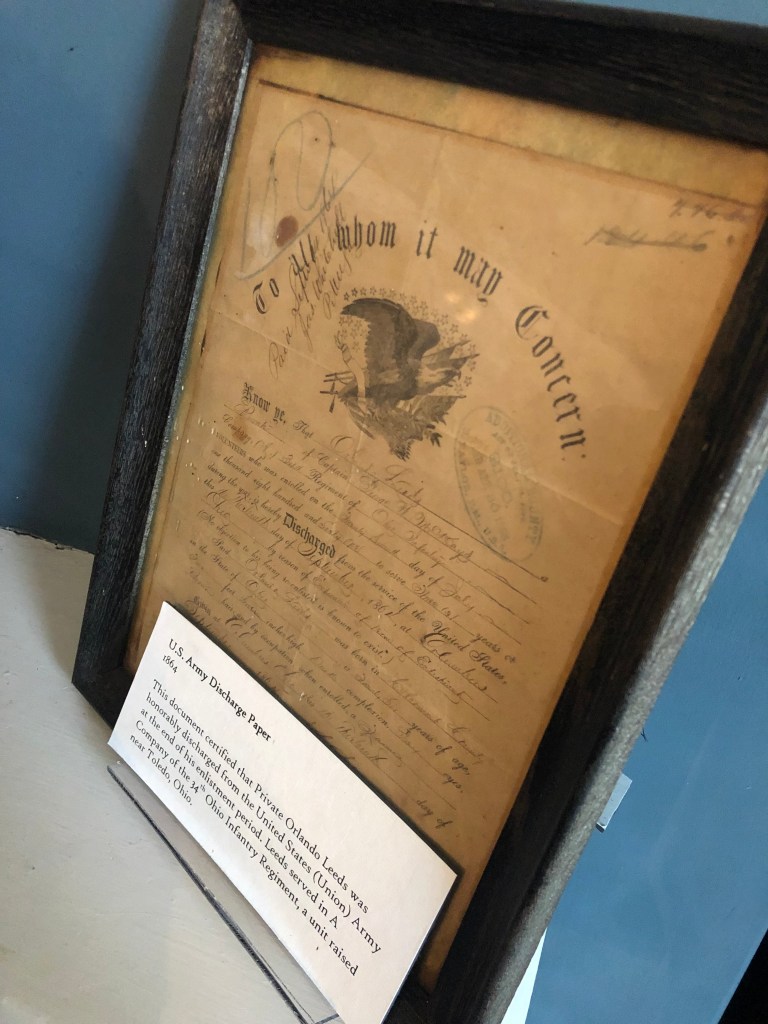
One of the highlights of our field trip was visiting the Ross Gowdy house, believed to have been built by David Ross, the nephew of Betsy Ross. This historic house holds many treasures within its walls. We were fortunate to see a second edition copy of “Uncle Tom’s Cabin,” a powerful literary work that had a profound impact on public opinion regarding slavery. The house also provided us with a glimpse into New Richmond’s once-thriving economy, which revolved around yarn and steamboat production. Additionally, we encountered the story of Henry Poindexter, whose case bears resemblance to that of Dred Scott, adding another layer of historical significance to our visit.
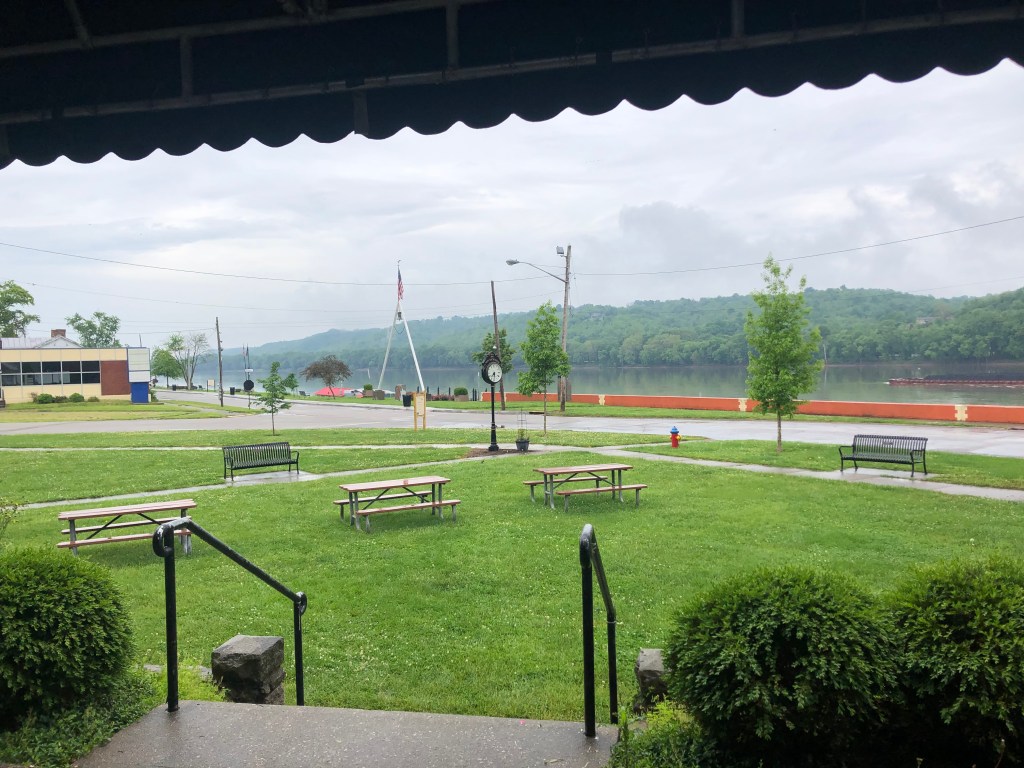
Our journey through New Richmond concluded at the local bandstand, where we learned about the Ohio River, which served as a dividing line between the North and the South during the era of slavery. It was fascinating to discover that the Ohio River, which used to be a mere 25 yards across and shallow at only 2-3 feet, has transformed over time, now spanning approximately 0.5 miles in width and reaching depths of 24 feet. This physical feature reinforced the geographical and historical context for our students, helping them better understand the challenges faced by those seeking freedom.
Overall, our field trip to New Richmond was an exceptional opportunity for our class to step outside the confines of the classroom and engage with history firsthand. The stories we heard, the artifacts we encountered, and the connections we made to our classroom learning left a lasting impression on all of us. It was a day filled with discovery, inspiration, and a deepened appreciation for the struggles and triumphs of those who came before us.


Wednesday
On Wednesday, I found myself back in the classroom, engrossed in the noble task of guiding my students through the intricate process of researching and uncovering the stories of Civil War veterans. The atmosphere was filled with a blend of enthusiasm and struggle, as some students faced challenges in locating suitable subjects, while others effortlessly dived into their investigations.
The classroom buzzed with students scattered at different stages of the research journey. And that, as a teacher, is precisely what I yearn for them to experience – the thrill of delving into historical records and piecing together the lives of these veterans. While completing the entire project is a commendable achievement, I want my students to realize that progress and learning come in various forms. Even if they only manage to finish the frayer and number mania activities, I assure them that it is absolutely fine. What truly matters is that they walk away from this experience feeling like true historians, having breathed life into forgotten tales.
One aspect that I have emphasized to my students throughout this endeavor is the importance of inquisitiveness. Encouraging them to ask questions, especially when confronted with unfamiliar abbreviations, has been crucial. For instance, many of them have approached me with queries about the meaning behind the abbreviation “H.A” on gravestones. Patiently, I have explained that it stands for “heavy artillery,” shedding light on a fragment of history that might have otherwise remained hidden.
Personally, I derive immense satisfaction from guiding my students through the research process, witnessing their growth as they piece together the narratives of these brave veterans. It is not merely an exercise in historical inquiry; it is an opportunity for them to connect with their local history, fostering a sense of belonging and appreciation for the sacrifices made by those who came before us.
In the end, Wednesday’s lesson was a poignant reminder of the power of research and investigation. As I guided my students on their journey to become historians, I witnessed their perseverance, their curiosity, and their genuine desire to uncover stories that were on the verge of being forgotten. Through this experience, they not only learn about history but also develop invaluable skills of critical thinking, analysis, and interpretation.


Thursday
I rarely find the need to take a personal day off from school. However, this year proved to be an exception. Last Thursday, I used my final personal day, allowing me to rejuvenate while providing my students with an engaging and productive day in their social studies class.
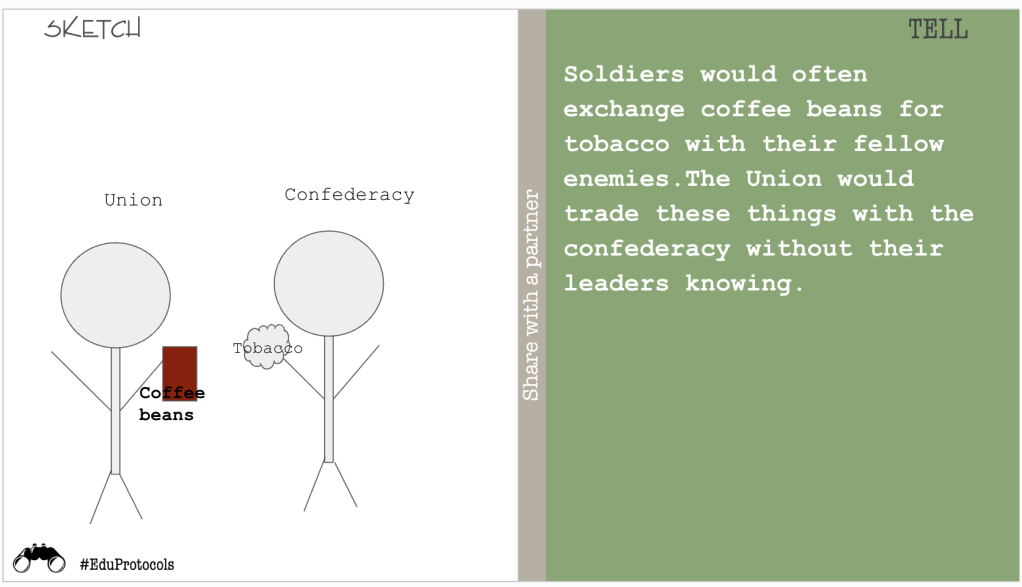
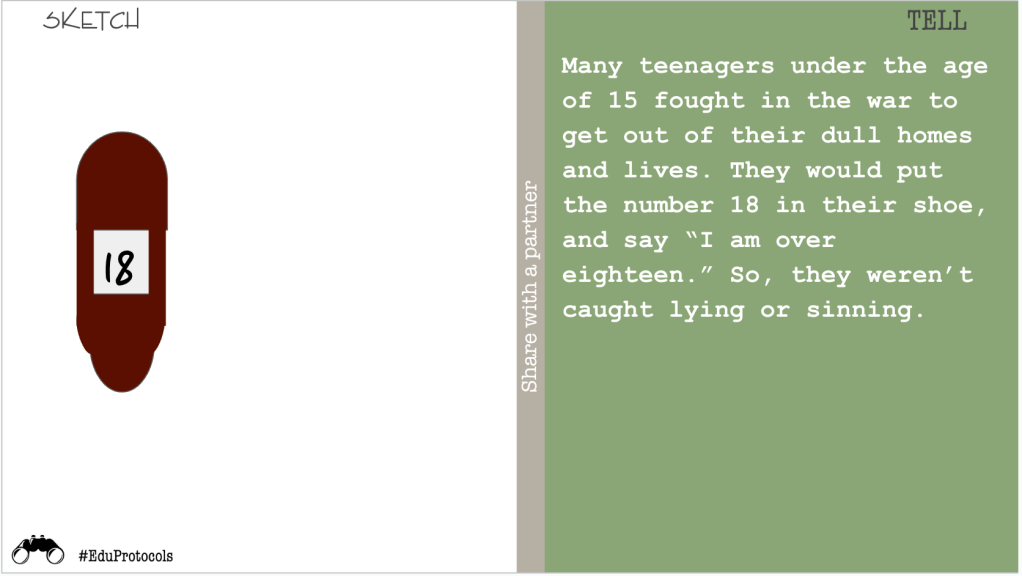
Knowing that I would be absent, I wanted to ensure my students had meaningful learning opportunities. I provided them with two choices for the day. The first option was to continue their research on a veteran, a project they had been working on for some time. Alternatively, they could watch an educational video on the life of a Civil War soldier, accompanied by a sketch and a writing activity.
To enhance the experience of watching the educational video, I decided to utilize Edpuzzle, an interactive video platform. This tool allowed me to embed questions and prompts throughout the video, enabling students to engage actively with the content. By integrating the sketch and writing activity at the end of the video, students could demonstrate their understanding and creativity.
To further consolidate the knowledge they had acquired throughout the year, I created a Gimkit review session consisting of 25 questions. Gimkit is an interactive quiz game that provides an engaging and competitive learning experience. I designed the questions to cover various topics my students had learned in social studies over the course of the year.
The response from my students was exceptional. A total of 40 students participated in the Gimkit review, and I was thrilled to see their average score was 75%. Considering the extensive content covered throughout the year, this was a remarkable achievement. It was evident that my students had retained and internalized a significant amount of information, which was truly gratifying to witness.
By offering choices and incorporating interactive tools like Edpuzzle and Gimkit, I aimed to keep their engagement high and their learning meaningful. The results surpassed my expectations, with students actively participating in both activities and achieving a commendable average score on the review. As I reflect on this experience, I am reminded of the importance of providing diverse learning opportunities and leveraging technology to enhance student engagement.


Friday
On Friday, I found myself back in the classroom and my primary objective was to assist my students in their research on Civil War veterans. As I moved around the room, I noticed that some students were still in the initial stages of the project, while others were nearing completion. Such is the nature of any classroom endeavor; progress varies among individuals.
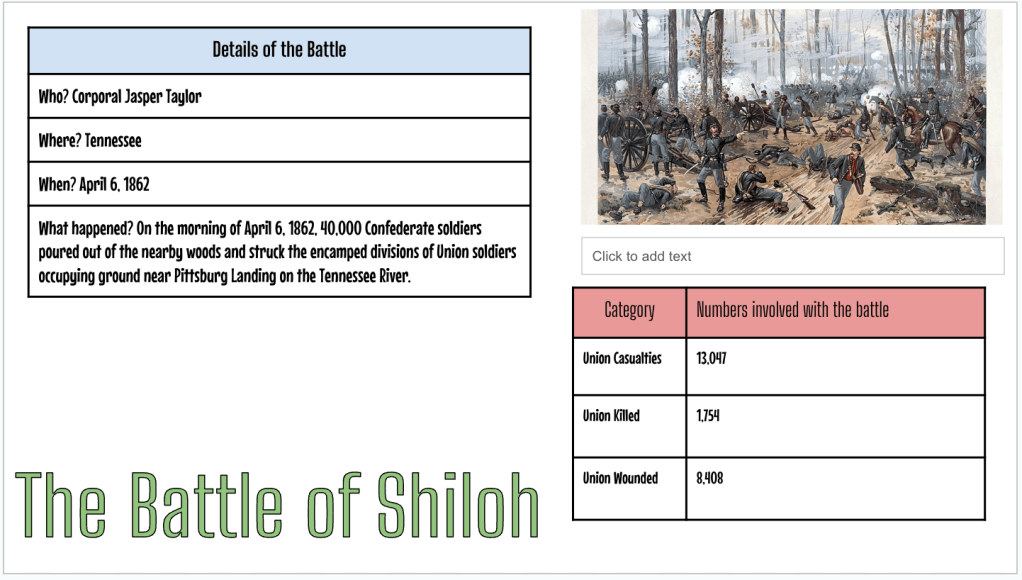
The main purpose of this exercise was to guide my students in their research, encouraging them to ask questions and helping them understand the significance of paying attention to minute details when searching for individuals and the battles they participated in. It became evident that even seemingly similar battles and skirmishes from the Civil War had the same names but were fought in different years. This realization served as a valuable lesson for all of us.
Reflecting on the day’s events, I must admit that I too made an error during the lesson. I mistakenly believed that a local veteran had been wounded in the Battle of Shiloh, only to discover later that he was actually injured during the Big Sandy expedition. This blunder occurred because I misread the discharge date and year. The experience reminded me that even as an educator, I am not exempt from making mistakes. It emphasized the importance of double-checking facts and being meticulous in our research.
Overall, Friday’s social studies lesson proved to be a valuable learning opportunity for both my students and me. It reinforced the significance of attention to detail when investigating historical events and the lives of those who were part of them. It highlighted the need for patience, perseverance, and the willingness to correct our mistakes. As we continue this journey of discovery together, I look forward to witnessing my students’ growth and understanding deepen with each new lesson.



 Moler's Musings