This week, as we approached the end of the school year, we delved deeper into the events that led to the Civil War. Building upon our previous lessons, we concluded our discussion on the Dred Scott decision and connected it to a local case involving Henry Poindexter.
To kick off the week, we explored the profound impact of Harriet Beecher Stowe’s influential novel, Uncle Tom’s Cabin. As an advocate for cultivating a love for reading among my students, I believe in the power of literary works to enhance their understanding of historical events. Thus, I always strive to incorporate excerpts from this remarkable novel into our curriculum.
This year, I had the privilege of utilizing an AI lesson generator called Curipod, which seamlessly integrated with my teaching materials. With the help of Curipod, I designed a mini-lesson paired with Iron Chef EduProtocol slides, creating an engaging and interactive experience for my students as we analyzed excerpts from Uncle Tom’s Cabin.
After exploring the themes presented in the novel, we embarked on a unique lesson plan designed by Amanda Sandoval, called the Bento Box. This activity challenged my students to identify and discuss four to five significant events or ideas that contributed to the mounting tension between the North and the South. They were encouraged to include images, symbols, and other visual representations within their Bento Boxes, enabling them to convey their insights creatively.
Next, we delved into one of my favorite projects of the year—introducing my students to the basics of the Civil War. We examined essential aspects such as the war’s commencement, prominent leaders on both sides, and the contrasting ideologies of the Union and the Confederacy. Through these lessons, I aimed to provide a solid foundation of knowledge while fostering critical thinking and analysis.
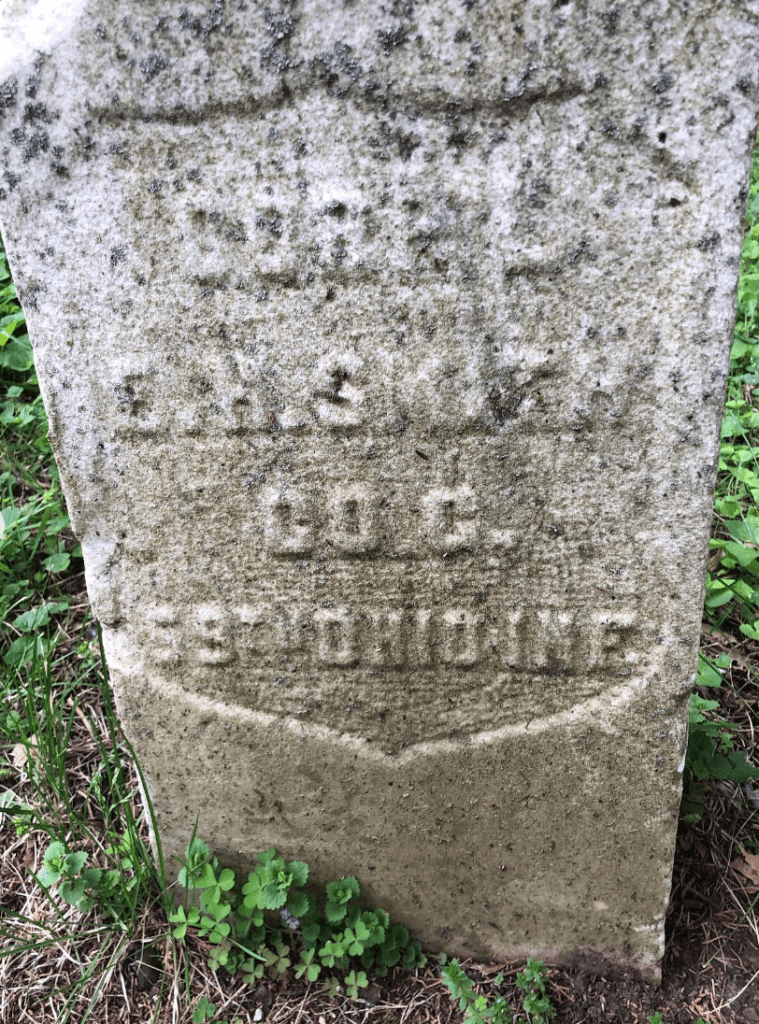
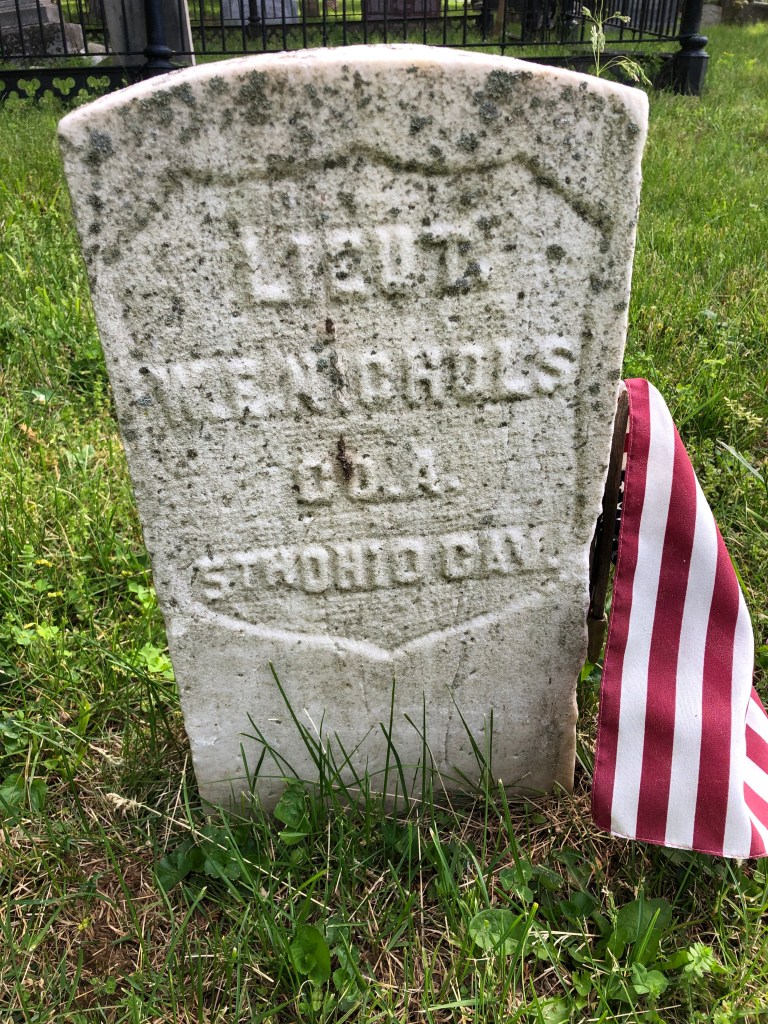
To further enrich our exploration of the Civil War, I took my students to the cemetery adjacent to our school. It was an enlightening experience as I taught them how to identify gravestones belonging to Civil War veterans. Each student recorded the names of four to five veterans, and together we learned how to navigate a military veterans’ database. This exercise allowed them to act as historians, piecing together the stories of these brave individuals and bringing history to life.
As the school year gradually comes to a close, I am grateful for the incredible progress my students have made and the enthusiasm they have shown. It has been a fulfilling week, packed with engaging lessons and hands-on activities that have deepened their understanding of the events preceding the Civil War. I am eagerly looking forward to our remaining time together as we continue our journey through history.
Monday and Tuesday – Uncle Tom’s Cabin
Wednesday – Bento Box Assessment
Thursday – Cemetery visit, EdPuzzle, Frayer, Gimkit
Friday – Civil War Veteran Research, Fold3 Database
Monday and Tuesday
On Monday and Tuesday, students learned about, Uncle Tom’s Cabin by Harriet Beecher Stowe in 8th grade social studies. Given the short class periods due to MAP testing, I had to adapt my lesson plan to maximize student engagement and learning.
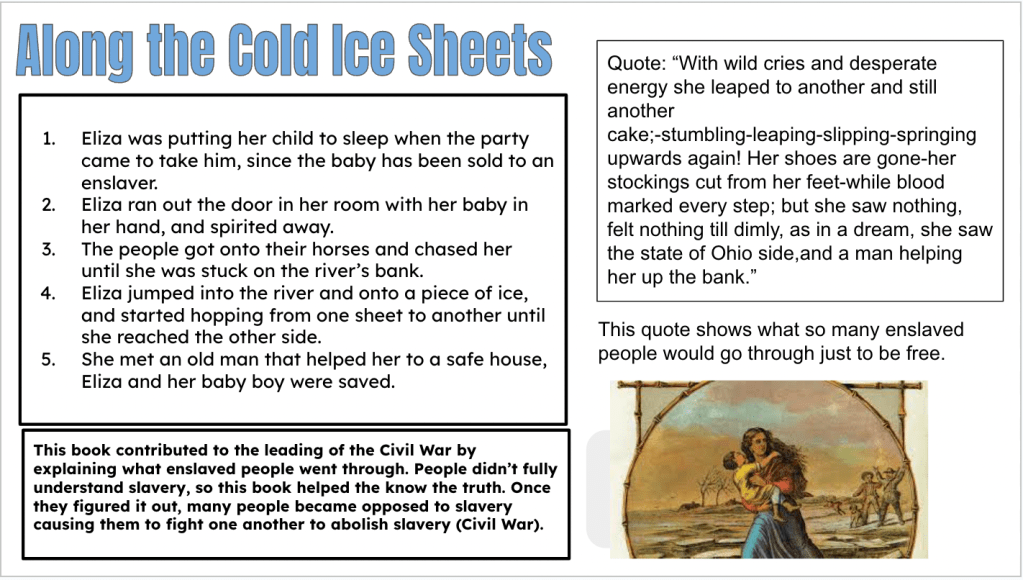
In previous years, I had students read an excerpt from one of three chapters and create a slide that sequences the events and includes a quote that would anger abolitionists. However, this year, I wanted to go beyond the plot and stats of the book and provide a more comprehensive and thought-provoking lesson.
That’s where Curipod, an AI lesson generating site, came in handy. I used it to create an engaging introduction that tested the students’ existing knowledge of the book. It also included interesting facts, “did you know” information, and significant concepts from the book. The Curipod feature that I found particularly useful was the ability to ask questions, receive multiple responses, and then vote on the most relevant and insightful answers. This feature allowed for a fair, democratic, and collaborative learning experience for all my students.
Once we had explored the background and significance of Uncle Tom’s Cabin, we focused on three chapters: Chapter 7 – A Mother’s Struggle, Chapter 30 – A Slave Warehouse, and Chapter 33 – Cassy. Students selected a chapter and designed a slide that featured a quote that would anger abolitionists. We then analyzed the quote together and considered how it reflected the harsh realities of slavery.
I was pleased with how engaged and motivated the students were throughout the lesson. By focusing on storytelling techniques and emotional language, Harriet Beecher Stowe created empathy and awareness about the devastating impact of slavery. Through Curipod, we were able to explore deeper insights and connections that students might not have made on their own.
Overall, I highly recommend using Curipod to enhance your teaching of “Uncle Tom’s Cabin” or any other literature. It provided a new level of engagement, collaboration, and critical thinking to my classroom. By understanding history through literature, we can help our students gain a unique and valuable perspective on the past.


Wednesday
This Wednesday marked the ending of our mini-unit on the events that led up to the Civil War. Despite the time constraint due to MAP testing, we embarked on an exciting assessment activity called the Bento Box, designed by the talented Amanda Sandoval. This activity challenged our students to curate a collection of symbols and pictures that represented key events, people, and ideas contributing to the mounting tensions between the North and the South. In this blog post, we will delve into the details of this assessment and highlight the remarkable engagement and effort demonstrated by our students.
The Bento Box activity was a refreshing addition to our assessment repertoire, and its unique structure encouraged critical thinking and creativity among our students. The fundamental concept behind the Bento Box is the idea of curating a collection of visuals to symbolize and represent various aspects of a particular topic. In this case, our focus was on the tensions that arose between the North and the South, ultimately leading to the outbreak of the Civil War.
The assessment involved a timed task, which added an element of urgency and challenged students to think quickly and efficiently. With a concise 30-minute class period at our disposal, our students embraced the task with determination and enthusiasm. It was truly inspiring to witness their eagerness to tackle a new activity format.
Each student was tasked with gathering a selection of pictures and symbols that best encapsulated the tension between the North and the South during that era. After selecting their images, students had to provide thoughtful explanations for each item, highlighting how it contributed to the growing divide between the two regions. The quality of these explanations, combined with the number of accurate representations, determined the final grade.
To guide our students, I established a clear grading rubric. Those who included four or more pictures with accurate explanations could earn a score of 7-8 out of 8 points. Meanwhile, students who managed to incorporate three pictures with explanations were eligible for a score of 5-6 points. This rubric allowed for flexibility while still providing clear expectations for the assessment.
The students’ performance during this Bento Box activity was exceptional. They embraced the challenge with determination, demonstrating their understanding of the historical context and their ability to analyze the causes of tension between the North and the South. The engagement and effort displayed by our students were truly commendable, particularly considering it was their first time engaging with this assessment format.
As an educator, I was impressed by their ability to adapt to a new activity quickly. The Bento Box not only encouraged creativity but also facilitated deeper comprehension of the topic. It allowed students to make connections between visuals and historical events, fostering a holistic understanding of the tensions that ultimately led to the Civil War.
Reflecting on this assessment experience, I couldn’t help but recognize the benefits of incorporating timed activities into our curriculum throughout the year. The addition of a timer encouraged students to work efficiently, prioritize their tasks, and think on their feet. This experience highlighted the importance of introducing diverse assessment formats that cater to various learning styles and foster critical thinking skills.
In conclusion, our Bento Box assessment on the tensions leading to the Civil War proved to be a resounding success. The engagement and dedication displayed by the students was truly remarkable, as they effortlessly incorporated visuals and explanations to represent the complexities of the era. By embracing new assessment techniques and introducing timed activities, we can provide our students with opportunities to thrive and demonstrate their understanding in dynamic and exciting ways.


Thursday
Thursday’s social studies class provided a perfect opportunity to introduce the Civil War and delve into an exciting hands-on activity.
As we concluded our mini-unit on the events that led to the Civil War, I wanted to ensure that my students had a solid understanding of this pivotal moment in history. However, due to time constraints, I had to find a concise yet informative method to introduce the topic.
To accomplish this, I incorporated an EdPuzzle Video on the Civil War, which highlighted key battles, prominent leaders, and other significant aspects. This engaging video allowed students to visualize the important events and grasp the broader context of the war.
Additionally, I utilized a frayer model activity where students collected information about both the Union and Confederate armies. This activity encouraged critical thinking and provided a framework for organizing their knowledge about the opposing forces.
To reinforce the knowledge gained from the EdPuzzle Video and frayer model, I employed the Fast and Curious EduProtocol. This protocol allowed students to review the content while fostering collaboration and healthy competition. I supplemented this protocol with a Gimkit, featuring questions related to the EdPuzzle Video and the information collected during the frayer model activity. This interactive approach ensured active student participation and deeper engagement with the material.
Now, let’s dive into my favorite project of the year! Near my classroom, on our school grounds, lies the Watkins Hill Cemetery. This historical cemetery holds great significance as the original burial ground for the village of Susanna, founded by Thomas Ashburn, which later merged with the village of New Richmond.
The cemetery houses the final resting place of several Civil War veterans, as well as individuals from the 1700s. Its rich history has always captivated me, and I wanted to share this fascination with my students.
For the project, I instructed students to research and document the names of Civil War veterans buried in the cemetery, along with the companies and regiments in which they served. I provided guidance on how to identify the graves of Union soldiers, offering a unique skill set for the students to develop.
With rain in the forecast for the following day, I decided to seize the opportunity and take the students on a field trip to the Watkins Hill Cemetery. With approximately 25-30 minutes remaining in class, students had ample time to either complete the EdPuzzle or the frayer model activity before embarking on this exciting adventure.
At the cemetery, students had the chance to explore, locate the graves of Civil War veterans, and gain firsthand knowledge about the individuals who played a significant role in our nation’s history. This hands-on experience brought history to life and fostered a deep connection with the past.
The combination of introducing the Civil War through an EdPuzzle Video, the frayer model activity, and the subsequent journey to the Watkins Hill Cemetery created a comprehensive and engaging learning experience for my students. By immersing themselves in the stories of Civil War veterans, they developed a profound understanding of the sacrifices made during this tumultuous time.
I encourage you to explore opportunities within your community to connect history with local landmarks, as it provides an enriching and memorable educational experience for students. Let us continue to ignite curiosity and foster a love for learning through innovative and hands-on teaching practices.



Friday
Friday’s social studies lesson involved diving deeper into the world of Civil War veterans. Building upon our previous activities, we continued our journey of discovery by sharing the names of the veterans we found in the Watkins Hill Cemetery and delving into research using Fold3, a military veteran database. Through a series of EduProtocols and collaborative work, our students embarked on a historian’s quest to piece together the stories of these brave individuals.
To begin our Friday lesson, students were given 10 minutes to finish the EdPuzzle or frayer activity focused on the beginnings of the Civil War. This allowed them to solidify their understanding of the key concepts we explored in the previous class.
Next, we moved on to sharing the Civil War veterans’ names that each student had researched and recorded from the Watkins Hill Cemetery. To streamline this process, we utilized a Google Form where students could input two or three of the names they had discovered. I then compiled the information into a spreadsheet, which served two purposes. Firstly, it allowed absent students to access the names of the veterans they had missed. Secondly, it provided an opportunity for students to cross-reference information, as some gravestones had weathered letters that were difficult to read. This collaborative sharing fostered a sense of collective knowledge and accuracy in our research.
To enhance our understanding of Civil War veterans and their stories, I introduced Fold3, a comprehensive military veteran database. I guided students on how to navigate the database and conduct research effectively. Fold3 covers veterans from the Revolutionary War through today, making it a valuable resource for historical exploration.
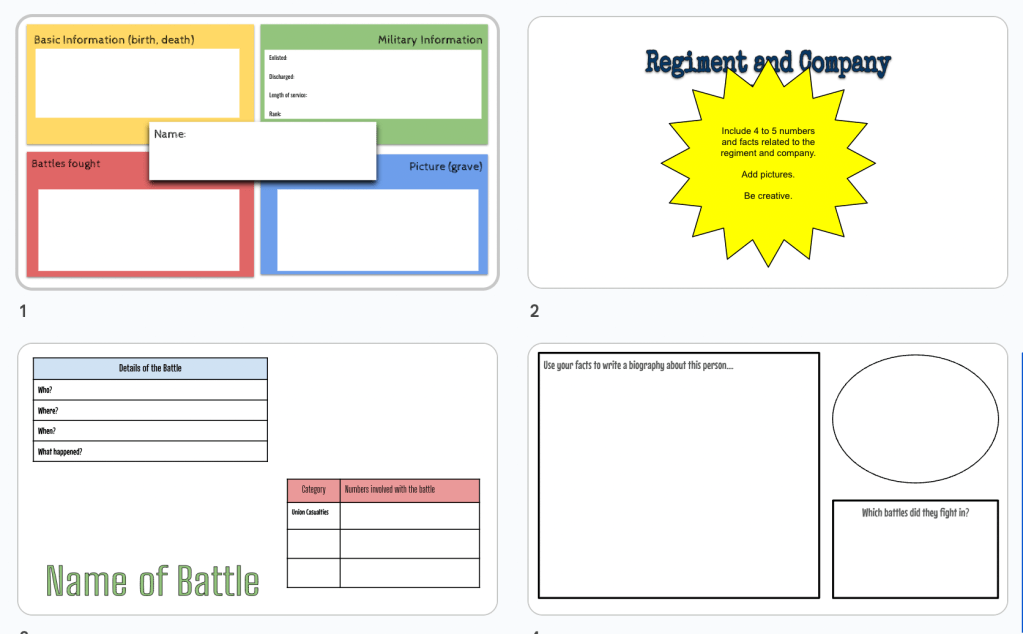
To assist students in organizing their research findings, I prepared a Google Slidedeck containing a series of EduProtocols. These protocols offered structured frameworks for recording and analyzing the information gathered.
- Frayer Model: Students used this protocol to collect and categorize essential information about the Civil War veterans they were researching, ensuring a comprehensive overview of each individual’s background.
- Number Mania EduProtocol: As the Fold3 database provided details about regiments and companies, including statistics like the number of wounded, deceased, and average age of enlistees, this protocol allowed students to analyze and interpret these numerical data points.
- Thick Slide: This protocol encouraged students to delve into a specific battle that the Civil War veteran may have participated in. By researching and documenting key details about the battle, students gained a deeper understanding of the historical context in which their chosen veterans played a part.
To inspire our students, I emphasized that the work they were engaged in mirrored the tasks undertaken by historians. Starting with a name and sifting through various resources, they were piecing together stories of individuals and events that had shaped our nation’s history. This realization highlighted the importance of their research and fostered a sense of pride in their role as historical detectives.
Friday’s social studies lesson provided a platform for students to dive into the stories of Civil War veterans buried in the Watkins Hill Cemetery. Through collaborative sharing, research utilizing Fold3, and the implementation of EduProtocols, students embarked on an exciting journey to uncover the rich historical tapestry woven by these brave individuals.
By immersing our students in the process of historical investigation, we foster a love for research, critical thinking, and a deeper understanding of the past.

 Moler's Musings