
Some lessons are bad. Some are good. Some are great. Whenever I’m reading the procedures for a lesson, I always evaluate it based on the 4 C’s – are the students creating, critically thinking, collaborating, and communicating. I also evaluate it based on the content and vocabulary being at an appropriate level for the students in 505. This is an example of how I took a lesson, which I would consider good, and redesigned it with EduProtocols.
I was looking for a lesson on resistance to slavery and I didn’t have time to use the lesson from last year. I’m five to six days off of my pace from last year. As I was browsing, I found this good lesson on Zinn Education – Poetry of Defiance: How the Enslaved Resisted.
This lesson had it all. It had students analyzing quotes. Students were collaborating with evidence of how the enslaved resisted. Students finished the lesson collaborating as they wrote a “Write that I” poem. Here is a simplified step-by-step version of the suggested procedure:
- Explain to students that they will learn about different ways enslaved people resisted slavery.
- Write the following statement on the board: “By 1860, there were more millionaires (slaveholders all) living in the lower Mississippi Valley than anywhere else in the United States. In the same year, the nearly 4 million American slaves were worth some $3.5 billion, making them the largest single financial asset in the entire U.S. economy, worth more than all manufacturing and railroads combined.” Ask for students’ reactions and lead a discussion on the importance of enslaved people’s labor and their power and limitations.
- Clarify any terms or concepts necessary for students to understand, such as labor strikes and the variety of locations where enslaved people worked.
- Distribute one or two quotes to each student about resisting slavery and provide the “Resisting Slavery Mixer Questions” handout.
- Explain that students will move around the room, share their quotes with others, and answer questions on the handout.
- When most students have finished, ask them to get into their groups, which are labeled by number and theme.
- If there is time, have students reflect on how the resistance of enslaved people challenged pro-slavery arguments such as this, “The slaves of the South are the happiest, and in some sense, the freest people in the world. The children and the aged and infirm work not at all, and yet have all the comforts and necessaries of life provided for them. They enjoy liberty, because they are oppressed neither by care or labor. The women do little hard work, and are protected from the despotism of their husbands by their masters.”
- Explain that students will create a collective poem using the quotes they received.
Write the first two lines of the poem on the board for the class.
I began thinking to myself, “How can I keep a similar structure of this lesson with EduProtocols?” Here was my thought process…
I often begin with the end in mind…I like the poem idea. However, as I dove into “Write that I” poems, it gets pretty in-depth. Plus, I have never heard of these poems. Trying to teach this to 8th graders in a day is something I didn’t have time to do. My mind immediately went to a Retell in Rhyme EduProtocol. I]Then I thought it might be great to smash Retell in Rhyme with a Sketch and Tell so students could add to their creativity and create a picture for their Retell in Rhyme.
Then I went back to beginning. A good way to hit on vocabulary is a Fast and Curious. I used ChatGPT to create some Gimkit questions using the examples of resistance. The fast and curious reps would expose the students to examples of resistance, and vocabulary, they might encounter during the lesson.
I like the idea of using a quote. This particular lesson had two quotes that were super interesting. However, I wanted to only use one. The quote was perfect a Thin Slide – prove the quote wrong using one example of resistance and one picture. I chose the quote from George Fitzhugh just to see the reactions of the students. I copied and pasted the quote to a slide deck. Before the Fast and Curious, I wanted to read the quote and have the students bury it in their minds and think about it. The plan was to come back to the quote after students collected notes about resistance in a Frayer. I envisioned them proving the quote wrong with examples of resistance. Plus, with having 60+ different slides with examples of resistance, this could provide a way to help students finish their Frayer.
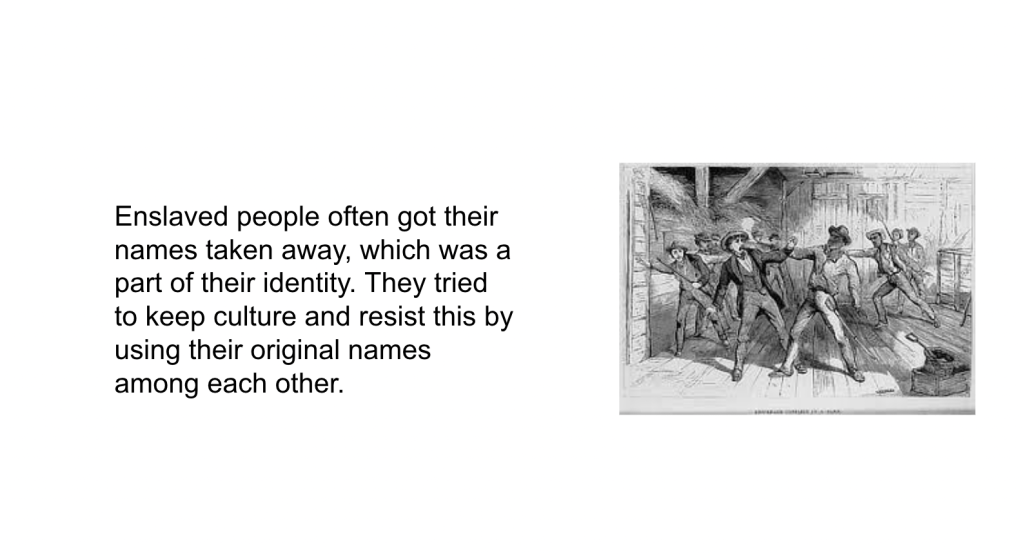

I wanted a way to provide some background information to resistance. One of the best, quickest ways I provide such information is through a CyberSandwich. So, I took an article from the lesson and pasted it onto a Google Doc. I had the students partner up, read for 10 minutes, take notes, compare notes, and write a brief summary.


For the examples of resistance, I wanted to drop the worksheet with questions. Instead, I put the examples of resistance in sever different envelopes around the room. Students worked in groups of 2 to 3 and walked around the room collecting examples of resistance using a Frayer. I love having students use Frayers to collect notes to contribute to, and create, a larger project/assessment.


Back the beginning, or the end…Students now have built an understanding of resistance to slavery through Fast and Curious, CyberSandwich, and they had notes on a Frayer. I wanted them to write a Retell in Rhyme poem about resistance and illustrate some aspect of the poem with Google Shapes. The Sketch and Tell and Retell in Rhyme are two things the students are familiar with.
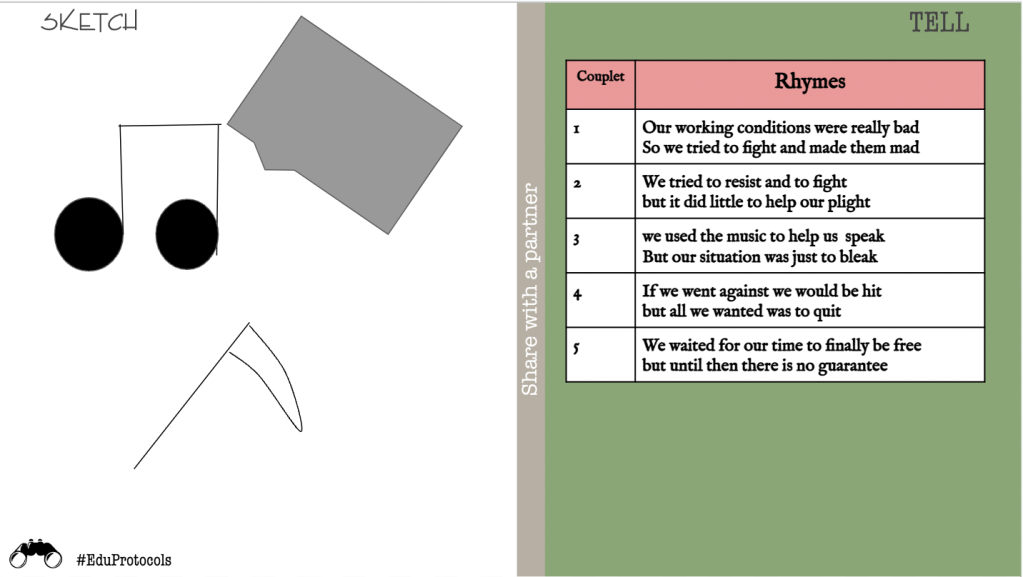
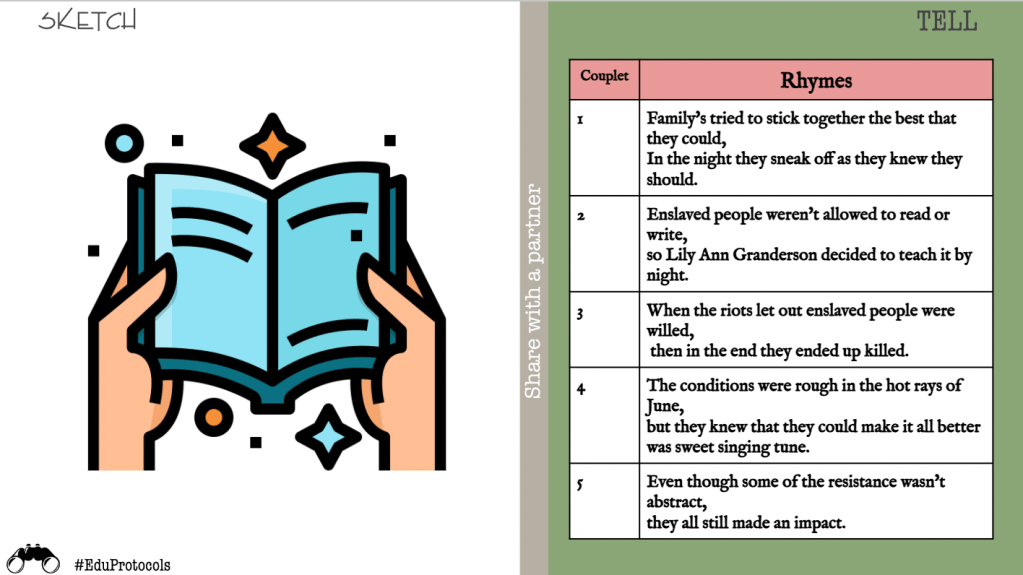
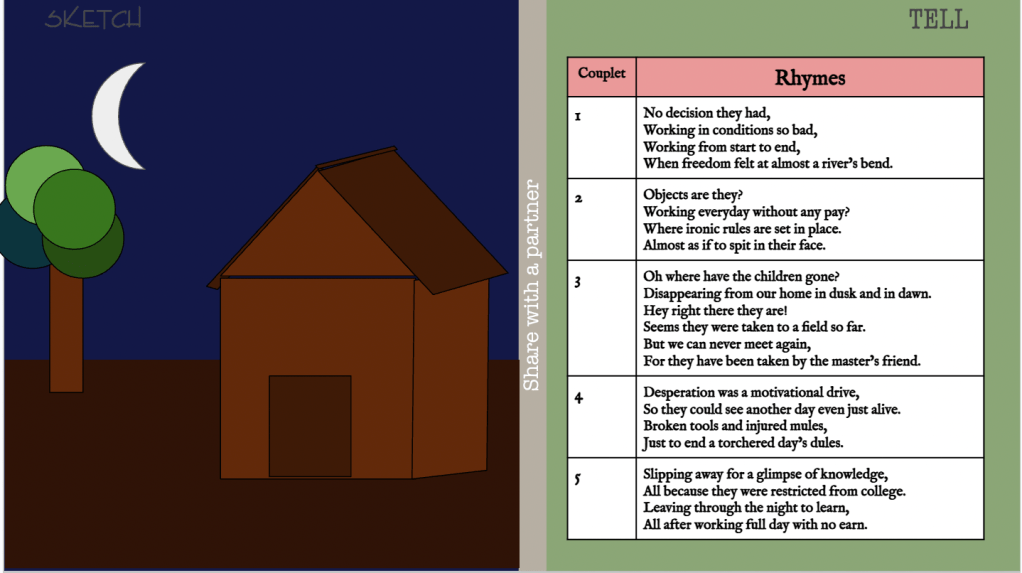
In the end, I added an extra day to the lesson. Instead of a two day lesson, it took three days. However, through the use of EduProtocols I was able to use familiar lesson frames, increase the creativity and collaboration among students. Here is a layout of the lesson day by day:
Day 1:
- Thin Slide – introduce quote
- Fast and Curious
- CyberSandwich
- Frayer
Day 2:
- Fast and Curious
- Frayer
- Thin Slide
- Sketch and Retell in Rhyme
Day 3:
- Sketch and Retell in Rhyme
- Fast and Curious

 Moler's Musings