This week, my focus was on the Civil War and delving into the vocabulary and events that ultimately led to this significant chapter in American history. We delved into the intriguing world of compromises, explored the complexities of the Kansas-Nebraska Act, and examined the profound impact of the Dred Scott case.
To make the learning experience engaging and interactive, I incorporated a variety of Eduprotocols. We kicked off the week with the Repuzzler protocol, which proved to be a fantastic way to reinforce Civil War vocabulary. Then, I employed the Cybersandwich technique to dive deeper into the intricacies of the Kansas-Nebraska Act, offering my students a unique perspective on its historical significance. Additionally, I utilized a “thick slide” approach to discuss the compromises that were made during this period, encouraging critical thinking.
We explored the infamous Dred Scott case and its implications on the course of American history. To make the topic more relatable, we drew a parallel to a local case involving Henry Poindexter, igniting a spark of curiosity and empathy within the classroom.
The Cybersandwich protocol provided the perfect framework for this comparative analysis. We began by examining the Dred Scott case, diving deep into its legal and social significance. Students explored online resources, read articles, and watched videos to gain a comprehensive understanding of the case’s impact on the lives of enslaved individuals and the nation as a whole.
However, despite my best efforts to create an organized and structured learning environment, this week felt like a jumbled mess. My classes seemed scattered, and with only 15 days of school left, it felt as though everything was out of control and chaotic. But as dedicated educators, we persevere and find ways to navigate through the challenges.
In the midst of the chaos, my students and I are pushing forward, determined to make the most of our time together. We understand that life can be unpredictable, but we are committed to learning, growing, and making the best of every situation. Together, we are weathering the storm and embracing the journey, even when it feels like everything is up in the air.
Monday – TIP Chart, Fast and Curious
Tuesday – Repuzzler, Compromises Over Slavery Thick Slide
Wednesday – Kansas Nebraska Act CyberSandwich
Thursday – Dred Scott CyberSandwich, Sketch and Tell
Friday – Career Day
Please donate to Samantha Cain’s GoFundMe Page
Monday
Monday’s class, we explored into the world of Civil War vocabulary. From engaging games to interactive activities, it was a day filled with movement and exploration.
To kick off the class, we started with a fast and curious Blooket game. Students eagerly participated, testing their knowledge of Civil War vocabulary. Although the class average across all sessions was around 57%, the enthusiasm and engagement were palpable. It was evident that the game sparked a desire to learn and improve their understanding of the topic.
Following the Blooket game, we transitioned into a TIP (Term, Information, and Picture) chart activity. To facilitate movement and provide a hands-on experience, I strategically placed eight envelopes containing Civil War vocabulary around the room. Students were excited to get up and explore these stations. At each envelope, they discovered a term related to the Civil War, paraphrased its definition, and created a symbol representing its meaning.
This activity encouraged collaboration and critical thinking as students engaged in discussions, shared their interpretations, and debated the best way to visually depict the terms. It not only deepened their understanding of the vocabulary but also fostered creativity and teamwork.
As the class drew to a close, we wrapped up with another round of the fast and curious Blooket game. The excitement and determination in the air were palpable as students put their newfound knowledge to the test. The combined results from all classes revealed a remarkable improvement, with an average of around 68%. The growth demonstrated by the students was a testament to their perseverance and the engaging learning activities we undertook together.
Monday’s class showcased the power of interactive learning and movement. By incorporating games like Blooket and activities like the TIP chart, we created an environment where students were not only learning but also enjoying the process. The combination of movement, collaboration, and creativity sparked a deeper understanding of Civil War vocabulary and left a lasting impact on the students.
Moreover, it served as a reminder of the importance of celebrating progress, regardless of the numerical results. The growth in student engagement and their desire to learn and improve were invaluable accomplishments that cannot be solely quantified by percentages.
Tuesday
Tuesday’s lesson, which brought about unexpected challenges, also provided opportunities for growth and collaboration. Our focus was on the Civil War, and though we encountered setbacks during our Fast and Curious Blooket game, we managed to pivot and engage in meaningful activities that fostered creativity and critical thinking.
Class began with another round of the Fast and Curious Blooket game. However, this time, things didn’t go as smoothly as we had hoped. It became apparent that some students had discovered ways to exploit the game using hacks, auto-pickers, and cheats, making it impossible for others to win. As an educator, I recognized the need to address this issue and find a way to defend against such actions.
In response to the challenges we faced, I immediately started researching strategies to prevent and counteract the use of cheats in online games like Blooket. While I am still in the process of finding a comprehensive solution, I remain determined to find an answer. As educators, we must adapt to the ever-evolving digital landscape and find ways to navigate these obstacles together.
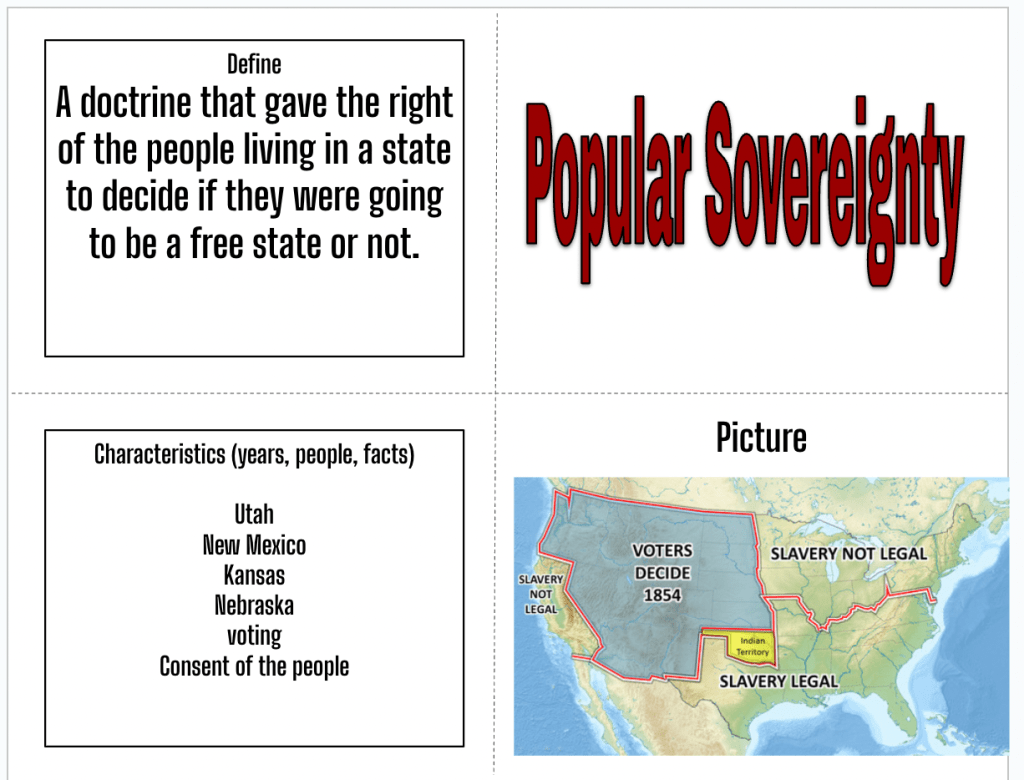
To shift the focus and engage students in a collaborative activity, we transitioned to the Repuzzler Eduprotocol. Students were tasked with adding definitions, characteristics, and pictures to each vocabulary word we had covered so far. I encouraged them to refer back to their TIP charts from Monday’s class to aid their creativity and understanding.
Throughout the activity, students collaborated and worked together to create eight slides, each representing a specific term related to the Civil War. I provided feedback on their use of visuals, guiding them to select appropriate images that accurately represented key words or characteristics. For example, for the Compromise of 1850, a picture of the California flag could symbolize its significance.
After completing the Repuzzler, we revisited the previous week’s work, giving students time to finish their Thick Slides on either the Missouri Compromise or the Compromise of 1850. This exercise allowed them to synthesize information and showcase their understanding of these pivotal events.
To deepen their analysis, students then created Venn diagrams to compare and contrast the two compromises. This activity encouraged critical thinking and fostered discussions as they explored the similarities and differences between the compromises, ultimately gaining a deeper understanding of their historical context and implications.
Tuesday’s lesson was a reminder that even the best-laid plans can encounter unexpected challenges. It highlighted the importance of adaptability and the necessity of finding solutions to address issues that arise in our ever-evolving digital landscape.



Wednesday
Wednesday was a day that tested my patience and made me question my career choice. While challenging days are a rarity for me, it’s important to acknowledge and reflect upon them, as they shape our growth and resilience as educators.
Wednesday proved to be a day filled with unexpected obstacles, where nothing seemed to go according to plan. Multiple stern lectures were necessary to address behavioral issues, incomplete work, and a lack of respect. Despite my efforts, it felt as though my words fell on deaf ears, leaving me frustrated and disheartened.
The day began with a Fast and Curious Gimkit game, which was meant to be an engaging and educational activity. However, the scores seemed to regress once again, adding to my mounting frustration. I noticed that some students struggled to pick up on obvious clues within the questions, such as the word “section” in the question about sectionalism. This lack of attention to detail hindered their progress, further compounding my disappointment.
To redirect the class and salvage the lesson, I decided to incorporate a hands-on activity using the Repuzzler slides from Tuesday. However, what I thought would be a quick task turned out to be time-consuming. I printed the best six slides and divided them into fourths, distributing different sets to each group. The objective was for them to reorganize the cards based on their understanding of the vocabulary terms.
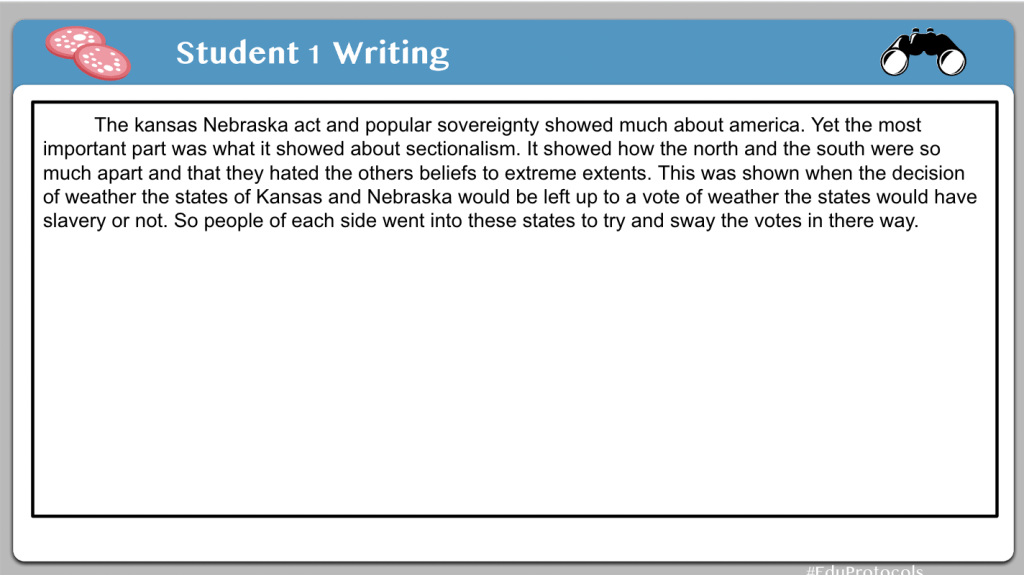
Unfortunately, the activity took longer than anticipated, consuming close to 15-20 minutes. This unexpected delay cut into the time I had hoped to devote to the Kansas and Nebraska Act cybersandwich. The limited time available for reading, note-taking, and discussion left some students unable to complete the task, adding to my mounting frustration.
Seeking Resilience and Renewed Optimism As Wednesday drew to a close, I found myself feeling worn down and discouraged. The challenges and setbacks had taken a toll on my enthusiasm and dedication. However, in moments like these, it is important to remind ourselves that teaching is a journey filled with highs and lows.
Thursday, a fresh day, loomed on the horizon, offering an opportunity for a new beginning. It is essential to acknowledge our frustrations, learn from them, and seek support from colleagues and mentors. By doing so, we can regain our sense of purpose and rekindle the passion that brought us to this noble profession.
Challenging days are an inevitable part of the teaching journey, and it is during these times that our dedication and resilience are put to the test. By reflecting on the obstacles we face and seeking ways to grow and improve, we can find the strength to persevere.


Thursday
In Thursday’s class, we delved into the historical significance of the Dred Scott case, weaving in a local connection to engage students on a deeper level. Exploring the similarities between the Dred Scott case and the intriguing story of Henry Poindexter, we embarked on a journey through time, comparing legal battles and examining the impact of key amendments.
As an educator, I always strive to connect historical events to the local context, making them more relatable and meaningful for my students. In this particular lesson, we discovered a remarkable similarity between the Dred Scott case of 1857 and a case involving Henry Poindexter in 1856.
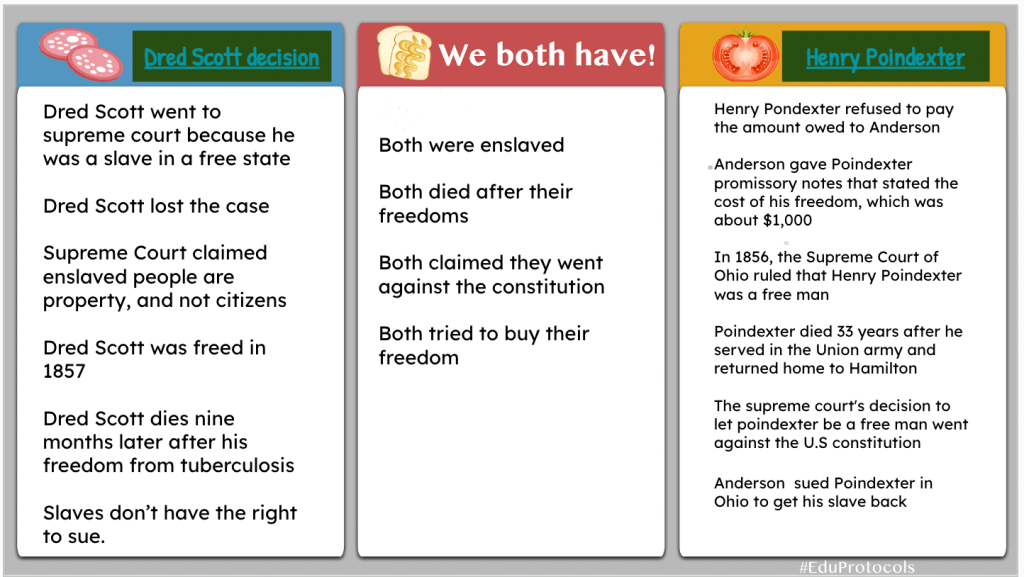
Henry Poindexter signed a promissory note committing to pay $1,000 for his freedom. When his enslaver allowed him to cross the river into Ohio, specifically in New Richmond and Cincinnati, Henry decided not to honor the agreement, arguing that he was now in the free state of Ohio. Subsequently, his enslaver sued him, leading to a legal battle that reached the Ohio Supreme Court. Ultimately, the court ruled in Henry’s favor, declaring him free. This local connection offered a unique opportunity to understand the complexities of the time through a relatable lens.
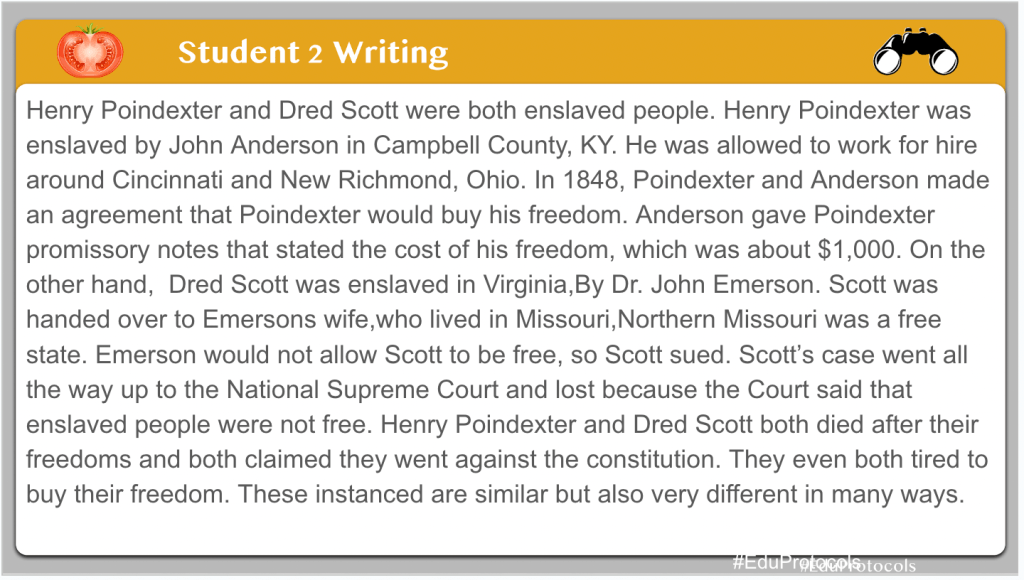
To deepen our understanding, we engaged in a Cybersandwich activity, comparing the Dred Scott case with Henry Poindexter’s legal battle. Students filled out a Venn diagram, identifying similarities and differences between the two cases. This exercise encouraged critical thinking, analysis, and reflection on the legal implications and consequences of each situation.
Following the Venn diagram, students composed a compare/contrast text structure to summarize their findings. This exercise not only reinforced their understanding of the cases but also developed their writing skills and ability to articulate complex ideas effectively.
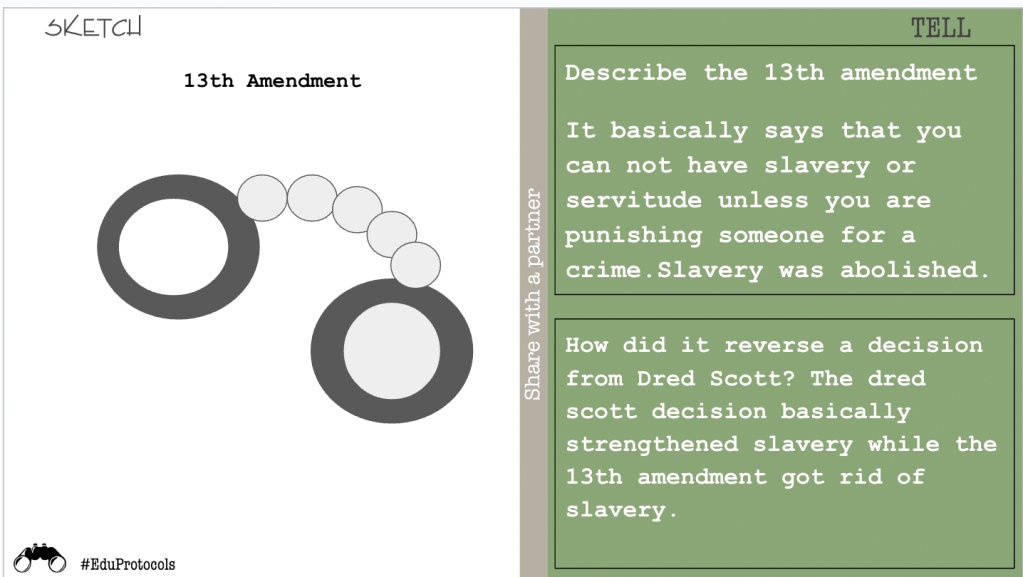
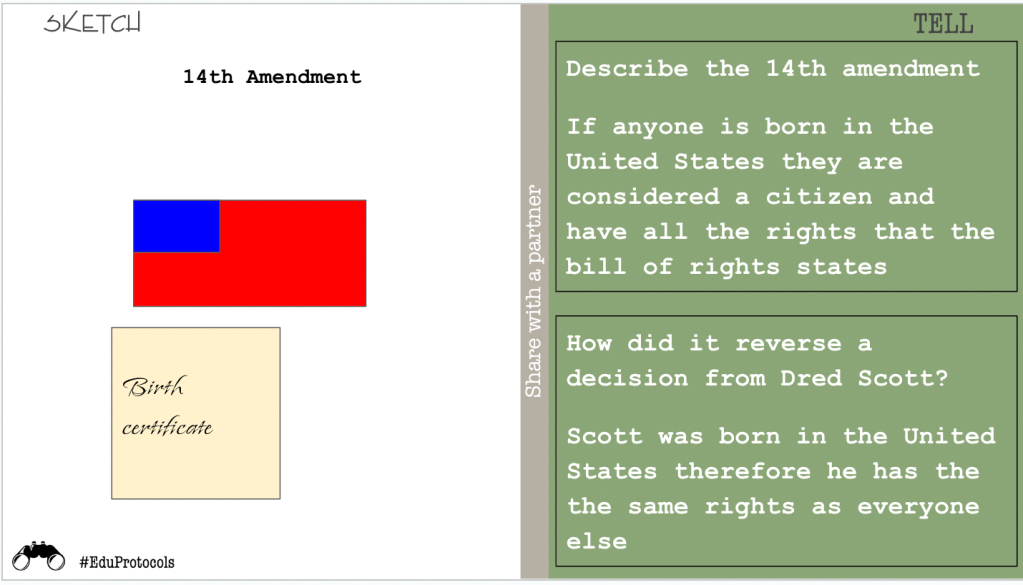
To further our exploration, we connected the Dred Scott case to the 13th and 14th Amendments, which had profound implications for civil rights and the overturning of the infamous decision. Employing a Sketch and Tell activity, students utilized Google Shapes to create visual representations of the 13th and 14th Amendments.
Accompanied by their sketches, students “told” the story of the amendments in their own words, explaining how each amendment played a significant role in nullifying the Dred Scott case decision. This exercise fostered creativity, critical thinking, and a deeper comprehension of the amendments’ impact on the course of history.
Thursday’s lesson was a cool exploration of local history intertwined with national events. By connecting the Dred Scott case to the story of Henry Poindexter, we provided students with a personal connection to a pivotal moment in our nation’s past. Moreover, examining the 13th and 14th Amendments enabled students to comprehend how the legal landscape evolved and how these amendments transformed the rights of individuals.
As we move forward, I remain committed to creating immersive and thought-provoking experiences that foster a deeper understanding of history and its relevance to our lives today. By embracing local history and encouraging critical analysis, we empower our students to recognize the impact of historical events and to draw parallels with their own lives.




 Moler's Musings