
This week we started a new lesson titled, Foreign Affairs of a Young Nation. We are taking a look at George Washington’s advice, and foreign policy, mentioned in his Farewell Address. We are also taking a look at how our first presidents involved our country in world affairs. Did they practice isolationism? Did they involve us in world affairs? At what cost?
Last year, part of this lesson was a blogging unit I out together. This year, as I mentioned in older posts, I’m taking a new approach. I’m using some classic rack and stack combinations of EduProtocols. Moreover, I’m trying some new rack and stack combinations.
I began this new lesson with some vocabulary using the Pile of Words strategy created by Jay McTighe. We followed this up with some Fast and Curious on Quizizz. The next day brought a CyberSandwich with Washington’s foreign policy with a Fast and Curious. Then we used a Hero’s Journey and Archetype Four Square combination with presidents.
The stories of the first few presidents trying to uphold President Washington’s advice is a perfect match with the Hero’s Journey. The Archetype Four Square is a great way to reflect on the presidents. It’s also a great way to get students making connections with evidence and reasoning.
Monday – No School
Tuesday – Pile of Words, Fast and Curious
Wednesday – CyberSandwich, Frayer, Fast and Curious
Thursday – Hero’s Journey, Archetype Four Square, Fast and Curious
Friday – Hero’s Journey (Jefferson), Archetype Four Square, Fast and Curious
Tuesday
Every year I try to discover new, and better, ways to teach vocabulary. I’m always looking for new strategies. As my co-author, Scott Petri, mentions from a Marzano study, students get 55% of their academic vocabulary from social studies classes. Teaching vocabulary correctly is important.
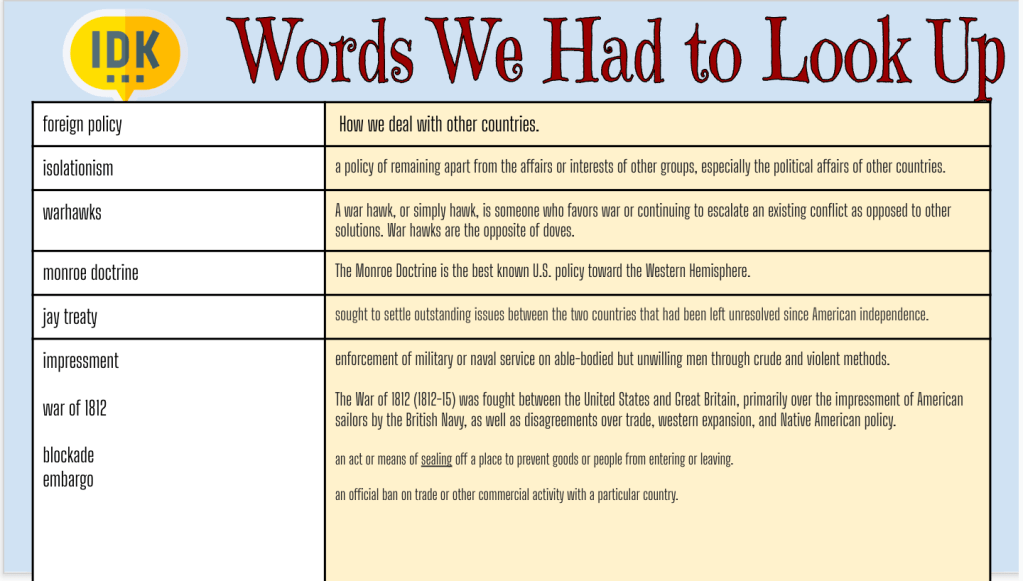
One of my new favorite strategies is the Pile of Words created by Jay McTighe. I went through the new lesson and made a list of important words. The words were already listed out in the History Alive chapter. However, I always add in a few extra words of my own. For example, I added the word: foreign policy.
When students came into class, I had the list of words posted on the Newline board and pronounced each one. I gave students 5 minutes to go through the list and pick out words they already knew. This was an interesting one because most students only knew one word out of the ten listed. The one word they remembered came from last week’s lesson: XYZ Affair.
Next I had students go through the words they didn’t know. I gave them 15 minutes to lookup and define the unknown words. I gave them this much time because they had so many words to lookup. After the timer went off, I had students discuss the words and categorize them. I have found that many students like to create categories FIRST. I try to coach them up and have them sort words FIRST, create categories SECOND. After the discussion, I had students predict what the lesson was about.
This time around, I didn’t do a fast and curious. I didn’t give any background information to the lesson. I wanted the predictions to be based purely on the vocabulary. Here are some predictions:
- “War and politics and how George Washington’s Farewell had an effect on what is going to happen or if it will help them. Amd america expanding or other countries expanding”
- “I think we will learn about how the U.S expanded and kicked out Spain colonies,Great britain colonies and french colonies. I also think we will learn about how different countries were involved with each other and how dIfferent words Involved U.S history.”
- “This lesson is going to be about how wars were fought over disputed land claims in north america, the body of the foreign policy, about treaties, the war of 1812, the monroe doctrine, and finally, about blockades and embargoes.”



Following the Pile of Words, students completed a Quizizz for a Fast and Curious. The Quizizz was a combination of vocabulary and content. The class averages were: 49%, and 52%.
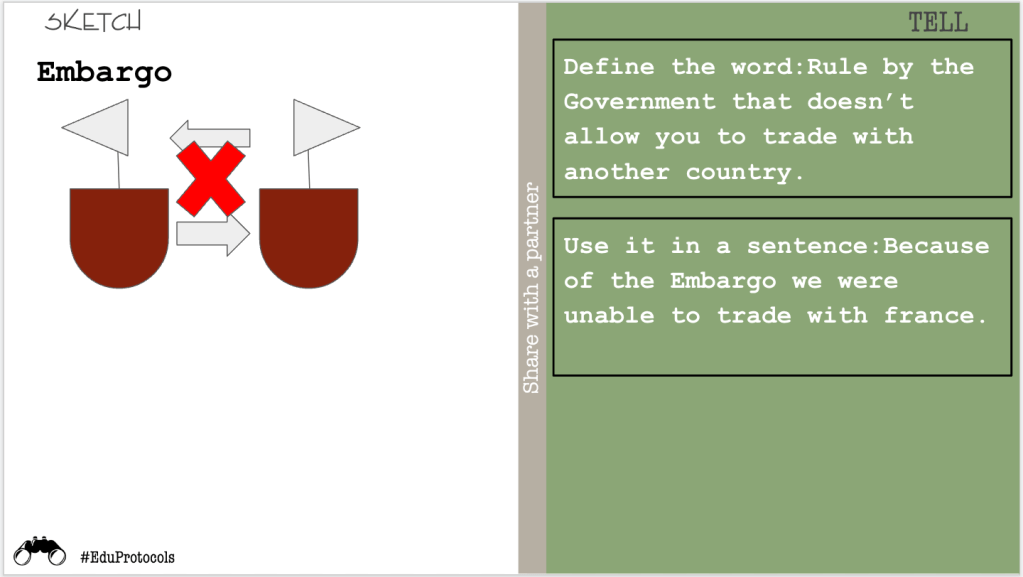
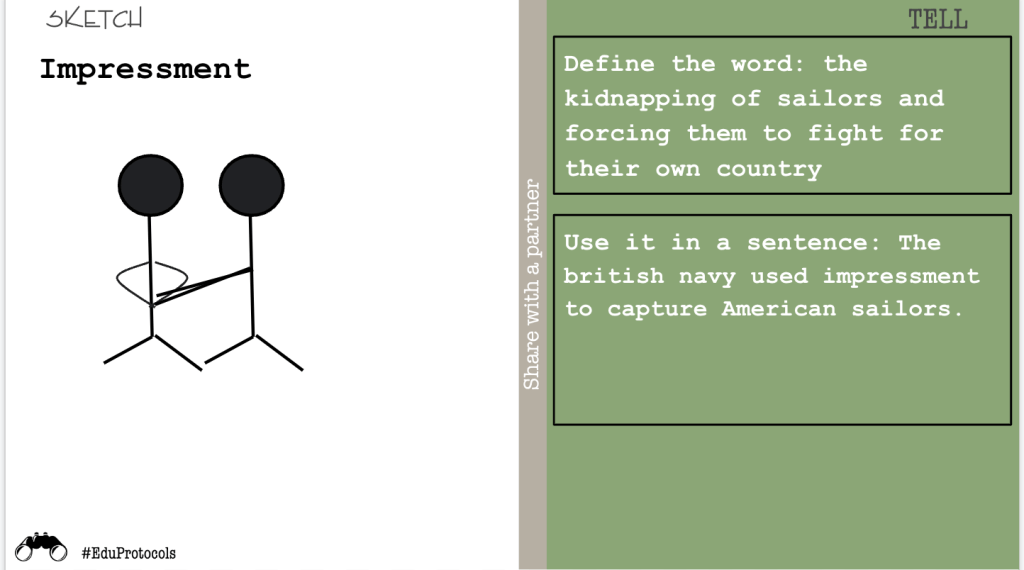
Unfortunately, I had to leave for the 2nd half of the day. Therefore, I changed my lesson plan completely. This is the beauty of EduProtocols. I switched my lesson to a Sketch and Tell paired with an EdPuzzle, and a Quizizz set up as an assignment. Whenever I’m gone, I try to leave FAMILIAR activities. The students understand Sketch and Tell, Edpuzzle, and Quizizz.
There was no guest teacher to cover my class. They were in the “learning lab” (sarcastic quotes) with supervision. Even in that situation, I had 75% student engagement. I’m defining engagement in this situation as students opening ONE of the assignments and completing it.
On the Sketch and Tell I left, students had to define four words, use it in a sentence, and create a picture to represent the word. The words I left were: embargo, impressment, neutrality, isolationism. The EdPuzzle video was a review of Washington’s Farewell Address. The Quizizz was 15 questions with a combination of vocabulary and content knowledge.


Wednesday
I began class on Wednesday with a Fast and Curious. I did this so I could give some feedback on the commonly missed questions and give feedback with vocabulary related questions.
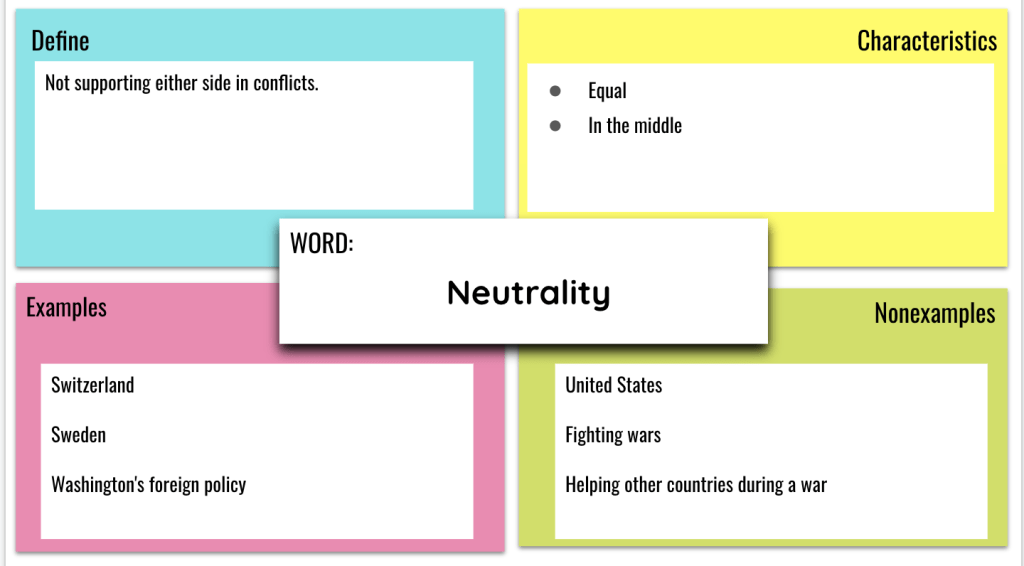
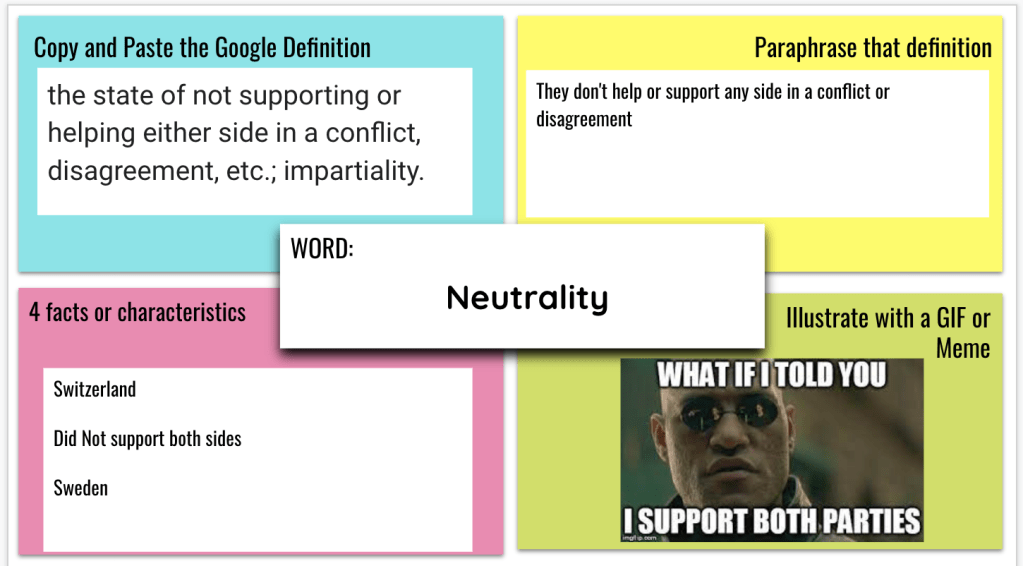
Following the Fast and Curious, students completed a Frayer with the words neutrality and foreign policy. The template I used was created by Amanda Sandoval (@historysandoval). I felt like this word was important to understanding the textbook section about Washington’s Foreign Policy.

Following the Frayer, we began a CyberSandwich with George Washington’s foreign policy. We are getting better and used the process of a CyberSandwich. The reading and notetaking took eight minutes. I had the students add four important facts to the Venn Diagram and discuss for 3 minutes. Finally, I had students write a paragraph and submit it through Socrative.
I like having students submit their paragraphs through Socrative for these reasons:
- Everything is in one spot. This means good feedback and quick grading.
- If I have class tiem leftover, I hit the “start vote” button on Socrative. Students read each other’s work and vote for the best paragraph. Then I will take that paragraph with the most votes, start a new Socrative question, and have students add more to the paragraph. Maybe I will have them change the topic sentence. Maybe it’s adding a vocabulary word. Either way, it makes them think differently.

We have been focusing on writing paragraphs with topic sentences, details, and a concluding sentence. If you knew some of the students who wrote those, you would be proud (I am). I have some awesome students!
We ended class with a Fast and Curious Quizizz. The class averages were: 60%, 62%, 65%, 58%, 68%. This was followed by some quick feedback for the most commonly missed questions.
Thursday and Friday
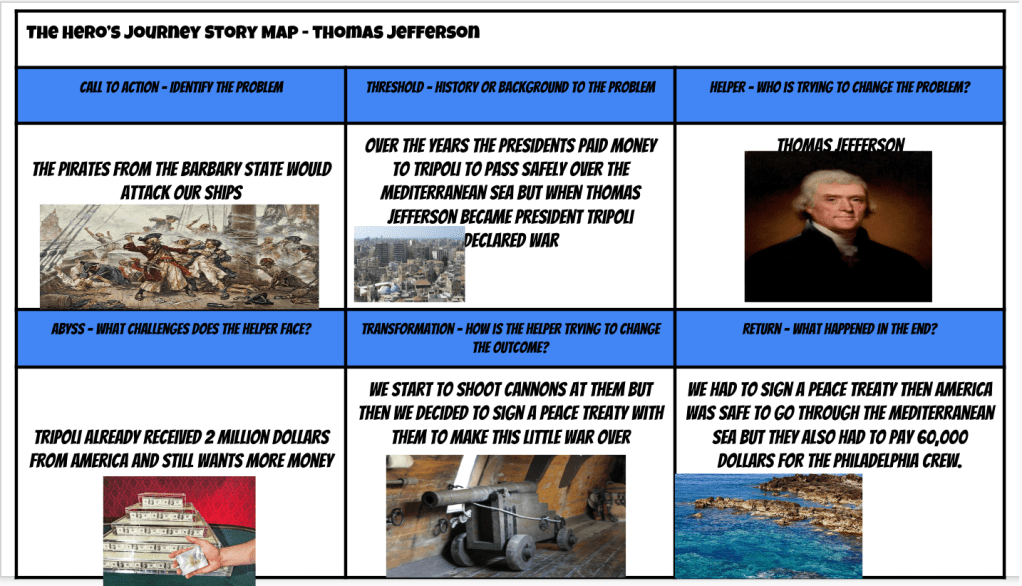
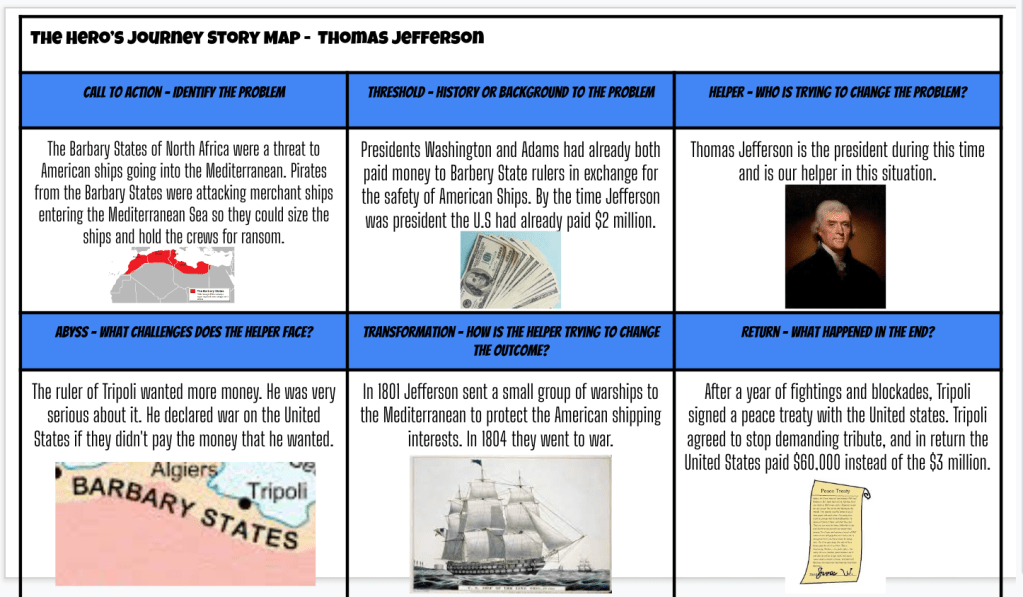
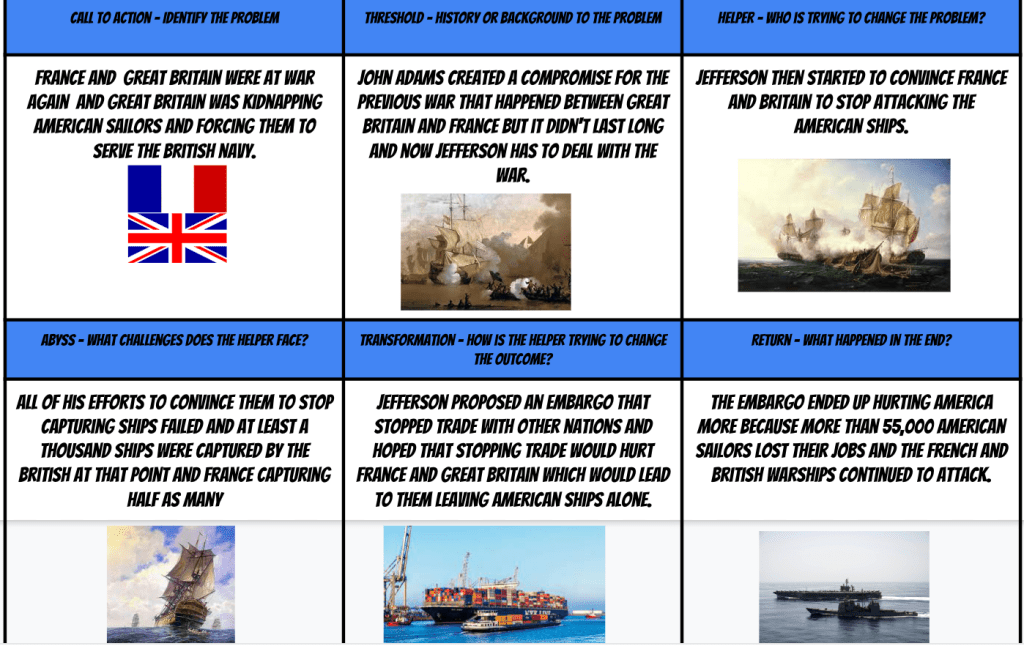
I was driving to school Thursday morning listening to my Daily Stoic podcast and thinking, “What the hell am I going to do today?” I do my best thinking in the car, mindlessly driving. It hit me about 5 minutes out from school – The Hero’s Journey and Archetype Four Square. It’s something new for the students, I have templates ready, and it’s a different way of comprehending. Plus, it works perfect with the stories of presidents trying to keep us out of wars against European countries.
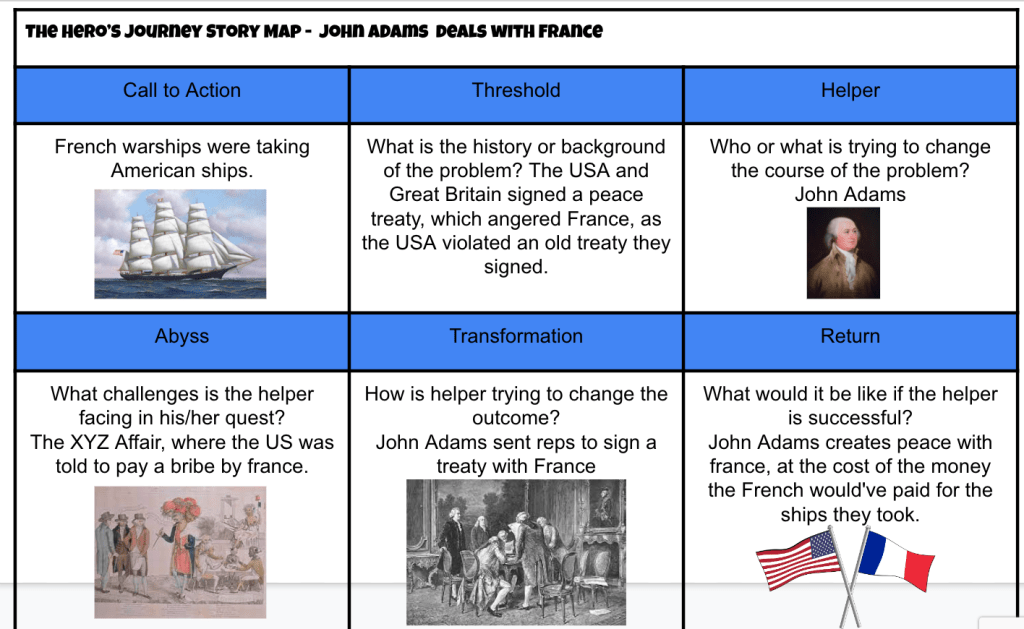
France attacking ships. The XYZ Affair, Insecure John Adams losing popularity. Jefferson paying ransoms to pirates. France and Great Britain impressing sailors. It works perfect with Hero’s Journey. How can these presidents follow Washington’s advice and avoid conflict?
Typically, I would do a low cognitive first rep with Hero’s Journey. I would suggest having the students map out a commercial with Hero’s Journey. However, I took a chance. I went for it. I read the textbook section about John Adams and did an I do, We do, You do with three boxes on the Hero’s Journey. For example:
- I do – I completed the problem on my own as I talked through the problem with the students. (France was attacking US ships.)
- We do – I asked the students, “What was the background to the problem?” They responded with, “France was mad at the Jay Treaty.”
- You do – I asked the students, “Your turn. Who is the helper or hero?” Some students said, “John Adams.” Other students said, “Napoleon.” They were all correct.
For any student needing extra help, I showed them some Hero’s Journey examples with Cinderella, Moana, and Harry Potter.
Once students were ready to go, I let take over on their own. They completed the Hero’s Journey with John Adams. With some feedback, they did a really nice job.
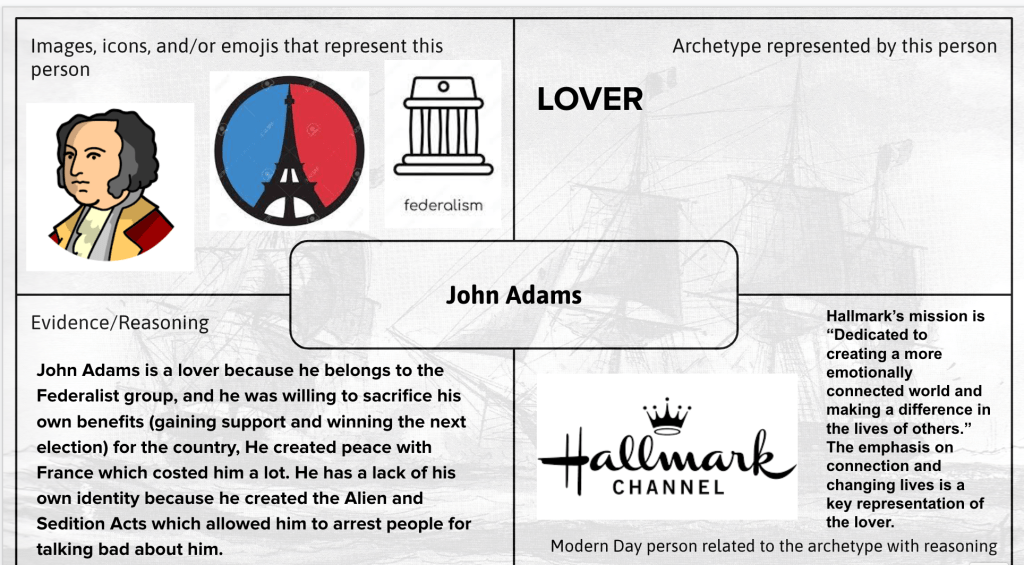
Following the Hero’s Journey, we completed an Archetype Four Square on John Adams. This a great way to get students reflecting on historical figures, using evidence, using reasoning, and making connections. Most students chose John Adams as a rebel. Some chose him as a magician. I said to them, “There are not right or wrong answers, only better answers. Justify your choice with evidence. Why is it the better choice?”
The next day, to keep reps going, students completed a Hero’s Journey and Archetype with Thomas Jefferson. I told them to focus on one problem Jefferson faced – Great britain and France attacking our ships or Barbary pirates. Overall, this second rep was better and I will provide it as a choice when we study the War of 1812.





 Moler's Musings