
This week was a shortened week with no school on Monday. I was in class for one day on Tuesday. Then I flew to Boston for MassCUE Wednesday through Friday.
We continued this week with a focus on the American Revolutionary War. Last week, one thing became clear – the students did not understand the Declaration of Independence (DOI). I simply could not do the same thing I did last year.
Last year, we did an in-depth exploration of the DOI where we ended with a blackout poetry lesson. With me being, gone, doing a blackout poetry lesson was out of the question. Plus, the fumes from our blackout poetry last year filled the school. It was an interesting day.
With my one day back, on Tuesday, I did a quick lesson on the DOI. I created a nearpod lesson, and we did Parafly with some excerpts. We also made some connections between grievances and past events we learned about. By the end of the lesson, students had a better understanding of the Declaration.
When I ended the class, I left it as the Declaration was the point of no return. The American Revolution was in full swing and the students would be learning more about the war.
Monday – No school
Tuesday – Nearpod Parafly
Wednesday and Thursday – American Revolution (Mr. Meehan History)
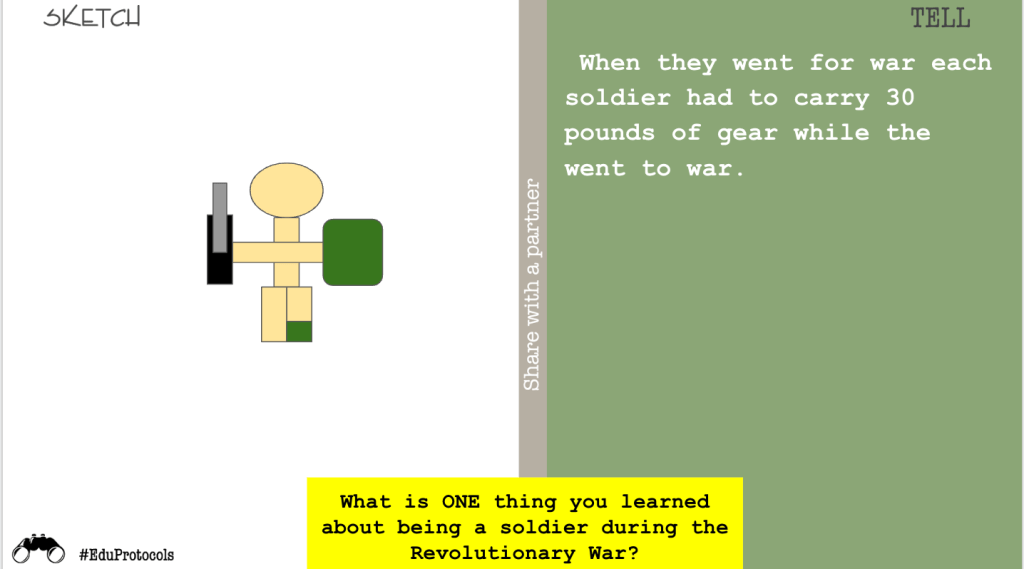
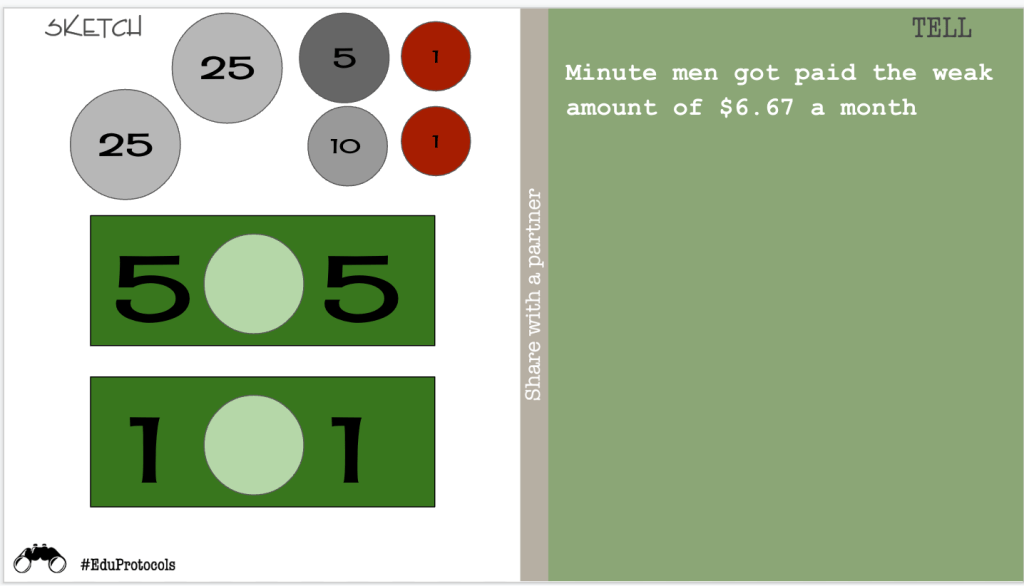
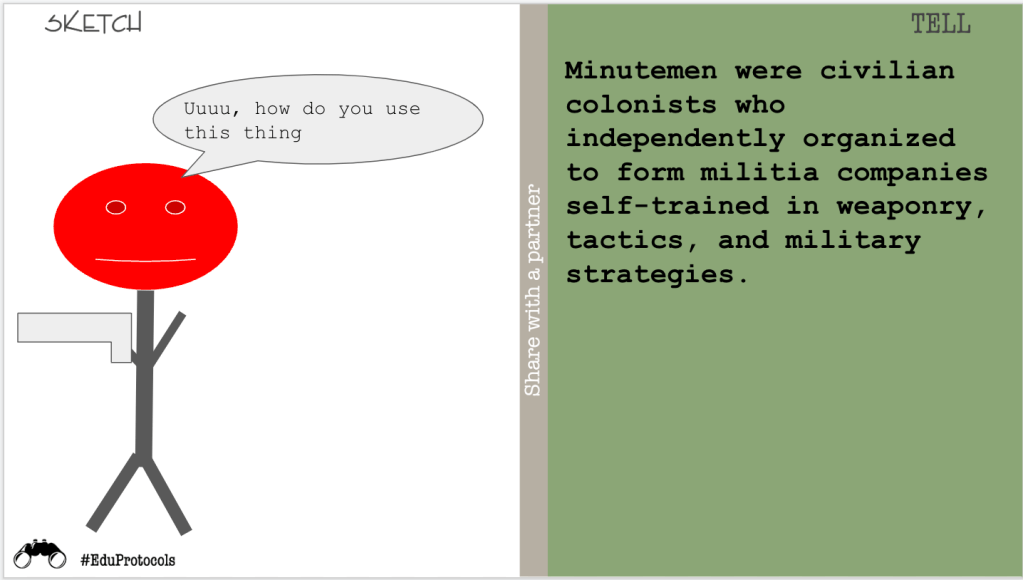
Friday – American Revolutionary War Soldiers (Mr. Meehan History) with a Sketch and Tell.
Tuesday
When I arrived today, I realized the students were confused about the Declaration of Independence. The message is fairly simple, but the configuration of words can be complex. As a result, I began class by showing a series of breakup clips from Seinfeld, Friends, and the Office. This provided an instant connection. Following the clips, I asked the students, “Why do you think I showed breakup clips?” Students began to think………..”Ummm because the colonies didn’t want to belong to Britain anymore. They were tired of the King. The colonists were tired of Parliament and taxation without representation.” The students figured it out. I framed the DOI as a breakup letter. This seemed to help them better understand the message written by Thomas Jefferson.
After our breakup videos, we used Parafly to help translate important sections of the DOI. With two of my classes, this strategy worked well. With three of my classes, I wish I would have Frayered some words such as: political bands, unalienable, endowed, self-evident, consent. This would have helped students develop better synonyms for these words when paraphrasing.
At the conclusion of the paraphrased sections, I had students identify which Enlightenment idea inspired those words: natural rights or social contract. I also had students make connections to previous content we learned. For example, with the grievances listed out against King George, we made connections back to the Boston Massacre, Intolerable Acts, and the Quartering Act.
The last slide in the nearpod had 4 statements on it with blanks. Here are these statements:
- All __________ are created equal.
- All people have basic __________________ that cannot be taken away.
- The government gets its power to make decisions and protect rights
from the _____________________ . - When the government does not protect the _____________ of the people, the _______________ have the right to _______________ or __________________ the government.
If students could fill in the blanks, then they understood the DOI. In the end, 95% of students could identify the enlightenment influence on the DOI and could fill in these four statements.
Wednesday and Thursday
For Wednesday and Thursday, I used a lesson I got from Mr. Meehan on Twitter. This lesson is similar to a hyperdoc, hyperslide, with several assignments about the American Revolutionary War. I made a few changes to the slides:
- Drag and drop arrows to the sentences that answers questions about Lexington and Concord.
- Weaknesses and Strengths of the British and Colonial Armies.
- True False statements paired with an infographic.
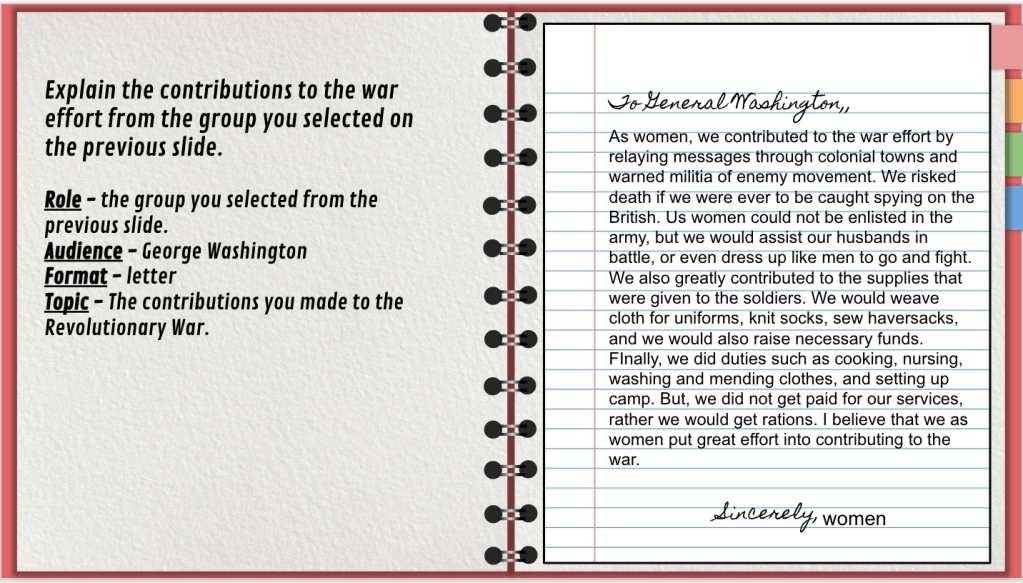
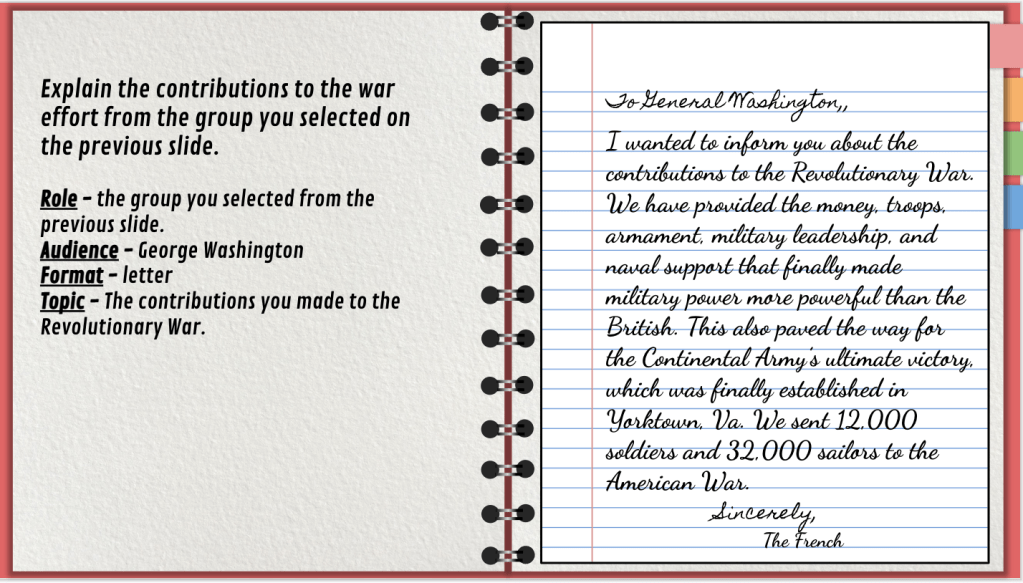
- Reading about different groups of people and how they contributed to the war. Then writing a letter from that group’s perspective. (Last year the slide was write a letter from General Washington’s perspective. Someone brought up a good point – why write from Washington’s perspective? Give other people a voice. So, I changed it and it worked out much better.
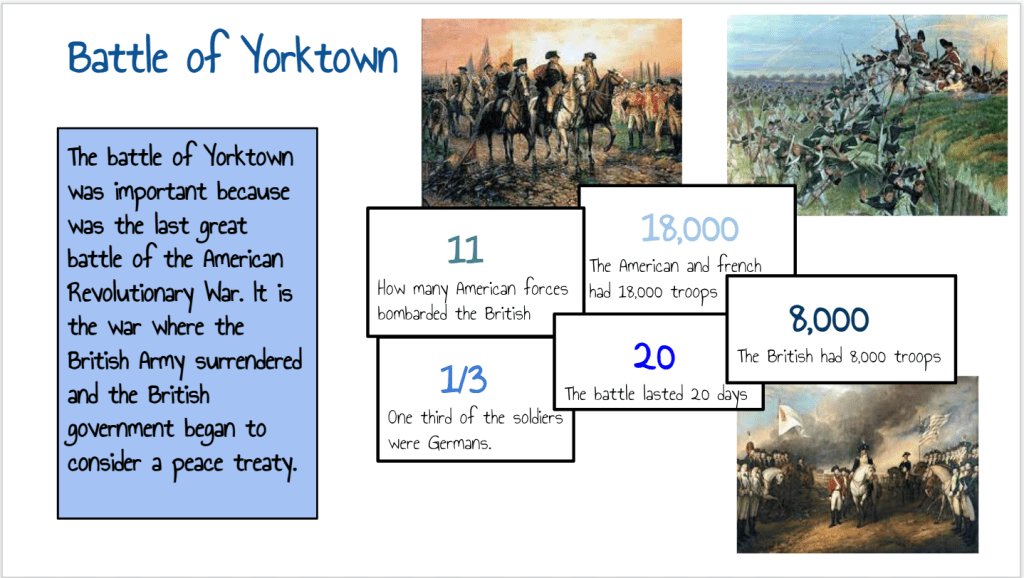
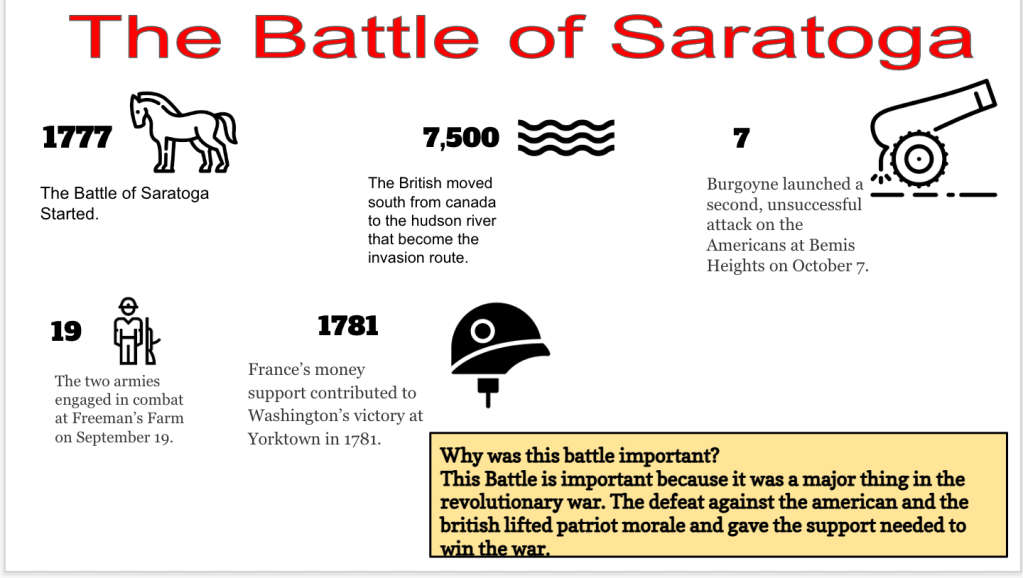
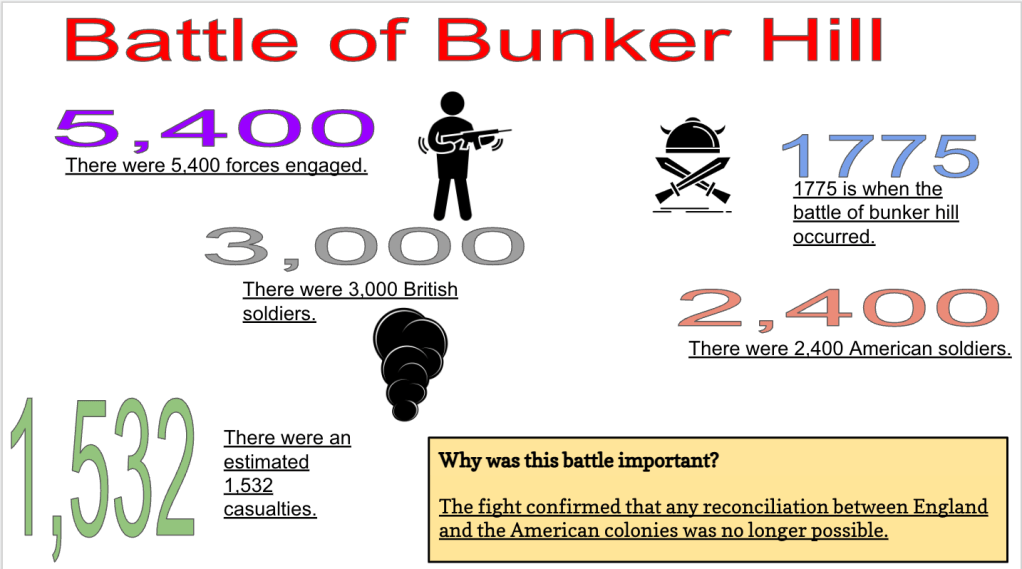
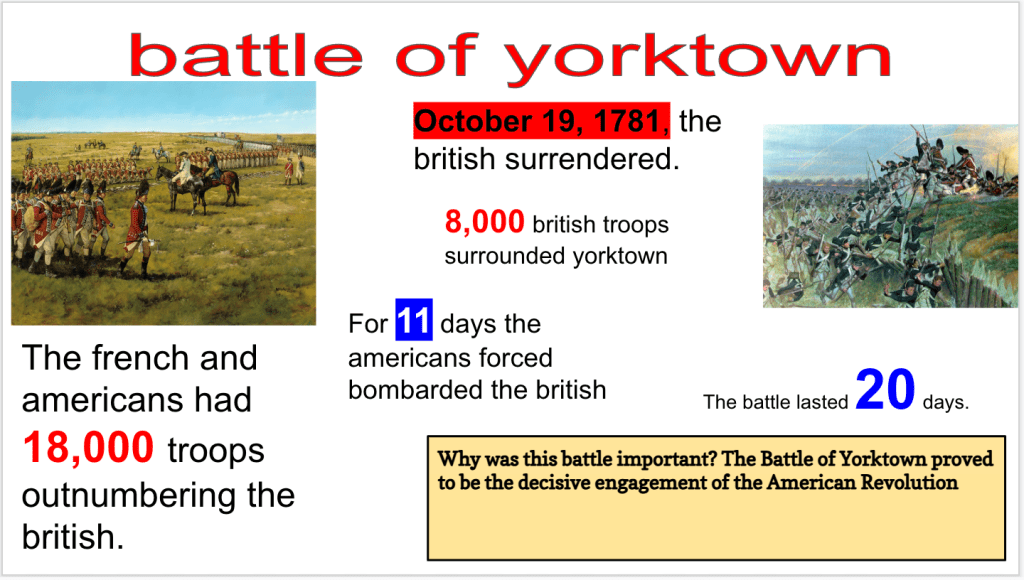
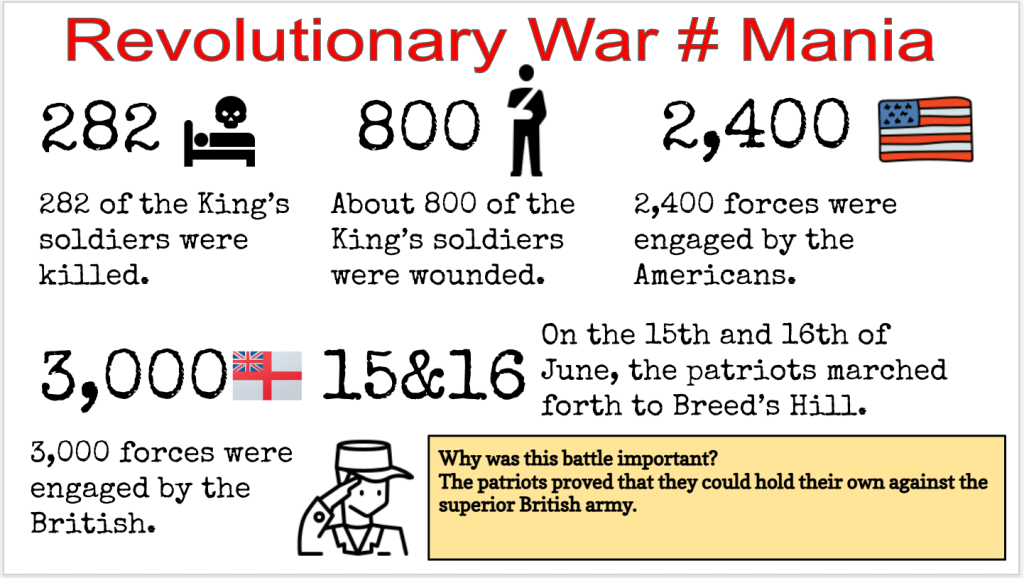
- Choose a battle and make a Number Mania.
- A slide with a song from Hamilton and some questions.
- A drag and drop slide that shows students how General Washington led the Americans to victory in the Battle of Yorktown.
For Wednesday, my expectation was to finish the first four options listed above. For Thursday, my expectation was to finish options five through seven listed above. I also set up a Quizizz to be taken twice. The students were shown the answer during the quiz and shown only the questions after the quiz. From these two days, I had 60% students engagement and 40% not engaged. It was interesting to see that 60% of students who were engaged scored a 70% or higher on the Quizizz and the other 40% scored a 69% or lower. I sent many, many emails of blank work screenshots to parents.
Here are some Number Mania’s and Letters:
Friday
Friday was a day to finish any missing assignments or learn about the experience of a soldier in the Revolutionary War. This lesson was another activity I got from Mr. Meehan on Twitter. It’s similar to a choose your own adventure as students click different options as they learn about colonial soldiers or minutemen. For example, they can choose to be a minuteman or colonial soldier. They pick a tool necessary for survival. Students learn about how much they were paid and what they ate.
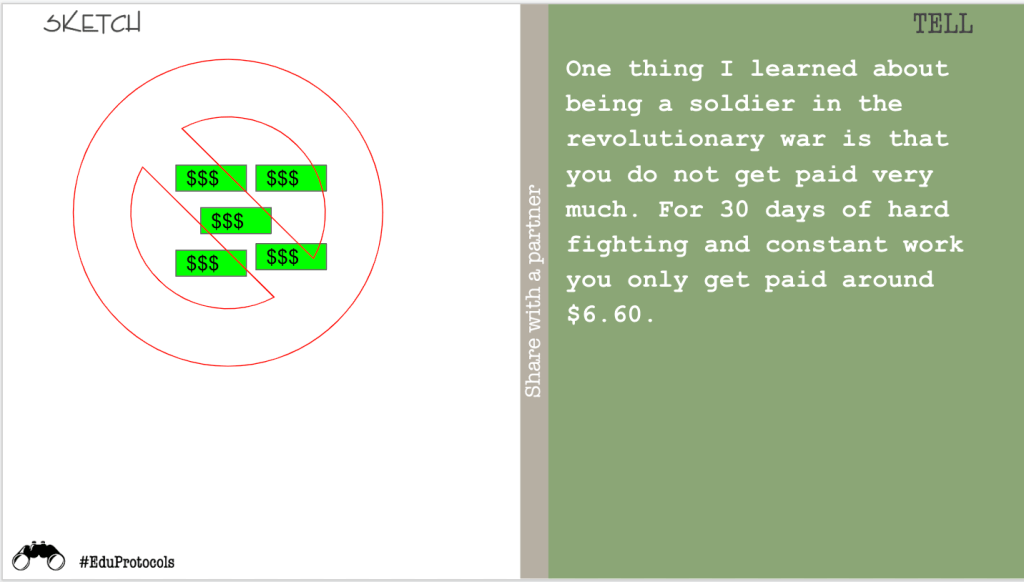
Last year, I left nan empathy map for students to complete after this activity. This year, I wanted to keep stuff simple and left a Sketch and Tell. I simply asked, “What is one thing you learned?” Here are some examples:

 Moler's Musings