
What a whirlwind of a week! I’m currently sitting in Columbus, OH working on this blog post. I was at school for Monday and Tuesday, and I’ve been in Columbus since Wednesday morning.
On Wednesday, I received the Ohio District 5 Teacher of the Year award. I had a professional development meeting on Thursday with OH-NNSTOY and met some amazing educators. I’m also in town to attend the Ohio Council for Social Studies Conference to promote EduProtocols Field: Social Studies Edition.
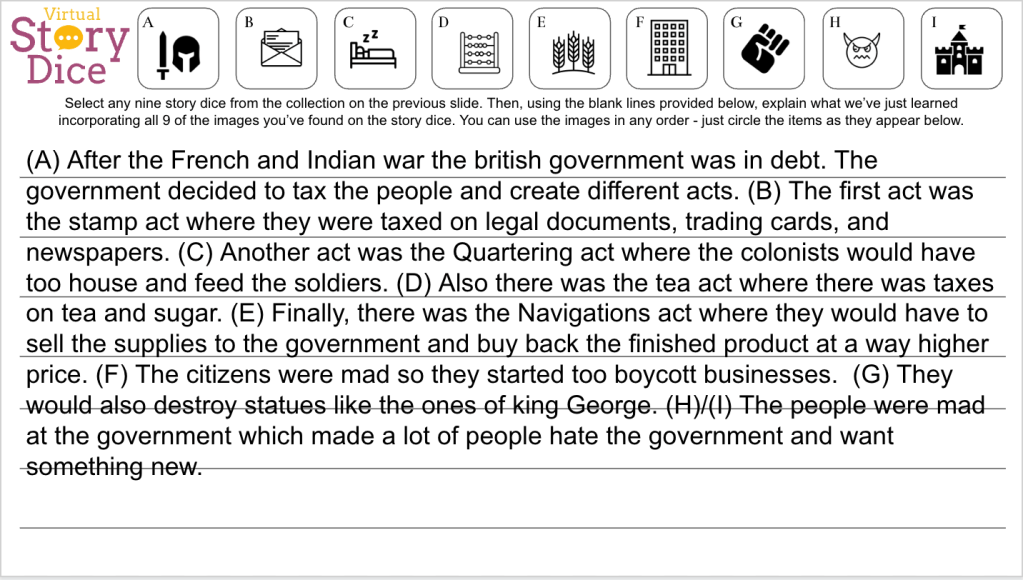
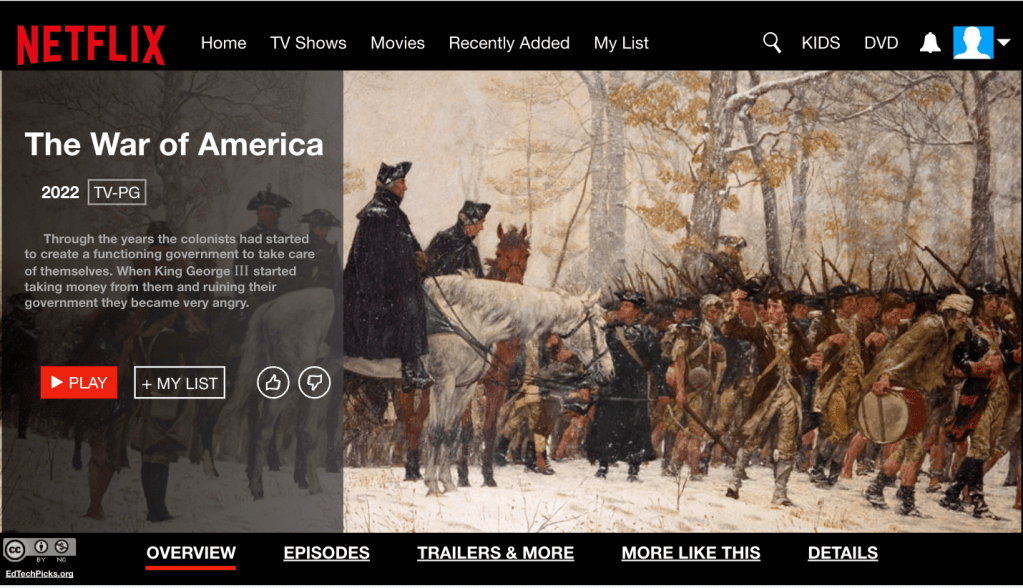
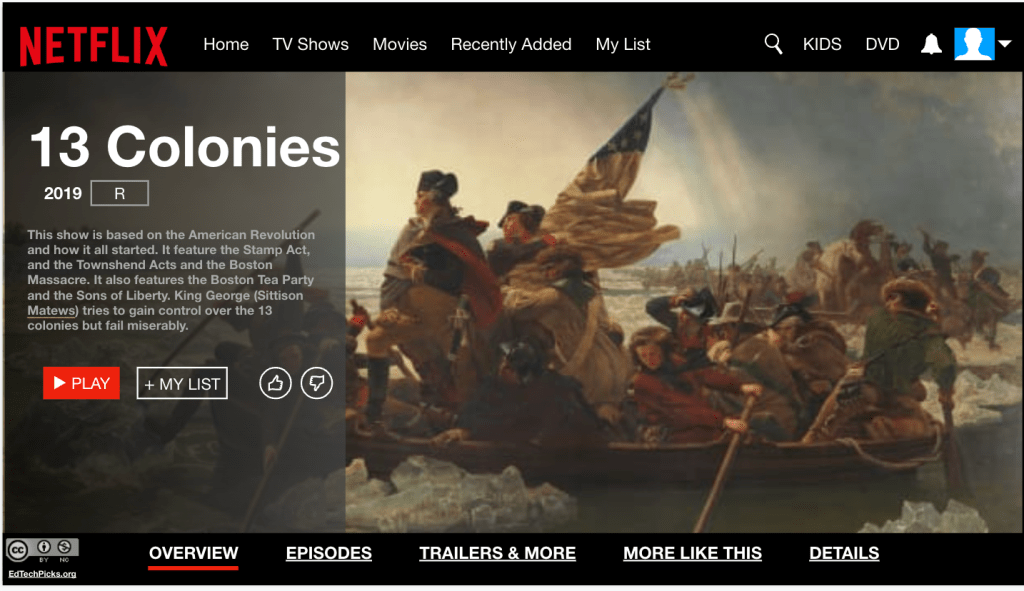
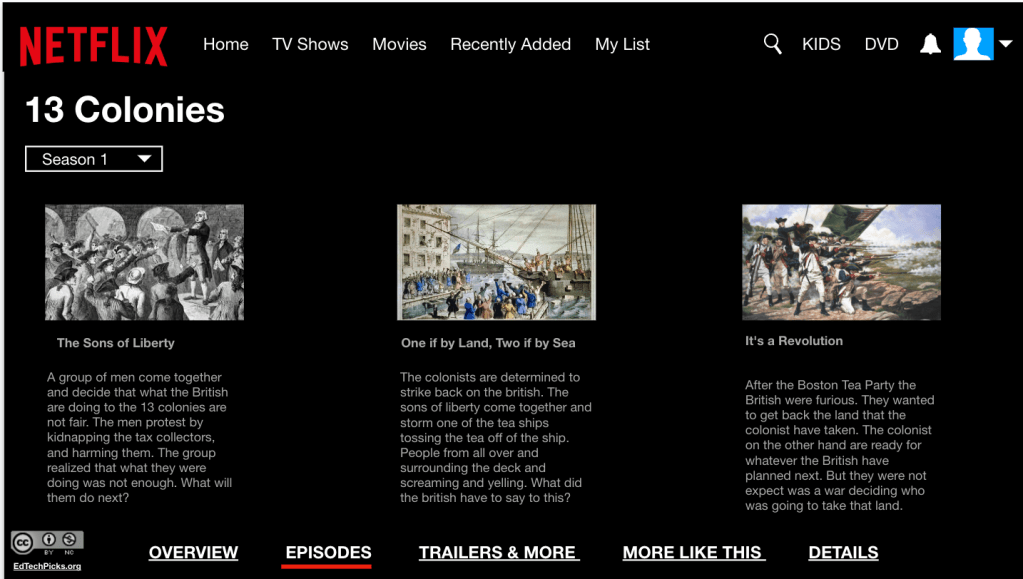
Back in 505 – we used Monday as a way to end the American Revolution mini-unit. I gave students a choice board and established success criteria. Students could choose between Virtual Story Cubes, Hexagonal Learning, or a creating a Netflix series with the Revolution.
This week we also focused on the Enlightenment thinkers and ideas and the influence those ideas had on the Declaration of Independence. Knowing that I would be out, I want to frontload some vocabulary to help set up the students for success. I also wanted to use some familiar lessons in class.
Monday – Choice Board
Tuesday – Fast and Curious, Parafly, Sketch and Tell
Wednesday – Nearpod over the Enlightenment
Thursday – Frayer, Thick Slide
Friday – Declaration of Independence Analysis
Monday
I wanted to start off the week by ending the American revolution mini-unit and move onto something else. I put together a choice board for students that included three choices for them to show me what they know:
- Virtual Story Cubes from EMC2Learning
- Netflix Template (I honestly have no clue where I found this).
- Hexagonal Learning (Stephanie Howell template)
Throughout the year I introduced different creative templates and lessons to students so I can offer the items as choices throughout the school year. The students were familiar with the Netflix template and Hexagonal learning. The Story Dice template was brand new. I thought most students chose the Netflix template, but I was wrong. Most students chose the Hexagonal Learning.
The Hexagonal Learning already had the concepts on the hexagons so it was a bit easier for students to show what they learned. Whereas, the Netflix and Story Cubes required a different set of creative thinking skills since the information wasn’t explicitly in front of them.
With any assignment, I always try to have clear expectations and success criteria to help guide the students through their creativity and learning. Here was my success criteria:
- You correctly identified and described 3 examples of taxes or acts that angered the people of Boston.
- You correctly described 2 examples of protest.
- You correctly described how and why the relationship changed between Britain and its citizens in the 13 colonies.
Here are some student samples:



Tuesday
Lately, I have been noticing a lot of copy and pasting and I wanted to address that issue. The perfect was to address this is through a Parafly EduProtocol. Introducing Enlightenment terms such a Republicanism, Social Contract, and Natural Rights was a perfect fit with Parafly.
When students came into 505 on Tuesday, I had my Quizizz up on the board. I have been using Gimkit and Blooket ALOT, and wanted to switch it up back to a Quizizz. The Quizizz contained vocabulary questions and questions directly related to a reading from ICivics. The first round of class averages with the Quizizz were: 54%, 52%, 54%, 36%, and 60%.
Following this Quizizz, I had students log into PearDeck. This was the first time I used PearDeck all year. I like to use Peardeck with Parafly because I can watch the kids typing in real time. I could also tap responses, make them glow, no name were shown, and give honest feedback.
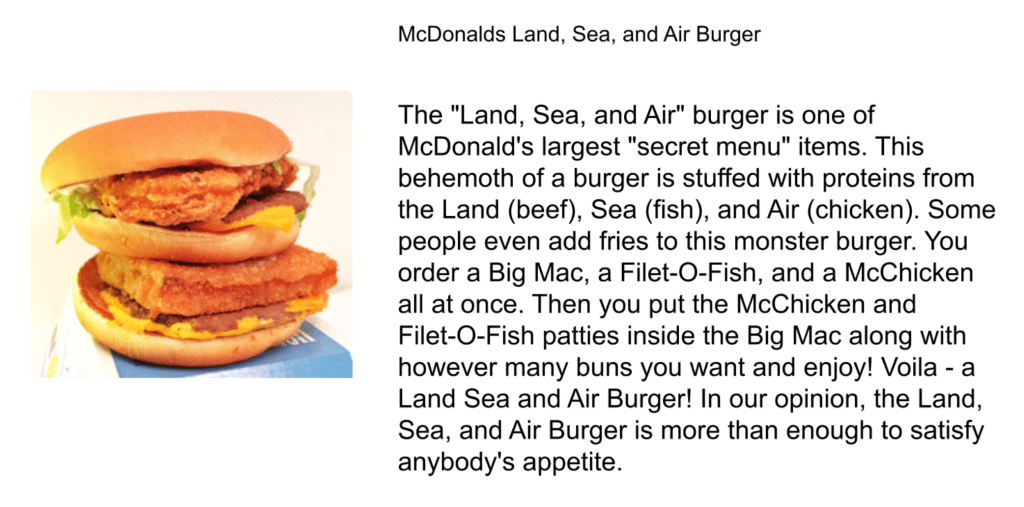
After students logged into PearDeck, I had to explain what paraphrasing means, and how it compared to summarizing. Then, I introduced paraphrasing with a small paragraph on the Land, Sea, and Air Burger which a secret menu item from McDonalds. I used McDonalds because it’s a happening place in our small little town of New Richmond. After some honest feedback and practice, I used short paragraphs directly from the ICivics reading related to Natural Rights, Social Contract, and Republicanism. I introduced the terms in that order because they built off of each other and made sense.


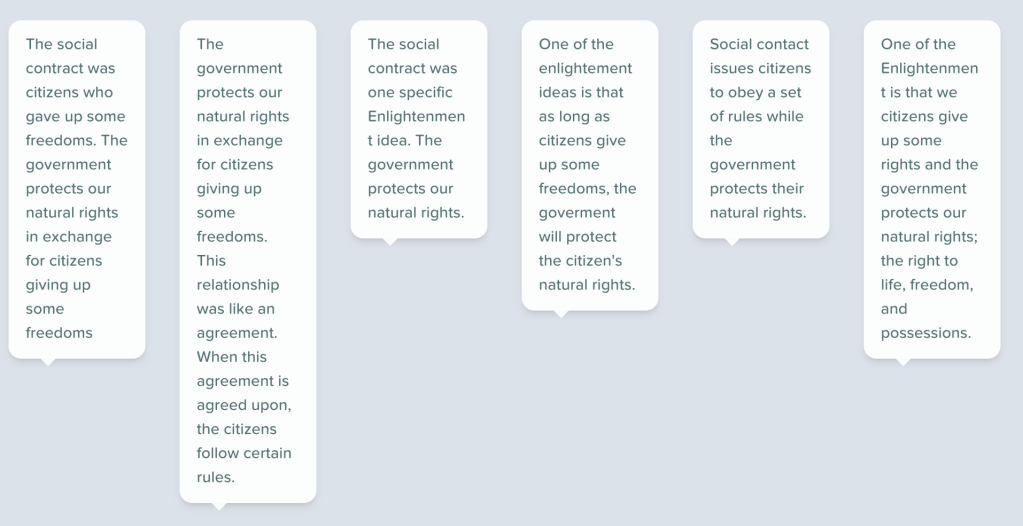
Students weren’t thrilled about the Parafly. I heard some groans, I’m bored comments, and one kid said, “Oh my God, this isn’t ELA.” I replied, “I’m a secret ELA teacher.” After students paraphrased definitions for the Enlightenment terms, I had them copy and paste their paraphrases onto a Sketch and Tell. Then students created images for each term and paraphrased definitions.
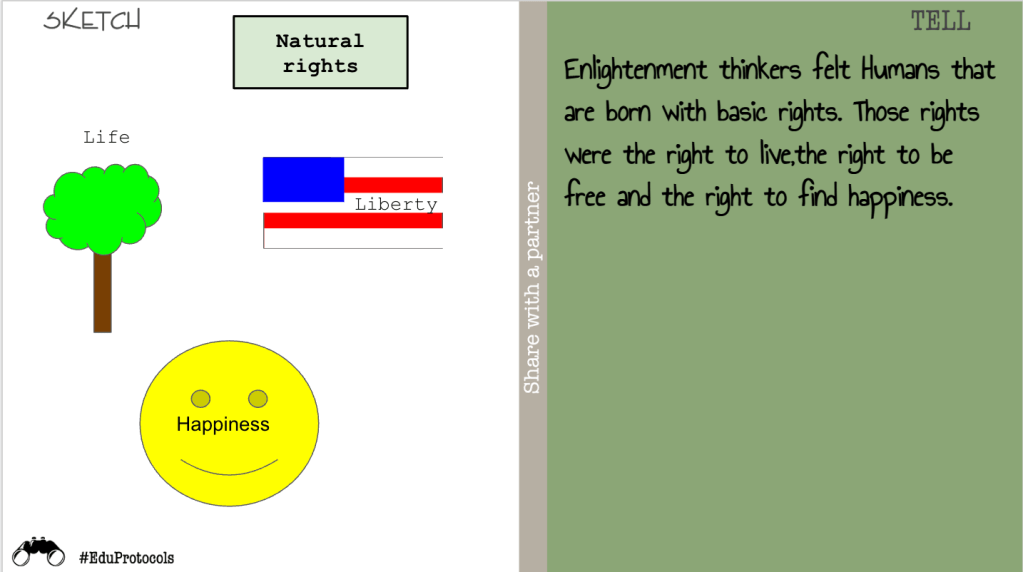

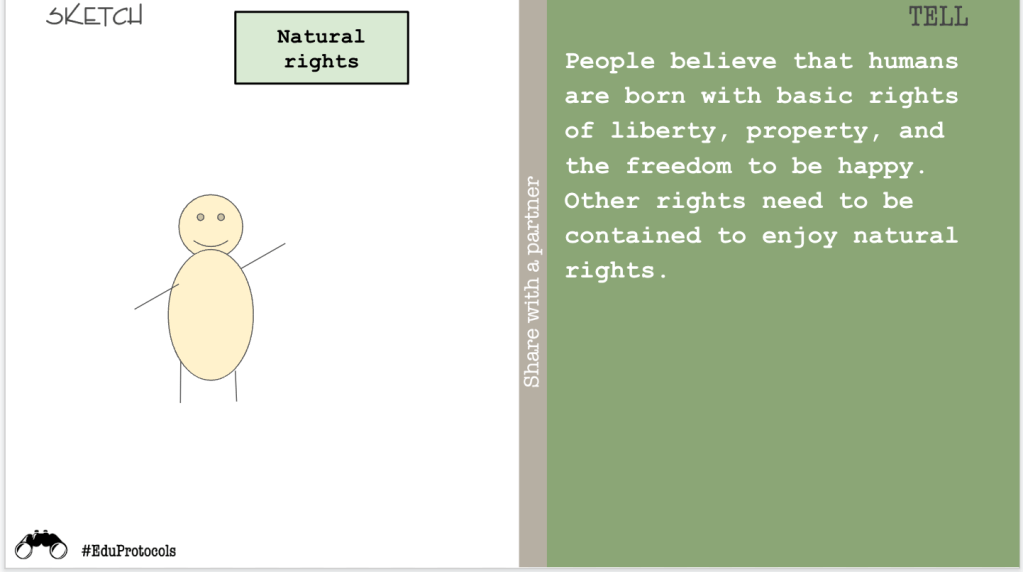

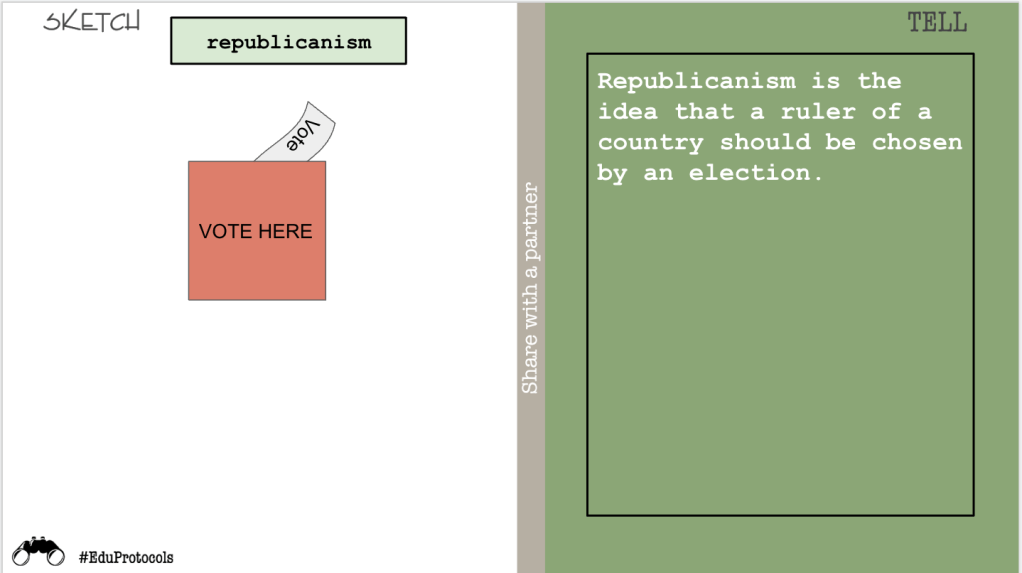
With 10 minutes to go in class, we circled back the same Quizizz as before. This time around, class averages were as follows: 86%, 82%, 92%, 75%, 96%. Despite the moans and groans, the students realized that Parafly worked and they learned something. They saw meaning in what we were doing. They built some confidence within themselves. It was awesome.
Wednesday
Wednesday, I was using a student paced Nearpod to help students learn about the Enlightenment and its influence on government and the Declaration of Independence. The Nearpod was created as a collaboration with ICivics.
I chose this lesson because it went along with our Parafly lesson from Tuesday, and it was simple for students to advance through the slides. This was meant to build some background knowledge and help the students understand how natural rights and social contract influenced the writing of the Declaration of Independence. When I checked in on students work, students engagement was at 90%.
Thursday
Thursday I needed another familiar EduProtocol for students to introduce them to the Declaration of Independence. Last year I used a Number Mania with an article I typed up that included a lot of numbers related to the Declaration. After reading the article, I retyped some of the paragraphs to make it better. However, I decided not to do a Number mania. Instead, students created a Thick Slide.
On the Thick Slide, I had students collect 5 important facts about the creation of the Declaration of Independence. They also included an interesting number with a fact (mini-Number Mania), 2 images with captions, and a place to include examples of social contract and natural rights.


Through the years, I have noticed that students have a lack of background knowledge about basic social studies stuff. For example, some of my students have never heard of Thomas Jefferson. This shows that we shouldn’t assume that students know basic information. As a result, I had students Frayer a Historical Person – that person being Thomas Jefferson. Here are some student samples:


Friday
I wanted to keep things simple and light for today. I used a lesson I got from Peacefield History on the Declaration of Independence. I don’t normally give digital worksheets, but it had to happen.
On the slides I shared, I included videos I made where I read sections of the Declaration of Independence as I explained some of the sentences and vocabulary. The slides also contained grievances where students used icons or GIFs to represent each grievance. Finally, I included a small section for students to copy and paste examples of natural rights and social contract.

 Moler's Musings