
Back at it……..and it was the longest week ever. We added an Advisory period this year which now gives us 8 periods a day. I’m used to 7 periods, and this will take some getting used to.
Every year I want to add new things to my teaching and into my classroom. This year I wanted to incorporate more reflective things for my students. For example, I have students reflecting on their attitudes and feelings towards meeting goals within lessons. I’m doing this with the Magana Mastery Tracker (I cannot share the link but you can find this awesome tool in Dr. Magana’s book, Learning in the Zone).
I used this first, full week of school to teach students about some EduProtocols. The students I have this year I have never had and they are not familiar with EduProtocols. I’m used to having some of the same 7th graders from the previous year which makes for a nice school year. As a result of never having these students, I’ve already noticed some interesting things which I mention later…
Monday – Number Mania Intro, Thin Slide
Tuesday – Sketch and Tell reps, Thin Slide
Wednesday – Historical Thinking Skills (HTS) Fast and Curious, Frayer
Thursday – Historical Thinking Skills Practice with 8Parts
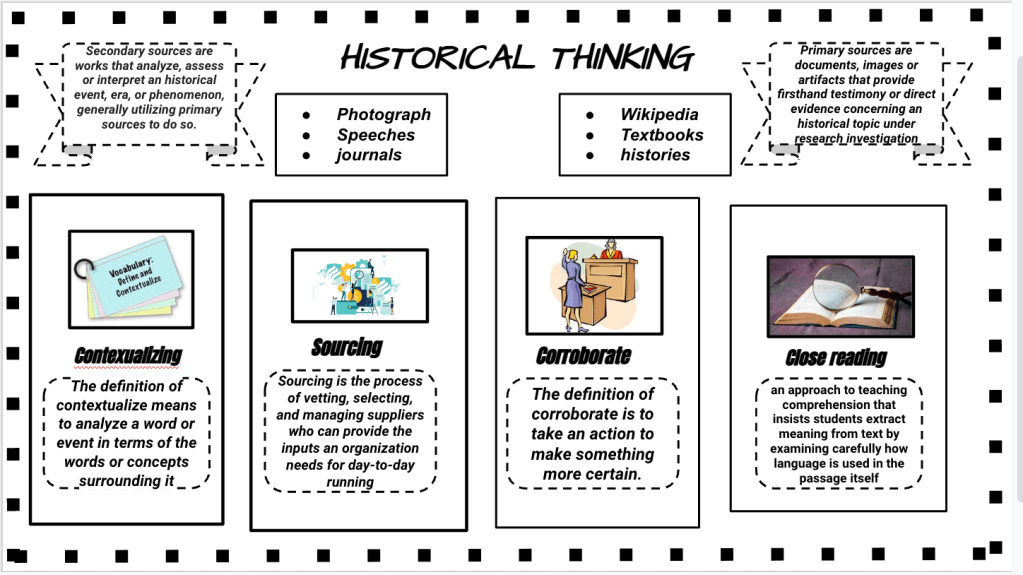
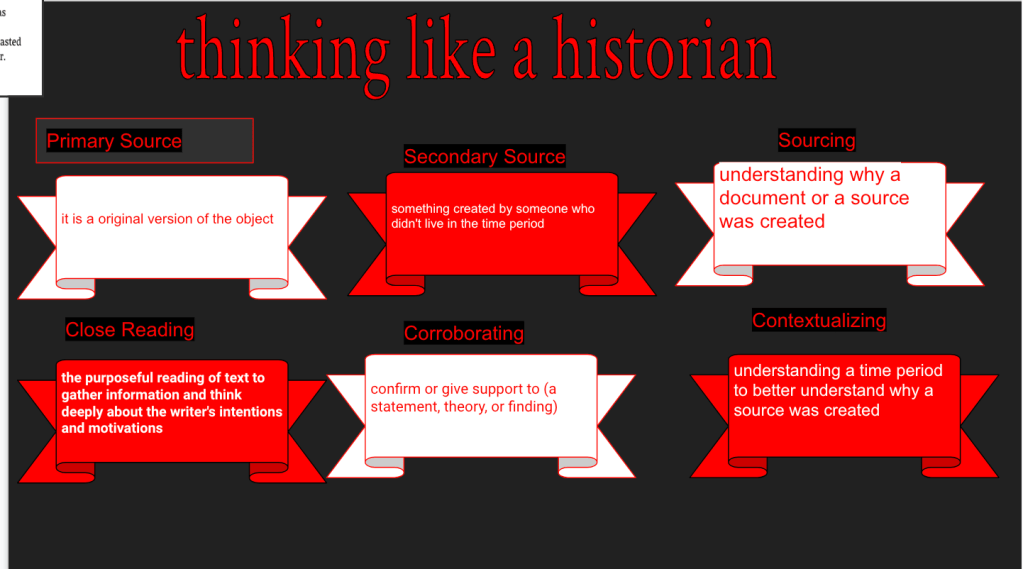
Friday – HTS Infographic (Original) (Scaffold) (Number Mania style)
Monday
The theme for Monday was getting to know each other. I began class with a fast and Curious about me. Then I introduced the Number Mania EduProtocol to get to know the students. On Google Classroom, I shared a premade Google Slide so I could introduce the students to Word Art, changing fonts, and changing colors. Please…….don’t assume that students know how to use basic Google functions. Google has been a part of my district for 10 years, and I still need to teach basic Google knowledge.
Before students began, I established success criteria such as changing fonts, changing colors, adding 4-5 numbers with facts, adding 2 pictures, and adding a title. Basic stuff. As the year progresses, I change the success criteria to focus more on content and organization. Once students open the Number Mania, I explain that they must use 5 numbers related to their lives. I don’t give any ideas, hints, or examples.
Here are some of the most creative numbers the students came up with: the number of states the student visited, shoe size, siblings, graduation year, etc. After the students chose numbers, they added a story about themselves at the bottom of the Number Mania. I had the students pause, and I asked, “If these numbers told a story about you, what story would it tell?”
Something I incorporated into the lesson this year (I could tell the students needed it) was stopping the students halfway through the Number Mania and having them check their work against the success criteria.
All in all, this is a great lesson to introduce basic Google skills, introduce the Number Mania, and get to know the students.
Tuesday
On this particular day, I wanted to introduce students to Sketch and Tell. Class began with a simple Sketch and Tell prompt: What is your hobby or talent? I use the first rep to go over Google Shapes and I introduce ctrl+D for duplicating shapes. The only success criteria I established were using multiple shapes and using multiple colors. The first rep lasted 8 minutes (I sometimes do things in eights – it’s my lucky number). I had the students partner up and explain their sketches to a partner. Then students wrote about their hobby or talent after sharing it with a partner. This was followed up with a 2nd rep.
The 2nd rep of Sketch and Tell is called The Town Dump. I created this lesson because a student pissed me off. (I often think of my best stuff when pissed off or with a beer). Three years ago I had several letters written by students taped on my wall and door. One day I noticed that someone wrote all over one of the notes on the wall. Pissed me off, and I created a lesson tied to history. Here is that lesson:
- I ask students, “Does everything have a story?” Most respond with yes, and some respond with no.
- I then read the story called the Town Dump by Wallace Stegner. This story is about a man reflecting on items of his he found in the Town Dump – some of the items can reveal what life in the town was like. Other items were his that were discarded because other people didn’t care for those items in the same way he did. He reminisced about the stories behind some of those items in the story.
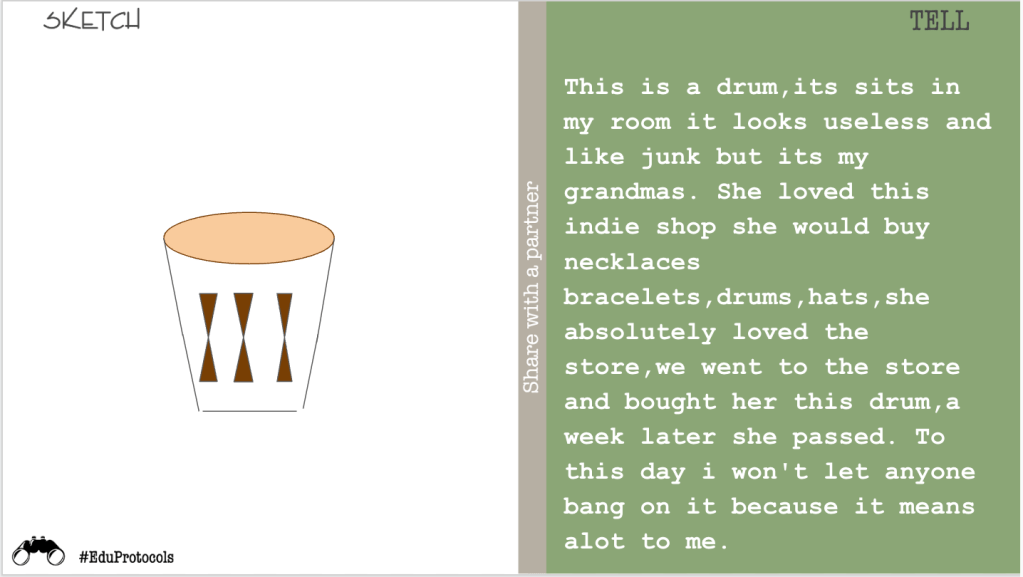
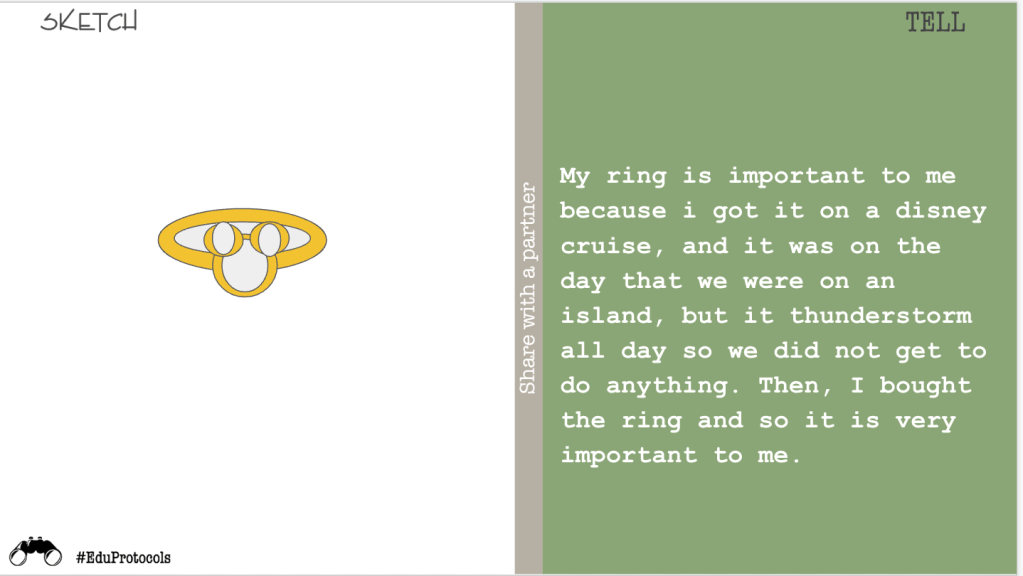
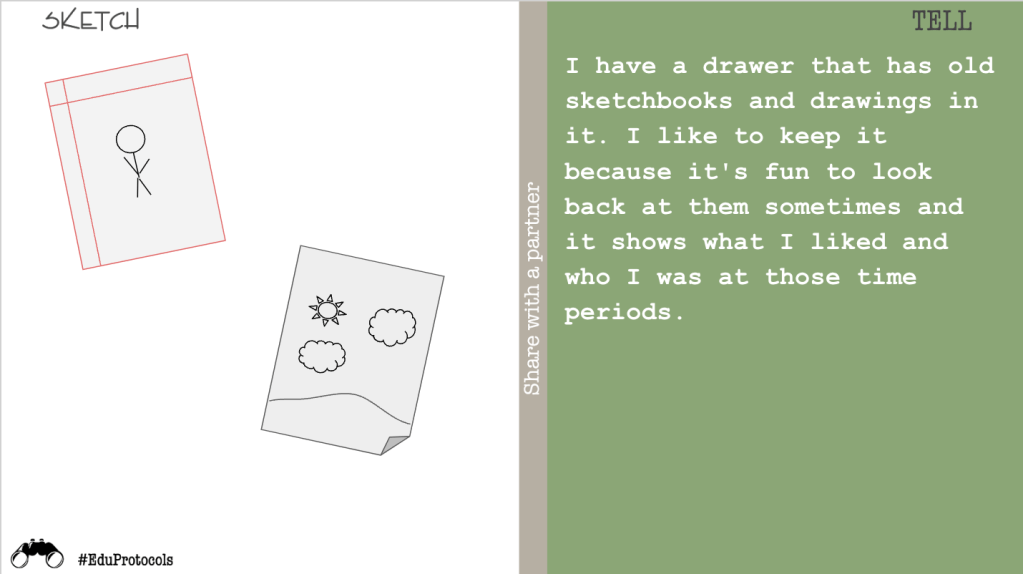
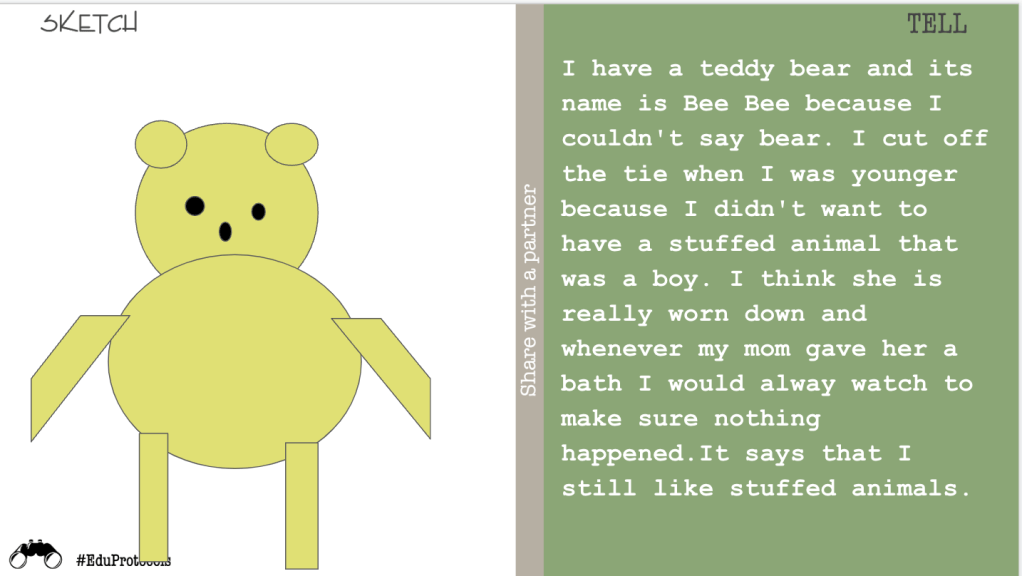
- At the conclusion of the story, I mention items in my room and the stories behind them. My laniards from conferences. The broken globe on my desk that belonged to a colleague that passed away 5 years ago. The student notes on my door. I make a point to say these items might be junk to you, but they mean the world to me because they have a story and I have an emotional attachment to them.
- I then transition to Sketch and Tell and ask them to sketch an item that most people would view as junk, but it would mean the world to them.
This is a powerful lesson and a great way to get to know your students at the beginning o the year. Plus, this is a nice transition to teaching historical thinking skills. Using historical thinking skills is the way to bring artifacts and various sources to life with their stories.
thinking skills. Using historical thinking skills is the way to bring artifacts and various sources to life with their stories.
Wednesday
On this day I began with a Fast and Curious with historical thinking skills. I created a 12 question quiz featuring primary sources, secondary sources, sourcing, contextualizing, corroborating, and close reading. The class averages were 52%, 52%, 57%, 60%, and 57%. I quickly gave feedback and then we switched gears to a Frayer.
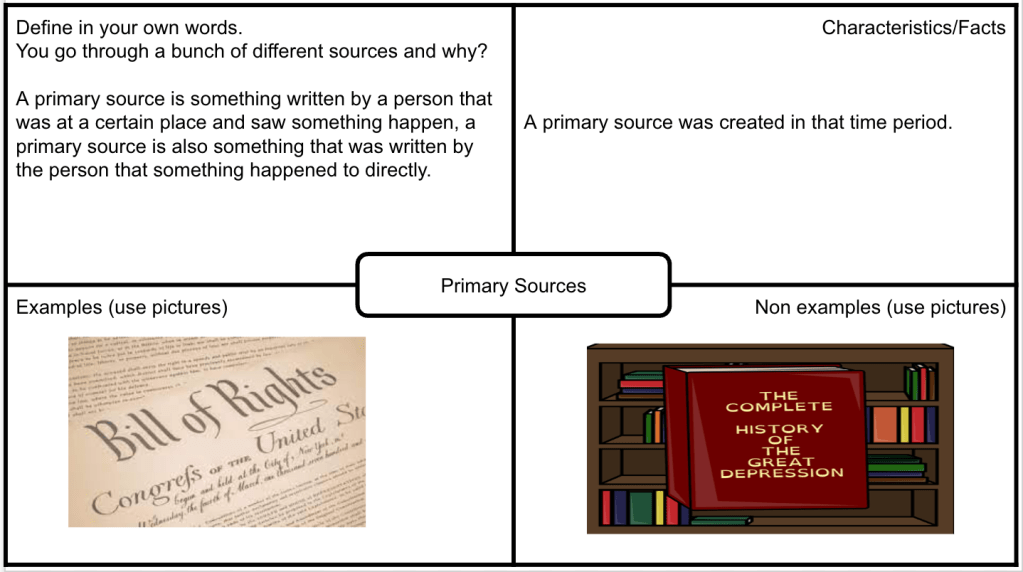
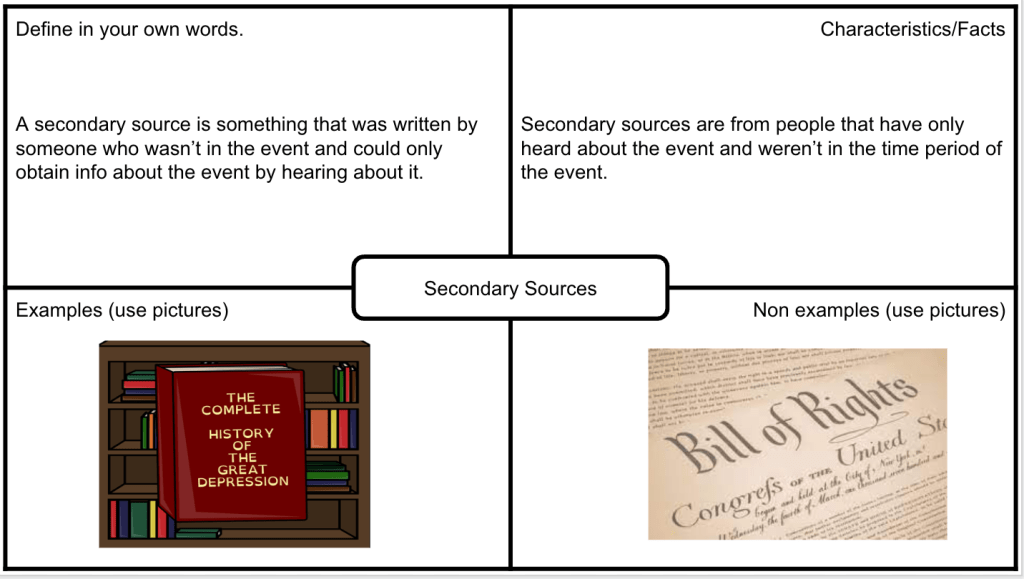
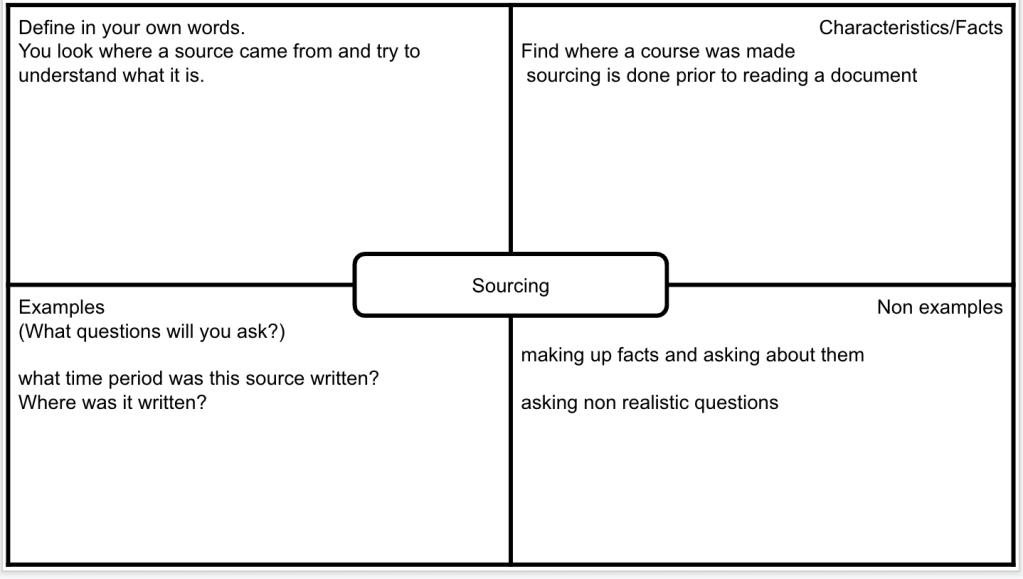
Last week students did 3 frayers so they were ready for this protocol. I had four Frayer models with primary sources, secondary sources, sourcing, and contextualizing. Last year I used a Sketch and Tell for these words, but I wanted to switch it up this year. Students defined the words, shared examples, nonexamples, and characteristics. For reference, I shared a slide presentation with information. I gave students 15 minutes to Frayer all 4 words. I quickly learned that I should have given 20 minutes. After the timer went off, I had students share their slides to the Newline interactive tv in my room. Some students came up and presented their Frayers while others wanted me to present. We took the Fast and Curious again and the scores were now 62%, 62%, 67%, 62%, and 70%. To me these scores were an improvement, but they weren’t as high as I expected them to be.
At the conclusion of the lesson, I had students track their progress with the Magana Mastery Tracker. Students set a goal for the lesson then rate their feelings, progress, and effort on a 1 to 3 scale.
Thursday
I began class Thursday with another rep of Fast and Curious. The scores this time were 60%, 59%, 62%, 62%, and 68%. I was completely caught off guard by these scores. I took some time to go over the Frayer models with my own examples.
I thought to myself, maybe if we practice the skills of sourcing, contextualizing, corroborating, and close reading then maybe the scores would go up. When I give feedback, I could reference our practice.
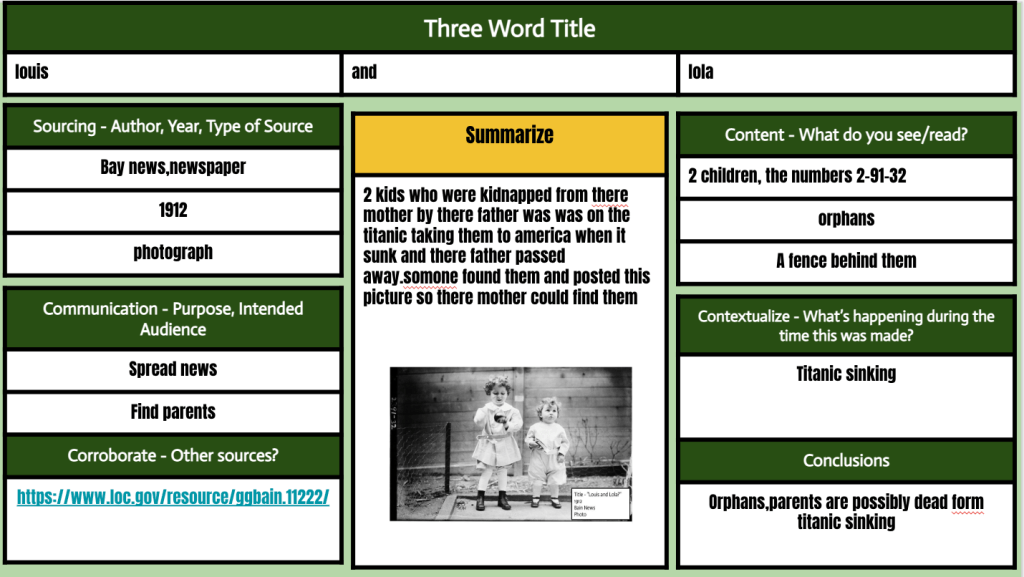
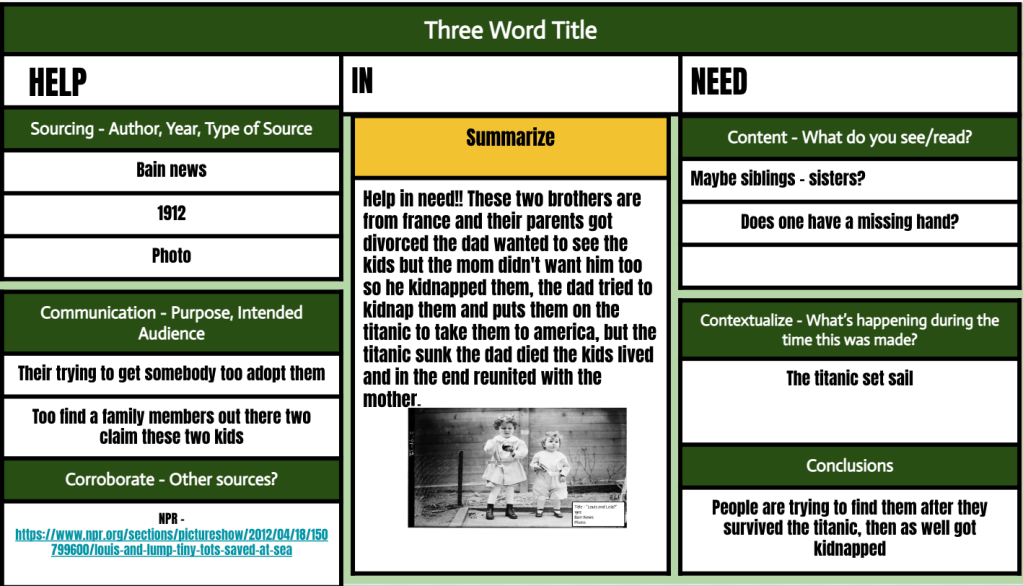
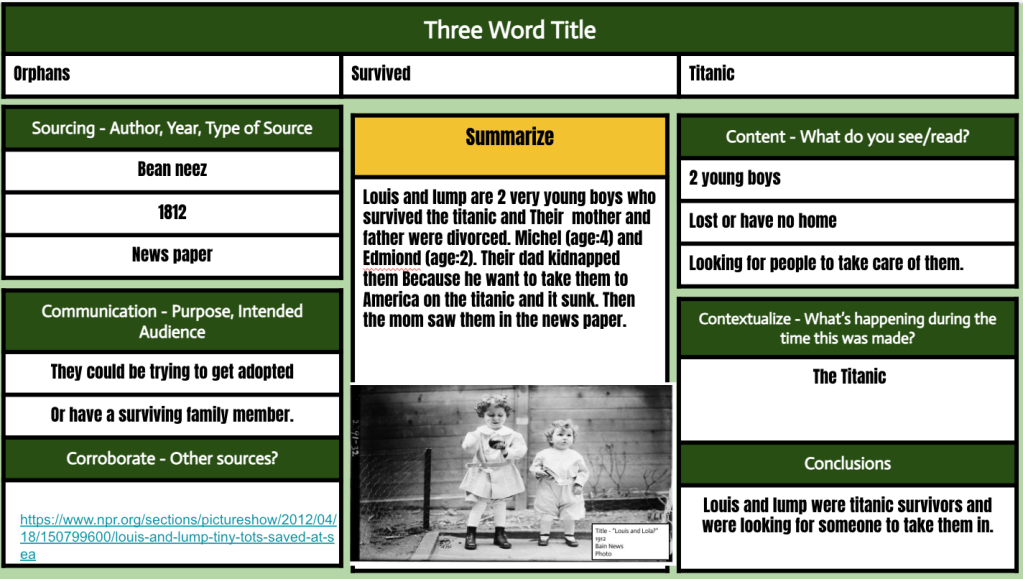
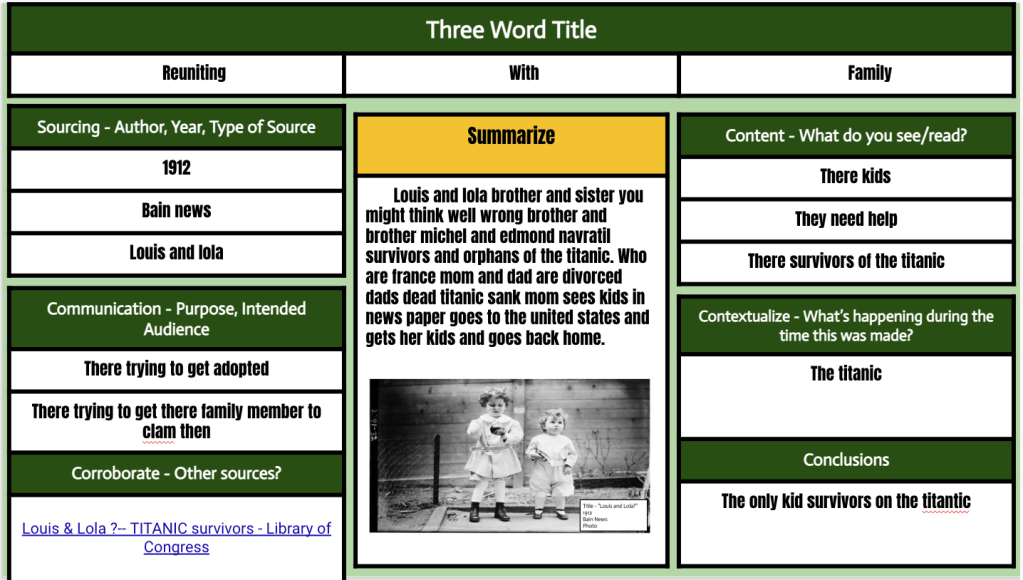
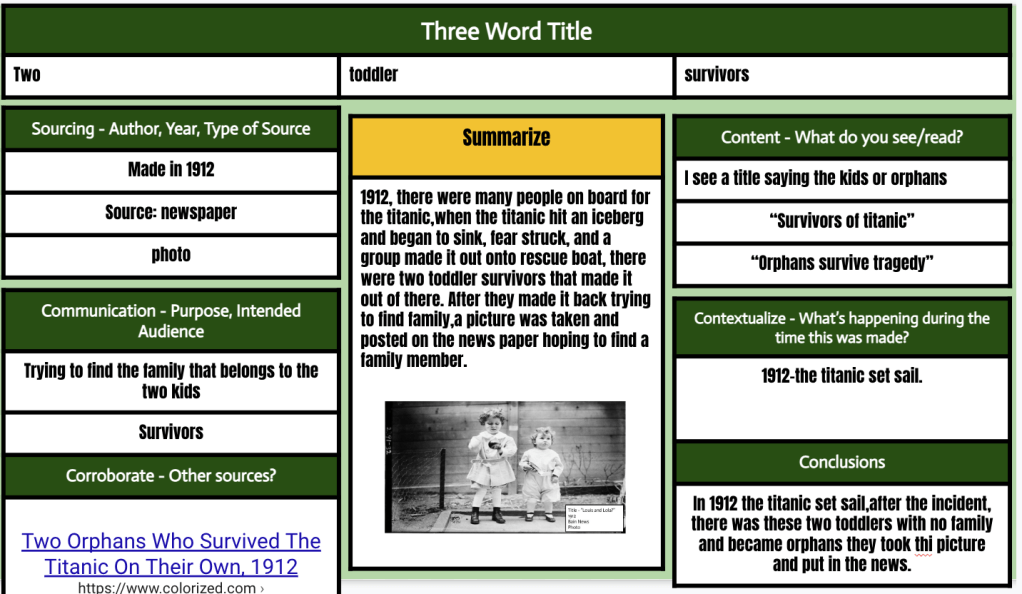
As a result, I created an iteration of 8Parts with historical thinking skills. I don’t know if it could be applied to photos, but I took a chance anyway. On Google Classroom, I shared my iteration along with a picture called Louis and Lola?. As you know, I take risks, I reflect, and I attempt to do better next time.
With this being our first rep, I walked students through the process of analyzing a photograph. I coached them up. The first thing we did was source the image, we wrote down the author, year, and title. Then I asked, if anything seemed stranbge about the title. Some students raised their hands and stated the question mark seemed strange because maybe their names aren’t Louis and Lola. Next we close read/analyzed the photo for details. Then students contextualized by searching the date 1912. I asked them., “What major event happened in 1912?” We discovered the Titanic sank. Then I asked, “What is the purpose of this photograph?” MANY students struggle with author’s purpose and point of view with informational sources. I waited a long time and across all classes I got, “The photo was made to share the news.” We thought about it and figured that if the Titanic sank, maybe they are trying to find the parents of these kids. Finally, students corroborated the information and found another source related to the photo. I made the point that if we never corroborated another source, all we would know is what we guessed about the photo. At the conclusion of the lesson, I had students write a summary about the photograph. We were unable to take the Quizizz once more.

Friday
We started off class with the same Quizizz again. This time the scores were 68%, 68%, 62%, 59%, 76%. Earlier in this post, I made reference to never having these students before. These low scores were eye opening to me. I looked at last year’s scores and my classes were at 90% or higher on the 4th rep of Fast and Curious. We had discussions in every class about using Quizizz, Gimkit, or Blooket as a learning tool. It’s not a review and forget tool. I’m hoping this is a phase and result of students getting used to me and my style.
To conclude this unit, I had students creating an infographic about Historical Thinking Skills. Some classes, I shared a blank slide presentation and let them create. Other classes, I shared the scaffolded version of the slides to help them visualize where information should go. I gave the classes 30 minutes to create. On Monday, they will have 10 minutes to finish up their infographics.

 Moler's Musings
One thought on “The Week That Was In 505”