My goal this year: cut out the fluff, get to the point, and reach Reconstruction. In my 7 years of teaching Social Studies, I have reached Reconstruction one time. I rushed through it in 3 days. It was pointless. This year, I gave myself 12 school days for Reconstruction (2 1/2 weeks).
This is unchartered territory for me. Honestly, it’s something I don’t remember much from school. The lessons I am designing for the unit are meant to help me figure out how the topics/content are connected. Furthermore, the lessons are designed to help the students gain some background information.
I wanted to begin the unit by having the students research and define the Reconstruction Era. I learned from my good friend, and co-author, Dr. Scott Petri that we often don’t focus on helping students understand and define historical eras. From here, I wanted to focus on these topics:
- Reconstruction Plans – Presidential and Radical.
- Reconstruction Amendments and Southern Responses.
- Black Codes
- Jim Crow Laws
- Voter Suppression
- People from the Reconstruction Era.
I need to think of a better way, and a better essential question for this unit. There are some awesome Reconstruction units I have seen, and would like to use. But, for now, I’m content with myself, and students, finding their way through new territory.
Monday – Reconstruction Era Iron Chef, Fast and Curious
Tuesday – No instruction (walk-a-thon)
Wednesday – Fact Mania
Thursday – No instruction (Field Trip)
Friday – Finish Fact Mania
Monday
Today I used class to introduce the Reconstruction Era. The first we completed in class was a Fast and Curious with Quizizz. After the Quizizz finished, I had students leave the questions and answers up on their screens. They were going to use the questions and answers for their Iron Chef on the Reconstruction Era.
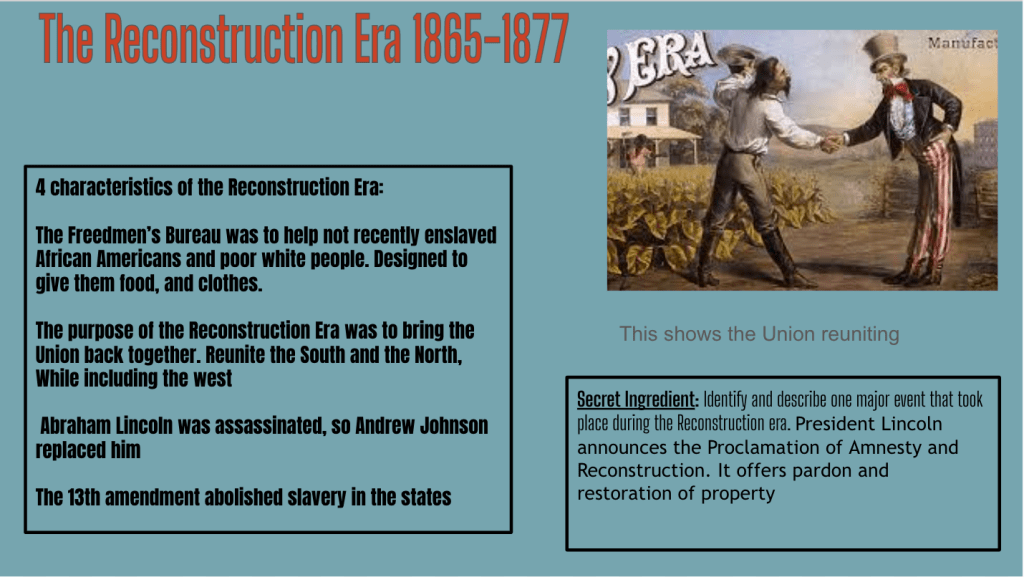
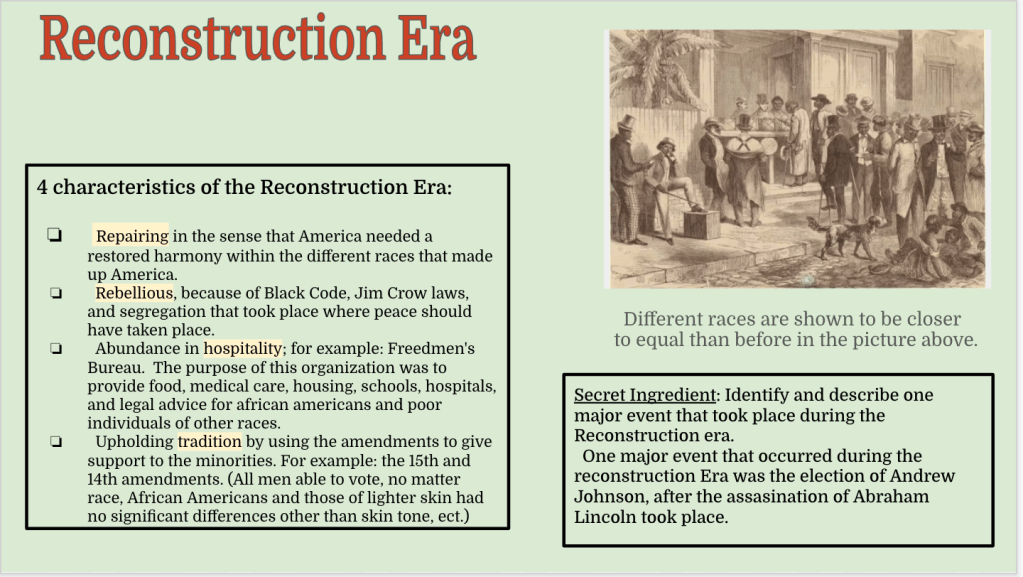
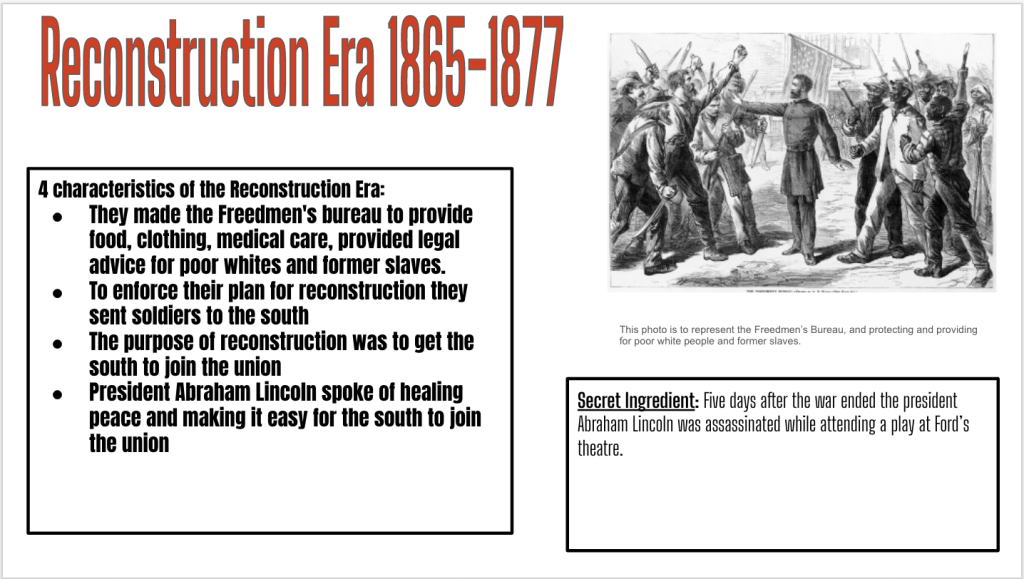
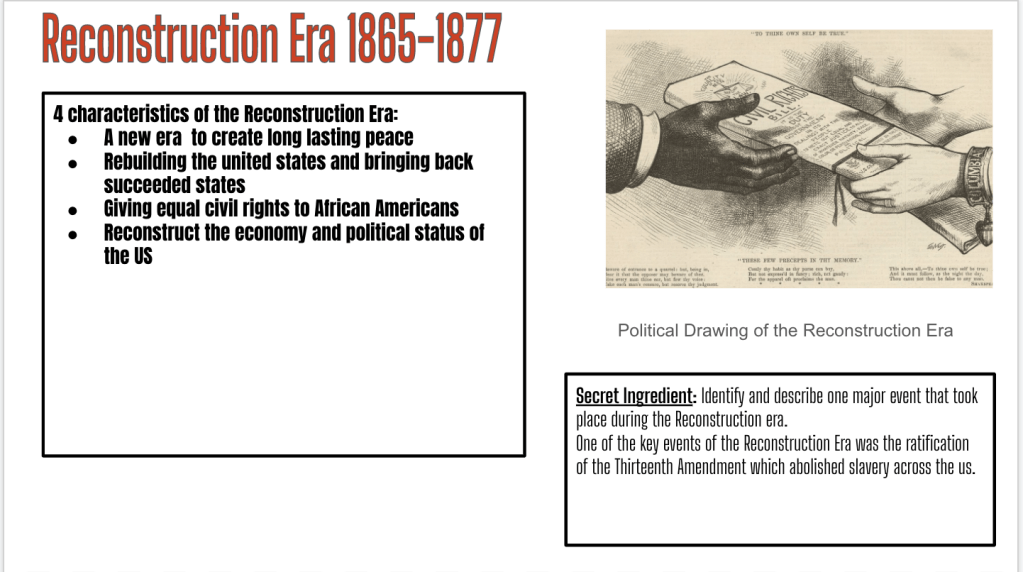
Next, I shared an Iron Chef slide for students to design. In the speaker notes, I copied and pasted a brief introduction on Reconstruction. The secret ingredient question was, “What was an important event from Reconstruction?” We read the brief introduction and discussed. Then I had students take 20 minutes to share 4 characteristics of the Reconstruction Era, a relevant picture with caption, and an important event. They could use the information from the Quizizz for help.
Introducing historical eras is something we often overlook. It helps place events in context and helps with sequencing. After students completed their Iron Chefs, we switched to a Thin Slide.
With the thin slide, I simply had the students share 1 characteristic and 1 picture related to Reconstruction. This was meant to help students add any information they may have missed, clear up misconceptions, and give students a chance to discuss Reconstruction in their own words. After our Thin Slide, we finished class with the same Fast and Curious Quizizz.
Here are some student Iron Chef examples:
Wednesday
Tuesday night I have a Zoom meeting with some educators – Dr. Sonny Magana, Marlena Hebern, Jacob Carr, Ariana Hernandez, Gabor Kertesz, Jen Goodman, Dr. Scott Petri, etc… We talk about ideas, student learning, effect sizes, and everything education. A great discussion with great ideas. In this particular meeting, Gabor Kertesz shared shared an activity completed by a student that was called Fact Mania. No numbers, just facts, pictures, and a title. This caught my eye and had my mind churning.
When Wednesday’s classes began, I started with the same Fast and Curious Quizizz. After the quiz, I asked students, “We are going to learn about Reconstruction plans. How do you want to learn it?” I shared a Mentimeter with 3 options – Fact Mania, Iron Chef, or CyberSandwich with Nearpod. A majority chose Fact Mania.
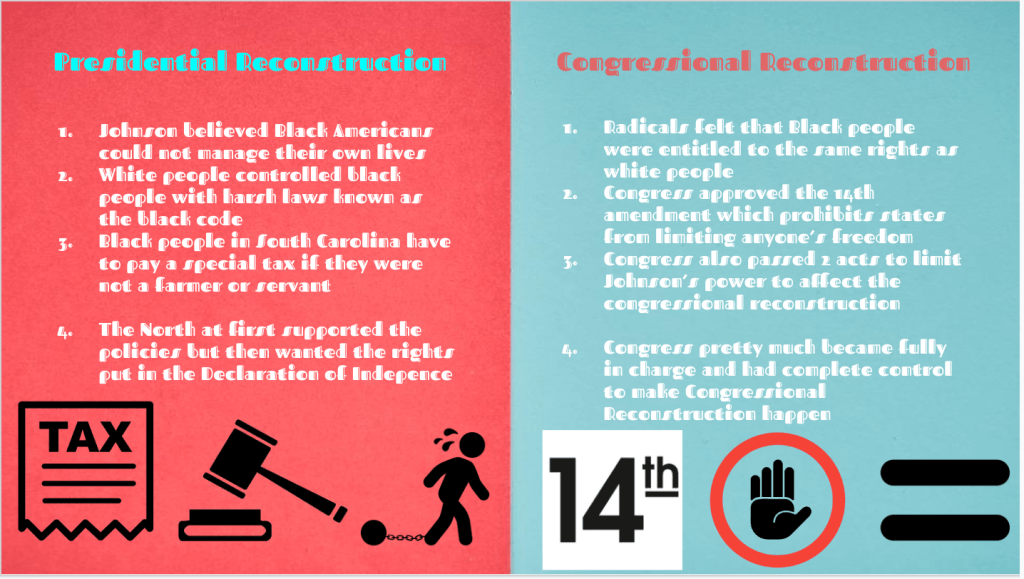
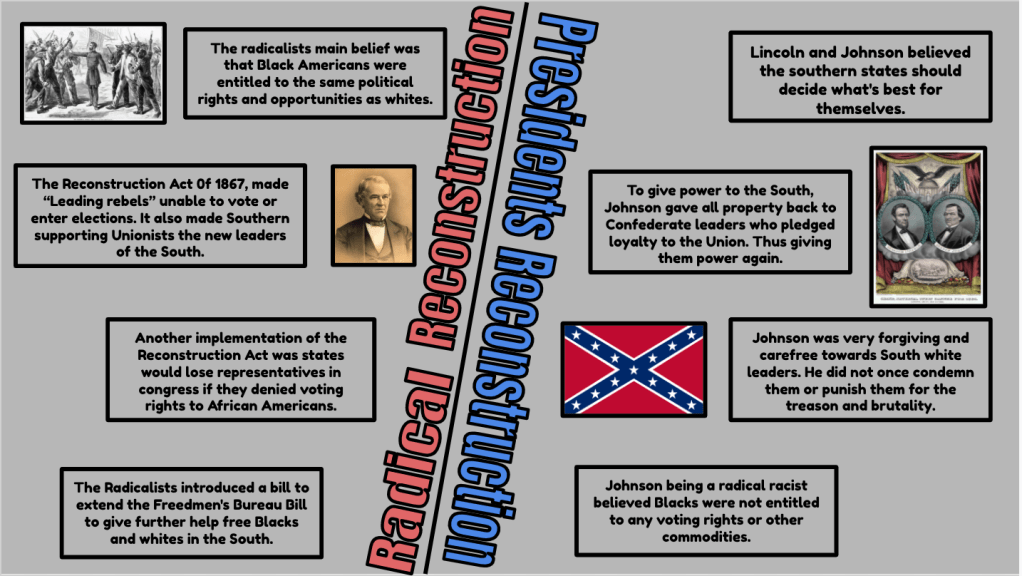
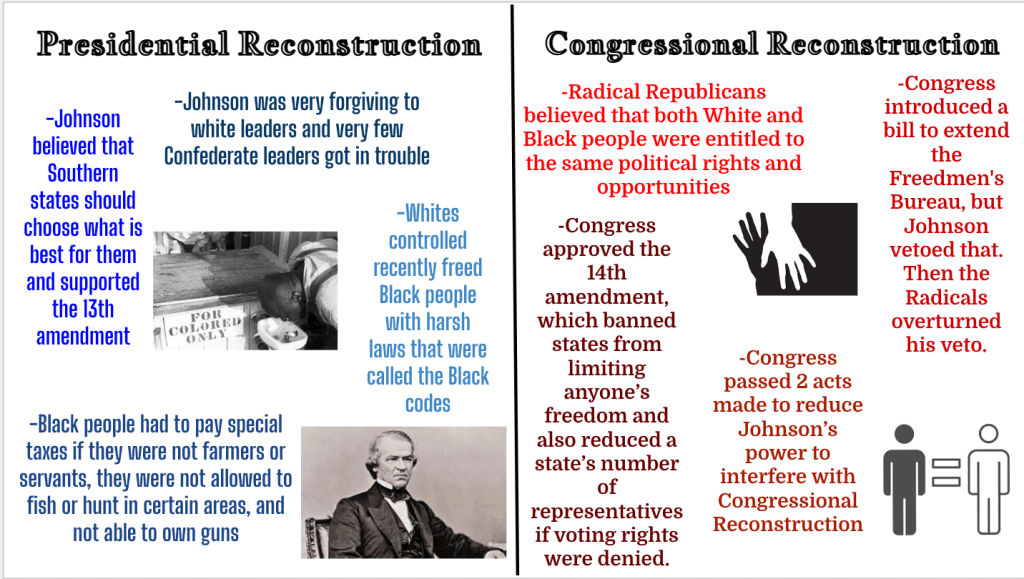
I created the assignment right there in class. Think about that for a second… I’m not completely comfortable teaching Reconstruction (because it’s been forever), I asked the students how they wanted to learn, and developed the assignment in class. That is the power of EduProtocols. Students reflect and decide how they want to learn. Students create “learning artifacts” and do the work. As a result, Fact Mania was born….
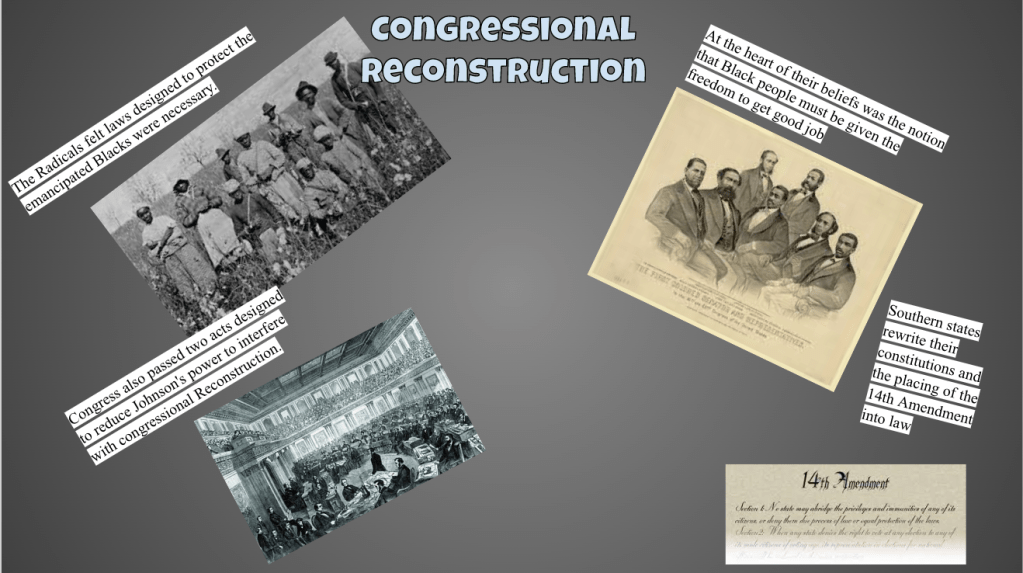
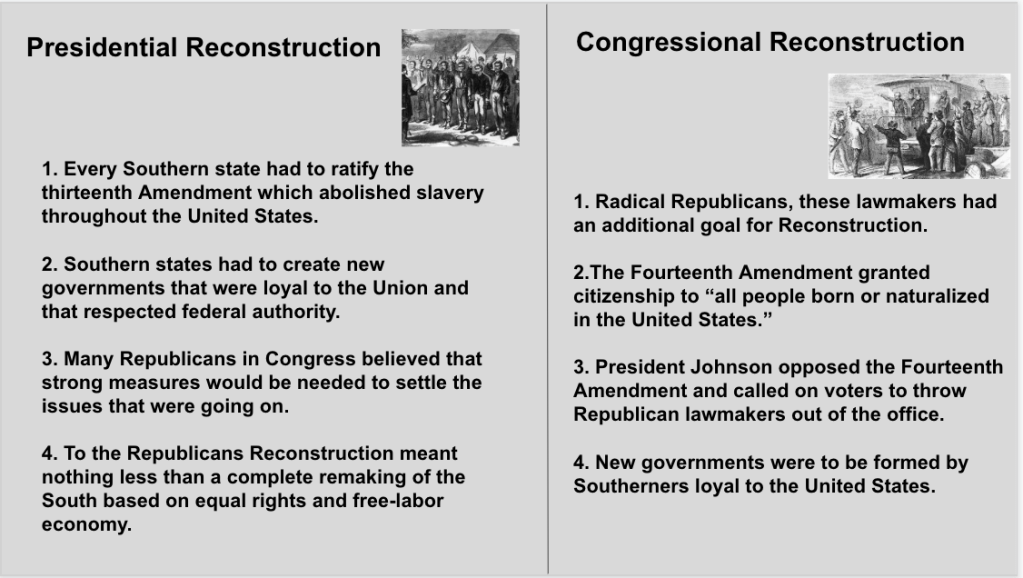
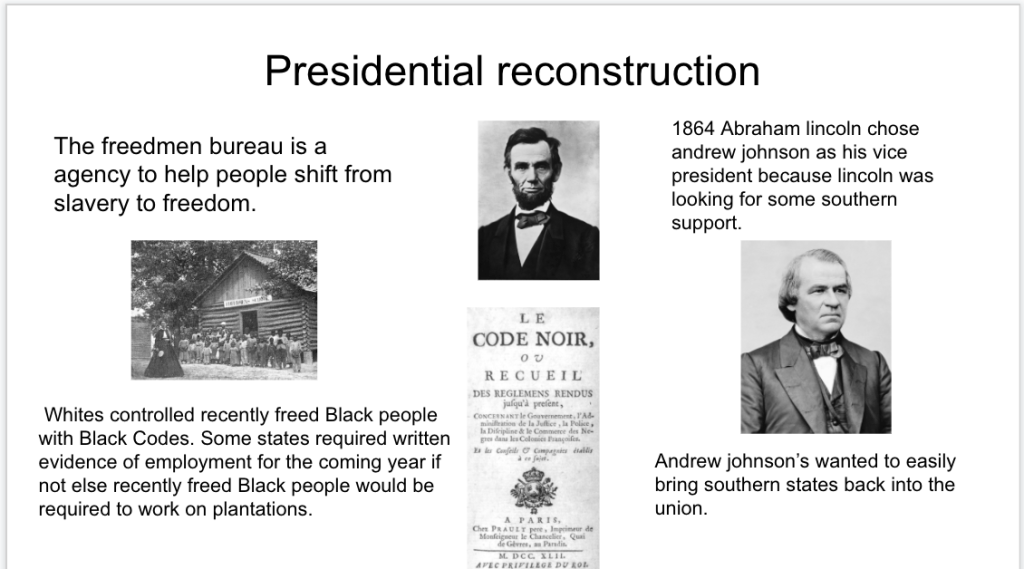
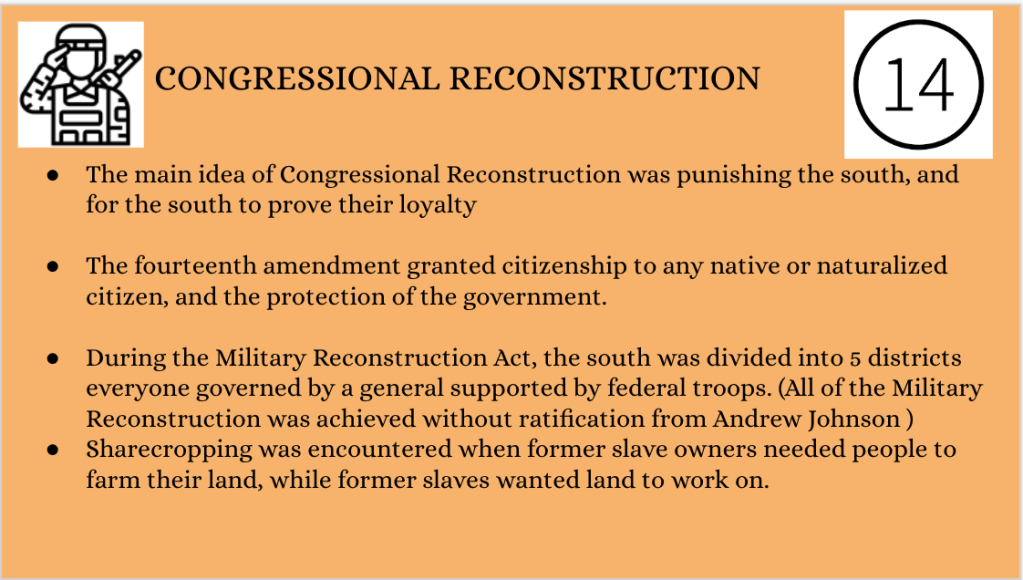
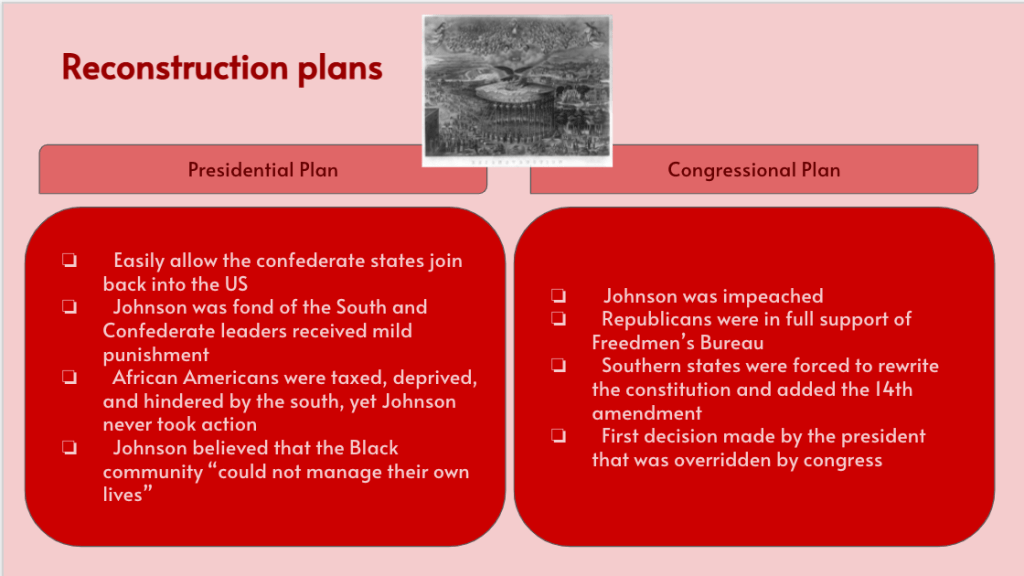
- I shared a blank Google Slide and a Newsela Article on Reconstruction Plans.
- Students needed to think about 4 BIG (important) facts related to each plan. I framed it with, “If you need to fully understand this topic, what are 4 main facts that you would need to know?
- Design a slide – add pictures, title, 4 facts for each, and organize it. Be creative.
That’s it. I admitted to the students that I was developing this as I went. That’s usually how I roll – I fly by the seat of my pants. Students are used to it. I’m used to it. It’s all good. However, I needed something more with this lesson…
Friday
What more did Fact Mania need? I love when students collaborate and communicate their learning with each other. I love creativity. I love games. It hit me…
- Have students reflect on their important facts and share them through a Google Form.
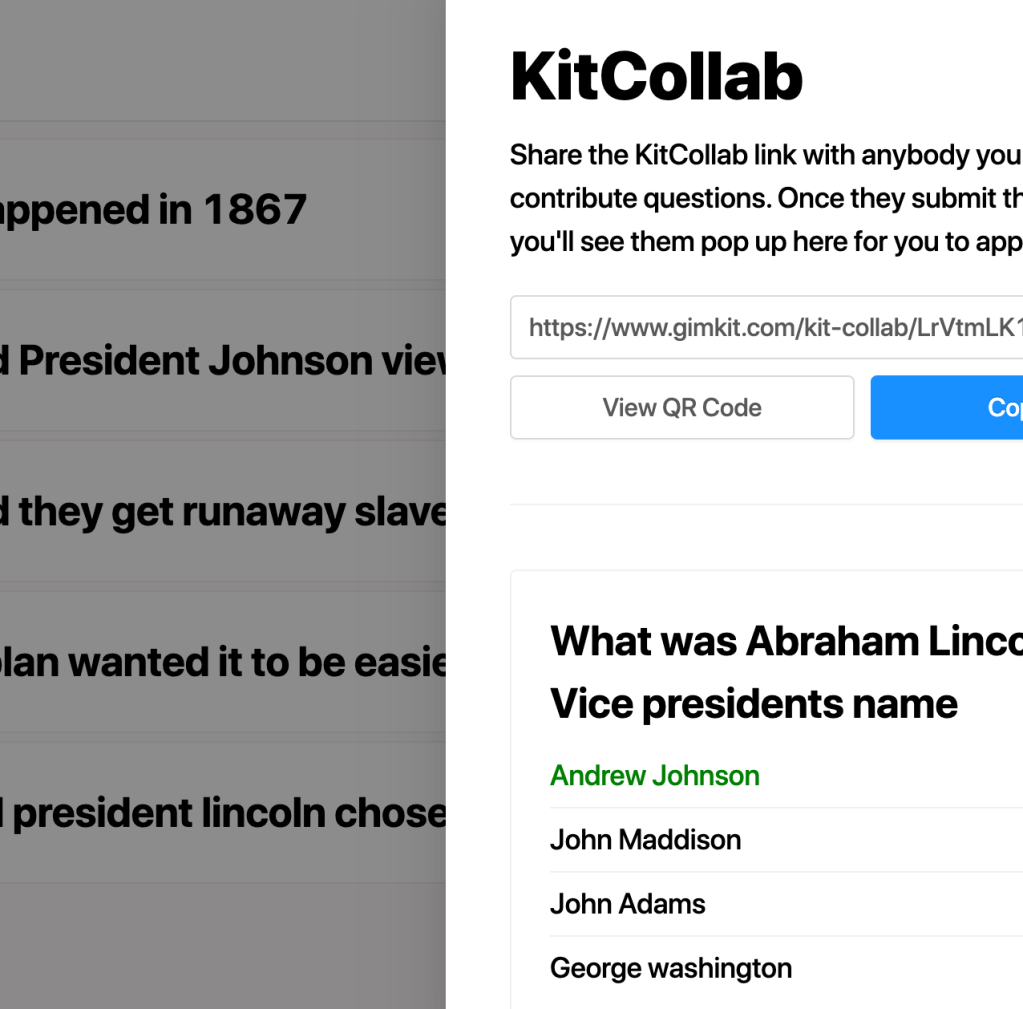
- Have students create questions using the Gimkit Kitcollab.
When class began, I set a timer for 15 minutes to finish up the Fact Mania slides. I also asked the students to share 2 facts from their slides. For this process, I created a Google Form where students could select which Reconstruction plan and type their fact to share. Then I created a Google Sheet of information and shared with the students. I like having students share their learning because it makes for nice discussions, feedback opportunities, and helps other students who might be a bit behind.
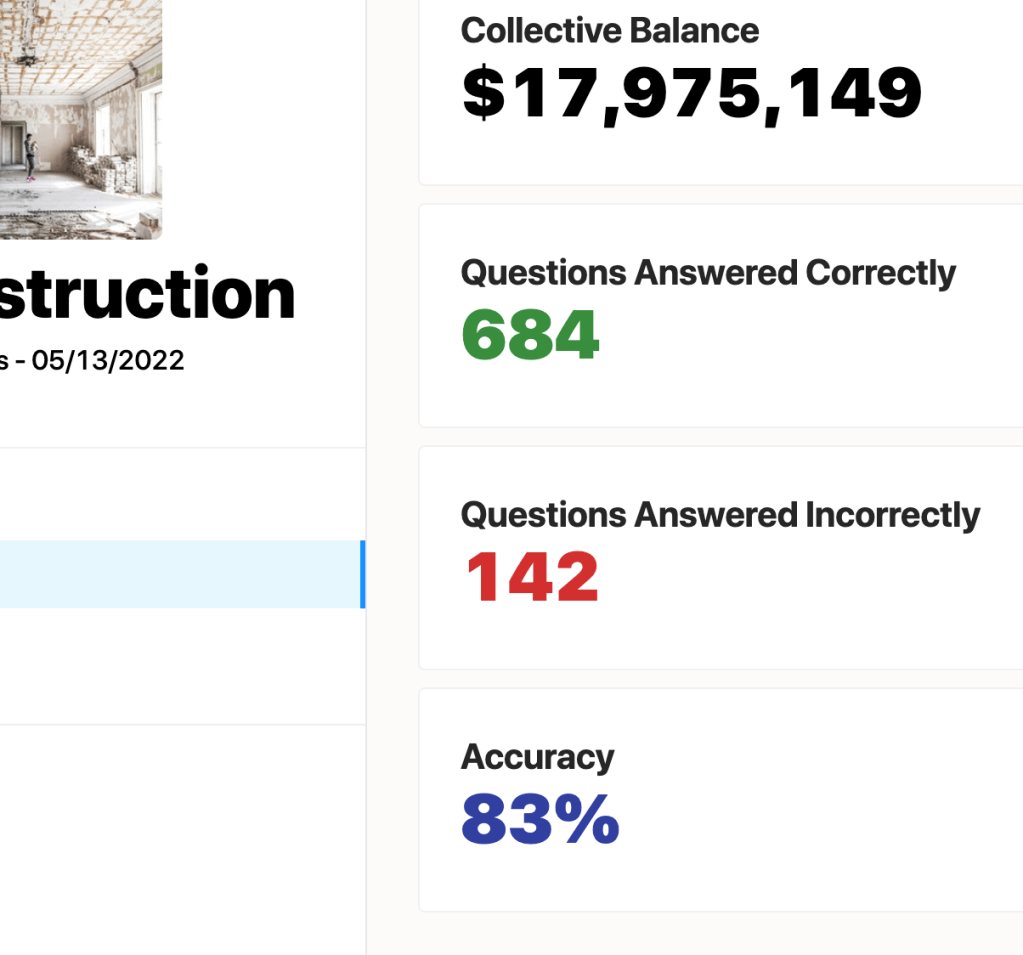
After 15 minute timer ended, I created a new Gimkit quiz, but I didn’t create any questions. I hit the Kitcollab option and it generated a link I could share with students. This link allowed students to create Gimkit questions to make a class Gimkit quiz. The Kitcollab allowed me to accept or reject questions. Plus, I could provide feedback in real time on the questions, wording of questions, and answer choices. This was super cool!! Onl 1 class was able to play the Gimkit, and they did a nice job with a class average of 83%.

 Moler's Musings