
I’m currently writing this on Good Friday. However, I could call this day Bad Friday:
- 3:00 AM wake up call from my 2 year old daughter who puked.
- I drove my 5 year old daughter to the bus stop and my front axle broke.
- Ran the 5 year old to the bust stop.
- A marker found its way into the laundry and ruined 2 pairs of my pants and a shirt.
- I had all these plans to work on 2 classes I’m taking and memorize my lines for the school play ONLY to do none of it.
If I write this with a bit of extra snark then I have 5 reasons listed above.
If I covered all of the standards laid out by the state, I could cover it all, but I could only do a mile wide and an inch deep. Why am I going to cover content just to say I covered it? That’s stupid. I’m going to cover important topics and cut out the unnecessary stuff. Last week we covered the different methods Abolitionists used to push for an end to slavery. I had a choice – so I switch to the women’s suffrage movement or go into resistance to slavery? After a discussion, we (my student teacher and I) decided to move into resistance to slavery.
Side note: I rarely teach the same stuff year to year because I would get bored and probably quit. This is why I quit teaching tennis – the feeling of doing the same lessons over and over, saying the same stuff over and over day after day. Awful. As a result, I mix up my lessons year to year. Sometimes I change how I teach. Other times I change what I teach.
The Resistance to Slavery lesson is a C3 Inquiry Unit on www.c3teachers.org. (Even though it says grades 3-5, it doesn’t matter. It can be used with any grade level 3-9, in my opinion). Every C3 unit has a “stage the compelling question” activity. With this particular unit, I turned the compelling question into a Number Mania. The unit itself was broken into 4 questions:
- What about the daily life of enslaved people would have prompted resistance?
- What were the means of resistance to slavery?
- What were the risks of resisting slavery?
- What were the results of resisting slavery?
I like the C3 units because they usually have great formative assessment tasks, EduProtocols can easily be incorporated into them, and they are very adaptable to different formats.
Nevertheless, here is my week:
Monday – finish Abolitionist assessment choice, Number Mania
Tuesday-Thursday – Resistance to Slavery Group Playlist, Thick Slide
Friday – No School
Monday
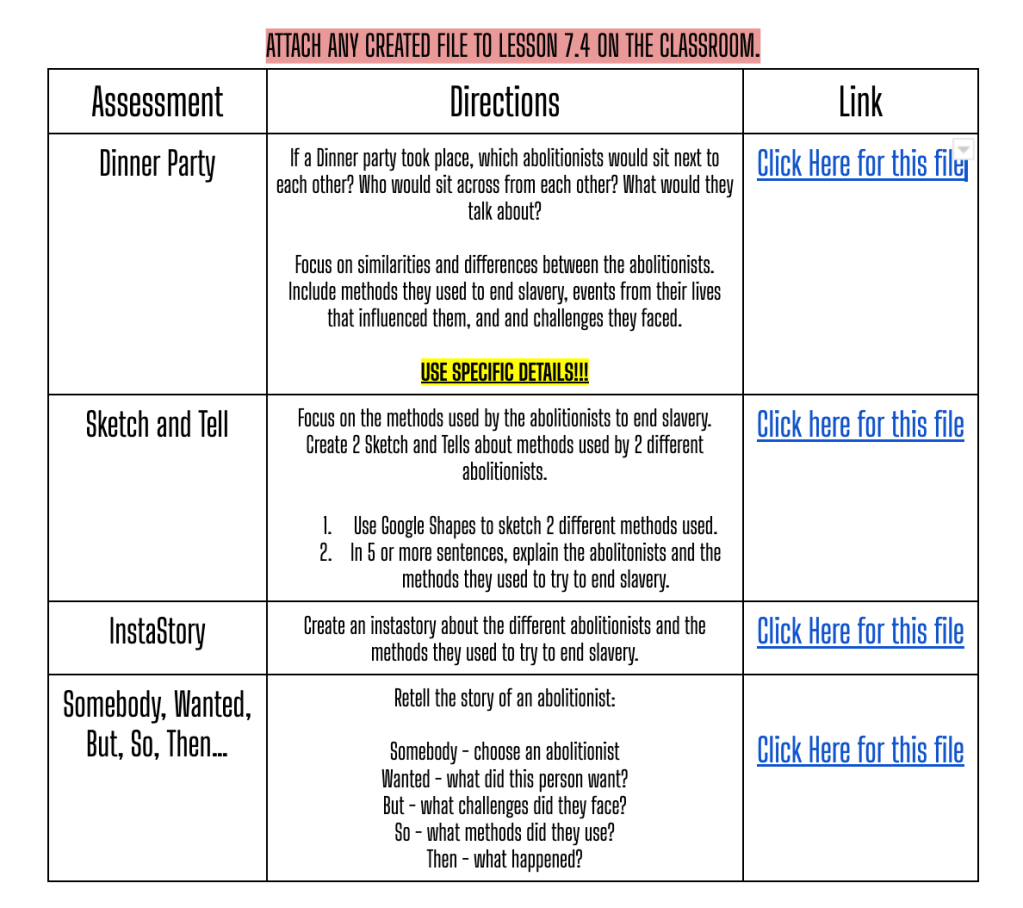
Monday was a day with all kind of stuff happening. Some students were finishing their assessment choices from the Abolition lesson.


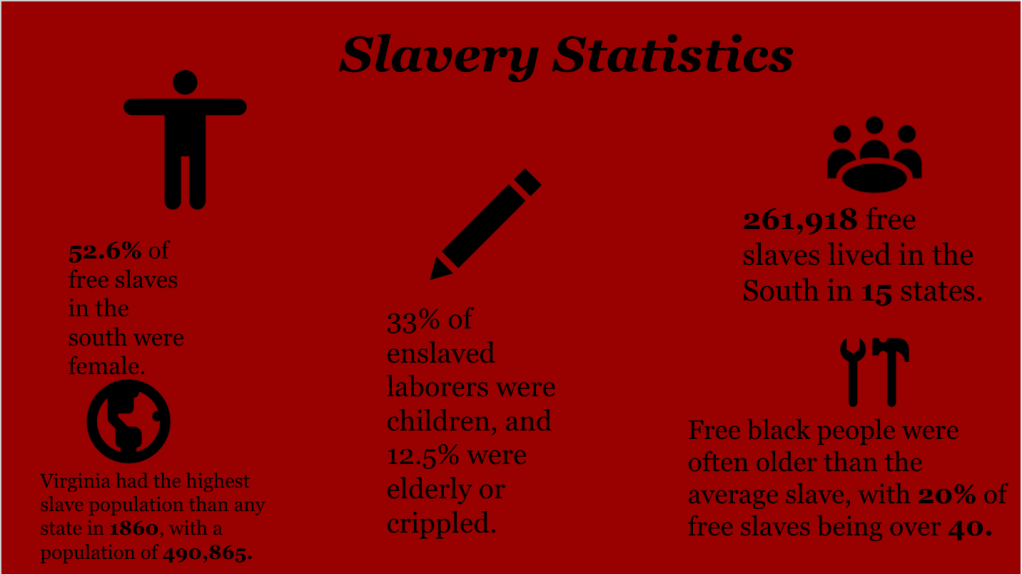
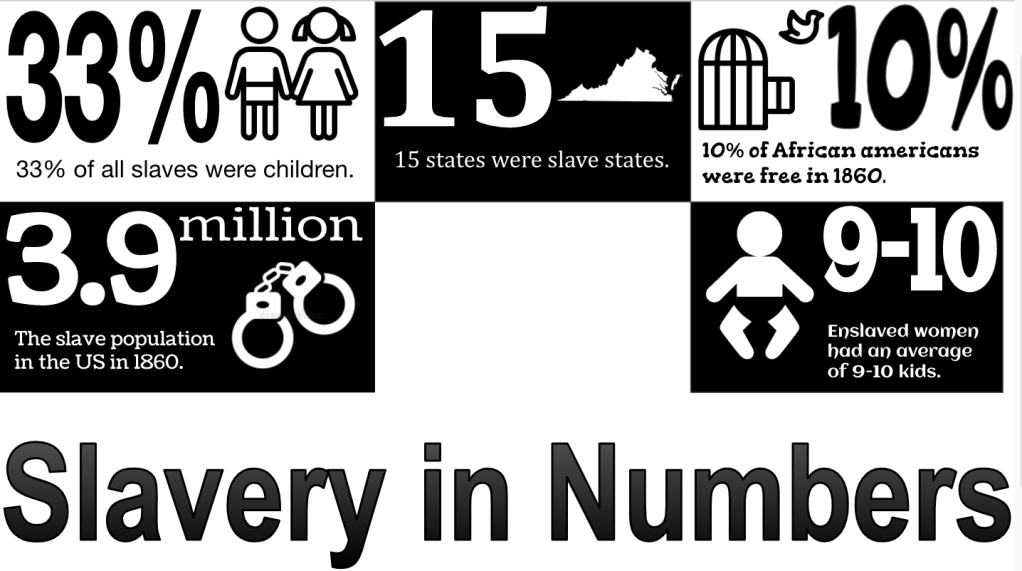
Other students began the new C3 lesson on resistance to slavery. I wanted to begin this lesson with some little known statistics about slavery. The statistics that textbooks won’t tell you. I found an article written by Henry Louis Gates (I shortened it down a bit for 8th grade). We turned this into a Number Mania. Students read the article for 10 minutes, and shared 2-3 numbers and facts with the class through a Google Form. I created a Google Sheet with the Form data and shared with the class.
Once I shared the Google Form Data, students had 15 minutes to design their Number mania slide. However, I framed the lesson like this, “When you select your numbers and facts, think of how you can tell a story with your infographic.”
The students did a really nice job with their infographics. They put a lot of thought into their creations. Many of them were surprised to learn that enslaved women had an average of 9-10 children. They were also surprised to learn that 75% of white families in the south didn’t enslave people. All in all, this was a powerful way to introduce the Resistance to Slavery C3 unit.
Tuesday-Thursday
I mentioned earlier the C3 Units are adaptable to any formats. When I was at Spring CUE in Palm Springs, I learned of the Group Playlists from Amanda Sandoval. These PlayLists are a modified version of the Playlists created by Catlin Tucker. I like these Group Playlists because they have students working individually, have self checks, and provide opportunities for students to collaborate. Here is an example (@historysandoval template):
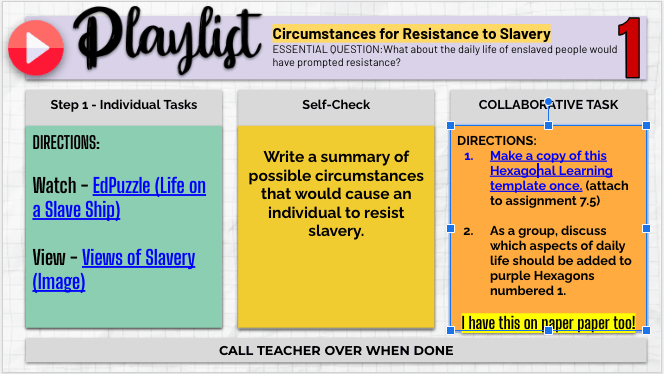

When I created these Group Playlists, I used similar sources the original C3 unit had linked. However, instead of youtube videos provided, I found the same videos on EdPuzzle. I also included primary and secondary sources into the individual tasks.
For the Self-check part of the Playlists – I made mini organizers on a Google Doc and made copies. I also made a Frayer model for students to collect notes. Some students really liked the Frayer. Other students really liked the mini organizers.
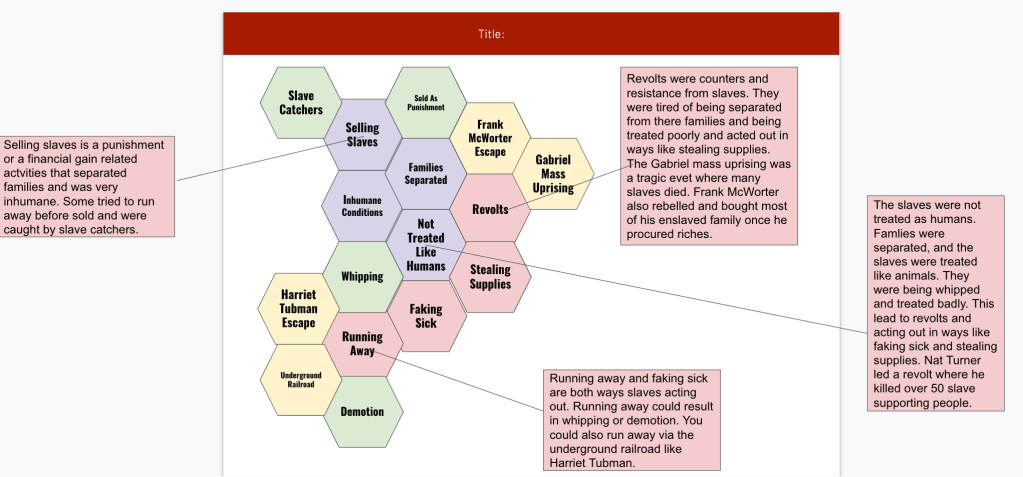
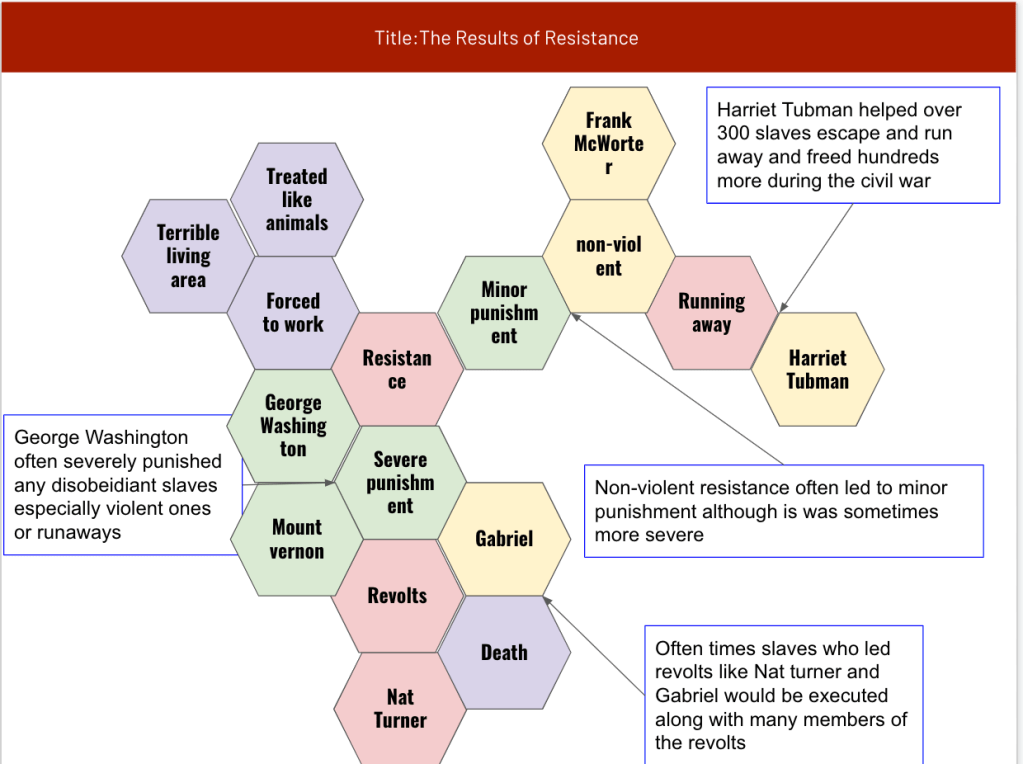
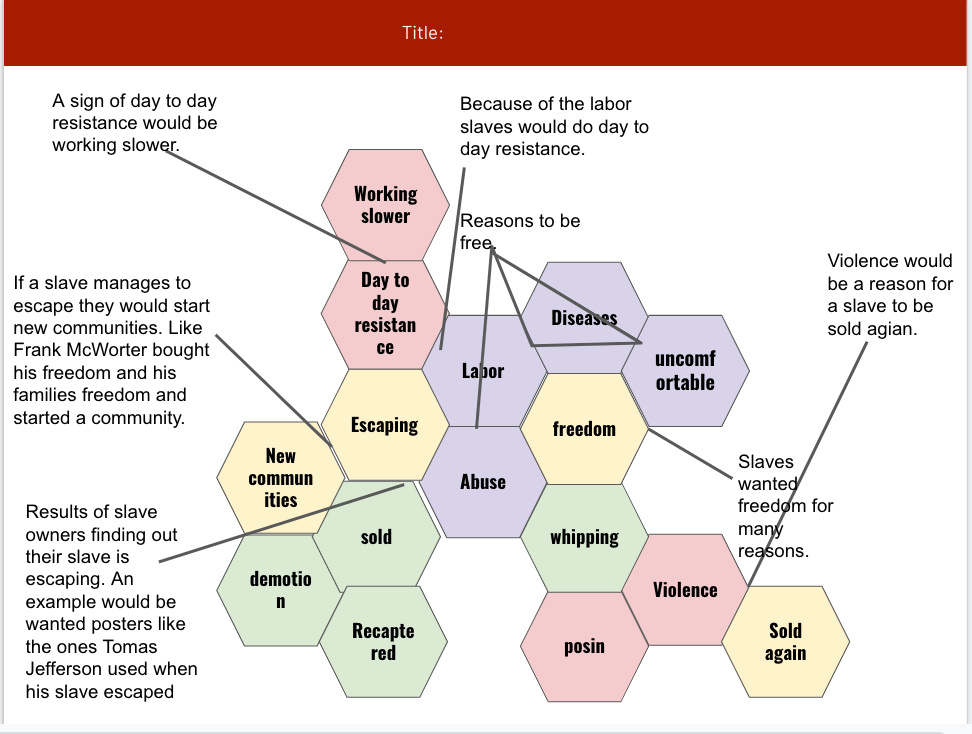
The goal for the individual tasks and self-check are building background knowledge with DOK 1 and 2 tasks. The collaborative task should be a DOK 3 or 4 with students applying, or creating, with their knowledge. I thought and thought about this for a day and a half. Then I thought of a great application strategy – hexagonal learning. Here were my thoughts:
- Share a blank hexagonal learning slide deck (have a paper version too).
- The blank slidedeck has 16 blank hexagons (4 for each playlist).
- At the end of each playlist, the students add 4 different ideas to 4 hexagons. The idea is to think about the answer to the playlist essential question.
- When all 4 playlists are completed, the students pait the hexagons and make connections.
- Finally, students find connections to people, narratives, and events they learned about from the playlist primary and secondary sources.
I didn’t know how this would turn out, but the students did awesome! They started from scratch and created their own learning and connections. I give credit to the clear learning objectives and goals for the awesome students creations.
The other part to C3 Units that I like are the extensions to learning. The extensions have students connecting their learning to today. In this particular unit, it wanted students to research a modern day resistance movement and make comparisons to slave resistance. When I read this, my mind went right to a Thick Slide idea.
Number Mania Creations



Hexagonal Learning


 Moler's Musings