First week back from Spring Break. A new unit began – The Industrial Revolution. In past years, I asked the question, “To what extent was the Industrial Revolution beneficial for people?” In the old unit, I would focus on new inventions, Lowell Mills, cotton production, etc. It just felt like it was isolated, and no context.
This year, I decided to focus on the differences in North and South based on the Industrial Revolution. We focused on geography, economy, and transportation. I wanted to go this route because it provided context and would eventually set us up for the Civil War unit afterwards.
Monday – Industrial Revolution – whirlygigs (Mr. Roughton lesson)
Tuesday – Fast and Curious, CyberSandwich
Wednesday and Thursday – Station Rotation, Fast and Curious
Friday – Thick Slide, Annotated Map Directions, Annotated Map
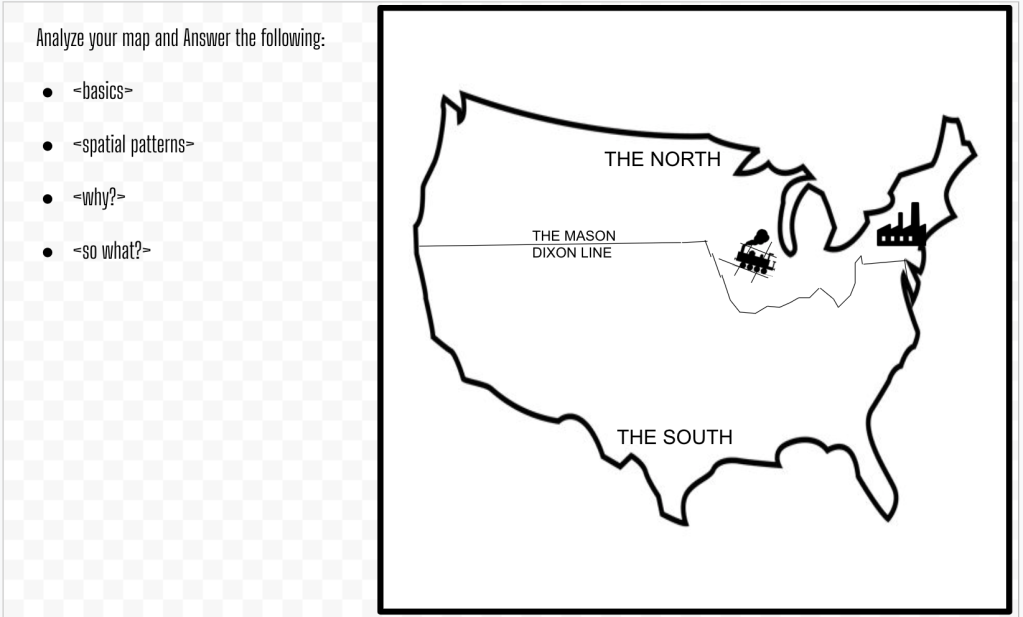
The end goal of the unit for students is having them understand how the Industrial Revolution impacted northern and southern states differently. The end assessment is an annotated map where students create symbols highlighting the differences and analyzing their maps.
Monday
This was the first day back from Spring Break. I needed something uplifting. I needed a hook to get the students into the Industrial Revolution. Then I suddenly remembered a lesson I saw on Mr. Roughton’s Website – it was a lesson where students experienced the transition from the Cottage Industry to Factory life making whirlygigs. This lesson is engaging and helps the students understand that some people made things in their homes; we didn’t always have factories.
For this lesson, I found some old paper (It’s a paper waster). Before we began, I showed the students a whirlygig and how it twirls around when dropped in the airs. For the first round, I didn’t give any instructions on how to make it. I didn’t give students any tools. They were frustrated as they tried to figure it out. After 5 minutes, I had them record their feelings and the number of functional whirlygigs they created.
The next round, I actually gave instructions, rulers, and scissors (but no paper clips). Students had 5 minutes to work independently to make as many whirlygigs as possible. At the end of time, I had them record the number of functional whirlygigs they created. I also had them record their feelings during this round. The big idea I pointed out during this round was some whirlygigs were better than others due to various reasons: we understood the directions differently and some had better tools than others. Lastly, I asked the students, “What would make this better?” They thought and thought and finally someone said, “If we got into groups, we could each specialize in something.” Lightbulb moment.
The third round, I had students get into groups. Each students specialized in creating some part of the whirlygig. Someone cut rectangles, someone cut a slit down the middle, someone folded the edges, and someone added a paper clip. This time the whirlygigs were similar, functional, and I brought up the idea of interchangeable parts with the paper clip.
This lesson idea is awesome and super engaging. It was a great way to introduce the Industrial Revolution and a great way to kick off the week the first day back from Spring Break.
Tuesday
Tuesday I got into the first main part of the lesson – the differences in geography between Northern and Southern states. Here is my initial lesson set up…
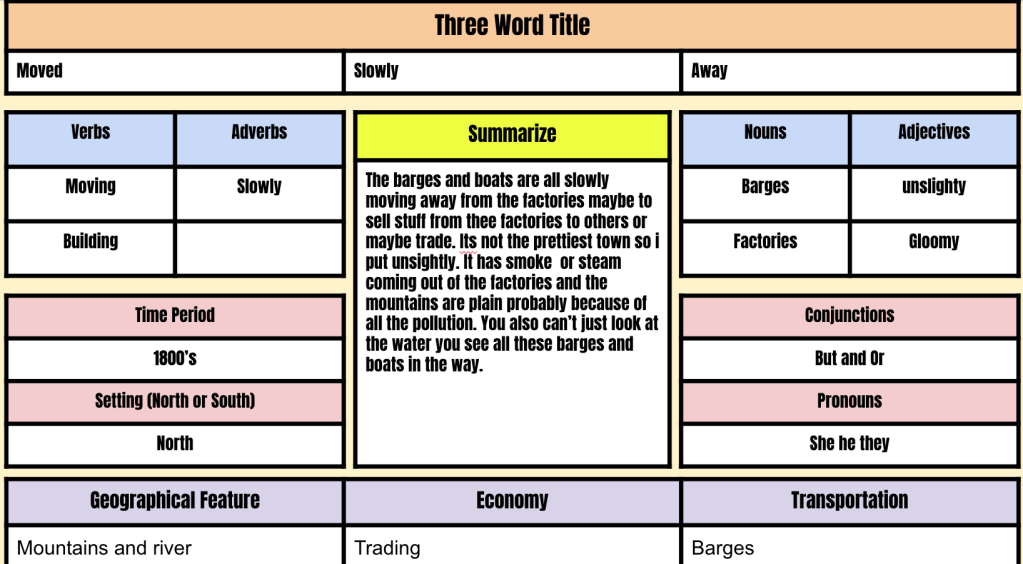
- Begin with an 8parts – I wanted the students to choose an image representing the North or the South. Students gave it a 3 word title, focused on nouns, adjectives, verbs, and adverbs. They would also list out an example of geography, economics, and transportation.Students finished the 8parts by writing a descriptive paragraph about the image.
- Transition to a Quizizz – the Quizizz had 12 questions, 5 vocabulary words and 7 questions related to Geography. If students did well with vocabulary that meant I didn’t have to waste time doing vocabulary activities.
- CyberSandwich – The CyberSandwich would be a 10 minute read and note take, 5 minute discuss, and a 10 minute summary. One students would read about northern geography and their partner would read about southern geography.
This plan would change throughout the day…
8Parts
I began the day with this period and took a chance with the 8Parts. I broke a golden rule and used the 8Parts for the first time this year with actual content. I should have known better. It’s interesting, though, because students that had me last year did an excellent job with this activity. However, I didn’t like some of the results and the 8Parts took entirely too long. Again, I should have known better – low cognitive load to begin and more reps!!
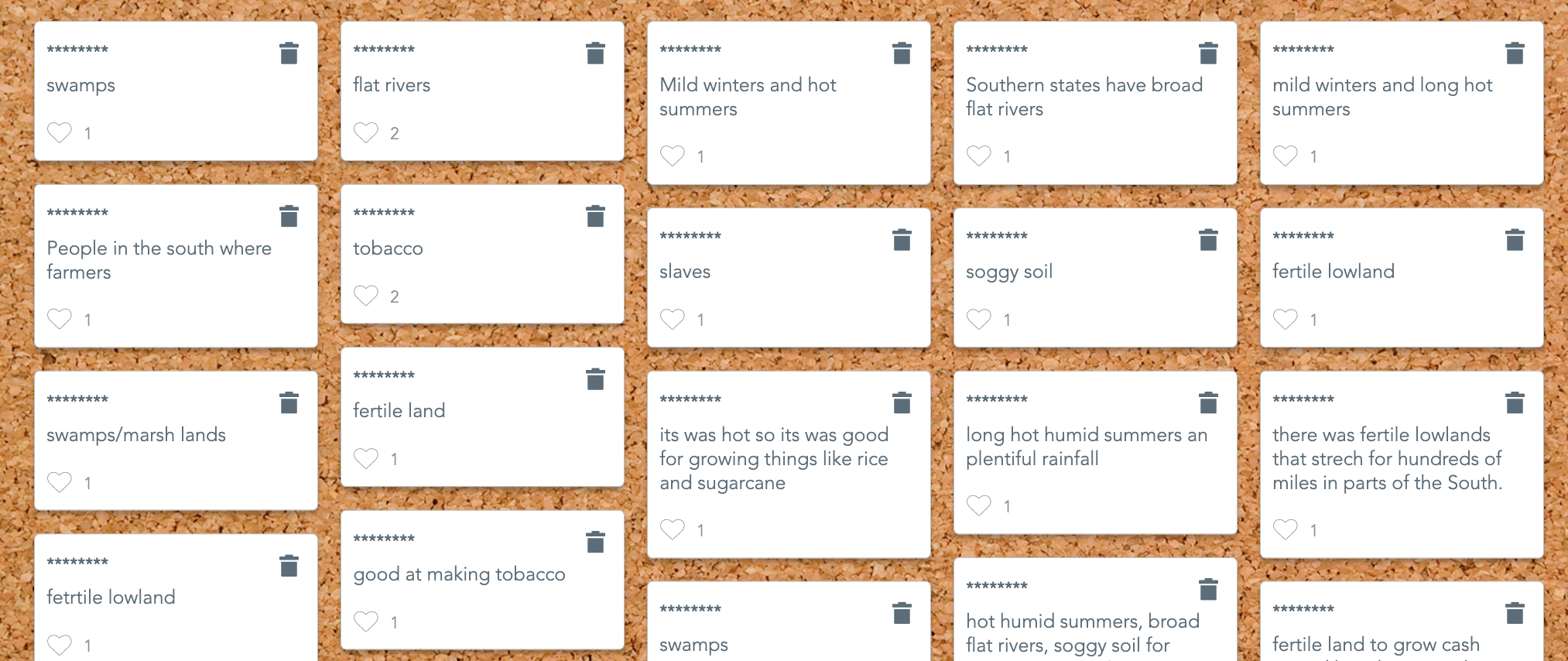
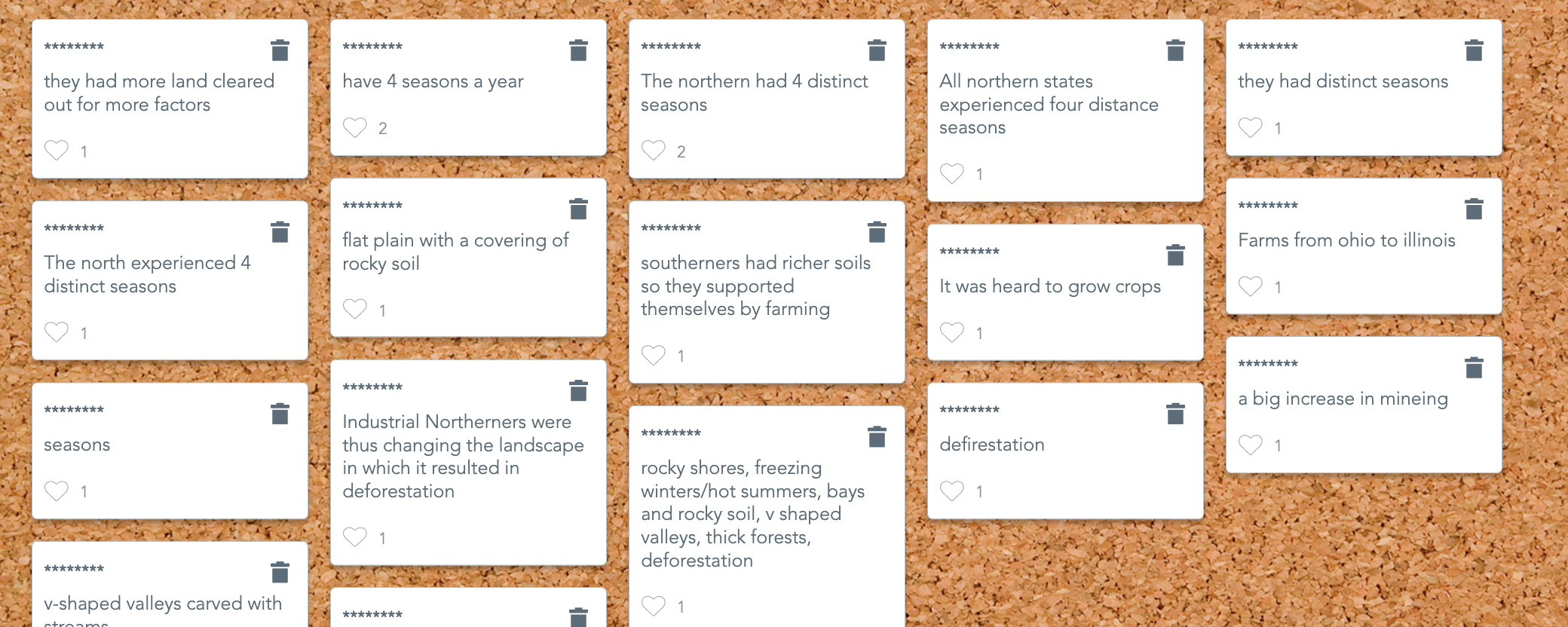
I decided that I needed something simpler and quicker. As a result, I switched this to a Thin Slide. However, the Thin Slide was done with a NearPod Collaborative Board. I uploaded the same images and gave students 3 minutes to share one word and one picture of a geographical feature they observed. This proved to be more effective as we looked for similarities in the posts…thank goodness for the Thin Slide in my toolbox. Plus, the setup on Nearpod was super easy!


Quizizz – Fast and Curious
The Quizizz I put together had 12 questions – 7 questions related to geography and 5 related to vocabulary. I included vocabulary questions to see how the students would do. The class average on vocabulary questions was 90% or higher across all classes. The class averages on geography questions was 40% or lower across all classes.
The goal was to run the Quizizz twice before the end of class. Here were the class averages the first time taking the Quizizz – 62%, 57%, 49%, 40%, 33%. After completing the CyberSandwich, the class averages were: 82%, 86%, 89%, 79%, 77%. This was a significant jump and shows the power of the Fast and Curious reps.
CyberSandwich
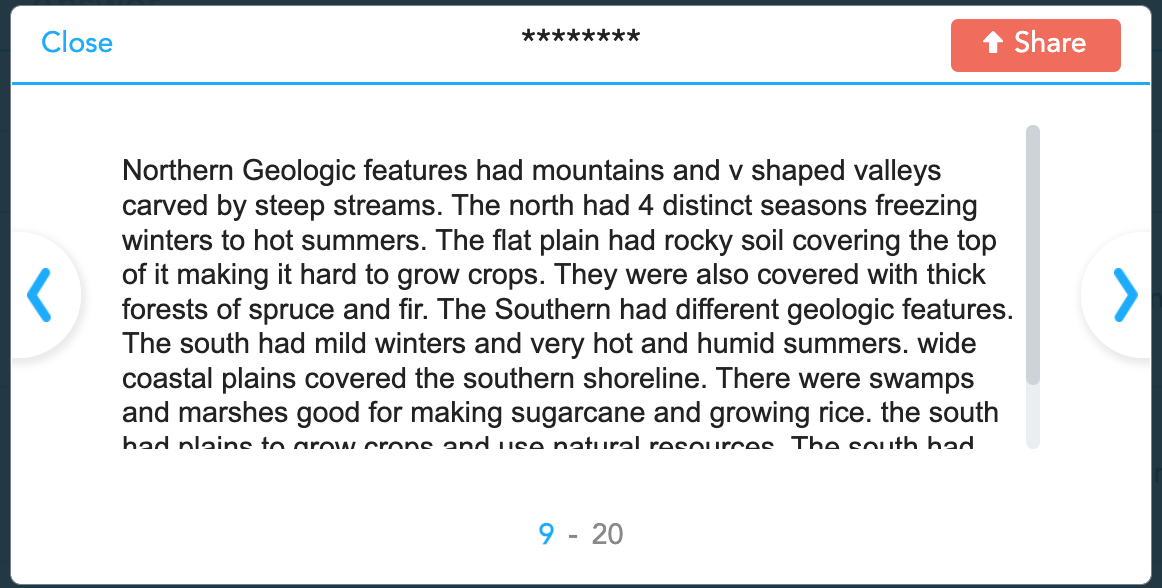
The CyberSandwich evolved throughout the day. We began the day with a completely digital CyberSandwich using Google Slides. One student read about northern geography and their partner read about southern geography. I felt bad that I didn’t have paper copies of the reading available of a physical copy of a note taking sheet. I try to have these things available for students. For 4th period and beyond, I had the copies available.


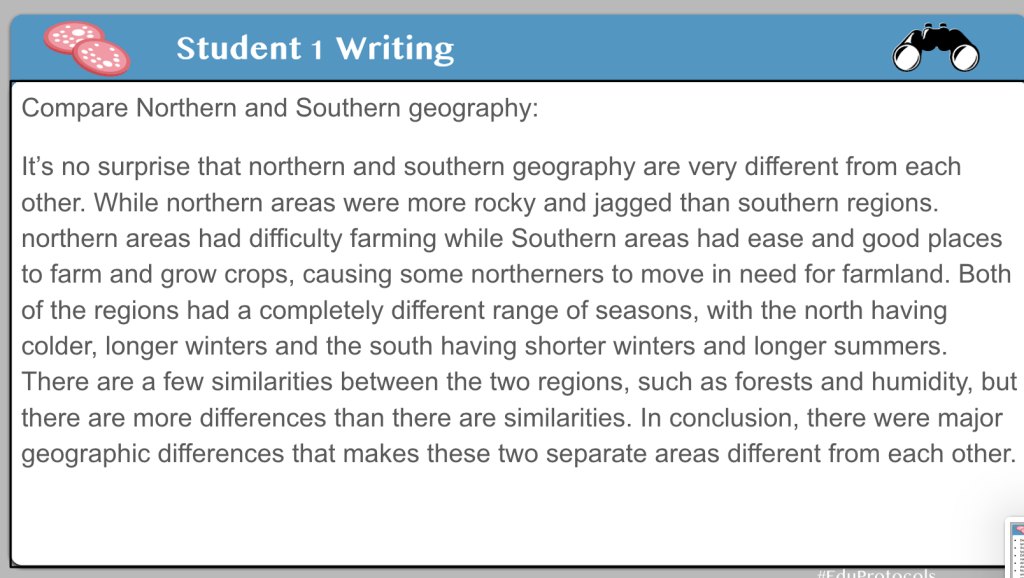

By the time 7th period rolled around, I had to switch up the CyberSandwich. This class is made up of 50% or more of students with an IEP and it’s tough for me to get around to everyone. With this class differentiation and UDL is a must. As a result, I created a CyberSandwich on Nearpod.
The Nearpod adaptation was such a great mixup!! I shared my Nearpod link and gave every student a Venn Diagram on paper and had them takes notes. I also had physical copies of the readings as well. There’s no doubt if I left the CyberSandwich as a Google Slide, it would not have gone as smoothly. I set up my Nearpod like this:
1st slide – I can statements.
2nd slide – Thin Slide with a Drawing Slide
3rd slide – Thin Slide with a Drawing Slide
4th slide – Read about Northern Geography – takes 4-5 notes.
5th slide – Collaborative Board – share 1-2 important notes you wrote
6th slide – Read about Southern Geography – takes 4-5 notes.
7th slide – Collaborative Board – share 1-2 important notes you wrote
8th slide – type a summary, write a summary on paper, or record audio of your summary.
All in all, it was cool how this lesson evolved throughout the day. My goal is to strive for better for my students and myself on a daily basis. Switching the CyberSandwich to a Nearpod was a huge move that proved to be effective for my 7th period students.

Wednesday and Thursday
For Wednesday, I was going to roll with another CyberSandwich. As usual, my mind changed and I wanted to try something different. I created a station rotation model that was to be completed in 2 days. The station rotation was set up on an interactive image made created with Genial.ly. When I created this set up, it was intentionally done with these options:
- EdPuzzle – Lowell Mills and the women of Lowell Mills (watch).
- Listenwise – NPR Podcast and the negative effects of the Industrial Revolution (listen).
- CyberSandwich – read about the Northern/Southern economies, discuss, and summarize.
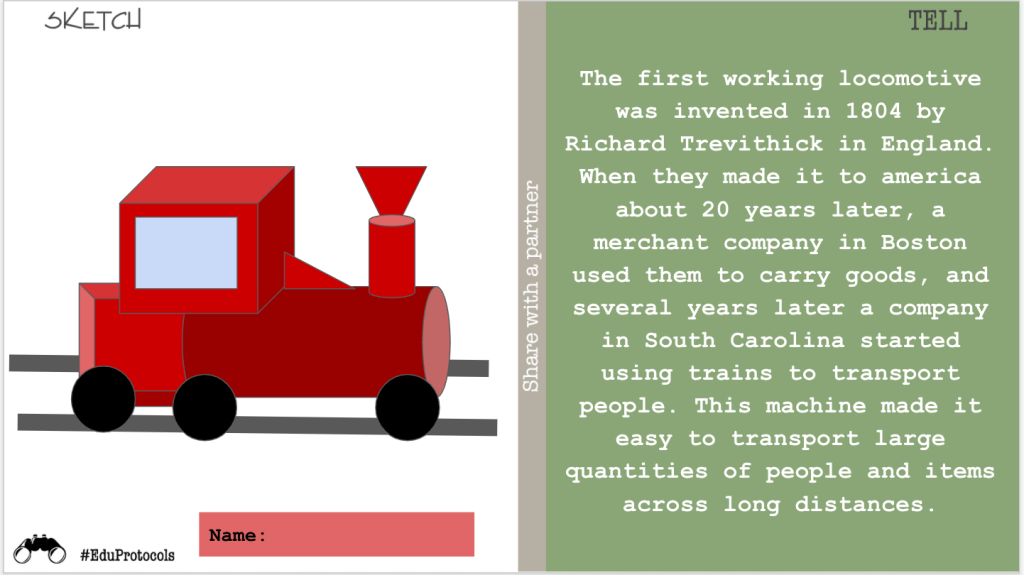
- Sketch and Tell – Research an invention that was invented between 1790-1840 and summarize your findings.
- Card Sort – get the paper bag and sort pictures into Northern or Southern categories.
Within these lessons, I provide accommodations and modifications as necessary. For example, if a students didn’t want to do a CyberSandwich with a partner, I had them read about the northern economy and I would share notes I created. Then we discussed the information together. In some cases for the written summary, I provided sentence starters for students. I also showed students how to use voice typing for a summary. As usual, I offered physical copies of the CyberSandwich and the readings. With any lesson or activity, my special education background kicks in for all students. All in all, the station rotation model was engaging and I had 80% of students complete all 5 stations.




Friday
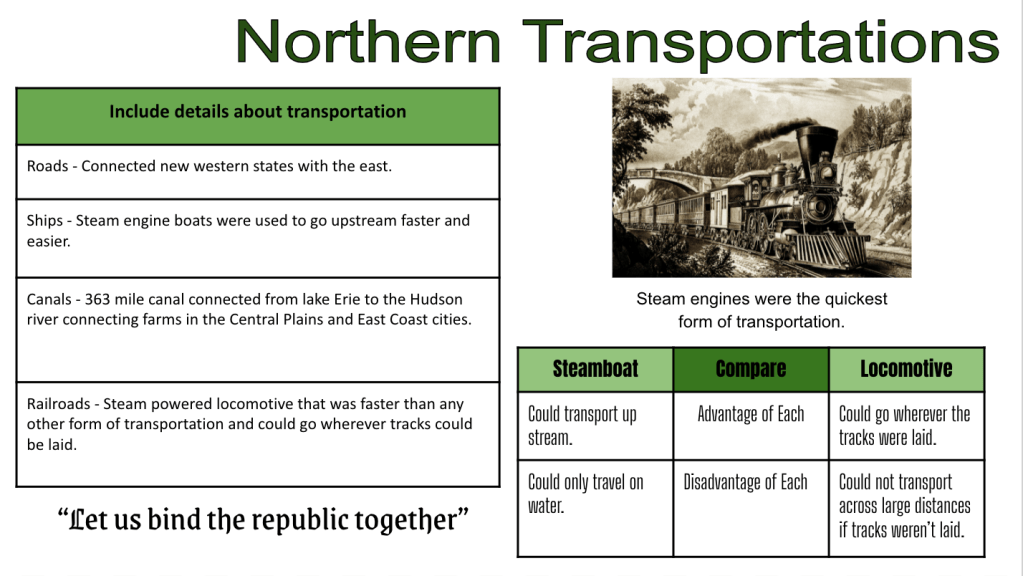
Friday was used to cover changes to transportation in the North. Students created a Thick Slide about railroads, canals, and steamboats. I gave students 20 minutes to read and design their slide. This is the 4th or 5th Thick Slide we have done, and they are getting so much better. Plus, the students love creating their slide. Reps are important!! Here are some student samples:


Through the week I kept emphasizing the CyberSandwiches and Thick Slide served a purpose. The students would look back on the information to help them create an annotated map. Here is the start to one of the maps:
My Final Thought
Earlier in the week I visited another class and walked the students through a Thick Slide. The students could choose a section to read for their slide. The slide had students writing details about the topic, copying a quote, adding a relevant picture, picture cation, and they explained a vocabulary term. I showed some examples and then gave them 20 minutes.
Near the end the states to me, “How do I know they’re done? What if they aren’t adding a caption? I’m going to have to take 10-15 minutes to go over this so they have everything they need.”
I replied, “It’s okay. They’re fine.”
She replied, “How do you know? Some of these kids aren’t going to have a caption or a quote. I come from a generation where I did everything asked of me.”
I replied, “I’m 38 with a masters degree. You have a masters degree. They’re in 6th grade. I come from a different generation, and I would have everything required of me too. There are people from all generations that don’t do everything required of them. It’s okay. You’re working too hard.”
Then I proceeded to use something I learned from Kim Voge at Spring CUE. I had all the students partner up and then I had them state one “glow” and one “grow” for their Thick Slides. Students gave each other feedback and they proceeded to correct the thing they didn’t have.
I don’t know where this distrust of students came from? To me it’s a self-fulfilling prophecy – if you expect them not to do things, then you will treat them as such, and that creates a negative situation for everyone involved. Kids are remarkable people and will rise to the occasion. We were blown away by their feedback and corrections and it took about 5 minutes. Trust students. Give them opportunities to speak with each other.

 Moler's Musings