I am currently writing this post from the Spring CUE Conference in Palm Springs, California. I made the trip out on Wednesday after school. This week is the last week before Spring Break begins. So that means craziness ensues. It’s unlike me to begin class with a stern lecture, but it had to happen this week.
As for the lessons and content, the goal for the week was wrapping up the Westward Expansion Unit. I wanted the content focus to be on the motivations for territorial expansion and the motivations for people moving west. The grand finale of the unit is a digital breakout I put together with some puzzles and clues to help the students.
Monday – Thick Slide combined with a SHEG Lesson.
Tuesday – Wrap up the SHEG lesson with a GimKit
Wednesday – CyberSandwich
Thursday – Text Quest Wrap Up
Friday – Digital Breakout
Monday and Tuesday
After finishing the traps and treasures lesson to give students background knowledge on how the United States expanded west through purchases, treaties, and wars – the perfect lesson is the Manifest Destiny SHEG Lesson. This lesson has students consider what motivated American territorial expansion. The lesson uses the familiar painting American Progress, and 3 other primary sources with different perspectives.
I decided to shorten this lesson down for middle school and I only had students analyze 2 sources:
- John O’Sullivan’s article on reasons for expansion (O’Sullivan coined the term Manifest Destiny).
- Theodore Parker who was an abolitionist and minister and offered the reasons for expansion were expanding slavery and showing power.
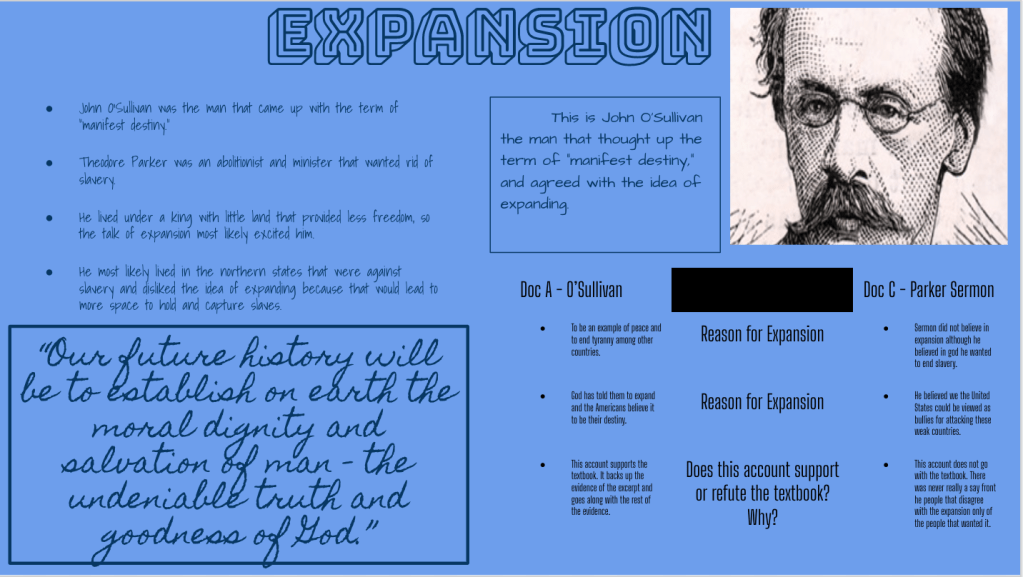
In order to analyze these perspectives, I created a Thick Slide for students. I set the Thick Slide up so students could source the documents, close read the documents, and compare the perspectives. I also had the students add a quote, picture, and caption.
With the lesson set up, the first task was reading a textbook excerpt about Manifest Destiny. I asked students to consider the information presented by the text – what was a reason for Manifest Destiny? This was followed up with the students reading 2 sources and completing the Thick Slide. Here are some student examples:


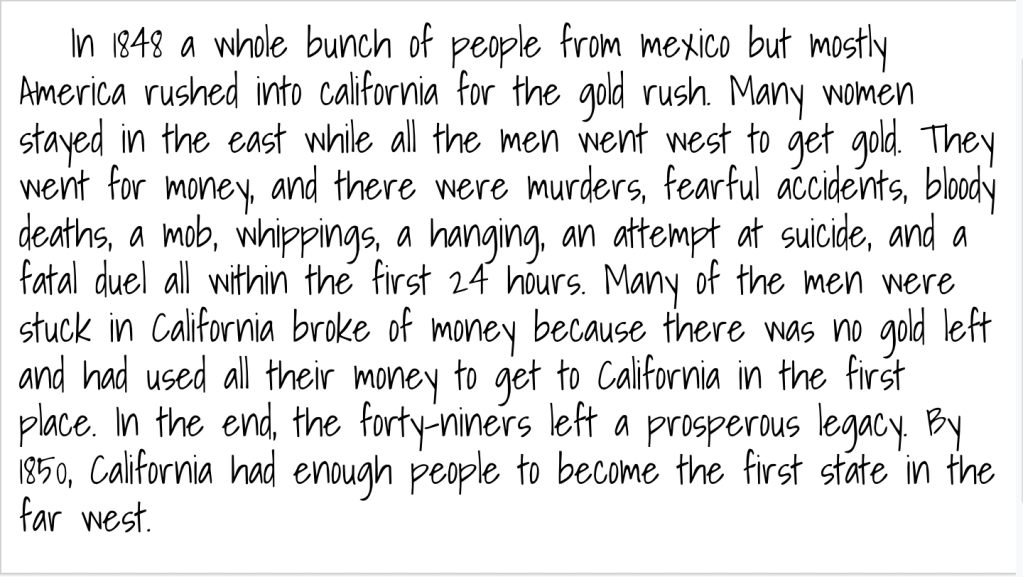
After the Thick Slide was completed, we circled back to the original textbook excerpt we started with and asked the question, “What more could you add to this excerpt?” Students used their thick slides and previous knowledge to create new paragraphs or insert new information. Here are some student samples:


Wednesday and Thursday
Wednesday we focused on groups of people that traveled west. Instead of going through all the groups, I have students focus on 3 of them: Mormons, 49er’s, and Pioneer Women. The Mormons and 49er’s are listed in our standards. Pioneer women I chose because they make references to voting rights which ties nicely to reform movements and the Women’s Suffrage Movement.
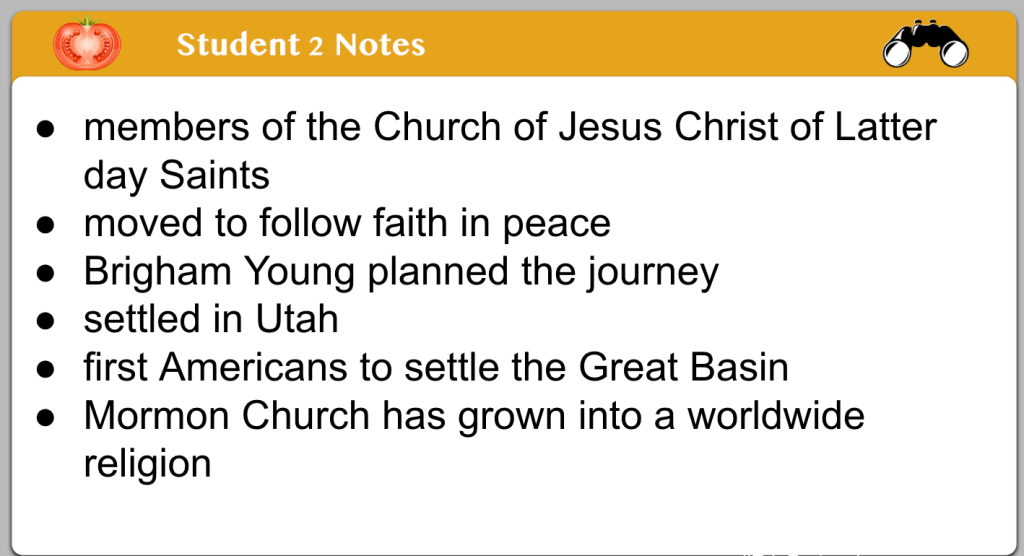
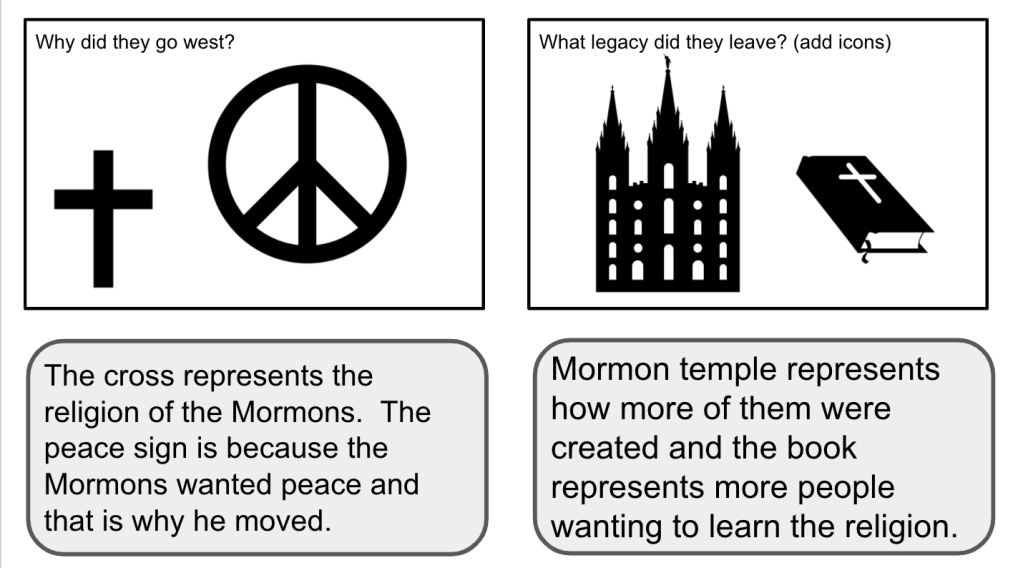
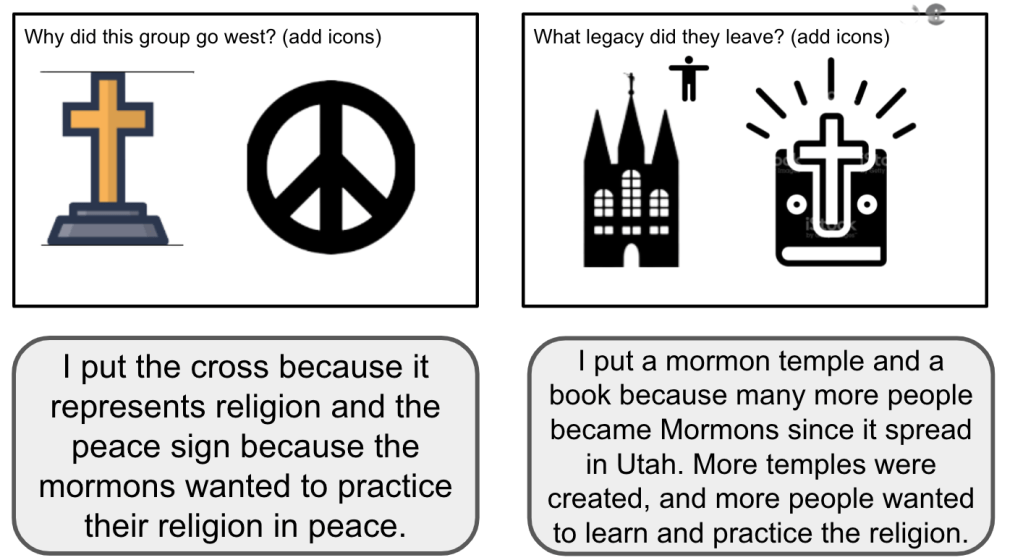
For this lesson, I set up a CyberSandwich where students could choose which group they wanted to study. I ran the standard 10 minute read and note taking, 5 minute discuss, and 10 minute summary. Instead of a summary at the end, students could choose to do an Icon Board which is an idea I got from Matt Miller at Ditch That Textbook. For the CyberSandwich, I had students focus on 2 questions:
- What motivated groups of people to move west?
- What legacy did these groups leave?
Here are some student samples:


The day after this lesson, I had students complete the Text Quest they started last week. During the first part of the Text Quest, I had students look at 3 items to figure out what all 3 had in common. Here is that slide:

The second part of the lesson, I had students go back and reread the articles from the CyberSandwich. This time, however, I had them look for examples of Bravery, Empathy, Fortitude, etc…
How did this lesson end up? I don’t know yet…….
Friday
The final day of the week, I put together a Digital Break. Here is the breakout:
In this breakout I included several clues to help students:
- A puzzle they have to put together.
- A hidden word, word search (Find all the words, the unused letters reveal the answer).
- My favorite – a Where’s Waldo page where I placed in my own Waldos with clue links embedded in. Students have to find the correct Waldo that holds the correct clue….

 Moler's Musings