
This week I needed to focus on a writing unit. It was brought to my attention that I needed to cover writing more often. So, I sat down and looked at the Common Core Writing standards and I made notes next to each item. Turns out I cover many of the standards already with weekly Frayers, CyberSandwiches, Iron Chefs, and Thin Slides. However, there was one standard I didn’t address yet – Argumentative Writing.
Despite me covering writing standards weekly with EduProtocols, I haven’t formally taught writing. I focus too much on content rather than process. I needed to put together a writing unit that focused on actually teaching the process of writing. The writing had to fit with the Monroe Doctrine because that’s where we are in class. So I sat down, got my mind working, and started with this question:
“Was the Monroe Doctrine a policy of expansion or self-defense?”
The next step of the process I wrote out some I Can statements. Here are those statements:
- I can identify 2 policies from the Monroe Doctrine.
- I can explain the Monroe Doctrine how the Monroe Doctrine can be seen as a policy of expansion.
- I can explain how the Monroe Doctrine can be seen as self-defense.
- I can construct a multi-paragraph essay.
Then I had to decide the process of teaching an argumentative essay. I’m not an ELA teacher, but I do love to write. I have never formally taught how to write an essay, and I wanted to keep things SIMPLE.
I chose two resources – a secondary source for background information, and three excerpts from the Monroe Doctrine to serve as a primary source. When I selected my resources, I kept the students in mind. The other dynamic to this writing unit planning was taking into account that some students practice writing essays and paragraphs monthly and others have very little practice. My compromise to this was expecting students to write 3 basic paragraphs to form an argumentative essay.
The last part of my planning process included adding some EduProtocols. Here was my plan:
Monday – No School
Tuesday – Fast and Curious, Thick Slide
Wednesday – Parafly
Thursday – Quizizz, Research Protocol (Google Form, V-Diagram)
Friday – Write the Essay (Essay organizer and model)
Tuesday
I used a new EduProtocol today – Thick Slides! My focus this week is writing a multi-paragraph using a prompt similar to what will be seen on the state test. I copied and pasted a prompt from the state test and plugged in my own content related to the Monroe Doctrine.
Most prompts on the state test have the students comparing and using evidence from 2 or more sources. In this case, I have a secondary source and primary source the students will be using. My focus is on 3 things for this week. I want the students to be confident with:
- Writing 3 solid, cohesive paragraphs.
- Creating a good thesis.
- Using evidence from the sources to support the thesis.
The Monroe Doctrine is a secondary issue. With these three things in mind, I started to piece together some Eduprotocols to help with writing. What came to mind are these 3 ideas:
- Thick Slides – developing a solid paragraph(s).
- Parafly to help us make sense of the Monroe Doctrine as our primary source.
- Research Protocol – develop a thesis with evidence.
Starting Class
I began class with the empty room and candle scenario in the picture. I had students close their Chromebooks and had them sit and think about the answers. No talking, No questions. Just think. The students seemed confused, and after 3-4 minutes I could tell they gave up. My point with this scenario was 2 things:
- Rarely will human beings sit and think long enough to solve a problem.
- We solve problems with background knowledge in our working memories. This is true because the only students who got the answer correct were the students I had in my 5th period one year ago. That was the only period I asked the question to last year.

What does this have to do with a writing prompt? Chance are the students won’t sit and think about what a “mile long” writing prompt is asking them unless they have some knowledge of the words and phrases. Essentially I used this as my “why” for working on writing this week.
What is the answer to the question above? Try to sit and think about it for longer than 10 minutes before looking it up.
The Prompt
Below is the writing prompt I put together for the students. It’s a long one so I had students read the prompt and submit unknown words and phrases through Mentimeter to create a Word Cloud.
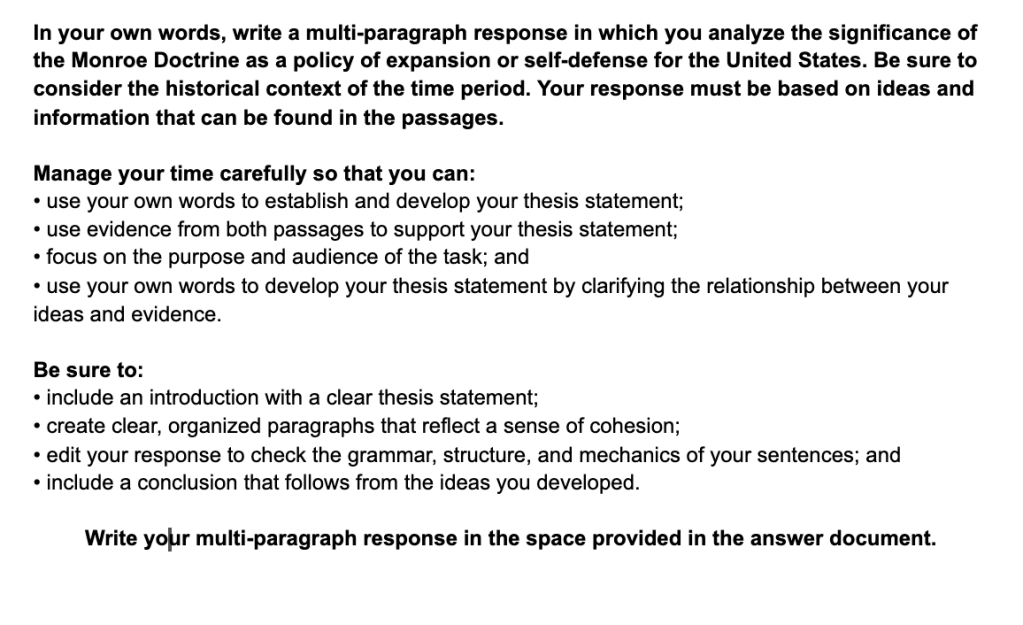
The most common words submitted to the word cloud were: significance, doctrine, Monroe Doctrine, policy, expansion, self-defense, context, thesis, audience, clarifying, mechanics, and cohesion. Here what I learned from the word cloud – don’t assume students know common words. This was followed by a discussion of what the prompt was asking the students to do.
Fast and Curious
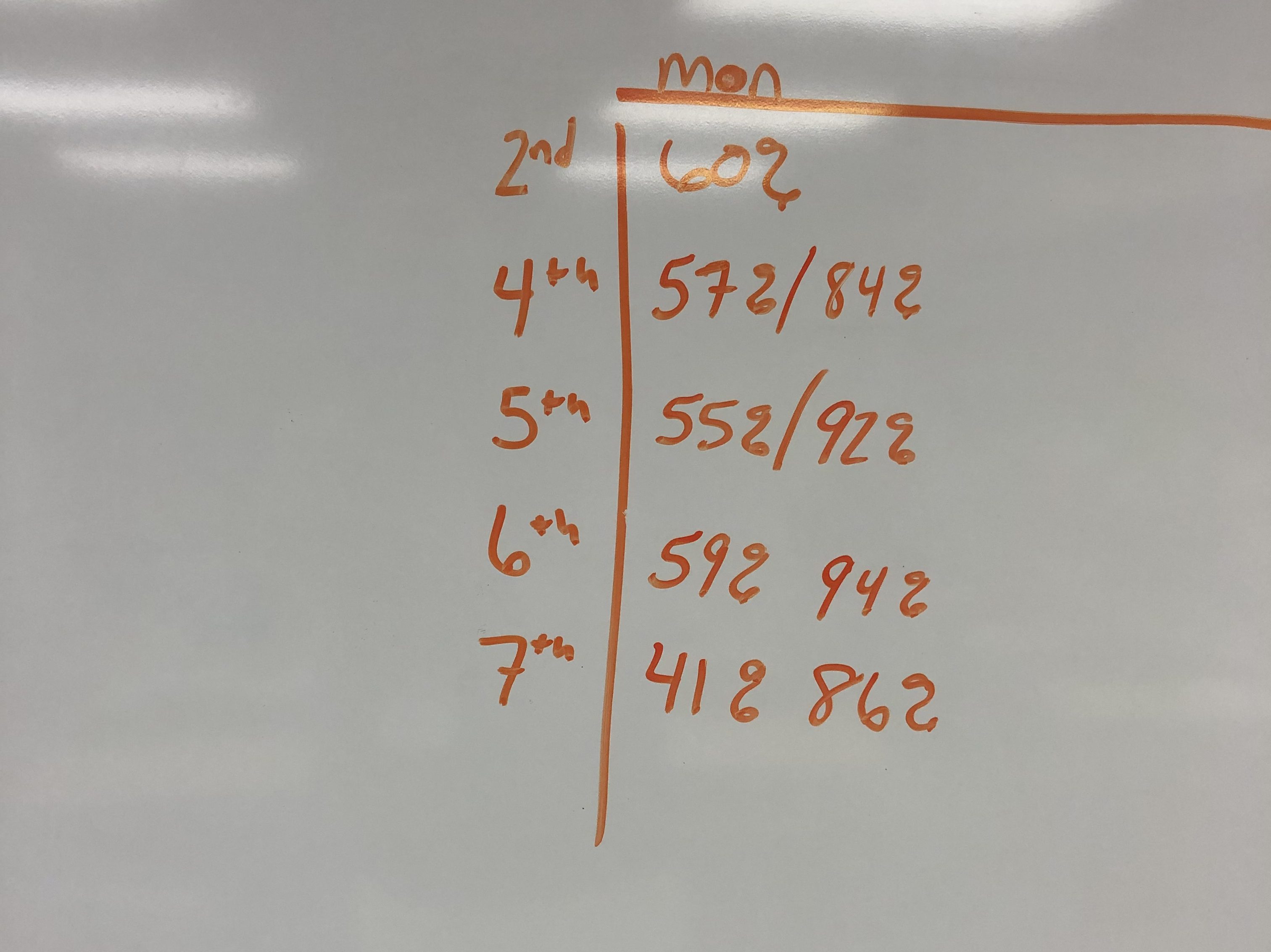
To begin building Monroe Doctrine background knowledge with the Monroe Doctrine, students took 4 minutes to do a Quizizz. The Quizizz was 6 questions. The first round wasn’t great. This was followed by feedback and a Thick Slide creation. We finished class with a 2nd round of Quizizz which was much better. Here are the results:
Thick Slides
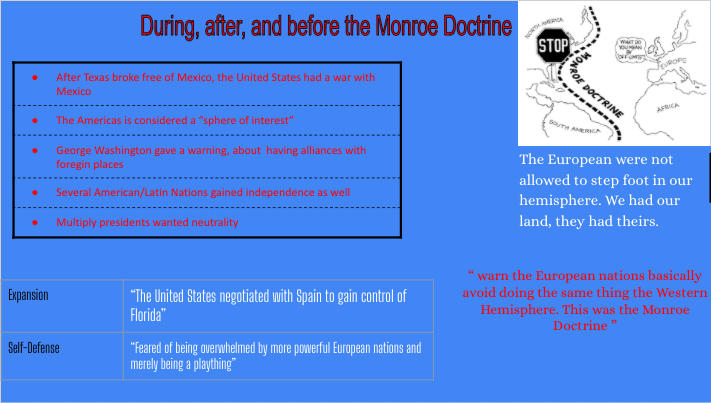
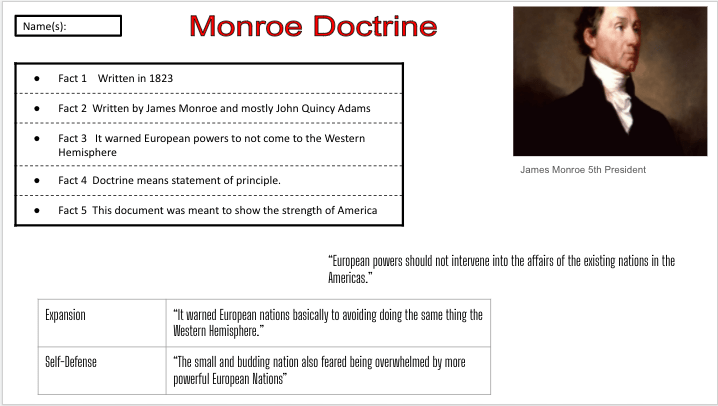
I have used Thick Slides once…..I think. But, I don’t think I would consider it Thick Slides. I was inspired to use it after watching Kim Voge’s video from EduProtocols Worldwide 3. It was a perfect fit for our essay writing unit. I love the simplicity of the design. Here were my requirements for the slide design with feedback I gave to students:
- Add a Title – the title should reflect the main idea of the topic.
- List 5 facts – focus on who, what, when, where, why. Many students copied and pasted their facts, but I will have them reword/paraphrase their facts.
- Find a relevant picture – add a caption that explain why the image works with the topic.
- Quote – find an interesting quote that relates to the main idea of the Monroe Doctrine.
- 2 pieces of evidence – find a quote that proves the Monroe Doctrine was used for expansion. Find a quote that prove the Monroe Doctrine was used for self-defense.
I gave students 20 minutes to complete their slide(s). Students will use their slides to develop paragraphs for the essay. I pointed out to students they could use this process with their scratch paper for the state test – list 5 facts on the paper, an important quote, etc. They could use this information to develop a solid paragraph.
Differentiating Ideas
- One student had a headache and couldn’t look at the screen – I gave a the reading on paper and a blank piece of paper. I helped him set up the blank paper with a title, 5 facts, and a quote.
- I added questions into the Facts section of the slide – Who wrote the Monroe Doctrine? What was the Monroe Doctrine? etc…
- I provided hard copies of the reading pre-highlighted for the students.
- Some students listened to the reading.




Wednesday
Continuing our essay writing unit with the Monroe Doctrine it was time to move on and look at 3 important excerpts from the primary source. I thought to myself – I could have the students analyze this doctrine with HIPPA or some other fancy acronym. However, I voted against that and went with a parafly. Yes, we want students understanding the context of the document, the author’s purpose, and so on. But I wanted the students to understand the words that James Monroe spoke to Congress. In order to accomplish this goal, I used Parafly which a quick paraphrasing activity. Here are the 3 excerpts I chose for the Parafly:
- “…the American continents by the free and independent condition which they have assumed and maintain, are henceforth not to be considered as subjects for future colonization by any European power……”
- “The citizens of the United States cherish sentiments the most friendly in favor of the liberty and happiness of their fellow men (Europeans) on the other side of the Atlantic. In the wars of the European powers in matters relating to themselves we have never taken any part, nor does it comport with our policy to do so…. With the existing colonies or dependencies of any European power we have not interfered and shall not interfere.”
- “It is only when our rights are invaded or seriously menaced that we resent injuries or make preparation for our defense or war…. to declare that we would consider any attempt on their part to extend their (European nations) system to any portion of this hemisphere as dangerous to our peace and safety.”
The Tools
I tried out the Parafly with multiple tools during the day. The goal with each tool was to give feedback to students in real time. Here are those tools with explanations:
- Peardeck – I began with Peardeck so I could watch students typing in real time on the screen. However, I couldn’t see student names with the free version. This was a good option, but I wanted to see student names.
- Nearpod – I liked that I could see student names, hide names, and I could run a timer for 4-5 minutes to keep the process moving. I didn’t like that I couldn’t see responses in real time. But, as students submitted I could provide feedback right away and it was easy to fix and change.
- Socrative – This was my least favorite option. Maybe I needed a paid version? Once students submitted, they couldn’t go back and make corrections. Again, maybe I was missing something? However, I really like the voting tool which can turn Parafly into a competition.
- Hemingway App – The Hemingway app allows students to edit text and it gives feedback on writing styles. I really like the Grade Level Readability rating. I challenged students to Paraphrase the text to a 6-8 grade level. They really, really enjoyed this challenge!!
Introducing Parafly
My students have never completed a parafly before. Some students practice paraphrasing a lot and some have never done it all. Since none of them have Parafly’d (Paraflied??) the Eduprotocols way I began with a short passage about a Land, Sea, and Air Burger on the McDonald’s menu. Before we began I shared a definition of paraphrasing. According to the Hemingway App the passage was at a 6th grade level. I challenged the students to paraphrase it to a 3-5 grade level. Here is that passage:
The “Land, Sea, and Air” burger is one of McDonald’s largest “secret menu” items. This behemoth of a burger is stuffed with proteins from the Land (beef), Sea (fish), and Air (chicken). Some people even add fries to this monster burger. You order a Big Mac, a Filet-O-Fish, and a McChicken all at once. Then you put the McChicken and Filet-O-Fish patties inside the Big Mac along with however many buns you want and enjoy! Voila – a Land Sea and Air Burger! In our opinion, the Land, Sea, and Air Burger is more than enough to satisfy anybody’s appetite.
As students paraphrased I gave feedback on vocabulary and sentence usage. For example, many students left the word “protein” in their paraphrase. I asked them, “What is a way to paraphrase protein?” Most replied back with, “Oh yeah, meat.” I also mentioned, “Instead of listing out all 3 sandwich names, just say it’s made up of 3 different menu items.” It’s little bits of feedback such as that that get the students thinking.
Paraphrasing a Primary Source
After practicing with a McDonald’s passage, I had students paraphrase a three excerpts from the Monroe Doctrine. Each excerpt represented an important provision from the doctrine. I challenged the students to paraphrase the excerpts from a 12th grade – college level down to a 6-8 grade level.
As we worked through the first excerpt, I noticed that the vocabulary gave students tons of trouble. I suggested Rewordify to help with the vocabulary. The students who used Rewordify properly got the most out of the paraphrasing. With the first excerpt (listed above) I mentioned to students that james Monroe said, “American Continents,” which refers to North AND South America. Many students didn’t pick up on that detail.
I began the day hoping for writing practice, but the Parafly served 2 purposes today:
- Paraphrasing and working with vocabulary to understand a primary source.
- Reading for important details.
After each excerpt, we discussed as a class the 3 important provisions from the Monroe Doctrine. Here are some results of from our Parafly today:


Thursday
Today we used the Research Protocol that will be featured in the EduProtocols: History Edition by Dr. Scott Petri and me. This protocol is great at getting students finding evidence to support a claim, explaining evidence, and sharing their findings into a class spreadsheet.
Before the lesson began, I ran the same quizizz from Tuesday and the students did well. All class averages were 80% or higher. Following the Quizizz, we began our 2nd rep of the Research Protocol. I shared a Google Form where I posted the prompt question at the top: “Was the Monroe Doctrine a policy of expansion or self-defense?” My expectation was every student submitted 1 piece of evidence for each side of the argument – 1 piece that supported expansion and 1 piece that supported self-defense. I also included links to the sources within the Google Form. Students had 15 minutes to submit 2 pieces of evidence. Here are the results:
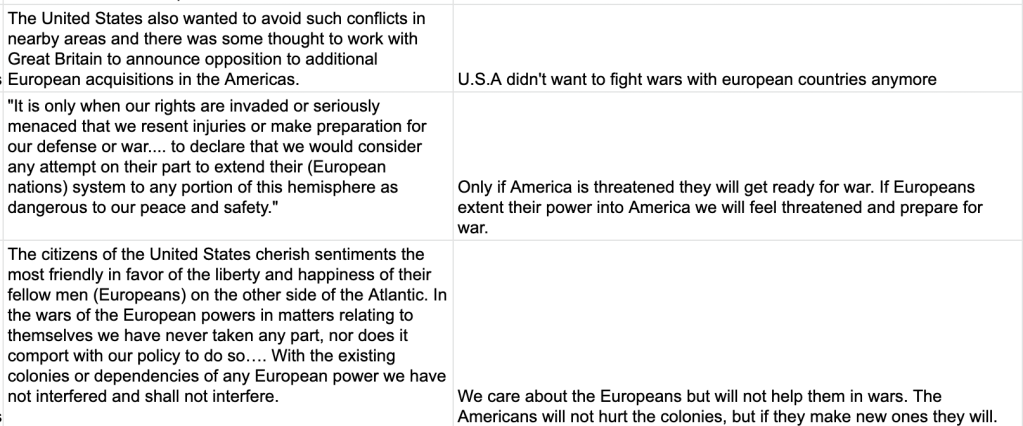

Following the evidence collection I post the Google Sheet, and I give the students a V Diagram where they can collect information. An example is listed here (I use it on paper, but created a digital version).
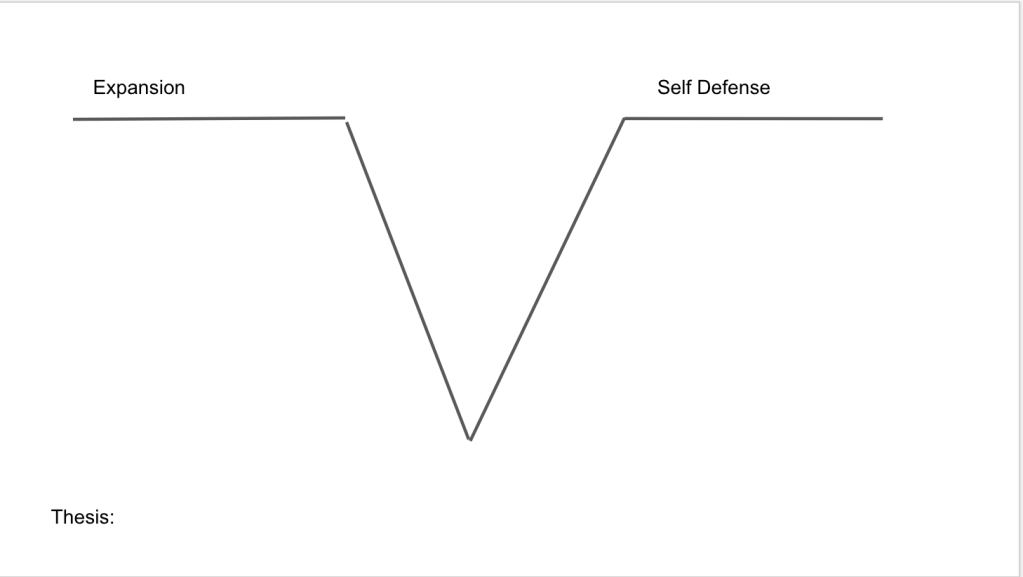
On the V Diagram, I wanted students to collect 2 pieces of information that supported both sides. Then students weigh the evidence and information then decide how they will write their thesis statement.
The research protocol gives students great practice finding details from multiple sources, analyzing those details, and practice writing a thesis statement.
With the research protocol completed, the students were heading into Friday ready to write their essays. They had a Thick Slide deconstructed paragraph to use, paraphrases of the Monroe Doctrine, and a V-Diagram with information, evidence, and a completed thesis.
Friday
Today was the day. Writing essays. Here were my different expectations for the variety of students in my classroom:
- Write 4 or more paragraphs, focus on a counter claim (advanced ELA students)
- Write 3 paragraphs
- Write 2 paragraphs
- Focus on writing a really good 1st paragraph with a hook, information, and thesis with all pieces organized correctly.
- Write 1 paragraph about the Monroe Doctrine.
- Fill out the graphic organizer.
- Give me a thesis with a reason.
This is differentiation. This seems like a lot, but it’s not. This is my classroom on a regular basis.
Before I had students write essays, I posted a graphic organizer and a model essay on the Google Classroom assignment (I turned off the copy and share settings). The essay gave step by step directions for setting up paragraphs with some transitional word suggestions. Then I read my model essay as I shared my thought process while writing. I typed my thought process as comments. Having students hear good writing and hearing a thought process is an effective strategy.
After reading my essay, it was time for students to write. I reminded them of their Thick Slide and V-diagram organizer to help guide them. It was time to write. Here are some of the completed essays:
In this collection, I chose essays to represent ALL students. This, to me, is the power of EduProtocols – which essays were written by students with IEP’s versus not on IEP’s?
Despite my feeling like I bored the students with focusing on writing, I felt like this unit was successful. The students gave me feedback and really enjoyed the Thick Slides the most, and the second most like items was the V-Diagram. Having the thick slide with facts, quotes, and other information was a game changer.
My Messages for the Week


Exciting News
I copied this from Scott Petri – we have a cover!!


 Moler's Musings