
I used a new EduProtocol today – Thick Slides! My focus this week is writing a multi-paragraph using a prompt similar to what will be seen on the state test. I copied and pasted a prompt from the state test and plugged in my own content related to the Monroe Doctrine.
Most prompts on the state test have the students comparing and using evidence from 2 or more sources. In this case, I have a secondary source and primary source the students will be using. My focus is on 3 things for this week. I want the students to be confident with:
- Writing 3 solid, cohesive paragraphs.
- Creating a good thesis.
- Using evidence from the sources to support the thesis.
The Monroe Doctrine is a secondary issue. With these three things in mind, I started to piece together some Eduprotocols to help with writing. What came to mind are these 3 ideas:
- Thick Slides – developing a solid paragraph(s).
- Parafly to help us make sense of the Monroe Doctrine as our primary source.
- Research Protocol – develop a thesis with evidence.
Starting Class
I began class with the empty room and candle scenario in the picture. I had students close their Chromebooks and had them sit and think about the answers. No talking, No questions. Just think. The students seemed confused, and after 3-4 minutes I could tell they gave up. My point with this scenario was 2 things:
- Rarely will human beings sit and think long enough to solve a problem.
- We solve problems with background knowledge in our working memories. This is true because the only students who got the answer correct were the students I had in my 5th period one year ago. That was the only period I asked the question to last year.

What does this have to do with a writing prompt? Chance are the students won’t sit and think about what a “mile long” writing prompt is asking them unless they have some knowledge of the words and phrases. Essentially I used this as my “why” for working on writing this week.
What is the answer to the question above? Try to sit and think about it for longer than 10 minutes before looking it up.
The Prompt
Below is the writing prompt I put together for the students. It’s a long one so I had students read the prompt and submit unknown words and phrases through Mentimeter to create a Word Cloud.
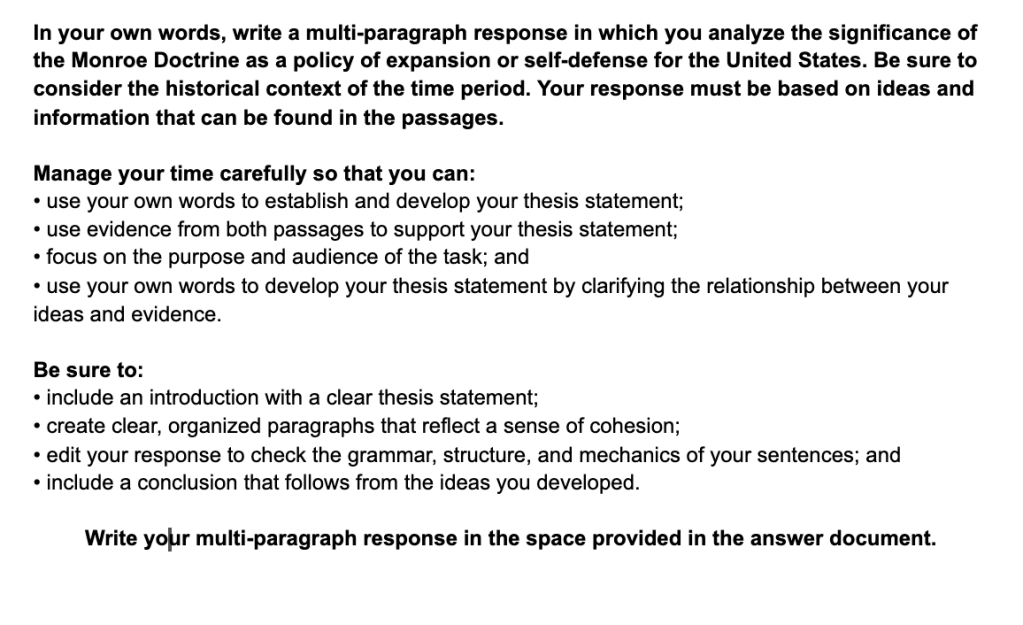
The most common words submitted to the word cloud were: significance, doctrine, Monroe Doctrine, policy, expansion, self-defense, context, thesis, audience, clarifying, mechanics, and cohesion. Here what I learned from the word cloud – don’t assume students know common words. This was followed by a discussion of what the prompt was asking the students to do.
Fast and Curious
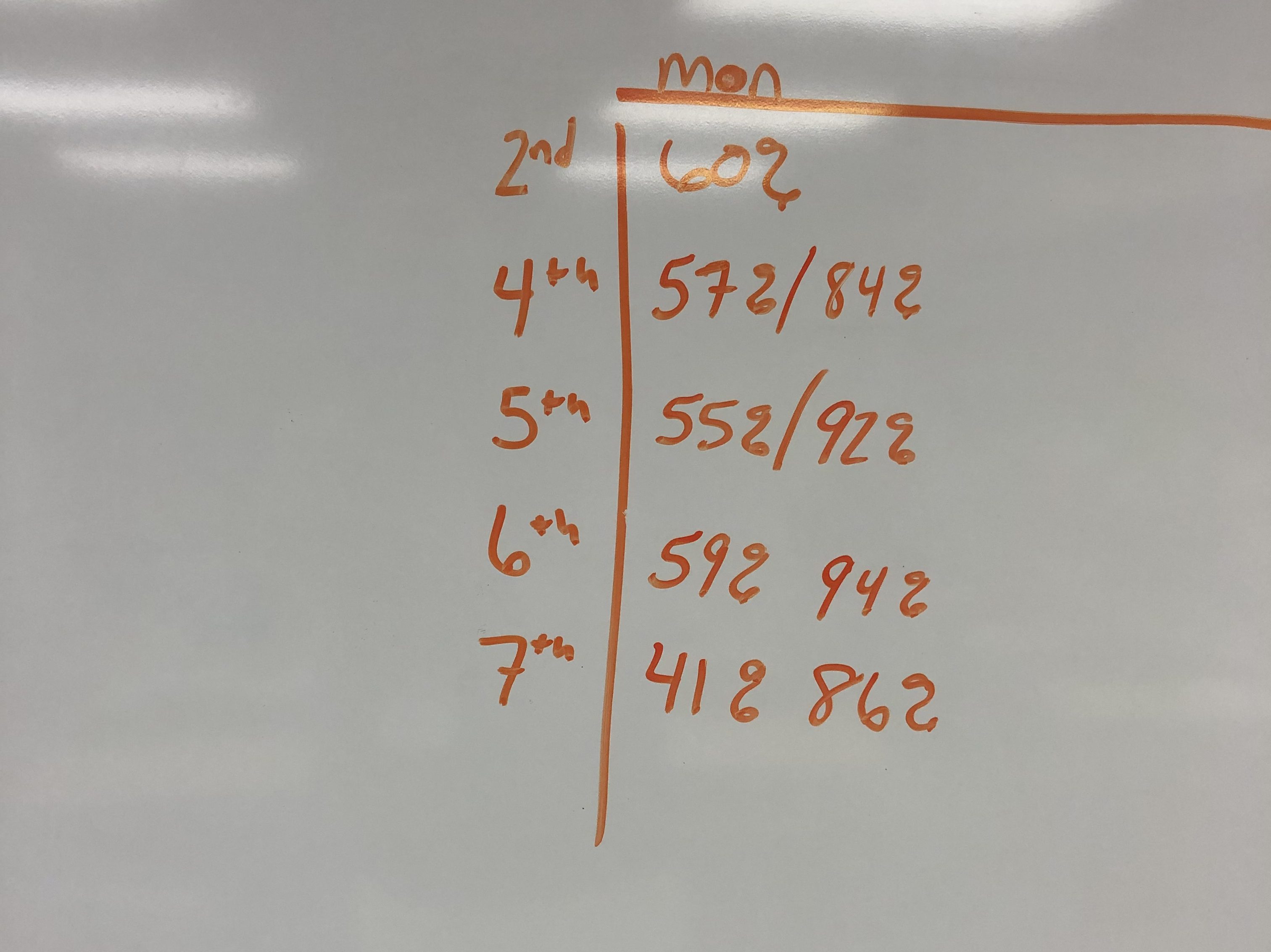
To begin building Monroe Doctrine background knowledge with the Monroe Doctrine, students took 4 minutes to do a Quizizz. The Quizizz was 6 questions. The first round wasn’t great. This was followed by feedback and a Thick Slide creation. We finished class with a 2nd round of Quizizz which was much better. Here are the results:
Thick Slides
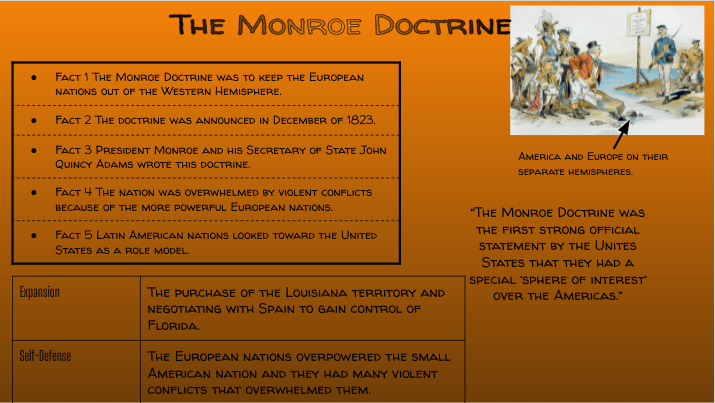
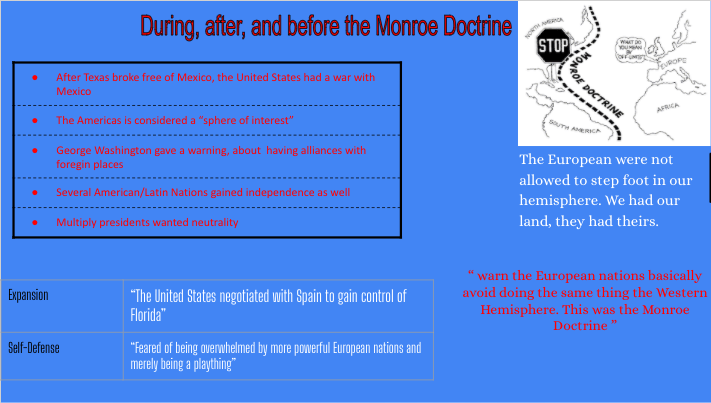
I have used Thick Slides once…..I think. But, I don’t think I would consider it Thick Slides. I was inspired to use it after watching Kim Voge’s video from EduProtocols Worldwide 3. It was a perfect fit for our essay writing unit. I love the simplicity of the design. Here were my requirements for the slide design with feedback I gave to students:
- Add a Title – the title should reflect the main idea of the topic.
- List 5 facts – focus on who, what, when, where, why. Many students copied and pasted their facts, but I will have them reword/paraphrase their facts.
- Find a relevant picture – add a caption that explain why the image works with the topic.
- Quote – find an interesting quote that relates to the main idea of the Monroe Doctrine.
- 2 pieces of evidence – find a quote that proves the Monroe Doctrine was used for expansion. Find a quote that prove the Monroe Doctrine was used for self-defense.
I gave students 20 minutes to complete their slide(s). Students will use their slides to develop paragraphs for the essay. I pointed out to students they could use this process with their scratch paper for the state test – list 5 facts on the paper, an important quote, etc. They could use this information to develop a solid paragraph.
Differentiating Ideas
- One student had a headache and couldn’t look at the screen – I gave a the reading on paper and a blank piece of paper. I helped him set up the blank paper with a title, 5 facts, and a quote.
- I added questions into the Facts section of the slide – Who wrote the Monroe Doctrine? What was the Monroe Doctrine? etc…
- I provided hard copies of the reading pre-highlighted for the students.
- Some students listened to the reading.



 Moler's Musings
3 thoughts on “Thick Slides Reflection”