
Well, not much a week in 505 – snow and ice cut the week short. The month of January was filled with interruptions – we went to remote learning twice, high school scheduling stuff for students, three or four snow days, and some upcoming field trips. My early republic unit, we are currently in, should have taken 5 to 6 weeks. However, we are only halfway through it. What should have been 5-6 weeks, will now be 7-8 weeks. Everything is a mess, but we just go with the flow and adapt.
With remote learning last week, students studied John Adams and the Sedition Act. However, I only had 42% students engagement. When we came back from remote learning this past Monday, I needed something that could serve as an introduction to John Adams, yet serve as a continuation of student learning from remote. I couldn’t find much, so I typed up a one page article about the sedition act with background information and how both parties felt about the act. We also did some review this week with Blooket and Gimkit. I was hoping to get to Thomas Jefferson, but weather cut our plans short.
Monday – Fast and Curious, CyberSandwich with John Adams
Tuesday – Quest 3 project Choice with Empathy Map or Hero’s Journey
Wednesday – Quest 3 Project Choice
Thursday and Friday – blizzard bag day – I shared a Thomas Jefferson reading from Icivics
Monday
With the start of the week, I had to be absent from school. So, my student teacher took over and ran a lesson I put together. Remote learning engagement from the previous week was awful, so I needed something to get all students on the same page. I needed something familiar, easy to run, and effective. I needed a CyberSandwich + Fast and Curious combo!!
I try to run a CyberSandwich at least once a week. It gives students a chance to read and practice with informational text, discussing information text, and summarizing their learning. Since work completion was not great last week, I needed a reading about John Adams that could introduce background information and add information for anyone who completed work from the previous week. The main goal of each Quest is to learn about a decision made by each of the first five presidents. Then students analyze that decision from the perspective of a Federalist or Democratic-Republican.
I ended up typing a one page document about John Adams and linking it to a CyberSandwich. Then I created a ten question Quizizz about the reading and John Adams. When I create a Quizizz for a Fast and Curious, I try to keep it to 10 questions or less. If I created this with a Gimkit or Blooket,I would add more questions since those games are based on time.
With this particular CyberSandwich, I added four questions to provide some scaffolding support for students. Instead of a summary at the end, I had students create dialogue between John Adams and Thomas Jefferson about the Sedition Act. I like to mix up the CyberSandwich from time to time to help with students engagement. However, the process stays the same – 10 minute, 5 minute discuss and compare, 10 minute summary or creation.
Here are some student examples:

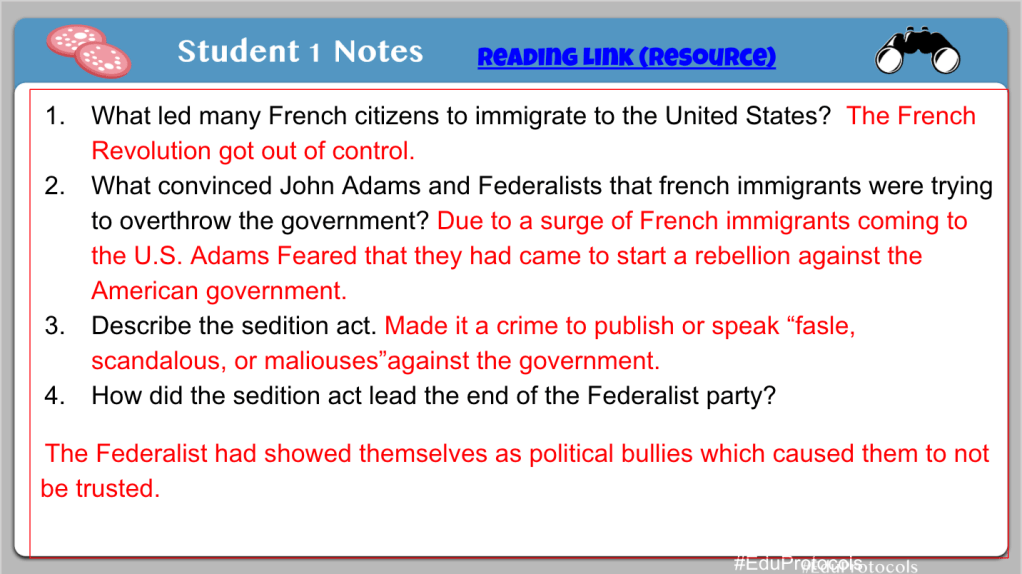


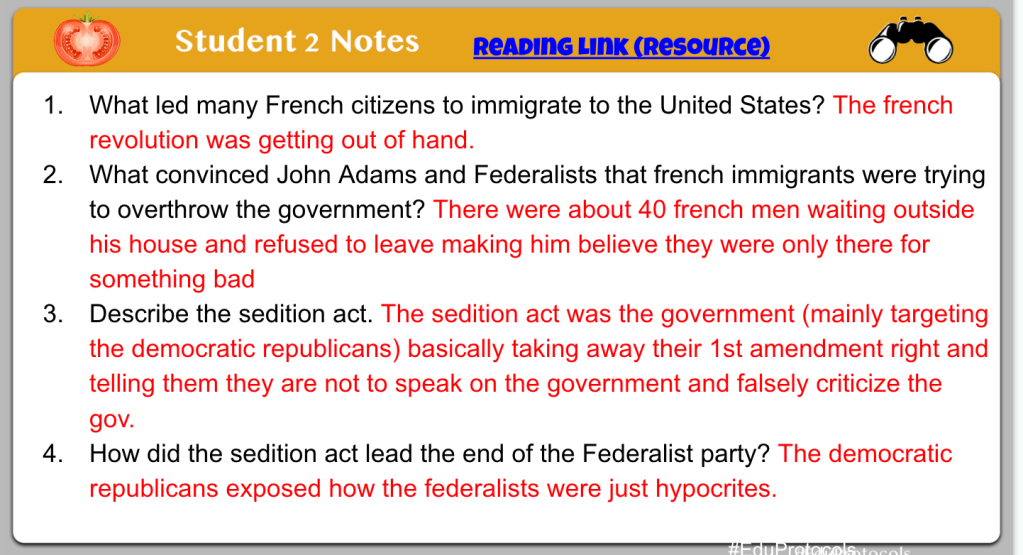
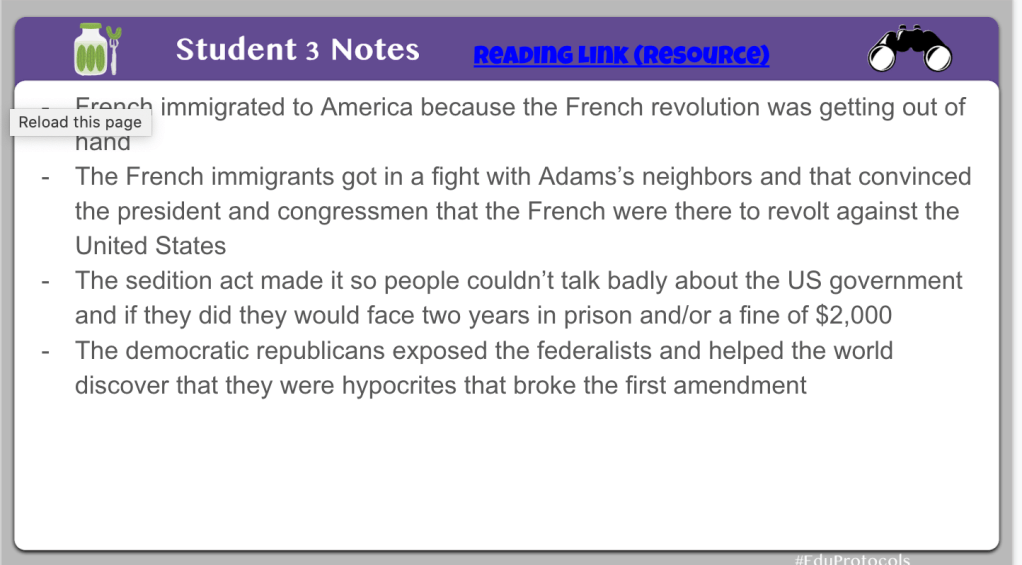

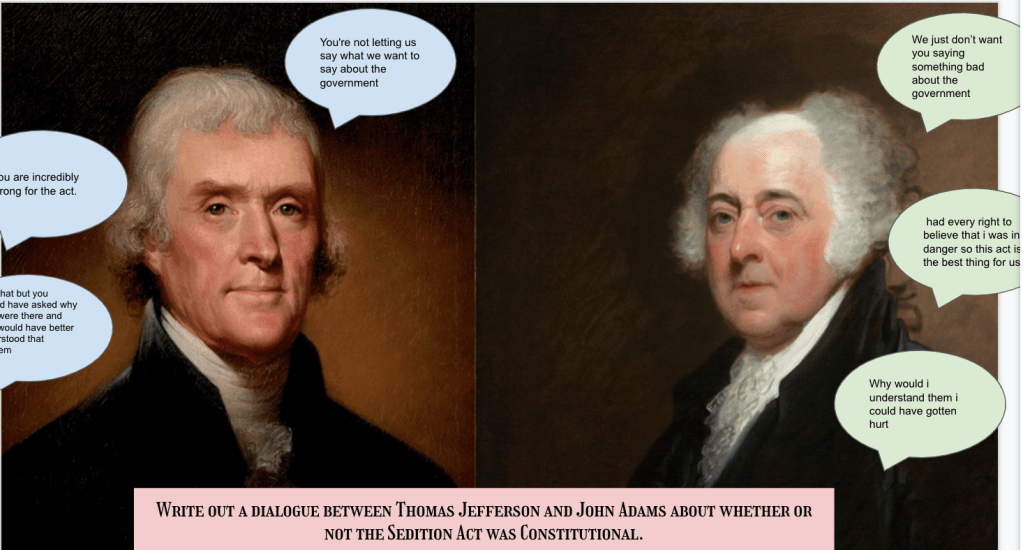
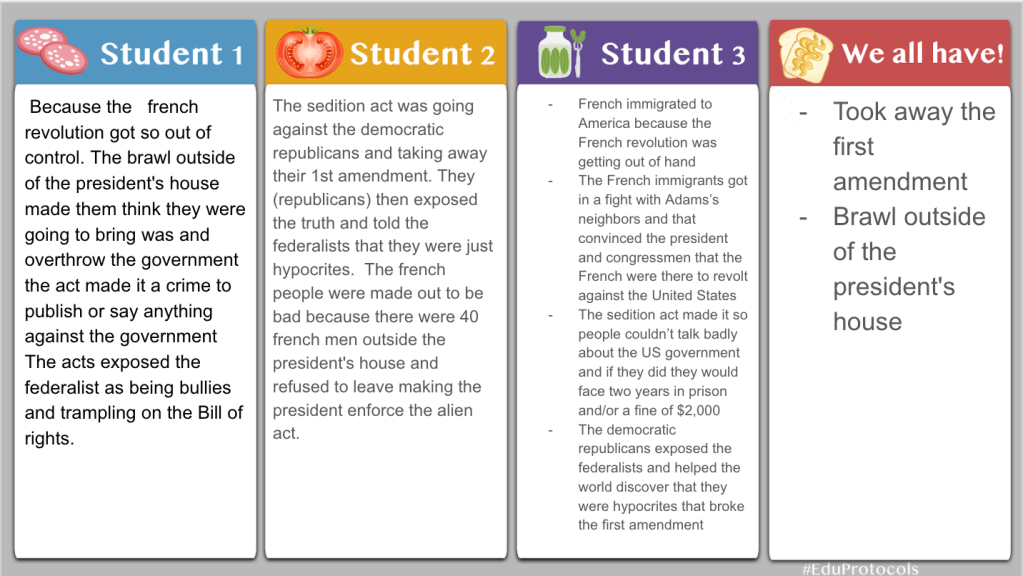
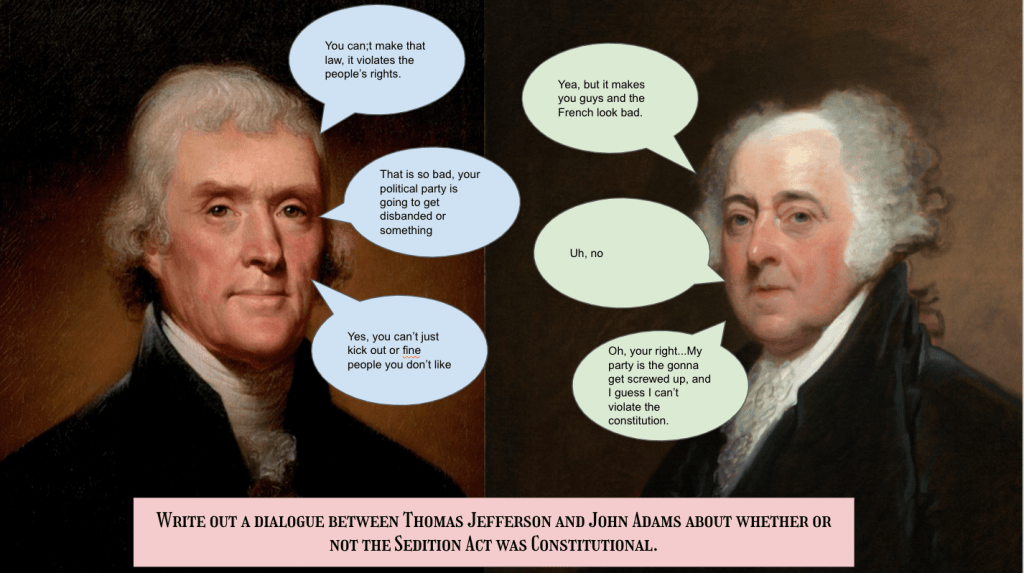
The students did great with the Fast and Curious Quizizz as well. Part way through the day, I texted the students teacher in my room and asked him how everything was going. He took a picture of the Quizizz results and said, “You have these students trained well.” Here are those Quizizz results:

Tuesday
As I stated above – The main goal of each Quest is to learn about a decision made by each of the first five presidents. Then students analyze that decision from the perspective of a Federalist or Democratic-Republican. Tuesday, I wanted to have students fill out an empathy map from the perspective of a Federalist or Democratic-Republican regarding the Sedition Act. I decided not to do a digital copy and printed 100 empathy maps. By the time 5th period rolled around, I wanted to try out a new EduProtocol I learned from Dr. Scott Petri (@scottmpetri) called the Hero’s Journey. Scott likes to use this EduProtocol at the end of a lesson or unit. I wanted to use it in place of an Empathy Map – it had that same empathy map feel to it.
Basically, students fill out a storyboard format as they map out how a character changes through a story. Here is that story map:
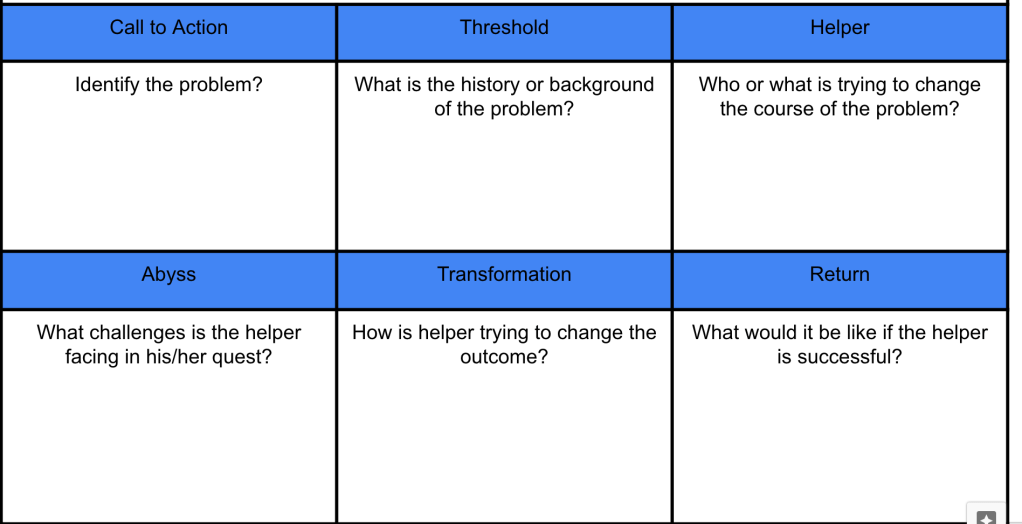
Through the Call to Action down to the Return – I thought this fit perfectly with analyzing the Sedition Act from multiple perspectives. I decided to try this lesson out with my 5th period and it worked out great. Here are the directions:
- This Hero’s Journey lesson lasted 20-25 minutes.
- I encouraged students to keep it simple and add pictures and/or icons.
- Students used examples from the CyberSandwich reading. This lesson gave students a chance to reuse the CyberSandwich reading a 2nd time. The more students can interact with a reading the better.
- I had students focus on one perspective as they filled out each box and followed the questions/prompts.
Whether it’s an Empathy Map or Hero’s Journey – these organizers can help students create their final project for Quest 3 – Facebook Profile, Blog, or Yelp Review. Here are some student journey examples:

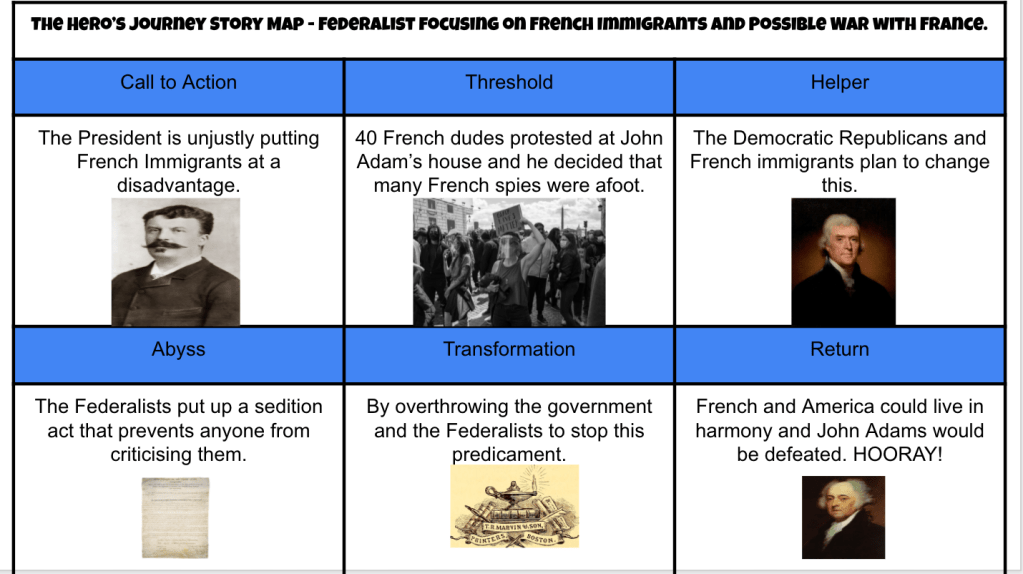


Wednesday
Wednesday was project choice day for Quest 3. Students could choose between 3 options: Facebook Profile, Yelp Review, or writing a blog on their Google Site. The goal with choice is to have students discuss the Sedition Act and impact of the Sedition Act signed into law by John Adams.
I shared a Google Doc with all the project choices listed out. I even linked in directions videos, some scaffolding support, I can statements, and a rubric. When I give feedback on student work, I always refer back to the I can statements. Here are some student examples:


Thursday and Friday
These days were Blizzard Bag days as we got hit with snow and ice for much of the day Thursday. So, I shared a reading about Thomas Jefferson from Icivics. This reading served as an introduction to Jefferson and the Louisiana Purchase for when we return to school.
My 505 Messages


 Moler's Musings