
The fastest semester of my life just ended. Let me add this – it’s amazing the amount of teachers that say their days go slow and weeks go slow, but say the semester went fast. That doesn’t make much sense to me. Anyhow, with EduProtocols and just having fun teaching, this truly was a semester that flew by.
The Units I Covered:
- Unit 0 – Thinking Like Historians
- Unit 1 – Exploration and Colonization of North America
- Unit 2 – Road to the Revolution
- Unit 3 – Constitutional Convention
- Unit 4 – The Constitution
This semester I focused on cutting out the fluff so more focus could be placed on important events such as The Declaration of Independence, Constitutional Convention, and the Constitution. As a result, we spent about 8-9 days on the Declaration, 15 days on the Constitutional Convention, and 15 days on the Constitution. I cut out things like 3-4 days on Jamestown and Plymouth, 5 days on explorers, and 3-4 days on colonies. Will lives forever be changed focusing, or not focusing on these topics? No.
In this post I want to focus on Better and Could Be Better. I say to the students all the time, “There are no wrong answers, right answers, good answers, or bad answers – just better answers. Find better every day.”
Better
Vocabulary
Vocabulary. I know it’s important, but it’s something I have neglected the past few years. I dedicated myself to finding good research based practices to use with vocabulary. I easily could tell students to copy down definitions and draw a little symbol, but that’s not effective. I love reading and I love podcasts, and as a result, I tried some good vocabulary strategies.
- Vocabulary Assessment – give students a list of important words from the unit. Let them quickly go through and assess their knowledge of the word – Know It, Not Sure, Don’t Know It. If the students Know it, then they can write a definition quickly, without Googling up the word. If the students are Not Sure, they have seen the word, but don’t know how to write a definition. If the students Don’t Know It, they have never seen the word before. Throughout the unit, keep coming back to the vocabulary assessment. Here is an example.
- Splashed Vocabulary – splash random vocabulary words around a Google Slide or write them on paper. Make copies and hand out to students. Have students work in pairs and discuss what they think the words mean. Have a class discussion about the words. Then have students draw lines between words they think are connected. Then have a class discussion as to why they think those words are connected. Pair this with a Frayer model or a Sketch and Tell. Here is an example.
- Skim a Reading – before starting a Cyber Sandwich, I like to have students skim the reading and look for unknown words. Students underline their unknown words and submit them to a Mentimeter Word Cloud. The words in the word cloud get bigger the more often they are submitted. We take the 3 largest words and Frayer them before starting a CyberSandwich. I like to use this before readings that I know will give students trouble – articles on religion or articles on government.
CyberSandwich
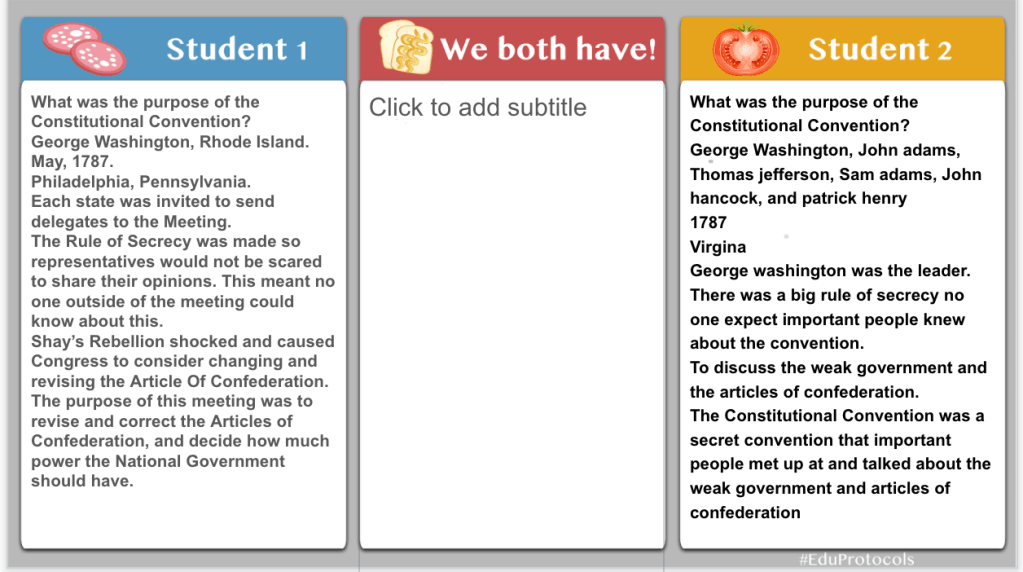
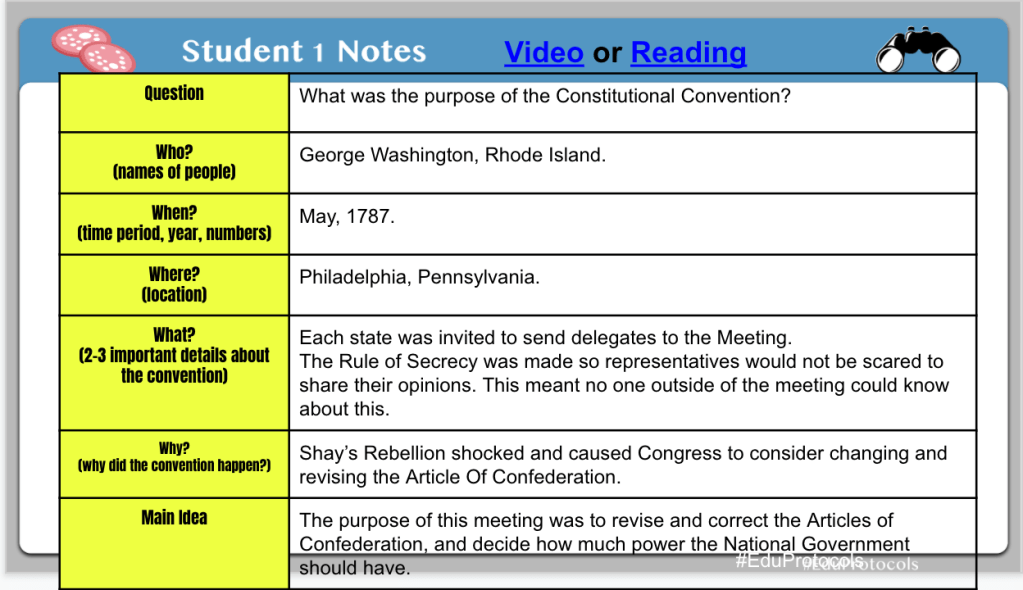
The CyberSandwich is becoming my new favorite EduProtocol. So far for this semester, I have used the CyberSandwich ten times – a mixture of paper and online. I have been adding note taking strategies to the notes slides as well. For example, I used a main idea note taking strategy where students read an informational article or textbook excerpt (try to keep it to one page) and answer the who, what, where, when, why questions. I added in some essential reading questions. I have also used some organizers for note taking strategies. One final strategy I used for note taking was a reading strategy. Students 1 read the article as student 2 took notes. Then students 2 read the same article as student 1 took notes. I try to keep this reading and note taking to 10 minutes. When it’s finished, I like to model the notes I took to help the students fill in any missing information.
The discussion piece of the CyberSandwich is super important. Keep the discussion and notes comparison to 5 minutes. It came to my attention this is important when I tried an experiment with my 7th bell with our popular sovereignty lesson. I decided to go from note taking to summarizing with no discussion. They only raised their class average from 55% to 75%, which was the lowest percentage raise on the day. Some teachers might feel if students aren’t discussing a topic for a full 5 minutes, they aren’t engaged. Not true. I bet if my 7th period discussed popular sovereignty for 30 seconds, the class average would have been higher.
Here is an example of a CyberSandwich with a Main Idea strategy.
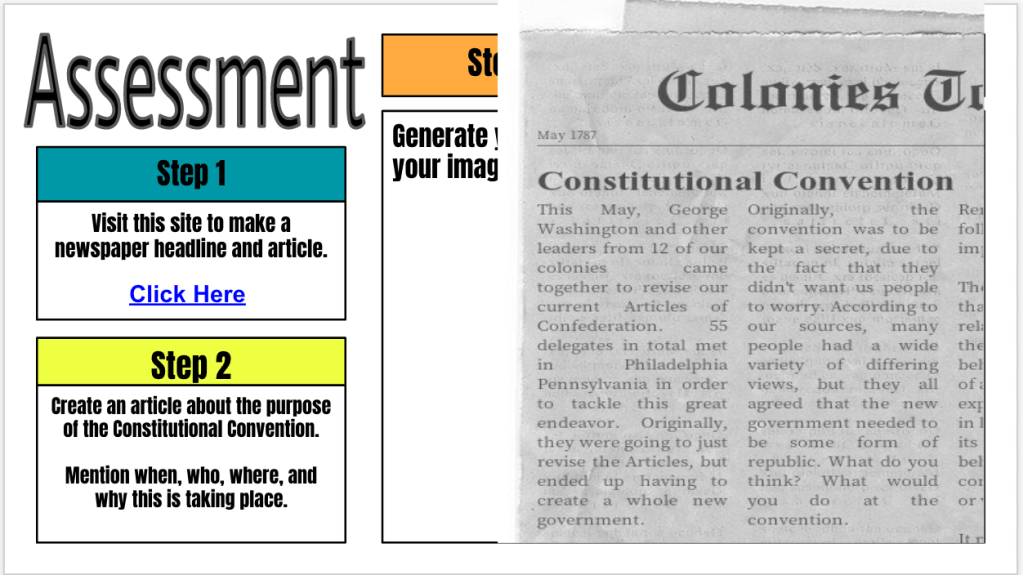
At the conclusion of a CyberSandwich have students summarize or complete another activity. If I want students to write a summary I will provide sentence stems for guidance. Sometimes I will have students complete a Sketch and Tell for their summary (An example is here). Other times I will have students create something such a newspaper article for a summary (An example of this is here). Mix it up from time to time for student engagement.


CyberSandwich with Fast and Curious
If you are running a CyberSandwich by itself, stop it, and try pairing it with a Fast and Curious. Create a Blooket, Gimkit, or Quizizz based on the reading you are using. Then run a Fast and Curious the first 5 minutes of class. Begin your CyberSandwich – 10 minute read and note taking, 5 minute discuss, 10 minute summary. Then finish the last 5 minutes of class with the same Fast and Curious. I have seen an average of 28% growth in one class period. Plus, when you pair the CyberSandwich with a Fast and Curious and students see their scores increase – you build confidence and build excitement and student engagement with the CyberSandwich.
Choice Boards
Differentiating is a huge part of the 505 classroom. My message to teachers is simple – you differentiate all the time, you just don’t realize how much you differentiate. You can differentiate based on student proficiency. You can differentiate based on student processing styles. I choose the latter to drive my differentiation strategies. Check out Doable Differentiation by Jane Kise. This is an amazing book that gave me a new perspective on students and instruction.
Due to this great book, I have placed a more intentional use of choice boards. I just don’t throw choice boards together and say, “Here you go. Choose 3 things.” The activities and lessons within the choice board intentional based on students processing styles. I focus on creating activities for students who need structure, students who question things, students who need movement, and students who create ideas in their ind and explore. The student engagement with the choice boards I have used this year was incredible. Here 2 examples of my choice boards:
I also used choice boards with assessment strategies as a choice. Two examples include a choice summative assessment at the end of the Constitutional Convention Unit. The other option was a choice formative assessment at the end of the checks and balance lesson. My approach for the assessments was addressing different processing styles. Here are those examples:
Hexagonal Learning
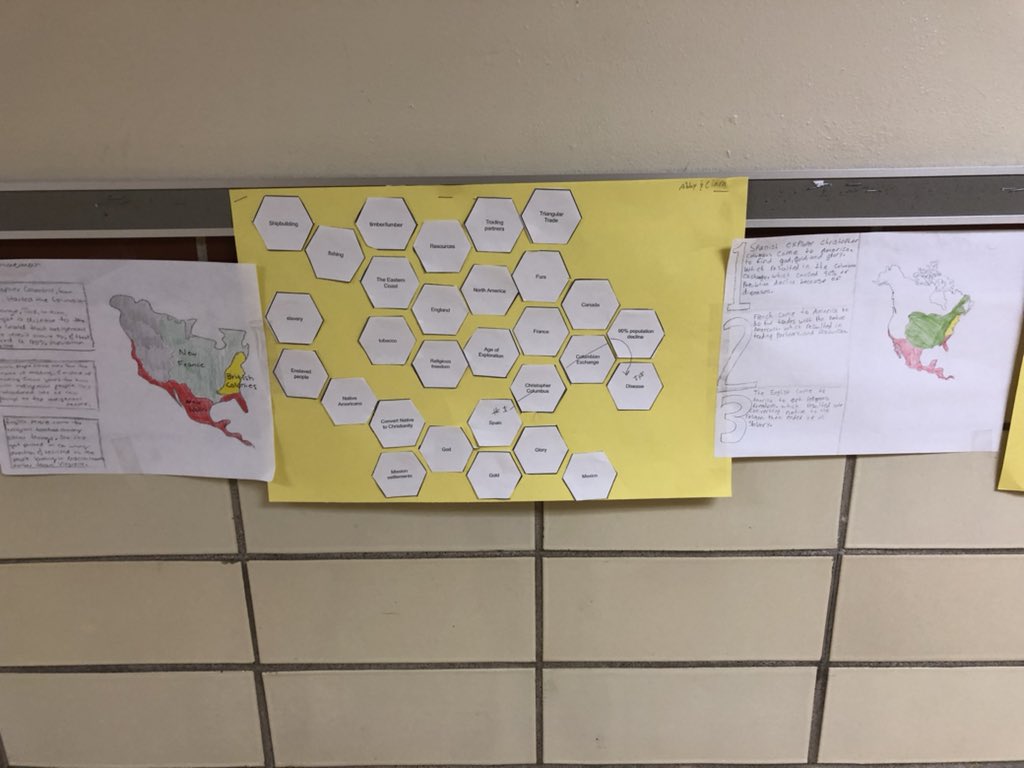
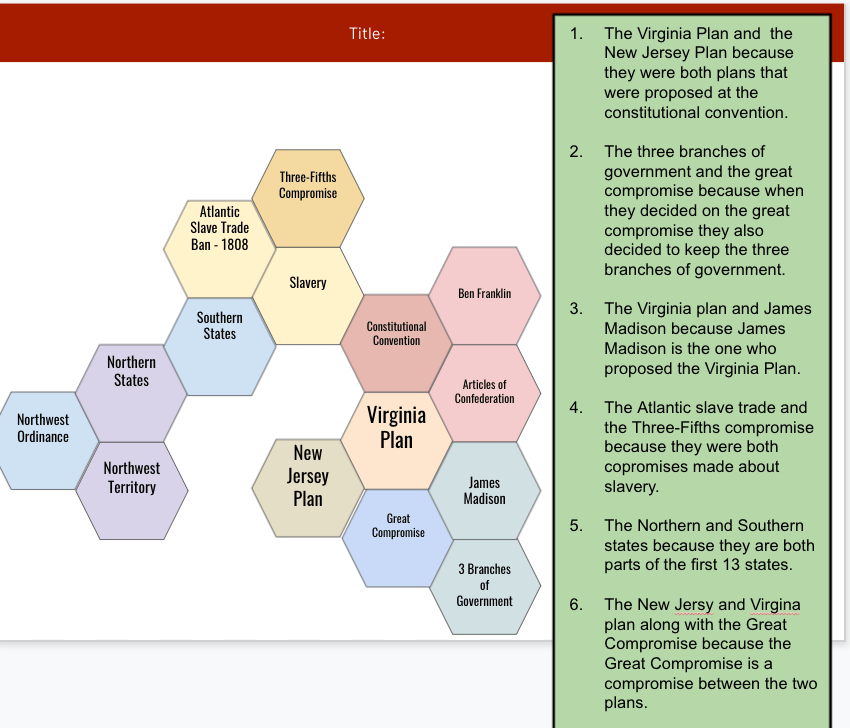
I’m a huge fan of Hexagonal Learning and I have committed to using it more often this year. So far this semester we have used Hexagonal Learning twice. If you are unfamiliar with hexagonal learning, students make connections between concepts written/typed on hexagons. Any time hexagons touch there has to be some type of connection.
I love how it can be used as a hands on activity for groups of students. It can be used as an online tool as well. I used hexagonal learning in the American Revolution unit in class. I also used this strategy for remote learning during the Constitutional Convention Unit. As you can see it’s versatile and easily adaptable. I’m glad I have used it twice and I would like to use it a few more times in the new year.

Could Be Better
Thinking ahead – what could be better? Honestly, everything. As a perfectionist. As a tennis player who grew up constantly being criticized. It all could be better. I had a conversation with 2 educational consultants the other day and they asked me, “How did you get your classroom to this point? The fast and curious. The CyberSandwich. The student engagement. It’s incredible.” To which I replied, “I honestly think I suck at what I do. That’s what drives me – not sucking at what I do. I seek better for me and the students.” That is truly my mindset – I suck. I don’t do enough.
As a result of this, I read and listen to podcasts. I know it’s impossible, but I strive to improve every aspect of my teaching – formative assessment, summative assessment, instructional strategies, student engagement, classroom management, differentiation, UDL, and the list can go on and on. However these are the things that could be better going into the 2nd semester:
- Parent communication – I’m awful at this. I tried to send 2 positive emails a day the first quarter and I was successful, but I haven’t done this in 3 months.
- Feedback – I need to improve giving timely feedback. Last semester had some flashes of good “in the moment” feedback, but I need to find ways of doing this more often.
- Gamified Unit – I want to create a gamified unit. Possibly with the New Republic unit. This is my goal over winter break – sit down and think of a story and create a gamified unit with the first 5 presidents. I created a Quest for this unit, but I think it needs to be more.
- Consistency – sometimes I wonder if I need to be more consistent with vocabulary strategies, reading strategies, or note taking strategies. However, I like to mix things up. Maybe I mix it up too much – I don’t know, I”m just thinking out loud.
- Emc2Learning – I need to incorporate more ideas from www.emc2Learning.com. This is a great site that could give me ideas for a gamified unit next year. One thing I love from this site is the Resource Rumble and the 12 topic Stitch up. However, I need to use more.
- Self Care – I’m worn the hell out. I need to take better care of myself. That is all.
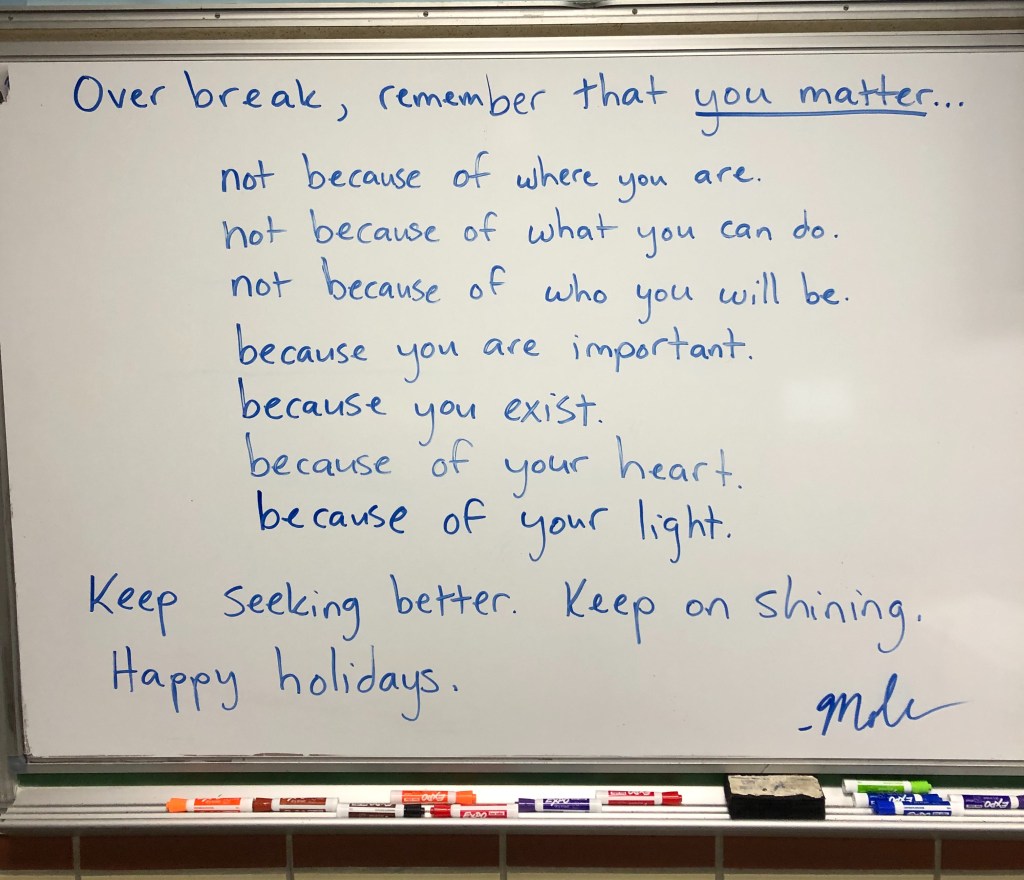
My Final Message
Cool Moments
A parent sent me a text with a picture of an acrostic poem I wrote before a tennis match. She found this poem in her daughter’s coat pocket….
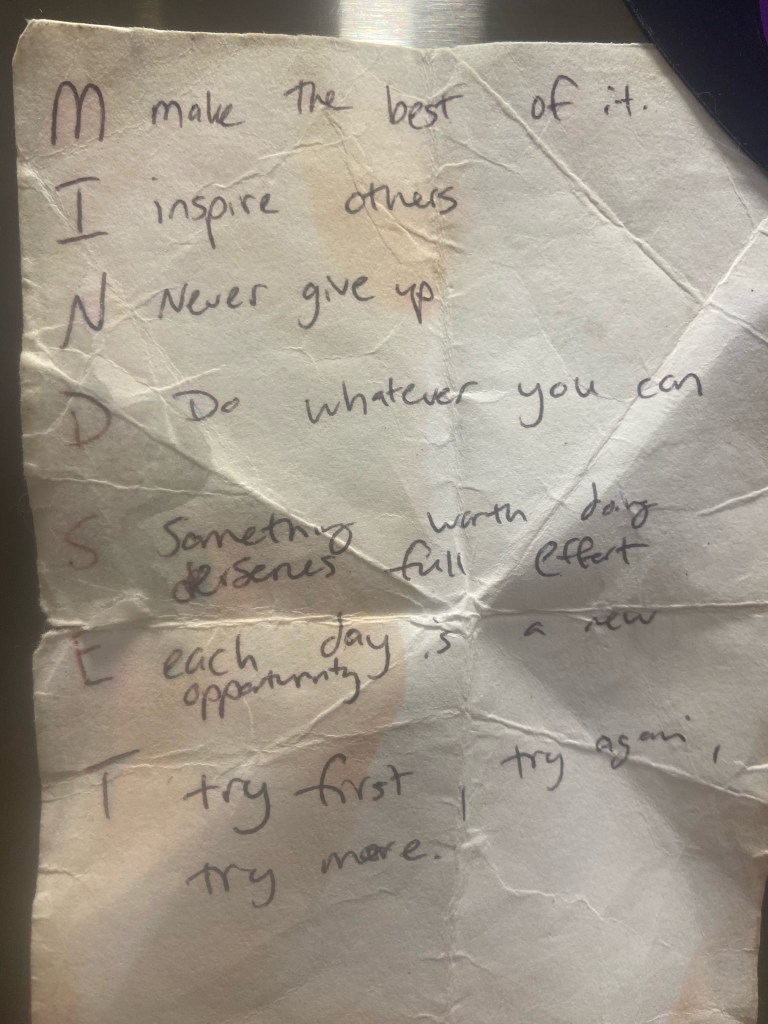
I wrote that poem 3 years ago. You never know what sticks with someone. Take a chance. Be a positive light in someone’s life.
I shared a Google form with students so they could write a teacher shoutout. I told them from the start, “This is not for me. Please give another teacher a shoutout.” However, here are 2 shoutouts written to me:


Once again, you never know what impact you might have on a students. Maybe it’s a lesson, a poem, a high five, anything.
Last but not least, this was super cool as I was checking out the Eduprotocols Worldwide Conference 3 (sign up here):

One of my goals since college was to write a book. Soon I will be achieving that goal.

 Moler's Musings