
We have a shortened week in 505 with the upcoming Thanksgiving holiday. Monday and Tuesday for class. That’s it. Then a much needed break. Despite the shortened week, it’s a weird week because we are coming off of remote learning the last 3 days.
During remote learning, I asked students to complete 3 assignments. Here are the results of student engagement from those assignments (I simply measured student engagement from the percentage completed – I have 102 students):
- A 12 question Quizizz related to vocabulary terms from the Constitutional Convention. – 85% student engagement
- Hexagonal Learning – 70% student engagement
- Final Assessment Project Choice – 45% engagement
The 12 question quizizz and Hexagonal learning were from the first day of remote learning. Obviously, a major drop off for days 2 and 3 which included the final assessment. With students being in different places with assignments, the 2 day week is perfect for catching up.
Monday – finish hexagonal learning or the final assessment. Begin on Federalists vs. AntiFederalist choice board.
Tuesday – finish any remaining assignments.
Monday and Tuesday
As mentioned above, students were in all kinds of different spots with assignments. Some students completed all work, some students completed some of the work, and some completed nothing it all. I told every class today, “The easy thing I could do is place a 1 in the gradebook for incomplete assignments and move on. However, FAILURE IS NOT AN OPTION IN 505.” I stand by this statement. I refuse to put zeros into the gradebook. I refuse to let students fail. It’s important for me, and the students, that I focus on learning and find ways to get students learning. If my class is the one successful class for a student, then I’m happy.
As a result, 2nd through 6th periods worked on final assessment projects and the Federalist choice board. 7th period was the class with most students not completing the hexagonal learning. We had a discussion about the hexagonal learning and many students said they were struggling with some of the concepts and making connections. So, I found, and assigned, an EdPuzzle video (6 minutes long) to help reteach concepts. Following the video, students worked on completing the hexagonal learning. In my opinion, if someone is struggling making connection between concepts, they will struggle with creating from the material.
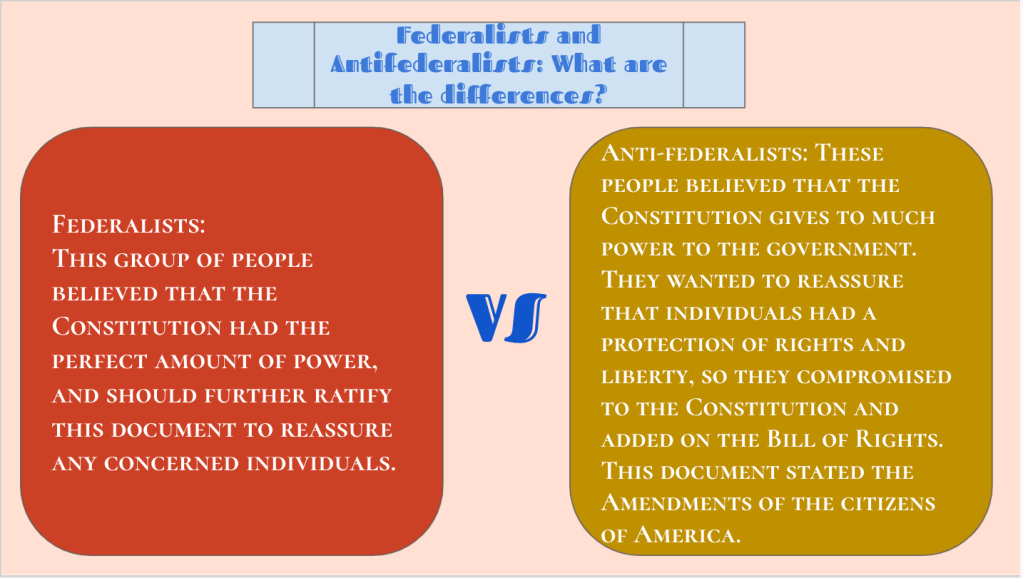
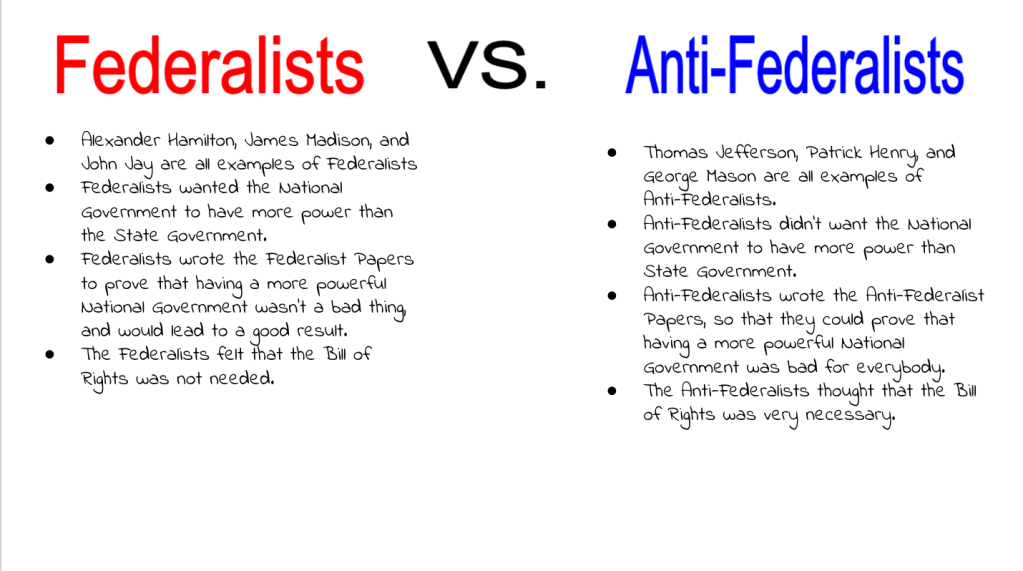
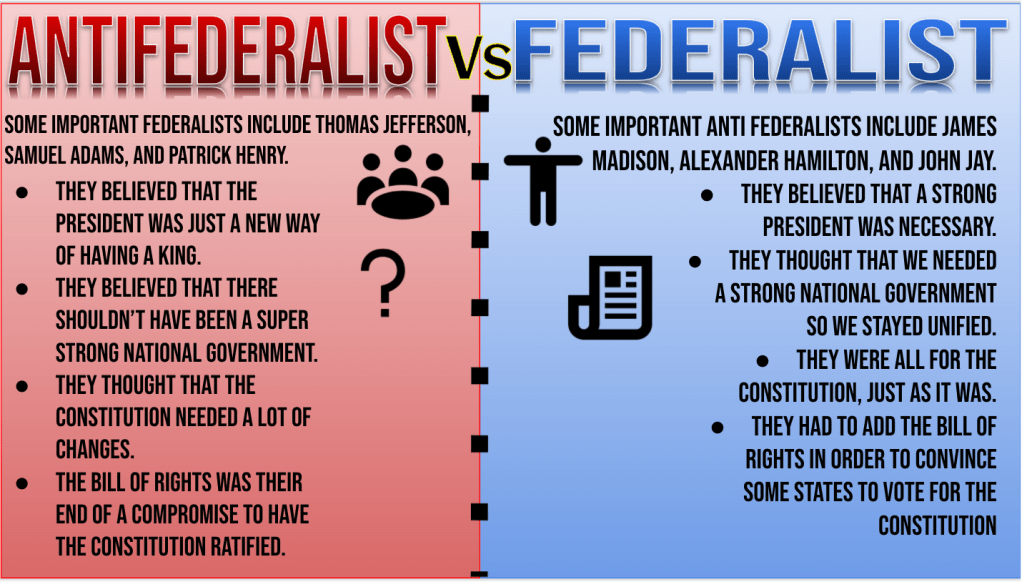
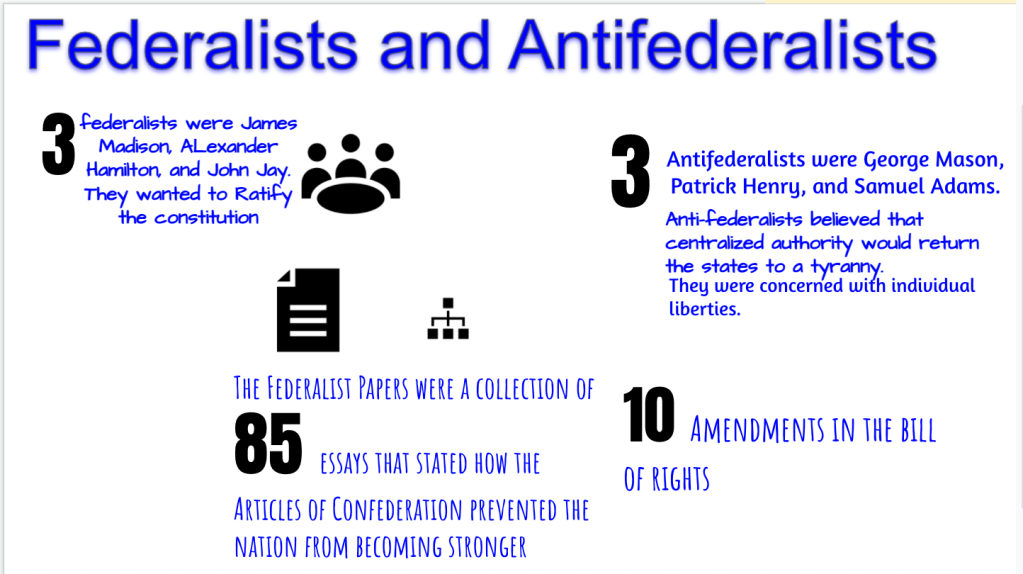
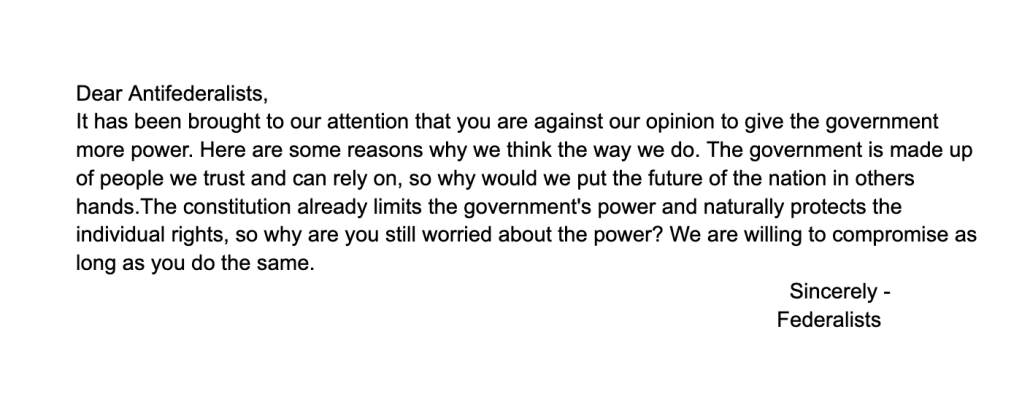
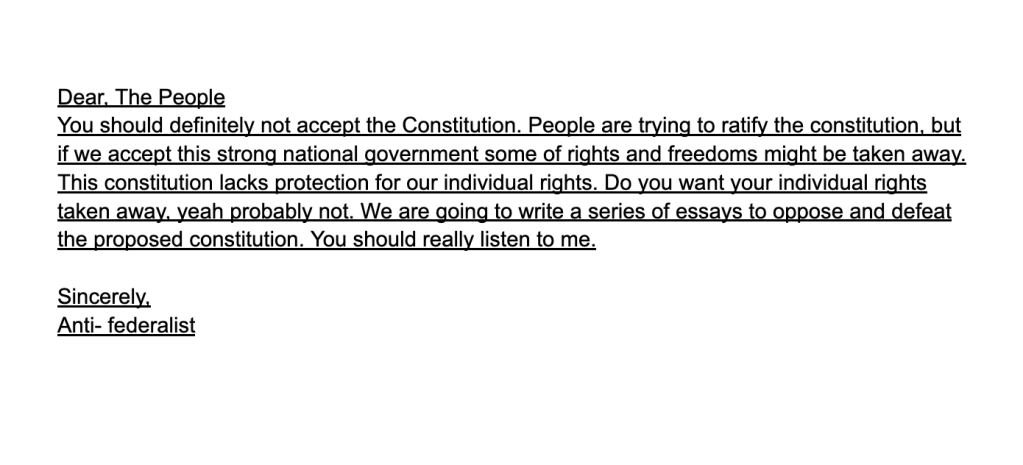
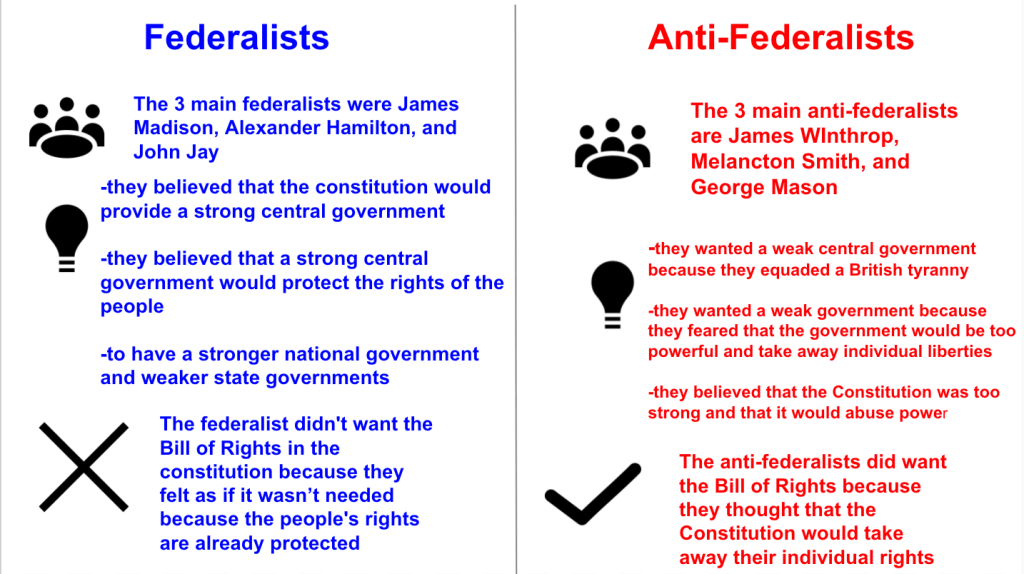
As some students worked to complete final assessments and hexagonal learning projects, another group of students worked on completing the Federalist vs. AntiFederalist choice board. I like to separate the Federalist and AntiFederalists and make a standalone lesson because I feel it’s remembered by students. It’s not all jumbled up with plans and compromises which is hard enough already for 8th graders. The Ohio state tests for high school usually feature a question about the Federalist and AntiFederalist debate. The Federalist choice board lesson had students deciding to learn about the differences between these groups by using a variety of activities of their choosing – CyberSandwich, Quizlet, Quizizz, EdPuzzle, analyzing Primary Sources, or PearDeck. Then students applied their learning to create an infographic, social media smackdown (from www.emc2learning.com), or writing a letter from the perspective of a Federalist or AntiFederalist.
Here are some FInal Assessment Projects:
The above projects represent a small sample size of student examples. Overall, students did a nice job with their assessments. Most students chose to design a Netflix series. The second place choice was writing an essay or creating a presentation. Four students chose the Time Magazine option. Finally, one student chose to write a script which she performed and then took it further and created a rap song.
Here are some student samples of Federalists vs. AntiFederalists (I’ll post more as they are turned in):

Final Thought
As I mentioned earlier, I said to some of my classes, “Failure is not an option in 505.” I will do anything I can to help students find a pathway to learning. Sometimes it’s frustrating because I feel like I care more than they do. Other times it’s overwhelming because I end up juggling 5-6 different pathways (assignments). Other times it’s rewarding because some students genuinely appreciate the effort and show learning.
Remote learning can be a mess. As much as I try to keep things simple, it always ends up being a mess. Some students have spotty internet service. Some don’t have a chromebook. Some have lives at home that aren’t conducive to learning. The easy things for me to do is to grade assignments as they are – normal grading, credit, no credit, etc. But, remote learning is anything but normal. As a result I create multiple pathways for students to show their learning:
- Straight up – Choose one of the four assessment options.
- Modified – Choose one of the four assessment options but focus on 3 major concepts instead of 5 major concepts.
- Forget about the four assessment options and turn in the Hexagonal Learning as the assessment.
- Modified – watch an EdPuzzle video for reteaching and complete the Hexagonal Learning.
- Forget about the Hexagonal Learning and four assessment options – watch an EdPuzzle video and complete a Quizizz.
This is the former intervention specialist in me coming out. Does anyone else do this? Sometimes I feel this too much, but sometimes I feel it is necessary. Modifying on the fly, or differentiating in the moment, is something I have gotten better with the last few years. I tend to question myself too much. However, one thing I’ve learned in education the past 12 years – there are no wrong and right answers or ideas; just better answers and ideas based on the students you have.
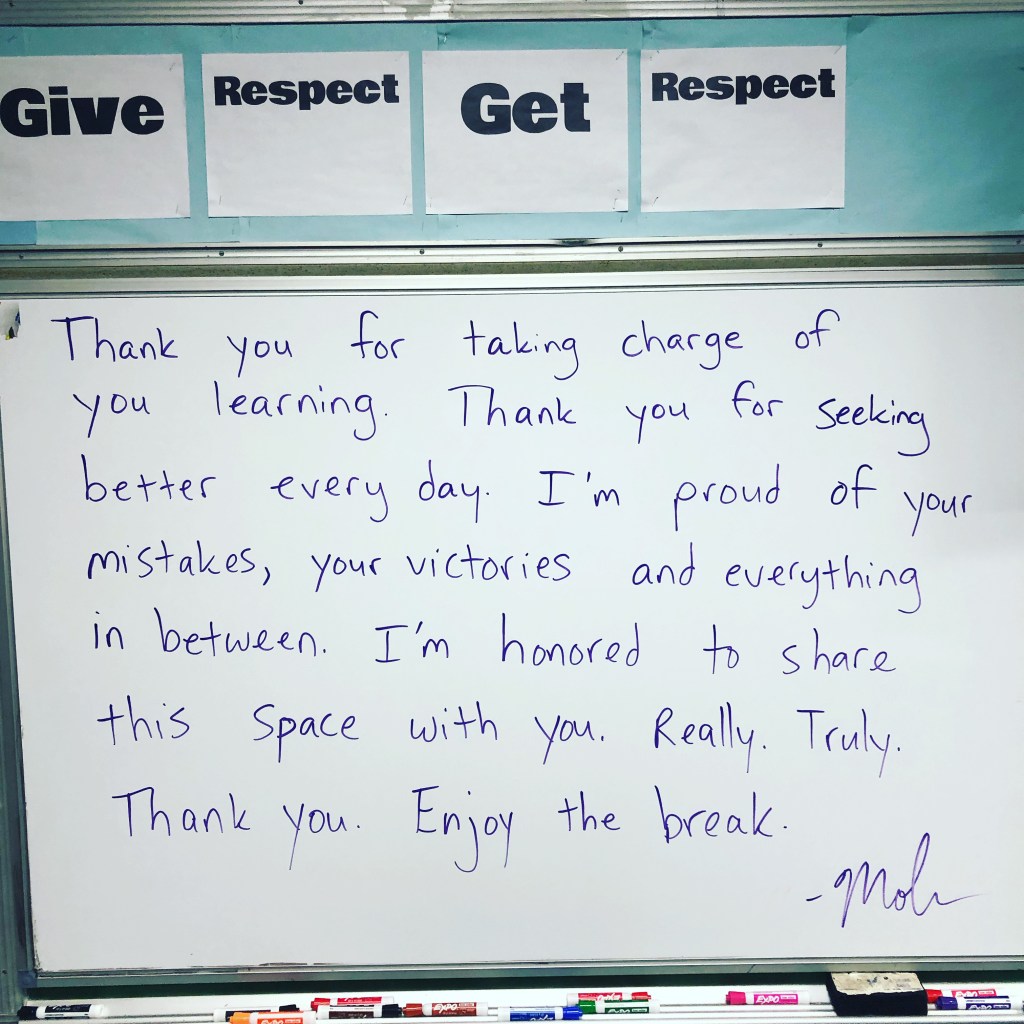

 Moler's Musings
Love how you share student work examples. Keep up the inspirational work.
LikeLike