This week we were in the final stretch of our Creating the Constitution Unit. We were wrapping up the 3/5ths compromise and moving into the impact of protecting slavery in the Constitution.
The week took a crazy turn when we suddenly switched to remote learning for Wednesday through Friday. We had a short notice and I had to switch some things up. My hexagonal learning became digital and I created final assessment options for the unit.
I was thinking about this a lot today…..before I became a teacher, I was a tennis pro. Not a “travel the world” tennis pro, but I teaching pro at local clubs. In my past tennis life, I was a staff pro, tennis director, and tournament director. I grew up playing tennis and was fortunate enough to take private lessons, group lessons, and play in tennis tournaments. But, I knew it was tough on my parents to pay for those things – tennis is expensive. However, as a tennis pro, and coach, I have always seen it as my role to promote and grow the sport of tennis. Knowing that tennis is expensive, I have always tried to make it affordable for everyone. I have given countless free lessons because I feel that’s important.
Sharing. This is the approach I take to education. This is why I love sharing stuff with others. Let’s promote good teaching. Let’s promote collaboration. Let’s work together for students. I truly don’t mind sharing individual lessons or entire units. This Teachers Pay Teachers stuff is for the birds – if you need something, I got you.
Monday – finishing 3/5ths compromise, SHEG Lesson.
Tuesday – The impact of protecting slavery.
Wednesday – Hexagonal learning.
Thursday and Friday – Final Assessment.
Monday
On Friday I gave students a choice of how they wanted to learn about compromises over slavery at the Constitutional Convention. Monday was a continuation to finish assignments. Students were finishing infographics or the remote learning (structured and basic) assignment. The main goal for this assignment was having students identify 3 compromises over slavery – 3/5ths compromise, Fugitive Slave Law, and Banning the Atlantic Slave Trade in 1808.
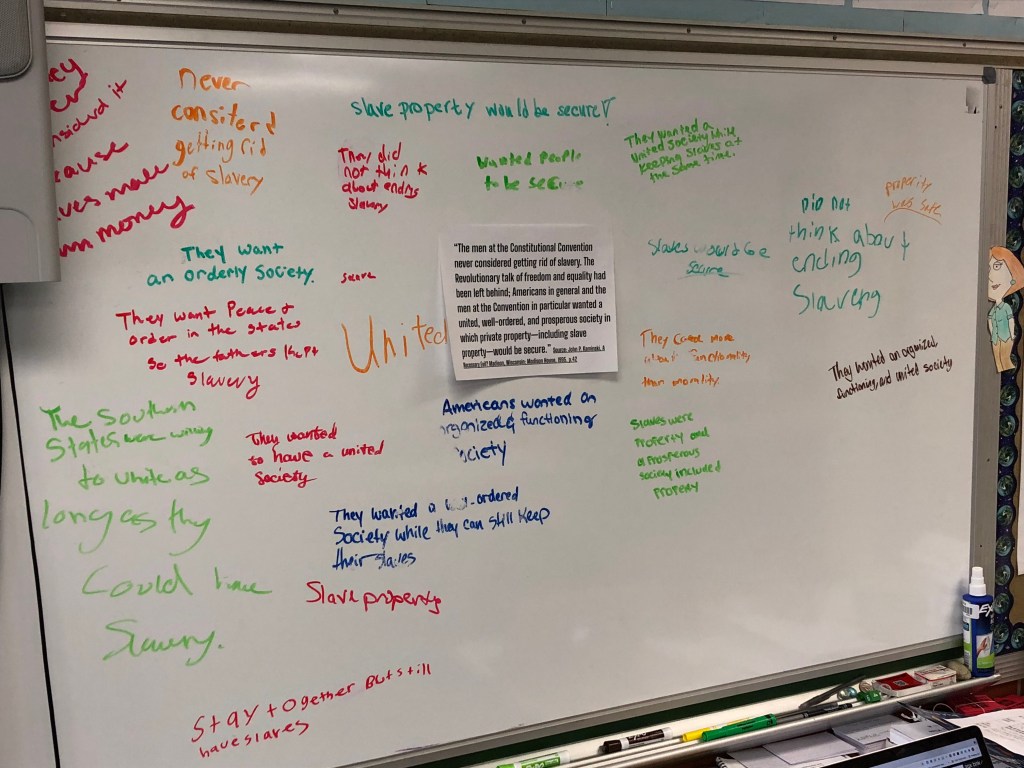
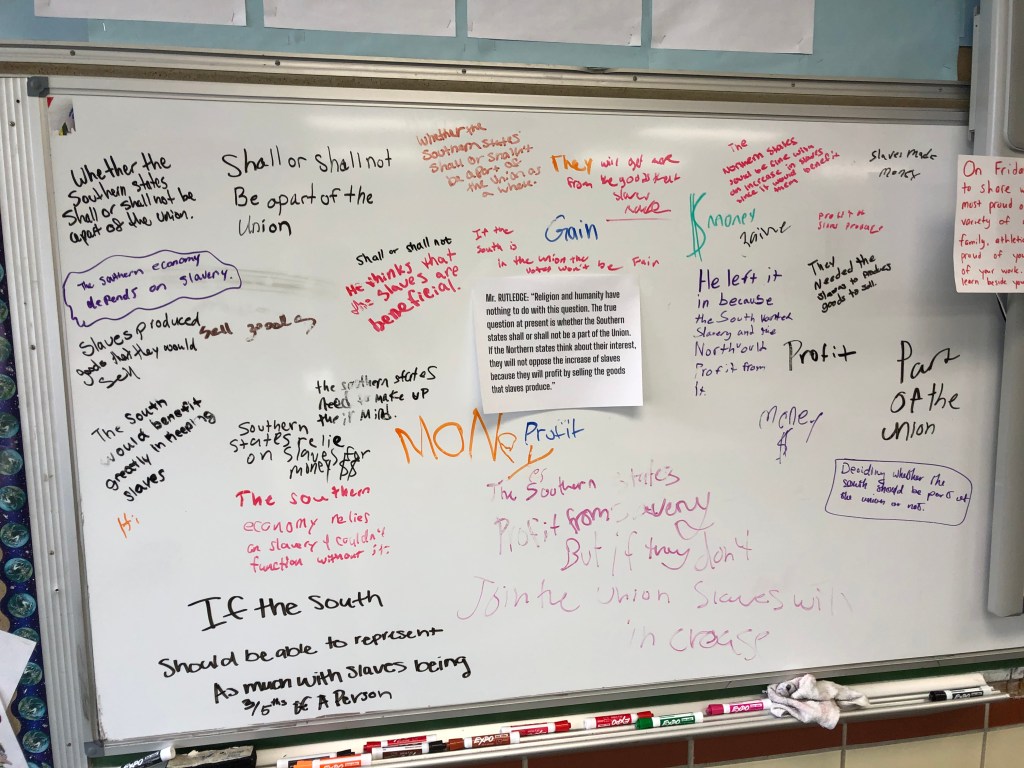
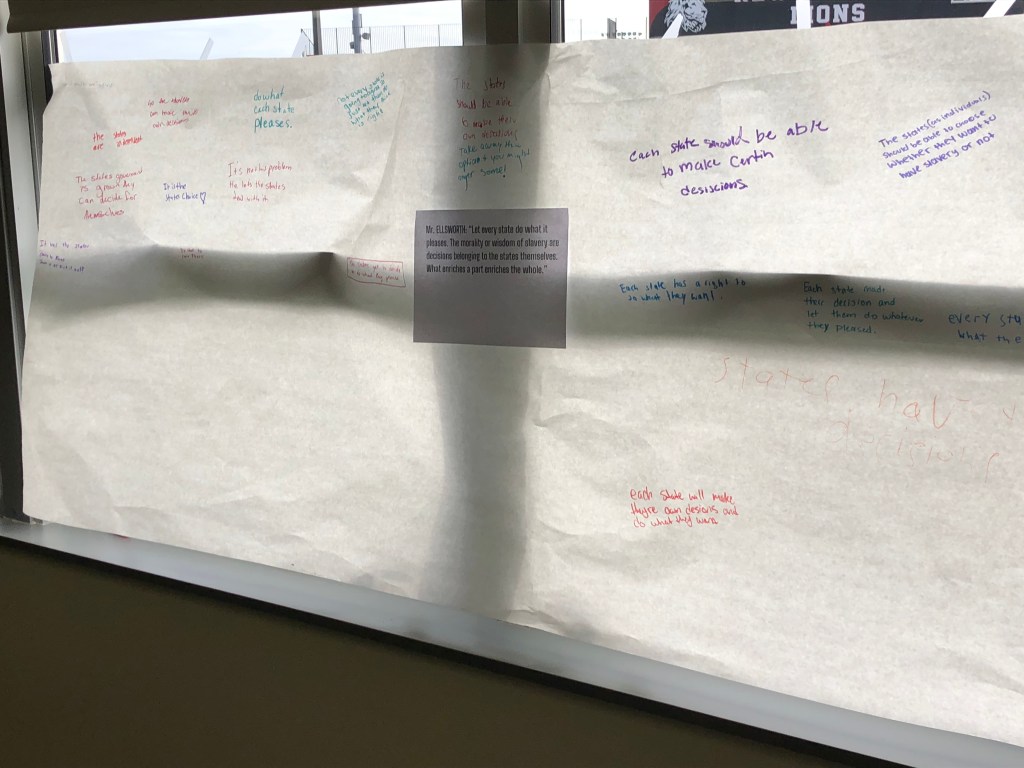
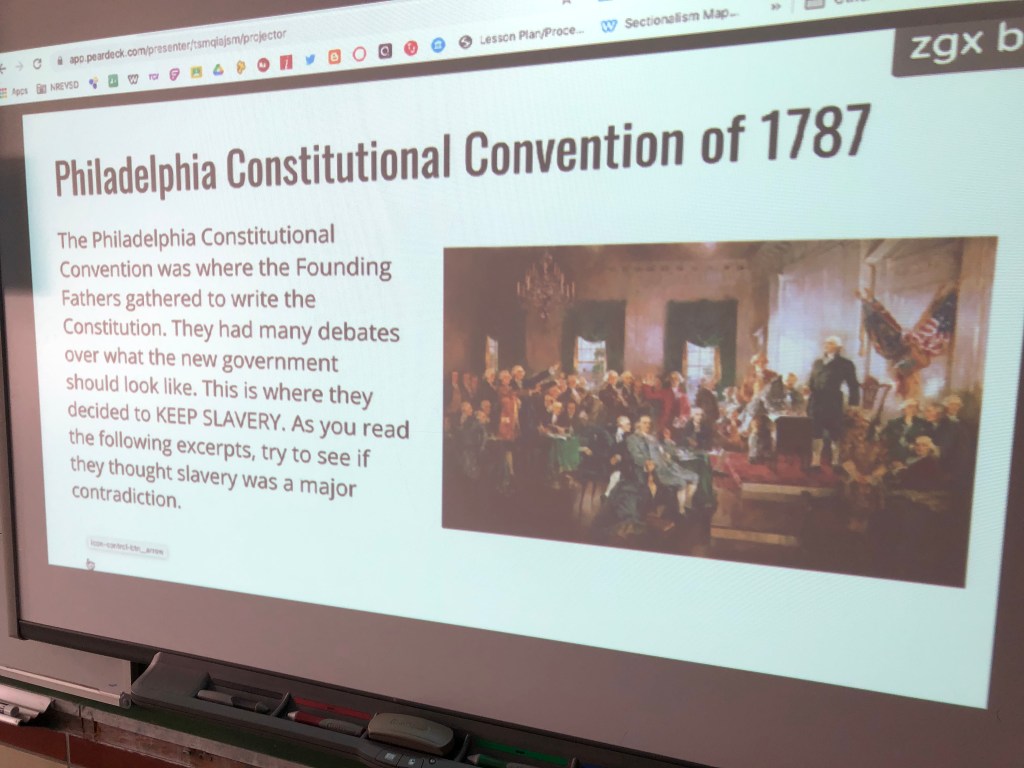
The next part of our lesson was a SHEG (Stanford History Education Group) lesson – Why did the Founding Fathers keep slavery in the Constitution. Students analyzed 3 quotes from the Convention, and 2 quotes from historians. Students analyzed these quotes through a graffiti wall that worked out very well! Then students answered the original question through a PearDeck lesson put together by Stacy Yung (@stacyyung). This was a great addition to our lesson from Friday.
Tuesday
This day was building off of the compromises over slavery. The question we were trying to answer was, “What was the impact of protecting slavery in the Constitution?” This lesson is sooo important, especially for the students I teach. But, in the times we are living in, it concerns me. This question is one that people can’t run away from. They can’t deny it. It’s a question that helps us better understand what is happening in our world today. Yet, it worries me with this topic……..and it shouldn’t worry me. That’s sad.
With this lesson, students work together and reac two excerpts. One excerpt is from William Lloyd Garrison. The other excerpt is from Thurgood Marshall. I explain the backgrounds of these men and students begin to read. Students make connections, create context, and make connections with the sources. Students read the documents, filled out the chart, and discussed with their partner. The goal of this lesson is for students to realize that protecting slavery had looooooooong lasting effects such as: amendments, Civil War,Jim Crow Laws, racism, Civil Rights movements, Black Lives Matter, etc. All in all, this was a successful lesson with a few classes.
One class, where I let them choose their groups, was a disaster. Teaching civil rights and human rights is a passion of mine, and this particular class thought it was a joke. It was sad to me. I was discussing slavery and some were laughing. Others were worried about school drama. Honestly, I can’t handle those reactions with such a serious topic. In my opinion, 8th graders should understand the situation and act respectfully. As a result, we ended up having a segment of “Life lessons with Mr. Moler.” I’m sure they didn’t like being lectured, but hopefully one they will appreciate years from now.
Wednesday
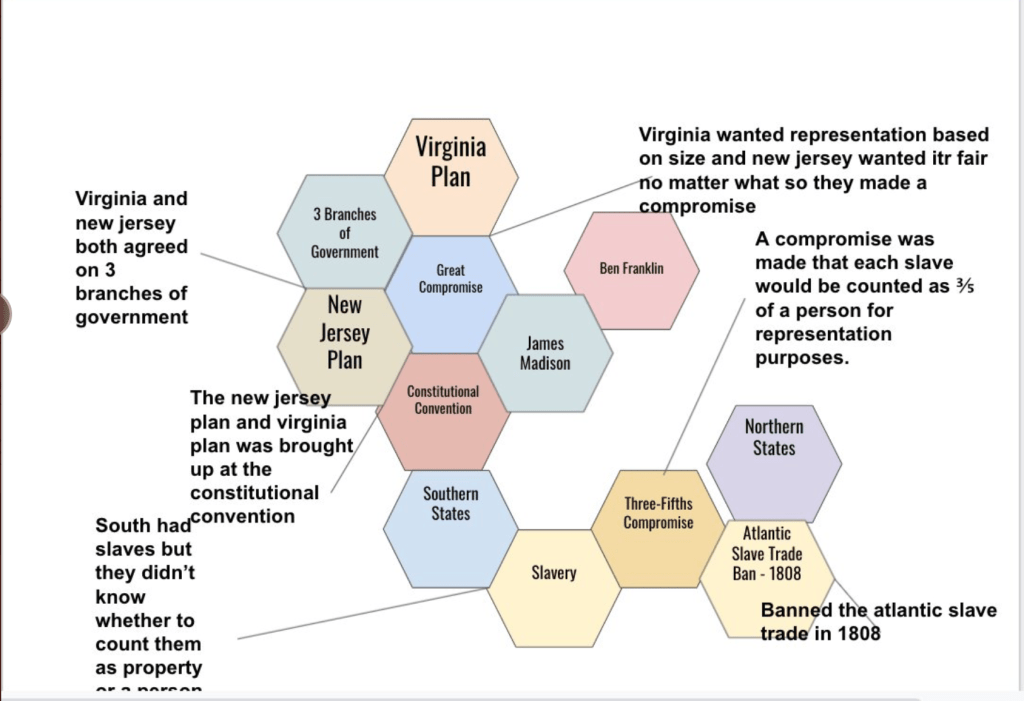
Tuesday night I got word we were switching to remote learning for the rest of the week. My plan for a paper and glue hexagonal learning lesson had to be switched. Thanks to Stephanie Howell (@mrshowell24) there was a digital hexagonal learning template. I switched the hexagons to major concepts from our unit with 16 total hexagons.
With remote learning, I dislike Google Meets…..A LOT, and I resort to making directions videos with Screencastify. (I really love how you can have people sign in with their GMail account to watch Screencastify videos. It keeps track of who watches.) Plus, with being at the end of a unit, there was no need for a Google Meet. With the Screencastify video, I walked students through the purpose of Hexagonal Learning and adding textboxes to make connections. Overall, students did a nice job:



Thursday and Friday
For Thursday and Friday, I created 4 options for a final assessment in our unit on Creating the Constitution. I kept the focus on the original question – Should the Constitutional Convention be considered a success? and I kept the focus on having the students explain 5 major concepts from our unit.
When I created the final assessment options I wanted to focus on students’ processing styles:
- Write a first person Time Magazine article from the viewpoint of someone who lived during the time of the Constitutional Convention (1787). Create a story about the Constitutional Convention being a success or a failure. Include information on at least 5 major concepts from our unit. Click here for the template (vision and interpretation processing)
- With a partner (or by yourself) write and perform a dialogue (write a script) between two representatives at the conclusion of the Constitutional Convention. They should recall 5 major concepts as they discuss the Convention as a success or a failure. Turn in your script. (Use Google slides, docs) (question and connection)
- Design a Netflix series about the Constitutional Convention as a success or a failure. Your Netflix series and episodes should focus on 5 major concepts from our unit. Click Here for template (experience and movement)
- List at least 5 major concepts from our unit explaining why these concepts are important. Based on these concepts, should the Constitutional Convention be considered successful? You may write an essay or use Google Slides to show the information. (Use Google slides, docs, or a Google Drawing) (structure and certainty)
I created a rubric for the projects so it could be open-ended and allow for student creativity instead of student compliance:
- Final Product includes a digital representation which is clear, informative, and organized.
- Final Product includes a mixture of media (pictures, videos) that enhances the visual appeal and supports your understanding of the Constitutional Convention.
- You created an original product that demonstrates your understanding of the Constitutional Convention:
- You chose 5 major concepts.
- You provided examples and accurate descriptions of 5 major concepts.
- You evaluated the Constitutional Convention as a success or failure.
Overall I was happy with the choices students made and the creativity:
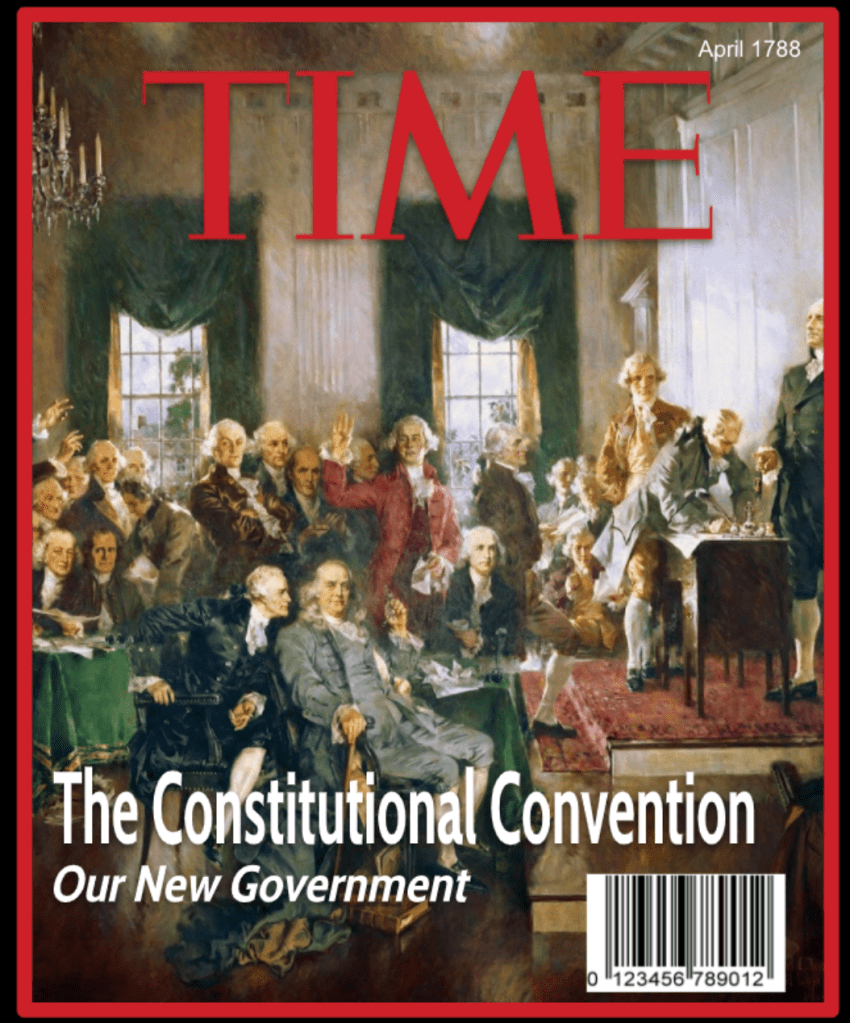
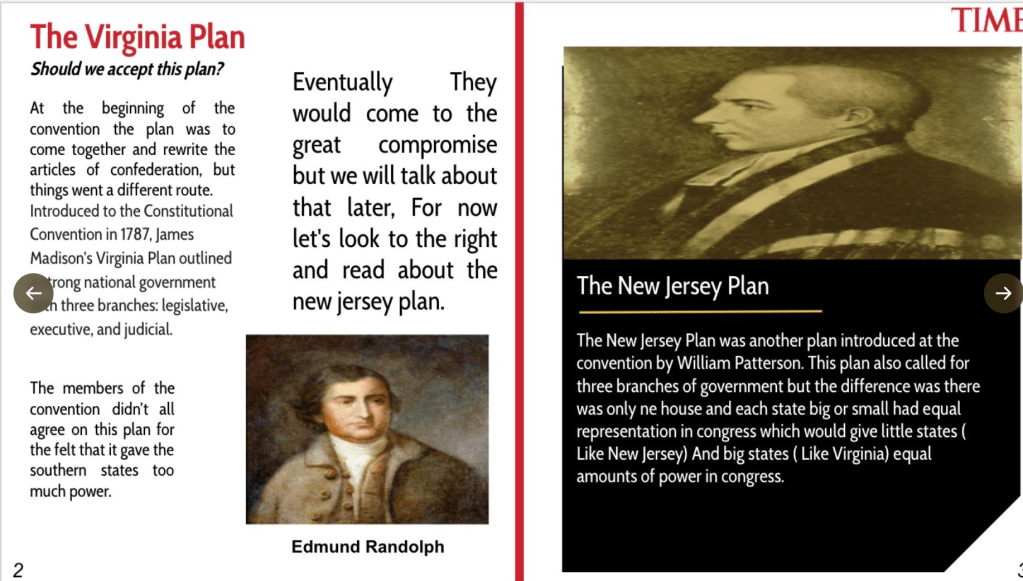

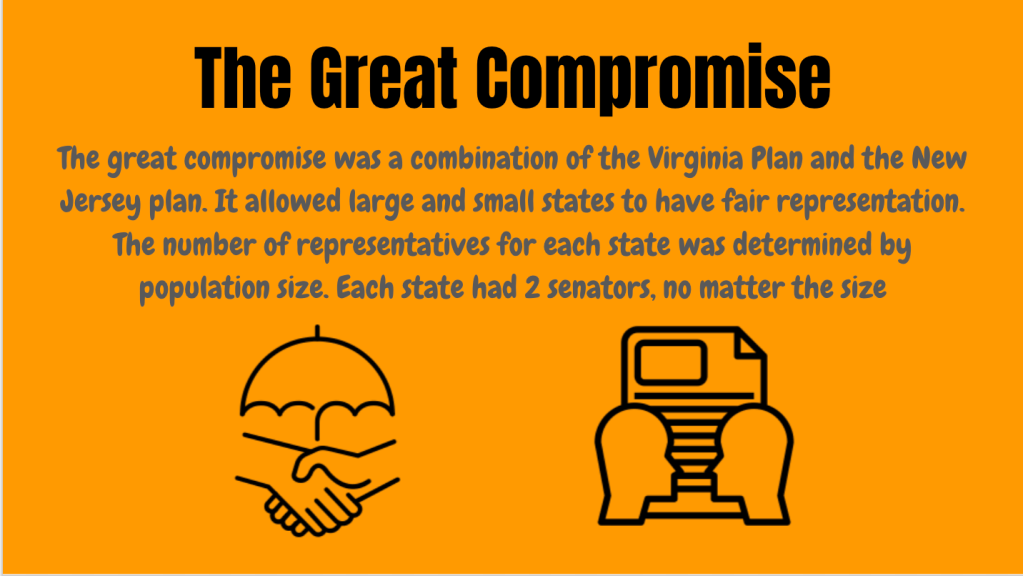


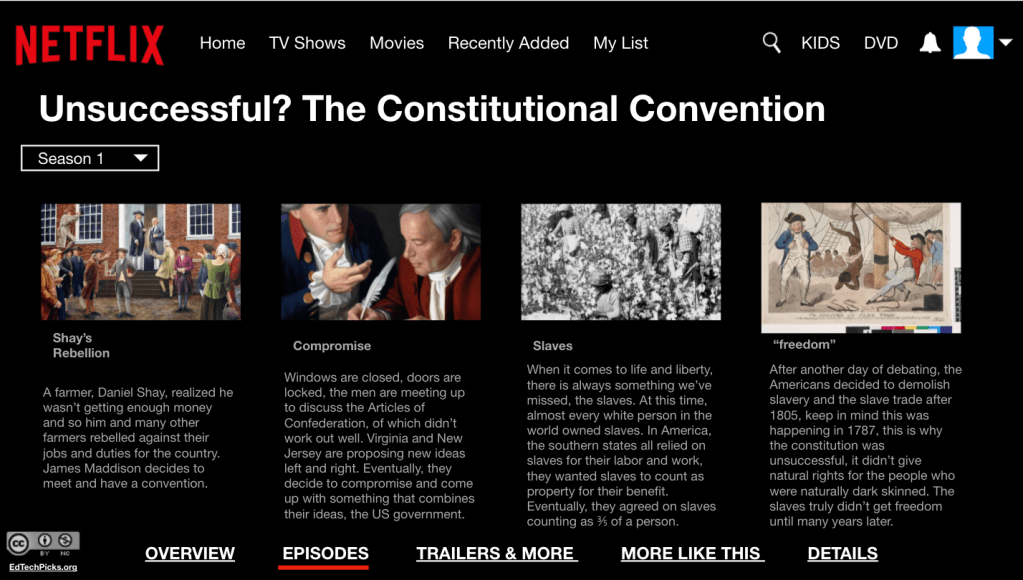
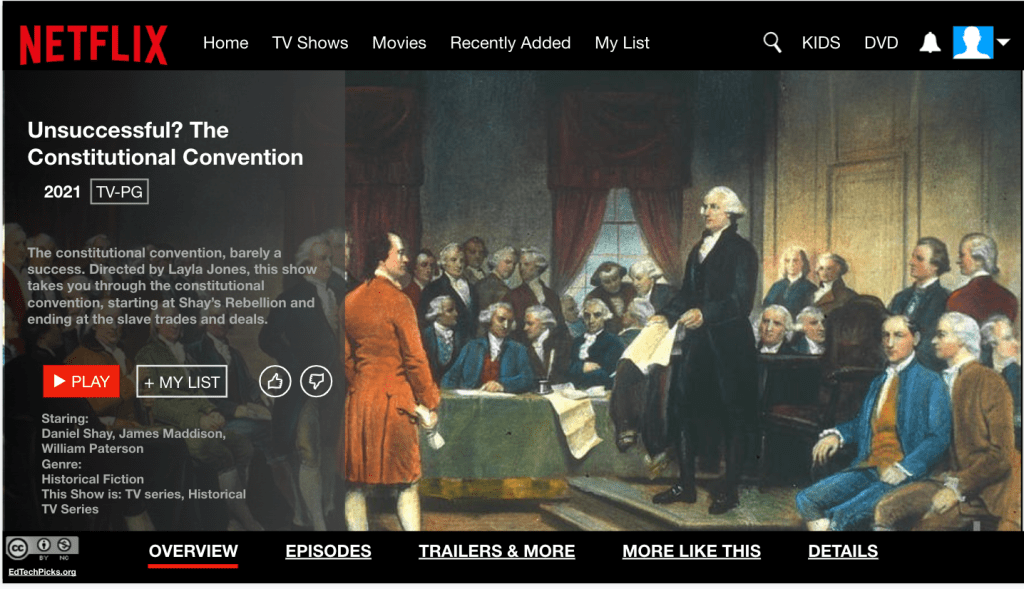


Student choices led me to see the individual processing styles. Most students chose the Netflix assessment, the second most chosen assessment was the structured essay/Google Slides assessment, 4 students chose the Magazine, and 1 student chose the script.

 Moler's Musings