
This week I started my 3rd Unit – Creating the Constitution. In this unit, students consider the following question, “Should the Constitutional Convention be considered a success?” Students end up forming their answer for this question based on the compromises that took place at the convention.
I love the Constitution and government! Finding ways for 8th grade students to connect to abstract ideas about government is a fun challenge for me. The Constitutional Convention isn’t mentioned in great detail within the standard. I believe it occurs only once if you do a search. However, I feel this unit is super important to set up my next unit on the principles of the Constitution.
To begin the Creating the Constitution unit, students need an understanding of the Articles of Confederation. I focus on the weaknesses of the Articles, the Northwest Territory and Northwest Ordinance as a success, and Shays’ Rebellion which highlighted the weaknesses of the articles and made us think differently about a stronger national government.
This week was a weird week with different schedules, and a day of remote learning. Nevertheless, we focused on some vocabulary and the Articles of Confederation.
Monday – Important vocabulary to build a working memory.
Tuesday – remote learning day – quizizz with designing 1 slide of the Solo Iron Chef.
Wednesday – 40 minute classes – finish the Solo Iron Chef
Thursday – 28 minute classes – Frayer and final assessment piece with the Articles of Confederation.
Friday – Catch up and complete work.
Monday
To introduce the Creating The Constitution unit, I began with a splash vocabulary lesson. The point of this lesson is to expose students to vocabulary, get them working with the words, making guesses of their meanings, and guessing which words connect.
I printed this list of vocabulary words and handed a copy to every student. The students partnered up and I read all of the words first so they could hear the pronunciations. Then I gave students 5 minutes to discuss and come up with definitions for what they think the words mean (NO chromebooks or computers). At the end pf 5 minutes, we had a class discussion about words we know, we might know, and have never seen before. The last part of the splash vocabulary lesson, I had students draw lines between words they thought were connected in some way. After my 5 minute timer went off, we had a class discussion about their ideas.
The class discussion went great as students shared where they heard these words before. Many were fearless when they shared some of their definitions for what they thought these words meant. I guess in some way it’s good they feel comfortable being wrong as I try to preach learning nonstop in class. Many students connected the Virginia Plan with the New Jersey Plan because as they stated, “They are plans.” Students also connected the Northwest Ordinance and Northwest Territory because as they stated, “They both have Northwest.” They connected Ratify to the Constitution because as they stated, “They probably had to approve the Constitution.”
Those connections may seem simple. Too simplistic. Not rigorous enough. Years ago I wouldn’t think much of those connections. However, by doing this exercise, students were working with the words and content. Students were building a working memory. As a result, when we begin to study the words within the lessons, they will think back to these connections to make sense of what they’re reading.
The final part of the lesson we did a Quizizz with the 12 vocabulary terms from our list. When the quiz finished, I introduced our compelling question, Should the Constitutional Convention be considered a success?
Tuesday and Wednesday
This was a remote learning day – gross. With remote learning days, I avoid Google Meets or Zooms. Instead, I make directions videos with screencastify and post the video to the assignment. To take attendance, I have students take a Quizizz or do an EdPuzzle. Here’s why I use one of these tools for attendance – I could do a Google Meet, but I’m not forcing student to turn on their camera. I could take attendance from the Google Meet, but are they really there? I could do a lesson, but are they really engaged or learning anything? Through a Quizizz or EdPuzzle, at least I have a timestamped lesson that students actually completed.
The Quizizz that students took related to the 12 vocabulary terms from the day before. At the conclusion of the quizizz, I reminded the students of the compelling question and introduced the supporting question, Why did the Articles of Confederation Fail? I created a Solo Iron Chef for students to complete for this lesson.
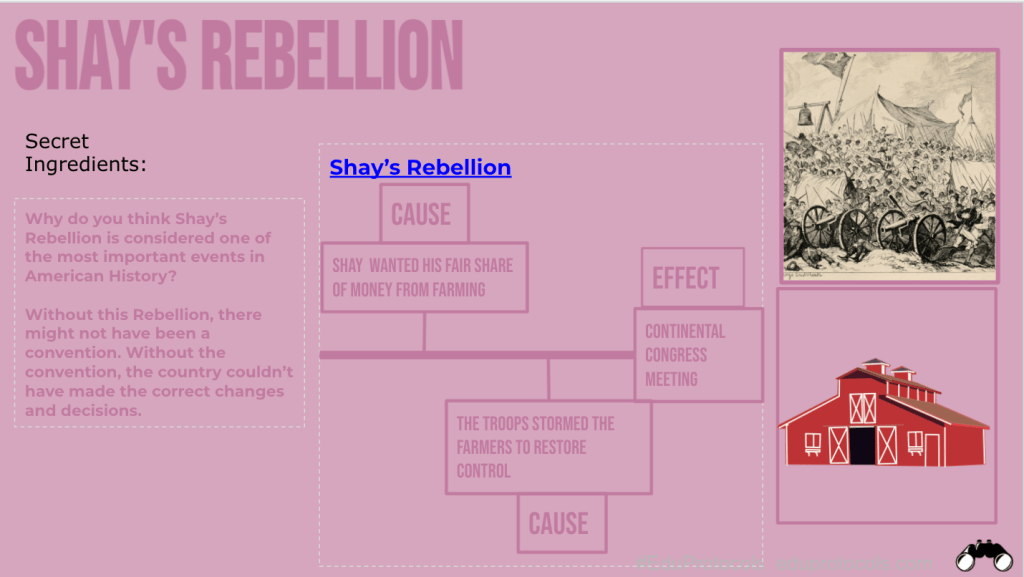
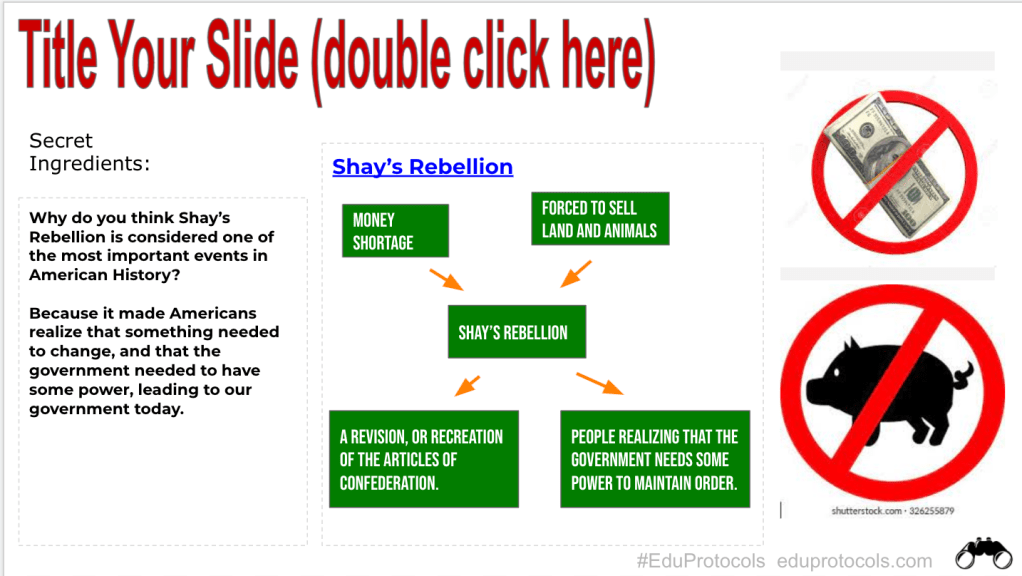
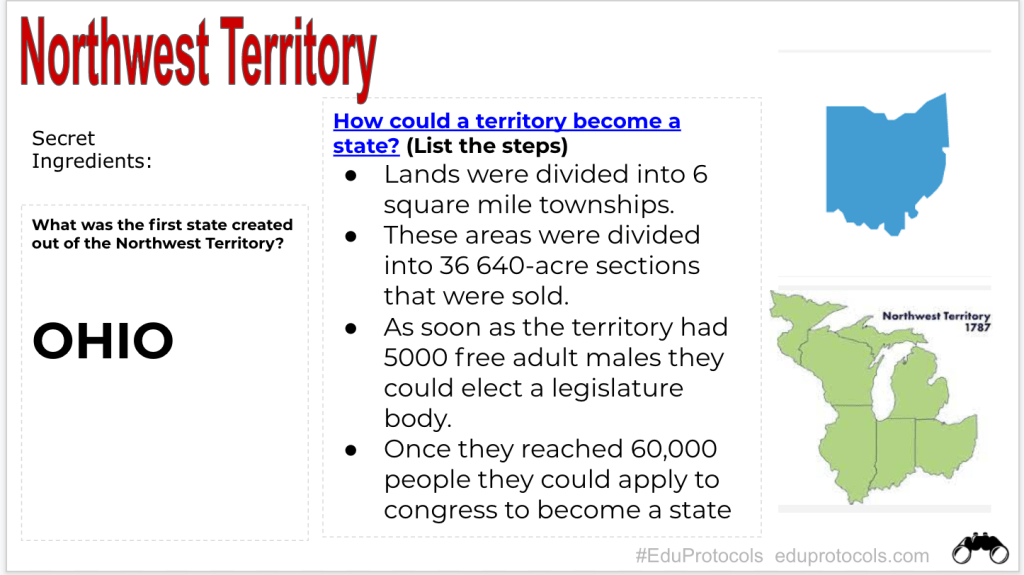
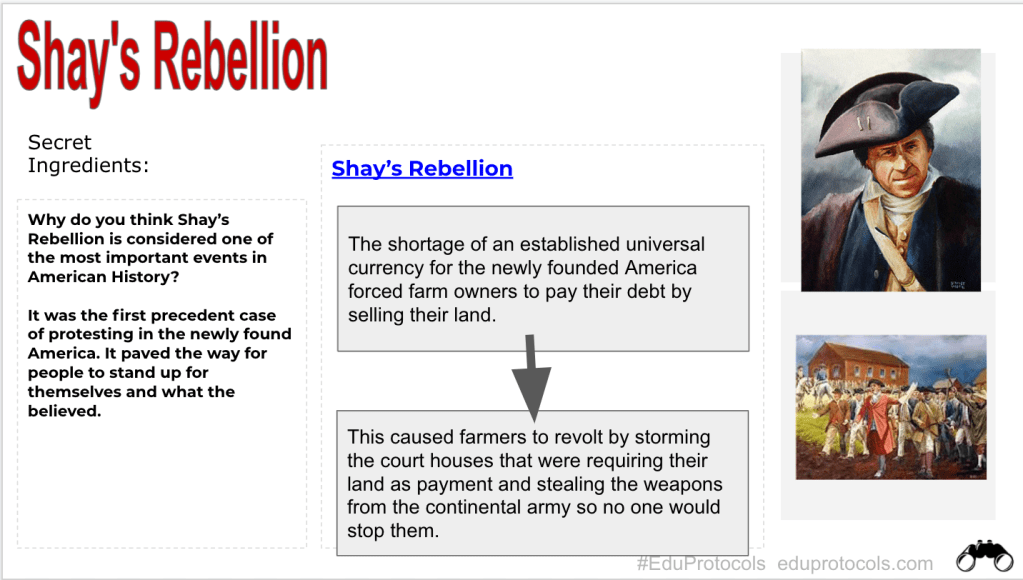
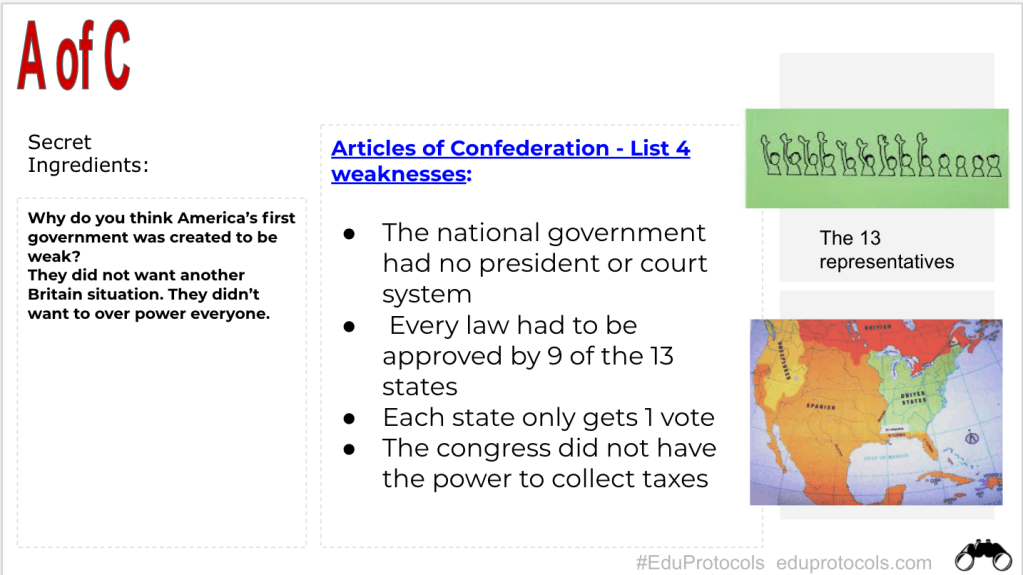
The Solo Iron Chef contains 3 slides with 3 different links. I took sections out of their textbook and linked in readings related to The Articles of Confederation, The Northwest Territory, and Shays’ Rebellion. For remote learning, I wanted students to only design and complete the Articles of Confederation slide.
I like the Solo Iron Chef because students are designing their slides to show their learning and it fits their needs. Some students kept in plain. While other students went all out. What’s interesting, students that I had last year (not all, but some) are the students that went all out and designed a colorful slide and changed some fonts. Here was the goal of each slide:
- Articles of Confederation – read the linked reading (or listen to it – I always record audio of me reading), list 4 weaknesses, add 2 pictures, create a title, and answer the secret ingredient question, “Why do you think America’s first government was created to be weak?”
- Northwest Territory/Ordinance – read the linked reading, list out – How did a territory become a state?, add 2 pictures, create a title, answer the secret ingredient – “What was the first state created out of the Northwest Territory?”
- Shays’ Rebellion – read the linked reading, create a cause and effect for Shays’ Rebellion, add 2 pictures, create a title, and answer the secret ingredient question – “Why do you think Shay’s Rebellion is considered one of the most important events in American History?”
On Wednesday, students finished their Solo Iron Chefs and began completing a Frayer model which I will describe under Thursday.



Thursday
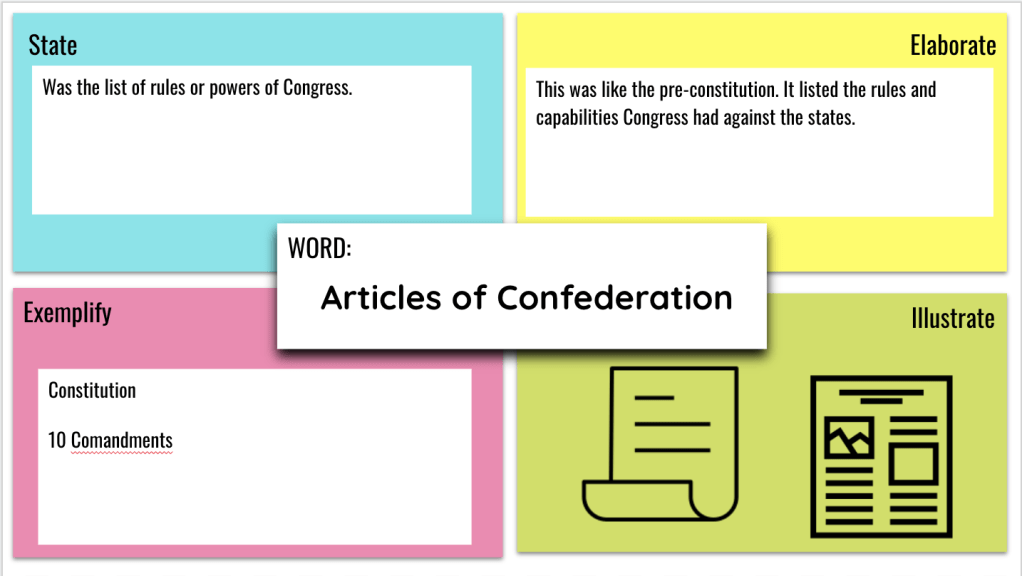
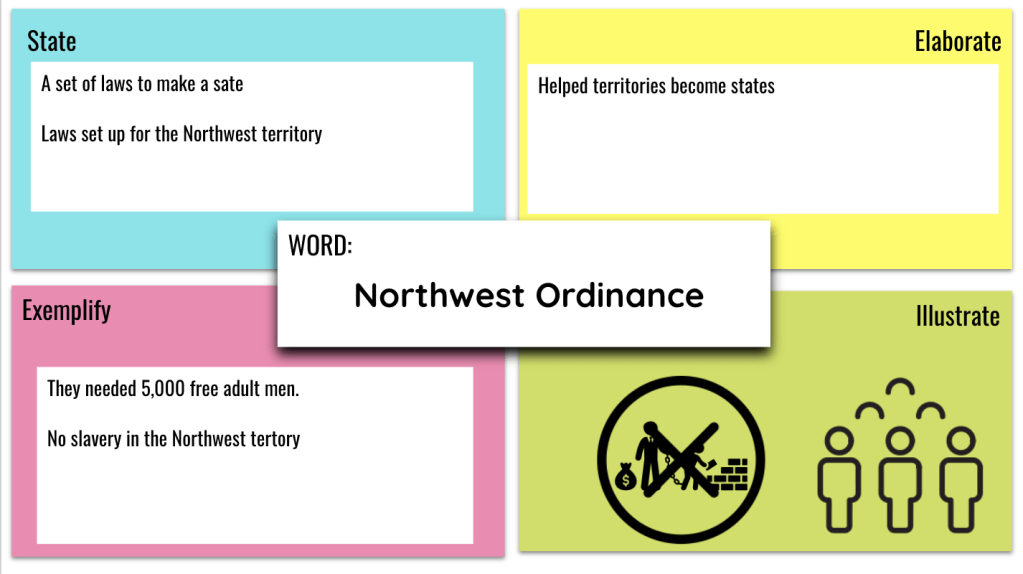
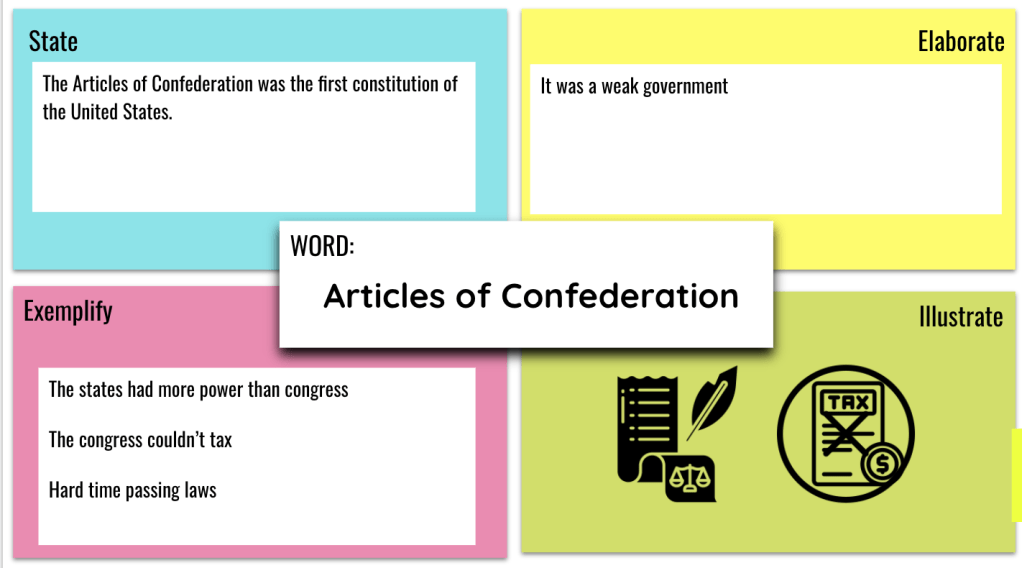
Thursday was a shortened class period and students used it to finish up Frayer’s or begin Frayers. Either way was fine. When we began the unit on Monday, we did a splash vocabulary activity to build a working memory with vocabulary. Naturally, most people would then hand a vocabulary list and have students copy definitions. I do not like this practice. Instead, I have students write their own definitions after working with the material.
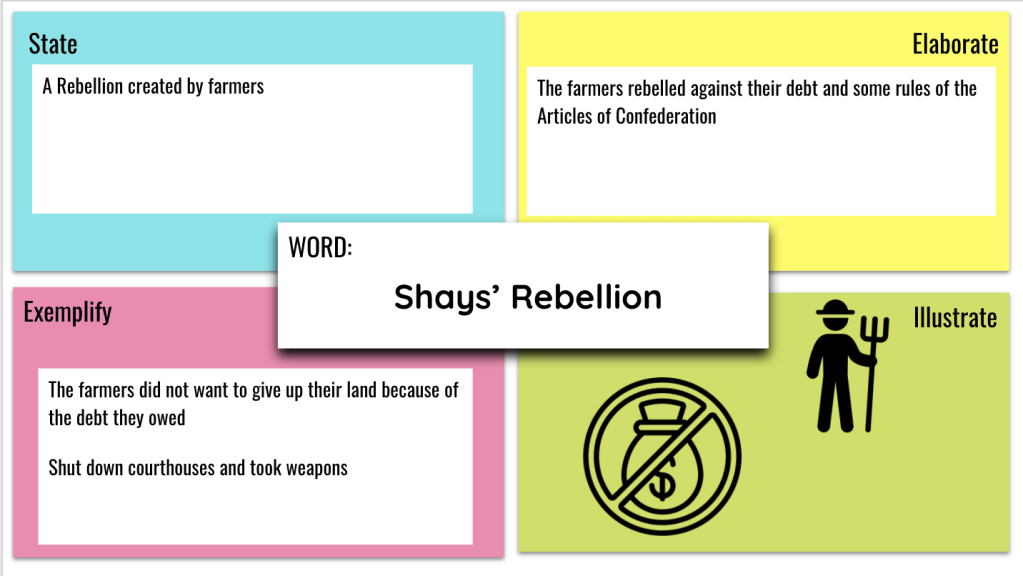
After students completed the Solo Iron Chef with the Articles of Confederation, Northwest Territory, and Shays’ Rebellion, I wanted them to create their own definitions on the Frayer. I asked them, “Based on what you learned, how would you define that word? How would you elaborate on that word? What examples or characteristics can you list?” If students can create their own definitions, this is learning at it’s finest. Did all students do it the correct way? No, and that’s okay. Here are some examples that students came up with after their learning:




Friday
Friday was a catch up day. I made a checklist for students of assignments that were to be completed on Google Classroom. I cut out the Checklist, and on the back, I wrote an encouraging note to every student. A few students said thank you, some did not, but I could tell they cared because very few checklists were thrown away.
For students that had everything completed during the week, I had one last choice assessment:
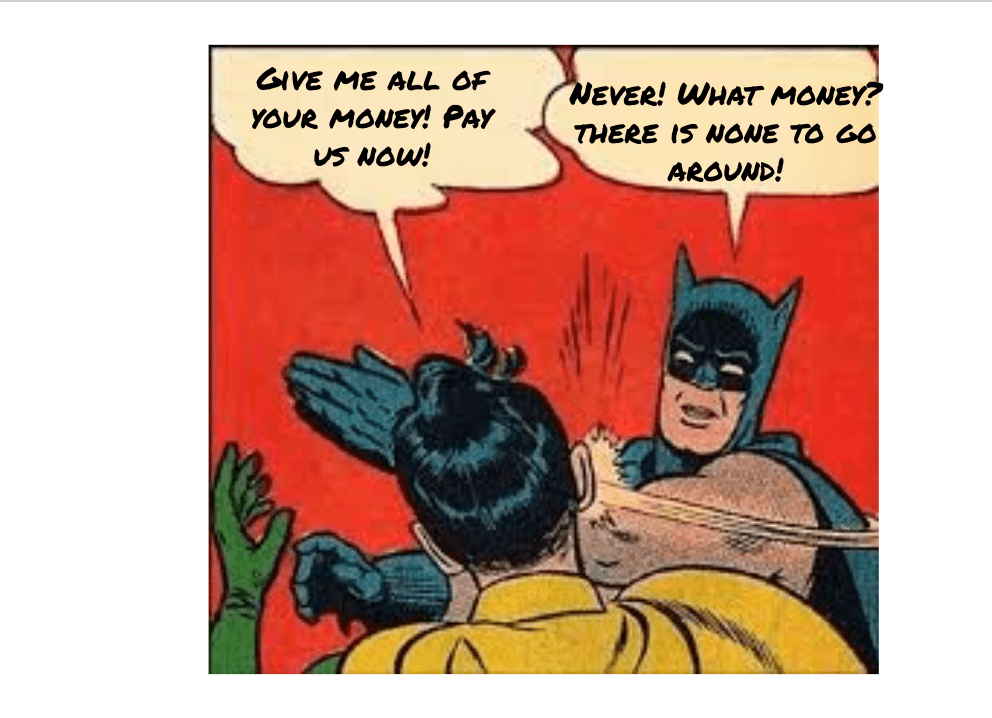
- Create 3 memes about the Articles of Confederation
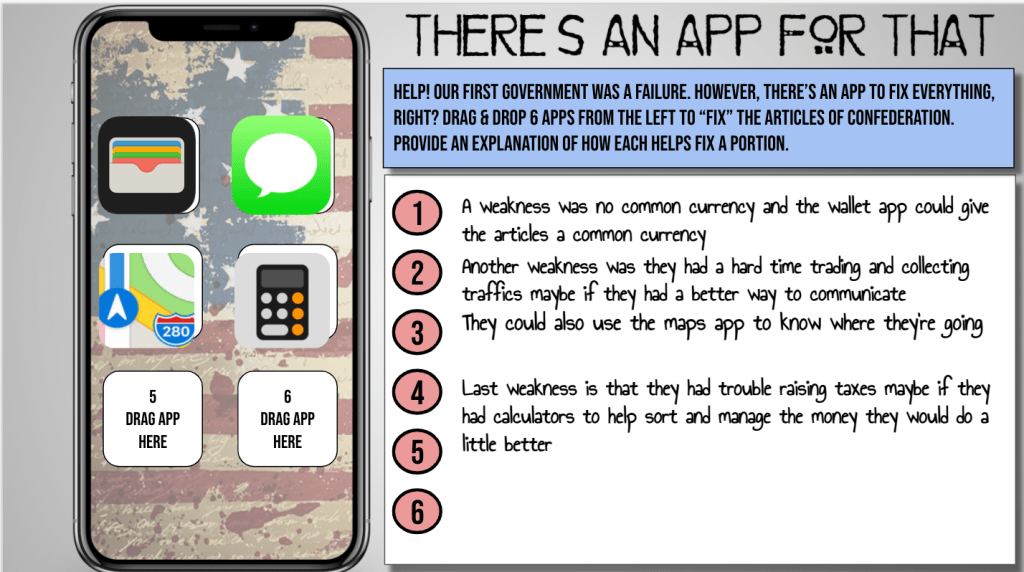
- There’s An App For That – created by Mike Meehan (@mrmeehanhistory) – choose 6 apps that would help fix the Articles of Confederation.
Both of these involve critical, and creative, thinking and both a super engaging for students. Here some of the results:




My Messages
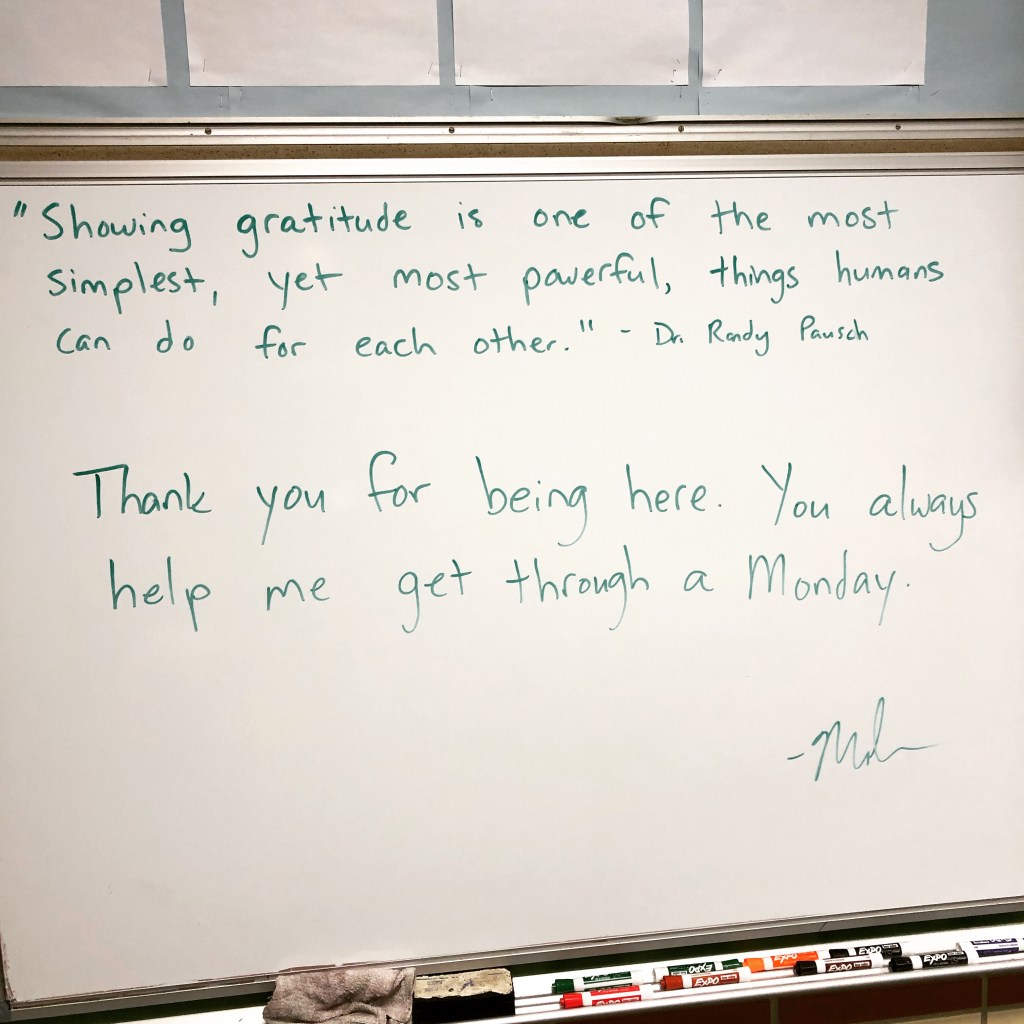
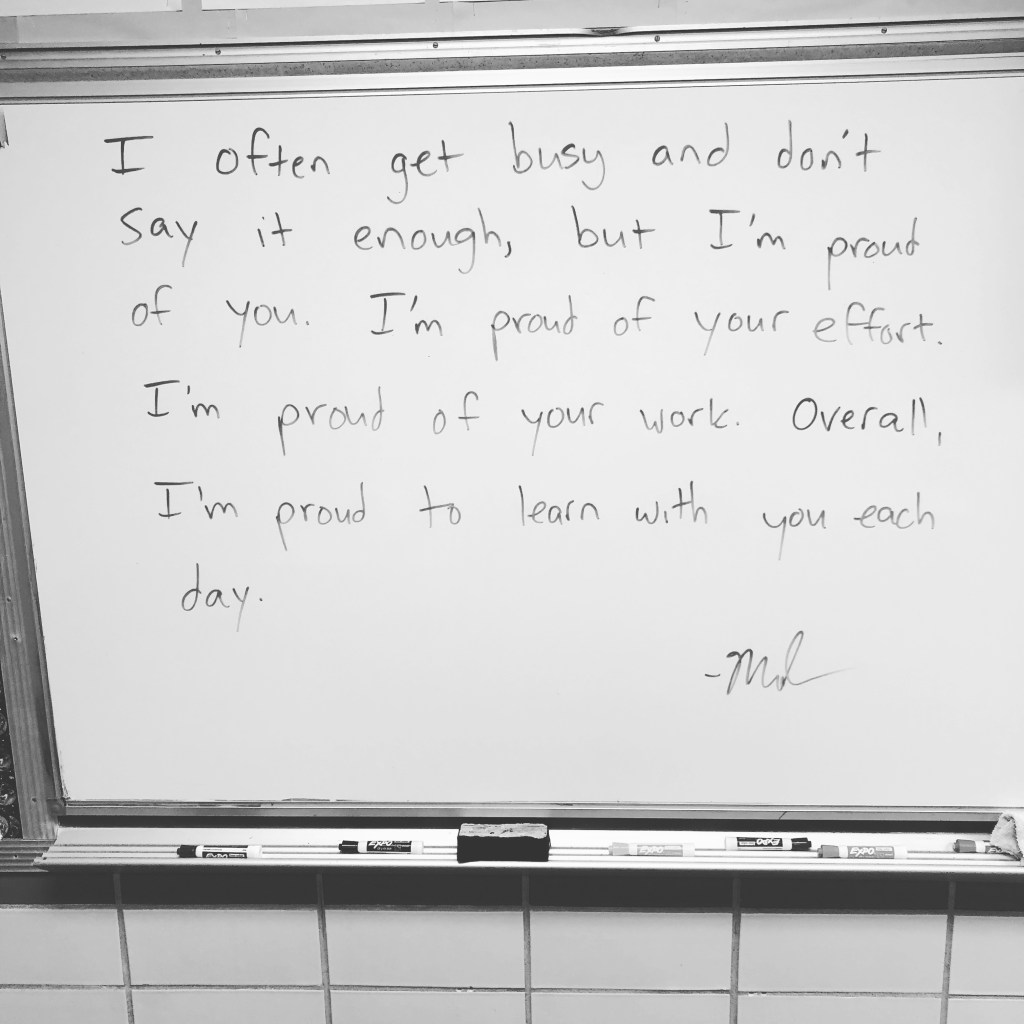
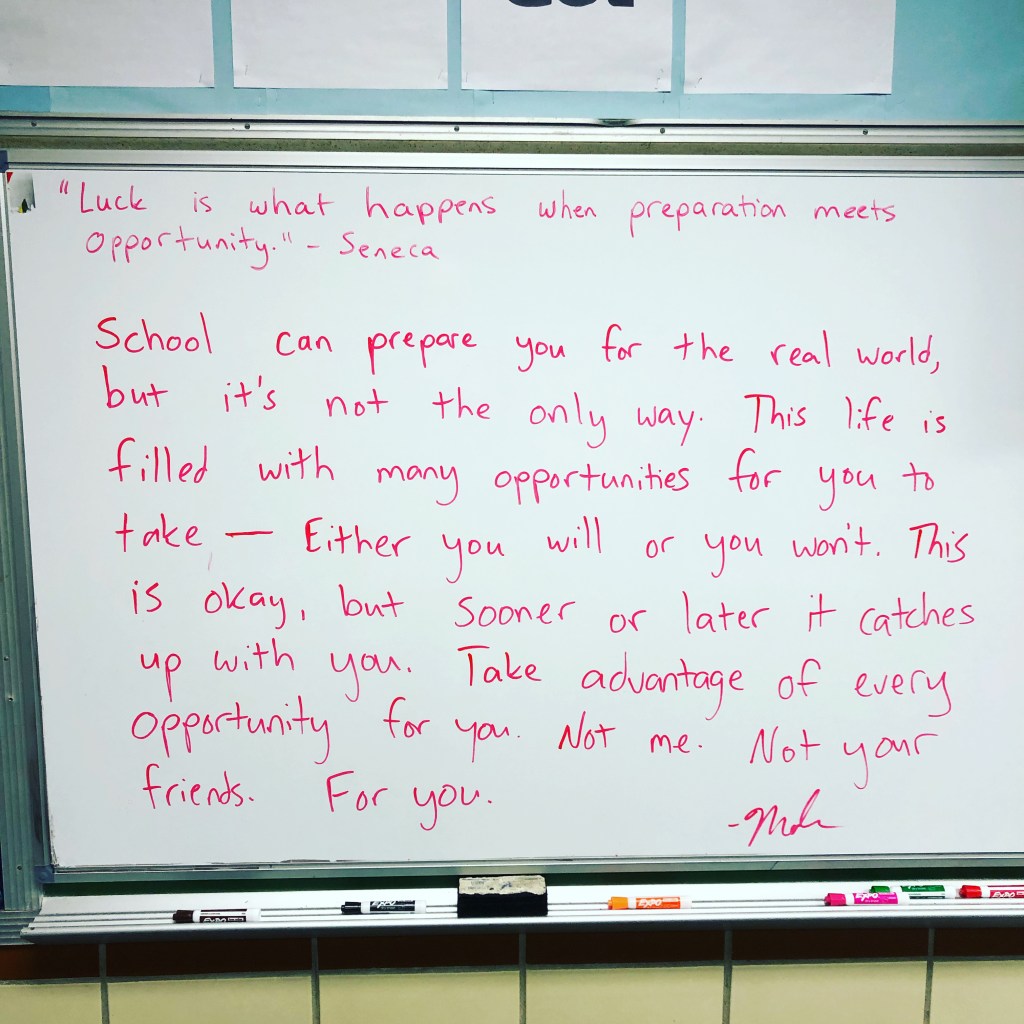
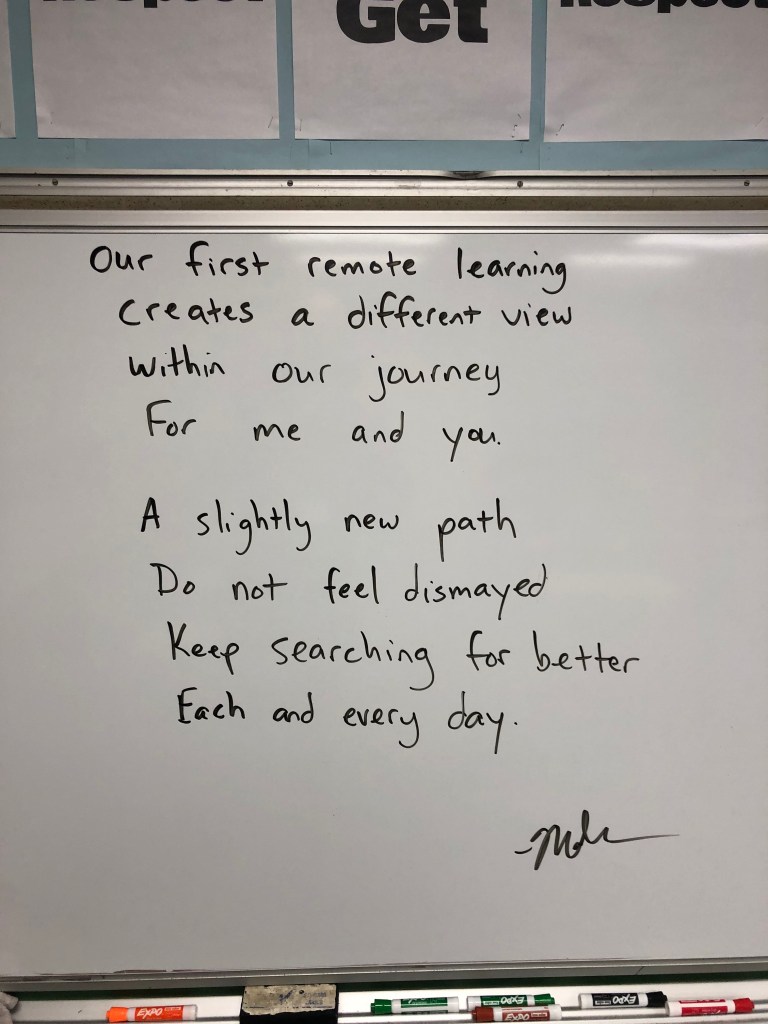
Here my room messages for the week:


 Moler's Musings